-
Feminist Revolt in the Museum
ACTIVITIES
-
Until 23 March 2020 – alternate Thursdays at 6:30pm / Sabatini Building, Auditorium and Nouvel Building, Protocol Room
Oh, Pioneers!
A Defiant Muse Film Society
In this instance, the Museo sets in motion a new format of expanded mediation: the film society, an initiative which accompanies exhibitions in which audiovisual language takes centre stage. This space of active contemplation, collective thought and mutual learning is built by means of a selection of audiovisual materials from the exhibition Defiant Muses. Delphine Seyrig and the Feminist Video Collectives in France in the 1970s and 1980s
Programme and session coordination: Miriam Martín
Attendance: free, until full capacity is reached -
Monday, 2 March – 7pm / Nouvel Building, Protocol Room
María Galindo
The Invisible Cage
Two key questions have led Bolivian artist, writer and activist María Galindo to develop this performance — an updated version of one presented in the Parliament of Bodies, a project curated by Paul B. Preciado and Viktor Neumann in conjunction with the Bergen Assembly (Norway, September 2019): What are our horizons in the feminist struggle? What or from where do we speak about when we are situated as feminists?
Force line: Action and Radical Imagination and Contemporary Disturbances
Attendance: free, until full capacity is reached -
Thursday, 5 March – 6pm / Nouvel Building, Protocol Room
Situated Voices 11
The Cost of Strawberries. Twenty-first-century Female Slaves
As part of the 8 March demonstrations, this new edition of the forum Situated Voices looks at the situation of Moroccan female day labourers who arrive in the fields of Huelva during the strawberry-picking campaigns and are hired from their places of origin.
Participants: Rahma El Basraoui, Fátima Boubkri, Nines Cejudo, Pastora Filigrana García, Justa Montero and Soulaima Vázquez
Organised by: Museo Situado
Coordinated by: Red Solidaria de Acogida, with the collaboration of Comisión artística Colombine, La Extraña Compañía and La Smorfia Teatro
Force line: Contemporary Disturbances
Attendance: free, until full capacity is reached -
Friday, 6 and Saturday, 7 March – 11:30am / Mbolo Moy Dole, Calle Dos Hermanas, 14 (Lavapiés, Madrid)
Graphic Outbreak 2. A Voice to Movements of Desire
Workshop with Queer Screen-printers
As part of the 8 March demonstrations, this new edition of the forum Situated Voices looks at the situation of Moroccan female day labourers who arrive in the fields of Huelva during the strawberry-picking campaigns and are hired from their places of origin.
Force line: Action and Radical Imagination
Attendance: free, with prior registration at inscripciones@museoreinasofia.es
-
Friday, 6 and Saturday, 7 March – 6pm / Nouvel Building, Protocol Room
Graphic Outbreak 3. I’m Stopping! Dancing Struggles
Workshop with Lapili
Through a series of exercises, information exchanges on musical frames of reference, essay and observation, this workshop seeks to create collective choreography that can be replicated in public space, working with movement as an instrument for expression born from enjoyment and the potential of our bodies.
Line force: Action and Radical Imagination
Attendance: free, with prior registration at inscripciones@museoreinasofia.es
-
Wednesday, 11 and Thursday, 12 March – 7pm and 6pm / Nouvel Building, Auditorium 200 and Protocol Room
The New Reaction. Antidotes and Synergies 1 Feminisms and Intersectional Alliances Opposite Hate as Politics
Conversation and workshop with Renata Souza, Esther Solano Gallego and Mattin
This programme seeks to analyse how new feminisms, struggles for the recognition and equality of post-colonial subjects and social migratory movements are fashioned as key spaces of resistance before the recent shift towards conservatism, with the activity setting out from the pooling of their experiences after becoming objects of defamation and hate by the new political right. During each encounter, sound artist Mattin will execute a series of Anti-fascist Scores.
Organised by: Museo Reina Sofía and Foundation of the Commons. Co-funded by the EU’s Creative Europe Programme
Force line: Action and Radical Imagination
Workshop assistance: free, with prior registration at inscripciones@museoreinasofia.es -
Sabatini Building, Protocol Room / Sabatini Building, Protocol Room
I’m Tired! Stops to Question Art and Work, Work and Life 1
Encounter with Marta Echaves and Julia Montilla
Imagining other ways of life and struggles for autonomy have been exploited by new modes of neoliberal production, whereby life itself (and its dimensions of subjectivity, affection, language, sociality) is at the centre of production value, as asserted by numerous thinkers and artists — Suely Rolnik, Isabel Lorey, Hito Steyerl, Bojana Kunst, and many more. Faced with today’s precarious conditions, self-exploitation and exhaustion, this programme examines the power of art to imagine non-productive, non-instrumental forms and forms of life and relationships.
Force line: Contemporary Disturbances
Attendance: free, until capacity is reachedContemporary Disturbances
-
Wednesday, 22 April – from 10am to 12pm / Nouvel Building, Auditorium 200
Pink Triangle 3
Encounter with Miquel Missé
Via its Pink Triangle encounters, the Museo seeks to consolidate a space of convergence between different agents working in the sphere of affective-sexual and gender diversity in schools. The programme’s third edition features Miquel Missé, a sociologist, trans activist and independent educator who works in the sphere of public policies for diversity.
Design and coordination: Cristina Gutiérrez Andérez and Fran MM Cabeza de Vaca
Attendance: free, with prior registration by writing to actividadesescolares@museoreinasofia.es -
Tuesday, 28 April – 7pm / Sabatini Building, Auditorium
Encounter with Concha Jerez
A conversation with Spanish artist Concha Jerez in relation to the retrospective Concha Jerez. Our Memory Is Being Stolen. The critique of censorship in the media and a reflection on the workings of repression shape the artist’s work and are captured across multiple supports spanning a number of decades.
Force line: Politics and the Aesthetics of Memory
Attendance: free, until full capacity is reached -
Wednesday, 6 May – 7pm / Nouvel Building, Auditorium 400
Without Women the World Stays Still
Conversation between Silvia Federici and Rafaela Pimentel
Writer and feminist activist Silvia Federici and activist and domestic worker Rafaela Pimentel, the driving force behind the collective Territorio Doméstico, have maintained a relationship of friendship and political-intellectual affinity since 2009. Both will converse with attendees about the specific struggles of domestic work and care within a capitalist and patriarchal system, and their place (invisible and denied) in reproducing the existing order.
Force line: Action and Radical Imagination
Attendance: free, until full capacity is reached -
Thursday, 11 June – 7pm / Nouvel Building, Protocol Room
The New Reaction. Antidotes and Synergies 2 The Demonisation of Feminism. The Instrumental Use of Women’s Rights
Round-table discussion
Participants: Nuria Alabao, Marisa Pérez Colina, Samuel Pulido, Fernanda Rodríguez and Mattin
Organised by: Museo Reina Sofía and Foundation of the Commons. Co-funded by the EU’s Creative Europe Programme
Force line: Action and Radical Imagination
Attendance: free, until full capacity is reached -
Friday, 26 June – 7pm / Nouvel Building, Auditorium 400
I’m Sick and Tired! Stops to Examine Art and Work, Work and Life 2
Lecture by Byung Chul
An expert in Cultural Studies, Byung Chul Han is a philosopher and essayist from South Korea and a lecturer at Berlin University of the Arts.
Force line: Contemporary Disturbances
Attendance: free, with prior ticket collection at the Museo Ticket Office and on the Museo Reina Sofía website -
Fissured Memories and Imaginaries of Revolt / From 4 to 28 May 2020
POLITICS AND THE AESTHETICS OF MEMORY CHAIR
Curator: Nelly Richard / Force line: Politics and the Aesthetics of Memory
-
Monday, 4 May – 7pm / Nouvel Building, Auditorium 400
The Powers of Memory in the Little Things
Lecture by Judith Butler
Judith Butler explores the idea of memory outside hegemonic readings of history and, challenging those who assert that history can only be captured in long narrative reconstructions, she suggests that some of the most brutal periods are more persuasively transmitted through the “little things”.
Moderator: Clara Serra
Attendance: free, with prior ticket collection at the Museo Ticket Office and on the Museo Reina Sofía website -
May / Sabatini Building, Auditorium
Memory’s Re-volts
Documentary Film in the Aftermath of Dictatorships in Spain, Chile and Argentina
This series screens documentaries and essay films in order to set forth different ways of approaching memory, exploring the different conflict zones between subjectivity and politics; between left(s), militancy and revolution; between critical sexualities and gender transformations; between left(s) and democracy; between social defiance, constituent drives and tasks to reinvent democracy.
Attendance: free, until full capacity is reached
-
Monday, 25 and Tuesday, 26 May – 11am / Nouvel Building, Study Centre
Imaginaries of Revolt
Seminar conducted by Nelly Richard
This seminar spotlights the social unrest that exploded on 18 October 2019 in Chile, shaking the country and causing its political system’s biggest crisis since the return to democracy in 1990. It explores the different dynamics of “revolt” (disobedience, transgression, insurgency, and so on) that gave value to the range of criticism spreading through the country’s cities, with echoing screams of “Chile woke up” and “No more abuses or privileges”.
Attendance: free, with prior registration by writing to inscripciones@museoreinasofia.es
-
Thursday, 28 May – 7pm / Sabatini Building, Auditorium
Memories of a Rebel
Conversation between Carmen Castillo and Nelly Richard
Carmen Castillo is a Chilean film-maker and a former member of MIR (Movement of the Revolutionary Left). Exiled to Paris during the military dictatorship in Chile, she made a number of films that thread together a unique and compelling body of work that eschews nostalgia and dominant narratives. Castillo continues to question the nature of political commitment and the possibilities of redirecting the “world’s disastrous path”.
Attendance: free, until full capacity is reached
-
Feminist Revolt in the Museum
GUIDED TOURS
-
Mondays at 7:15pm and Saturdays at 12:30pm
Defiant Muses: Everyone Dreams of Responding to the Television
Until 23 March
A tour around the exhibition Defiant Muses. Delphine Seyrig and the Feminist Video Collectives in France in the 1970s and 1980s, which offers an exploration into the figure of Delphine Seyrig, the French actress, video producer and activist, and the feminist scene to which she held close ties.
Attendance: free, until full capacity is reached (15 people)
Meeting point: the adjoining area between the Sabatini Building and Nouvel Building, Floor 1 -
Wednesdays at 11:30am and Thursdays at 5pm
Making Space and How to Wander from Disorientation. Feminisms in Collection 2 and Collection 3
Until December
This activity looks at the space which burst forth across the post-Second World War artistic landscape, affecting not only art-making but also people situated inside the art system (who occupied this space?) and those who were decentred. Through this wandering, people are invited to participate in a relational practice with mediators and other group members with the aim of dismantling the idea of the person “who explains things” and to form a plural voice uttered from feminism.
Meeting point: the adjoining area between the Sabatini Building and Nouvel Building, Floor 1
Attendance: free, until full capacity is reached, with prior registration at the Mediation desk from thirty minutes before the start of the visit (15 people). -
Mondays and Wednesdays 10:00am, 11:30am and 5pm; Thursdays and Fridays at 10am and 11:30am
Listen Up, Listen Up!: Feminisms
Until 15 June
The route map of this activity starts from the learning that stemmed from the feminist movement in its imagining of other forms education and, therefore, inhabiting the world. It aims to reflect upon the accounts comprising art history, identifying violent episodes from a patriarchal logic, prioritising relationships of care opposed to those from power, questioning hierarchies between scientific knowledge and mainstream knowledge, and underscoring the diversity of subjectivities, bodies and identities.
Aimed at: groups of students from Primary, Secondary and Sixth Form Education and over 65s
Meeting point: Sabatini Building, Floor 1, education desk
Attendance: free, with prior registration by writing to visitasescolares@museoreinasofia.es -
Feminist Revolt in the Museum
RESEARCH
-
Open call, until 31 March
Our Many Europes Research Residencies
Inside the framework of Our Many Europes — Europe’s Critical ‘90s and The Constituent Museum (OME), run by the European museum confederation L’Internationale, the Museo has opened a call for three research residencies to support research, artistic production and archive work.
Organised by: Museo Reina Sofía and L’Internationale. Co-funded by the EU’s Creative Europe Programme.
Force line: Action and Radical Imagination -
Research
Emerging Knowledge 2
Feminist Cartographies. Morocco
In the first episode of a project of feminist cartographies with which to foster connections between feminist struggles in different contexts, a mapping of Morocco gets under way and is structured around three core questions: Which feminist collectives, women’s collectives and gender dissidences are active in the territory today? Which practices, debates and challenges do these groups consider among them and with Moroccan society? What are the connections that can be made with the reality facing Mediterranean Europe?
Participants: Hanan Dalouh Amghar and Maggie Schmitt
Organised by: Museo Reina Sofía and Laboratoria – Feminist Research Space -
Feminist Revolt in the Museum
STUDY GROUPS
-
Until 28 March / Nouvel Building, Workshops -1
Driving Evil Away
Around Pharmacologization and Contemporary Disturbances
This study group shares common forms of collective and daily resistance in opposition to the growing alliance between the pharmaceutical industry, economic power and neoliberal logic. By means of an approach to alternative knowledge hailing from the Global South, the activity seeks to debate life management and care policies, and encourage a knowledge exchange through non-hegemonic, transversal and affective practices.
Coordinated by: Equipo re - Anarchivo sida (Nancy Garín and Linda Valdés)
For dates and times, please check programme -
28 March – 4 July / Sabatini Building, Children’s Workshops
The Internal (Intimate-Revolutions) Mobilisation Button Regarding Maternal Work
The aim of this study group is to encourage a mixed collective reflection from the knowledge and tasks that emanate from politicised maternal bodies. Through dynamics of self-enquiry and actions rooted in feminist critical theory, the sessions put forward an intimate revolution as a strategy of peaceful emancipation and as a way to oppose exclusion and the devaluation systematically attributed to maternal work.
Coordinated by: Luisa Fuentes Guaza
Attendance: free, with prior registration -
Feminist Revolt in the Museum
DIGITAL PROJECTS
-
Microsite around the Collection
Outside the Canon. Pop Artists in Spain
In the late 1960s and the decade that followed, feminism became an international lingua franca around which the work of many artists revolved. In Spain, despite the dictatorship, these radical discourses incorporated a Pop Art with a local flavour and an anti-Francoist discourse. If, however, during those two decades the work of artists was disseminated widely, the same could not be said for the work of recently recovered, same-generation female counterparts. This microsite, therefore, contextualises and places these women artists’ work, seeking to counteract a male-art-dominated historiography.
-
Collection
Interview with Miriam Cahn
La producción de Miriam Cahn (Basilea, 1949) emerge fuertemente influida por los movimientos feministas y pacifistas de los años sesenta. Desde el inicio de su trayectoria en los años setenta, se ha interesado por temas cruciales que van a recorrer todo su trabajo, como la guerra, la violencia, la familia, la muerte, la sexualidad o la defensa feminista.
-
Collection
Interview with Natalia Iguiñiz
Since the start of her career, Natalia Iguiñiz (Lima, 1973) has worked closely with different women’s collectives and feminist movements in Peru. In these projects, she studies how the containment of women’s sexual and reproductive rights creates major tensions inside a Peruvian cultural and social context.
-
Processes Channel
RRS RADIO
-
Tansik (تنسيق / coordination)
Meira Asher
Composer-performer and human rights activist Meira Asher (Ireland) has made a sound piece exclusively for Museo Reina Sofía Radio that addresses the conflict in the Gaza Strip. In the piece, the artist accompanies Akef and Walid, two Palestinian farmers, while they enter land held under Israeli military control to collect olives from their olive trees. Via a composition led by her own voice, Meira transports us to Kufr Qaddum, the place of conflict.
-
Singing is what makes work possible (Syllabus)
Bill Dietz & Hong-Kai Wang
Since the autumn of 2018, Bill Dietz (Arizona) and Hong-Kai Wang (Taiwan) have conducted research into the relationships between song and the concepts of work and value. In their contribution to Museo Reina Sofía Radio, we witness the essays of a group of people who attempt to learn how to sing songs in different languages, with these encounters allowing Dietz and Wang to touch on themes such as reproductive work, migration and spiritual work, doing so from a mise en scène of listening and the search for experimental modes of socialisation through sound and orality.
-
Feminist Revolt in the Museum
COLLECTION
-
Room 206.09
The Front and Rearguard: Women in the Spanish Civil War
In this room, two lines of research which are key to the Museo Reina Sofía Collection converge: the context of the 1930s and the Spanish Civil War, and the recovery of the work of women artists, often ignored or obscured by the work of their male counterparts. The role of women during the Civil War was at once active and diverse, most notably exemplified in Kati Horna (Budapest, 1912 – Mexico City, 2000) and Gerda Taro (Stuttgart, 1910 – El Escorial, 1937), photographers who travelled to Spain to cover the armed conflict, disseminating their work in national and international publications such as Umbral, Regards and Die Volks-Illustrierte. In the sphere of visual arts, figures such as Pitti (Madrid, 1908 - Pamplona, 2004) and Juana Francisca (Madrid, 1911–2008) created graphic art to the backdrop of war, while the role of workers and militiawomen to serve the cause was broadly depicted in different media.
-
Feminist Revolt in the Museum
EXHIBITIONS
-
Until 23 March 2020 / Sabatini Building, Floor 3
Defiant Muses
Delphine Seyrig and the Feminist Video Collectives in France in the 1970s and 1980s
This exhibition revisits the history of the feminist movement in France through the emergence of video collectives in the 1970s, focusing on a network of creative alliances that emerged at a time of great political unrest. Films, videos, artworks, photographs, documents and archive materials show the concerns the feminist movement exposed at the time, concerns which still resonate today in the ongoing construction of alliances against structural sexism in the film industry and the challenge to normative gender roles.
Curator: Nataša Petrešin-Bachelez and Giovanna Zapperi
Organised by: Museo Reina Sofía, in collaboration with LaM (Lille Métropole Musée d'art moderne, d'art contemporain et d'art brut), and Centre audiovisuel Simone de Beauvoir -
29 April - 21 September / Sabatini Building, Floor 3, Stairwells, Vaults Gallery and Protocol Room
Concha Jerez
Our Memory Is Being Stolen
This exhibition presents the works of artist Concha Jerez (Las Palmas de Gran Canaria, 1941), produced in a period spanning from the 1970s to the present, recovering and surveying her work from a perspective in which the artist’s personal memory and collective memory intersperse — anonymous memory and memory reflected in the media. The Spanish Civil War and its subsequent repression, censorship in the Transition to democracy in Spain, the vindication of forgotten, anonymous figures — women, migrants — and the relationship between memory and its repression are some of the issues explored and which enter into dialogue with the Museo’s own history and its previous state as a hospital.
Curator: João Fernandes
Organised by: Museo Reina Sofía -
7 May – 21 October / Retiro Park, Palacio de Velázquez
Anna-Eva Bergman
From North to South, Rhythms
Norwegian artist Anna-Eva Bergman (1909–1987) viewed rhythm as a structural element of painting, a rhythm stemming from the employment of specific materials — metal foil, gold leaf, silver, copper — forms, lines and colours. Her relationship with Spain began in 1933, when she lived in Menorca for a year with her partner, Hans Hartung. In 1962, she travelled to Almería, a trip that would be instrumental in defining her work — it was the location of her first horizon pieces, a motif she would return to when she once again painted Norwegian landscapes. This link between Norway and Spain – north and south – led to similarities in formal terms, but with very different tones, between both landscapes.
Curators: Nuria Enguita and Christine Lamothe
Organised by: Bombas Gens Centre d’Art/Fundació Per Amor a l’Art and Fondation Hartung-Bergman, in collaboration with Museo Reina Sofía
Feminist Revolt in the Museum

Held on 02 Mar 2020
A museum that wants to be feminist does not only claim to be so for such a pivotal date as 8 March. Rather, it recognises, on a daily basis, that it is a territory of struggle for conflictive positions that neither appease nor stabilise. A museum that seeks to be feminist constantly reviews its ways of doing, judging and seeing, addressing a place of bodies, affection and care, the uses and scope of language, knowledge, practices and feminist methodologies, among other aspects.
Therefore, this programme sees the Museo Reina Sofía bring together an ensemble of initiatives that will be held over the coming months (from lectures and workshops, exhibitions and digital projects, to guided tours and presentations of the Collection), encompassing the wide-ranging forms of feminist revolt present in our day-to-day. An unremitting and unstoppable force that irreversibly transfigures the idea and practice of the political, opening the door to emancipated subjectivities and the cracks of a(nother) future.
Organised by
Museo Reina Sofía
Más actividades
![Isabel Coixet, 100 Years and You Everywhere [100 años y tú en todos los sitios], 2026, película](https://recursos.museoreinasofia.es/styles/small_landscape/public/Actividades/2.diseminar-mundo.jpg.webp)
John Berger and Isabel Coixet. Continued Ways of Seeing
Thursday, 17 September 2026 at 7pm
Ways of Seeing (1972) is one of the most revolutionary television series on art history, the museum and contemporary critical culture. Across four episodes, an articulate, enthusiastic John Berger unpacks the relationships between classical art through the gaze and new technology, the nude and feminism, the oil painting and commodity fetichism, advertising and consumerism. In essence, a level of critical commitment only comparable to its capacity for dissemination. Unsurprisingly, the series, and the book that would distil it, continues to forge vocations. This session sees art historians Alberto López Cuenca and Modesta Di Paola carry out an analysis of Berger’s audiovisual work, placing the stress on episodes one and four of the series. In the first episode, Berger reflects on the connection between the act of seeing, looking and being in light of new technology, such as the film camera. At the same time, it analyses how the culture of reproduction is turning paintings into messages or fragments of communication while stressing the importance of silence when observing historical paintings. In the fourth and final episode, he introduces advertising as a new iconic-verbal language that shares certain principles with the message of oil painting as a luxury item.
The session opens with the premiere of a filmic letter from Isabel Coixet, one of Spain’s most internationally acclaimed directors, to John Berger, with whom she maintained a long friendship and deep admiration. The short film is testament to the ubiquitous and long-lasting presence of the author of Ways of Seeing, even after his death in 2017.
![Chantal Akerman, Woman Sitting after Killing [Mujer sentada después de matar], 2001, instalación. Museo Reina Sofía](https://recursos.museoreinasofia.es/styles/small_landscape/public/Actividades/chantal-akerman-mujer-sentada-despues-matar.jpg.webp)
On Your Screen: Art History and the Museum Facing the Audiovisual Challenge
18, 19 SEP 2026
The conference On Your Screen: Art History and the Museum Facing the Audiovisual Challenge sparks debate around the transformations of art history and museum space upon embracing the audiovisual format. Its starting point is John Berger’s emblematic television series Ways of Seeing (1972), a landmark in the democratisation of art-historical discourse. In the series, Berger illustrated how the transfer of a work such as Goya’s Los fusilamientos del 3 de mayo (The Third of May 1808 or the Executions) from museum gallery to home TV screen completely changed the viewer’s experience, allowing the image to travel to straight to the viewer.
In the twenty-first century, this screen-based ecosystem has expanded exponentially, with museums not only physically integrating screenings and devices into their galleries— following in the wake of many exhibitions on the moving image — but also deploying complex virtual strategies. Equally, numerous en vez de a multitudeof historians, students and creators use digital platforms to circulate their ideas and projects. This audiovisual shift opens access to ignored materials and democratises knowledge, as well as challenging traditional hierarchies and the interpretive authority of institutions. The conference, promoted by the research project ATLAS AV: The Audiovisualisation of Art History and the Museum, seeks to analyse this vast audiovisual material, its archives, and its capacity to transform the memory of art.
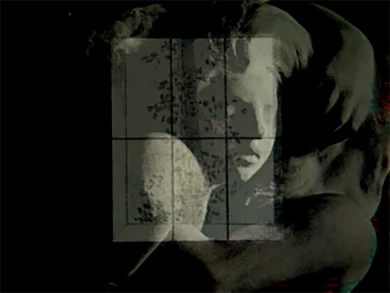
Godard and Miéville: Time and Ruin
Friday, 18 September 2026 - 7pm
Inside the framework of the conference On Your Screen: Art History and the Museum Facing the Audiovisual Challenge, this film series sets forth three critical visions of the museum via three sessions featuring the works of John Berger, Jean-Luc Godard and Anne-Marie Miéville, Ariella Azoulay, Alan Resnais and Chris Marker, Kwate Nee-Owoo, and the premiere of short films by Isabel Coixet and La Vulcanizadora (Maria Rojas Arias and Andrés Jurado). In classical theory, the museum gives the world meaning; it contains fragments of the past, granting them a history, a narrative that explains preterite time and the present. Today, there is an implicit assumption that this function hides and legitimises forms of power, yet what if the museum, instead of explaining the world, multiplied it through radical ideas, silenced periods and repressed subjects? Such is the approach of the film-makers and artists in this film season.
In 1972 the writer John Berger opened the landmark television series Ways of Seeing with an iconoclastic gesture: slicing Sandro Botticelli’s painting Venus and Mars (1485) in London’s National Gallery. A transgressive act that recalls contemporary attacks on the museum by dissident youth and with which Berger, after revealing it was a reproduction, sought to ignite debate around the idea of an original artwork and a copy. In this, the hundredth anniversary of his birth, the first session pays homage to one of the great art writers of the twentieth century. Starting with a review of Berger’s audiovisual work by art historians Alberto López Cuenca and Modesta Di Paola, the series begins with the premiere of 100 Years and You Everywhere (2026), an unreleased short film by Isabel Coixet composed as a beautifully crafted letter to Berger, and continues with an analysis of fragments of Ways of Seeing in relation to the museum and contemporary art.
The second session screens two medium-length films by Jean-Luc Godard and Anne-Marie Miéville on time, ruin and museum. In The Old Place. Small Notes Regarding the Arts at Fall of 20th Century (1999), both film-makers consider what remains of that “old place”, the museum, at the close of a century of wars and totalitarianism, and ask whether it should be more of a legend or desire than a place. This same driving principle leads Godard to build his own imaginary museum in Reportage amateur (maquette expo) (2006), a rickety toy museum which, paradoxically, contains the great film-maker’s full power of thought on history and images.
Finally, the third session explores one of the major challenges of recent years: the decolonisation of the museum, the recognition of its link to imperialist discourses of power and the need to situate a new silenced or repressed subject at the centre of the Western narration of history. Under the title Museums and Restitution, it includes the film Undocumented. Unlearning Imperial Plunder (2019), by theorist Ariella Azoulay, Statues Also Die, by Alan Resnais and Chris Marker (1953), Kwate Nee-Owoo’s You Hide Me (1970) and the first screening of the short film Quinto verso, parte de Tonada (Fifth Verse, Part of Tonada), by La Vulcanizadora (Maria Rojas Arias and Andrés Jurado), filmed at the Museo de América in Madrid.
![Ariella Azoulay, Un-documented. Unlearning Imperial Plunder [Indocumentados. Desaprendiendo el saqueo imperial], 2019, película](https://recursos.museoreinasofia.es/styles/small_landscape/public/Actividades/5.diseminar-mundo.jpg.webp)
Museums and Restitution
Saturday, 19 September 2026 - 7pm
Centuries of plundering, decades of amnesia, years of living with unmitigated extractivist power… Does a museum, as we know it, have a raison d'être in a postcolonial society?
This session expounds the operations of the museum as a colonial machine, while putting forward ideas, in narration, for a more just, equal and inclusive institution of the future via society’s marginalised and minority voices. The session begins with the international premiere of Quinto verso, parte de Tonada (Fifth Verse, Part of Tonada), which presents a vision of the Quimbaya Collection (fifth and sixth centuries CE) from the Museo de América in Madrid. It is constructed with the voices and chants of Wayúu mourners and guides, not only as a way of reinstating the role of these gold idols — anthropomorphic figures of men and women used as vessels in ritual practices — but also to imagine that what must be exhibited is not the gold itself. It is the ritual’s own chant. In the classic film You Hide Me (1970), Ghanaian film-maker Kwate Nee-Owoo accesses the British Museum’s collection of African art, located in the building’s basement, to question the meaning behind a museum plundering and nullifying. A fine exercise of first-person institutional critique screened for the first time in Spain. Almost seventy years since Resnais and Marker made Statues Also Die (1953), a reflection on the aura-bearing value of the museum opposite the identity-based and cultural belonging of African art, theorist Ariella Azoulay films the same statues again at the Musée du Trocadéro (today the Musée du Quai Branly), which survive and wait to be reunited with their people. Azoulay, whose wholly original undertaking is a lesson to the museum of the future, connects the forced migration of these sculptures with the mass transit of people crossing borders artificially imposed by the same system that has plundered their culture.
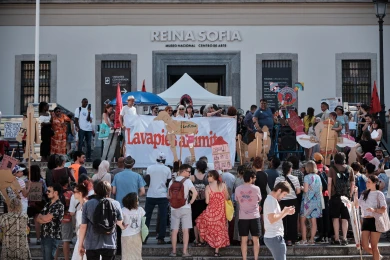
The School of Transformative Institutionalism and Local Organisation
From 21 to 24 September 2026
The School of Transformative Institutionalism and Local Organisation (S.T.I.L.O.) is a programme of joint learning and join strategy which sets in motion a process for the exchange of questions, methodologies and experiences between cultural organisations. The overall aim is to create, circulate and prototype tactics, tools and collective knowledge on institutional practices that open new channels for defending culture and advocating structural transformation in divergent geographical contexts.
The project is part of the Laboratorio de Institucionalidad Compartida (The Laboratory of Shared Institutionalism, LIC), a space for the Museo Reina Sofía’s research, work and advocacy centred on developing, experimenting with and systemising practices, protocols and tools which contribute to a fairer and more liveable cultural ecosystem.
For many years now, so-called infrastructural critique in museums questions material, legal and economic infrastructures, among others, as well as the forms of solidarity and practices required to sustain the cultural ecosystem. By approaching current debates, S.T.I.L.O. raises questions on the ways in which organisations define and interpret their practices, organise their relations and respond to the social contexts in which they operate.
The school gathers four cultural organisations that work via different institutional models – scale, contexts, conditions, different working models — with the goal of pooling common strategies and tools of organisation, advocacy and relationships with local communities.
The programme is conceived as a collaborative process with the participation of Arika, La Revuelta, BAK Basecamp and The Tentacular Museum (Museo Reina Sofía) and is structured around preparatory online sessions and an in-person seminar in Madrid.
S.T.I.L.O. is an activity framed inside the working strand of Situated Organisations from L'Internationale’s Museum of the Commons project, which reflects on the role of museums and art organisations as actors within complex social networks and ecosystems, with a view to exploring new ways to democratise institutions and make them more open, inclusive and useful.