-
Tuesday, 21 June 2022 Meeting point: Nouvel Building, Floor 1, Room 104.06 and Room 104.07
Session 1
Registration5pm and 7pm
Free Unions. Searching for a Place.
Activities on the CollectionFree Unions is a series of events, tours and activations in the rooms of Communicating Vessels. Collection 1881–2021, the new presentation of the Museo Reina Sofía Collection. This edition, under the title Searching for a Place, activates Room 104.06. Luis Camnitzer: Puerto Montt Massacre, 1969 and Room 104.07. A Map Is Not a Place. Via performers Teresa Ralli and Jorge Tadeo Baldeón, from Grupo Cultural Yuyachkani, active since 1971 in Peru, fragments of the collective’s artistic repertoire are set in relation to the memories formalised by other artists who have confronted similar political or social situations.
-
Wednesday, 22 June 2022 Nouvel Building, Auditorium 200 and online platform
Session 2
Tickets―Presenta Isabel de Naverán
17:00 - 18:00 h / Edificio Nouvel, Auditorio 200
Andres Cotter. Persistencia de la memoria
Perú, 1998, color, VO en español, AD, 61’ 40’’
Proyección audiovisualThe documentary Persistencia de la memoria (The Persistence of Memory) compiles interviews with Miguel Rubio Zapata and some of the Yuyachkani members, as well as archaeologists, critics and theatre specialists in Peru. There are also scenes from the performances Músicos Ambulantes, Encuentro de Zorros, Baladas del Bien-Estar, Son de los Diablos, Contraelviento, Adiós Ayacucho, Yuyachkani en Concierto, No Me Toquen Ese Valse, Hasta Cuándo Corazón, Retorno and Pasacalle, pieces that were presented by the group during their first twenty-five years of theatre work.
Directed by Andrés Cotter in 1997, the film narrates the group’s progression: from an ensemble of young students seeking to explore theatre to becoming an integral part of Peruvian society, a component which responds to problems in the country’s culture and politics. It also shows Yuyachkani’s relationship with the community and sharply illustrates the history of works and the theatre group.
6pm – 8pm / Nouvel Building, Auditorium 200 and online platform
Dancing with Archive
A conversation between Ruth Estévez and Teresa RalliThis conversation, centred on the Grupo Cultural Yuyachkani archive, reflects on the group’s journey in response to the political context they had to live through, in addition to some of their work and collaboration strategies with different social and cultural agents across the more than fifty years it has been running. Ruth Estévez, a researcher and curator, and, Teresa Ralli, the founder of Yuyachkani, debate and activate a series of images, documents and texts to extend the idea of archive as a living tool in progress, and not just as a repository of memory.
-
Friday, 24 June 2022 Nouvel Building, Protocol Room and online platform
Session 3
Tickets—Moderated by Elisa Fuenzalida
11:00 h
Action and Collection. For Theatre with a Decolonial Perspective
A conversation between Teresa Ralli and Rita SegatoThis encounter, which opens a dialogue between this year’s Chair programmes Expanded Theatricalities and Aníbal Quijano, puts forward a conversation between Teresa Ralli, the founder of Yuyachkani, and Rita Segato, an Argentinian anthropologist, feminist and the director of the latter Chair mentioned above.
-
Friday, 24 June 2022 Nouvel Building, Auditorium 200 and online platform
Session 4
Tickets―Presented by José Antonio Sánchez
5:30pm – 6pm / Nouvel Building, Auditorium 200
Miguel Rubio (director) and Ricardo Ayala (producer). Living Soul. So Memory Can Bloom
Peru, 2022, colour, original version in Spanish, DA, 14’ 29’’
Audiovisual screeningThe documentary Alma Viva (Living Soul) shows Grupo Cultural Yuyachkani’s work with the Truth and Reconciliation Commission in Peru, created to investigate the violence unleashed from terrorism and political instability between 1980 and 2000. On 8 April 2002, the Truth and Reconciliation Commission visited Huamanga for a public hearing, and then Huanta and Ayacucho. Yuyachkani presented Adiós Ayacucho (Goodbye Ayacucho), with Augusto Casafranca, and Rosa Cuchillo, with Ana Correa, as well as participating in public actions and vigils held in public spaces to pay homage to those who had disappeared. The video shows the inhabitants of these towns relating their experiences of violence to Yuyachkani members, and interviews with the group talking about their presentations and conversations with the public and the performance and testimony scenes. This documentary is an excellent resource for understanding Yuyachkani’s relationship with Peruvian audiences and the influence they have had on their work.
6pm – 8pm / Nouvel Building, Auditorium 200 and online platform
Yuyachkani and the Truth and Reconciliation Commission in Peru
A conversation between Teresa Ralli and Laura TejeroYuyachkani’s work with the Truth and Reconciliation Commission in Peru constitutes a fertile creative period for the group. In Peru, living in direct confrontation was unprecedented and with a level of violent polarisation without parallel in the twentieth century; widespread violence that started in the poorest areas of the country, spreading to most of its cities. Their experience also enables us to reflect on our own relationship to the recent past and the impunity of crimes with which we still live.
In this session, Teresa Ralli outlines her own experience and shares reflections on the way in which theatre, body and group practices serve to activate ways that contributed to thinking and situating oneself physically before the social and political conflicts that affected bodies’ way of relating. By the same token, Ralli offers a meditation on the way in which collaboration with the Truth and Reconciliation Commission irreversibly reshaped Yuyachkani’s artistic activity.
-
Wednesday, 22, Friday, 24 and Saturday, 25 June 2022 Nouvel Building, Auditoriums, Lobby
Representation and Crisis
Audiovisual material show
A selection of audiovisual material from different time periods and interventions in the career of Grupo Cultural Yuyachkani
The Expanded Theatricalities Chair
Yuyachkani (I Am Thinking, I Am Remembering), Memories in Action
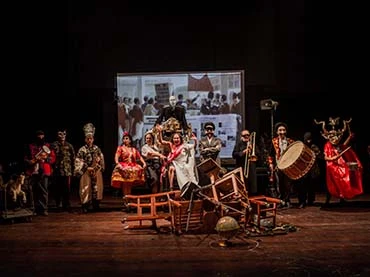
Held on 21, 22, 24, 25 Jun 2022
Curated by the research-creative group ARTEA, the Expanded Theatricalities Chair analyses the thought inhabiting stage and performance practices, encouraging the listening and dialogue that materialises between artistic practices and modes of social theatricality. The aim is to punctuate the political potency of theatre, choreography and action art, taking into consideration that which is inherent in all of them: the modes of collaborative production and the simultaneous presence of bodies, differentiated and individualised, turned into places that posit discourses, the manifestation of forms of dissidence and the emergence of desire as the driving force of life.
This second edition presents the artistic and political pathway taken by Grupo Cultural Yuyachkani, founded in Peru in 1971, and highlights some of the key moments in their long history to spark debates that remain present in Peruvian and Latin American cultural contexts, and in Spanish and European spheres. It gets under way with a performance action by Yuyachkani in the rooms of the Museo Reina Sofía Collection, framed inside the programme Free Unions, and continues with sessions focused on the archive of the group’s output across fifty years and on their work with the Truth and Reconciliation Commission from 1980 to 2000 in Peru. Equally, one of the sessions engages in dialogue with the programme of the Aníbal Quijano Chair in a week centred on decolonialism, hosting a conversation between Teresa Ralli, founder and member of Yuyachkani, and Rita Segato, an anthropologist, feminist and coordinator of the Chair. As usual, the Expanded Theatricalities Chair expands its engagement with the Museo by way of an encounter between guests and students from the MA in Performing Arts and Visual Culture.
The encounter also ties in with the research project The New Loss of Centre. Critical Practices of Live Arts and Architecture in the Anthropocene , developed by ARTEA since June 2020. The project focuses on the study of theatricalities inside the framework of environmental humanities, a transdisciplinary research field which looks to bridge the gap between science and the humanities, under the assumption that human-related aspects are related to just one more agent among others that shape the environment. Other public activities stemming from study groups were also linked to this research project previously, for instance Body, Territory and Conflict (Museo Reina Sofía, 2020–2021) and Conjugating Worlds: Multi-Species Corporealities (Museo Reina Sofía, 2022) both coordinated by Fernando Quesada, a member of the collective and academic director of the project.
[dropdown]
Ruth Estévez is a curator and writer. She holds an MA in Art History from the National Autonomous University of Mexico (UNAM). Her curatorial approach draws influences from her interest in the historical relationship between theatre and the visual arts, and in 2010 she founded LIGA, Space for Architecture, a non-profit platform focused on experimentation with architecture, urbanism and public art. From 2007 to 2012, she organised a project devoted to unexplored political theatre works by León Ferrari, and she was also head curator of Museo Carrillo Gil in Mexico City. She later went on to become director and curator of REDCAT/CalArts in Los Angeles and senior curator at The Rose Art Museum in Boston (2017–2020), as well as the organiser of Idiorhythmias, a performance, music, poetry and text programme in Museu d’Art Contemporani de Barcelona (2018–2020). She is the director and head curator at Amant, in Brooklyn, New York, and was among the curators at the 34th Biennial of São Paolo in 2021.
Elisa Fuenzalida is a Peruvian researcher, writer and activist with an MA in Advanced Studies in Social and Cultural Anthropology from the Complutense University of Madrid. Her career as a researcher focuses on developing critical methodologies applied to gender, race and territory, and she worked as a carer for children and the elderly in Spain during the COVID-19 health crisis. She collaborates in the Aníbal Quijano Chair, curated by Rita Segato, in the Museo Reina Sofía, and, in the Study Centre, she is currently conducting a research residency entitled Las flores huelen, los otros duelen (The Aroma of Flowers, the Pain of Others) with artist Javier Vargas.
Isabel de Naverán holds a PhD in Fine Arts from the University of the Basque Country and is an independent researcher. She is part of the research group ARTEA, with her studies exploring the crossroads between art, contemporary choreography and performance in curatorial, publishing and writing projects. In 2010, she founded, with Beatriz Cavia, Miren Jaio and Leire Vergara, the project Bulegoa z/b — Office for Art and Knowledge, with which she was affiliated until 2018. She is the author of the books Envoltura, historia y síncope (Caniche, 2021) and Ritual de duelo (Consonni, 2022).
She is currently a live arts adviser in the Museo Reina Sofía’s Public Activities Department and an associate researcher at the Azkuna Zentroa Society and Contemporary Culture Centre in Bilbao.
Teresa Ralli is a founder and member of Grupo Cultural Yuyachkani, where she has co-directed La Primera Cena y Cambio de Hora (The First Supper and Clock Change), and works as an administrator and has overall responsibility for its archive and documentation. As an actress-artist, she participates in the conception and mise en scène of Yuyachkani’s collective shows and pedagogical events. She was honoured with the 2011 Lima Warmi Award from Lima City Hall in recognition of her cultural and teaching work, and for her contribution to the country’s standing and development, and, with Miguel Rubio, received the Senior Fellows distinction from the Hemispheric Institute of Performance and Politics at New York University (NYU). She was the organiser of the Theatre-Women Encounters held in the Casa de Yuyachkani over a ten-year period. Moreover, she holds a baccalaureate in Communications and a degree in Performing Arts from the Pontificia Universidad Católica del Perú, where she has lectured since 1998, primarily exploring the body and the voice on her courses.
José Antonio Sánchez is a lecturer in the Faculty of Fine Arts at the University of Castilla-La Mancha (UCLM) in Cuenca and founder of the research group ARTEA and the MA in Performing Arts and Visual Culture at UCLM and the Museo Reina Sofía. His publications most notably include Brecht y el expresionismo (UCLM, 1992), La escena moderna (Akal, 1999), Prácticas de lo real (Visor, 2007) and Cuerpos ajenos (La uÑa RoTa, 2017). He has coordinated different events around creation and thought, for instance Situaciones (1999-2002), Jerusalem Show (2011) and No hay más poesía que la acción (2013). Furthermore, he co-directed, with Juan Ernesto Díaz and Ruth Estévez, the stage version of Palabras ajenas (The Words of Others, 2017–2018), by Argentinian artist León Ferrari.
Rita Segato is a professor of Anthropology and Bioethics in the UNESCO Chair at the University of Brasilia. She was an expert witness on the trials of the Sepur Zarco case in Guatemala, where sexual violence was first tried and prosecuted, in the form of domestic and sexual slavery, as a war strategy used by the State. Her main fields of interest include new forms of violence against women and the contemporary consequences of the coloniality of power. Her most important works include: La Nación y sus Otros: raza, etnicidad y diversidad religiosa en tiempos de políticas de la identidad (Prometeo Libros, 2007) and La crítica de la colonialidad en ocho ensayos y una antropología por demanda (Prometeo Libros, 2015).
Jorge Tadeo Baldeón is an artist who lives between Berlin and Lima. He has been involved with Grupo Cultural Yuyachkani since the 1990s via pedagogical experiences with different communities and theatre productions in which he has participated through visual and performing arts. His practices are linked to different interdisciplinary platforms and art collectives that reflect critically on local and global environments from a non-hegemonic, anti-colonial and feminist perspective. Since 2007, he has been co-founder and co-director of the elgalpon.espacio association in Lima.
Laura Tejero Tabernero is a sociologist who holds a PhD in Social Anthropology from the Complutense University of Madid. Her research field centres on victimisation policies in Peru after the Truth and Reconciliation Commission. She is an expert in the executive management of not-for-profit organisations and has over ten years’ experience working in different organisations in the third sector. In 2013, she was awarded a Marie Curie research fellowship at the International Conflict Research Institute from Ulster University in Northern Ireland. She is the author of Nosotros, las víctimas. Violencia, justicia transicional y subjetividades políticas en el contexto peruano de recuperación posconflicto (Papeles del CEIC, International Journal on Collective Identity Research, 2014) and Del empoderamiento a la desilusión: los legados ambivalentes de la justicia transicional en el Perú (2015). She is currently associate professor in the Department of Social Anthropology at the Complutense University of Madrid and is in charge of Interpretation and Gender at Amnesty International.
[/dropdown]
Curated by
ARTEA
Organised by
Museo Reina Sofía
Programme
Inside the framework of
TIZ 4. Slumil K’ajxemk’op (Rebel Land)
Attendance Certificate
An attendance certificate will be issued to anyone who requests it via email at centrodeestudios@museoreinasofia.es, specifying in the subject line “Certificate”, by 20 June
Certificado de asistencia
Se emitirá un certificado de asistencia a aquellas personas que lo soliciten, mediante correo a centrodeestudios@museoreinasofia.es, especificando en el asunto “Certificado” antes del 20 de junio
Participants
Participants


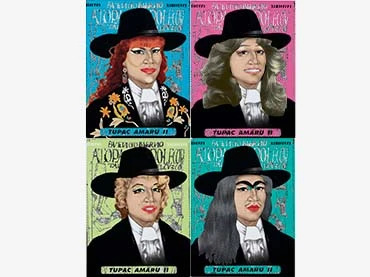
Más actividades
![Joseph Kosuth. One and Three Chairs [Una y tres sillas]](https://recursos.museoreinasofia.es/styles/small_landscape/public/Actividades/joseph_kosuth.jpg.webp)
The (legal) person and the legal form. Chapter III
Monday 11, Wednesday 13 and Thursday 14 May 2026
As part of the Studies Constellation, the Study Directoship’s annual fellowship, art historian and theorist Sven Lütticken leads the seminar The (Legal) Person and the Legal Form: Theoretical, Artistic, and Activist Commitments to foster dialogue and deepen the hypotheses and questions driving his research project.
The seminar consists of eight sessions, divided into three chapters throughout the academic year. While conceived as non-public spaces for discussion and collective work, these sessions complement, nourish, and amplify the public program of the Studies Constellation.
First session of the third chapter focuses on the transformation of the artwork in the context and wake of Conceptual art. The very notion of the artwork, together with its ownership and authenticity, is reconsidered from a broad perspective open to new and alternative models of management, which could ultimately transform the relationship between artist, artwork and owner. Can some of the practices in question serve as critical models? To what extent is it possible to think and act with them, and extrapolate from them, beyond a beautiful niche?
The second session turns to the question of representation. While many (but not all) human natural persons can, in principle, represent themselves in legal matters, other needs representatives. This goes for minors as well for adults who have been placed under legal guardianship; it applies to fictitious persons such as corporations and states, who need human representatives to sign contracts or defend them in court. We will look into the question of legal representation in conjunction with other forms of representation, in the cultural as well as political register—taking cues from Spivak’s distinction between portrait (Darstellung) and proxy (Vertretung), which is an unstable and historically mutable one.
The seminar concludes with a closing session dedicated to collectively revisiting and reflecting on the themes and discussions that have emerged throughout the first Studies Constellation Residency Program.
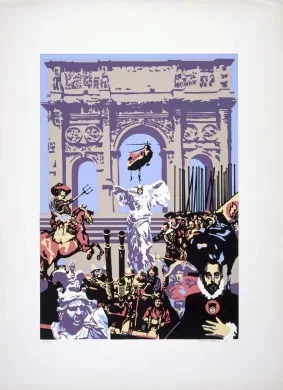
Patricia Falguières
Tuesday May 12th 2026 – 19:00 h
Art historian Patricia Falguières inaugurates the María Luisa Caturla Chairwith the lecture Art History in Dark Times. This Chair, dedicated to the reflection on art in times «sick with uncertainty», is aimed at dismounting, digressing and imagining multiple temporalities and materialities in art history and cultural studies from an eccentric gaze, in the sense of being displaced, off-centre or with a centre that is different.
The lecture’s title references Hannah Arendt’s collection of essays Men in Dark Times, which in turn paraphrases a Bertol Brecht poem. In it, Arendt asserts «dark times are not only not new, they are no rarity in history».
Patricia Falguières also claims history knows many periods when the public realm has been obscured, when the world becomes so uncertain that people cease to ask anything of politics except to relieve them of the burden of their vital interests and their private freedom. The art historian —whose expertise is in the field of Renaissance art and philosophy but paying close attention to contemporaneity— invites us to a «chaotic and adventurous journey», from the Italian Renaissance to Fukushima, through which to delve into the questions: What can the practice of art history mean today, in a world ablaze with ominous glimmers and even more ominous threats, if not as mere entertainment or social ornament? Of what vital interests, of what freedom can it bear witness and serve as an instrument?
![Tracey Rose, The Black Sun Black Star and Moon [La luna estrella negro y negro sol], 2014.](https://recursos.museoreinasofia.es/styles/small_landscape/public/Obra/AD07091_2.jpg.webp)
On Black Study: Towards a Black Poethics of Contamination
27, 28, 29 ABR 2026
The seminar On Black Study: Towards a Black Poethics of Contamination proposes Black Study as a critical and methodological practice that has emerged in and against racial capitalism, colonial modernity and institutional capture. Framed through what the invited researcher and practitioner Ishy Pryce-Parchment terms a Black poethics of contamination, the seminar considers what it might mean to think Blackness (and therefore Black Study) as contagious, diffuse and spreadable matter. To do so, it enacts a constellation of diasporic methodologies and black aesthetic practices that harbor “contamination” -ideas that travel through texts, geographies, bodies and histories- as a method and as a condition.
If Blackness enters Western modernity from the position of the Middle Passage and its afterlives, it also names a condition from which alternative modes of being, knowing and relating are continually forged. From within this errant boundarylessness, Black creative-intellectual practice unfolds as what might be called a history of touches: transmissions, residues and socialities that unsettle the fantasy of pure or self-contained knowledge.
Situated within Black radical aesthetics, Black feminist theory and diasporic poetics, the seminar traces a genealogy of Black Study not as an object of analysis but as methodological propositions that continue to shape contemporary aesthetic and political life. Against mastery as the horizon of study, the group shifts attention from what we know to how we know. It foregrounds creative Black methodological practices—fahima ife’s anindex (via Fred Moten), Katherine McKittrick’s expansive use of the footnote, citation as relational and loving labour, the aesthetics of Black miscellanea, and Christina Sharpe’s practices of annotation—as procedures that disorganise dominant regimes of knowledge. In this sense, Black Study is approached not as a discrete academic field but as a feel for knowing and knowledge: a constellation of insurgent practices—reading, gathering, listening, annotating, refusing, world-making—that operate both within and beyond the university.
The study sessions propose to experiment with form in order to embrace how ‘black people have always used interdisciplinary methodologies to explain, explore, and story the world.’ Through engagements with thinkers and practitioners such as Katherine McKittrick, C.L.R. James, Sylvia Wynter, Christina Sharpe, Fred Moten, Tina Campt, Hilton Als, John Akomfrah, fahima ife and Dionne Brand, we ask: What might it mean to study together, incompletely and without recourse to individuation? How might aesthetic practice function as a poethical intervention in the ongoing work of what Sylvia Wynter calls the practice of doing humanness?
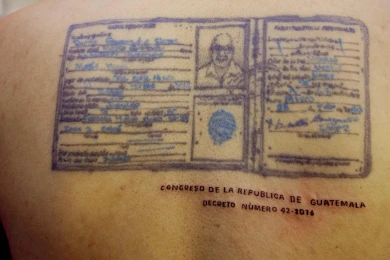
Mediations of the Archive: Art, Community, and Political Action
Tuesday 7, and Thursday 23, April, 2026 – 17:00 h
The online seminar Archival Mediations: Art, Community, and Political Action, curated by Sofía Villena Araya, examines the role of archival practices in caring for, dignifying, and activating memory in Central America. As part of the Cáder Institute for Central American Art’s first line of research, driven by the question “What Art Histories does Central America produce?”, this seminar proposes an approach to the archive as a mediator that articulates relationships between art, community, and political action, while engaging with the historiographical questions raised by their intersections.
Although the proposal is not limited to discussions of the Central American isthmus, it is framed by the particular conditions under which memory has been constructed in the region. Central America is a territory vulnerable to natural and geological disasters, marked by political violence exercised by authoritarian states and fragile institutions, a persistent colonial and imperial legacy, and the social fragmentation resulting from these factors. It is also a context in which the archive does not necessarily refer to a specific place —such as a building or documentary collection— nor does it primarily follow the protocols of a discipline such as archival science. Rather, the seminar explores how the archive operates, through art, as a dispositif that forges connections, generates forms of belonging, and opens spaces for political action.
The encounter unfolds across two sessions: the first focuses on archival practices addressing questions of memory, violence, and war; the second examines community-based practices surrounding queer and sex-dissident archives. In the face of the systematic destruction of memory, the archival practices discussed in these sessions demonstrate how the archive emerges in other spaces and according to different logics. Within this framework, the proposed space for exchange and research explores the role of art as a productive medium for constructing archives through images, affects, intimacy, performativity, the body, orality, and fiction, as well as through other materialities that challenge the centrality of the document and of writing.
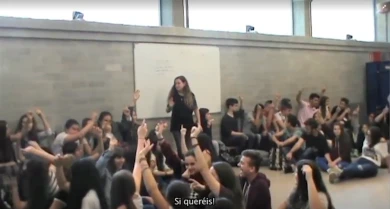
Intergenerationality
Thursday, 9 April 2026 – 5:30pm
This series is organised by equipoMotor, a group of teenagers, young people and older people who have participated in the Museo Reina Sofía’s previous community education projects, and is structured around four themed blocks that pivot on the monstrous.
The third session gazes at film as a place from which to dismantle the idea of one sole history and one sole time. From a decolonial and queer perspective, it explores films which break the straight line of past-present-future, which mix memories, slow progress and leave space for rhythms which customarily make no room for official accounts. Here the images open cracks through which bodies, voices and affects appear, disrupting archive and questioning who narrates, and from where and for whom. The proposal is at once simple and ambitious: use film to imagine other modes of remembering, belonging and projecting futures we have not yet been able to live.