Held on 20 Oct 2020
I tear
the throat
they plunged
into my body
Lupe Gómez, Disobedience, 1995
The Museo Reina Sofía presents the second edition of ESTUDIO, an annual programme which brings together work in a range of formats — stage pieces, performance lectures, readings, conversations — and is the outcome of research conducted by a series of artists and researchers whose practices are tied, either directly or dialogically, to the sphere of choreography and performance.
Revolving around themes on the capacity to speak and utter, the violence involved in speaking up, the use and questioning of one’s own voice or the voice of others, feigned or simulated, when it flutters in the undetermined limit between the consideration of truth or lie, this edition of ESTUDIO looks to imagine new forms of listening and recognition. It stops before the perception of voices and sounds — seemingly non-human, produced from a human body — yielding to the attempt to leave oneself — leave verb and language, break the asymmetry between form and content — to search for a mental, vital rhythm, an enduring and shared exhalation.
Over the course of an afternoon and evening, the research of four artists whose work is linked to voice will be presented, prompting an immersive journey through the limits where the word emerges, something half said or unsaid. Delving into a medium from the imperceptible howl of a brief spasm, a sound that coaxes and slows to become song, to become a wail, the physical stirring of phonemes, gestures akin to a sole animal, an over-linguistic effort, to live our relationships from uncertainty and vibration.
In a cumulus of intensities, the journey is set out inside three spaces in the Museo: one of the rooms of the Collection in the historical Sabatini Building, the former site of San Carlos Hospital, founded in the eighteenth century; the Garden; and the Protocol Room, in the contemporary Nouvel Building. The programme is concluded with a preliminary session in the form of conversations with the participating artists, bringing these essays closer to their areas of study.
PROGRAMME
Tuesday, 20 October 2020 / From 10am to 2pm
Nouvel Building, Protocol Room
ESTUDIO in conversation
An encounter that seeks to bring the public in touch with different performance proposals, before they take place, by approaching fields of research that explore the array of projects presented. Thus, it puts forward a common space of learning in the form of a colloquium with speakers associated with the artists participating in the second edition of ESTUDIO. Approached around four conversations, it opens up reflections, formulates questions and shares references to detect and reveal common interests, connections and potential. In short, a journey through the limits where the word emerges.
Thursday, 22 October 2020 / From 5pm to 9pm
Session 1 / Nouvel Building, Protocol Room
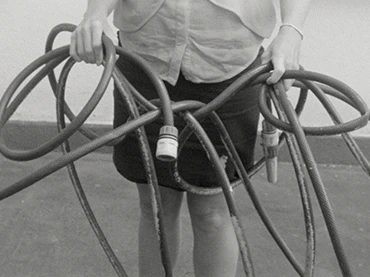
The Breeze Carries Lies. Niño de Elche
Lenght: 40’
[dropdown]
The breeze carries lies,
And let he who says he doesn’t lie
Tell you he doesn’t breathe
(Spanish folk song)
Heavy flamenco song, long song, song that belongs to someone, stolen voice, afillá (hoarse) voice, the voice this way, a gruff squawk, voice in song, voice of argument, ideal voice, the flamenco song written with spelling mistakes, personal song? The monkey sings from memory, song by right, oral voice, one’s own voice? Imaginary voice or voice of the mad, noisy voice, voice painted, strip back the voice, irate voice, legitimate voice, spiritual voice, voice of yarn, bastard song, regulated song, gifted song, ghostly song, spectral voice, voice of rubbish or voice of truth, sing another tune, common voice? Song of fire, physical voice, bloodied voice, spatial voice, deliberated voice, reflective voice, song of boy or girl, speechless voice, singular voice? Sing with no mouth, truthfully lying voice.
Niño de Elche
There is a lie attributed to forms of art-making, practices from which, paradoxically, a kind of purity or authenticity is demanded. The voice, in its materiality, takes on a channelling of this complexity, showing the being that it is blurred, shaped by impurities, haziness. But maybe it is these textures — those that show the fumbles of speech and thought — that make a being alive and changeable. The Breeze Carries Lies is an experimentation which, as in all experimental processes, is in progress and attempts to speak to us of the voice or voices as body, space and hope. Denying the veracity of the voice is to broaden its conception and thus be able to displace us towards places that encourage us to continue observing the quantity of linguistic, sound, conceptual, spatial and communicative possibilities it offers. Here it is about understanding the lie not as harmful per se, but as something that can grant us the constant possibility of discovering new paths from which to rethink our new forms of social, cultural and political relations.
Session 2 / Sabatini Building, Room 102
Tutuguri. Flora Détraz
Length: 25’
[dropdown]
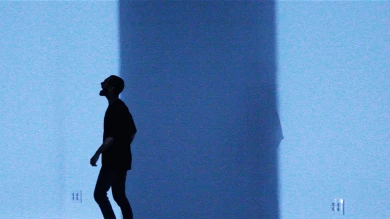
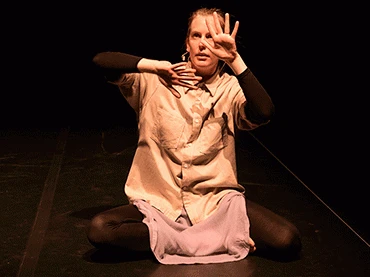
Produced at the crossroads between the vocal cords and physical movement of the body, in an exercise to “listen” how a dance sounds, Tutuguri is a polyphonic performance that takes its title from Tutuguri. The Rite of the Black Sun (1936), the well-known poem by Antonin Artaud.
Tutuguri explores the asynchronism between movements and sounds, in a perpetual conflict of opposites where the body of the person dancing is inhabited by whispers, animal grunts, child noises, strange sounds, conversations, song, and abdominal sounds that transport us to a spectral landscape of voices, sketching a state of connection between sound flows and affection.
Session 3 / Sabatini Building, Garden
Souffle(s)! [Delusions of (a) Garden]. Loreto Martínez Troncoso
Length: 35’
[dropdown]
Martínez Troncoso responds to the invitation to continue exploring the relationships between action and language, between orality and body gestures, with a proposal conceived for this edition of ESTUDIO, upon which she reflects with the following words:
(And the formulation of these words does not come easily, similar to having a lump in your throat).
I recall a few years back the silence that settled in my throat as I became open-mouthed1… silence from dryness? Today this silence settles through a closed mouth, a full mouth. In a closed mouth no air can get in and, on a du mal à respirer! The nares still remain. What would my nares say if they could speak?
(so much time for so few words to be formulated, although words are not that much because there are many words here inside, but the tension or attention of how one feels at the time… [delirium of a garden])
— …ma bouche est un creux, a garden, a hole, an inside and outside, an over- and underground, land or a den to clear, oxygenate, caress.
(I imagine this coming 22 October with wind, touching and caressing our skin...)
With souffle I entitle or call — perhaps it is a calling — this moment, which in Spanish means: breath, breathing, blowing, wind… and with the exclamation mark of its verb souffler: Blow! Breathe Out! Huff! Puff! Growl! Snort! Breathe! Breathe in! Take a breath! Push! Fly! Fly away!
1Avoir le souffle coupé, literal translation: to be short of breath.
Session 4 / Sabatini Building, Room 102
Speak to Me, Body. Nazario Díaz
Length: 50’
[dropdown]
I propose an act of resistance by tying aspects such as the phonetic transformation of my vocal flow, the notion of circularity or the idea of purging through perseverance, placing my body in collision with language and a certain will for geographical and identity oscillation.
Nazario Díaz
Speak to Me, Body is part of Looking for Pepe, a study that started in 2016 and sets out from the figure of Córdoba artist Pepe Espaliú (1955–1993), unfurling a series of investigations around the body, language and territory.
The work takes its title from the text Juan Vicente Aliaga wrote in conjunction with the exhibition held in Pabellón Mudéjar in Seville in homage to Espaliú in 1994, a year after his death from AIDS-related complications. The interest in how Espaliú developed links between his work and his circumstances, marked by illness, at a social and political period undergoing a major transformation, inspires a work linked to the subject matter that mutates or disappears, and the idea of the erosion and restraint of a body understood as physical and social existence.
Looking for Pepe opens out from the mutual involvement of Jorge Gallardo, Jesús Alcaide, Cuqui Jerez, María Jerez, Isaak Erdoiza and Ion Munduate; and Speak to Me, Body has gestated as research inside the framework of the 2016/2017 MA in Performing Arts and Visual Culture and was premiered on 29 November 2018 in Elipsiak, a series curated by Isabel de Naverán for Azkuna Zentroa, Bilbao.
Force line
Rethinking the museum
Curator
Isabel de Naverán
Organised by
Museo Reina Sofía
Sponsorship

Admission:
Conversations: sold out
Performances: sold out
Punctuality is required given that entry will not be allowed once the first performance is under way. Doors open at 4:30pm
Duration:
Conversations: 4 hours
Performances: 3 hours and 45 minutes
Participants
Niño de Elche (Elche, 1985) is an “inter-disciplinary” artist whose broad-ranging work synthesises strands of genres such as flamenco, rock, contemporary music, freeform improvisation, electronic music, poetry, visual arts and performance. At this intersection of forms and language notably stands his project Vaconbacon, cantar las fuerzas (2011), drawing from the painter Francis Bacon, with the collective Bulos y Tanguerías, and his albums Voces del Extremo (voted best album of 2015 by music critics), Antología del Cante Flamenco Heterodoxo (2018), Colombiana (2019) and albums in collaboration with Toundra (Exquirla) and Los Planetas (Fuerza nueva). Also of note are his diverse performances at the Sónar Festival, with Los Voluble and Israel Galván, and collaborations with performing artists that include Angélica Liddell, Juan Carlos Lérida, Belén Maya and María Muñoz, to name but a few. Moreover, he has published two books, No comparto los postres (2016) and Morbo legítimo (2019), both published by Bandaàparte Editores. In 2019 he was awarded the Inédit Festival Prize for the best Spanish documentary with Niños somos todos (Inner Kids), and he is currently finishing his work based on research into the sonic legacy of Val del Omar with a sound installation entitled Invisible Auto Sacramental. A Sonic Representation from Val del Omar in the Museo Reina Sofía, and his latest record La distancia entre el barro y la electrónica. Siete diferencias valderomarianas, produced by Miguel Álvarez-Fernández.
Flora Détraz (Paris, 1988) is a choreographer and performer who initially trained in classical Ballet and Literature. She studied with Maguy Marin in the National Choreographic Centre of Lyon and completed her training with the Choreographic Study, Research and Creation Programme (PEPCC) at Forum Dança, Lisbon. As a choreographer and performer, she worked with Marlene Monteiro Freitas on the piece Bacantes-Prelude to a Purge (2019). Furthermore, she has worked or studied with artists such as Vera Mantero, Lia Rodrigues, Meredith Monk, Loïc Touzé, Meg Stuart and Jonathan Burrows, all of whom have had some influence on her way of working and her current concerns. Since 2013 she has developed her own research around the relationships between the voice and movement, culminating in pieces like Peuplements (2013), Tutuguri (2016) and Muyte Maker (2018). Her forthcoming creation, Glottis, will be presented in November 2020 at the lkantara Festival in Lisbon, and, subsequently at the December Dance Festival in Bruges.
Loreto Martínez Troncoso (Vigo, 1978) works primarily with writing as her subject matter, the word (the act of saying), its tempo, rhythm, (its) silence… taking on the form of publicly “speaking up”, sound pieces, written texts and also interventions in and with spaces. In addition to collaborations with different artists, her work has slowly but surely opened out to other voices, the voices of others, particularly with Opereta A~Mar (2014) Entre[hu]ecos (2017) and El eco de tu voz - l'écho de ta voix (2018). In recent years we have been able to experi-mention her “writings” in her exhibition in CGAC (Santiago de Compostela, 2019); her exhalations and song in Chambre n°53, (soupervues, Vaison-la-Romaine, 2018); her sighs and éclats in “Mutaciones: Vidas secretas” (Museo Picasso, Buitrago del Lozoya, 2018); her words and non-words in Ah ha! (PAN! – Privé/Public, IF, Limoges, 2017) and Et la terre tourne, (Parades for FIAC, Paris, 2016); her respirations/expirations in Por dónde comenzar, si est-ce qu’il y a un commencement quelconque (Galería PM8, Vigo, 2017), and her silence in El aire que yo respiro es el aire que tú respiras (Parc Saint Léger, Pougues-les-Eaux, 2016).
Nazario Díaz (Linares, Jaén, 1985) develops his work primarily in the field of performing arts, focusing on the concepts of the body, the gaze and writing. He is part of the collective Vértebro, with Juan Diego Calzada and Ángela López, with whom he curated the festival Beautiful Movers in Córdoba. His experience of the MA in Performing Arts and Visual Culture at the University of Castilla-La Mancha, ARTEA and the Museo Reina Sofía has lent him a critical context in which to develop his project Looking for Pepe, which brings together past interests around two main concepts: presence and resistance. As a performer he has worked with, among others, Jorge Gallardo, Isaak Erdoiza and Societat Doctor Alonso. Since the end of 2018, he has lived in Bilbao, where he participates in two collective contexts of learning: PICA, an intensive programme of support for a temporary community of artists and researchers, held in Azala (Vitoria-Gasteiz) and run by Idoia Zabaleta and Luciana Chieregati, and the programme Invitación, a proposal by Coletivo Qualquer to investigate and exchange methodologies and tools from the sphere of live arts. At the present time, he is working on Otro borrado a través de la insistencia, as a solo work, and Conversation pieces, with Basque choreographer Isaak Erdoiza.


Más actividades
![Isabel Coixet, 100 Years and You Everywhere [100 años y tú en todos los sitios], 2026, película](https://recursos.museoreinasofia.es/styles/small_landscape/public/Actividades/2.diseminar-mundo.jpg.webp)
John Berger and Isabel Coixet. Continued Ways of Seeing
Thursday, 17 September 2026 at 7pm
Ways of Seeing (1972) is one of the most revolutionary television series on art history, the museum and contemporary critical culture. Across four episodes, an articulate, enthusiastic John Berger unpacks the relationships between classical art through the gaze and new technology, the nude and feminism, the oil painting and commodity fetichism, advertising and consumerism. In essence, a level of critical commitment only comparable to its capacity for dissemination. Unsurprisingly, the series, and the book that would distil it, continues to forge vocations. This session sees art historians Alberto López Cuenca and Modesta Di Paola carry out an analysis of Berger’s audiovisual work, placing the stress on episodes one and four of the series. In the first episode, Berger reflects on the connection between the act of seeing, looking and being in light of new technology, such as the film camera. At the same time, it analyses how the culture of reproduction is turning paintings into messages or fragments of communication while stressing the importance of silence when observing historical paintings. In the fourth and final episode, he introduces advertising as a new iconic-verbal language that shares certain principles with the message of oil painting as a luxury item.
The session opens with the premiere of a filmic letter from Isabel Coixet, one of Spain’s most internationally acclaimed directors, to John Berger, with whom she maintained a long friendship and deep admiration. The short film is testament to the ubiquitous and long-lasting presence of the author of Ways of Seeing, even after his death in 2017.
![Chantal Akerman, Woman Sitting after Killing [Mujer sentada después de matar], 2001, instalación. Museo Reina Sofía](https://recursos.museoreinasofia.es/styles/small_landscape/public/Actividades/chantal-akerman-mujer-sentada-despues-matar.jpg.webp)
On Your Screen: Art History and the Museum Facing the Audiovisual Challenge
18, 19 SEP 2026
The conference On Your Screen: Art History and the Museum Facing the Audiovisual Challenge sparks debate around the transformations of art history and museum space upon embracing the audiovisual format. Its starting point is John Berger’s emblematic television series Ways of Seeing (1972), a landmark in the democratisation of art-historical discourse. In the series, Berger illustrated how the transfer of a work such as Goya’s Los fusilamientos del 3 de mayo (The Third of May 1808 or the Executions) from museum gallery to home TV screen completely changed the viewer’s experience, allowing the image to travel to straight to the viewer.
In the twenty-first century, this screen-based ecosystem has expanded exponentially, with museums not only physically integrating screenings and devices into their galleries— following in the wake of many exhibitions on the moving image — but also deploying complex virtual strategies. Equally, numerous en vez de a multitudeof historians, students and creators use digital platforms to circulate their ideas and projects. This audiovisual shift opens access to ignored materials and democratises knowledge, as well as challenging traditional hierarchies and the interpretive authority of institutions. The conference, promoted by the research project ATLAS AV: The Audiovisualisation of Art History and the Museum, seeks to analyse this vast audiovisual material, its archives, and its capacity to transform the memory of art.
Godard and Miéville: Time and Ruin
Friday, 18 September 2026 - 7pm
Inside the framework of the conference On Your Screen: Art History and the Museum Facing the Audiovisual Challenge, this film series sets forth three critical visions of the museum via three sessions featuring the works of John Berger, Jean-Luc Godard and Anne-Marie Miéville, Ariella Azoulay, Alan Resnais and Chris Marker, Kwate Nee-Owoo, and the premiere of short films by Isabel Coixet and La Vulcanizadora (Maria Rojas Arias and Andrés Jurado). In classical theory, the museum gives the world meaning; it contains fragments of the past, granting them a history, a narrative that explains preterite time and the present. Today, there is an implicit assumption that this function hides and legitimises forms of power, yet what if the museum, instead of explaining the world, multiplied it through radical ideas, silenced periods and repressed subjects? Such is the approach of the film-makers and artists in this film season.
In 1972 the writer John Berger opened the landmark television series Ways of Seeing with an iconoclastic gesture: slicing Sandro Botticelli’s painting Venus and Mars (1485) in London’s National Gallery. A transgressive act that recalls contemporary attacks on the museum by dissident youth and with which Berger, after revealing it was a reproduction, sought to ignite debate around the idea of an original artwork and a copy. In this, the hundredth anniversary of his birth, the first session pays homage to one of the great art writers of the twentieth century. Starting with a review of Berger’s audiovisual work by art historians Alberto López Cuenca and Modesta Di Paola, the series begins with the premiere of 100 Years and You Everywhere (2026), an unreleased short film by Isabel Coixet composed as a beautifully crafted letter to Berger, and continues with an analysis of fragments of Ways of Seeing in relation to the museum and contemporary art.
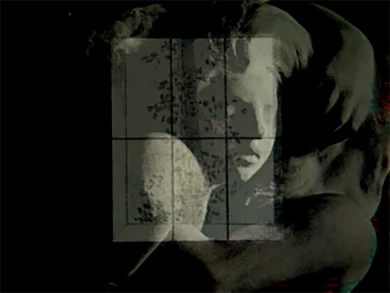
The second session screens two medium-length films by Jean-Luc Godard and Anne-Marie Miéville on time, ruin and museum. In The Old Place. Small Notes Regarding the Arts at Fall of 20th Century (1999), both film-makers consider what remains of that “old place”, the museum, at the close of a century of wars and totalitarianism, and ask whether it should be more of a legend or desire than a place. This same driving principle leads Godard to build his own imaginary museum in Reportage amateur (maquette expo) (2006), a rickety toy museum which, paradoxically, contains the great film-maker’s full power of thought on history and images.
Finally, the third session explores one of the major challenges of recent years: the decolonisation of the museum, the recognition of its link to imperialist discourses of power and the need to situate a new silenced or repressed subject at the centre of the Western narration of history. Under the title Museums and Restitution, it includes the film Undocumented. Unlearning Imperial Plunder (2019), by theorist Ariella Azoulay, Statues Also Die, by Alan Resnais and Chris Marker (1953), Kwate Nee-Owoo’s You Hide Me (1970) and the first screening of the short film Quinto verso, parte de Tonada (Fifth Verse, Part of Tonada), by La Vulcanizadora (Maria Rojas Arias and Andrés Jurado), filmed at the Museo de América in Madrid.
![Ariella Azoulay, Un-documented. Unlearning Imperial Plunder [Indocumentados. Desaprendiendo el saqueo imperial], 2019, película](https://recursos.museoreinasofia.es/styles/small_landscape/public/Actividades/5.diseminar-mundo.jpg.webp)
Museums and Restitution
Saturday, 19 September 2026 - 7pm
Centuries of plundering, decades of amnesia, years of living with unmitigated extractivist power… Does a museum, as we know it, have a raison d'être in a postcolonial society?
This session expounds the operations of the museum as a colonial machine, while putting forward ideas, in narration, for a more just, equal and inclusive institution of the future via society’s marginalised and minority voices. The session begins with the international premiere of Quinto verso, parte de Tonada (Fifth Verse, Part of Tonada), which presents a vision of the Quimbaya Collection (fifth and sixth centuries CE) from the Museo de América in Madrid. It is constructed with the voices and chants of Wayúu mourners and guides, not only as a way of reinstating the role of these gold idols — anthropomorphic figures of men and women used as vessels in ritual practices — but also to imagine that what must be exhibited is not the gold itself. It is the ritual’s own chant. In the classic film You Hide Me (1970), Ghanaian film-maker Kwate Nee-Owoo accesses the British Museum’s collection of African art, located in the building’s basement, to question the meaning behind a museum plundering and nullifying. A fine exercise of first-person institutional critique screened for the first time in Spain. Almost seventy years since Resnais and Marker made Statues Also Die (1953), a reflection on the aura-bearing value of the museum opposite the identity-based and cultural belonging of African art, theorist Ariella Azoulay films the same statues again at the Musée du Trocadéro (today the Musée du Quai Branly), which survive and wait to be reunited with their people. Azoulay, whose wholly original undertaking is a lesson to the museum of the future, connects the forced migration of these sculptures with the mass transit of people crossing borders artificially imposed by the same system that has plundered their culture.
The School of Transformative Institutionalism and Local Organisation
From 21 to 24 September 2026
The School of Transformative Institutionalism and Local Organisation (S.T.I.L.O.) is a programme of joint learning and join strategy which sets in motion a process for the exchange of questions, methodologies and experiences between cultural organisations. The overall aim is to create, circulate and prototype tactics, tools and collective knowledge on institutional practices that open new channels for defending culture and advocating structural transformation in divergent geographical contexts.
The project is part of the Laboratorio de Institucionalidad Compartida (The Laboratory of Shared Institutionalism, LIC), a space for the Museo Reina Sofía’s research, work and advocacy centred on developing, experimenting with and systemising practices, protocols and tools which contribute to a fairer and more liveable cultural ecosystem.
For many years now, so-called infrastructural critique in museums questions material, legal and economic infrastructures, among others, as well as the forms of solidarity and practices required to sustain the cultural ecosystem. By approaching current debates, S.T.I.L.O. raises questions on the ways in which organisations define and interpret their practices, organise their relations and respond to the social contexts in which they operate.
The school gathers four cultural organisations that work via different institutional models – scale, contexts, conditions, different working models — with the goal of pooling common strategies and tools of organisation, advocacy and relationships with local communities.
The programme is conceived as a collaborative process with the participation of Arika, La Revuelta, BAK Basecamp and The Tentacular Museum (Museo Reina Sofía) and is structured around preparatory online sessions and an in-person seminar in Madrid.
S.T.I.L.O. is an activity framed inside the working strand of Situated Organisations from L'Internationale’s Museum of the Commons project, which reflects on the role of museums and art organisations as actors within complex social networks and ecosystems, with a view to exploring new ways to democratise institutions and make them more open, inclusive and useful.