LANDSCAPE TRANCE. THE FILMS OF OLIVER LAXE
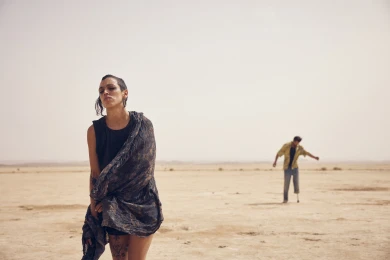
Oliver Laxe, Sirāt , 2025, película
Over this coming month of February, the Museo organises a complete retrospective on the filmography of Oliver Laxe. The series converses with the work HU/هُوَ. Dance as if no one were watching you, an installation by the Sirāt director conceived specifically for the Museo Reina Sofía’s Espacio 1, and includes the four feature-length films Laxe has made to date, as well as his short films and a four-session carte blanche programme, in which he will select works that chime with his films and creative concerns.
Oliver Laxe’s gaze is one of the most unique in the contemporary film landscape, his film-making a resilient, spiritual and transcultural space imbued with a cultural and social nomadism that reflects his life and beliefs and which, fundamentally, puts forward an anti-materialist ethic to deal with our times. His filmography, characterised by profound spirituality, a time of contemplation and a close connection to nature and the sacred, approaches universal themes such as redemption and the meaning of existence via stories that extend across remote, rural and timeless landscapes, and with atmospheres that draw on western and police film genres. His protagonists, largely amateur actors, cross through physical territories while travelling on inner journeys consumed by guilt, the desire for community reintegration and the realisation of an end goal they ignore. Nature, particularly desert and landscape, is another character, a living, pantheistic presence that conditions and reflects human conflicts. Stretched-out time, a focus on sensory experience and allusions to ancient religion situate us in a meditative conception of film which seeks to be a manifesto to re-enchant the world.
Within the series, the carte blanche sessions see the film-maker choose four films which map his obsessions: Sergei Dvortsevoy’s Highway (1999), which crosses the plains of Kazakhstan via a small travelling circus; Artavazd Peleshyan’s film The Seasons (1975), an ode to the passing of time through landscape; Trás-os-Montes (1976), an ethnographic work of fiction, made by Antònio Reis and Margarida Cordeiro, spotlighting a Portuguese farming community and their rituals and purity of life; and Kaneto Shindo’s The Naked Island, which shows a family of four’s daily struggle in a natural paradise.
Organised by
Museo Reina Sofía
Accessible activity
The activity has two spaces reserved for people with reduced mobility
Agenda
jueves 05 feb 2026 a las 19:00
Session 1. Oliver Laxe. Sirāt. Trance en el desierto (Desert Trance)
Spain and France, 2025, DCP, colour, sound, original version in Spanish, 115’
As a father (Sergi López) and son (Bruno Núñez Arjona) search for Mar, their daughter and sister who has disappeared at a rave, they also imbibe a nomadic and alternative way of life which stems from partying and electronic music culture. A life devoid of material trappings and bourgeois codes, yet full and affective, enlivened by the community of ravers — non-actors playing themselves. In Arabic Sirāt means a bridge, the transit towards another state in which pain is part of the catharsis. Winner of the Jury Prize at Cannes and nominated for the Best International Feature Film and Best Sound Awards at the 2026 Oscars, the film draws as much from 1960s counterculture (Zabriskie Point) as genre film-making (Mad Max) to construct an essay on contemporary unease. The sublime and ominous desert photography of Mauro Herce and the techno soundtrack of Kanding Ray point to the construction of a mood state that transcends towards the physical and the sensorial.
viernes 06 feb 2026 a las 19:00
Session 2. Sergei Dvortsevoy. Highway
Kazakhstan and France, 1999, DCP, colour, sound, original version in Kazakh with Spanish subtitles, 53’
The first film in Oliver Laxe’s carte blanche sessions and one of the major thematic and iconic influences on Sirāt. Trance en el desierto, Highway throws into relief the life of a travelling-circus family during the Russian era. Eccentric lives are taken to extremes on a majestic plain split by a highway to nowhere and with a truck as a dwelling. A winner in the Un Certain Regard section at Cannes with Tulpan (2008), Sergei Dvortsevoy (Kazakhstan, 1962) is a key figure in the contemporary observational documentary, making the camera in his film-making an invisible element that allows the viewer to witness subjects and events of immense beauty, and an honesty that meets their gaze for the first time.
sábado 07 feb 2026 a las 19:00
Session 3. Oliver Laxe. Sirāt. Trance en el desierto (Desert Trance)
Spain and France, 2025, DCP, colour, sound, original version in Spanish, 115’
jueves 12 feb 2026 a las 19:30
Sesión 4
Oliver Laxe. Suena la trompeta, ahora veo otra cara (As the Trumpet Sounds I See Another Face)
Spain and Morocco, 2007, digital archive, colour, sound, without dialogue, 8’
Oliver Laxe. Mimosas
Spain and Morocco, 2016, DCP, colour, sound, original version in Arabic with Spanish subtitles, 98’
Oliver Laxe’s second feature-length film and winner of the Grand Prix at Cannes Critics’ Week. With a screenplay by Santiago Fillol, one of the film-maker’s regular collaborators, and shot entirely in Arabic in Morocco’s Atlas Mountains, Mimosas follows the journey of a caravan in realising the wish of its leader, an elderly sheikh, of arriving at the medieval city of Sijilmasa, the place he longs to reach to die and be buried there. In the middle of a fraught expedition, the leader dies and a young man with messianic and rash qualities takes on the mantle of transporting the body of the dead man. Mimosas is informed by the western genre, with a caravan’s final mission in the harshness of nature, and Sufi mysticism, with the search for transcendence as an objective, in a mysterious fable of duty and ethics. The session is opened by Laxe’s short film Suena la trompeta, ahora veo otra cara (As the Trumpet Sounds I See Another Face), a lyrical portrait, in 16mm, of male faces, some of which appear in Mimosas, presaging the fusion of landscape and subject from this film and tracing Laxe’s origins in the grammar of experimental film.
viernes 13 feb 2026 a las 18:30
Session 5. Artavazd Peleshian. The Seasons
Armenia, 1975, DCP, black and white, sound, original version in Armenian with Spanish subtitles, 30’
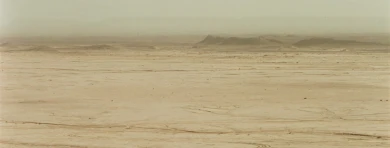
Oliver Laxe’s second carte blanche session. The Seasons is an elegy to the passage of time and to the adaptation of the most elementary human activities — livestock farming, agriculture, cookery — that is, to the changes and challenges that shape nature. With Vivaldi’s Four Seasons fusing with the ancestral sounds of these actions, Peleshian creates a lyrical fresco on the harmonious yet toiling existence of humans in the natural world. Shot in Armenia, The Seasons is also the film-maker’s ode to his countrymen, the Armenian people, in their effort to cling to life. Regarded as one of the most original figures in Soviet and world cinema, Artavazd Peleshian (1938–2023) was a film-maker known for his theories of montage and long-form poetic work.
viernes 13 feb 2026 a las 19:30
Session 6. Ben Rivers. The Sky Trembles and the Earth Is Afraid and the Two Eyes Are Not Brothers
Morocco and the UK, 2015, DCP, colour, sound, original version in Arabic, Berber, French and Spanish with Spanish subtitles
A film in two parts. The first is an exercise of cannibal film in which Ben Rivers makes a new film based on Mimosas and from the different beautiful and extreme situations entailed in shooting the film deep in the Atlas Mountains. The second is a fable on racial mixing and cultural colonisation, inspired by Paul Bowles’ A Distant Episode (1947), the source of this film’s title. In Bowles’ short story, a self-important European linguist travels to North Africa to study the local dialect and is captured by a Berber tribe and stripped of his identity, culminating in him losing his speech. In Rivers’ version it is Laxe who is trapped as the Western film-maker and altered in a dancing, paradoxical figure, with Rivers showing us Laxe’s interpretive qualities while speaking of the director’s living process to divest himself of Western rationalism.
sábado 14 feb 2026 a las 19:00
Session 7. (Second session)
Oliver Laxe. Suena la trompeta, ahora veo otra cara (As the Trumpet Sounds I See Another Face)
Spain and Morocco, 2007, digital archive, colour, sound, without dialogue, 8’
Oliver Laxe. Mimosas
Spain and Morocco, 2016, DCP, colour, sound, original version in Arabic with Spanish subtitles, 98’
jueves 19 feb 2026 a las 19:00
Session 8
Oliver Laxe. París #1
Spain, 2007, DCP, black and white, sound, original version in Spanish and Galician with Spanish subtitles, 35’
Oliver Laxe. O que arde (Fire Will Come)
Spain, France and Luxemburg, 2019, DCP, colour, sound, original version in Galician and Spanish with Spanish subtitles, 85’
Oliver Laxe exists in a contradictory space: on one side, an international film-maker; on the other, with a body of work that is inseparable from local discourse. This session explores the idea of the genius loci, understood in the sense of belonging and protecting a home. Born in Paris to Galician migrants, Laxe returns with his family to their place of origin, the Valle de los Ancares, a mountainous area shared between the Galicia, León and Asturias regions and the place the film-maker considers home. París #1, named as such because the French capital was the migratory destination of the locals, is a travel journal around the Ancares mountains that forms an impressionistic manifestation of O que arde (Fire Will Come). Winner of the Jury Prize within the Un Certain Regard section at Cannes and honoured with two Goya Awards in 2020 — Best Photography, for the work of Mauro Herce, and Best New Actress, for Benedicta Sánchez — O que arde is a rural drama on a convicted pyromaniac’s return to his village. Laxe grabs our attention here with how he incorporates the nature of the Ancares mountains, the peerless use of non-actors — such as Benedicta Sánchez — and the masterly use of psychology on the viewer.
viernes 20 feb 2026 a las 19:00
Session 9. Margarida Cordeiro and António Reis. Trás-Os-Montes
Portugal, 1976, DCP, colour, sound, original version in Portuguese with Spanish subtitles, 111’
Oliver Laxe’s third carte blanche session. Trás-os-Montes is a unique poetic film that explores the Trás-os-Montes region in north-east Portugal with a gaze situated between ethnography, fiction and myth. Shot from September to October 1974 and edited for almost a year, this feature film travels, with a contemplative camera, through the towns, landscapes and inhabitants of the region, an impoverished and remote land sculpted by emigration and rural depopulation. By way of the daily gestures of the elderly, women, children and shepherds, and legends, rituals and fragments of ancestral voices, the film composes a poem of the land, where past and present merge and geography becomes the bearer of memory and myth. Trás-os-Montes is a crowning work in world cinema, prompting a sensorial and reflective experience on the cycle of life and the passage of time.
sábado 21 feb 2026 a las 19:00
Session 10 (Second session)
Oliver Laxe. París #1
Spain, 2007, DCP, black and white, sound, original version in Spanish and Galician with Spanish subtitles, 35’
Oliver Laxe. O que arde (Fire Will Come)
Spain, France and Luxemburg, 2019, DCP, colour, sound, original version in Galician and Spanish with Spanish subtitles, 85’
Oliver Laxe exists in a contradictory space: on one side, an international film-maker; on the other, with a body of work that is inseparable from local discourse. This session explores the idea of the genius loci, understood in the sense of belonging and protecting a home. Born in Paris to Galician migrants, Laxe returns with his family to their place of origin, the Valle de los Ancares, a mountainous area shared between the Galicia, León and Asturias regions and the place the film-maker considers home. París #1, named as such because the French capital was the migratory destination of the locals, is a travel journal around the Ancares mountains that forms an impressionistic manifestation of O que arde (Fire Will Come). Winner of the Jury Prize within the Un Certain Regard section at Cannes and honoured with two Goya Awards in 2020 — Best Photography, for the work of Mauro Herce, and Best New Actress, for Benedicta Sánchez — O que arde is a rural drama on a convicted pyromaniac’s return to his village. Laxe grabs our attention here with how he incorporates the nature of the Ancares mountains, the peerless use of non-actors — such as Benedicta Sánchez — and the masterly use of psychology on the viewer.
jueves 26 feb 2026 a las 19:00
Session 11
Oliver Laxe and Enrique Aguilar. Y las chimeneas decidieron escaper (And the Chimneys Decided to Escape)
Spain, 2006, DCP, black and white, sound, without dialogue, 12’
Oliver Laxe. Todos vós sodes capitáns (You All Are Captains)
Spain, 2010, DCP, black and white, sound, original version in French with Spanish subtitles, 85’
This session presents the beginnings of the film-maker via one of his early short films and his first feature-length film, two pieces that work as sides of the same coin. Both show a desire to explore realities that differ from the lay and functional dogma of modernity. Y las chimeneas decidieron escaper (And the Chimneys Decided to Escape) is a short film on the machinic, dehumanising violence of the metropolis, made up of fragmented images, noise, vibrations and out-of-focus shots. On the flipside, Todos vós sodes capitáns (You All Are Captains) is film-making as a game of rebellion and learning through a film workshop in Tangiers with a group of Moroccan children. Through this fun experiment, the children learn to invent other forms of representation, mobilise narratives of emancipation and break down north-south barriers that establish who, what and how is represented; an exercise with shades of Jean Vigo in Zero for Conduct, whereby a young Laxe is also part of the learning. The film received the Critics’ Prize within the Directors’ Fortnight at Cannes.
viernes 27 feb 2026 a las 19:00
Session 12. Kaneto Shindô. The Naked Island
Japan, 1960, DCP, black and white, sound, without dialogue, 98’
Oliver Laxe’s fourth and final carte blanche session. On this occasion he selects one of the salient films from Japanese post-war realism, The Naked Island, a reflection on work, the passing of time and human resilience. The film is shaped by a poetic naturalism focused on its fundamentals. With no dialogue and a film score by composer Hikaru Hayashi, it depicts the life of a farming family of four in their efforts to inhabit a deserted island on the Seto Inland Sea in Japan. With its pure black and white and monumental landscape photography recalling Luchino Visconti’s La Terra Trema, The Naked Island sees Kaneto Shindô’s camera turn this daily toil into an arresting visual ritual: long journeys, repeated gestures and a constant struggle against the environment make the viewer feel the physical and symbolic weight of survival in the middle of paradise. However, a family tragedy breaks this routine, leading to a profound exploration of the fragile nature of existence.
sábado 28 feb 2026 a las 19:00
Session 13 (second session)
Oliver Laxe and Enrique Aguilar. Y las chimeneas decidieron escaper (And the Chimneys Decided to Escape)
Spain, 2006, DCP, black and white, sound, without dialogue, 12’
Oliver Laxe. Todos vós sodes capitáns (You All Are Captains)
Spain, 2010, DCP, black and white, sound, original version in French with Spanish subtitles, 85’
This session presents the beginnings of the film-maker via one of his early short films and his first feature-length film, two pieces that work as sides of the same coin. Both show a desire to explore realities that differ from the lay and functional dogma of modernity. Y las chimeneas decidieron escaper (And the Chimneys Decided to Escape) is a short film on the machinic, dehumanising violence of the metropolis, made up of fragmented images, noise, vibrations and out-of-focus shots. On the flipside, Todos vós sodes capitáns (You All Are Captains) is film-making as a game of rebellion and learning through a film workshop in Tangiers with a group of Moroccan children. Through this fun experiment, the children learn to invent other forms of representation, mobilise narratives of emancipation and break down north-south barriers that establish who, what and how is represented; an exercise with shades of Jean Vigo in Zero for Conduct, whereby a young Laxe is also part of the learning. The film received the Critics’ Prize within the Directors’ Fortnight at Cannes.


![Artavazd Pelechian, Vremena goda [Las estaciones], 1975, película](https://recursos.museoreinasofia.es/styles/small_landscape/public/Actividades/paisajes_trance_5.png.webp)
Más actividades
Difficulty. Forms and Political Effects of Deviation in Writing and Contemporary Art
23 February – 14 December 2026 – Check programme
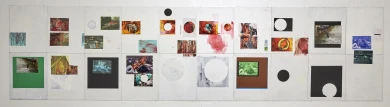
Difficulty. Forms and Political Effects of Deviation in Writing and Contemporary Art is a study group aligned towards thinking about how certain contemporary artistic and cultural practices resist the referentiality that dominates the logics of production and the consumption of present-day art. At the centre of this proposal are the concepts of difficulty and deviation, under which it brings together any procedure capable of preventing artistic forms from being absorbed by a meaning that appears previous to and independent from its expression. By ensuring the perceptibility of their languages, difficulty invites us to think of meaning as the effect of a signifying tension; that is, as a productive and creative activity which, from the materiality of art objects, frees aesthetic experience from the representational mandate and those who participate in it from the passiveness associated with tasks of mimesis and decoding.
The economy of the referential norm translates the social logic of capitalism, where insidious forms of capturing subjectivity and meaning operate. In the early 1980s, and adopting a Marxist framework, poet Ron Silliman highlighted how this logic entailed separating language from any mark, gesture, script, form or syntax that might link it to the conditions of its production, rendering it fetichised (as if without a subject) and alienating its users in a use for which they are not responsible. This double dispossession encodes the political strategy of referential objectivity: with no subject and no trace of its own consistency, language is merely an object, that reality in which it disappears.
The political uses of referentiality, more sophisticated today than ever before, sustain the neoliberal-extractivist phase of capitalism that crosses through present-day societies politically, economically and aesthetically. Against them, fugitive artistic practices emerge which, drawing from Black and Queer studies and other subaltern critical positions, reject the objective limits of what exists, invent forms to name what lies outside what has already been named, and return to subjects the capacity to participate in processes of emission and interpretation.
Read from the standpoint of artistic work, the objective capture of referentiality may be called transparency. Viewed from a social contract that reproduces inequality in fixed identity positions, transparent in this objectivity are, precisely, the discourses that maintain the status quo of domination. Opposite the inferno of these discourses, this group aims to collectively explore, through deviant or fugitive works, the paradise of language that Monique Wittig encountered in the estranged practices of literature. For the political potency of difficulty — that is, its contribution to the utopia of a free language among equals — depends on making visible, first, its own deviations; from there, the norm that those deviations transgress; and finally, the narrowness of a norm which in no way exhausts the possibilities ofsaying, signifying, referring and producing a world.
From this denouncement of referential alienation, fetishisation and capture, Difficulty. Forms and Political Effects of Deviation in Writing and Contemporary Art turns its attention to the strategies of resistance deployed by contemporary artists and poets. Its interest is directed towards proposals as evidently difficult or evasive as those of Gertrude Stein, Lyn Hejinian, Theresa Hak Kyung Cha, Kameelah Janan Rasheed, Kathy Acker, María Salgado and Ricardo Carreira, and as seemingly simple as those of Fernanda Laguna, Felix Gonzalez Torres and Cecilia Vicuña, among other examples that can be added according to the desires and dynamics of the group.
The ten study group sessions, held between February and December, combine theoretical seminars, work with artworks from the Museo Reina Sofía’s Collections and exhibitions, reading workshops and public programs. All these formats serve as spaces of encounter to think commonly about certain problems of poetics — that is, certain political questions — of contemporary writing and art.
Difficulty. Forms and Political Effects of Deviation in Writing and Contemporary Art inaugurates the research line Goodbye, Representation, through which the Museo Reina Sofía’s Studies Directorship seeks to explore the emergence of contemporary artistic and cultural practices which move away from representation as a dominant aesthetic-political strategy and redirect their attention toward artistic languages that question the tendency to point, name and fix, advocating instead for fugitive aesthetics. Over its three-year duration, this research line materializes in study groups, seminars, screenings and other forms of public programming.
LANDSCAPE TRANCE. THE FILMS OF OLIVER LAXE
From 5 to 28 February 2026 – check programme
Over this coming month of February, the Museo organises a complete retrospective on the filmography of Oliver Laxe. The series converses with the work HU/هُوَ. Dance as if no one were watching you, an installation by the Sirāt director conceived specifically for the Museo Reina Sofía’s Espacio 1, and includes the four feature-length films Laxe has made to date, as well as his short films and a four-session carte blanche programme, in which he will select works that chime with his films and creative concerns.
Oliver Laxe’s gaze is one of the most unique in the contemporary film landscape, his film-making a resilient, spiritual and transcultural space imbued with a cultural and social nomadism that reflects his life and beliefs and which, fundamentally, puts forward an anti-materialist ethic to deal with our times. His filmography, characterised by profound spirituality, a time of contemplation and a close connection to nature and the sacred, approaches universal themes such as redemption and the meaning of existence via stories that extend across remote, rural and timeless landscapes, and with atmospheres that draw on western and police film genres. His protagonists, largely amateur actors, cross through physical territories while travelling on inner journeys consumed by guilt, the desire for community reintegration and the realisation of an end goal they ignore. Nature, particularly desert and landscape, is another character, a living, pantheistic presence that conditions and reflects human conflicts. Stretched-out time, a focus on sensory experience and allusions to ancient religion situate us in a meditative conception of film which seeks to be a manifesto to re-enchant the world.
Within the series, the carte blanche sessions see the film-maker choose four films which map his obsessions: Sergei Dvortsevoy’s Highway (1999), which crosses the plains of Kazakhstan via a small travelling circus; Artavazd Peleshyan’s film The Seasons (1975), an ode to the passing of time through landscape; Trás-os-Montes (1976), an ethnographic work of fiction, made by Antònio Reis and Margarida Cordeiro, spotlighting a Portuguese farming community and their rituals and purity of life; and Kaneto Shindo’s The Naked Island, which shows a family of four’s daily struggle in a natural paradise.
Cultural Work
Thursday, 12 February 2026 – 5:30pm
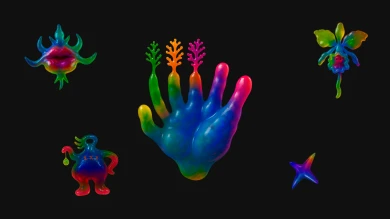
This series is organised by equipoMotor, a group of teenagers, young people and older people who have participated in the Museo Reina Sofía’s previous community education projects, and is structured around four themed blocks that pivot on the monstrous.
Session number two looks to approach film as a place from which cultural work is made visible and processes of production engage in dialogue with artistic creation. From this premise, the session focuses on exploring how audiovisual content is produced, assembled and distributed, from the hands that handle the images to the bodies that participate in its circulation. The aim is to reflect on the invisible effort, precarity and forms of collaboration that uphold cultural life, that transform the filmic experience into an act that recognises and cares for common work.
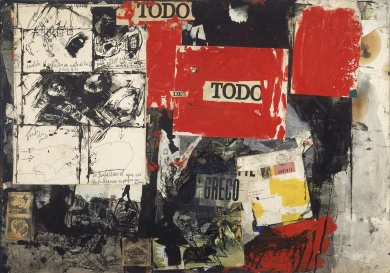
Alberto Greco. Viva el arte vivo
Tuesday, 10 February 2026 – 7pm
In conjunction with the opening of the exhibition Alberto Greco. Viva el arte vivo, Fernando Davis, the show’s curator, and Amanda de la Garza, the Museo Reina Sofía’s deputy artist director, will converse in the Nouvel Building’s Auditorium 400 on the life and work of the Argentinian artist, a core figure in experimental avant-garde art.
The title of both exhibition and conversation originates from the proclamation “Long Live Arte Vivo” Alberto Greco (Buenos Aires, 1931— Barcelona, 1965) disseminated around the streets and on the walls of Rome. For Greco, arte vivo was an art of the future, an art based on a set of irreverent and untimely gestures, of adventures open to unpredictability melding with life, and which began in 1962, prior to his coining of the term “vivo-dito”. In his Manifiesto dito dell´arte vivo (Dito Arte-Vivo Manifesto), which he pasted on the walls of Genoa, Greco encouraged new contact “with the living elements of our reality: movement, time, people, conversations, smells, rumours, places, situations”. He would also burst into the everyday of Madrid’s streets as he convened a “vivo-dito moment”, culminating in the burning of a canvas painted collectively in Madrid’s Lavapiés neighbourhood.
In addition to founding arte vivo, Alberto Greco was an informalist painter, a queer flâneur, a poet and sometime actor. This intense journey of Greco’s life and art is closely connected to the migrant route he embarked upon in 1950 in Buenos Aires, taking in Atacama and Humahuaca, Paris, Rio de Janeiro, São Paulo, Genoa, Rome, Madrid, Piedralaves, New York and Ibiza and ending abruptly in Barcelona, where he took his own life shortly after writing his final great work, the novel Besos brujos (Bewitching Kisses, 1965).
These inaugural conversations, part of the main working strands of the Museo’s Public Programmes Area, aim to explore in greater depth the exhibition narratives of the shows organised by the Museo from the perspective of artists, curators and specialists.
![Basel Abbas y Ruanne Abou-Rahme, At Those Terrifying Frontiers Where the Existence and Disappearance of People Fade Into Each Other [En esas fronteras aterradoras donde la existencia y la desaparición de personas se disuelven entre sí], 2019](https://recursos.museoreinasofia.es/styles/small_landscape/public/Colecci%C3%B3n/abbasabourahme.png.webp)
Gaza and Aestheticide
Tuesday February 10, 2026 – 16:00 h
“This seminar examines the systematic destruction of Palestinian collective sensibility — what we might call ‛aestheticide’ — that has accompanied Israel’s genocide and ecocide in Gaza, and considers the conditions of artistic practice in its aftermath. Over more than two years, the demolition of universities, archives, museums, and libraries has not only erased cultural and intellectual infrastructure but has also targeted the very possibility of representation itself. The destruction of a people has been accompanied by the destruction of their image, their history, and their capacity to be known: reportage, scholarship, and cultural memory have been deliberately undermined, with media institutions, universities, and museums often complicit in this repression. Gaza consequently functions as a rehearsal space for a possible global future — of fascism, post-liberal authoritarianism, militarized borders, and AI-enabled warfare —, a laboratory for an emerging world order. What, then, becomes of critical analysis and resistance under these conditions? And what becomes of aesthetics and politics?”
—T.J. DemosThis seminar takes place thanks to the art historian’s invitation to Spain by the Miró Foundation. In the context of the museum, it engages in dialogue with a broader line of work on the climate emergency and decolonial perspectives developed within the Museum of the Commons project (2023–2026) of the L’Internationale network, of which the Museo Reina Sofía is a member; as well as with some of the questions that animate the study group Aesthetics of Peace and Desertion Tactics. Finally, it is also embedded in a wider strategy of support for and commitment to the artistic and discursive practices of Palestinian artists and cultural practitioners, most clearly reflected in the TEJA network.