Video-Nou. Anthological Programming
Session 5. Playback: The Sublime Image. Video Art in Spain (1970–1987)
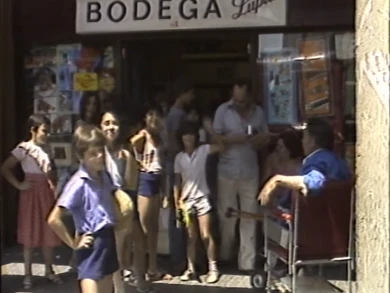
Video Nou, Programación antológica (Anthological Programme), 1977–79, film
Held on 20, 26 Mar 2026
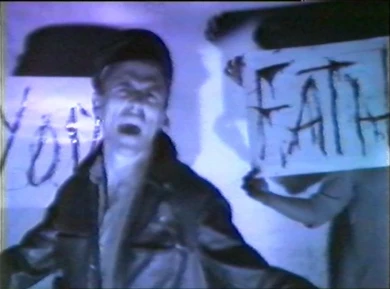
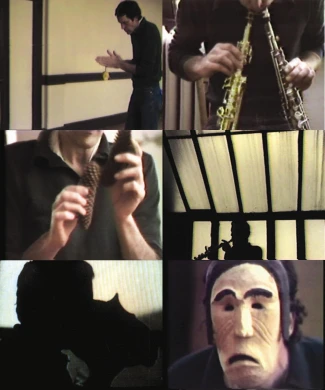
Video-Nou (1977–1979) was a Barcelona collective that used video as a medium for criticism, participation and social intervention during the Transition to democracy in Spain, their work committed to horizontal communication and the collective production of videos with communities. The practice of the collective — made up of Carles Ameller, Genís Cano, Albert Estival, Xefo Guasch, Marga Latorre, Pau Maragall, Lluïsa Ortínez, Lluïsa Roca and Joan Úbeda — made video a popular tool with which to recognise, through collective voices, dissipated authorships and natural performers, the nascent society at the time. This session presents a compilation of the collective’s best works, from neighbourhood life and street assemblies to developmentalism in Barcelona, its environmental consequences and the new political landscape. A fresco of 1970s Spain.
Acknowledgments
Museu d'Art Contemporani de Barcelona (MACBA)
Organised by
Museo Reina Sofía
Accessible activity
This activity has two spaces reserved for people with reduced mobility
Agenda
viernes 20 mar 2026 a las 19:00
First session
jueves 26 mar 2026 a las 19:00
Second session
Programme
Session 5. Video-Nou. Programación antológica (Anthological Programme)
Spain, 1977–79, DCP, black and white, colour, sound, original version in Spanish and Catalan with Spanish subtitles, 60’. Museo Reina Sofía Collection
Activity within the program...
Playback: The Sublime Image
Video Art in Spain (1970–1987)
During the month of March, the dawn of video as an artistic medium in Spain takes over the Museo Reina Sofía’s Cinema theatre, doing so distinctively by retrieving The Sublime Image. Video Art in Spain (1970–1987), the first exhibition on this new audiovisual language held in Spain. The show, curated by Manuel Palacio and coordinated by Guadalupe Echeverría and Pedro Santos, with the collaboration of Eugeni Bonet and Antoni Mercader, mapped youth subcultures, an eagerness for new media, the seeping of artistic languages into one another, and a DIY aesthetic.
The Museo Reina Sofía’s origins midway through the 1980s reflect a yearning that was twofold: on one side, the desire to become acquainted with international contemporary art in its most resounding and monumental capacity, and on the other, to show new languages transforming the traditional field of art, reflecting a country transformed by the end of the dictatorship that sought to assimilate into Western democracies. It is unsurprising that along with major international exhibitions (Matisse, Miró, Diego Rivera, minimal sculpture) a pathway opened to a broad number of shows on new media, for instance Procesos: cultura y nuevas tecnologías (Processes: Culture and New Technology, 1986), La imagen sublime. Vídeo de creación en España (1970-1987) (The Sublime Image. Video Art in Spain [1970–1987], 1987), solo shows devoted to Muntadas and Marcel Odenbach (both in 1988) and the Bienal de la Imagen en movimiento (The Moving Image Biennial, 1990 and 1992). As a result, a nascent institution shaped, before becoming a museum in 1992, its identity as an art centre, as an institution historically focused on experimentation and the contemporary.
This “playback” of The Sublime Image. Video Art in Spain (1970–1987) also bears a relation to the original event in that it similarly assembles two formats: exhibiting in exhibition space, this time in a room inside Collection. Contemporary Art: 1975–Present, and a programme of screenings in the Museo’s Cinema. Further, this present-day series seeks to recover the approach of the original sessions, which manifested the multiple nature of video in relation to performance and Action Art, as well as television, the music video and post-cinema narratives, while also revealing an attitude and a gaze among artists, programmers and the public that were an integral part of 1980s Spain. The playback also offers the chance to rediscover forgotten audiovisual pioneers like Regina Álvarez and Marta Batlle, and to revise the early work of recognised figures in video art in Spain, such as Muntadas and the recently deceased Eugènia Balcells. On a final note, it brings the audience closer to the early works of artists who would later become points of reference in the Spanish audiovisual industry, for example Xavier Villaverde, and shines a light on forgotten works from the era that remain pertinent today, among them those made by Javier Codesal, Manuel Abad and Manel Muntaner.
Admission: Free, until full capacity is reached. Tickets may be collected at the Museo’s Ticket Offices or on the Museo Reina Sofía website (a maximum of 2 per person). 20% of the visitor-capacity will be reserved for attendance without ticket collection on the day of the activity. Doors open thirty minutes before each screening
Ver programa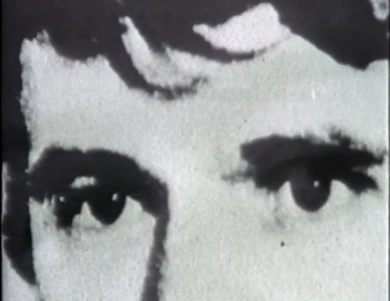
Manel Muntaner. ’84 Special
Past activity
— With a presentation and talk by Manel Muntaner
The film series closes with a dystopian vision of the 1980s, a piece which is regarded as a cult work in Spanish video and hitherto one of the most forgotten. In Especial 84, Manel Muntaner intermingles key passages from George Orwell’s 1984 with contemporary images of surveillance, domination, violence, resistance and subjugation. The video recalls the dark side of the 1980s, a time of neo-conservative shifting in international politics and the AIDS pandemic, by way of a carefully chosen selection of fictional extracts and real news, apocalyptically narrated with a voiceover that seems to turn Orwell’s warning into an urgent prophecy.
Post-Video Narratives. Javier Codesal and Manuel Abad
Past activity
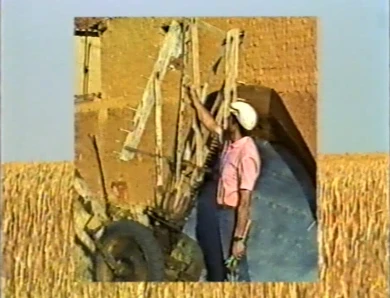
The sixth session is a return to video’s narrative dimension at its most cinematic, while also incorporating, with maturity, the traits of the medium — collage, the rupture of a film grammar and the nature of recording lived experience — through the screening of two cult medium-length films. In Pornada (a wordplay with “porn” and “working day”) the inhabitants of an unusual Castilian town labour to get a telephone service as they dig their own grave in a local cemetery for entertainment; Hispanic Surrealism, a reflection on Spain’s rural exodus and humour along the lines of José Luis Cuerda are concentrated in this unique video by Javier Codesal, a milestone in the medium. The work of Manuel Abad, meanwhile, is a tragic and melancholy meditation on suicide in Galicia using the aesthetics of collage that is characteristic of video.
Video-Nou. Anthological Programming
Past activity
Video-Nou (1977–1979) was a Barcelona collective that used video as a medium for criticism, participation and social intervention during the Transition to democracy in Spain, their work committed to horizontal communication and the collective production of videos with communities. The practice of the collective — made up of Carles Ameller, Genís Cano, Albert Estival, Xefo Guasch, Marga Latorre, Pau Maragall, Lluïsa Ortínez, Lluïsa Roca and Joan Úbeda — made video a popular tool with which to recognise, through collective voices, dissipated authorships and natural performers, the nascent society at the time. This session presents a compilation of the collective’s best works, from neighbourhood life and street assemblies to developmentalism in Barcelona, its environmental consequences and the new political landscape. A fresco of 1970s Spain.
Architectures. The Topographical Camera
Past activity
— With a presentation and talk by Julián Álvarez
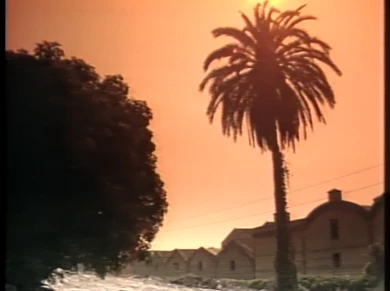
How does video’s new gaze recognise space in its different dimensions? Batlàntic puts forward a tangible representation of financial abstraction in contemplating on the glass architecture of a multinational bank a superimposed formula to calculate value. Fàbriques is a fascinating example of urban architecture, a drift through the factories of the Barcelona area of Poblenou before it underwent radical gentrification. As if in an exercise by Georges Perece, describing the same square over and over, Línia 39 puts forward a videographic panorama to exhaust the gaze in one place: twenty-four hours in the plaza de Rovira i Trias in Barcelona. Moreover, in Indian Circle Eugènia Balcells approaches a similar exercise to early Chantal Akerman in turning the camera into a mechanical eye of domestic intimacy, in stills of life that occur between unalterable movements of the camera.
Other Movidas: The Music Video
Past activity
The third session gathers youth music subcultures from the mid-1980s, a vibrant time for music video language, exploring how music, partying and night-life encapsulate a profound desire for total change, reflected in the formal experiments of the works here. The Basque radical rock of La Polla Records (Juan José Narbona with Txus), Hertzainak (Josu Zabala with Mata a tu viejo) and Kortatu (Tipula Beltza with Sarri, Sarri) with latent terrorist conflict (Ramón de Vargas with Canciones vascas), mixed with the telluric, histrionic Galician punk of Os Resentidos and Antón Reixa in Abdul, a music video with scenography by artists Menchu Lamas and Antón Patiño, and Alicia en Galicia Caníbal, a music video of Galician identity seen through the lens of counterculture via the track “Galicia cannibal”. The session concludes with Andalusian folklore in the witty, night-time style of Círculo Vicioso in Temperamento cañí.
Mise en Scènes. Video and Performance
Past activity
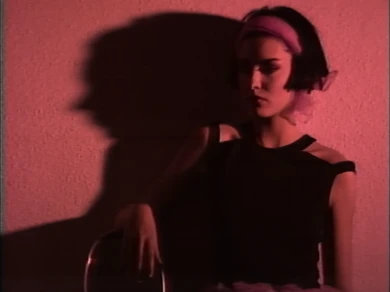
A programme threaded together by the mise en scène, the masquerade, the costume, pastiche and aesthetic saturation. Regina Álvarez, in a pioneering and little-known exercise in the female gaze, studies, via the pose, the construction of femininity in canonical cinema. Antonio Cano and Pedro Garhel, for their part, film a performance for camera developed at ARCO 1985, whereby Garhel and Rosa Galindo dance around post-minimalist sculptures with loud colours. José Ramón Da Cruz develops a psychodrama laden with aestheticism between a dancer and a person with reduced mobility. Finally, El Hortelano, an iconic painter from Madrid’s Movida movement, makes in Koloroa an impossible news bulletin, which, in topsy-turvy Spanish, he presents with Ouka Leele and artists from the time like Ceesepe, Nazario and Jaume Sisa. A method that would inspire Almodóvar in Kika (1993).
Origins. Video and Action
Past activity
— With a presentation by Manuel Palacio, curator of The Sublime Image. Video Art in Spain (1970–1987) and a lecturer in Audiovisual Communication and Advertising at the University Carlos III (Madrid), alongside Carlota Álvarez Basso, head of the Museo Reina Sofía’s Department of Audiovisual Works from 1992 to 1999, and Chema González, head of the Museo Reina Sofía’s Film and New Media Department.
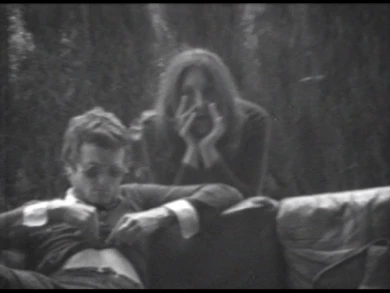
A programme on the origins of video linked to happenings, performance and Action Art; in other words, connected to life itself. Primera Muerte (First Death) is the first video art piece made in Spain, a work which disappeared for decades before being finally recovered by curators Imma Prieto and Blanca de la Torre in 2010. After the Barcelona College of Architects asked a group of avant-garde artists made up of Sílvia Gubern, Jordi Galí, Àngel Jové and Antoni Llena to give a lecture, the group decided to record everyday scenes of them living together and subsequently showed them during the lecture on a TV monitor while Àngel Jové read extracts of William S. Burroughs’s The Naked Lunch and the audience was recorded and confronted with their own images while The Beatles’ song “Let It Be” played. Meanwhile, in Subsensorial Actions 1 by Muntadas, the artist, with his eyes covered, experiments with meanings alluding to somatic actions recalling Vito Acconci and Lygia Clark, as well as the existential absurdism of Buster Keaton.
Más actividades
![Isabel Coixet, 100 Years and You Everywhere [100 años y tú en todos los sitios], 2026, película](https://recursos.museoreinasofia.es/styles/small_landscape/public/Actividades/2.diseminar-mundo.jpg.webp)
John Berger and Isabel Coixet. Continued Ways of Seeing
Thursday, 17 September 2026 at 7pm
Ways of Seeing (1972) is one of the most revolutionary television series on art history, the museum and contemporary critical culture. Across four episodes, an articulate, enthusiastic John Berger unpacks the relationships between classical art through the gaze and new technology, the nude and feminism, the oil painting and commodity fetichism, advertising and consumerism. In essence, a level of critical commitment only comparable to its capacity for dissemination. Unsurprisingly, the series, and the book that would distil it, continues to forge vocations. This session sees art historians Alberto López Cuenca and Modesta Di Paola carry out an analysis of Berger’s audiovisual work, placing the stress on episodes one and four of the series. In the first episode, Berger reflects on the connection between the act of seeing, looking and being in light of new technology, such as the film camera. At the same time, it analyses how the culture of reproduction is turning paintings into messages or fragments of communication while stressing the importance of silence when observing historical paintings. In the fourth and final episode, he introduces advertising as a new iconic-verbal language that shares certain principles with the message of oil painting as a luxury item.
The session opens with the premiere of a filmic letter from Isabel Coixet, one of Spain’s most internationally acclaimed directors, to John Berger, with whom she maintained a long friendship and deep admiration. The short film is testament to the ubiquitous and long-lasting presence of the author of Ways of Seeing, even after his death in 2017.
![Chantal Akerman, Woman Sitting after Killing [Mujer sentada después de matar], 2001, instalación. Museo Reina Sofía](https://recursos.museoreinasofia.es/styles/small_landscape/public/Actividades/chantal-akerman-mujer-sentada-despues-matar.jpg.webp)
On Your Screen: Art History and the Museum Facing the Audiovisual Challenge
18, 19 SEP 2026
The conference On Your Screen: Art History and the Museum Facing the Audiovisual Challenge sparks debate around the transformations of art history and museum space upon embracing the audiovisual format. Its starting point is John Berger’s emblematic television series Ways of Seeing (1972), a landmark in the democratisation of art-historical discourse. In the series, Berger illustrated how the transfer of a work such as Goya’s Los fusilamientos del 3 de mayo (The Third of May 1808 or the Executions) from museum gallery to home TV screen completely changed the viewer’s experience, allowing the image to travel to straight to the viewer.
In the twenty-first century, this screen-based ecosystem has expanded exponentially, with museums not only physically integrating screenings and devices into their galleries— following in the wake of many exhibitions on the moving image — but also deploying complex virtual strategies. Equally, numerous en vez de a multitudeof historians, students and creators use digital platforms to circulate their ideas and projects. This audiovisual shift opens access to ignored materials and democratises knowledge, as well as challenging traditional hierarchies and the interpretive authority of institutions. The conference, promoted by the research project ATLAS AV: The Audiovisualisation of Art History and the Museum, seeks to analyse this vast audiovisual material, its archives, and its capacity to transform the memory of art.
Godard and Miéville: Time and Ruin
Friday, 18 September 2026 - 7pm
Inside the framework of the conference On Your Screen: Art History and the Museum Facing the Audiovisual Challenge, this film series sets forth three critical visions of the museum via three sessions featuring the works of John Berger, Jean-Luc Godard and Anne-Marie Miéville, Ariella Azoulay, Alan Resnais and Chris Marker, Kwate Nee-Owoo, and the premiere of short films by Isabel Coixet and La Vulcanizadora (Maria Rojas Arias and Andrés Jurado). In classical theory, the museum gives the world meaning; it contains fragments of the past, granting them a history, a narrative that explains preterite time and the present. Today, there is an implicit assumption that this function hides and legitimises forms of power, yet what if the museum, instead of explaining the world, multiplied it through radical ideas, silenced periods and repressed subjects? Such is the approach of the film-makers and artists in this film season.
In 1972 the writer John Berger opened the landmark television series Ways of Seeing with an iconoclastic gesture: slicing Sandro Botticelli’s painting Venus and Mars (1485) in London’s National Gallery. A transgressive act that recalls contemporary attacks on the museum by dissident youth and with which Berger, after revealing it was a reproduction, sought to ignite debate around the idea of an original artwork and a copy. In this, the hundredth anniversary of his birth, the first session pays homage to one of the great art writers of the twentieth century. Starting with a review of Berger’s audiovisual work by art historians Alberto López Cuenca and Modesta Di Paola, the series begins with the premiere of 100 Years and You Everywhere (2026), an unreleased short film by Isabel Coixet composed as a beautifully crafted letter to Berger, and continues with an analysis of fragments of Ways of Seeing in relation to the museum and contemporary art.
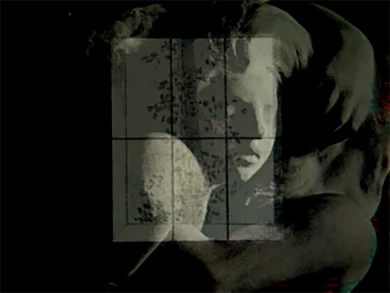
The second session screens two medium-length films by Jean-Luc Godard and Anne-Marie Miéville on time, ruin and museum. In The Old Place. Small Notes Regarding the Arts at Fall of 20th Century (1999), both film-makers consider what remains of that “old place”, the museum, at the close of a century of wars and totalitarianism, and ask whether it should be more of a legend or desire than a place. This same driving principle leads Godard to build his own imaginary museum in Reportage amateur (maquette expo) (2006), a rickety toy museum which, paradoxically, contains the great film-maker’s full power of thought on history and images.
Finally, the third session explores one of the major challenges of recent years: the decolonisation of the museum, the recognition of its link to imperialist discourses of power and the need to situate a new silenced or repressed subject at the centre of the Western narration of history. Under the title Museums and Restitution, it includes the film Undocumented. Unlearning Imperial Plunder (2019), by theorist Ariella Azoulay, Statues Also Die, by Alan Resnais and Chris Marker (1953), Kwate Nee-Owoo’s You Hide Me (1970) and the first screening of the short film Quinto verso, parte de Tonada (Fifth Verse, Part of Tonada), by La Vulcanizadora (Maria Rojas Arias and Andrés Jurado), filmed at the Museo de América in Madrid.
![Ariella Azoulay, Un-documented. Unlearning Imperial Plunder [Indocumentados. Desaprendiendo el saqueo imperial], 2019, película](https://recursos.museoreinasofia.es/styles/small_landscape/public/Actividades/5.diseminar-mundo.jpg.webp)
Museums and Restitution
Saturday, 19 September 2026 - 7pm
Centuries of plundering, decades of amnesia, years of living with unmitigated extractivist power… Does a museum, as we know it, have a raison d'être in a postcolonial society?
This session expounds the operations of the museum as a colonial machine, while putting forward ideas, in narration, for a more just, equal and inclusive institution of the future via society’s marginalised and minority voices. The session begins with the international premiere of Quinto verso, parte de Tonada (Fifth Verse, Part of Tonada), which presents a vision of the Quimbaya Collection (fifth and sixth centuries CE) from the Museo de América in Madrid. It is constructed with the voices and chants of Wayúu mourners and guides, not only as a way of reinstating the role of these gold idols — anthropomorphic figures of men and women used as vessels in ritual practices — but also to imagine that what must be exhibited is not the gold itself. It is the ritual’s own chant. In the classic film You Hide Me (1970), Ghanaian film-maker Kwate Nee-Owoo accesses the British Museum’s collection of African art, located in the building’s basement, to question the meaning behind a museum plundering and nullifying. A fine exercise of first-person institutional critique screened for the first time in Spain. Almost seventy years since Resnais and Marker made Statues Also Die (1953), a reflection on the aura-bearing value of the museum opposite the identity-based and cultural belonging of African art, theorist Ariella Azoulay films the same statues again at the Musée du Trocadéro (today the Musée du Quai Branly), which survive and wait to be reunited with their people. Azoulay, whose wholly original undertaking is a lesson to the museum of the future, connects the forced migration of these sculptures with the mass transit of people crossing borders artificially imposed by the same system that has plundered their culture.
The School of Transformative Institutionalism and Local Organisation
From 21 to 24 September 2026
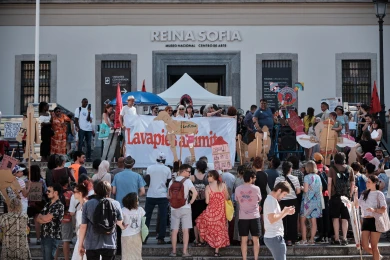
The School of Transformative Institutionalism and Local Organisation (S.T.I.L.O.) is a programme of joint learning and join strategy which sets in motion a process for the exchange of questions, methodologies and experiences between cultural organisations. The overall aim is to create, circulate and prototype tactics, tools and collective knowledge on institutional practices that open new channels for defending culture and advocating structural transformation in divergent geographical contexts.
The project is part of the Laboratorio de Institucionalidad Compartida (The Laboratory of Shared Institutionalism, LIC), a space for the Museo Reina Sofía’s research, work and advocacy centred on developing, experimenting with and systemising practices, protocols and tools which contribute to a fairer and more liveable cultural ecosystem.
For many years now, so-called infrastructural critique in museums questions material, legal and economic infrastructures, among others, as well as the forms of solidarity and practices required to sustain the cultural ecosystem. By approaching current debates, S.T.I.L.O. raises questions on the ways in which organisations define and interpret their practices, organise their relations and respond to the social contexts in which they operate.
The school gathers four cultural organisations that work via different institutional models – scale, contexts, conditions, different working models — with the goal of pooling common strategies and tools of organisation, advocacy and relationships with local communities.
The programme is conceived as a collaborative process with the participation of Arika, La Revuelta, BAK Basecamp and The Tentacular Museum (Museo Reina Sofía) and is structured around preparatory online sessions and an in-person seminar in Madrid.
S.T.I.L.O. is an activity framed inside the working strand of Situated Organisations from L'Internationale’s Museum of the Commons project, which reflects on the role of museums and art organisations as actors within complex social networks and ecosystems, with a view to exploring new ways to democratise institutions and make them more open, inclusive and useful.