Madrecitas. Mothers’ Right to Raise and Care for Their Children
Institutional Violence against Racialised Mothers and Children
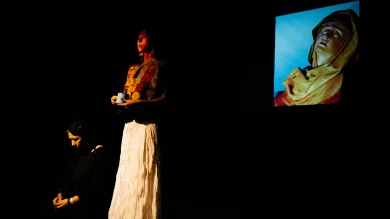
The La Llorona performance by Linda Porn and Frida Trejo in Muestra Fervor, Barcelona, 2024. Fotograph: Alfonso Blanco
Fotograph: Alfonso Blanco
This encounter aims to spotlight how institutional, gender-based violence is more severe for migrant and/or racialised women by way of audiovisual pieces, a performance and spaces of debate and discussion.
The violence inflicted on the body of these mothers is never straightforward: a brutal compendium of violence driven by institutional racism and the judicialisation and criminalisation of non-Eurocentric motherhood. The Madrecitas collective has devoted many years to denouncing rights violations and institutional violence migrant mothers and their descendants have been subjected to in the Spanish State. As asserted by one of the collective’s members and activists, Mel de Lima, doubt is constantly cast over the right of migrant mothers to raise and care for their children, challenging their parenting capacities via legal persecution over their irregular administrative situation.
This situation highlights the urgent need to work collectively for an anti-racist feminism, whereby the intersection of these forms of violence is made manifest. Consequently, the encounter begins by displaying four audiovisual pieces which reflect legal approaches and the experiences of migrant mothers, followed by an afternoon session featuring the performance La Llorona (Weeping Woman) by artists Linda Porn and Frida Trejo. This stage and audiovisual work explores the institutional, patriarchal and colonial violence incited through racism, misogyny and maternaphobia that affects racialised and impoverished mothers and minors by deconstructing the myth of La Llorona (Weeping Woman), created during the colonial period in New Spain, today’s Mexico.
This activity joins the social demands, endorsed from the Museo’s Tentacular Museum, that advocate for an advance in public policies from an anti-racist perspective to protect children and women.
A childcare space run by Maestras del Barrio is available, by filling out a registration form beforehand, in the morning and afternoon sessions of the encounter.
With the support of
Organised by
Museo Reina Sofía and Madrecitas
Agenda
sábado 08 feb 2025 a las 11:30
Presentation and Madrecitas Audiovisual Pieces
sábado 08 feb 2025 a las 12:30
Racialised Children and Mothers Persecuted in the Spanish State
— Discussion between Mel de Lima, Tamara Fernández, Carolina Meloni and Nora Rugama
sábado 08 feb 2025 a las 17:00
La Llorona, performance by Linda Porn and Frida Trejo
sábado 08 feb 2025 a las 18:00
Discussion between Linda Porn, Frida Trejo and Adilia de las Mercedes
Participants
Tamara Fernández is a practising lawyer who specialises in institutional violence in children’s care centres.
Mel de Lima is a mother-activist, a human rights advocate for racialised women and children and a member of the Madrecitas Association.
Madrecitas Association is an association made up of migrant women who denounce the violation of human rights and institutional violence against migrant women and their descendants.
Carolina Meloni is a transfeminist philosopher, writer, researcher and activist specialised in anti-colonialism.
Adilia de las Mercedes (Spain-Guatemala) is a lawyer specialised in anti-discriminatory law at DEMOS, the Legal Office of Human Rights, and director of the Women of Guatemala Association (AMG).
Linda Porn is a visual artist, actress, sex worker, single mother and a graduate from the Teatro Campesino e Indígena in Mexico. Her work has been shown at numerous museums, for instance MoMA in New York, the Museu d’Art Contemporani de Barcelona (MACBA) and the Centro de Cultura Contemporània de Barcelona (CCCB), as well as at multiple film and theatre festivals in different European countries.
Nora Rugama is a psychologist specialised in sexual and institutional violence and also a member of the Women of Guatemala Association (AMG).
Frida Trejo is an actress, visual artist and cinematographer who has worked with the company Los Menos Teatro.
A childcare space run by Maestras del Barrio is available, by filling out a registration form beforehand, in the morning and afternoon sessions of the encounter.


Más actividades
Dear Americas
Friday 29 May and 5 June, 2026
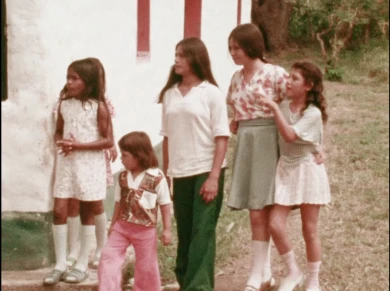
In these films, Marilú Mallet travels to Solentiname, in Nicaragua, and Andahuaylillas, in Peru, to paint a portrait of communities which resist the severity of forced industrialisation. In Solentiname, the focus is on the poet and priest Ernesto Cardenal’s founding of a Christian, poetic and revolutionary utopia, while in Andahuaylillas, a town close to Cuzco, Mallet explores the multiple layers of Andean culture.
A Poetics of the Subject
Thursday 28 May and 4 June, 2026
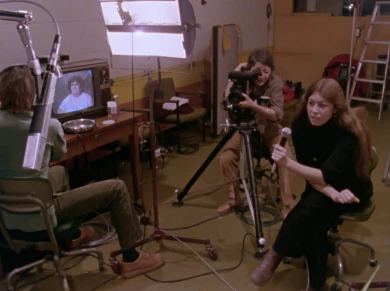
In the tension between documentary and fiction, between the rawness of a tragic political present and narrative escape, lies the truth of the exile’s condition. In Journal inachevé (Unfinished Diary, 1982) Marilú Mallet experiments with her own subjectivity, moving from affirmation to doubt. In Double Portrait (2000), María Luisa Señoret paints her daughter Marilú, who records the process. In this circular relationship, the film-maker constructs a poetics of the portrait as something perpetually unfinished, a process of exploration in which memory, identity and political history merge to become blurred.
Institutional Decentralisation
28 MAY 2026
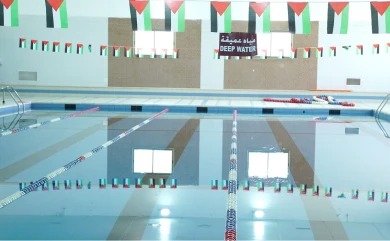
This series is organised by equipoMotor, a group of teenagers, young people and older people who have participated in the Museo Reina Sofía’s previous community education projects, and is structured around four themed blocks that pivot on the monstrous.
This fourth and final session centres on films that take the museum away from its axis and make it gaze from the edges. Pieces that work with that which is normally left out: peripheral territories, unpolished aesthetics, clumsy gestures full of intent. Instead of possessing an institutional lustre, here they are rough, precarious and strange in appearance, legitimate forms of making and showing culture. The idea is to think about what happens when central authority is displaced, when the ugly and the uncomfortable are not hidden, when they are recognised as part of the commons. Film that does not seek to be to one’s liking, but to open space and allow other ways of seeing and inhabiting the museum to enter stage.
Ordinary, Common and Public. Common Fixes for Ordinary Communities
Tuesday, 26, and Wednesday, 27 May 2026 – Check programme
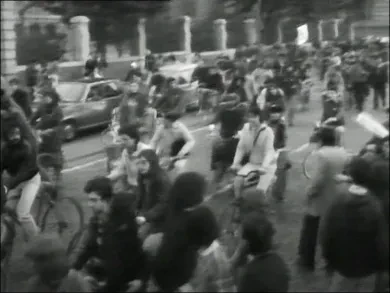
Ordinary, Common and Public. Common Fixes for Ordinary Communities is the title of the fourteenth encounter run by Sociología Ordinaria, a transdisciplinary research group that explores daily knowledge deemed ordinary, superficial or frivolous from a traditional academic and intellectual viewpoint.
This latest edition seeks to approach and map connections between concepts of the commons and the public realm — remembering that the ordinary is also the commons — and to ensure affects and moods of discontent are mobilised towards hope.
By way of its multiple declinations — community, community-based practices, the commons, the communal — the encounter seeks to reflect on different ways of creating, (re)configuring, maintaining, fixing, arranging, caring for and defending the public realm and the commons. Furthermore, it explores forms of invocation and experimentation as tools opposite the helplessness of an uncertain present, in addition to resistance against attempts of expropriation, distortion, privatisation and touristification.
Felix Gonzalez-Torres. Sweet Revenge
26 MAY 2026
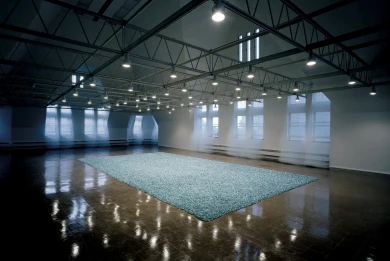
Nancy Spector and Alejandro Cesarco, curators of the exhibition Felix Gonzalez-Torres. Sweet Revenge, will speak with Manuel Segade, director of the Museo Reina Sofía, in a session dedicated to exploring the interpretive frameworks of this first large-scalepresentation in Madrid of the work of Felix Gonzalez-Torres (1957–1996), whose practice continues to resonate in the present.
The conversation begins with the exhibition’s title itself, Sweet Revenge, understood as a paradoxical notion that articulates much of the artist’s thinking. From there, the tensions running through his work are explored: the coexistence of opposing registers, ambiguity as a method, and the simultaneously affective and political charge of his works.
The dialogue also touches on some of the themes that run through his body of work, such as thenotions of identity, citizenship, and authority, alongside experiences linked to the AIDS crisis, and emotions such as love, loss, grief, and optimism. Special attention is given to the way in which Gonzalez-Torres shifts languages associated with Arte Povera, conceptualism, and minimalism towards open, participatory, and deeply personal structures.
The session also includes a reflection on the research process that shaped the exhibition, providing context for the curatorial decisions and criteria that structure it. In this context, Gonzalez-Torres’s work emerges as a device that actively engages those who activate orinterpret it, distributing responsibility for the production of meaning—a process that is alwaysunstable and constantly under negotiation.
These inaugural conversations, part of the main working strands of the Museo’s Public Programmes Area, aim to explore in greater depth the exhibition narratives of the shows organised by the Museo from the perspective of artists, curators and specialists.