Graphic Action Art, Revolt and Anti-Fascism
International Encounter on Graphic Turn
Held on 18 May 2022
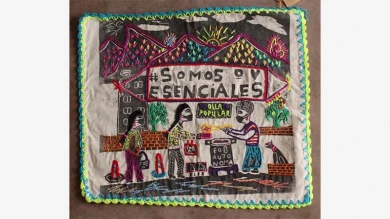
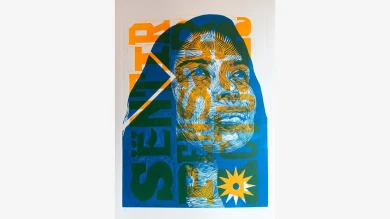
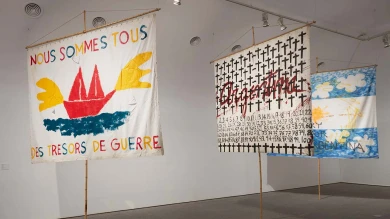
This international encounter, setting out from Graphic Turn. Like the Ivy on a Wall, a collective exhibition stemming from a long research process driven by the Southern Conceptualisms Network, brings together researchers, artists and activists as it looks to foster exchanges to examine art and political graphic action art in Latin America, as much in its recent history as a present characterised by the return of authoritarianism and the loss of civil liberties.
The encounter pools different graphic action art tools and tactics from the street — understanding graphic art in an expanded sense, or more aptly as a burst — with initiatives ranging from collective sewing to cartography. The programme comprises tables to debate themes which intensify the curatorial concepts of the show and create a transversal composition among artists, curators, researchers and activists with a view to sharing different graphic art tools and strategies of dissemination and occupying streets.
A dialogue that seeks to find not only coincidences and affinities between historical cycles and the present day, but also tensions and latencies. Graphic art — like the ivy in the chorus of the well-known song “Volver a los diecisiete” (Being Seventeen Again), by Chilean singer-songwriter Violeta Parra — grows on walls and sprouts over and over. Just like life.
[dropdown]
Clara Albinati (Brazil) is a professor at the Pontifícia Universidade Católica in Minas Gerais, Belo Horizonte, and is a member of the Southern Conceptualisms Network. She works as a researcher and independent film-maker.
Sebastián Alonso Bessonart (Uruguay) is a professor at the University of the Republic, in Montevideo, Uruguay. Focusing on contemporary artistic and curatorial practices, he coordinates the CasaMario Project and has participated in numerous biennials and international exhibitions.
Carolina Barrero (Cuba) is an art historian, curator and activist. She has worked in different institutions and art galleries and has promoted actions of civic and peaceful resistance linked to the 27N group and San Isidro Movement.
Edén Bastida (Mexico) is a visual artist who holds a PhD in Art Theory and History from the University of Buenos Aires, with his research on underground Zapatista film-making noteworthy.
Gonzalo Castro-Colimil (Chile) is an artist and cultural agitator. He founded the Coordinator of Artistic Operations (COA) and is director of the ËFA Txawün residency and circuit of territorial experience.
Javier del Olmo (Argentina) is an architect and multidisciplinary artist. He is a co-founding member of the art-action collectives XI Ventanas (1996–2003), Mínimo9 (2000–2003), Arde! (2001–2012) and Artistas Solidarios (2013–2018).
David Feldman (USA) is a film-maker, editor and photographer. His works most notably include the documentary Los Olvidados. The Forgotten (2014) on the installation of Jay Lynn Gómez’s mural paying homage to migrants who have died attempting to cross the Mexican-US border.
Hugo Giménez (Paraguay) is a film-maker. He was awarded the IV DOCTV Latinoamérica Prize for Fuera de campo, and his film Matar a un muerto (Killing the Dead) was Paraguay’s nomination for the Goya Awards and Oscars in 2021, the same year he was also nominated for best Ibero-American fictional debut feature in the Platino Awards.
Sol Henaro (Mexico) is a researcher and curator. Her specialist field is the critical historiography of artistic practices from 1980 to the present day. Since 2010, she has been part of the Southern Conceptualisms Network and since 2015 she has curated Acervo Documental and overseen the Arkheia Documentation Centre at the Museo Universitario Arte Contemporáneo (MUAC) in Mexico.
Carlos Henríquez Consalvi (Venezuela) is the director of Museo de la Palabra y la Imagen, in El Salvador. He is also the founder of Radio Venceremo and has curated exhibitions on historical memory, culture and identity. He was awarded the International Prince Claus Award for Culture and Development.
Cristina Híjar (Mexico) is a professor in the fields of communication and politics and a visual arts researcher. She is part of the work group Art and Politics from the Latin American Council of Social Sciences (CLACSO) and the Híjar Collective, which focuses on aesthetic-political actions for historical memory.
Natalia Iguiñiz Boggio (Peru) is a visual artist, university lecturer, feminist activist and mum. Her work explores the construction of discourses around conceptions of women, sexuality, domestic work and maternity, as well as historical memory and the coloniality of power.
Ana Longoni (Argentina) is a writer and researcher at Argentina’s National Scientific and Technical Research Council (CONICET), where she explores the crossroads between art and politics in Latin America. She has also propelled the Southern Conceptualisms Network since it was founded, and from 2018 to 2021 she was director of the Museo Reina Sofía’s Public Activities Department.
Jay Lynn Gómez (USA) is an artist. Her work focuses on giving a voice to the migrant community in California and revealing their working conditions. Her work has been exhibited at institutions that include the National Portrait Gallery of the Smithsonian Institution (Washington D.C.) and the Museum of Latin American Art (MOLAA, Long Beach, California).
André Mesquita (Brazil) is a researcher who holds a PhD in Social History. He investigates the articulations between art, politics and activism, and is also a curator at the Museu de Arte de São Paulo Assis Chateaubriand (MASP) and a member of the Southern Conceptualisms Network.
Fernando Miranda (Uruguay) is a professor and researcher at the University of the Republic, in Montevideo, Uruguay. He currently coordinates the Research Nucleus of Visual Culture, Education and Identity Construction in the Fine Arts Institute at the same university.
Guillermina Mongan (Argentina) is an art historian, teacher, researcher, curator and artist. She is a member of the Southern Conceptualisms Network, the collective Frente Sudaka, Serigrafistas Queer— where she also coordinates its ASK archive — and Cromoactivismo.
Alberto Nanclares (Spain) is a visual artist, urban activist, architect and DJ. He was among those driving forward the Graphic Liberation of Madrid Movement and, since 2001, has been a founding member of the Basurama collective.
Yanelys Núñez Leyva (Cuba) is a curator and feminist activist. She is a member of the San Isidro Movement and co-founder of the Museo de la Disidencia en Cuba (MDC) cultural platform.
Elva Peniche Monfort (Mexico) is a researcher, teacher, curator and archive manager. Her interests encompass the crossroads between archive, photography and Latin American artistic practices in the second half of the twentieth century.
Juan Pablo Pérez (Argentina) is a teacher, artist and curator. He coordinates the Department of Visual Ideas from the “Floreal Gorini” Cultural Centre of Cooperation, is part of the Southern Conceptualisms Network and participated in the archive-show Resistencias Tipográficas.
Suset Sánchez Sánchez (Cuba) is a curator, art critic and researcher. She has been a research fellow in the Museo Reina Sofía’s Exhibitions Department and Spain’s Royal Academy in Rome, as well as curating the Intermediæ programme of activities in Matadero Madrid.
Mariela Scafati (Argentina) is an artist. Her work experiments with Geometric Abstraction, modern design, performance and alternative media. She is a member of Serigrafistas Queer and Cromoactivismo, and her shows most notably include ¡Teléfono! En diálogo con Lidy Prati (Centro Cultural Borges, 2009) and Handcuff Secrets (Floating Island stand at Art Basel Miami, 2017).
Sylvia Suárez (Colombia) is a professor in the Visual Arts Department at the Pontificia Universidad Javeriana, Bogotá, and a curator and art historian. She is a member of the Taller Historia Crítica del Arte (Critical History of Art Workshop) research group and the Southern Conceptualisms Network.
Mabel Tapia (Argentina) is deputy artistic director of Museo Reina Sofía.
Todo por la praxis is an artistic collective made up of visual artist, researcher and educator Jo Muñoz (Chile) and architect and artist Diego Peris López (Spain). Its concerns spotlight dissidences as political forms of resistance which are able to build other possible imaginaries.
César Valencia (Chile) is a visual artist. He was previously a member of the Piñen collective, Illicit Association (2010–2018) and develops the Medicinal and Emotional Graphic Production graphic archive.
Paulina E. Varas (Chile) is an academic and associate researcher at the Andrés Bello University in Santiago de Chile. She is currently developing the project Art, Politics and Women from Chile, a genealogy of/for/with the social and subjective body, with support from the Chilean National Agency of Research and Development.
Hugo Vidal (Argentina) is a visual artist. His works centred on political art and activism have been included in projects such as the 8th Meeting of European and Latin American Museums. Retracing Networks (Museo Reina Sofía and ARCOmadrid, 2019) and the archive-show Resistencias Tipográficas (“Floreal Gorini” Cultural Centre of Cooperation 2015).
[/dropdown]
Programme
Wednesday, 18 May 2022
10:30am Presentation
—Conducted by Ana Longoni and Mabel Tapia, with a video intervention by the La Voz de la Mujer Graphic Art Collective
11am – 2pm Untimely Memories
Round-table discussion
Speaking of memories inside the framework of graphic art practice points to a genealogy of the relationship between art and politics, comprising graphic action art hailing from divergent eras and places. The untimely can be understood as that which bursts forth in time to subvert the order of life, and certain graphic actions can be taken as signs of an inverted or dislocated temporality. In an untimely fashion, they strike up a dialogue between experiences and knowledge, creating new relationships and meanings between the present, past echoes and impulses towards the future.
Coordinated by: Sol Henaro
Participants: Sebastián Alonso Bessonart, Hugo Giménez, Cristina Híjar, Fernando Miranda, Alberto Nanclares and Juan Pablo Pérez
4:30pm - 6:30pm Graphic Action Art: From Revolution to Repression
Round-table discussion
Intellectuals’ relationships with politics and their active participation in collective processes to transform social reality through revolutionary channels have historically led to a field of tensions: from enthusiasm, solidarity and militant commitment to subsequent disillusion before the persecution and repression of critical thought by the State and the exercise of political violence on bodies, all of which is reflected in symbolic production. These are cyclical disputes in Latin American history that have occurred since the Cuban Revolution. This round-table discussion ignites dialogue between the oscillating and complex place of graphic action art in Cuba and Nicaragua.
Coordinated by: Suset Sánchez Sánchez
Participants: Carolina Barrero and Yanelys Núñez Leyva
6:30 - 8:30pm Neither True Nor False
Performance and Conversation
Since 2013, Argentinian artist and activist Mariela Scafati has been performing Neither True Nor False, putting forward an exercise of memory which revisits the past twenty years of her committed practice in serigraph activism, in which she has driven collective initiatives such as the Taller Popular de Serigrafía and Serigrafistas Queer. After the performance, Scafati will discuss this journey (and the poetic operations invoking it) with artist and curator Guillermina Mongan, who has supported and written about the action.
Participants: Guillermina Mongan and Mariela Scafati
Thursday, 19 May 2022
11am – 2pm Graphic Bodies: Stencils for Street Choreography
Round-table discussion
Street-based graphic art practices cannot be considered externally from the bodies printing and bearing them. There is little more fragile than a card stencil that will be used repeatedly to paint a wall, surface, T-shirt or skin as a support to multiply its image. Graphic bodies trace their polyphonic and talking chorography in the streets.
Coordinated by: Sylvia Suárez
Participants: Clara Albinati, Gonzalo Castro-Colimil, Elva Peniche Monfort and Paulina E. Varas
4pm – 6:30pm Border-crossings: Collective Practices and Reinventing the Political
Round-table discussion
The notion of cross-border graphic art refers to the knowledge and bodies of resistance that cross borders (geopolitical frontiers and borders between knowledge) with the disobedience of successive steps and the power of collective walking, weaving alliances, tackling precariousness in life and tacking disobedient memories under an open sky.
Coordinated by: André Mesquita
Participants: Carlos Henríquez Consalvi, Todo por la praxis collective, Javier del Olmo and César Valencia
7pm – 9pm Anti-fascist Graphic Activism in the Present
Assembly
This forum of assembly seeks dialogue between different contemporary experiences of anti-fascist and anti-patriarchal graphic art and art-making (visual and performance) in public spaces that face an increasingly more excluding and violent order. Via short interventions by six activist artists from different contexts, a space is created to share experiences between researchers, artists and activists participating in the collective project Graphic Turn — and between different local and Latin American collectives and activists — to imagine modes of sharing knowledge and weaving collaboration networks.
Coordinated by: Ana Longoni
Participants: Eden Bastida, David Feldman, Natalia Iguiñiz Boggio, Jay Lynn Gómez and Hugo Vidal
Organised by
Museo Reina Sofía and Red Conceptualismos del Sur
Collaboration
Mexican Embassy in Spain, Cultural Diplomacy of Mexico, the Cultural Institute of Mexico in Spain and hablarenarte
With the support of
Chile’s National Agency of Research and Development (Proyecto Fondecyt/ANID nº 11201004)
En el marco de
Participants
Participants
Más actividades
![Joseph Kosuth. One and Three Chairs [Una y tres sillas]](https://recursos.museoreinasofia.es/styles/small_landscape/public/Actividades/joseph_kosuth.jpg.webp)
The (legal) person and the legal form. Chapter III
Monday 11, Wednesday 13 and Thursday 14 May 2026
As part of the Studies Constellation, the Study Directoship’s annual fellowship, art historian and theorist Sven Lütticken leads the seminar The (Legal) Person and the Legal Form: Theoretical, Artistic, and Activist Commitments to foster dialogue and deepen the hypotheses and questions driving his research project.
The seminar consists of eight sessions, divided into three chapters throughout the academic year. While conceived as non-public spaces for discussion and collective work, these sessions complement, nourish, and amplify the public program of the Studies Constellation.
First session of the third chapter focuses on the transformation of the artwork in the context and wake of Conceptual art. The very notion of the artwork, together with its ownership and authenticity, is reconsidered from a broad perspective open to new and alternative models of management, which could ultimately transform the relationship between artist, artwork and owner. Can some of the practices in question serve as critical models? To what extent is it possible to think and act with them, and extrapolate from them, beyond a beautiful niche?
The second session turns to the question of representation. While many (but not all) human natural persons can, in principle, represent themselves in legal matters, other needs representatives. This goes for minors as well for adults who have been placed under legal guardianship; it applies to fictitious persons such as corporations and states, who need human representatives to sign contracts or defend them in court. We will look into the question of legal representation in conjunction with other forms of representation, in the cultural as well as political register—taking cues from Spivak’s distinction between portrait (Darstellung) and proxy (Vertretung), which is an unstable and historically mutable one.
The seminar concludes with a closing session dedicated to collectively revisiting and reflecting on the themes and discussions that have emerged throughout the first Studies Constellation Residency Program.
Patricia Falguières
Tuesday May 12th 2026 – 19:00 h
Art historian Patricia Falguières inaugurates the María Luisa Caturla Chairwith the lecture Art History in Dark Times. This Chair, dedicated to the reflection on art in times «sick with uncertainty», is aimed at dismounting, digressing and imagining multiple temporalities and materialities in art history and cultural studies from an eccentric gaze, in the sense of being displaced, off-centre or with a centre that is different.
The lecture’s title references Hannah Arendt’s collection of essays Men in Dark Times, which in turn paraphrases a Bertol Brecht poem. In it, Arendt asserts «dark times are not only not new, they are no rarity in history».
Patricia Falguières also claims history knows many periods when the public realm has been obscured, when the world becomes so uncertain that people cease to ask anything of politics except to relieve them of the burden of their vital interests and their private freedom. The art historian —whose expertise is in the field of Renaissance art and philosophy but paying close attention to contemporaneity— invites us to a «chaotic and adventurous journey», from the Italian Renaissance to Fukushima, through which to delve into the questions: What can the practice of art history mean today, in a world ablaze with ominous glimmers and even more ominous threats, if not as mere entertainment or social ornament? Of what vital interests, of what freedom can it bear witness and serve as an instrument?
![Tracey Rose, The Black Sun Black Star and Moon [La luna estrella negro y negro sol], 2014.](https://recursos.museoreinasofia.es/styles/small_landscape/public/Obra/AD07091_2.jpg.webp)
On Black Study: Towards a Black Poethics of Contamination
27, 28, 29 ABR 2026
The seminar On Black Study: Towards a Black Poethics of Contamination proposes Black Study as a critical and methodological practice that has emerged in and against racial capitalism, colonial modernity and institutional capture. Framed through what the invited researcher and practitioner Ishy Pryce-Parchment terms a Black poethics of contamination, the seminar considers what it might mean to think Blackness (and therefore Black Study) as contagious, diffuse and spreadable matter. To do so, it enacts a constellation of diasporic methodologies and black aesthetic practices that harbor “contamination” -ideas that travel through texts, geographies, bodies and histories- as a method and as a condition.
If Blackness enters Western modernity from the position of the Middle Passage and its afterlives, it also names a condition from which alternative modes of being, knowing and relating are continually forged. From within this errant boundarylessness, Black creative-intellectual practice unfolds as what might be called a history of touches: transmissions, residues and socialities that unsettle the fantasy of pure or self-contained knowledge.
Situated within Black radical aesthetics, Black feminist theory and diasporic poetics, the seminar traces a genealogy of Black Study not as an object of analysis but as methodological propositions that continue to shape contemporary aesthetic and political life. Against mastery as the horizon of study, the group shifts attention from what we know to how we know. It foregrounds creative Black methodological practices—fahima ife’s anindex (via Fred Moten), Katherine McKittrick’s expansive use of the footnote, citation as relational and loving labour, the aesthetics of Black miscellanea, and Christina Sharpe’s practices of annotation—as procedures that disorganise dominant regimes of knowledge. In this sense, Black Study is approached not as a discrete academic field but as a feel for knowing and knowledge: a constellation of insurgent practices—reading, gathering, listening, annotating, refusing, world-making—that operate both within and beyond the university.
The study sessions propose to experiment with form in order to embrace how ‘black people have always used interdisciplinary methodologies to explain, explore, and story the world.’ Through engagements with thinkers and practitioners such as Katherine McKittrick, C.L.R. James, Sylvia Wynter, Christina Sharpe, Fred Moten, Tina Campt, Hilton Als, John Akomfrah, fahima ife and Dionne Brand, we ask: What might it mean to study together, incompletely and without recourse to individuation? How might aesthetic practice function as a poethical intervention in the ongoing work of what Sylvia Wynter calls the practice of doing humanness?
Mediations of the Archive: Art, Community, and Political Action
Tuesday 7, and Thursday 23, April, 2026 – 17:00 h
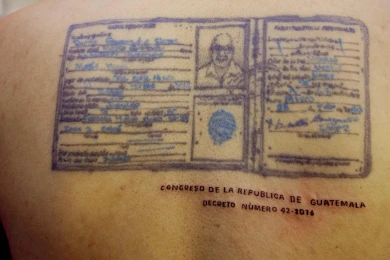
The online seminar Archival Mediations: Art, Community, and Political Action, curated by Sofía Villena Araya, examines the role of archival practices in caring for, dignifying, and activating memory in Central America. As part of the Cáder Institute for Central American Art’s first line of research, driven by the question “What Art Histories does Central America produce?”, this seminar proposes an approach to the archive as a mediator that articulates relationships between art, community, and political action, while engaging with the historiographical questions raised by their intersections.
Although the proposal is not limited to discussions of the Central American isthmus, it is framed by the particular conditions under which memory has been constructed in the region. Central America is a territory vulnerable to natural and geological disasters, marked by political violence exercised by authoritarian states and fragile institutions, a persistent colonial and imperial legacy, and the social fragmentation resulting from these factors. It is also a context in which the archive does not necessarily refer to a specific place —such as a building or documentary collection— nor does it primarily follow the protocols of a discipline such as archival science. Rather, the seminar explores how the archive operates, through art, as a dispositif that forges connections, generates forms of belonging, and opens spaces for political action.
The encounter unfolds across two sessions: the first focuses on archival practices addressing questions of memory, violence, and war; the second examines community-based practices surrounding queer and sex-dissident archives. In the face of the systematic destruction of memory, the archival practices discussed in these sessions demonstrate how the archive emerges in other spaces and according to different logics. Within this framework, the proposed space for exchange and research explores the role of art as a productive medium for constructing archives through images, affects, intimacy, performativity, the body, orality, and fiction, as well as through other materialities that challenge the centrality of the document and of writing.
Intergenerationality
Thursday, 9 April 2026 – 5:30pm
This series is organised by equipoMotor, a group of teenagers, young people and older people who have participated in the Museo Reina Sofía’s previous community education projects, and is structured around four themed blocks that pivot on the monstrous.
The third session gazes at film as a place from which to dismantle the idea of one sole history and one sole time. From a decolonial and queer perspective, it explores films which break the straight line of past-present-future, which mix memories, slow progress and leave space for rhythms which customarily make no room for official accounts. Here the images open cracks through which bodies, voices and affects appear, disrupting archive and questioning who narrates, and from where and for whom. The proposal is at once simple and ambitious: use film to imagine other modes of remembering, belonging and projecting futures we have not yet been able to live.