Carte Blanche Session: Radical Film Network
Sanrizuka in Action. Researching the Archives of Ogawa Productions

Held on 22 Jun 2024
The Museo Reina Sofía extends a carte-blanche invitation to members of the Radical Film Network, made up of historians and theorists from political and independent cinema, to put together a film programme of their choice in the Museo. In response, those in the network have selected fragments of films from the Sanrizuka documentary series made by Ogawa Productions, a seminal, non-fictional film collective from Japan that was founded in 1968 by film-maker Shinsuke Ogawa (1935–1992), a pre-eminent figure in Japanese cinema. With a commitment to independent, collective and political film-making, the group filmed the first political and social upheavals in Japan, for instance the student protests and the Sanrizuka agricultural community’s struggles, which form the nucleus of this session.
From 1968 to 1977, the writer and film-maker Fukuda Katsuhiko (1943–1998) and Ogawa Productions documented the Sanrizuka farmers’ and their allies’ resistance movement as they protested about the destruction of their villages and land caused by the construction of Narita International Airport, the main aerial gateway to Japan and a project imposed by the government at the time. The struggle extended across a number of decades and, therefore, was one of the biggest social opposition movements in Japan, one that still echoes today and reverberates through other contemporary land defence struggles and movements. During this process, members of Ogawa Productions lived in the region of Sanrizuka, in the town of Heta, situated at the heart of the conflict, and would make seven films, all told, about the conflict, documenting core aspects of the farmers’ lives.
This presentation focuses on the audiovisual collection of Narita International Airport and the archives of the Community Historical Museum, which conserve the memory of decades-long land struggles against the construction of this infrastructure. The screenings are complemented by a conversation with researcher Aikawa Yoichi and the film programmer Ricardo Matos Cabo on the history and potential use of these images.
Organised by
Museo Reina Sofía
Related links
Archivos del cine radical / Archives of Radical Cinema (Radical Film Network and Universidad Autónoma de Madrid)
Participants
Aikawa Yoichi is a film archivist, historian and lecturer at Japan’s Nagano University. He was born in Shibayama, where Ogawa Productions produced their series of Sanrizuka films. His main areas of research are Japanese contemporary history and historical sociology and, alongside different researchers and archivists from different fields, he organises, conserves and researches the bulk of materials left by Ogawa Productions and ex-member Fukuda Katsuhiko, who was one of his research mentors.
Ricardo Matos Cabo is an independent film programmer and researcher. His work focuses on the history of documentary film, the intersection of film, archive and the history of social movements, with a contemporary approach to post-war Japanese documentaries and the history of film pedagogy. He has recently organised, among other events, retrospectives on the work of Ogawa Productions, Tsuchimoto Noriaki and Sumiko Haneda, and together with Lucía Salas co-edited the book El cine de Peter Nestler. Se acercan otros tiempos (Caniche Editorial, 2023). He is currently a professor at the Elías Querejeta Zine Eskola (Donostia-San Sebastián).
Más actividades
All Time
Saturday, 25 April and 16 May 2026 — 7pm
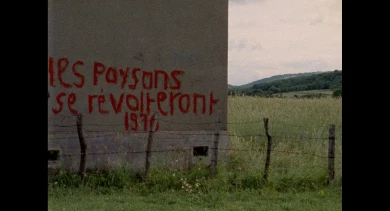
As a recap of the previous sessions, this screening considers a geography of past and present struggles: a refined formal approach, a portrait of popular life, the landscape testimony of working communities and the critique of accumulation and inequality. The monumental diptych Too Early, Too Late (1982) reflects Engels’s sharp analysis of the French Revolution, along with the enumeration of the distribution of taxes on different hamlets in the French countryside. In the second part, the account of Mahmoud Hussein — a pseudonym for Egyptian Marxist historians Bahgat El Nadi and Adel Rifaat — ranges across the memory of anti-imperialist citizen revolts in Egypt throughout the twentieth century. The film destabilises stereotypes and common places of political insurgency in the North African country. Recovering and circulating this latent memory helps to name that which still resists being named and, as Straub y Huillet indicate, “making the revolution is to put very old yet forgotten things back in their place”.
Framed inside The Collection Screened is the programme Present Time: Insurgent Images, curated by Luis López Carrasco, a key film-maker with a distinguished international career. The works in the programme, selected from the Museo’s film and video collection, interlink projects that are conceptual, refined, systematic — as an X-ray of their time in history — with firebrand domestic and activist films, comprehending different political emergencies from the second half of the twentieth century in Europe and Latin America. These works are viewed in light of a genealogy of revolt which buries its roots in the nineteenth century.
![Joan Colom, El carrer [La calle], 1960, película](https://recursos.museoreinasofia.es/styles/small_landscape/public/Actividades/coleccion-proyectada-5.jpg.webp)
Observation and Intervention
Friday, 24 April and 15 May 2026 — 7pm
If cinema does not set out to reach objectivity then each film takes a biased view of observed reality. The session begins with the seemingly neutral view of Cao Guimarães to observe a boy and girl playing in the rain in Da Janela do Meu Cuarto (From the Window of My Room, 2004). A work, deceptively relaxed, which prefigures one of the session’s constants: the place of childhood as a project of worlds to come. The boundless urban vitality of Barcelona Joan Colom portrays in El carrer (The Street, 1960) comes face to face with the extraordinary Niños (Children, 1974), by the Grupo de Cine Liberación sin Rodeos, a multi-voiced depiction of a group of friends in Cuzco whose citizen-focused schooling co-exists, just, with their daily work and reveals the limitations of the Revolutionary Government of the Armed Forces in Peru. Visión de la selva (View of the Jungle, 1973), by the same Peruvian collective, puts forward another model of representation and intervention on the public sphere with direct news activism, which denounces the plundering of the Amazon by multi-national companies.
Framed inside The Collection Screened is the programme Present Time: Insurgent Images, curated by Luis López Carrasco, a key film-maker with a distinguished international career. The works in the programme, selected from the Museo’s film and video collection, interlink projects that are conceptual, refined, systematic — as an X-ray of their time in history — with firebrand domestic and activist films, comprehending different political emergencies from the second half of the twentieth century in Europe and Latin America. These works are viewed in light of a genealogy of revolt which buries its roots in the nineteenth century.
![Video-Nou/Servei de Vídeo Comunitari, Ocaña. Exposició a la Galería Mec-Mec [Ocaña. Exposición en la Galería Mec-Mec], 1977, película](https://recursos.museoreinasofia.es/styles/small_landscape/public/Actividades/coleccion-proyectada-7.png.webp)
Daily Matter
Thursday, 23 April and 14 May 2026 — 7pm
Time, light, vision. What is an image? How does an image make us see the world? First, hypnosis, a reset: Paulino Viota’s Duración (Duration, 1970), the portrait of a clock face over sixty seconds. Next, a window into a slightly altered reality: Javier Aguirre’s Objetivo 40º (40 Degree Lens, 1968–1970). A minimum intervention that inspires a session considered as successive immersions in blocks of time, as well as a journey that starts from the intimacy of a candle, the movement of a car around abandoned peripheries and the traces of anti-Franco protestors, with night falling to the emotive, profound and sharp voice of Ocaña. Now in 1990, the journey ends at other street protests, those articulated by the Agustín Parejo School collective owing to the housing problem in Málaga. As Javier Aguirre states: “It is not about achieving the objective. It is about demystifying it”.
Framed inside The Collection Screened is the programme Present Time: Insurgent Images, curated by Luis López Carrasco, a key film-maker with a distinguished international career. The works in the programme, selected from the Museo’s film and video collection, interlink projects that are conceptual, refined, systematic — as an X-ray of their time in history — with firebrand domestic and activist films, comprehending different political emergencies from the second half of the twentieth century in Europe and Latin America. These works are viewed in light of a genealogy of revolt which buries its roots in the nineteenth century.
![Tracey Rose, The Black Sun Black Star and Moon [La luna estrella negro y negro sol], 2014.](https://recursos.museoreinasofia.es/styles/small_landscape/public/Obra/AD07091_2.jpg.webp)
On Black Study: Towards a Black Poethics of Contamination
27, 28, 29 ABR 2026
The seminar On Black Study: Towards a Black Poethics of Contamination proposes Black Study as a critical and methodological practice that has emerged in and against racial capitalism, colonial modernity and institutional capture. Framed through what the invited researcher and practitioner Ishy Pryce-Parchment terms a Black poethics of contamination, the seminar considers what it might mean to think Blackness (and therefore Black Study) as contagious, diffuse and spreadable matter. To do so, it enacts a constellation of diasporic methodologies and black aesthetic practices that harbor “contamination” -ideas that travel through texts, geographies, bodies and histories- as a method and as a condition.
If Blackness enters Western modernity from the position of the Middle Passage and its afterlives, it also names a condition from which alternative modes of being, knowing and relating are continually forged. From within this errant boundarylessness, Black creative-intellectual practice unfolds as what might be called a history of touches: transmissions, residues and socialities that unsettle the fantasy of pure or self-contained knowledge.
Situated within Black radical aesthetics, Black feminist theory and diasporic poetics, the seminar traces a genealogy of Black Study not as an object of analysis but as methodological propositions that continue to shape contemporary aesthetic and political life. Against mastery as the horizon of study, the group shifts attention from what we know to how we know. It foregrounds creative Black methodological practices—fahima ife’s anindex (via Fred Moten), Katherine McKittrick’s expansive use of the footnote, citation as relational and loving labour, the aesthetics of Black miscellanea, and Christina Sharpe’s practices of annotation—as procedures that disorganise dominant regimes of knowledge. In this sense, Black Study is approached not as a discrete academic field but as a feel for knowing and knowledge: a constellation of insurgent practices—reading, gathering, listening, annotating, refusing, world-making—that operate both within and beyond the university.
The study sessions propose to experiment with form in order to embrace how ‘black people have always used interdisciplinary methodologies to explain, explore, and story the world.’ Through engagements with thinkers and practitioners such as Katherine McKittrick, C.L.R. James, Sylvia Wynter, Christina Sharpe, Fred Moten, Tina Campt, Hilton Als, John Akomfrah, fahima ife and Dionne Brand, we ask: What might it mean to study together, incompletely and without recourse to individuation? How might aesthetic practice function as a poethical intervention in the ongoing work of what Sylvia Wynter calls the practice of doing humanness?
Mediations of the Archive: Art, Community, and Political Action
Tuesday 7, and Thursday 23, April, 2026 – 17:00 h
The online seminar Mediations of the Archive: Art, Community, and Political Action, curated by Sofía Villena Araya, examines the role of archival practices in caring for, dignifying, and activating memory in Central America. As part of the Cáder Institute for Central American Art’s first line of research, driven by the question “What Art Histories does Central America produce?”, this seminar proposes an approach to the archive as a mediator that articulates relationships between art, community, and political action, while engaging with the historiographical questions raised by their intersections.
Although the proposal is not limited to discussions of the Central American isthmus, it is framed by the particular conditions under which memory has been constructed in the region. Central America is a territory vulnerable to natural and geological disasters, marked by political violence exercised by authoritarian states and fragile institutions, a persistent colonial and imperial legacy, and the social fragmentation resulting from these factors. It is also a context in which the archive does not necessarily refer to a specific place —such as a building or documentary collection— nor does it primarily follow the protocols of a discipline such as archival science. Rather, the seminar explores how the archive operates, through art, as a dispositif that forges connections, generates forms of belonging, and opens spaces for political action.
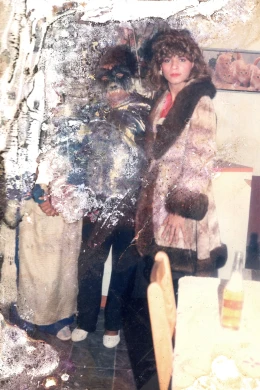
The encounter unfolds across two sessions: the first focuses on archival practices addressing questions of memory, violence, and war; the second examines community-based practices surrounding queer and sex-dissident archives. In the face of the systematic destruction of memory, the archival practices discussed in these sessions demonstrate how the archive emerges in other spaces and according to different logics. Within this framework, the proposed space for exchange and research explores the role of art as a productive medium for constructing archives through images, affects, intimacy, performativity, the body, orality, and fiction, as well as through other materialities that challenge the centrality of the document and of writing.