
Archipielago 2020
Held on 18 Sep 2020
For a fourth consecutive year, the concert series Archipelago invites the audience to delve into the complex nature of the contemporary world through listening and explores the relationship between experimental music and popular culture by way of sounds from different narratives and geographies. The present edition continues to conduct research into that popular repertory as a form transmitting knowledge, questioning the globalising principles associated with notions such as experimentation and avant-garde.
Mix, transmission and mutation are terms which, musically, can have a positive meaning, and are aspects this concert series has always embraced. Yet today these words have become imbued with a negative connotation, reflecting the shift towards the hermeticism of nation states and their borders: How will contemporary music genres be affected? What about the different sound communities scattered around the world? To what degree will it impact the practices of an entire generation of musicians? And the live music experience? How will local aspects be re-signified in this new setting? How will networks be re-built in a world where the freedom of movement and contact of bodies are limited?
In dealing with these enquiries, the latest edition of Archipelago assumes a novel format: all acts will take place outdoors in the Sabatini Building Garden via a quadrophonic arrangement of sound, placing the stress on the physicality of sound and offering DJ-led listening sessions, whilst drawing inspiration from the experience of diaspora. Concerts which look to reinvent popular culture and speculate on what is in store and on constructing in a particularly unpredictable future.
Programme
Friday, 18 September – from 7pm to 9pm
Doors open at 6:30pm
7pm - Cher-ee-lee
Cher-ee-lee is the moniker Jerilyn Gonçalves uses for her sessions and podcasts, some of which have featured on digital platforms such as Radio Relativa and KRAAK. Of note is her radio show Música para Camaleones (Music for Chameleons), in which she traces the plurality of directions taken by Venezuela’s sound heritage, within and beyond its borders, with the project leading Gonçalves to study her country’s music with the aim of, as she puts it, “building a home away from home”. Cher-ee-lee is a native from Caracas who had to move to Madrid, integrating into the community of Venezuelan expatriates settled in Spain, the largest in Europe. For Archipelago she leads a session around the captivating musical syncretism of Venezuela and its subsequent influence on manifestations of contemporary experimentation. In short, an invitation to discover an uncommon narrative on Venezuela’s fertile culture and history.
8pm - Jessica Ekomane
Rhythm, tone, time and space are probably the four variables that define the compositions of this French artist, residing in Berlin, who is a great admirer of Györgi Ligeti and Maryanne Amacher. In Archipelago, she performs a concert which, through the use of a quadrophonic system and the immersive nature of her sonic landscapes, seeks to trigger a cathartic effect among the audience as she employs her experience of making installations in which psychoacoustics are at the core. Ekomane’s pieces, moreover, depart from an investigation into the relationships between individual perception and collective dynamics, between listening and its social determinants. Multivocal (2019), her debut album, aptly demonstrates her rigorous aesthetics and working methodology — seemingly static, but ever-changing, to the point of inducing a kind of trance in the listener.
Saturday, 19 September – from 1pm to 2pm
Doors open at 12:30pm
1pm - Lucrecia Dalt
In recent years, this Berlin-based Colombian artist has developed a prolific career at the intersection of electroacoustic music, vocal experimentation and installation. Dalt’s work perpetually draws from myriad musical, literary and artistic references, moving between territories as far-reaching as science fiction, geology and animism. In this vein, it is worth highlighting the installation made in 2019, with Maria Thereza Alves, in the German capital’s botanical garden during the CTM festival, in which both gave a voice to tropical plants renamed under Western classifications. Her appearance at the festival also served to present No Era Sólida (2020) in a quadrophonic format, a record which delves into the strands already opened in Anticlines (2018). This latest work unfolds through Lia, a kind of projection of the artist that materialises vocally in an act which draws parallels with Interface, a poem by Chicana poet Gloria Anzaldúa in which she narrates her affaire with an extraterrestrial being; a queer and mestizo text, from which the title of the album originates.
Saturday, 19 September – from 6pm to 9pm
Doors open at 5:30pm
6pm - Jokkoo (Baba Sy & Mbodj)
The Jokkoo collective came into being in Barcelona in 2017 to disseminate music and sound narratives from the African continent and its diasporas. Despite a markedly electronic identity, their sounds did not find a place on the dance floors of the Catalan city. Thus, Baba Sy and Mbodj (Maguette Dieng) — joined by Opoku, Mookie and B4mba over the past year — decided to bring this musical ebullience to the fore at parties, events and a programme on the radio station Dublab, with reference points most notably including genres which, with a cosmic and futurist spirit, seek to transform the analysis of the past and foreground the present. This guided listening session focuses on the inheritance and echoes of the black Atlantic, a sound journey that is also an account of certain histories that closely run through this duo.
7pm - Tarta Relena
Tarta Relena is a Catalan duo, made up of Marta Torrella (contralto) and Helena Ros (soprano), that explores, a cappella, the sonorities of different oral tradition music and singer-songwriters related to the Mediterranean. Both came into contact with polyphony via choral music, leading them to explore renaissance and baroque repertoires, in addition to their background in musicology (Marta) and linguistics (Helena), which goes some way towards explaining their performances of ancient Sephardic, Greek, Corsican and Menorcan songs. Whilst respecting tradition, their aim is not to perpetuate it and both are quick to avoid any glimmer of purism — thus, they accept with humour the tag “progressive Gregorian” in defining their music. For Archipelago they put forward a concert that reflects the achievements of their outstanding debut, Ora pro nobis (2019), and more recently Intercede pro nobis (2020), a work which welcomes the introduction of subtle electronic arrangements.
8pm - Lucrecia Dalt
In recent years, this Berlin-based Colombian artist has developed a prolific career at the intersection of electroacoustic music, vocal experimentation and installation. Dalt’s work perpetually draws from myriad musical, literary and artistic references, moving between territories as far-reaching as science fiction, geology and animism. In this vein, it is worth highlighting the installation made in 2019, with Maria Thereza Alves, in the German capital’s botanical garden during the CTM festival, in which both gave a voice to tropical plants renamed under Western classifications. Her appearance at the festival also served to present No Era Sólida (2020) in a quadrophonic format, a record which delves into the strands already opened in Anticlines (2018). This latest work unfolds through Lia, a kind of projection of the artist that materialises vocally in an act which draws parallels with Interface, a poem by Chicana poet Gloria Anzaldúa in which she narrates her affaire with an extraterrestrial being; a queer and mestizo text, from which the title of the album originates.
With the sponsorship of:
Curators:
Rubén Coll and José Luis Espejo
Collaboration:
Organised by
Museo Reina Sofía
Sponsorship:


Más actividades
All Time
Saturday, 25 April and 16 May 2026 — 7pm
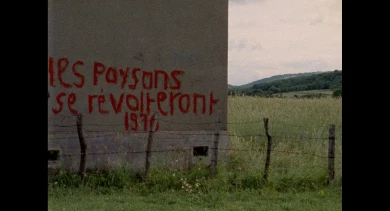
As a recap of the previous sessions, this screening considers a geography of past and present struggles: a refined formal approach, a portrait of popular life, the landscape testimony of working communities and the critique of accumulation and inequality. The monumental diptych Too Early, Too Late (1982) reflects Engels’s sharp analysis of the French Revolution, along with the enumeration of the distribution of taxes on different hamlets in the French countryside. In the second part, the account of Mahmoud Hussein — a pseudonym for Egyptian Marxist historians Bahgat El Nadi and Adel Rifaat — ranges across the memory of anti-imperialist citizen revolts in Egypt throughout the twentieth century. The film destabilises stereotypes and common places of political insurgency in the North African country. Recovering and circulating this latent memory helps to name that which still resists being named and, as Straub y Huillet indicate, “making the revolution is to put very old yet forgotten things back in their place”.
Framed inside The Collection Screened is the programme Present Time: Insurgent Images, curated by Luis López Carrasco, a key film-maker with a distinguished international career. The works in the programme, selected from the Museo’s film and video collection, interlink projects that are conceptual, refined, systematic — as an X-ray of their time in history — with firebrand domestic and activist films, comprehending different political emergencies from the second half of the twentieth century in Europe and Latin America. These works are viewed in light of a genealogy of revolt which buries its roots in the nineteenth century.
![Joseph Kosuth. One and Three Chairs [Una y tres sillas]](https://recursos.museoreinasofia.es/styles/small_landscape/public/Actividades/joseph_kosuth.jpg.webp)
The (legal) person and the legal form. Chapter III
Monday 11, Wednesday 13 and Thursday 14 May 2026 - Registration deadline extended
As part of the Studies Constellation, the Study Directoship’s annual fellowship, art historian and theorist Sven Lütticken leads the seminar The (Legal) Person and the Legal Form: Theoretical, Artistic, and Activist Commitments to foster dialogue and deepen the hypotheses and questions driving his research project.
The seminar consists of eight sessions, divided into three chapters throughout the academic year. While conceived as non-public spaces for discussion and collective work, these sessions complement, nourish, and amplify the public program of the Studies Constellation.
First session of the third chapter focuses on the transformation of the artwork in the context and wake of Conceptual art. The very notion of the artwork, together with its ownership and authenticity, is reconsidered from a broad perspective open to new and alternative models of management, which could ultimately transform the relationship between artist, artwork and owner. Can some of the practices in question serve as critical models? To what extent is it possible to think and act with them, and extrapolate from them, beyond a beautiful niche?
The second session turns to the question of representation. While many (but not all) human natural persons can, in principle, represent themselves in legal matters, other needs representatives. This goes for minors as well for adults who have been placed under legal guardianship; it applies to fictitious persons such as corporations and states, who need human representatives to sign contracts or defend them in court. We will look into the question of legal representation in conjunction with other forms of representation, in the cultural as well as political register—taking cues from Spivak’s distinction between portrait (Darstellung) and proxy (Vertretung), which is an unstable and historically mutable one.
The seminar concludes with a closing session dedicated to collectively revisiting and reflecting on the themes and discussions that have emerged throughout the first Studies Constellation Residency Program.
School of SUP: Trash Cinema Session
Thursday 30 April 2026 – 7pm
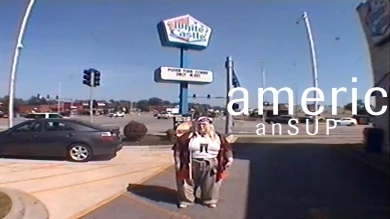
The deranged study plan by School of SUP, an equipo1821 development, brings to public attention their unique display of classwork with this screening. The session shows three short films made with analogue cameras, written and edited by and starring, collectively, students in pure DIY style, followed by a presentation of American SUP (2026), a feature-length and irreverent trash film by Soy una pringada and Dani Tezla.
American SUP (2026) is a US road trip through the American Midwest, recorded with a camera from 1997, in which YouTuber, DJ, cultural agitator and cult internet personality Soy una pringada and Dani Tezla direct and star in an adventure with no shortage of stellar appearances and impossible settings: the home of American Football, a corpse store, the Rainforest Café storm, a Cannibal Corpse gig, a basement in Minnesota, foul hotels, cuck chairs and a clown-filled hall of fame. The film is a lo-fi, folk-tinged version of American Gothic, a genre practised by film-makers such as George Kuchar, Harmony Korine and Sean Price Williams.
This session, moreover, is articulated with the core strands of the equipo1821 education programme School of SUP. Film, Art and Nihilism in the 1990s, which, through film — mainly from the 1990s — explores different underground practices, urban cultures, crossovers of art with popular culture and a kind of generational adolescent angst as background noise.
![Tracey Rose, The Black Sun Black Star and Moon [La luna estrella negro y negro sol], 2014.](https://recursos.museoreinasofia.es/styles/small_landscape/public/Obra/AD07091_2.jpg.webp)
On Black Study: Towards a Black Poethics of Contamination
27, 28, 29 ABR 2026
The seminar On Black Study: Towards a Black Poethics of Contamination proposes Black Study as a critical and methodological practice that has emerged in and against racial capitalism, colonial modernity and institutional capture. Framed through what the invited researcher and practitioner Ishy Pryce-Parchment terms a Black poethics of contamination, the seminar considers what it might mean to think Blackness (and therefore Black Study) as contagious, diffuse and spreadable matter. To do so, it enacts a constellation of diasporic methodologies and black aesthetic practices that harbor “contamination” -ideas that travel through texts, geographies, bodies and histories- as a method and as a condition.
If Blackness enters Western modernity from the position of the Middle Passage and its afterlives, it also names a condition from which alternative modes of being, knowing and relating are continually forged. From within this errant boundarylessness, Black creative-intellectual practice unfolds as what might be called a history of touches: transmissions, residues and socialities that unsettle the fantasy of pure or self-contained knowledge.
Situated within Black radical aesthetics, Black feminist theory and diasporic poetics, the seminar traces a genealogy of Black Study not as an object of analysis but as methodological propositions that continue to shape contemporary aesthetic and political life. Against mastery as the horizon of study, the group shifts attention from what we know to how we know. It foregrounds creative Black methodological practices—fahima ife’s anindex (via Fred Moten), Katherine McKittrick’s expansive use of the footnote, citation as relational and loving labour, the aesthetics of Black miscellanea, and Christina Sharpe’s practices of annotation—as procedures that disorganise dominant regimes of knowledge. In this sense, Black Study is approached not as a discrete academic field but as a feel for knowing and knowledge: a constellation of insurgent practices—reading, gathering, listening, annotating, refusing, world-making—that operate both within and beyond the university.
The study sessions propose to experiment with form in order to embrace how ‘black people have always used interdisciplinary methodologies to explain, explore, and story the world.’ Through engagements with thinkers and practitioners such as Katherine McKittrick, C.L.R. James, Sylvia Wynter, Christina Sharpe, Fred Moten, Tina Campt, Hilton Als, John Akomfrah, fahima ife and Dionne Brand, we ask: What might it mean to study together, incompletely and without recourse to individuation? How might aesthetic practice function as a poethical intervention in the ongoing work of what Sylvia Wynter calls the practice of doing humanness?
![Aurèlia Muñoz, Ocell estel S2 [Pájaro-cometa S2], 1982. Archivo Aurèlia Muñoz](https://recursos.museoreinasofia.es/styles/small_landscape/public/Actividades/aurelia-munoz-charlainaugura.jpg.webp)
Aurèlia Muñoz. Beings
28 ABR 2026
In conjunction with the opening of Aurèlia Muñoz. Beings, an exhibition curated by Fundación EINA via its einaidea platform, Manuel Cirauqui, einaidea’s founding director, and collaborators Rosa Lleó and Sílvia Ventosa engage in conversation around the curatorial approach to this anthological show devoted to Aurèlia Muñoz (Barcelona, 1926–2011). The exhibition, organised by the Museo Reina Sofía and the Museu d’Art Contemporani de Barcelona (MACBA), traces an extensive path through the artist’s career and revises the conceptual points that run through her work, points which are pivotal to understanding the development of contemporary textile art.
The encounter seeks to explore new perspectives imparted by the show and to offer a wider reading of Muñoz’s legacy, travelling through more than fifty years of artistic practice: from monumental textile structures to handmade paper sculptures, from her beginnings linked to Nouvelle Tapisserie and the Catalan Tapestry School to the consolidation of her own language, which flows beyond the limits of fabric and craft.
Furthermore, the conversation touches on the experimental nature of Muñoz’s work, defined by a constant investigation into techniques and materials that interlace ancestral knowledge and artisan traditions with contemporary resources, as well as her main points of reference, influences and unique concept of space. Thus, the focus rests on the concept of “beings”, which are key to understanding her semi-abstract sculptures and suspended structures, conceived as constantly evolving forms which inhabit space. Finally, her drawings, maquettes and personal archive are presented as keys to understanding the cohesiveness and depth of her creative universe.
These inaugural conversations, part of the main working strands of the Museo’s Public Programmes Area, aim to explore in greater depth the exhibition narratives of the shows organised by the Museo from the perspective of artists, curators and specialists.