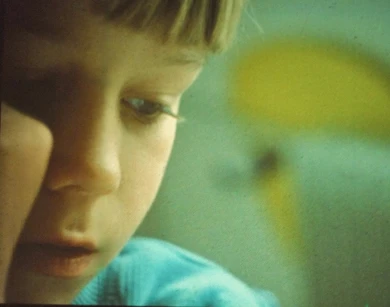
Ute Aurand. Franz. Película, 2011
Held on 08, 14 May 2025
— With a presentation by and discussion with Ute Aurand in the first session
Total duration: 61’
Ute Aurand. Maria und Die Welt (Maria and the World)
Germany, 1995, digital archive, colour, black and white, sound, 15’
Ute Aurand. Kopfüber im Gëast (Hanging Upside Down in the Branches)
Germany, 2009, 16mm, colour, silent, 15’
Ute Aurand. Zu Hause (At Home)
Germany, 1998, 16mm, black and white, sound, 2’30’’
Ute Aurand. Paulina
Germany, 2011, 16mm, colour, black and white, silent, 5’
Ute Aurand. Franz
Germany, 2011, 16mm, colour, black and white, silent, 5’
Ute Aurand. Lisbeth
Germany, 2011, 16mm, colour, silent, 3’
Ute Aurand. Lisa
Germany, 2017, 16mm, colour, black and white, sound, 5’
Ute Aurand. Renate
Germany, 2021, 16mm, colour, black and white, sound, 6’
Ute Aurand. Zuoz
Germany, 2009, 16mm, colour, sound, 1’30’’
Ute Aurand. Sakura, Sakura
Germany, 2015, 16mm, colour, black and white, sound, 3’
Aurand composes these film portraits, awash with tenderness and empathy, from long-standing lived experiences with those depicted, most of them from the film-maker’s artistic and affective community. A portrait gallery that is, therefore, a homage to Berlin’s alternative culture scene over recent decades as the figures fuse with their environment in a rhythmic, rapid montage that speaks of the inexorable passing of time.
Organised by
Museo Nacional Centro de Arte Reina Sofía
Activity within the program...
Ute Aurand. People, Places, Lives
The Museo Reina Sofía, within the framework of Documenta Madrid, organises a retrospective on Ute Aurand (Germany, 1957), one of the most widely admired experimental film-makers in recent memory. Aurand’s work, comprising some forty films, is striking for being conceived in first person, a form of poetry based on the formal characteristics of analogue film in 16mm. The director will attend the series to present her work and engage with the audience.
Documenta Madrid devotes this year’s edition to archive images, the rationale behind foregrounding Ute Aurand and her work in this series. Film, an invention of modernity, comes into being as a great archive of the world, with the pioneering film-makers in the late nineteenth century travelling to record, show and assemble distant places in which, with the arrival of the camera, trade and industry would soon disembark for the purposes of expansion. Ute Aurand belongs to a counter-current tradition, in which film, far from visually conquering the world, fuses and dilutes through daily experience. Her film-making is also an archive, yet not so much an encyclopaedic repertoire of places and subjects as an ensemble of daily lives, memories and moments that are transfigured in beautiful epiphanies by the camera and by a unique 16mm poetic she implements in exceptional fashion.
Aurand shoots all her films in 16mm using a Bolex, the camera par excellence for experimental film, breathing life into a body of work which gains depth in all material and procedural qualities of analogue cinema. Her work is an affirmation of an artisan aesthetic and practice, inseparable from a particular way of seeing, that confronts the logics of the digital image pervading our present. Aspects such as thirty-second sequences, the maximum duration of film, editing from the same camera and the scarcity of filmed material are entwined with chromatic pulsations and grainy textures to give form to a beautiful poetic of the fleetingness that responds at once to technique and the filmed theme.
Her filmic compositions are made up of shimmering portraits of friends and relatives and vivid landscapes which mean something to her, two genres Aurand has worked on across decades. Each one is afforded a monographic programme in this series. These portraits and landscapes are a way of conversing with the passing of time while also retaining the deeply intimate nature of existence: moments of life transmuted into films. The third programme spotlights Aurand’s first-person collective conversation with other women film-makers, for instance Margaret Tait, Marie Menken and Ewelina Rosinska. This session, curated by Aurand, also alludes to the decades-long roles of film curator and conservator she has undertaken at Arsenal, the Institute for Film and Video Art, a German film centre and a reference point internationally.
Ver programaPortraits
Past activity
— With a presentation by and discussion with Ute Aurand in the first session
Total duration: 61’Ute Aurand. Maria und Die Welt (Maria and the World)
Germany, 1995, digital archive, colour, black and white, sound, 15’Ute Aurand. Kopfüber im Gëast (Hanging Upside Down in the Branches)
Germany, 2009, 16mm, colour, silent, 15’Ute Aurand. Zu Hause (At Home)
Germany, 1998, 16mm, black and white, sound, 2’30’’Ute Aurand. Paulina
Germany, 2011, 16mm, colour, black and white, silent, 5’Ute Aurand. Franz
Germany, 2011, 16mm, colour, black and white, silent, 5’Ute Aurand. Lisbeth
Germany, 2011, 16mm, colour, silent, 3’Ute Aurand. Lisa
Germany, 2017, 16mm, colour, black and white, sound, 5’Ute Aurand. Renate
Germany, 2021, 16mm, colour, black and white, sound, 6’Ute Aurand. Zuoz
Germany, 2009, 16mm, colour, sound, 1’30’’Ute Aurand. Sakura, Sakura
Germany, 2015, 16mm, colour, black and white, sound, 3’Aurand composes these film portraits, awash with tenderness and empathy, from long-standing lived experiences with those depicted, most of them from the film-maker’s artistic and affective community. A portrait gallery that is, therefore, a homage to Berlin’s alternative culture scene over recent decades as the figures fuse with their environment in a rhythmic, rapid montage that speaks of the inexorable passing of time.
Landscapes
Past activity
— With a presentation by and discussion with Ute Aurand in the first session, moderated by film curator and experimental film theorist, Pablo Marín
Screening in 16mm
Total duration: 70’Ute Aurand. To Brasil
Germany, 2023, 16mm, colour, black and white, sound, 18’Ute Aurand. Glimpses from a Visit to Orkney in Summer 1995
Germany, 2020, 16mm, colour, silent, 4’30’’Ute Aurand. Four Diamonds
Germany, 2016, 16mm, colour, sound, 4’30’’Ute Aurand. Junge Kiefern (Young Pines)
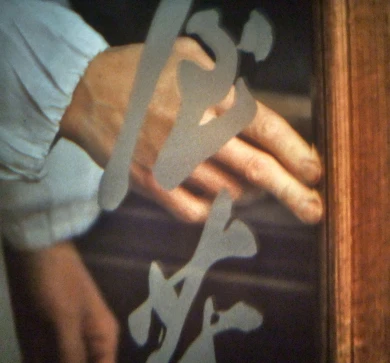
Germany, 2011, 16mm, colour, black and white, sound, 43’Places Aurand has visited throughout her life: Brazil, Japan, Scotland, in which her fascination with local culture mixes with an impressionistic visual perception. Fading fragments of architecture, people and nature speak of the ephemeral quality of travel, yet with the film-maker, forever clutching her camera, moving, and with no tripod, they are also a prolongation of her body. An ode to travel-based knowledge and learning.
Conversations
Past activity
Duración total: 76’
Margaret Tait. Portrait of Ga [Retrato de Ga]
Escocia, 1952, 16mm, color, VO en inglés sin subtítulos, 4’30’’Renate Sami. Wenn du eine Rose siehst [Cuando ves una rosa]
Alemania, 1995, DCP, sonido, 5’Utako Koguchi. Sleeping Flower [Flor durmiente]
Japón, 1991, 16mm, color, sonido, 1991, 7’Marie Menken. Notebook [Cuaderno de notas]
Estados Unidos, 1962-1963, 16mm, color, silente, 10’Maria Lang. Familiengruft - ein Liebesgedicht an meine Mutter [Cripta familiar-un retrato de amor a mi madre]
Alemania, 1981, archivo digital, VO en alemán con subtítulos en español, blanco y negro, 10’Ute Aurand y Ulrike Pfeiffer. Oh! Die vier Jahreszeiten [¡Oh! Las cuatro estaciones]
Alemania, 1986-1988, archivo digital, color, sonido, 20’Ewelina Rosinska. Erde im Mund [Tierra en la boca]
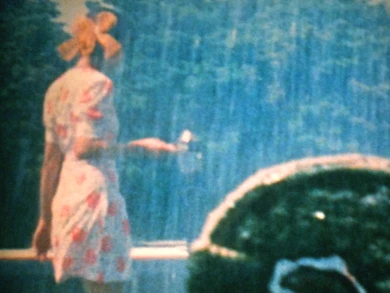
Polonia, 2020, DCP, color, sonido, 20’Aurand pertenece a una tradición lírica y vibrante del cine en primera persona, en la que sostiene un diálogo con autoras del pasado, como la norteamericana Marie Menken (1909-1970) o la escocesa Margaret Tait (1918-1999), pero también del presente, como la polaca Ewelina Rosinska (1987). Una conversación sin fronteras generacionales ni geográficas, a la que se suman la japonesa Utako Koguchi (1961), mentoras como Renate Sami (1935-2023) y coetáneas como Maria Lang (1945) o Ulrike Pfeiffer (1951), todas ellas valedoras del cine como una forma de poesía y en la concepción artesanal del 16mm.
Más actividades
Dear Felix:
Saturdays at 6pm
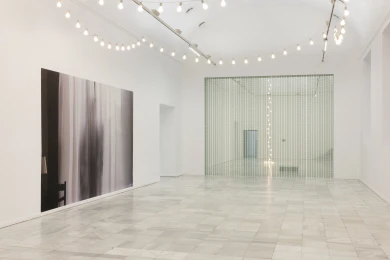
The immediately recognisable art of Felix Gonzalez-Torres, which is on display, from May to October 2026, in the show Sweet Revenge, moves beyond the transmission of messages laden with poetic evocation, vital or biographical reflection, or even a clear political or ethical positioning. Rather, it seeks an active response by visitors to the exhibition. His work invites engagement with these messages so that, whether delighting, moving or challenging, it still prompts viewers to participate in the dialogue and complete the artistic undertaking with their own actions.
Thus, the guided tour Dear Felix: offers a shared, dialogue-inflected tour through the show, with the aim of collectively thinking and feeling the gestures the artist’s work puts forward. Ostensibly simple actions such as crossing through a beaded curtain to take a sweet and eat it, taking a poster from a stack of paper or simply observing a billboard closely, all contain ways of understanding life, loss, love, injustice or the passing — never linear — of time. The tour’s ultimate aim is not to set meanings or create an overload of interpretations of the work, nor does it seek to crystallise an image of the artist and his life in a response to questions which are not there. It looks instead to provide a space to open shared meaning in these apparently simple objects and to attempt a possible correspondence of return from the here and now. A lumbering attempt at responding which starts with a simple Dear Felix:
Files of Tropical Revolutions
Sábado 20 y 27 de junio, 2026 - 19:00 H
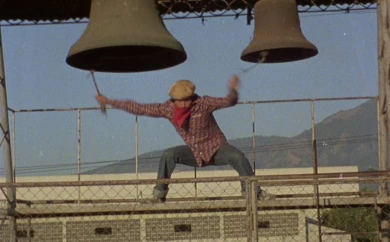
The Reframing Banana Imagery series concludes with two works that condense the height and twilight of this period in history, epic sagas that cross borders and registers to embody experiences of armed struggle in the region. Cameras mix with firearms, borders between nations blur and patience reaches breaking point. This is where the tipping point lies, where the bloodshed weighs heavy and the murmurings of regional brotherhood are buried in the ground again.
Pan y dignidad (Carta abierta de Nicaragua) [Bread and Dignity (An Open Letter to Nicaragua)] recounts the historical records and process of national reconstruction in Nicaragua via the Sandinista popular uprising. Historias prohibidas de Pulgarcito (Forbidden Tales of Tom Thumb) places the camera at the heart of the El Salvador revolutionary struggle, interspersing testimonies of daily violence with the verses of the poet Roque Dalton.
Both works understand the armed revolution as an open file under construction. The insurgent brotherhood, although dissolved, still resounds in regional history.
Circling Over Exploited Bodies
Friday, 19 and 26 June 2026 - 7pm
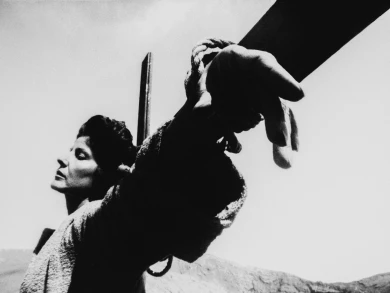
When forms of violence are inflicted on society, film responds from urgency. Images become abstract, sounds fade and the register of dissidence comes from the gut. La zona intertidal (The Intertidal Zone) is an essayistic and poetic approach to the repression of teachers in El Salvador in the 1970s — a teacher studies the biodiversity of the El Salvador coast as a boy finds a body on the same beach. A propósito de la mujer (About Women) interweaves testimonies of misery and rage towards patriarchal structures with fictional scenes of a symbolic procession through a harsh desert.
Both films understand the body as a target of violence and a territory of insurrection, a space where the blood shed by militancy and the patriarchal yoke turn pain into denouncement and existence outside the status quo into an act of political dissidence.
Robert Capa
Friday, 26 June 2026 – 6pm
This international encounter centred on the figure of Robert Capa (Budapest, 1913 — Thai Binh, Vietnam, 1954), one of photojournalism’s pre-eminent figures, is held within the framework of the government initiative Spain and Freedom. Fifty Years and in conjunction with a cluster of three locations — the building on number 10 Calle Peironcely, the Plaza del Fotógrafo Robert Capa and the San Carlos Borromeo Parish in Vallecas — declared as a Place of Democratic Memory.
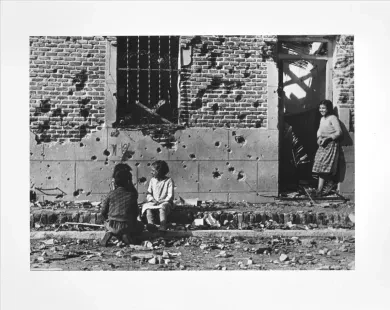
The emblematic photo Robert Capa took in 1936 of this area of Republican Madrid, featuring anonymous children talking in front of a bullet-riddled building attacked by Nazi-fascist air forces, has, in recent years, become a catalyst for impassioned collective action vindicating memory and denouncing the horrors and brutality of wars, past and present.
Within this context, representatives from cultural and academic spheres and civil society organisations from Germany, the USA and Spain discuss the legacy of Capa and photojournalism in European democratic memory, exploring in greater depth two citizen initiatives constructed by Europe from its shared memory: #SalvaPeironcely10 (#SavePeironcely10), in Entrevías (Puente de Vallecas), and the Capa Haus Initiative in the Lindenau neighbourhood of Leipzig, both united by the protection and conservation of historical heritage and by the defence of peace.
The round-table discussion features the participation of Cynthia Young, Juan Miguel Sánchez Vigil, Ulf-Dietrich Brumann and José María Uría Fernández and is moderated by Myriam Soto Lucas. Carmina Gustrán Loscos, the commissioner of Spain and Freedom. Fifty Years, will also join the discussion.
equipoMotor
Jueves alternos, 23 de octubre, 2025 - 11 de junio, 2026 - 17:30 h
El programa equipoMotor regresa en su edición 25-26 con un aire espectral y mutante para lanzar la pregunta: ¿y si el Museo fuera «un poco más Frankenstein»? Inspirándose en dicho monstruo y en todas aquellas criaturas que desafían la norma desde los márgenes, el proyecto de mediación cultural Galaxxia diseña y acompaña una edición incisiva, intergeneracional y descentralizadora, donde saberes invisibilizados, cuerpos raros y deseos molestos se entrelazan para generar nuevas formas de imaginación crítica y radical. En los sótanos y corredores del Museo —un particular laboratorio— las dudas no se esconden: son materia prima.
Así, para este curso el equipoMotor convoca a personas de todas las edades que hayan participado en ediciones anteriores de los distintos equipos del Área de Educación a recorrer el Museo como quien manipula un cuerpo abierto: descoyuntando algunas de sus categorías teóricas y artísticas —la necropolítica, lo crip-cuir, la lucha de clases, las políticas del malestar, la decolonialidad, la temporalidad cuir, la descentralización institucional o el feísmo— para articular un relato díscolo, remendado y palpitante.
El programa se estructura en bloques temáticos sobre lo freak como metodología, el trabajo cultural, la intergeneracionalidad y la diversidad territorial. Cada bloque a su vez se despliega en sesiones que combinan disparadores teóricos y estéticos, visitas a exposiciones y espacios liminales del Museo, talleres artísticos con artistas, ejercicios de curaduría audiovisual colectiva y de relatoría radiofónica, así como instancias de activación pública, mediante proyecciones de cine experimental y coloquios compartidos con el público, en complicidad con el archivo Hamaca y el Área de Cine y Nuevos Medios del Museo.
De este modo, la presente edición incorpora una particularidad: el grupo de participantes irá transformándose en un «colectivo curatorial audiovisual temporalmente autónomo», con capacidad de incidir en la programación del Museo y de abrir la conversación de equipoMotor al público general, cuestionando y expandiendo así los límites entre las cabezas que deciden, las manos que producen y los cuerpos y presencias que habitan la institución. Las personas seleccionadas en la modalidad oyente serán invitadas a las proyecciones públicas, así como a otras activaciones y momentos de apertura del equipoMotor.
Frente al relato de un museo homogéneo, pulcro y lineal, apostamos por un Museo disidente, contradictorio y lleno de vida residual. Un Museo que no tema hacerse preguntas incómodas ni mostrar sus cicatrices. equipoMotor. Un poco más Frankenstein no busca repensar el cuerpo de la institución, sino habitarlo en sus desgarros, tal como es: híbrido, inacabado, infecto, fantasmagórico… y cargado de esporas y chispas por venir.