
The Museo Reina Sofía’s Experimental Music Series puts forward an experience which crosses borders — both imaginary and real — between sound and music, between the celebratory and the conceptual, and between the accessible and the experimental. Three dates to set the series in motion, three projects, three creative worlds which converge in one common space: a laboratory of reflection and aesthetic experience offered by the Museo.
The series does not seek to be a succession of standard concerts or a strict framework of experimental performances. Rather, it looks to unfurl three encounters which converse under a broad umbrella of sound, with each generating layers — conceptual, sensorial, political — which although different also possess a shared will for deconstruction, hybridisation and to open meaning. Thus, the celebratory and the critical, the crossovers of visuality and soundscape, and the collaborative alliances and poetic power of profound listening all fuse together.
Three days and three ways to break down limits: from museum to dancefloor, sound objects to audiovisual field, environment to internal experience, and at the core always sound and music. The series opens to the expanded spectrum of sound: an invitation to the public to listen to the unusual, venture into hybridisation and to embrace the power of what happens between music, sound, the visual and the performative.
Curatorship
Pedro Portellano
Organised by
Museo Reina Sofía
The activities in this programme
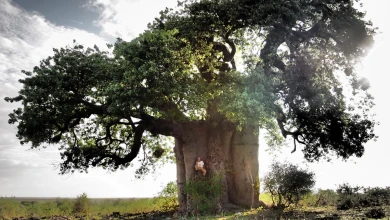
Francisco López and Barbara Ellison
Past activity
The third session in the series brings together two international reference points in sound art in one evening — two independent performances which converse through their proximity here. Barbara Ellison opens proceedings with a piece centred on the perceptively ambiguous and the ghostly, where voices, sounds and materials become spectral manifestations.
This is followed by Francisco López, an internationally renowned Spanish sound artist, who presents one of his radical immersions in deep listening, with his work an invitation to submerge oneself in sound matter as a transformative experience.
This double session sets forth an encounter between two artists who, from different perspectives, share the same search: to open ears to territories where sound becomes a poetic force and space of resistance.
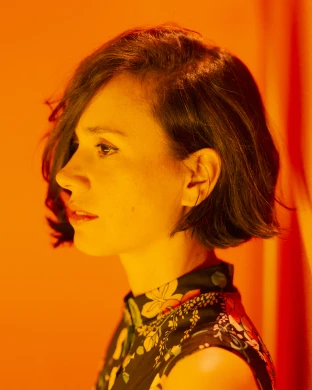
Ylia and Marta Pang
Past activity
The encounter between Spanish DJ and producer Ylia and visual artist Marta Pang is presented in the form of a premiere in the Museo Reina Sofía. Both artists converge from divergent trajectories to give form to a new project conceived specifically for this series, which aims to create new stage projects by setting out from the friction between artists and dialogue between disciplines.
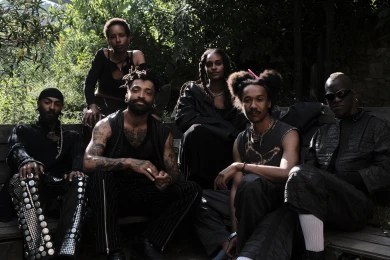
Jokkoo Collective
Past activity
Within a Museo Reina Sofía context, Jokkoo sets forth a “takeover” which transfers club energy to the Museo, resignifying institutional space as a place to dance, think and share. The collective’s interests traverse LGBTQIA+ issues, postcolonial critique and the vindication of invisible genealogies in music history. The collective takes that which seemingly comes into being as a celebratory gesture and turns it into a social and artistic laboratory where the corporal, the political and the aesthetic merge momentarily.
Participants
Jokkoo Collective
is an art and music collective based in Barcelona that works from the intention and need to research and disseminate the most contemporary and futuristic creations in experimental and alternative scenes from the African continent and its diaspora and allied communities across the world. They create connections and spaces to give a platform to dissident aesthetics and narratives, with their work moving between club and critical thought as they develop prolific work as DJs, producers and programmers, situating themselves at the heart of a community that understands music as a place of resistance and affirmation. The collective is made up of six people with common goals: Baba Sy, Maguette Dieng (Mbodj), Oscar Taylor (Opoku), Nicolas Beliot (Mooki6), Ismäel N’diaye (B4mba) and Miriam Camara (TNTC).
Barbara Ellison
is an artist who works from perceptive ambiguity — the phantasmic, the ghostly — unfurling materials of a double nature: transhuman voices and ritual installations. Her work delves into territories which explore the intangible and the ritual, expanding the limits of sound towards experiences which inhabit the border between the visible and the unheard-of. Her creations have received international recognition and encompass composition, film production, installations, sculpture, drawing and performance.
Ylia,
is a Spanish artist whose trajectory crosses multiple territories of electronic music to constitute one of the most unique and prolific voices in contemporary Spanish electronica. She deploys a sound imaginary which moves from atmospheric subtlety to rhythmic fervour, perpetually with a unique sensibility for collaboration and listening. With an artistic arc that flows between electronic experimentation, contemporary composition and club culture, she has performed at renowned festivals such as Sónar, Primavera Sound, Mutek and MIRA, in addition to working on multidisciplinary projects for theatre and dance and film soundtracks.
Marta Pang,
is a visual artist from Hong Kong who lives in Berlin. Her scenographic and generative gaze converses with sound through live images, digital textures and compositions which expand perceptive space, with her visual world drawing from creative technologies and algorithmic generation. In specialising in generative visuals and audiovisual pieces which are reactive to sound, Pang has performed her work on the underground scene, with artists such as Om Unit, and on prominent international stages, supporting the tours of Post Malone and Travis Scott. Her work has also featured in festivals and digital art galleries like Beyond Basel, Bideotikan and Art in Space Gallery (Dubai).
Francisco López
is one of the foremost artists in the current experimental music scene and audio art. With a career in the sphere of sound creation spanning more than four decades, his work comprehends field recordings, performances and installations which transform the space into an absolute sensorial environment. With a practice that constitutes an invitation to become immersed in sound matter as a transformative experience, his hundreds of sound installations and concert-performances have appeared in around seventy countries in concert halls, festivals, art galleries and museums, including the Museo de Bellas Artes in Buenos Aires, PS1 in New York, the Musée d'Art Moderne de Paris and the Museo Reina Sofía, among others
Pedro Portellano
is a cultural programmer and musician who has curated different series for institutions such as the Museo Reina Sofía, Museo Thyssen-Bornemisza, Centro Conde Duque, Studio Tomás Saraceno, Veranos de la Villa and La Casa Encendida, among others. He was also part of the Red Bull Music Academy in Madrid, directed Matadero Madrid’s Nave de Música, and is the co-founder of the RAYO Audiovisual Festival at Cineteca Madrid.
More activities
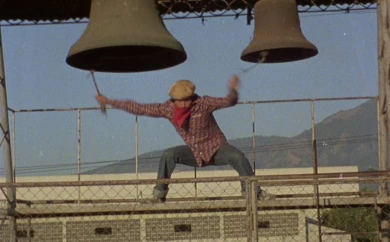
Files of Tropical Revolutions
Sábado 20 y 27 de junio, 2026 - 19:00 H
The Reframing Banana Imagery series concludes with two works that condense the height and twilight of this period in history, epic sagas that cross borders and registers to embody experiences of armed struggle in the region. Cameras mix with firearms, borders between nations blur and patience reaches breaking point. This is where the tipping point lies, where the bloodshed weighs heavy and the murmurings of regional brotherhood are buried in the ground again.
Pan y dignidad (Carta abierta de Nicaragua) [Bread and Dignity (An Open Letter to Nicaragua)] recounts the historical records and process of national reconstruction in Nicaragua via the Sandinista popular uprising. Historias prohibidas de Pulgarcito (Forbidden Tales of Tom Thumb) places the camera at the heart of the El Salvador revolutionary struggle, interspersing testimonies of daily violence with the verses of the poet Roque Dalton.
Both works understand the armed revolution as an open file under construction. The insurgent brotherhood, although dissolved, still resounds in regional history.
Circling Over Exploited Bodies
Friday, 19 and 26 June 2026 - 7pm
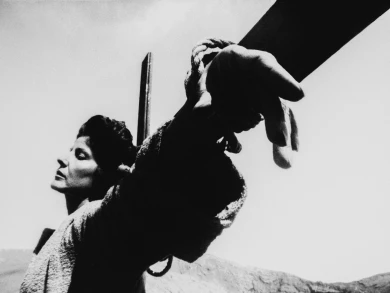
When forms of violence are inflicted on society, film responds from urgency. Images become abstract, sounds fade and the register of dissidence comes from the gut. La zona intertidal (The Intertidal Zone) is an essayistic and poetic approach to the repression of teachers in El Salvador in the 1970s — a teacher studies the biodiversity of the El Salvador coast as a boy finds a body on the same beach. A propósito de la mujer (About Women) interweaves testimonies of misery and rage towards patriarchal structures with fictional scenes of a symbolic procession through a harsh desert.
Both films understand the body as a target of violence and a territory of insurrection, a space where the blood shed by militancy and the patriarchal yoke turn pain into denouncement and existence outside the status quo into an act of political dissidence.
Central American Designation of Origin
Thursday, 18 and 25 June 2026 - 7pm
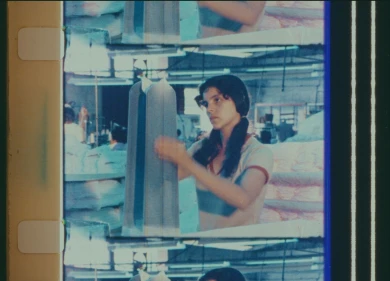
Fertile lands, farmers’ hands, rural faces. This first programme in the series Reframing Banana Imagery understands the foundations of the Central American experience from exploitation, extractivism and displacement, and from the organisation and resistance that emerged as a reaction. The four films within extend from a lyrical documentary on farmers’ solidarity to the playful subversion of the institutional format of the United Fruit Company.
Bananeras (Banana Growers) is a combative portrait of the inhumane conditions of the American banana plantations located in Nicaragua through much of the twentieth century. Costa Rica Banana Republic is a perspicacious satire via an institutional documentary of banana production, spotlighting the extractive nature of this agro-exporting model in the 1970s. Organización Campesina (Farmers’ Organisation) frames rural resistance in Honduras from a direct depiction and lyrical documentary, while Dos veces mujer (Two Times a Woman) dissects the invisibility of the double-shift working day Central American women farmers endure: working in the countryside and working in the home. As a whole, the works here present the earth at once as a wounded body and a space of dignity.

Aesthetics of Peace and Desertion Tactics
8 October 2025 – 24 June 2026
The study group Aesthetics of Peace and Tactics of Desertion: Prefiguring New Pacifisms and Forms of Transitional Justice proposes a rethinking—through both a theoretical-critical and historical-artistic lens—of the intricate network of concepts and practices operating under the notion of pacifism. A term not without contestation and critical tension, pacifism gathers under its name a multiplicity of practices—from anti-militarism and anti-war movements to non-violence activism—while simultaneously opening urgent debates around violence, justice, reparation, and desertion. Here, pacifism is not conceived as a moral doctrine, but as an active form of ethical and political resistance capable of generating aesthetic languages and new positions of social imagination.
Through collective study, the group seeks to update critical debates surrounding the use of violence and non-violence, as well as to explore the conflict of their representation at the core of visual cultures. In a present marked by rearmament, war, genocide, and the collapse of the social contract, this group aims to equip itself with tools to, on one hand, map genealogies and aesthetics of peace—within and beyond the Spanish context—and, on the other, analyze strategies of pacification that have served to neutralize the critical power of peace struggles. Transitional and anti-punitive justice proposals will also be addressed, alongside their intersections with artistic, visual, and cinematic practices. This includes examining historical examples of tribunals and paralegal activisms initiated by artists, and projects where gestures, imaginaries, and vocabularies tied to justice, reparation, memory, and mourning are developed.
It is also crucial to note that the study programme is grounded in ongoing reflection around tactics and concepts drawn, among others, from contemporary and radical Black thought—such as flight, exodus, abolitionism, desertion, and refusal. In other words, strategies and ideas that articulate ways of withdrawing from the mandates of institutions or violent paradigms that must be abandoned or dismantled. From feminist, internationalist, and decolonial perspectives, these concepts have nourished cultural coalitions and positions whose recovery today is urgent in order to prefigure a new pacifism: generative, transformative, and radical.
Aesthetics of Peace and Tactics of Desertion, developed and led by the Museo Reina Sofía’s Studies Management, unfolds through biweekly sessions from October to June. These sessions alternate between theoretical discussions, screenings, work with artworks and archival materials from the Museo’s Collection, reading workshops, and public sessions. The group is structured around sustained methodologies of study, close reading, and collective discussion of thinkers such as Judith Butler, Elsa Dorlin, Juan Albarrán, Rita Segato, Sven Lütticken, Ruth Wilson Gilmore, and Franco “Bifo” Berardi; historical episodes such as the anti-nuclear and anti-arms race movement in Spain; and the work of artists and activists including Rojava Film Commune, Manuel Correa and the Oficina de Investigación Documental (Office for Documentary Investigation), and Jonas Staal, among other initial cases that will expand as the group progresses.

equipoMotor
Jueves alternos, 23 de octubre, 2025 - 11 de junio, 2026 - 17:30 h
El programa equipoMotor regresa en su edición 25-26 con un aire espectral y mutante para lanzar la pregunta: ¿y si el Museo fuera «un poco más Frankenstein»? Inspirándose en dicho monstruo y en todas aquellas criaturas que desafían la norma desde los márgenes, el proyecto de mediación cultural Galaxxia diseña y acompaña una edición incisiva, intergeneracional y descentralizadora, donde saberes invisibilizados, cuerpos raros y deseos molestos se entrelazan para generar nuevas formas de imaginación crítica y radical. En los sótanos y corredores del Museo —un particular laboratorio— las dudas no se esconden: son materia prima.
Así, para este curso el equipoMotor convoca a personas de todas las edades que hayan participado en ediciones anteriores de los distintos equipos del Área de Educación a recorrer el Museo como quien manipula un cuerpo abierto: descoyuntando algunas de sus categorías teóricas y artísticas —la necropolítica, lo crip-cuir, la lucha de clases, las políticas del malestar, la decolonialidad, la temporalidad cuir, la descentralización institucional o el feísmo— para articular un relato díscolo, remendado y palpitante.
El programa se estructura en bloques temáticos sobre lo freak como metodología, el trabajo cultural, la intergeneracionalidad y la diversidad territorial. Cada bloque a su vez se despliega en sesiones que combinan disparadores teóricos y estéticos, visitas a exposiciones y espacios liminales del Museo, talleres artísticos con artistas, ejercicios de curaduría audiovisual colectiva y de relatoría radiofónica, así como instancias de activación pública, mediante proyecciones de cine experimental y coloquios compartidos con el público, en complicidad con el archivo Hamaca y el Área de Cine y Nuevos Medios del Museo.
De este modo, la presente edición incorpora una particularidad: el grupo de participantes irá transformándose en un «colectivo curatorial audiovisual temporalmente autónomo», con capacidad de incidir en la programación del Museo y de abrir la conversación de equipoMotor al público general, cuestionando y expandiendo así los límites entre las cabezas que deciden, las manos que producen y los cuerpos y presencias que habitan la institución. Las personas seleccionadas en la modalidad oyente serán invitadas a las proyecciones públicas, así como a otras activaciones y momentos de apertura del equipoMotor.
Frente al relato de un museo homogéneo, pulcro y lineal, apostamos por un Museo disidente, contradictorio y lleno de vida residual. Un Museo que no tema hacerse preguntas incómodas ni mostrar sus cicatrices. equipoMotor. Un poco más Frankenstein no busca repensar el cuerpo de la institución, sino habitarlo en sus desgarros, tal como es: híbrido, inacabado, infecto, fantasmagórico… y cargado de esporas y chispas por venir.