-
Wednesday, 26 May 2021 Nouvel Building, Auditorium 200
Session 1. Magical Labyrinths
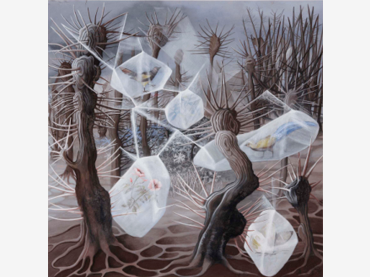
TicketsHistorical, individual and collective experiences find an image of utterance in the labyrinth. The labyrinth speaks of the manufacturing of memories, of its impossible governance, of loss and its circles. From the labyrinth, Republican diaspora becomes accessible on its different paths, from the concentration-camp galaxy of Max Aub — which leads from the French camps to anti-fascist resistance and to the Lagers of Nazi extermination — to the “labyrinth of Spanishness” that inhabited the dreams of democratic intellectuals after Franco’s death. At that point, the cultural memory of Iberian diaspora was defined in the geopolitical disputes over the Atlantic and memories before and after the Cold War. After the fall of the Berlin Wall, the Republican maze questions us apropos of the hospitality between identities and languages in cross-border communities. Labyrinths govern the genealogical relations and blood discourses that diaspora establishes and cuts off, as well as its arboreal metaphors — trunks, branches, roots, rhizomes — the botanical language the exile requires for utopian archives and future museums.
-
Thursday, 27 May 2021 Nouvel Building, Auditorium 200
Session 2. The Stateless and Savages
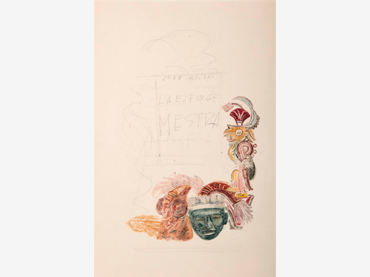
TicketsDiasporas have in place a biblical tropology— the expulsion of Eden, Exodus, the return of the prodigal son, the escape to Egypt, among others — which the Republican imagination in exile does not hesitate to summon in its favour. As a civil religion, from this poetic mould, the pilgrim Spain finds in León Felipe its greatest poet and in Quixote the mythic-poetic emblem for the roaming Spaniard. Starting out from such a figure, the modern metaphysics of the refugee is fleshed out, and is one of the two main lines of work of exile in the symbolic. The other line makes a more valuable mystical device out of the critique of the colonial enterprises of the past. It is about inhabiting not only “the departure” but also appropriating exiled lives from the experience of those banished from the empire. As the history of the Bartra and Muirà family elucidates, from exile there is experience of “the other” as “re-encounter”. It is about the myth of the savage, where, from the conflict between the individual and estrangement, the third possibility of a gaze comes into being — the mixed-race sphinx — which explores the fissures of modern narratives of civilisation and brutality in its American projection. Animals, the indigenous, slaves, the evicted, vagabonds and madmen forged, with exiles, an intense poetic alliance. Thus, it is possible to track a non-binary logic, explored in this session as necessarily intersectional, by means of different works, navigating between myths, masks, islands and cannibals, colonial ghosts and modern allegories.
-
Friday, 28 May 2021 Nouvel Building, Auditorium 200
Session 3. Spirits and Transits
TicketsIn narratives of diaspora, biography and history cross over decisively; personal time with other common times, those belonging to a given nation, class, absent community, generation, or ecosystem. These different times constitute a memorial landscape which is also geographical. Thus, in the case of the Atlantic, in recent years an array of disciplines has described it as a territory of transits, resistance and rule. A place of community mourning. An Acheron. Republican diaspora responds to this same historical and biographical demand, interrogating the place of death and the possibility of crossing it. Therefore, exile is, concurrently, political and ontological, at once an interior and exterior loss. Diaspora affirms the conjoint form of discontinuity, but also survival, both in the void and in memory. That is the paradox of Republican exodus, an eerie province of a nation, its absent presence which, nevertheless, knows how to utter through the language of spirits. Communication with the dead and the migration of souls would be core dimensions of exilic narratives in an aesthetic and philosophical paradigm — with patent religious drifts — which also enable a meta-historical conversation to be set in motion. Only from a posthumous perspective can exiles from different times and places speak to one another as equals. From the “circle of death” the poet León Felipe describes, the experiences of interior reclusion (encryption, moles, conversion) enter into dialogue under Francoism with those of anomie and transculturation in partibus infidelium.
Thus, from these codes such divergent literary or artistic works, such as those by Sender, Iñárritu, Rodoreda, Zambrano, Benjamin, Castelao, Salabert and Tolrà, are expressed.

-
Saturday, 29 May 2021 Nouvel Building, Auditorium 200
Closing lecture. Culture is Exile. The Political Imagination of Diaspora (1936–2021)
Germán Labrador in dialogue with Rosario Peiró
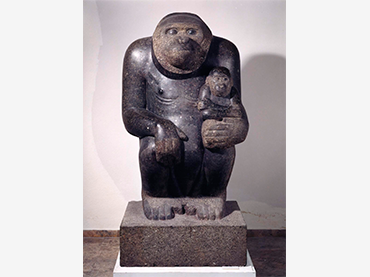
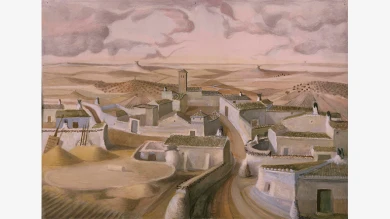
TicketsThe year 2019 marked eighty years since the start of Republican exile, framed in the context of a global migration crisis and with clear parallels between the new and old fields of the displaced in Europe. The memory of Iberian diaspora thus became part of a much larger history of displacement and return, a history which did not begin with the Civil War, did not end in the Transition to democracy in Spain, and does not have Spaniards as the sole protagonists. This lecture takes up this synchrony to consider new relationship modes with Republican exiles.
Held on 26 May 2021
What does remembering the ethical, aesthetic and political experiences of Republican exiles mean eighty years later within the global context of the climate emergency and migrant crisis? In the framework of the last century’s world wars, a new citizen figure was born: the refugee. This figure embodied the experience of hundreds and thousands of Spaniards, and founded a political world we still inhabit. A century on, the full mobilisation of resources, bodies and weapons of global capital cause migrant flows on a scale that is unprecedented in human history, constituting a threat from which increasingly fewer sectors of the population in Western countries are exempt. To return to the experiences and knowledge developed by thousands of people exiled after the Spanish Civil War is to do so from this evidence. The debate no longer revolves around the place wrested from the national history of those banished from the country by death and destruction. It is not about any recognition owed to artists, intellectuals, researchers and people who contributed so much to the artistic and civil life of their new-found homes. For perhaps the objective is not so much to “bring back exiles”, or “recover them” in relation to those areas of experience that were not, or could not be, assimilated. Rather, it is to propose, from this impossibility, other modes of transhistorical dialogue. The proposal here is to summon exile, to ponder its archive of experiences and knowledge as a set of useful notions today in order to think from diaspora so we can relate to the degree of exile or migrant that may be in each. For the diasporic position, ahead of being a form of diminished national identity awaiting restoration, must now be understood as a radical place of vulnerability, one of aesthetic and political creativity. From there it is possible to open other unknown experiences and configurations, thereby establishing alliances with them.
[dropdown]
This was considered and stipulated by Iberian exiles in 1936. Or at least a percentage of those people. For them, exodus also represented distance from national mechanisms and techo-capitalist modernity. The experience of anomie and dispossession, of contact with every form of exclusion, and difference meant that many radically questioned things and, in the process, the great Spanish myths were thrown into crisis, as were narratives of the Conquista. The imagery of a pilgrim Spain was born, able to lead to non-Western espistemologies and forms of alternative religiousness or revolutionary spiritualty. Concurrently, poets, draughtsmen and photographers documented, in first person, the concentration-camp archipelago in European nations, the necropolitical continuity between liberal capitalism, colonial government and the totalitarian state still called “progress”.
By way of these premises, this seminar, conducted by lecturer and researcher Germán Labrador Méndez, sets forth a discussion around certain points in time from Spain’s stateless archive through the works — writings, drawings, cultural and political undertakings — of a broad number of its members — children, women, men — as it seeks to establish moments of rupture, in which the destituent powers and the utopian potential of diasporic experience are expounded. Each session in the seminar is organised around these three emblems: labyrinths, savages and spirits, all central figures in exilic imaginary, but rarely the subject of studies. As a whole, they speak of transit and nostalgia, of search and misdirection, of the self and its demons, of the monster that constitutes or threatens us, of death and the afterlife, of the cultivation of memory, and its ruin and possible return.
[/dropdown]
Curator
Germán Labrador Méndez
Organised by
Museo Reina Sofía
Educational program developed with the sponsorship of

Más actividades
![Joseph Kosuth. One and Three Chairs [Una y tres sillas]](https://recursos.museoreinasofia.es/styles/small_landscape/public/Actividades/joseph_kosuth.jpg.webp)
The (legal) person and the legal form. Chapter III
Monday 11, Wednesday 13 and Thursday 14 May 2026
As part of the Studies Constellation, the Study Directoship’s annual fellowship, art historian and theorist Sven Lütticken leads the seminar The (Legal) Person and the Legal Form: Theoretical, Artistic, and Activist Commitments to foster dialogue and deepen the hypotheses and questions driving his research project.
The seminar consists of eight sessions, divided into three chapters throughout the academic year. While conceived as non-public spaces for discussion and collective work, these sessions complement, nourish, and amplify the public program of the Studies Constellation.
First session of the third chapter focuses on the transformation of the artwork in the context and wake of Conceptual art. The very notion of the artwork, together with its ownership and authenticity, is reconsidered from a broad perspective open to new and alternative models of management, which could ultimately transform the relationship between artist, artwork and owner. Can some of the practices in question serve as critical models? To what extent is it possible to think and act with them, and extrapolate from them, beyond a beautiful niche?
The second session turns to the question of representation. While many (but not all) human natural persons can, in principle, represent themselves in legal matters, other needs representatives. This goes for minors as well for adults who have been placed under legal guardianship; it applies to fictitious persons such as corporations and states, who need human representatives to sign contracts or defend them in court. We will look into the question of legal representation in conjunction with other forms of representation, in the cultural as well as political register—taking cues from Spivak’s distinction between portrait (Darstellung) and proxy (Vertretung), which is an unstable and historically mutable one.
The seminar concludes with a closing session dedicated to collectively revisiting and reflecting on the themes and discussions that have emerged throughout the first Studies Constellation Residency Program.
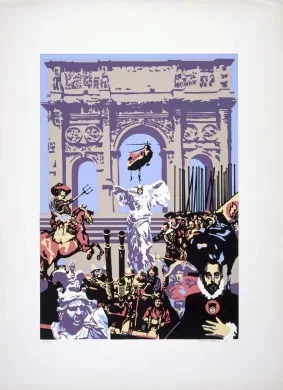
Patricia Falguières
Tuesday May 12th 2026 – 19:00 h
Art historian Patricia Falguières inaugurates the María Luisa Caturla Chairwith the lecture Art History in Dark Times. This Chair, dedicated to the reflection on art in times «sick with uncertainty», is aimed at dismounting, digressing and imagining multiple temporalities and materialities in art history and cultural studies from an eccentric gaze, in the sense of being displaced, off-centre or with a centre that is different.
The lecture’s title references Hannah Arendt’s collection of essays Men in Dark Times, which in turn paraphrases a Bertol Brecht poem. In it, Arendt asserts «dark times are not only not new, they are no rarity in history».
Patricia Falguières also claims history knows many periods when the public realm has been obscured, when the world becomes so uncertain that people cease to ask anything of politics except to relieve them of the burden of their vital interests and their private freedom. The art historian —whose expertise is in the field of Renaissance art and philosophy but paying close attention to contemporaneity— invites us to a «chaotic and adventurous journey», from the Italian Renaissance to Fukushima, through which to delve into the questions: What can the practice of art history mean today, in a world ablaze with ominous glimmers and even more ominous threats, if not as mere entertainment or social ornament? Of what vital interests, of what freedom can it bear witness and serve as an instrument?
![Tracey Rose, The Black Sun Black Star and Moon [La luna estrella negro y negro sol], 2014.](https://recursos.museoreinasofia.es/styles/small_landscape/public/Obra/AD07091_2.jpg.webp)
On Black Study: Towards a Black Poethics of Contamination
27, 28, 29 ABR 2026
The seminar On Black Study: Towards a Black Poethics of Contamination proposes Black Study as a critical and methodological practice that has emerged in and against racial capitalism, colonial modernity and institutional capture. Framed through what the invited researcher and practitioner Ishy Pryce-Parchment terms a Black poethics of contamination, the seminar considers what it might mean to think Blackness (and therefore Black Study) as contagious, diffuse and spreadable matter. To do so, it enacts a constellation of diasporic methodologies and black aesthetic practices that harbor “contamination” -ideas that travel through texts, geographies, bodies and histories- as a method and as a condition.
If Blackness enters Western modernity from the position of the Middle Passage and its afterlives, it also names a condition from which alternative modes of being, knowing and relating are continually forged. From within this errant boundarylessness, Black creative-intellectual practice unfolds as what might be called a history of touches: transmissions, residues and socialities that unsettle the fantasy of pure or self-contained knowledge.
Situated within Black radical aesthetics, Black feminist theory and diasporic poetics, the seminar traces a genealogy of Black Study not as an object of analysis but as methodological propositions that continue to shape contemporary aesthetic and political life. Against mastery as the horizon of study, the group shifts attention from what we know to how we know. It foregrounds creative Black methodological practices—fahima ife’s anindex (via Fred Moten), Katherine McKittrick’s expansive use of the footnote, citation as relational and loving labour, the aesthetics of Black miscellanea, and Christina Sharpe’s practices of annotation—as procedures that disorganise dominant regimes of knowledge. In this sense, Black Study is approached not as a discrete academic field but as a feel for knowing and knowledge: a constellation of insurgent practices—reading, gathering, listening, annotating, refusing, world-making—that operate both within and beyond the university.
The study sessions propose to experiment with form in order to embrace how ‘black people have always used interdisciplinary methodologies to explain, explore, and story the world.’ Through engagements with thinkers and practitioners such as Katherine McKittrick, C.L.R. James, Sylvia Wynter, Christina Sharpe, Fred Moten, Tina Campt, Hilton Als, John Akomfrah, fahima ife and Dionne Brand, we ask: What might it mean to study together, incompletely and without recourse to individuation? How might aesthetic practice function as a poethical intervention in the ongoing work of what Sylvia Wynter calls the practice of doing humanness?
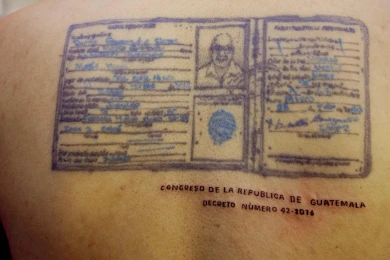
Mediations of the Archive: Art, Community, and Political Action
Tuesday 7, and Thursday 23, April, 2026 – 17:00 h
The online seminar Archival Mediations: Art, Community, and Political Action, curated by Sofía Villena Araya, examines the role of archival practices in caring for, dignifying, and activating memory in Central America. As part of the Cáder Institute for Central American Art’s first line of research, driven by the question “What Art Histories does Central America produce?”, this seminar proposes an approach to the archive as a mediator that articulates relationships between art, community, and political action, while engaging with the historiographical questions raised by their intersections.
Although the proposal is not limited to discussions of the Central American isthmus, it is framed by the particular conditions under which memory has been constructed in the region. Central America is a territory vulnerable to natural and geological disasters, marked by political violence exercised by authoritarian states and fragile institutions, a persistent colonial and imperial legacy, and the social fragmentation resulting from these factors. It is also a context in which the archive does not necessarily refer to a specific place —such as a building or documentary collection— nor does it primarily follow the protocols of a discipline such as archival science. Rather, the seminar explores how the archive operates, through art, as a dispositif that forges connections, generates forms of belonging, and opens spaces for political action.
The encounter unfolds across two sessions: the first focuses on archival practices addressing questions of memory, violence, and war; the second examines community-based practices surrounding queer and sex-dissident archives. In the face of the systematic destruction of memory, the archival practices discussed in these sessions demonstrate how the archive emerges in other spaces and according to different logics. Within this framework, the proposed space for exchange and research explores the role of art as a productive medium for constructing archives through images, affects, intimacy, performativity, the body, orality, and fiction, as well as through other materialities that challenge the centrality of the document and of writing.
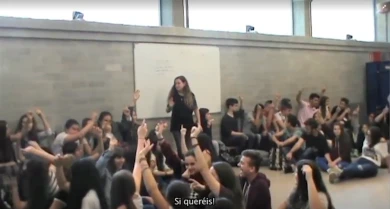
Intergenerationality
Thursday, 9 April 2026 – 5:30pm
This series is organised by equipoMotor, a group of teenagers, young people and older people who have participated in the Museo Reina Sofía’s previous community education projects, and is structured around four themed blocks that pivot on the monstrous.
The third session gazes at film as a place from which to dismantle the idea of one sole history and one sole time. From a decolonial and queer perspective, it explores films which break the straight line of past-present-future, which mix memories, slow progress and leave space for rhythms which customarily make no room for official accounts. Here the images open cracks through which bodies, voices and affects appear, disrupting archive and questioning who narrates, and from where and for whom. The proposal is at once simple and ambitious: use film to imagine other modes of remembering, belonging and projecting futures we have not yet been able to live.