-
18 and 19 July 2014 Nouvel Building, Floor 1, Entrance hall 104
Gender travel
A performance by Pablo Esbert Lilienfeld
The performance oscillates between a “theatrical” presence of movement and sound actions, as well as conversations with visitors inside the museum. It involves the accumulation of ideas, stories and experiences from these conversations, using them in successive actions in such a way that the performance is constructed as time elapses. The work is based on a simple premise: identity as a transitory place. Identity as territory (its borders, sovereignty and administration of power) and identity as transition (the border-likeness and the unstable). Within this framework, gender identity and sexual orientation are the material for a debate involving the body and action as a reference point.
-
18 and 19 July 2014 Sabatini Building, Floor 1, Space 1
Celebration
A performance by Giorgia Nardin
The performance opens up a reflection on the first impressions of Olivia, a 30-year-old woman with tattoos all over her body. Giorgia’s interest in and respect for tattoo art has led her to formulate questions on the way they are seen on “different” bodies, the story behind these bodies, the stories they tell and how they are received. What information do we register the first time we see someone? What are the connotations, associations, opinions and judgements based on what we see?.
-
• 18 and 19 July 2014 Sabatini Building, Floor 1, Children’s workshops
Alboom!!!
A performance by Silvia Gribaudi
From the natural state of a girl or boy’s body, relatively free from gender references, and in a white space, Silvia Gribaudi creates a place that uses different dolls and toys to invite play, while at the same time putting forward a dialogue on gender and its patterns. The installation is presented over both days as a space of open play for children visiting the Museo.
-
18 and 19 July 2014 Nouvel Building, Protocol Room
Untitled
A performance by Bruno Isakovic
The focus of this creation is oriented towards the potent factors that make up our lives and the paths we take (gender, sexuality, love, desires) and the translation of this process of transformation that continues throughout life via the naked body and its multiple meanings.
How have we come to formulate our desires? What has been our starting point and what have we picked up along the way? As we feel secure in our own being, is it possible to recognise the propensity that draws our current state and its changes? Is it possible to predict them?To create transparent notions of what has shaped us it is necessary for us to look at that which is the most unexpected, the most forgotten and everything we take for granted. It is not just about oneself; it is about the world and a network of systems that affects a great deal of the process that shapes us as human beings.
Performing Gender

Held on 18 Jul 2014
Performing Gender is a European project that takes a critical look at the politics of gender and sexuality using dance and performance tools. Bodies and their multiple gender inscriptions are the subject of exploration and experimentation by a group of artists that, over the course of one year, have carried out their research by touring around different European institutions.
For one week in July, four choreographers – Silvia Gribaudi and Giorgia Nardin from Italy, Bruno Isakovic from Croatia and Pablo Esbert Lilienfeld from Spain – return to the Museo Reina Sofía to set up a creative residency that will culminate, on 18 and 19 July, in the presentation of durational pieces across diverse spaces inside the Museo.
In collaboration with

With support from
Participants
Participating choreographers
Silvia Gribaudi is a choreographer and performer from Turin, Italy. Her performances include: Unattimo (2008, shortlisted for Anticorpi Explo), A Corpo Libero (the Audience Award and Jury Award at the GD´A Veneto 2009), Spring and Wait. In 2012 she participated as a choreographer with Sharon Fridman for Inner and in residency for the Festival de Danse et des Arts Multiples in Marseille. In Italy she has been creating various community projects for social inclusion.
Giorgia Nardin was born in Venice in 1988 and began her ballet training at a very young age, before studying for three years at the Northern School of Contemporary Dance in Leeds (UK). He first solo Dolly was finalist at the GD´A Prize 2012 and was selected to be performed as part of the DNA/RomaEuropa Festival 2012. Dolly was also selected to be performed as part of the Italian Showcase in the Dance Base Fringe Festival – Edinburgh 2013.
Pablo Esbert Lilienfeld was born in Madrid. His 2011 piece, Edit, was the only work from Spain selected in 2012 for Aerowaves. Pablo develops his musical creativity by composing the large majority of the music in his pieces and videos and also works as a musician. As a performer he has worked for companies such as Alias (Geneva), Philippe Siare (Lausanne) and Christoph Winkler (Berlin).
Bruno Isakovic graduated in contemporary dance from the Amsterdam School of the Arts in 2009. While he collaborates with different choreographers, he also creates his own performances. He works as a guest lecturer at the Bilgi University of Performing Arts in Istanbul and runs workshops in Croatia and the surrounding areas. He received the Deutscher Akademischer Austausch Deinst-Stipendienurkunde (2010) and the Jury Award and Award for Best Solo at the Solo Dance International Festival in Budapest.
Diary Keeper
Amy Bell is a contemporary dance performer, choreographer and teacher. She trained at the London Contemporary Dance School, and has created series of duets with Valentina Golfieri and performed for Tino Sehgal, Maresa von Stockert, Conor Doyle and Giorgia Nardin, among others. Amy lectures in Critical Studies, Choreography and Technique and is involved in the Performing Gender project as official writer and diary keeper.
Más actividades
Dear Americas
Friday 29 May and 5 June, 2026
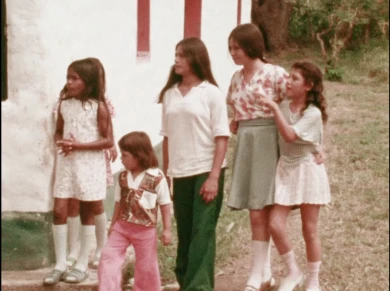
In these films, Marilú Mallet travels to Solentiname, in Nicaragua, and Andahuaylillas, in Peru, to paint a portrait of communities which resist the severity of forced industrialisation. In Solentiname, the focus is on the poet and priest Ernesto Cardenal’s founding of a Christian, poetic and revolutionary utopia, while in Andahuaylillas, a town close to Cuzco, Mallet explores the multiple layers of Andean culture.
A Poetics of the Subject
Thursday 28 May and 4 June, 2026
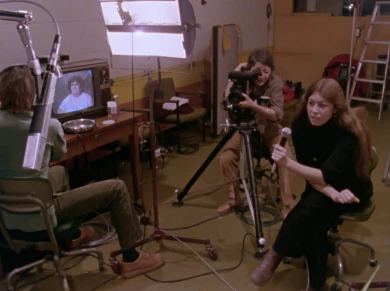
In the tension between documentary and fiction, between the rawness of a tragic political present and narrative escape, lies the truth of the exile’s condition. In Journal inachevé (Unfinished Diary, 1982) Marilú Mallet experiments with her own subjectivity, moving from affirmation to doubt. In Double Portrait (2000), María Luisa Señoret paints her daughter Marilú, who records the process. In this circular relationship, the film-maker constructs a poetics of the portrait as something perpetually unfinished, a process of exploration in which memory, identity and political history merge to become blurred.
Institutional Decentralisation
28 MAY 2026
This series is organised by equipoMotor, a group of teenagers, young people and older people who have participated in the Museo Reina Sofía’s previous community education projects, and is structured around four themed blocks that pivot on the monstrous.
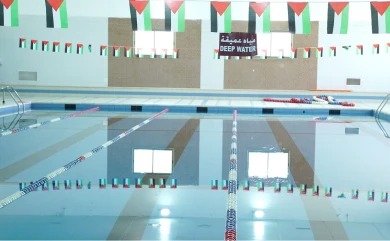
This fourth and final session centres on films that take the museum away from its axis and make it gaze from the edges. Pieces that work with that which is normally left out: peripheral territories, unpolished aesthetics, clumsy gestures full of intent. Instead of possessing an institutional lustre, here they are rough, precarious and strange in appearance, legitimate forms of making and showing culture. The idea is to think about what happens when central authority is displaced, when the ugly and the uncomfortable are not hidden, when they are recognised as part of the commons. Film that does not seek to be to one’s liking, but to open space and allow other ways of seeing and inhabiting the museum to enter stage.
Ordinary, Common and Public. Common Fixes for Ordinary Communities
Tuesday, 26, and Wednesday, 27 May 2026 – Check programme
Ordinary, Common and Public. Common Fixes for Ordinary Communities is the title of the fourteenth encounter run by Sociología Ordinaria, a transdisciplinary research group that explores daily knowledge deemed ordinary, superficial or frivolous from a traditional academic and intellectual viewpoint.
This latest edition seeks to approach and map connections between concepts of the commons and the public realm — remembering that the ordinary is also the commons — and to ensure affects and moods of discontent are mobilised towards hope.
By way of its multiple declinations — community, community-based practices, the commons, the communal — the encounter seeks to reflect on different ways of creating, (re)configuring, maintaining, fixing, arranging, caring for and defending the public realm and the commons. Furthermore, it explores forms of invocation and experimentation as tools opposite the helplessness of an uncertain present, in addition to resistance against attempts of expropriation, distortion, privatisation and touristification.
Felix Gonzalez-Torres. Sweet Revenge
26 MAY 2026
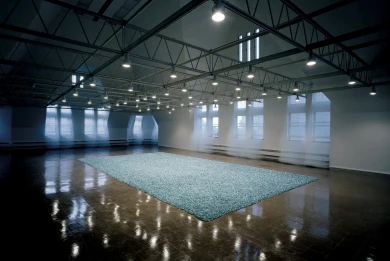
Nancy Spector and Alejandro Cesarco, curators of the exhibition Felix Gonzalez-Torres. Sweet Revenge, will speak with Manuel Segade, director of the Museo Reina Sofía, in a session dedicated to exploring the interpretive frameworks of this first large-scalepresentation in Madrid of the work of Felix Gonzalez-Torres (1957–1996), whose practice continues to resonate in the present.
The conversation begins with the exhibition’s title itself, Sweet Revenge, understood as a paradoxical notion that articulates much of the artist’s thinking. From there, the tensions running through his work are explored: the coexistence of opposing registers, ambiguity as a method, and the simultaneously affective and political charge of his works.
The dialogue also touches on some of the themes that run through his body of work, such as thenotions of identity, citizenship, and authority, alongside experiences linked to the AIDS crisis, and emotions such as love, loss, grief, and optimism. Special attention is given to the way in which Gonzalez-Torres shifts languages associated with Arte Povera, conceptualism, and minimalism towards open, participatory, and deeply personal structures.
The session also includes a reflection on the research process that shaped the exhibition, providing context for the curatorial decisions and criteria that structure it. In this context, Gonzalez-Torres’s work emerges as a device that actively engages those who activate orinterpret it, distributing responsibility for the production of meaning—a process that is alwaysunstable and constantly under negotiation.
These inaugural conversations, part of the main working strands of the Museo’s Public Programmes Area, aim to explore in greater depth the exhibition narratives of the shows organised by the Museo from the perspective of artists, curators and specialists.