1926–2026: One Hundred Years of the Lyceum Club Femenino
Culture, Feminism, Modernity
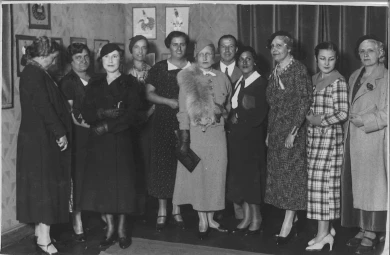
Martín Santos Yubero, Inauguración de la exposición de figurines de Victorina Durán en el Lyceum Club Femenino de Madrid, octubre de 1933
Museo Nacional de Artes Escénicas
The Lyceum Club Femenino (Lyceum Women’s Club) was established in Madrid in 1926, constituting a space which opened new pathways for women to participate in Spain’s intellectual, artistic and political life in the first third of the twentieth century, and for figures such as designer Victorina Durán, pedagogue María de Maeztu, lawyer and politician Victoria Kent and artist Ángeles Santos, to name but a few. To mark the Madrid Club’s one hundredth anniversary, this research symposium examines its role as a key place for studying women’s and feminist culture in Spain’s Silver Age by analysing and vindicating the different agencies, trajectories and cultural projects that structured the space.
By way of three lectures and two round-table discussions, the symposium sets forth a journey through the Lyceum Club Femenino and the cultural context from which it emerged, from its standing as a pioneering institution to the study of cultural material from the period and the process of constructing the figure of the “modern woman”. These talks and discussions look to shed light on how new ways of thinking, creating and occupying public space were shaped, expanding the gaze on cultural, educational and social networks linked to the Lyceum — as much concerning its ties with other intellectual and artistic circles as the continuity and transformation of these networks during Republican exile. Finally, the symposium features three artistic interventions conceived to recover the artistic legacy of this space in Madrid.
The Museo Reina Sofia joins the Ministry of Culture’s cultural programme focused on the centenary of the Lyceum Club Femenino via these sessions, co-organised with the Spanish National Research Council (CSIC).
Organised by
Museo Reina Sofía and the Spanish National Research Council (CSIC), via the project Hacedoras de Cultura. Conexones e intercambios artísticos transatlánticos en el siglo XX (Women Culture Makers. Transatlantic Artistic Connections and Exchanges in the Twentieth Century) PID2022-142633OA-I00, funded by MICIU/AEI/10.13039/501100011033/ FEDER “A Way of Making Europe”
Research Management
Mónica Monmeneu González and Carmen Gaitán Salinas
Acknowledgements
The Department of Art History and Heritage from the History Institute (Spanish National Research Council, CSIC)
Creadoras de la escena musical madrileña en la Edad de Plata (Women Creators from the Madrid Music Scene during Spain’s Silver Age), PHS-2024/PH-HUM-351. Grants for the purposes of carrying out R&D programmes between Research Groups from the Community of Madrid in Human and Social Processes. Open call, 2024. Community of Madrid
Spain on Stage. Dance and the Imagination of National Identity (ERC-2023-COG: 101125179). European Research Council



Agenda
jueves 02 jul 2026 a las 10:00
Official Welcome
jueves 02 jul 2026 a las 10:10
Inaugural Concert
—Led by Samuel Diz, guitarist and researcher
jueves 02 jul 2026 a las 10:30
The Lyceum Club Femenino in Madrid, a Cultural Institution (1926–1939)
— Opening lecture by Mónica Monmeneu
jueves 02 jul 2026 a las 11:15
Artists’ Things: Women Creators and Materiality in the Cultural Sphere during the First Third of the Twentieth Century
— Keynote lecture by Irene García Chacón
jueves 02 jul 2026 a las 12:00
Coffee break
jueves 02 jul 2026 a las 12:30
The Lyceum Club’s Networks in Madrid: Three Gazes
— Round-table discussion. Moderated by: Mónica Monmeneu. Participants: Juan Aguilera Sastre, Patricia Molins and Carmen Gaitán Salinas
jueves 02 jul 2026 a las 13:30
Break
jueves 02 jul 2026 a las 16:00
Dance Performance
—Led by María Cabrera Fructuoso, dancer, researcher and member of the ERC research project Spain On Stage. Dance and the Imagination of National Identity
jueves 02 jul 2026 a las 16:15
Education, Culture and Women in Spain’s Silver Age
— Round-table discussion. Moderated by: Carmen Gaitán Salinas. Participants: Pilar Piñón, Mercedes Gómez Blesa and María del Mar del Pozo Andrés
jueves 02 jul 2026 a las 17:15
Figures in a New Era: Women and Modernity in Twentieth-Century Spanish Culture
— Closing lecture by Xon de Ros
jueves 02 jul 2026 a las 18:00
Break
jueves 02 jul 2026 a las 18:30
Closing Concert
—Led by Irene Alfageme (piano), Jessica Bogado (soprano), Jorge Trillo (bass-baritone) and Aurelio Viribay (piano), from the Escuela Superior de Canto de Madrid
Participants
Carmen Gaitán Salinas
holds a PhD in Contemporary History from the Complutense University of Madrid (UCM) and is a tenured researcher in the Department of Art History and Heritage at the History Institute of the Spanish National Research Council (CSIC). She is currently head researcher on the project Artistas transatlánticas. Producciones e identidades entre España y Latinoamérica en el siglo XX desde la perspectiva feminista (Transatlantic Artists. Productions and Identities between Spain and Latin America in the Twentieth Century from a Feminist Perspective, Ministry of Equality, Women’s Institute, 52-1-ID22), and is the director of Cultura, arte y género. Seminario permanente de investigación para otras historias posibles (Culture, Art and Gender. Standing Research Seminar for Other Possible Histories). She is the author of Las artistas del exilio republicano español. El refugio latinoamericano (Cátedra, 2019), the critical edition of the diaries of Manuela Ballester, Mis días en México. Diarios (1939-1953) (Renacimiento, 2021), and co-editor of the three-volume memoirs of Victorina Durán, Mi vida (Residencia de Estudiantes, 2018). Furthermore, she has participated in numerous research residencies in international centres of excellence, contributed to different evaluation committees on national and international research projects and awards, and organised different activities of research dissemination.
Irene García Chacón
holds a PhD in Art History and is an assistant lecturer in the Department of Art History at the Complutense University of Madrid (UCM). She has also served as a tenured lecturer at the University of Valladolid. She received an Extraordinary Doctoral Award for her doctoral thesis in 2018, with the help of an FPU grant at CCHS-CSIC, as well as carrying out residences at New York University, Université Sorbonne Nouvelle-Paris 3, the University of Cambridge and Università Ca’ Foscari. Through a post-doctoral contract in the NextGenerationEU Requalification of University Professors, she was also a research fellow at the Università di Bologna. Her work has been published in magazines such as Ínsula, Investigaciones Feministas and Rassegna Iberistica and by publishers such as Visor, Comares and CSIC. Furthermore, she has curated the exhibitions Universo Ferrant (The Ferrant Universe, Museo Patio Herreriano, 2022) and Mujeres de papel. Trazos de la generación del 27 (Paper Women. Traces of the Generation of ’27, Sociedad Económica de Amigos del País de Málaga, 2017).
Mercedes Gómez Blesa
holds a PhD in Philosophy and is an essayist. Her research focuses on the work of women artists, writers and essayists in Spain’s Silver Age, particularly María Zambrano, who was the focus of the essay La razón mediadora: Filosofía y Piedad en María Zambrano (2008), which earned her the Gran Vía Essay Prize. In 2007 she published Las Intelectuales Republicanas: la conquista de la ciudadanía and her first poetry collection, Los nuevos bárbaros, and, in 2009, Modernas y vanguardistas. Mujer y democracia en la II República. In 2018 she put together the critical edition of La mujer moderna y sus derechos by Carmen de Burgos and published Modernas y vanguardistas. Las mujeres-faro de la Edad de Plata (2019). Her most recent essays include Estéticas de la ausencia (2021) and La constelación femenina de María Zambrano (2026). She is a patron of the María Zambrano Foundation and director of the Complete Works of María Zambrano.
Mónica Monmeneu González
(European University Institute) holds a degree in Art History from the Complutense University of Madrid (UCM, 2017) and an MA in Contemporary Art History and Visual Culture from the Autonomous (UAM) and Complutense (UCM) Universities, 2018. She is currently a predoctoral researcher at the European University Institute (Florence) with a thesis that explores the role of women’s cultural institutions in the first half of the twentieth century as places of artistic management, sociability and intellectual exchange in transatlantic space via the history of the Lyceum Women’s Clubs in Madrid and Havana. Her research explores different aspects of women’s history in art from cultural and gender studies, and she has co-directed activities such as the postgraduate course Modernas por asociación. El Lyceum Club Femenino de Madrid y sus legados (1926-1960) [2023], organised by the Spanish National Research Council (CSIC).
Patricia Molins de la Fuente
is an art historian, curator and researcher. She has served as an art lecturer at different academic centres and is a coordinator in the Museo Reina Sofía’s Exhibitions Department, where she has curated the show Maruja Mallo. Mask and Compass (2025–2026) and worked on collective projects such as Campo Cerrado. Art and Power in Postwar Spain 1939–1953 (2016) and The Spanish Night. Flamenco, Avant-garde and Popular Culture 1865–1936 (2007–2008). She is currently the curator, with Selina Blasco, of Memoria, tejidos, museos. Los barrios bajos de la atención (Memory, Fabrics, Museums. The Backstreets of Attention), a project by the Deputy Directorate-General of State Museums and the Deputy Directorate-General of Visual Arts and Contemporary Creation under Spain’s Ministry of Culture.
Pilar Piñón Varela
holds an Economics degree from the Complutense University of Madrid (UCM), a PhD from the Faculty of Political Science and Sociology at Spain’s National University of Distance Education (UNED) and is a manager with more than twenty-five years’ experience in institutional leadership, international education and transatlantic relations between Spain and the USA. She combines her senior management responsibilities with her research work, centred on the cultural and educational relations between Spain and the USA in the twentieth century and transatlantic women’s networks. This work is supported by institutional experience, archive research and ongoing collaboration with universities and academic bodies from the USA. She also actively participates in cultural and academic initiatives aimed at strengthening educational and cultural dialogue between both countries, with a focus on the role of women’s networks and the historical dimension of transatlantic academic exchange.
María del Mar del Pozo Andrés
has been a lecturer at the University of Alcalá since 2011 and, also since 2011, has coordinated the MA in Educational Memory and Criticism, as well as serving as director of the Antonio Molero Education Museum since 2021. She has been president of the Spanish Society of the History of Education (SEDHE) (2021–2025) and is a member of the Executive Committee of the International Standing Conference for the History of Education (ISCHE) (2006–2012). Since 2022 she has been the co-editor of Paedagogica Histórica. International Journal of the History of Education, the research strands of which are the history of urban education, the reception and transfer of international education currents, the role of education in building national identities, visual studies in education, the history of women’s education and the history of school culture. One of her best-known works is Justa Freire o la pasión de educar. Biografía de una maestra atrapada en la historia de España (Octaedro, 2013).
Xon de Ros
is an emeritus professor of Cultural Studies and Modern Spanish Literature at the University of Oxford (UK). She works in the fields of women’s studies, comparative literature, modernist poetry and the visual arts. Further, she has given lectures in wide-ranging academic and cultural forums, including: Cátedra Ángel González (University of Oviedo), Ca’ Foscari (University of Venice), Chapter Arts Centre (Cardiff), The Barbican Milton Court (London), Museo Picasso Málaga and Museo Reina Sofía. She is a member of different academic organisations such as the Centre for the Study of Contemporary Women’s Writing (Institute of Romance Studies, London) and the Centre for Iberian and Latin-American Visual Studies (Birkbeck College, London), and is a member of the Advisory Committee of the Bulletin of Spanish Studies. Her most recent essays include The Cultural Legacy of Maria Zambrano (Legenda, 2021); A Companion to Spanish Women’s Studies (Boydel and Brewer, 2017); Primitivismo y Modernismo: el legado de Maria Blanchard (Peter Lang, 2007); and The Poetry of Antonio Machado (OUP, 2015).
Irene Alfageme
is a pianist who specialises in the vocal repertoire of the Spanish musical tradition. She has collaborated on recitals with singers such as Bryn Terfel and Plácido Domingo and on rehearsals with Felicity Lott, Magdalena Kozena, Miah Persson and Ian Bostridge, as well as with directors such as Jesús López-Cobos, Josep Pons and Vasily Petrenko. As a répétiteur she has worked with the Hoffmann Theatre of Bamberg and the Teatro Calderón de Valladolid, where she was also in charge of the artistic coordination on the project Calderón Lírico. She has performed numerous recitals in Europa, Canada, the United Arab Emirates, South Africa and Japan, and her awards include the Janet Duff Greet Prize, Concurso Ciudad de San Sebastián, Monserrat Alavedra and Certamen Pedro Bote.
Jessica Bogado
is a soprano. Her career is distinguished by the versatility of her voice and her intense expressive capacity, allowing her to naturally move between old repertoires and contemporary creation. Her work has been presented on eminent European stages, where she combines solid stage and concert work with a strong interest in Spanish song and new creation, and she received the Prize for the Best Performer of Spanish Song in the City of Logroño Singing Competition and was part of the programme Crescendo in Madrid’s Teatro Real. She has also performed recitals with renowned pianists such as Aurelio Viribay, Jorge Robaina and Rubén Fernández Aguirre. Moreover, she is committed to contemporary creation, presenting her work in emblematic spaces such as the Auditorio Nacional, Museo del Prado, Palacio de Cibeles, Casa de América and Museo Reina Sofía.
María Cabrera Fructuoso
holds a PhD in Humanities: Language and Culture from Rey Juan Carlos University (URJC) and is a postdoctoral researcher on the project ERC Spain On Stage. Dance and the Imagination of National Identity, led by Doctor Idoia Murga Castro. Her fields of study focus on the reconstruction of choreographic pieces by artists from the Silver Age, and are concerned with sociological, stylistic, musical and technical aspects. She also professionally performs Spanish dance. Her academic and artistic career includes a degree in Visual Arts and Dance Pedagogy (Rey Juan Carlos University, URJC), an MA in Flamenco Studies (Escola Superior de Música de Catalunya, ESMUC) and a Professional Degree in Piano (Francisco Casanovas de Torrevieja Professional Conservatoire). She performs with distinguished companies and as a soloist and castanets soloist, touring in Spain and internationally. Previously, she was a Margarita Salas postdoctoral researcher (Rey Juan Carlos University, URJC).
Samuel Diz
is a concert soloist, researcher and music curator specialised in Spain’s Silver Age. His work revises the historiographical canon from a gender perspective and recovers the cultural legacy of Republican exile from 1939. His studio projects most notably include Memoria de la melancolía (Poliédrica, 2020), recorded with the guitar of Lorca, in dialogue with texts by María Teresa León, and El mal de amor: The Songbook of Gustavo Durán (Poliédrica, 2026), made with the daughters of the composer from the Generation of ’27 as an exercise in democratic memory. He has performed in spaces like the Fundación Juan March in Madrid and the Palau de la Música de Barcelona, and has given performance lectures at Oxford, Harvard, Boston, CUNY and Yale universities. He collaborates with the Residencia de Estudiantes and the Biblioteca Nacional de España (BNE) to conserve personal archives and participates in research projects such as Hacedoras de Cultura (Spanish National Research Council, CSIC) and Creadoras de la escena musical madrileña en la Edad de Plata (Complutense University of Madrid, UCM).
Jorge Trillo
is a bass-baritone who holds a degree in Musicology and an MA in Musical Heritage from the University of Oviedo, where he is a PhD candidate. He began his studies in song in 2018 under the tutelage of soprano María Antonia Entrialgo de Castro at the Professional Music Conservatoire of Gijón, where he graduated in 2022 with the Extraordinary End-of-Degree Award and the “Young Performers” Prize awarded by the Conservatoire. He is currently studying an advanced degree at the Escuela Superior de Canto de Madrid, with professors Teresa Barrientos and Irene Alfageme, and has also received master classes in vocal technique from professors such as Carlos Mena, Juliane Banse, Gemma Bertagnolli, Filippo Mineccia, Eva Maria Riedl-Buschan and Carlos Álvarez.
Aurelio Viribay
is a lecturer at the Escuela Superior de Canto de Madrid and a specialist in singer accompaniment. He has performed recitals in different countries alongside singers such as Walter Berry, Celso Albelo, María Bayo, Ainhoa Arteta, Annalisa Stroppa, Alicia Nafé, Saioa Hernández and Ofelia Sala, and has been a professor of Vocal Reportoire at the Universität für Musik und darstellende Kunst and Musik und Kunst Privatuniversität der Stadt Wien, both in Vienna. As an accompanying pianist he has worked on courses led by Thomas Quasthoff at Mozarteum University Salzburg, Walter Berry in Austria and Berganza at the Escuela Superior de Música Reina Sofía in Madrid. He was also awarded an Extraordinary Doctoral Award from Rey Juan Carlos University in Madrid with the thesis La Canción de Concierto en el Grupo de los Ocho de Madrid (Editorial Doble J, 2014).
Más actividades
Rethinking Guernica
Monday and Sunday - Check times
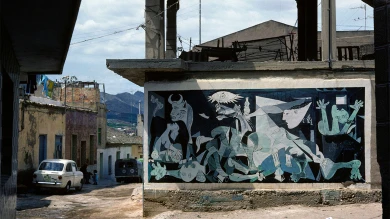
This guided tour activates the microsite Rethinking Guernica, a research project developed by the Museo Reina Sofía’s Collections Area, Conservation and Restoration Department and the Digital Projects Area of the Editorial Activities Department, assembling around 2,000 documents, interviews and counter-archives related to Pablo Picasso’s painting Guernica (1937).
The visit sets out an in-situ dialogue between the works hung around the painting and a selection of key documents, selected by the Museo’s Education Team and essential to gaining an idea of the picture’s historical background. Therefore, the tour looks to contribute to activating critical thought around this iconic and perpetually represented work and seeks to foster an approach which refreshes our gaze before the painting, thereby establishing a link with the present. Essentially revisiting to rethink Guernica.
Dear Felix:
Saturdays at 6pm
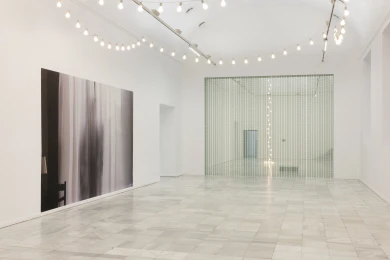
The immediately recognisable art of Felix Gonzalez-Torres, which is on display, from May to October 2026, in the show Sweet Revenge, moves beyond the transmission of messages laden with poetic evocation, vital or biographical reflection, or even a clear political or ethical positioning. Rather, it seeks an active response by visitors to the exhibition. His work invites engagement with these messages so that, whether delighting, moving or challenging, it still prompts viewers to participate in the dialogue and complete the artistic undertaking with their own actions.
Thus, the guided tour Dear Felix: offers a shared, dialogue-inflected tour through the show, with the aim of collectively thinking and feeling the gestures the artist’s work puts forward. Ostensibly simple actions such as crossing through a beaded curtain to take a sweet and eat it, taking a poster from a stack of paper or simply observing a billboard closely, all contain ways of understanding life, loss, love, injustice or the passing — never linear — of time. The tour’s ultimate aim is not to set meanings or create an overload of interpretations of the work, nor does it seek to crystallise an image of the artist and his life in a response to questions which are not there. It looks instead to provide a space to open shared meaning in these apparently simple objects and to attempt a possible correspondence of return from the here and now. A lumbering attempt at responding which starts with a simple Dear Felix:
1926–2026: One Hundred Years of the Lyceum Club Femenino
Thursday, 2 July 2026
The Lyceum Club Femenino (Lyceum Women’s Club) was established in Madrid in 1926, constituting a space which opened new pathways for women to participate in Spain’s intellectual, artistic and political life in the first third of the twentieth century, and for figures such as designer Victorina Durán, pedagogue María de Maeztu, lawyer and politician Victoria Kent and artist Ángeles Santos, to name but a few. To mark the Madrid Club’s one hundredth anniversary, this research symposium examines its role as a key place for studying women’s and feminist culture in Spain’s Silver Age by analysing and vindicating the different agencies, trajectories and cultural projects that structured the space.
By way of three lectures and two round-table discussions, the symposium sets forth a journey through the Lyceum Club Femenino and the cultural context from which it emerged, from its standing as a pioneering institution to the study of cultural material from the period and the process of constructing the figure of the “modern woman”. These talks and discussions look to shed light on how new ways of thinking, creating and occupying public space were shaped, expanding the gaze on cultural, educational and social networks linked to the Lyceum — as much concerning its ties with other intellectual and artistic circles as the continuity and transformation of these networks during Republican exile. Finally, the symposium features three artistic interventions conceived to recover the artistic legacy of this space in Madrid.
The Museo Reina Sofia joins the Ministry of Culture’s cultural programme focused on the centenary of the Lyceum Club Femenino via these sessions, co-organised with the Spanish National Research Council (CSIC).
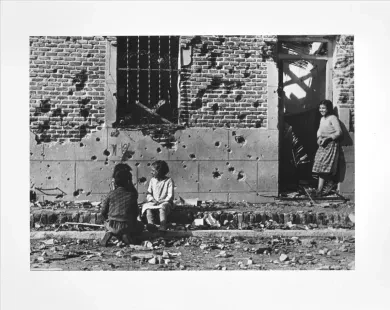
Robert Capa
Friday, 26 June 2026 – 6pm
This international encounter centred on the figure of Robert Capa (Budapest, 1913 — Thai Binh, Vietnam, 1954), one of photojournalism’s pre-eminent figures, is held within the framework of the government initiative Spain and Freedom. Fifty Years and in conjunction with a cluster of three locations — the building on number 10 Calle Peironcely, the Plaza del Fotógrafo Robert Capa and the San Carlos Borromeo Parish in Vallecas — declared as a Place of Democratic Memory.
The emblematic photo Robert Capa took in 1936 of this area of Republican Madrid, featuring anonymous children talking in front of a bullet-riddled building attacked by Nazi-fascist air forces, has, in recent years, become a catalyst for impassioned collective action vindicating memory and denouncing the horrors and brutality of wars, past and present.
Within this context, representatives from cultural and academic spheres and civil society organisations from Germany, the USA and Spain discuss the legacy of Capa and photojournalism in European democratic memory, exploring in greater depth two citizen initiatives constructed by Europe from its shared memory: #SalvaPeironcely10 (#SavePeironcely10), in Entrevías (Puente de Vallecas), and the Capa Haus Initiative in the Lindenau neighbourhood of Leipzig, both united by the protection and conservation of historical heritage and by the defence of peace.
The round-table discussion features the participation of Cynthia Young, Juan Miguel Sánchez Vigil, Ulf-Dietrich Brumann and José María Uría Fernández and is moderated by Myriam Soto Lucas. Carmina Gustrán Loscos, the commissioner of Spain and Freedom. Fifty Years, will also join the discussion.
equipoMotor
Jueves alternos, 23 de octubre, 2025 - 11 de junio, 2026 - 17:30 h
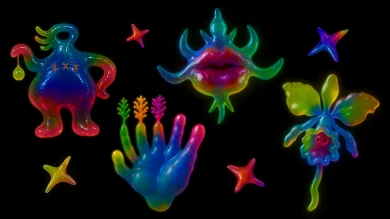
El programa equipoMotor regresa en su edición 25-26 con un aire espectral y mutante para lanzar la pregunta: ¿y si el Museo fuera «un poco más Frankenstein»? Inspirándose en dicho monstruo y en todas aquellas criaturas que desafían la norma desde los márgenes, el proyecto de mediación cultural Galaxxia diseña y acompaña una edición incisiva, intergeneracional y descentralizadora, donde saberes invisibilizados, cuerpos raros y deseos molestos se entrelazan para generar nuevas formas de imaginación crítica y radical. En los sótanos y corredores del Museo —un particular laboratorio— las dudas no se esconden: son materia prima.
Así, para este curso el equipoMotor convoca a personas de todas las edades que hayan participado en ediciones anteriores de los distintos equipos del Área de Educación a recorrer el Museo como quien manipula un cuerpo abierto: descoyuntando algunas de sus categorías teóricas y artísticas —la necropolítica, lo crip-cuir, la lucha de clases, las políticas del malestar, la decolonialidad, la temporalidad cuir, la descentralización institucional o el feísmo— para articular un relato díscolo, remendado y palpitante.
El programa se estructura en bloques temáticos sobre lo freak como metodología, el trabajo cultural, la intergeneracionalidad y la diversidad territorial. Cada bloque a su vez se despliega en sesiones que combinan disparadores teóricos y estéticos, visitas a exposiciones y espacios liminales del Museo, talleres artísticos con artistas, ejercicios de curaduría audiovisual colectiva y de relatoría radiofónica, así como instancias de activación pública, mediante proyecciones de cine experimental y coloquios compartidos con el público, en complicidad con el archivo Hamaca y el Área de Cine y Nuevos Medios del Museo.
De este modo, la presente edición incorpora una particularidad: el grupo de participantes irá transformándose en un «colectivo curatorial audiovisual temporalmente autónomo», con capacidad de incidir en la programación del Museo y de abrir la conversación de equipoMotor al público general, cuestionando y expandiendo así los límites entre las cabezas que deciden, las manos que producen y los cuerpos y presencias que habitan la institución. Las personas seleccionadas en la modalidad oyente serán invitadas a las proyecciones públicas, así como a otras activaciones y momentos de apertura del equipoMotor.
Frente al relato de un museo homogéneo, pulcro y lineal, apostamos por un Museo disidente, contradictorio y lleno de vida residual. Un Museo que no tema hacerse preguntas incómodas ni mostrar sus cicatrices. equipoMotor. Un poco más Frankenstein no busca repensar el cuerpo de la institución, sino habitarlo en sus desgarros, tal como es: híbrido, inacabado, infecto, fantasmagórico… y cargado de esporas y chispas por venir.