-
International Museum Day, 2015
Saturday, May 16
Museum in Dance. Tour for children and adults based around artworks and movement
Location: Education Information Point, Floor 1, Sabatini Building. Registration up to half an hour before the start of the activity.
Time: 6:00 p.m.
Aimed at: familiesContemporary dance has a distinguished presence over this weekend. The proposal comprises a tour through painting and abstract sculpture, where the composition and meaning of the works chosen are presented to visitors by using corporeal expression and movement. The tour, open to both children and adults, who are invited to actively participate, strives to open new channels for perceiving, understanding and enjoying contemporary art.
Educational program developed with the sponsorship of: Fundación Banco Santander
Dance. Trinity Test 1.0. Contemporary dance performance by Begoña Quiñones & Mar Rodríguez
Location: Patio Nouvel
Time: 12:00 a.m. and 7:00 p.m.
Length: 12 minutos
Admission: free
In collaboration with: Certamen Coreográfico de Madrid
Choreography and performance: Verónica Garzón, Begoña Quiñones and Mar Rodríguez
Music: Fabrizio di Salvo
Costume design: Mar Rodríguez and Begoña Quiñones
This choreography stems from a previous project called Load Fulcrum, set in motion by these two choreographers and dancers in the programme “Companies in Residence”, from the Canal Dance Centre, and gestating through the art residence granted within the framework of XVIII MASDANZA, by Dantzagunea and its Sortutakoak programme.Follow Me. Activity for young people <18
Activity design: Equipo
Equipo, the group of young people collaborating with the education department, invite participants to journey through the Museo using certain clues and indications to find out how much we follow our own footsteps or whether we are lead by others’ decisions.
Aimed at: young people aged between 13 and 18
Time: 6:00 p.m.
Capacity: 25 participants
Registration type: free activity, with prior registration at hastadieciocho@museoreinasofia.es or by phone on +34 91 774 10 00 ext. 2096
The activity revolves around the interest members of Equipo have taken in the world of social media and the trends it sets, conditioning young people’s tastes and choices. Are we actually as free as we think we are? Are we able to decide or do we do what we are told without thinking about it just to be part of the group? Would you blindly follow the orders of someone you don't know in a museum? Would you dare to discover new spaces by following clues without knowing who they’re from? This activity offers the chance to discover the Museo Reina Sofía from another point of view and to get to know the young people in the Equipo project.Educational program developed with the sponsorship of: Fundación Banco Santander
Guided tours of the Collection and Exhibitions
Admission: Free, until full capacity is reached
Registration: Meeting Point, up to an hour before the start of each tour.
Capacity: 25 people per tour
11:30 a.m. La Colección reescrita
12:30 p.m. A propósito de... Aún no. Sobre la reinvención del documental y la crítica de la modernidad
12:30 p.m. A propósito de... Carl Andre. Escultura como lugar
5:00 p.m. Guernica. Historia de un icono
7:00 p.m. CuerpoEducational program developed with the sponsorship of: Fundación Banco Santander
-
International Museum Day, 2015
Sunday, May 17
Guided tours of the Collection and Exhibitions
11:30 a.m. Guernica. Historia de un icono
12:30 p.m. A propósito de… Fuego blanco. La colección moderna del Kunstmuseum Basel
12:30 p.m. A propósito de... Carl Andre. Escultura como lugar
5:00 p.m. FeminismoMuseum in Dance. Tour for children and adults based around artworks and movement
Location: Education Information Point, Floor 1, Sabatini Building. Registration up to half an hour before the start of the activity.
Time: 1:00 p.m.
Aimed at: families
Performers: Patricia Ruz, Tania Arias, Raúl Márquez and Pablo Martín Jones
Capacity: 30 people (children and adults)
Contemporary dance has a distinguished presence over this weekend. The proposal comprises a tour through painting and abstract sculpture, where the composition and meaning of the works chosen are presented to visitors by using corporeal expression and movement. The tour, open to both children and adults, who are invited to actively participate, strives to open new channels for perceiving, understanding and enjoying contemporary art.Educational program developed with the sponsorship of: Fundación Banco Santander
-
Día Internacional de los Museos, 2015
Monday, May 18
Presentation of the restoration of the work Portrait of Joella by Salvador Dalí and Man Ray
In 1933 Man Ray created the plaster portrait of Joella Bayer, the wife of New York gallery owner Julien Levy. On the occasion of an exhibition held the following year in the Julien Levy Gallery, Salvador Dalí intervened pictorially in the portrait plaster, transforming it into a sculpture-object.
To mark International Museum Day, the Conservation-Restoration Department will present to visitors the recent restoration of the work, carried out through the sponsorship of the Bank of America Merrill Lynch and its Art Conservation Program.Location: Room 205, Sabatini Building, Floor 2
Time: 11:00 a.m., 12:30 p.m. and 5:00 p.m.
Admission: Free, until full capacity is reachedRestoration programme carried out with the sponsorship of: FUNDACIÓN MAPFRE
Restoration of the work Joella with the sponsorship of: Bank of America Merrill LynchI call them simply books. Opening of the exhibition curated by Guy Schraenen
The exhibition I call them simply books, devoted to the «book as book», can be seen as part two of the previous one It is not new, it is a book, that it was a purely conceptual approach to the book. The title is a quotation by Peter Downsbrough, an American artist who has published numerous «books» since 1972.
Artists’ books are a new and revolutionary way of dealing with the space of the book, it is not considered any more as a mere container of information, but as a creative space. These books are generally of average format, of traditional appearance and the materials and printing techniques are unexceptional; but while the conventional books and their content can be diffused by other media, the artists' books of this exhibition can only exist as books. They are, even published in several hundreds of copies, original art works. The various drawings, photographs, etc., used to be reproduced in these works should not be considered as originals, but the books themselves, the book as a work of art. Thus we call them "books" in the same way we call a painting "painting".
Among the artist presented are works by Marcel Broodthaers, Daniel Buren, James Lee Byars, José Luis Castillejo, Mirtha Dermisache, Peter Downsbrough, Sol LeWitt, Richard Long, Michael Snow and Bernard Villers.
Location: Nouvel Building, Library and Documentation Center. Space D, Floor 0
Time: 7:00 p.m.Radio Nacional de España visits the Museo Reina Sofía
Location: Nouvel Building. Floor 1
Time: 8:00 to 12:00 p.m.
Admission: Free, until full capacity is reached
Access time: access until 11 p.m.
From inside the Museo, Radio Nacional de España will broadcast the evening news, 24 horas (24 hours), directed by Miguel Ángel Domínguez. Visitors will have the chance to attend its broadcast live.Special late opening, until 11 p.m., to the exhibition White Fire. The Kunstmuseum Basel Modern Collection
The Museum offers the chance of visiting the extraordinary exhibition la extraordinaria exposición White Fire. The Kunstmuseum Basel Modern Collection until 11 p.m. coinciding with the International Museum Day.. The Kunstmuseum Basel is considered one of the finest public municipal museums in the world. The two cornerstones of its collection are the works dating from the 15th and 16th centuries, on one side, and artworks from the 19th century to the 21st, on the other, with the ensemble of the latter making it one of the most significant collections of contemporary art in Europe.Guided tour of the Library
The Documentation Centre and Library offer the chance to discover their facilities in this visit. The aim is to divulge their collections and services as a study and research tool for contemporary art. A selection of highly valued pieces will be on display, ranging from Vicente Huidobro’s poem Tour Eiffel, published in 1918 and with an illustrated cover by Robert Delaunay, to the SMS collection of multiples edited in New York in 1968 by The Letter Edged in Black.Location: Nouvel Building, Documentation and Library Centre. Space D, Floor 0
Time: 9:30 a.m. and 10:45 p.m.
Capacity: 20 people per group
Registration: prior registration at antonio.majado@museoreinasofia.es
Registration deadline: May 17Guided Tours
Visita comentada al Archivo en que se encuentra la memoria histórica del Museo
The Central Archive offers the chance to discover its history and documentary content by way of an explanatory talk on the role of archive within the institution. It aims to divulge its collections and services as a source for the study and research of contemporary art.
Location: Nouvel Building, Study Centre. Space D, Floor 5
Time: 11:00 a.m.
Capacity: 20 people
Registration: prior registration by writing to archivo@museoreinasofia.es
Registration deadline: May 18
Apropos of… White Fire. The Kunstmuseum Basel Modern Collection
This guided tour aims to demonstrate that a collection is more than just a list of masterpieces added systematically. The objective is to delve deeper and expand, by looking at the history of what is widely considered the number-one public municipal museum in the world, the aspects that have forged one of the most important and representative collections of modern and contemporary art in Europe over the years.
Registration: Meeting Point, up to one hour before the start of each visit
Time: 6:00 p.m.
Capacity: 25 people per visit
Leap into Space. Visit-workshop led by circus artists
Leap into Space is a family activity that puts forward an innovative way of moving closer to contemporary art through resources taken from circus arts and conducted by circus artists. These artists will foster the ongoing interaction between children and adults and the works of Lucio Fontana, Gil J. Wolman, Wolf Vostell and Yves Klein, leading them towards a new stage of art appreciation.
Location: Education Information Point, Floor 1, Sabatini Building. Registrations up to half an hour before the start of each activity.
Time: 6:00 p.m.
Aimed at: families
Performers: Jorge Jorge y Dalí Bergamaschi
Capacity: 30 people (children and adults)
Seen and Unseen. A Tour through visual and tactile impressionsThis tour is designed as an alternative experience, one where a visually impaired person and an educator specialised in accessibility provide multi-sensory strategies to approach art by means of a descriptive visit around Collection 2 with visual and tactile impressions. The commentary on the works selected includes impressions obtained by the visually impaired person through tactile exploration, for instance with sculptures, and the thorough visual analysis of various paintings and photographs by the sighted person. The aim of the initiative is to encourage visitors to experience and share the process through which visually impaired people access art content.
Time: 12:00 a.m. and 6:00 p.m.
Educators: Azucena Hernández and Asier Vázquez
Registration: Meeting Point, up to one hour before the start of each visit
Capacity: 20 people per visit
Further information: email accesibilidad@museoreinasofia.es or by phone: +34 91 774 10 00, Ext. 2033Educational program developed with the sponsorship of: Fundación Banco Santander

Held on 16, 17, 18 May 2015
The Museo will once again be taking part in the celebration of International Museum Day (IMD), held on 18 May, contributing, on 16, 17 and 18 May, with dance activities, workshops and a programme of guided tours that aim to offer plural viewpoints of its Collection and temporary exhibitions. These will include the remarkable Kunstmuseum Basel collection, a descriptive visit through visual and tactile impressions and special or hidden places inside the Museo, which this year will pass through the library facilities and the archive spaces that conserve the Museo’s historical memory, offering an overview of the restoration processes recently carried out on Portrait of Joella by Salvador Dalí and Man Ray.
International Museum Day (IMD) has been held worldwide since 1977, providing the chance to meet with visitors and involve them in museums’ role as spaces for critical awareness, the dissemination of art and culture and the exchange of ideas and knowledge. Spaces which, on a daily basis, face challenges of sustainability, the connection to multiple communities surrounding them and the creation of sustainable networks that share and circulate narratives. The theme adopted by ICOM this year is Museums for a sustainable society, which fully encompasses museums’ permanent priorities and lines of work.
Organised by
Museo Reina Sofía

Más actividades
Rethinking Guernica
Monday and Sunday - Check times
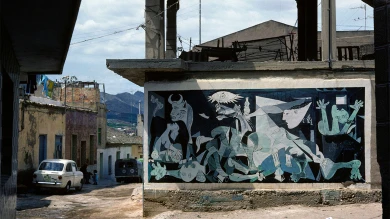
This guided tour activates the microsite Rethinking Guernica, a research project developed by the Museo Reina Sofía’s Collections Area, Conservation and Restoration Department and the Digital Projects Area of the Editorial Activities Department, assembling around 2,000 documents, interviews and counter-archives related to Pablo Picasso’s painting Guernica (1937).
The visit sets out an in-situ dialogue between the works hung around the painting and a selection of key documents, selected by the Museo’s Education Team and essential to gaining an idea of the picture’s historical background. Therefore, the tour looks to contribute to activating critical thought around this iconic and perpetually represented work and seeks to foster an approach which refreshes our gaze before the painting, thereby establishing a link with the present. Essentially revisiting to rethink Guernica.
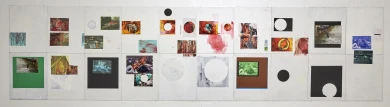
Difficulty. Forms and Political Effects of Deviation in Writing and Contemporary Art
23 February – 14 December 2026 – Check programme
Difficulty. Forms and Political Effects of Deviation in Writing and Contemporary Art is a study group aligned towards thinking about how certain contemporary artistic and cultural practices resist the referentiality that dominates the logics of production and the consumption of present-day art. At the centre of this proposal are the concepts of difficulty and deviation, under which it brings together any procedure capable of preventing artistic forms from being absorbed by a meaning that appears previous to and independent from its expression. By ensuring the perceptibility of their languages, difficulty invites us to think of meaning as the effect of a signifying tension; that is, as a productive and creative activity which, from the materiality of art objects, frees aesthetic experience from the representational mandate and those who participate in it from the passiveness associated with tasks of mimesis and decoding.
The economy of the referential norm translates the social logic of capitalism, where insidious forms of capturing subjectivity and meaning operate. In the early 1980s, and adopting a Marxist framework, poet Ron Silliman highlighted how this logic entailed separating language from any mark, gesture, script, form or syntax that might link it to the conditions of its production, rendering it fetichised (as if without a subject) and alienating its users in a use for which they are not responsible. This double dispossession encodes the political strategy of referential objectivity: with no subject and no trace of its own consistency, language is merely an object, that reality in which it disappears.
The political uses of referentiality, more sophisticated today than ever before, sustain the neoliberal-extractivist phase of capitalism that crosses through present-day societies politically, economically and aesthetically. Against them, fugitive artistic practices emerge which, drawing from Black and Queer studies and other subaltern critical positions, reject the objective limits of what exists, invent forms to name what lies outside what has already been named, and return to subjects the capacity to participate in processes of emission and interpretation.
Read from the standpoint of artistic work, the objective capture of referentiality may be called transparency. Viewed from a social contract that reproduces inequality in fixed identity positions, transparent in this objectivity are, precisely, the discourses that maintain the status quo of domination. Opposite the inferno of these discourses, this group aims to collectively explore, through deviant or fugitive works, the paradise of language that Monique Wittig encountered in the estranged practices of literature. For the political potency of difficulty — that is, its contribution to the utopia of a free language among equals — depends on making visible, first, its own deviations; from there, the norm that those deviations transgress; and finally, the narrowness of a norm which in no way exhausts the possibilities ofsaying, signifying, referring and producing a world.
From this denouncement of referential alienation, fetishisation and capture, Difficulty. Forms and Political Effects of Deviation in Writing and Contemporary Art turns its attention to the strategies of resistance deployed by contemporary artists and poets. Its interest is directed towards proposals as evidently difficult or evasive as those of Gertrude Stein, Lyn Hejinian, Theresa Hak Kyung Cha, Kameelah Janan Rasheed, Kathy Acker, María Salgado and Ricardo Carreira, and as seemingly simple as those of Fernanda Laguna, Felix Gonzalez Torres and Cecilia Vicuña, among other examples that can be added according to the desires and dynamics of the group.
The ten study group sessions, held between February and December, combine theoretical seminars, work with artworks from the Museo Reina Sofía’s Collections and exhibitions, reading workshops and public programs. All these formats serve as spaces of encounter to think commonly about certain problems of poetics — that is, certain political questions — of contemporary writing and art.
Difficulty. Forms and Political Effects of Deviation in Writing and Contemporary Art inaugurates the research line Goodbye, Representation, through which the Museo Reina Sofía’s Studies Directorship seeks to explore the emergence of contemporary artistic and cultural practices which move away from representation as a dominant aesthetic-political strategy and redirect their attention toward artistic languages that question the tendency to point, name and fix, advocating instead for fugitive aesthetics. Over its three-year duration, this research line materializes in study groups, seminars, screenings and other forms of public programming.

CLINIC 2628. A Community of Writing and Research in the Arts
February – October 2026
Clinic 2628 is a project which supports and brings together writings which stem from the intention to offer a space and sustainable time for research work in art and culture. Framed within an academic context which is increasingly less receptive to the forms in which thinking happens and is expressed, the aim is to rescue the academic from its neoliberal trappings and thus recover the alliance between precision and intuition, work and desire. A further goal is to return writing to a commons which makes this possible through the monitoring of processes and the collectivisation of ideas, stances, references and strategies.
The endeavour, rooted in a collaboration between the Museo Reina Sofía’s Studies Directorship and the Artea research group, via the i+D Experimenta project, is shaped by three annual editions conceived as spaces of experimentation, discussion and a demonstration of writings critical of what is put forward by today’s academia.
What forces, forms and processes are at play when writing about art and aesthetics? In academia, in museums and in other cultural institutions, the practice of writing is traversed by productivist logics which jeopardise rhythms of research and experimentation. The imposition of both scientism inherent in the structure of “the paper” and the quantifying of results which demand a criterion of quality and visibility sterilise and smoothen, from the outset, the coarseness that is particular to writing understood from the concrete part of language: phonic, graphic, syntactic and grammatical resistance connecting the language user to the community the language unites and activates. They also sterilise the roughness enmeshed in the same desire to write, the intuitive, clear and confusing pathways that once again connect the writer to those reading and writing, participating in a common good that is at once discovered and produced.
The progressive commercialisation of knowledge propelled by cognitive capitalism moves further away from the research and production of knowledge in artworks and artistic languages and practices. The work of curators and archive, criticism, performances and essays formerly saw a horizon of formal and emotional possibilities, of imagination that was much broader when not developed in circumstances of competition, indexing and impact. Today, would it be possible to regain, critically not nostalgically, these ways; namely, recovering by forms, and by written forms, the proximity between art thinking and its objects? How to write in another way, to another rhythm, with no more demands than those with which an artwork moves towards different ways of seeing, reading and being in the world?
Take Shelter in Culture 2026
Mondays, from 6 July to 24 August 2026 – 3pm
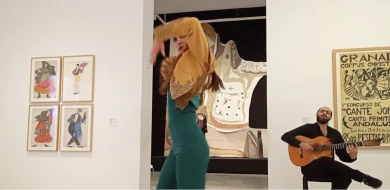
This summer, the Museo Reina Sofía participates, for the third year running, in Take Shelter in Culture. The campaign features performances by distinguished figures from flamenco guitar and dance in the rooms of The Spanish Night. Flamenco, Avant-Garde and Popular Culture, to the backdrop of Alberto’s work La romería de los cornudos (The Pilgrimage of the Cuckolds), on the second floor of the Sabatini Building, close to Picasso’s Guernica.
Every Monday, starting on Monday, 6 July and ending on 24 August, at 3pm different flamenco artists will perform, offering a different way of visiting the works in the Museo Reina Sofía Collections.
This programme of cultural activities, promoted from Madrid City Council’s Area of Culture, Tourism and Sport, allows people visiting the Museo in the hottest hours of the day during the summer months to enjoy a space in which to shelter from extreme temperatures.
equipoMotor
Jueves alternos, 23 de octubre, 2025 - 11 de junio, 2026 - 17:30 h
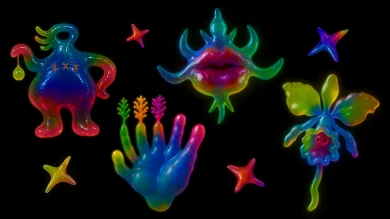
El programa equipoMotor regresa en su edición 25-26 con un aire espectral y mutante para lanzar la pregunta: ¿y si el Museo fuera «un poco más Frankenstein»? Inspirándose en dicho monstruo y en todas aquellas criaturas que desafían la norma desde los márgenes, el proyecto de mediación cultural Galaxxia diseña y acompaña una edición incisiva, intergeneracional y descentralizadora, donde saberes invisibilizados, cuerpos raros y deseos molestos se entrelazan para generar nuevas formas de imaginación crítica y radical. En los sótanos y corredores del Museo —un particular laboratorio— las dudas no se esconden: son materia prima.
Así, para este curso el equipoMotor convoca a personas de todas las edades que hayan participado en ediciones anteriores de los distintos equipos del Área de Educación a recorrer el Museo como quien manipula un cuerpo abierto: descoyuntando algunas de sus categorías teóricas y artísticas —la necropolítica, lo crip-cuir, la lucha de clases, las políticas del malestar, la decolonialidad, la temporalidad cuir, la descentralización institucional o el feísmo— para articular un relato díscolo, remendado y palpitante.
El programa se estructura en bloques temáticos sobre lo freak como metodología, el trabajo cultural, la intergeneracionalidad y la diversidad territorial. Cada bloque a su vez se despliega en sesiones que combinan disparadores teóricos y estéticos, visitas a exposiciones y espacios liminales del Museo, talleres artísticos con artistas, ejercicios de curaduría audiovisual colectiva y de relatoría radiofónica, así como instancias de activación pública, mediante proyecciones de cine experimental y coloquios compartidos con el público, en complicidad con el archivo Hamaca y el Área de Cine y Nuevos Medios del Museo.
De este modo, la presente edición incorpora una particularidad: el grupo de participantes irá transformándose en un «colectivo curatorial audiovisual temporalmente autónomo», con capacidad de incidir en la programación del Museo y de abrir la conversación de equipoMotor al público general, cuestionando y expandiendo así los límites entre las cabezas que deciden, las manos que producen y los cuerpos y presencias que habitan la institución. Las personas seleccionadas en la modalidad oyente serán invitadas a las proyecciones públicas, así como a otras activaciones y momentos de apertura del equipoMotor.
Frente al relato de un museo homogéneo, pulcro y lineal, apostamos por un Museo disidente, contradictorio y lleno de vida residual. Un Museo que no tema hacerse preguntas incómodas ni mostrar sus cicatrices. equipoMotor. Un poco más Frankenstein no busca repensar el cuerpo de la institución, sino habitarlo en sus desgarros, tal como es: híbrido, inacabado, infecto, fantasmagórico… y cargado de esporas y chispas por venir.