-
17 and 25 July, 2013
Carlos Reygadas
Post Tenebras Lux
Technical credits: 2012. Mexico, France, Germany, Holland, in the original Spanish, colour and sound, 120´.
Screening format: Blu-ray
With this film – which has been polemical since its premiere – Reygadas opts for a hermetic discourse to explore the oppressive violence infusing the social spectrum in Mexico. With rigorous formalism, the film launches the spectator into a dense chronology that captures the collapse of a man dragged along by the inertia of his life. What is apparently a self-imposed exile in the countryside with his family does not free him of his sense of alienation; neither the rural idyll nor the everyday activities he shares with the locals calm the irrational attacks of fury and loneliness.
-
19 and 27 July, 2013
Juan Carlos Rulfo y Carlos Hagerman
Los que se quedan
Technical credits: 2008. Mexico, in the original Spanish, colour and sound, 98´.
Screening format: Blu-ray
This film portrays several towns inhabited exclusively by women and children, no men whatsoever, as a consequence of the transformation occurring in Mexico's rural communities due to migration to the United States. Rulfo and Hagerman document the intimate consequences of migration, how these consequences change everyday life, projects and aspirations, using a singular poetic of abandonment to address a theme commonly found in Mexican cinema.
-
24 July and 1 August, 2013
Emiliano Altuna, Carlos Rossini y Diego Osorno
El alcalde
Technical credits: 2012. Mexico, in the original Spanish, colour and sound, 80´.
Screening format: Blu-ray
As an example of a violent response to a catastrophic state of affairs, this film portrays Mauricio Fernández Garza, the controversial mayor of San Pedro Garza García, in Monterrey, Nuevo León, the richest and safest municipal in all of Latin America. A radical and unpredictable figure, his ideas and strategies for keeping order have led to major debate at the national level. Is fighting crime from outside the law a valid solution? What are the consequences of a state alongside the State? -
26 July and 3 August, 2013
Nicolás Pereda y Jacob Secher Schulsinger
Matar extraños
Technical credits: 2013. Mexico and Denmark, in the original Spanish, colour and sound, 63´.
Screening format: Blu-ray
Pereda and Secher Schulsinger deconstruct the collective myth of the Mexican Revolution, inquiring into how history and the past are integrated into the present. On the one hand, the film tells the story of three men lost in the desert hoping to join the armed struggle and, on the other hand, it shows a series of rehearsals and auditions with different actors who improvise dialogues for a film about the Mexican Revolution.
-
31 July and 8 August, 2013
Kyzza Terrazas
El lenguaje de los machetes
Technical credits: 2011. Mexico, in the original Spanish, colour and sound, 78´.
Screening format: Blu-ray
What are the radical ideas and insurgencies of today, the result of the unfinished processes of independence and revolution? Behind Ray and Ramona's turbulent relationship, this film exposes class contradictions and rocks the artificial pillars of national unity. It draws a dramatic line that oscillates between self-sabotage and extreme idealism, coalescing in the couple's iconoclastic impulse to pulverize the Basilica of Guadalupe, with the idea of “creating a better world”. -
2 and 10 August, 2013
Michel Franco
Después de Lucía
Technical credits: 2012. Mexico, in the original Spanish, colour and sound, 93´.
Screening format: Blu-ray
In this film, the adolescent body becomes the record of a reality torn apart by traumas, chaos and paralysis. After the death of her mother, a young woman and her father move to the capital city. She soon becomes the target of her classmates, but she resists stoically so as not to upset her father. Franco constructs a revealing and precarious suspension, between extreme violence and silent resistance. -
7 and 17 August, 2013
Roberto Fiesco
Quebranto
Technical credits: 2012. Mexico, in the original Spanish, colour and sound, 95´.
Screening format: Betacam Digital
With a highly theatrical mise-en-scene, Roberto Fiesco portrays the memory, strength and vitality of two women who have faced a series of losses. Inhabitants of a world of memories, Coral Bonelli, now a transgender actress and dancer, along with her mother, Lilia Ortega, who is also an actress, share with each other and with the spectator a series of tragicomic testimonies. The film highlights the prejudices still associated with the body and with identity, and the fight against them. -
9 and 22 August, 2013
Michel Lipkes
Malaventura
Technical credits: 2012. Mexico, in the original Spanish, colour and sound, 75´.
Screening format: Blu-ray
Using a minimalist style, Michel Lipkes captures the everyday gestures of an old man in Mexico City, on his last day of life. The film deals with the proximity of death, showing the protagonist's attempts to remain steady in a world that is pushing him out. Extended time and slow-motion gestures illustrate a banal day, a decrepit place and an old man in decay but who tries, in spasmodic impulses, to hold on to life. -
14 and 24 August, 2013
Everardo González
Cuates de Australia
Technical credits: 2011. Mexico, in the original Spanish, colour and sound, 90´.
Screening format: Blu-ray
On a ranch in the Sierra de Coahuila, in northeast Mexico, the severe droughts that plague the area seriously threaten the health of its inhabitants. This documentary records the resulting exodus but also resistance and strategies for survival. Cuates de Australia is an example of how the cultural imaginary regarding a territory can become an archipelago of topographies as uninhabitable as they are inevitable, a forgotten space in which to try out new paths of resistance. -
16 and 28 August, 2013
Kenya Márquez
Fecha de caducidad
Technical credits: 2011. Mexico, in the original Spanish, colour and sound, 80´.
Screening format: Blu-ray
A mother looking for her son, fearing he has been a victim of organized crime, and a young woman fleeing from a stormy past. Between the morgue and a residential building, the steps of these women draw in spectators and show them the insides of a Mexico that is surprising and at the same time familiar. The film's cathartic moments allow Márquez to experiment with another way of navigating through the social configurations generated by drug trafficking, the mafia and the vestiges of an obsolete patriarchy. -
21 and 29 August, 2013
Gabriel Mariño
Un mundo secreto
Technical credits: 2012. Mexico, in the original Spanish, colour and sound, 87´.
Screening format: Blu-ray
Using the structure of a road movie, the director captures the state of vulnerability and impenetrability typical of adolescence. The film follows a young woman whose sudden decision to leave the vacuum of her life at home and school leads her to cross the uncertain landscapes of Northern Mexico, revealing improbable moments of shared solitude. Mariño looks at the turbulent transition from childhood to the adult world without falling prey to the clichés often appearing in narratives about adult transition. -
23 and 30 August, 2013
Eduardo Villanueva
Penumbra
Technical credits: 2013. Mexico, in the original Spanish, colour and sound, 88´.
Screening format: Blu-ray
Shot during the first rays of the morning sun or in the fading light of the late afternoon, Penumbra paints a picture of daily life and poverty in rural Mexico, with its characteristic slow pace of life and with very little dialogue. The story's main character, an old hunter in his final days, lets viewers read between the lines about the violence that saturates the country's rural areas. With its contemplative character, Penumbra alludes to a cinema 'on hold', but also to the non-time created by the absence of a future.

Held on 17, 19, 24, 25, 26, 27, 31 Jul, 01, 03, 06, 07, 08, 09, 10, 14, 16, 17, 21, 22, 23, 24, 28, 29, 30 Aug 2013
This summer film series explores one of the contemporary cinematographies that, although very interesting, is among the least distributed in Europe. Midway between new auteur voices and the poetics of documentary, this series shows how film responds to a situation of provisionality and how it imagines the future from the vantage point of uncertainty.
The audiovisual series Imminent Mexico looks at how a generation of filmmakers deals with a present that is provisional, that has major changes looming, and it reveals how an uncertain and immediate future is imagined, due to the difficulty of foreseeing the long term. The twelve films comprising the program, by filmmakers such as Carlos Reygadas, Nicolás Pereda, Juan Carlos Rulfo and Michel Lipkes, and others, offer a critical commentary of the country's current situation, while at the same time exploring a range of themes, forms and styles that in recent years have given Mexican cinema considerable international recognition. The films programmed transit between purely documentary strategies to the resources used in fiction, including a dose of the irreverent spirit typical of experimental film, but most of all they show the blurring of obsolete frontiers and a marked hybridisation between genres.
This new cinema, identified with a type of filmmaking that can be described as 'on hold', favours the creation of atmospheres over orthodox narratives, presenting palimpsestic, surreal or minimalist narrations and chaotic and desolate landscapes that reflect the tacit violence permeating everyday life. The uncertainty of the future has prompted various filmmakers to focus on people's interior lives, subjective experiences and family dynamics. Their work invites viewers to journey through fragmented territories, to inhabit parallel worlds that point to the strange geography formed by migration circuits and organized crime, or to follow subjects who are lost in thought, absorbing the uncertain present and being pulled by the undertow of the future. The detachment of this contemplative cinema evokes the state of alienation of a country in which a perpetual state of alert has become the norm; the visceral nature of a cinema 'on hold' documents the bodies that dramatize social deterioration while the comedy of the absurd reminds us that the end of the world responds to a number of different logics. It can be dramatic, it can be a slow fade to black or it can be the indication of a liberating optimism.
In this respect, the selected films offer glimpses instead of exact visions, they produce distorted refractions more than precise reflections or mirror images of reality; some films intentionally lose their focus, showing only glimmers, fragments, mirages; they reveal some aspects of the world while simultaneously concealing others; in short, they observe reality, assuming its inevitable aura, a key aspect of an aesthetic and a cinema of imminence that is having a considerable impact on contemporary audiovisual culture.
Itinerary
Centro de Cultura Digital, México D.F., March 20 to April 6, 2014, CPH:Dox, Copenhagen. Second semester, 2014
Curatorship
Antonio Zirión and Mara Fortes
Itinerancies
Museo Nacional Centro de Arte Reina Sofía, Madrid
17 July, 2013 - 30 August, 2013
Centro de Cultura Digital, México D.F.
20 March, 2014 - 6 April, 2014
Más actividades
Dear Americas
Friday 29 May and 5 June, 2026
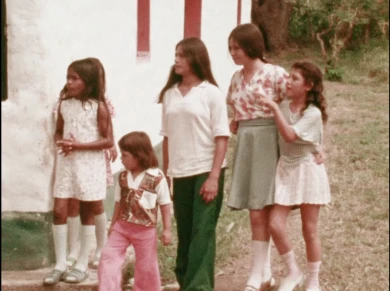
In these films, Marilú Mallet travels to Solentiname, in Nicaragua, and Andahuaylillas, in Peru, to paint a portrait of communities which resist the severity of forced industrialisation. In Solentiname, the focus is on the poet and priest Ernesto Cardenal’s founding of a Christian, poetic and revolutionary utopia, while in Andahuaylillas, a town close to Cuzco, Mallet explores the multiple layers of Andean culture.
A Poetics of the Subject
Thursday 28 May and 4 June, 2026
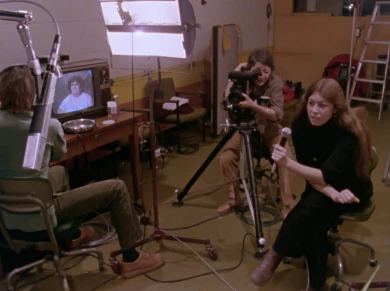
In the tension between documentary and fiction, between the rawness of a tragic political present and narrative escape, lies the truth of the exile’s condition. In Journal inachevé (Unfinished Diary, 1982) Marilú Mallet experiments with her own subjectivity, moving from affirmation to doubt. In Double Portrait (2000), María Luisa Señoret paints her daughter Marilú, who records the process. In this circular relationship, the film-maker constructs a poetics of the portrait as something perpetually unfinished, a process of exploration in which memory, identity and political history merge to become blurred.

Institutional Decentralisation
28 MAY 2026
This series is organised by equipoMotor, a group of teenagers, young people and older people who have participated in the Museo Reina Sofía’s previous community education projects, and is structured around four themed blocks that pivot on the monstrous.
This fourth and final session centres on films that take the museum away from its axis and make it gaze from the edges. Pieces that work with that which is normally left out: peripheral territories, unpolished aesthetics, clumsy gestures full of intent. Instead of possessing an institutional lustre, here they are rough, precarious and strange in appearance, legitimate forms of making and showing culture. The idea is to think about what happens when central authority is displaced, when the ugly and the uncomfortable are not hidden, when they are recognised as part of the commons. Film that does not seek to be to one’s liking, but to open space and allow other ways of seeing and inhabiting the museum to enter stage.
Ordinary, Common and Public. Common Fixes for Ordinary Communities
Tuesday, 26, and Wednesday, 27 May 2026 – Check programme
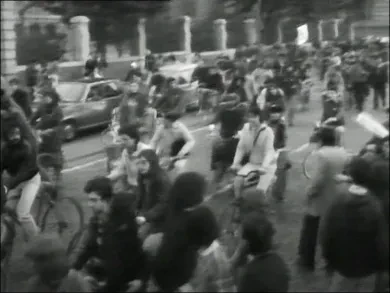
Ordinary, Common and Public. Common Fixes for Ordinary Communities is the title of the fourteenth encounter run by Sociología Ordinaria, a transdisciplinary research group that explores daily knowledge deemed ordinary, superficial or frivolous from a traditional academic and intellectual viewpoint.
This latest edition seeks to approach and map connections between concepts of the commons and the public realm — remembering that the ordinary is also the commons — and to ensure affects and moods of discontent are mobilised towards hope.
By way of its multiple declinations — community, community-based practices, the commons, the communal — the encounter seeks to reflect on different ways of creating, (re)configuring, maintaining, fixing, arranging, caring for and defending the public realm and the commons. Furthermore, it explores forms of invocation and experimentation as tools opposite the helplessness of an uncertain present, in addition to resistance against attempts of expropriation, distortion, privatisation and touristification.
Felix Gonzalez-Torres. Sweet Revenge
26 MAY 2026
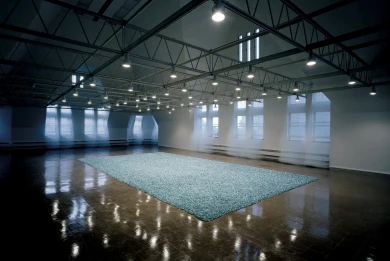
Nancy Spector and Alejandro Cesarco, curators of the exhibition Felix Gonzalez-Torres. Sweet Revenge, will speak with Manuel Segade, director of the Museo Reina Sofía, in a session dedicated to exploring the interpretive frameworks of this first large-scalepresentation in Madrid of the work of Felix Gonzalez-Torres (1957–1996), whose practice continues to resonate in the present.
The conversation begins with the exhibition’s title itself, Sweet Revenge, understood as a paradoxical notion that articulates much of the artist’s thinking. From there, the tensions running through his work are explored: the coexistence of opposing registers, ambiguity as a method, and the simultaneously affective and political charge of his works.
The dialogue also touches on some of the themes that run through his body of work, such as thenotions of identity, citizenship, and authority, alongside experiences linked to the AIDS crisis, and emotions such as love, loss, grief, and optimism. Special attention is given to the way in which Gonzalez-Torres shifts languages associated with Arte Povera, conceptualism, and minimalism towards open, participatory, and deeply personal structures.
The session also includes a reflection on the research process that shaped the exhibition, providing context for the curatorial decisions and criteria that structure it. In this context, Gonzalez-Torres’s work emerges as a device that actively engages those who activate orinterpret it, distributing responsibility for the production of meaning—a process that is alwaysunstable and constantly under negotiation.
These inaugural conversations, part of the main working strands of the Museo’s Public Programmes Area, aim to explore in greater depth the exhibition narratives of the shows organised by the Museo from the perspective of artists, curators and specialists.