-
Opening and closing session
Programme 1
-
Tuesday, 3 November 2020 / Filmoteca Española, Cine Doré
Session 1
Second session (closing session): Monday, 28 December 2020 – 7pm / Museo Reina Sofía, Sabatini Building, Auditorium
Derek Jarman. Blue
UK, 1993, colour, original version in English with Spanish subtitles, DCP in Cine Doré and digital archive in Museo Reina Sofía, 74’Opening session presented by James Mackay, a producer on a broad array of Derek Jarman films and curator of this series.
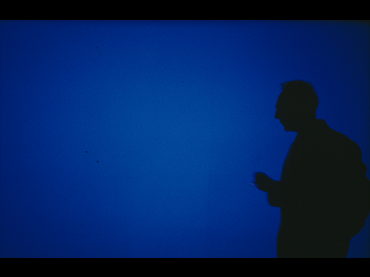
The film opening and closing the series, Blue, is formed by a single static shot of the colour blue with a voice-over and musical soundtrack. The voice reads a poetic and diaristic text written by Jarman, documenting his illness (AIDS) and impending death at a time when he had been partially blinded and his sight was almost completely reduced to blue light. The film, his final feature, was made a few months prior to his death. The visual language of Blue, an unchanging blue screen, directly references the evocation of the void and the areas of immateriality in the work of Yves Klein (1928–1962) through the use of the "International Klein Blue" colour. Andrew Wilson, a curator at Tate Britain, wrote: “The film’s voice-over is spoken by Jarman alongside long-term collaborators Tilda Swinton, Nigel Terry and John Quentin. The text — often spoken as a form of verse — is augmented by music and sound by Jarman’s regular composer Simon Fisher-Turner, as well as Coil, Momus, Karol Szymanowski and Eric Satie. (…). The film became a meditation on colour, the void and his disease. Jarman explained in a late proposal for the film: ‘The monochrome is an alchemy, effective liberation from personality. It articulates silence. It is a fragment of an immense work without limit. The blue of the landscape of liberty.’”
-
Feature films
Programme 2
-
Friday, 6 November 2020 / Filmoteca Española, Cine Doré
Session 1
Second session: Wednesday, 2 December 2020 – 7pm / Museo Reina Sofía, Sabatini Building, Auditorium
Ken Russell. The Devils
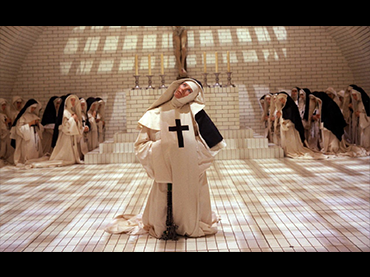
UK and USA, 1971, colour, original version in English with Spanish subtitles, DCP in Cine Doré and digital archive in Museo Reina Sofía, 111’Derek Jarman worked on The Devils, one of the most contentious and controversial films in the history of cinema, as a production designer, designing the sets and historical settings. The film narrates the rise and fall of Urbain Grandier, a dissolute, tyrannical Catholic priest from seventeenth-century France, and the obsessive and neurotic desire for him by Ursuline Sister Jeanne des Anges, played by Vanessa Redgrave. Nestled among this account is the witch-hunt as a power struggle and the persecution of the freest and most alternative form of sexuality. Adapted from Aldous Huxley’s book The Devils of Loudun (1952), the film was banned in many countries and roundly censored in those where it was premiered, receiving an “X” rating. Despite this, Ken Russell would receive the Best Director Award at the Venice Festival in 1971. Jarman, in the tradition of the modern stage designs of Adolphe Appia (1862–1928) and Edward Gordon Craig (1872–1966), designed the sets as a total work of art that depicts religious totalitarianism.
-
Saturday, 7 November 2020 / Filmoteca Española, Cine Doré
Session 2
Second session: Thursday, 3 December 2020 – 7pm / Museo Reina Sofía, Sabatini Building, Auditorium
Ken Russell. Savage Messiah
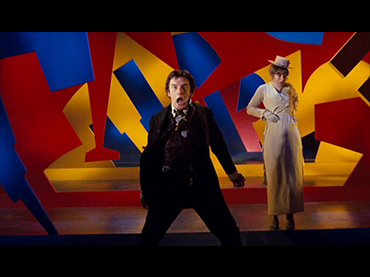
UK, 1972, colour, original version in English with Spanish subtitles, DCP in Cine Doré and B-R in Museo Reina Sofía, 103’A biographical film on avant-garde sculptor Henri Gaudier-Brzeska (1891–1915) and the second Ken Russell-Derek Jarman collaboration. Once more, Jarman would design the sets and historical settings, with Russell confessing his interest in Jarman as “the last true bohemian”. The film explores both the life of an artist against the grain of aesthetic and social conventions in the origins of twentieth-century avant-garde movements, and an idiosyncratic love story between Henri Gaudier and Sophie Brzeska: she, a writer and 20 years his senior, would have an intense and strictly platonic love affair with Gaudier that would last five years. The sculptor, who would die aged 24 in the First World War, adopted the name of his companion to avoid problems of acceptance and so they could pass as brother and sister. In this instance, Russell examines one of his favourite themes, the artist-genius, albeit divested of any mysticism.
-
Tuesday, 10 November 2020 / Filmoteca Española, Cine Doré
Session 3
Second session: Saturday, 5 December 2020 – 7pm / Museo Reina Sofía, Sabatini Building, Auditorium
Derek Jarman y Paul Humfress. Sebastiane
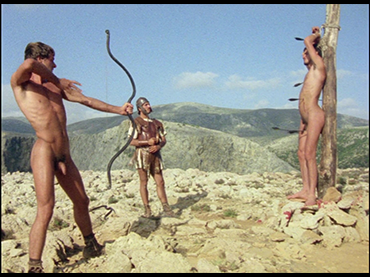
UK, 1976, colour, original version in Latin with Spanish subtitles, DCP in Cine Doré and digital archive in Museo Reina Sofía, 85’Sebastiane is one of the founding films in the construction of queer cinema, whereby the homosexual gaze defies the heterosexual subject that has predominated the history of the medium, both in production and reception. Despite it being Jarman’s first fictional film, he was already putting in place his major themes with striking clarity: the marginalised figure, brimming erudition, the fusion of myth, occultism and ancient history, and the search for the ideal beauty to express sexual difference. Shot in Latin in Jarman’s wharf studio in London and in Sardinia, and with a shoestring budget of 30,000 pounds, the film tells the story of Saint Sebastian, a member of Emperor Diocletian’s imperial guard banished to a military garrison on the coast and reduced in rank to private. There he must survive the sexual assault of Severus until his execution as he defends ideal love based on pacifism and nature.
-
Wednesday, 11 November 2020 / Filmoteca Española, Cine Doré
Session 4
Second session: Wednesday, 9 December 2020 – 7pm / Museo Reina Sofía, Sabatini Building, Auditorium
Derek Jarman. Jubilee
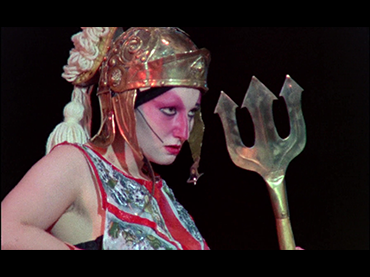
UK, 1978, colour, original version in English with Spanish subtitles, DCP in Cine Doré and digital archive in Museo Reina Sofía, 103’A cult film through which Derek Jarman was able to bring to bear the rage, dissent and frustration of the British punk movement. Jubilee, alluding to the Silver Jubilee of Elizabeth II, is a fiercely original film which moves between science fiction, music video, trash aesthetic, arthouse cinema and epoch-making document. Queen Elizabeth I of England is transported 400 years into the future, from 1570 to 1970, a present future in which she witnesses the United Kingdom plunged into chaos, with Elizabeth II murdered, a fascist police government and mass-media manipulation. In the midst of this social and physical decay, shot to urban scenes of post-war London, violent gangs, played by punk icons like Jordan, Toyah Wilcox and Adam Ant, seethe and swarm. Brian Eno also composed his first film score for this classic in political dystopia.
-
Saturday, 14 November 2020 / Filmoteca Española, Cine Doré
Session 5
Second session: Thursday, 10 December 2020 – 7pm / Museo Reina Sofía, Sabatini Building, Auditorium
Derek Jarman. The Tempest
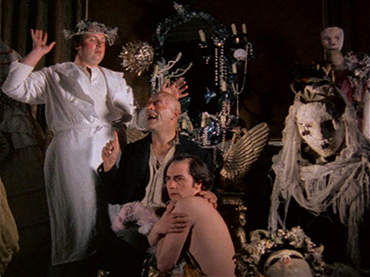
UK, 1979, colour, original version in English with Spanish subtitles, DCP in Cine Doré and digital archive in Museo Reina Sofía, 92’An original adaptation of William Shakespeare’s The Tempest (1611), this film constitutes a project to reinterpret what Jarman would spend years pursuing, in this instance moving between theatre and cinema. The film enabled him to explore a middle ground between both mediums, something he would also develop in later works, such as Edward II and Wittgenstein. With the magical and supernatural strand of the film Jarman returned to the history of alchemy and occultism, a mainstay in his Super-8 and 16mm work. The adaptation would punctuate forgiveness in this story of betrayal, revenge, condemnation and romance, foregrounding, through second readings, the relationship between Prospero and Ariel.
-
Tuesday, 17 November 2020 / Filmoteca Española, Cine Doré
Session 6
Second session: Saturday, 12 December 2020 – 7pm / Museo Reina Sofía, Sabatini Building, Auditorium
Derek Jarman. Caravaggio
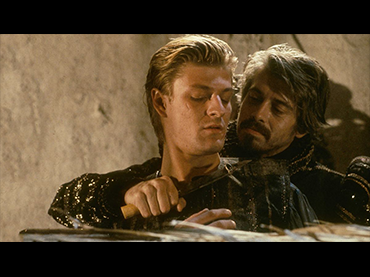
UK, 1986, colour, original version in English with Spanish subtitles, DCP in Cine Doré and digital archive in Museo Reina Sofía, 93’This biographical film about Baroque painter Caravaggio (1571–1610) is one of Derek Jarman’s biggest mainstream successes. Behind the theme is a complex web of correspondence and relations. Firstly, the film-maker identified with Caravaggio as a revolutionary gay artist hounded during his lifetime, whether it be by the Vatican or in Thatcher’s Britain. Secondly, in both there is the common conception of ancient and religious history in a profoundly contemporary and troubling sense, for instance the religious themes of Caravaggio with vagabonds and prostitutes from his time or anachronisms in Jarman’s Jubilee, The Tempest and this film. Finally, the two artists employ the body as a rupture of hierarchies of representation: Caravaggio against the decorum of classical painting, Jarman against the hetero-dominant gaze, for instance in Sebastiane. Ultimately, Jarman would say: “We’re both hindquarter boys of the night”. The film employs a tableau vivant — a living picture — with bravura and constitutes a first outing in film for Tilda Swinton, who would become Jarman’s muse and go on to work with him on numerous occasions.
-
Wednesday, 18 November 2020 / Filmoteca Española, Cine Doré
Session 7
Second session: Wednesday, 16 December 2020 – 7pm / Museo Reina Sofía, Sabatini Building, Auditorium
Derek Jarman. War Requiem
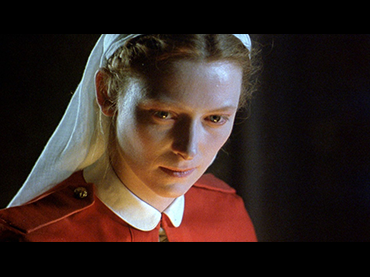
UK, 1989, colour, original version in English with Spanish subtitles, DCP in Cine Doré and digital archive in Museo Reina Sofía, 92’An inherently operatic film, in which the symphonic composition War Requiem Op. 66, (1962), by Benjamin Britten, fuses with documentary archive footage and a series of scenes and tableaux vivants (living pictures) on the First World War, drawing inspiration from the poetry of British soldier Wilfred Owen (1893–1918), who died in battle. The film also includes eye-catching performances by Laurence Olivier in his final role, and a mesmerising Tilda Swinton. War Requiem is a plea against the horrors of war in all its manifestations, and although its use of military imagery approximates Imagining October (1984) and The Last of England (1987), it sits closer to the rest of Jarman’s oeuvre, where images and music combine without the predominance of narrative, for instance the short film Aria (1987), or the music videos he made, included in this season in the form of a monographic session.
-
Saturday, 21 November 2020 / Filmoteca Española, Cine Doré
Session 8
Second session: Thursday, 17 December 2020 – 7pm / Museo Reina Sofía, Sabatini Building, Auditorium
Derek Jarman. Edward II
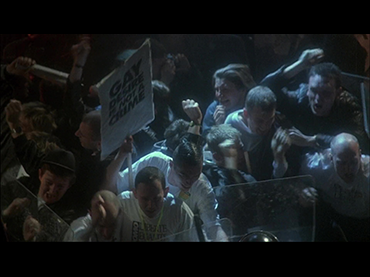
UK, 1991, colour, original version in English with Spanish subtitles, DCP in Cine Doré and digital archive in Museo Reina Sofía, 90’Based on the 1562 tragedy of Christopher Marlowe, this film represents another queer re-reading of history and the use of the past against a present oppressor. The film explores the persecution of King Edward II, a gay archetype recovered by Jarman, joining a far-reaching repertoire with figures such as Sebastian, Caravaggio, Prospero and Pasolini. Jarman deliberately uses anachronism to speak of homophobia in Thatcher’s Britain, particularly after the approval of the controversial Article 28, amended to the 1986 Local Government Act, outlawing any representation of homosexuality. In this way, the mix between a medieval and contemporary set design, with strong influences from the staging of The Devils (1971), juts out in the sequences where Annie Lennox renders a version of a Cole Porter song to the protest of the contemporary gay rights group, OutRage! Alongside it the unremitting theme of institutional violence meted out on the individual.
-
Tuesday, 24 November 2020 / Filmoteca Española, Cine Doré
Session 9
Second session: Wednesday, 23 December 2020 – 7pm / Museo Reina Sofía, Sabatini Building, Auditorium
Derek Jarman. Wittgenstein
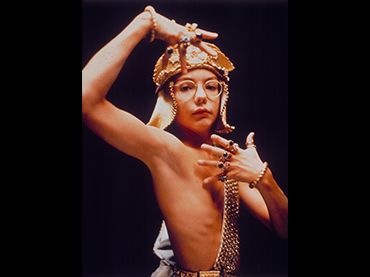
UK and Japan, 1993, colour, original version in English with Spanish subtitles, DCP in Cine Doré and digital archive in Museo Reina Sofía, 75’“The limits of my language mean the limits of my world”, wrote Wittgenstein (1889–1951), whose life forms the narrative for this TV film commissioned by Channel 4 for a series on philosophers. Picking up on this idea, Jarman steers the film towards an original frontier space straddling theatre and film, where both languages are contaminated and strengthened. The philosopher’s life transpires in a series of disrupted fragments played by personages dressed in vibrant colours to a minimalist setting. The original script by Marxist theorist Terry Eagleton doesn’t shy away from the shadows of Wittgenstein’s biography, which thicken as they are related from a child-like vision of his childhood: gay sexual orientation, frustration with teachings or his conflicts with Bertrand Russell, all of which contrast with the lucidity of genius.
-
Experimentation, Super-8 and music videos
Programme 3
-
Thursday, 5 November 2020 – 7pm / Museo Reina Sofía, Sabatini Building, Auditorium
Session 1
Second session: Tuesday, 1 December / Filmoteca Española, Cine Doré
Derek Jarman. Electric Fairy
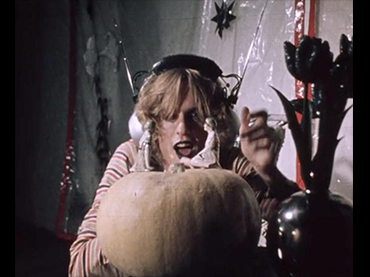
UK, 1971, colour, original version, sound, digital archive, 6’30’’Derek Jarman. In the Shadow of the Sun
UK, 1972, colour, original version, sound, digital archive, 57’Electric Fairy saw Jarman first make inroads into film-making as a director, after previously designing the sets for The Devils (1971) and Savage Messiah (1972). The film, lost for many years and recovered recently by James Mackay, reflects the camp sensibility of that era in relation to the participation of the film-maker in the Gay Liberation movement. In the Shadow of the Sun, meanwhile, is the culmination of two years filming in Super-8, with Jarman dubbing the series of films “the art of mirrors”. This full-length work would incorporate numerous earlier films, such as Journey to Avebury (1973), Tarot (1973) and Death Dance (1973), a more ambitious ensemble including different overlapping layers and an extension of time through re-filming slowed-down projected images. In 1981, the film was transferred to 16mm and an original score was composed by Throbbing Gristle.
-
Friday, 6 November 2020 – 7pm / Museo Reina Sofía, Sabatini Building, Auditorium
Session 2
Second session: Friday, 4 December / Filmoteca Española, Cine Doré
Derek Jarman. Imagining October
UK, 1984, colour, original version, sound, 16mm, 27’Julian Cole. Ostia
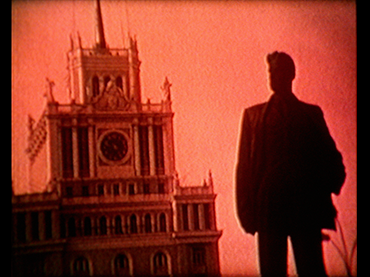
UK, 1987, colour, original version in English with Spanish subtitles, digital archive, 27’Imagining October stemmed from an invitation to curate a group exhibition, with John Maybury and Cerith Wyn Evans, as part of the 1984 edition of the London Film Festival. Jarman accepted a proposal by the British Film Institute (BFI) to travel to Soviet Russia with a group of film-makers and critics, including Sally Potter and Peter Wollen, who would both appear in the film, taking his Super-8 camera with him on the trip. Upon his return, he filmed a group of soldiers, played by young artists like Peter Doig, posing for a group portrait. The slogans, inspired by Mayakovsky, offered a critique of Thatcher’s Government with images comparing and contrasting it to the Soviet State. Julian Cole’s Ostia, for its part, depicts the last night of Pier Paolo Pasolini’s life and presents Jarman in the role of the Italian film-maker. Although it was made on a low budget and filmed in London, its faithfulness to the events surrounding the death of Pasolini are striking, and no subsequent film on the same theme has managed to capture such an alluring portrait.
-
Thursday, 12 November 2020 – 7pm / Museo Reina Sofía, Sabatini Building, Auditorium
Session 3
Second session: Wednesday, 9 December / Filmoteca Española, Cine Doré
Derek Jarman. Super-8 programme
Studio Bankside. UK, 1972, colour and b/w, original version, sound, 6’47’’
Journey to Avebury. UK, 1973, colour, original version, sound, 10’
Tarot, also known as The Magician. UK, 1973, colour, original version, 7’39’’
Sulphur. UK, 1973, colour, VO, sound, 15’
Sloane Square, also known as Removal Party and Sloane Square: A Room of One’s Own. UK, 1974–1976, colour and b/w, original version, sound, 8’
A Break from Sebastian, also known as Sebastian Mirror Film. UK, 1975, colour, original version, sound, 6’
Waiting for Waiting for Godot. UK, 1982, colour, original version, 7’14’’
All screenings in the session are in Super-8 transferred to digital
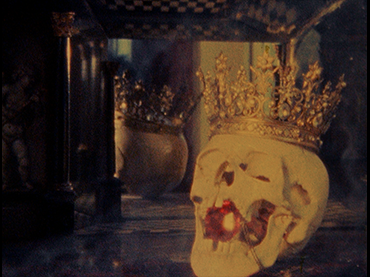
A cross-wise selection of seven Derek Jarman films produced in Super-8 between 1972 and 1982. The film-maker would pick up a Super-8 camera for the first time in 1972, quickly becoming adept at filming and editing in the medium and producing a prolific body of work, making 42 films across this ten-year period. In most cases, the films were accompanied by music pieces selected from commercial records and tapes. In the films screened in this session, the soundtracks have been created expressly by Simon Fisher Turner, Coil and Cyclobe, and the A Break from Sebastian soundtrack is composed by musician Nick Hudson.
-
Friday, 13 November 2020 – 7pm / Museo Reina Sofía, Sabatini, Auditorium
Session 4
Second session: Friday, 11 December / Filmoteca Española, Cine Doré
Derek Jarman. T.G.: Psychic Rally in Heaven
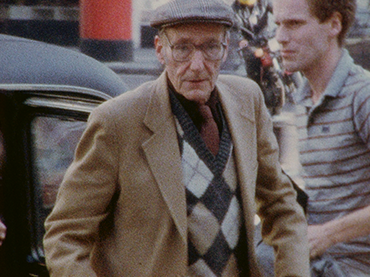
UK, 1981, colour, original version, 16mm, 8’Derek Jarman. Pirate Tape: William Burroughs
UK, 1983, colour, original version, 16mm, 15’Derek Jarman, Michael Kostiff, John Maybury and Cerith Wyn Evans. The Dream Machine
UK, 1984, colour, original version, 16 mm, 32’Psychic Rally in Heaven was shot in December 1980 in London’s Heaven night club, directly after Throbbing Gristle finished recording the score to In the Shadow of the Sun. The film was initially silent, with music added after Throbbing Gristle’s album Second Annual Report. Pirate Tape: William Burroughs is a portrait of the writer during his visit to London for The Final Academy, a counterculture event organised by David Dawson, Roger Ely and Genesis P-Orridge. The Dream Machine also surfaced from this activity, Bryon Gysin’s visit to London and the exhibition Dream Machine, an optical-mechanical meditation device Jarman designed with Ian Somerville in the B2 Gallery. The collective film comprises four dreams, each a different work by each of the four artists, who would form an informal group during this period and create and exhibit films and paintings in London.
-
Thursday, 19 November 2020 – 7pm / Museo Reina Sofía, Sabatini Building, Auditorium
Session 5
Second session: Saturday, 12 December / Filmoteca Española, Cine Doré
Derek Jarman. The Angelic Conversation
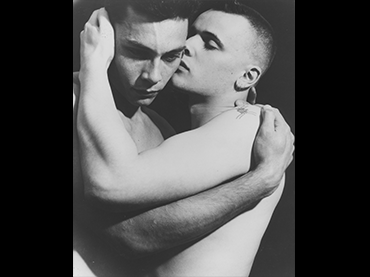
UK, 1985, colour, original version in English with Spanish subtitles, DCP Cine Doré and digital archive in Museo Reina Sofía, 78’The Angelic Conversation is a succession of images of gay love, ethereal coastal landscapes and variegated gardens to a background reading of 14 love sonnets by William Shakespeare, read by actress Judi Dench. The soundtrack was composed by experimental group Coil. To this non-linear, dreamlike structure, invoking ritual and magic, an Arcadian world seems to take root, interrupted by modern images of radar systems and burning cars which, in the words of Jarman, “remind you there is a price to be paid in order to gain this dream in the face of a violent world”. This film condenses many of the themes and images of his Super-8 work and the expanded form of the music video Jarman would explore in depth, in addition to a queer re-reading of high culture as Shakespeare is returned to time and again, with his adaptation of The Tempest (1979) one such example.
-
Friday, 20 November 2020 – 7pm / Museo Reina Sofía, Sabatini Building, Auditorium
Session 6
Second session: Sunday, 13 December / Filmoteca Española, Cine Doré
Derek Jarman. The Last of England
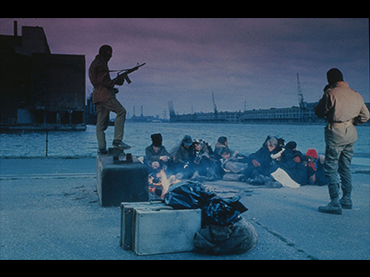
UK, 1987, colour, original version in English with Spanish subtitles, DCP in Cine Doré and digital archive in Museo Reina Sofía, 87’This film and Jubilee (1978) make up a dystopian duology against the most conservative and excluding side of England. Where Jubilee was all punk rage and anger, The Last of England is frustration and melancholy. Jarman wrote: “In Jubilee the past dreamed the future present. The Last of England has the same form, but with the difference this time that I have added myself to the film. Here the present dreams of the past future”. The film takes its title from an 1855 pre-Raphaelite painting by Ford Madox Brown, in which a man and a woman from the English countryside leave the country to start a new life in Australia. Jarman made the film shortly after he was diagnosed as HIV positive and, therefore, imagines himself among the people being banished through the mounting state violence against the HIV-positive community, an event which, as a past future, reminds him of his grandparents’ emigration to New Zealand. The Last of England, with the preliminary title Victorian Values, pivots around footage of riots, amateur recordings and Super-8 material in a tormented vision of England on the edge. Through fiction alluding to the present, Jarman conveys the desperation of Thatcher-era Britain.
-
Monday, 23 November 2020 – 7pm / Museo Reina Sofía, Sabatini Building, Auditorium
Sesion 7
Second session: Tuesday, 15 December / Filmoteca Española, Cine Doré
Derek Jarman. Aria
UK, 1987, colour, original version, digital archive, 5’Derek Jarman. Selection of music videos
UK and Spain, 1983–1993, colour and b/w, original version, digital archive, 75’
Including, by order of screening:Psychic TV. Catalan
The Smiths. The Queen is Dead, There is a Light, Panic and Ask
Easterhouse. Whistling in the Dark and 1969
The Mighty Lemon Drops. Out of Hand
Bob Geldof. I Cry Too and In the Pouring Rain
Pet Shop Boys. It’s a Sin, Rent, Paninaro, Domino Dancing and King’s Cross (screenings for the first international tour)
Suede. So Young
Patti Smith. Little Emerald Bird
Suede. The Next Life (AIDS benefit concert)
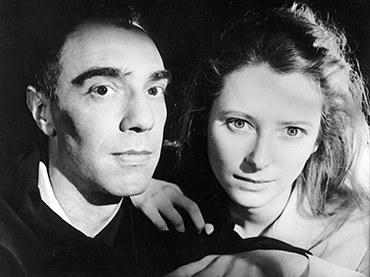
This session encompasses the music videos Derek Jarman made from the mid-1980s onwards. Although he had made other videos before this point, the film-maker wanted greater freedom and would use the genre to try out different ideas. The programme gets under way with Aria, his contribution to the collective feature-length film which entailed narrating a story through an operatic aria. When a commission arose to make a new piece for The Smiths, Jarman decided to bring together young artists and film-makers from his sphere — Richard Heslop, John Maybury, Christopher Hughes, Cerith Wyn Evans, David Lewis, Andy Crabb — creating a collaborative group that would go on to make music videos for Bob Geldof, Easterhouse, Pet Shop Boys, Patti Smith and Suede. Among these clips is Catalan, made in Spain via a commission from journalist Paloma Chamorro, with music by Psychic TV, a story by Jordi Valls (also known as Vagina Dentata Organ) and a concept by Genesis P-Orridge, whose live broadcast would almost be suspended on the Spanish TV programme La edad de oro. Jarman would draw on these works, in the main produced by James Mackay, and they would constitute a space of experimentation with film-making techniques that became fully realised in The Last of England (1987) and The Garden (1990).
-
Wednesday, 25 November 2020 – 7pm / Museo Reina Sofía, Sabatini Building, Auditorium
Session 8
Second session: Friday, 18 December / Filmoteca Española, Cine Doré
Derek Jarman. The Garden [El jardín]
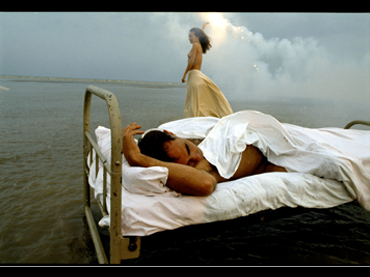
UK, 1990, colour, original version in English with Spanish subtitles, DCP in Cine Doré and digital archive in Museo Reina Sofía, 95’The Garden is Jarman’s fragmented low-fi revisioning of the Passion, starring Tilda Swinton as the Madonna and queer lovers, Johnny Mills and Keith Collins (Jarman’s partner), as Christ. Set in the stark, otherworldly landscape of Jarman’s garden home in Dungeness, Kent, the film expresses fury over the homophobic lack of response to the AIDS crisis, which Jarman himself suffered with during filming. It’s also a reenactment of his childhood trauma of being punished for sexual exploration. At boarding school in England, he and another boy who shared a “secret garden” were beaten and shamed when found. This “paradise perverted,” as Jarman called it, is reflected in intermingled scenes of whacking schoolmasters’ punishing rods and the lovers' lashings. The opening narration resonates with the uncertainty of our present-day pandemic: “I want to share this emptiness with you / Not fill the silence with false notes or put tracks through the void / I want to share this wilderness of failure.”
Mary Katharine Tramontana
-
Friday, 27 November 2020 – 7pm / Museo Reina Sofía, Sabatini Building, Auditorium
Session 9
Second session: Tuesday, 22 December / Filmoteca Española, Cine Doré
Derek Jarman. Glitterbug
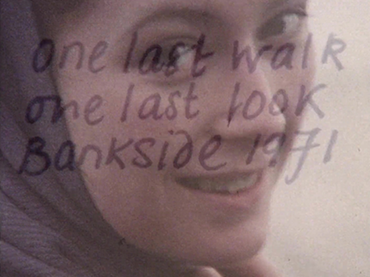
UK, 1994, colour and b/w, original version, DCP in Cine Doré and 35 mm in Museo Reina Sofía, 56’Glitterbug was conceived as an accompanying film to Blue (1993) and is made up of images to no narrative sound. However, the film-maker’s rapidly deteriorating health meant the project could not be carried out on the scale he had envisaged and had realised in Blue. Fortunately, a commission by BBC Arena enabled Jarman to revise his Super-8 archive and, working with David Lewis and Andy Crabb, to produce a visual memoire from it. Brian Eno, who had worked previously with Jarman on Sebastiane, Jubilee and Blue, composed the score.
-
Saturday, 28 November 2020 – 7pm / Museo Reina Sofía, Sabatini Building, Auditorium
Session 10
Second session: Saturday, 26 December / Filmoteca Española, Cine Doré
Isaac Julien. Derek
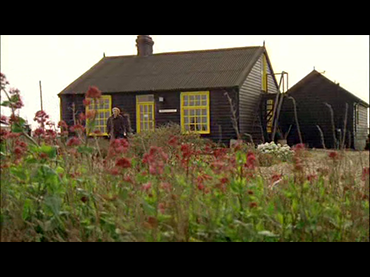
UK, 2008, colour, original version in English with Spanish subtitles, digital archive, 75’Film-maker Isaac Julien’s words define this film: “In a collaboration with Tilda Swinton, Derek poetically tells the story of Derek Jarman through extensive use of archive footage. The documentary is centred in a day-long interview Jarman gave to Colin McCabe in the ‘80s. From Sebastiane (1976) to Blue (1992), Derek Jarman’s films constantly interrogated time and art, and epitomised his own era. He was a painter, part of that moment that made sixties London a capital of the art world. He was a film-maker, perhaps the single most crucial figure of British independent cinema through the seventies, eighties and nineties. He lived as a gay man surfing the joys of Gay Liberation and the sorrows of Aids. He lived as a participant observer, noting with pen or camera all that passed before him — from punk to Thatcher, from Hampstead Heath to film premiere. Now those images serve to place his art in his time, to produce a fascinating history that we can put to use”.
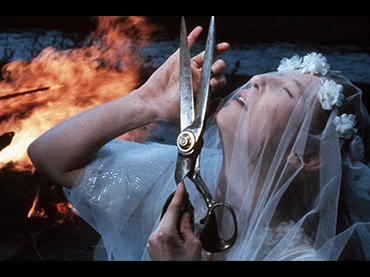
Held on 03 Nov 2020
Every autumn since 2016, the Museo Reina Sofía and Filmoteca Española have organised an audiovisual season which combines, over a two-month period, the film programmes of both institutions. The 2020 retrospective shines a light on Derek Jarman (1942–1994), painter, film-maker, gay rights activist, stage designer, writer and gardener. Jarman’s indefatigable output reminds us at once of film’s importance in recognising difference and as an act of love and dissidence.
Jarman was a luminary who shaped a queer gaze and identity in film, countering not only the hetero-centred visual predominance in the medium, but also paving the way for queer interpretations and readings of the past, upholding an alternative present he would live and experience in permanent discord, from the explosion of punk in the 1970s to activism fighting AIDS-related discrimination in the mid-1990s. First and foremost, his work is characterised by mesmerising erudition which threads together ancient history, religious iconography, classic literature and art history, cast out to rock the present, not reaffirm it. Secondly, it is sculpted by constant autobiographical experience, with characters that predominantly allude to the role of the artist on the margins who lives with sweeping social, state and religious violence and repression, aspects Jarman would suffer as a public-eye gay figure in Thatcher’s Britain. Thirdly, his work rests on his belief in being able to transform art, a central theme ranging over different aspects of his work: an interest in medieval alchemy and occultism as knowledge of transformation, the search for myth and contemporary allegory to interrogate simplified versions of the present, and faith in surviving illness though art, as evinced in Blue, his final feature film. Finally, Jarman’s cinema is profoundly symptomatic of his era, for it is collectively inhabited by London’s underground music, art and culture scene in the period stretching from the 1970s to the 1990s.
The series comprises three programmes connected in a circular fashion: an opening session with Blue, which stands out as one of the most staggering and emotive films of our times, and a second session as the conclusion to the series; a second block including the entire body of fictional feature-length films Jarman was part of, from his origins as a stage designer with Ken Russell (1971–1972) to Wittgenstein (1993), one of his last productions, to cult films such as Sebastiane (1976) and Caravaggio (1986), among others. Lastly, a section encasing his forays into experimental Super-8 and 16mm film-making and the music videos the artist would zealously produce from the early 1980s, coming to focus on imagery of England’s alternative music and collage films like The Garden and The Last of England, in which a mix of languages flows out beyond any narrative order. The block culminates in the documentary Derek (2008), artist Isaac Julien’s homage to Derek Jarman.
Curator
James Mackay
With the collaboration of
Basilisk Communications and LUMA Foundation
Organised by
Museo Reina Sofía and Filmoteca Española
With the sponsorship of

Más actividades
![Isabel Coixet, 100 Years and You Everywhere [100 años y tú en todos los sitios], 2026, película](https://recursos.museoreinasofia.es/styles/small_landscape/public/Actividades/2.diseminar-mundo.jpg.webp)
John Berger and Isabel Coixet. Continued Ways of Seeing
Thursday, 17 September 2026 at 7pm
Ways of Seeing (1972) is one of the most revolutionary television series on art history, the museum and contemporary critical culture. Across four episodes, an articulate, enthusiastic John Berger unpacks the relationships between classical art through the gaze and new technology, the nude and feminism, the oil painting and commodity fetichism, advertising and consumerism. In essence, a level of critical commitment only comparable to its capacity for dissemination. Unsurprisingly, the series, and the book that would distil it, continues to forge vocations. This session sees art historians Alberto López Cuenca and Modesta Di Paola carry out an analysis of Berger’s audiovisual work, placing the stress on episodes one and four of the series. In the first episode, Berger reflects on the connection between the act of seeing, looking and being in light of new technology, such as the film camera. At the same time, it analyses how the culture of reproduction is turning paintings into messages or fragments of communication while stressing the importance of silence when observing historical paintings. In the fourth and final episode, he introduces advertising as a new iconic-verbal language that shares certain principles with the message of oil painting as a luxury item.
The session opens with the premiere of a filmic letter from Isabel Coixet, one of Spain’s most internationally acclaimed directors, to John Berger, with whom she maintained a long friendship and deep admiration. The short film is testament to the ubiquitous and long-lasting presence of the author of Ways of Seeing, even after his death in 2017.
![Chantal Akerman, Woman Sitting after Killing [Mujer sentada después de matar], 2001, instalación. Museo Reina Sofía](https://recursos.museoreinasofia.es/styles/small_landscape/public/Actividades/chantal-akerman-mujer-sentada-despues-matar.jpg.webp)
On Your Screen: Art History and the Museum Facing the Audiovisual Challenge
18, 19 SEP 2026
The conference On Your Screen: Art History and the Museum Facing the Audiovisual Challenge sparks debate around the transformations of art history and museum space upon embracing the audiovisual format. Its starting point is John Berger’s emblematic television series Ways of Seeing (1972), a landmark in the democratisation of art-historical discourse. In the series, Berger illustrated how the transfer of a work such as Goya’s Los fusilamientos del 3 de mayo (The Third of May 1808 or the Executions) from museum gallery to home TV screen completely changed the viewer’s experience, allowing the image to travel to straight to the viewer.
In the twenty-first century, this screen-based ecosystem has expanded exponentially, with museums not only physically integrating screenings and devices into their galleries— following in the wake of many exhibitions on the moving image — but also deploying complex virtual strategies. Equally, numerous en vez de a multitudeof historians, students and creators use digital platforms to circulate their ideas and projects. This audiovisual shift opens access to ignored materials and democratises knowledge, as well as challenging traditional hierarchies and the interpretive authority of institutions. The conference, promoted by the research project ATLAS AV: The Audiovisualisation of Art History and the Museum, seeks to analyse this vast audiovisual material, its archives, and its capacity to transform the memory of art.
Godard and Miéville: Time and Ruin
Friday, 18 September 2026 - 7pm
Inside the framework of the conference On Your Screen: Art History and the Museum Facing the Audiovisual Challenge, this film series sets forth three critical visions of the museum via three sessions featuring the works of John Berger, Jean-Luc Godard and Anne-Marie Miéville, Ariella Azoulay, Alan Resnais and Chris Marker, Kwate Nee-Owoo, and the premiere of short films by Isabel Coixet and La Vulcanizadora (Maria Rojas Arias and Andrés Jurado). In classical theory, the museum gives the world meaning; it contains fragments of the past, granting them a history, a narrative that explains preterite time and the present. Today, there is an implicit assumption that this function hides and legitimises forms of power, yet what if the museum, instead of explaining the world, multiplied it through radical ideas, silenced periods and repressed subjects? Such is the approach of the film-makers and artists in this film season.
In 1972 the writer John Berger opened the landmark television series Ways of Seeing with an iconoclastic gesture: slicing Sandro Botticelli’s painting Venus and Mars (1485) in London’s National Gallery. A transgressive act that recalls contemporary attacks on the museum by dissident youth and with which Berger, after revealing it was a reproduction, sought to ignite debate around the idea of an original artwork and a copy. In this, the hundredth anniversary of his birth, the first session pays homage to one of the great art writers of the twentieth century. Starting with a review of Berger’s audiovisual work by art historians Alberto López Cuenca and Modesta Di Paola, the series begins with the premiere of 100 Years and You Everywhere (2026), an unreleased short film by Isabel Coixet composed as a beautifully crafted letter to Berger, and continues with an analysis of fragments of Ways of Seeing in relation to the museum and contemporary art.
The second session screens two medium-length films by Jean-Luc Godard and Anne-Marie Miéville on time, ruin and museum. In The Old Place. Small Notes Regarding the Arts at Fall of 20th Century (1999), both film-makers consider what remains of that “old place”, the museum, at the close of a century of wars and totalitarianism, and ask whether it should be more of a legend or desire than a place. This same driving principle leads Godard to build his own imaginary museum in Reportage amateur (maquette expo) (2006), a rickety toy museum which, paradoxically, contains the great film-maker’s full power of thought on history and images.
Finally, the third session explores one of the major challenges of recent years: the decolonisation of the museum, the recognition of its link to imperialist discourses of power and the need to situate a new silenced or repressed subject at the centre of the Western narration of history. Under the title Museums and Restitution, it includes the film Undocumented. Unlearning Imperial Plunder (2019), by theorist Ariella Azoulay, Statues Also Die, by Alan Resnais and Chris Marker (1953), Kwate Nee-Owoo’s You Hide Me (1970) and the first screening of the short film Quinto verso, parte de Tonada (Fifth Verse, Part of Tonada), by La Vulcanizadora (Maria Rojas Arias and Andrés Jurado), filmed at the Museo de América in Madrid.
![Ariella Azoulay, Un-documented. Unlearning Imperial Plunder [Indocumentados. Desaprendiendo el saqueo imperial], 2019, película](https://recursos.museoreinasofia.es/styles/small_landscape/public/Actividades/5.diseminar-mundo.jpg.webp)
Museums and Restitution
Saturday, 19 September 2026 - 7pm
Centuries of plundering, decades of amnesia, years of living with unmitigated extractivist power… Does a museum, as we know it, have a raison d'être in a postcolonial society?
This session expounds the operations of the museum as a colonial machine, while putting forward ideas, in narration, for a more just, equal and inclusive institution of the future via society’s marginalised and minority voices. The session begins with the international premiere of Quinto verso, parte de Tonada (Fifth Verse, Part of Tonada), which presents a vision of the Quimbaya Collection (fifth and sixth centuries CE) from the Museo de América in Madrid. It is constructed with the voices and chants of Wayúu mourners and guides, not only as a way of reinstating the role of these gold idols — anthropomorphic figures of men and women used as vessels in ritual practices — but also to imagine that what must be exhibited is not the gold itself. It is the ritual’s own chant. In the classic film You Hide Me (1970), Ghanaian film-maker Kwate Nee-Owoo accesses the British Museum’s collection of African art, located in the building’s basement, to question the meaning behind a museum plundering and nullifying. A fine exercise of first-person institutional critique screened for the first time in Spain. Almost seventy years since Resnais and Marker made Statues Also Die (1953), a reflection on the aura-bearing value of the museum opposite the identity-based and cultural belonging of African art, theorist Ariella Azoulay films the same statues again at the Musée du Trocadéro (today the Musée du Quai Branly), which survive and wait to be reunited with their people. Azoulay, whose wholly original undertaking is a lesson to the museum of the future, connects the forced migration of these sculptures with the mass transit of people crossing borders artificially imposed by the same system that has plundered their culture.
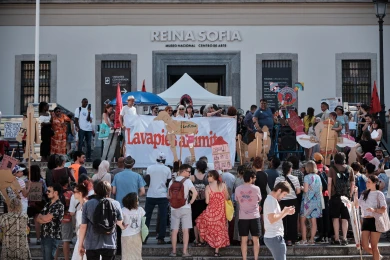
The School of Transformative Institutionalism and Local Organisation
From 21 to 24 September 2026
The School of Transformative Institutionalism and Local Organisation (S.T.I.L.O.) is a programme of joint learning and join strategy which sets in motion a process for the exchange of questions, methodologies and experiences between cultural organisations. The overall aim is to create, circulate and prototype tactics, tools and collective knowledge on institutional practices that open new channels for defending culture and advocating structural transformation in divergent geographical contexts.
The project is part of the Laboratorio de Institucionalidad Compartida (The Laboratory of Shared Institutionalism, LIC), a space for the Museo Reina Sofía’s research, work and advocacy centred on developing, experimenting with and systemising practices, protocols and tools which contribute to a fairer and more liveable cultural ecosystem.
For many years now, so-called infrastructural critique in museums questions material, legal and economic infrastructures, among others, as well as the forms of solidarity and practices required to sustain the cultural ecosystem. By approaching current debates, S.T.I.L.O. raises questions on the ways in which organisations define and interpret their practices, organise their relations and respond to the social contexts in which they operate.
The school gathers four cultural organisations that work via different institutional models – scale, contexts, conditions, different working models — with the goal of pooling common strategies and tools of organisation, advocacy and relationships with local communities.
The programme is conceived as a collaborative process with the participation of Arika, La Revuelta, BAK Basecamp and The Tentacular Museum (Museo Reina Sofía) and is structured around preparatory online sessions and an in-person seminar in Madrid.
S.T.I.L.O. is an activity framed inside the working strand of Situated Organisations from L'Internationale’s Museum of the Commons project, which reflects on the role of museums and art organisations as actors within complex social networks and ecosystems, with a view to exploring new ways to democratise institutions and make them more open, inclusive and useful.