The Caribbean Relation
A Programme inside the Framework of ARCOmadrid 2024. The Shore, the Tide, the Current: An Oceanic Caribbean
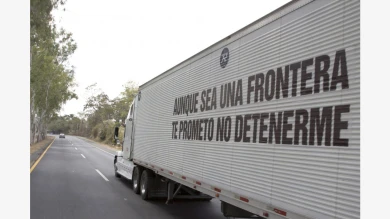
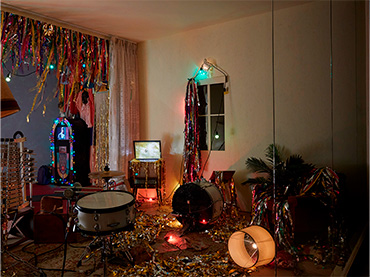
Ernesto Bautista, New promises, 2012
Date and time
Held on 07 Mar 2024
In The Caribbean Relation, the Museo Reina Sofía develops a diverse programme inside the framework of ARCOmadrid 2024. Under the title The Shore, the Tide, the Current: An Oceanic Caribbean, this edition calls attention to the Caribbean region’s make-up of hybridisations, mixes and creolisations, a mental and geographical space traversed by the poetics of relation, in reference to the concept of Martinique thinker Édouard Glissant. Moreover, the history of the Caribbean has demonstrated its capacity to transform the violence of colonisation into an amalgam of different influences and identities projected into the world via Caribbean diaspora.
By starting out from this subject, the Museo recovers the historical figure of experimental Puerto Rican film-maker José Rodríguez Soltero, reads and dances the writings of Cuban curator Tamara Díaz Bringas, and brings proceedings to a conclusion with a party/concert propelled by DJ Valerie Brathwaite, who was born in Trinidad and Tobago and lives in Venezuela, and Toccororo, a Spanish woman with Cuban roots. In unison, it will re-open Apparatus ‘92. Can History Be Rewound?, rooms in the Museo Reins Sofía Collection centred on post-colonial art and thought, to offer a wide-ranging exhibition programme with shows on Ulla von Brandenburg, Ibon Aranberri, Antoni Tàpies and Olga de Soto.
Organised by
Museo Reina Sofía
Activities
-
From 7 to 23 March 2024 Nouvel Building, Auditorium 200
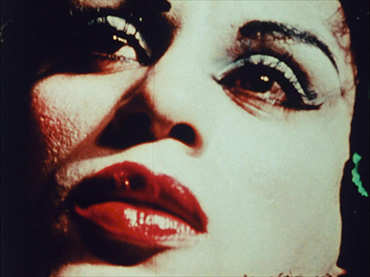
The Films of José Rodríguez Soltero: Cuir/Queer Latinx
Film Series
TicketsThe Museo recovers through this film series the work of Puerto Rican artist José Rodríguez Soltero (1943–2009), a key figure of Caribbean diaspora and the New York underground in the 1960s and 1970s. Rodríguez Soltero belonged to the same generation and social context as Jack Smith and Andy Warhol, sharing film-making methods, with the relevance of his work obscured until the restoration of his only three conserved films Jerovi (1965), Lupe (1966) and Dialogue with Che (1968), all three of which are screened in this series.
-
Saturday, 9 March 2024 Nouvel Building, Auditorium 400 and online platform
All Lives
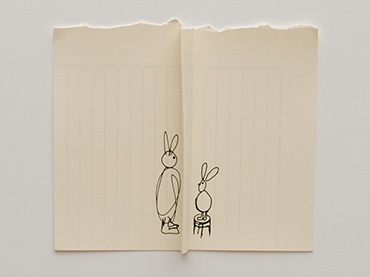
Reading and Dancing the Texts of Tamara Díaz Bringas
Online platformThis encounter seeks to share the texts of Cuban researcher and curator Tamara Díaz Bringas (1973–2022) in the form of a collective reading and dance. Through Díaz Bringas, writing is understood as a way of looking after ourselves, to be in the world through listening and mutual understanding. The texts gathered in Todas las vidas (All Lives) [consonni, 2024] are the pretext for celebrating, in this encounter, forms of making and the networks that the curator wove in her life, situated, across almost three decades, in the specific contexts and urgencies of Cuba, Central America and Spain.
-
Saturday, 9 March 2024 Sabatini Building, Floor 1
The Shore, the Tide, the Current: An Oceanic Caribbean
ARCOmadrid 2024 Party in the Museo Reina Sofía
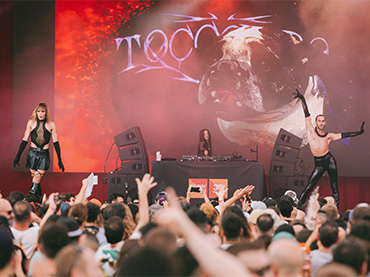
The Museo Reina Sofía welcomes Caribbean tides and currents, which flow through the Sabatini Building’s Garden and Cloister from 10pm until midnight as part of the ARCOmadrid 2024 closing party. Embracing the themes of this edition of the Madrid art fair, The Shore, the Tide, the Current: An Oceanic Caribbean, DJ Valerie Brathwaite and Toccororo unfurl a sound-based connection between distant shores, and with influences and approaches that are as interesting as they are different.
Collectionn
-
Apparatus ‘92. Can History Be Rewound?
The Museo re-opens the rooms of the Collection centred on the 1990s, a period in which many of the changes that explain the current world order took place. In Spain, the events and celebrations of 1992 (Expo ‘92 in Seville, the Barcelona Olympic Games, Madrid as European Capital of Culture), six years after joining the European Union — in what was considered an example of a successful integration into modernity — reflected enthusiasm that concealed the weakness of an economic structure partly underpinned by a real estate bubble; its blowout in 2008 marked the beginning of the end of globalising euphoria.
Expo ‘92 in Seville was an event conceived to celebrate Spain’s categorical arrival into modernity and served to elucidate the light and darkness of Iberian colonial legacy, as well as enabling an analysis of the inherent relationship that exists between conquest and violence. Violence defined by extractivism, by the plundering of history and by the logics of colonialist dispossession, including the exploitation of resources and people, and conflicts of gender and race.
Exhibitions
-
Until 10 March 2024 Retiro Park, Palacio de Velázquez
Ulla von Brandenburg
One-sequence Spaces
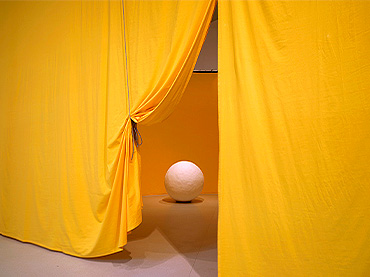
The work of artist Ulla von Brandenburg (Karlsruhe, Germany, 1974) is shaped by her early training as a stage designer and a brief stint in the world of theatre. For this exhibition the artist develops a series of textile installations which, as backdrops, can be crossed by openings, thereby blurring the limits between inside and outside. The textile geometric forms are shown alongside three films by the artist to accompany the visual work, expanding information, providing nuances and inviting the spectator to move through this new scenography of entwined spaces and histories.
-
Until 11 March 2024 Sabatini Building, Floor 3
Ibon Aranberri
Partial View
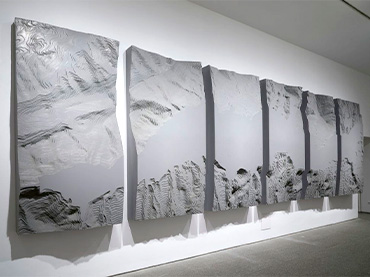
TicketsThis anthological exhibition devoted to Ibon Aranberri (Itziar-Deba, 1969) assembles a selection of works spanning from the 1990s to the present, revisiting different projects and placing the stress primarily on the evolution of the artistic language he has employed across his career. Aranberri’s body of work is characterised by its incompleteness, and by generating materials and situations of different types which expand the artistic process. His practice encompasses the co-existence of documentary materials resulting from research processes with a corpus of images and sculptural forms which, seemingly veiled or inaccessible, establish a correlation between their abstract quality and the narrative materiality of documents.
-
Until 24 June 2024 Sabatini Building, Floor 4
Antoni Tàpies
The Practice of Art
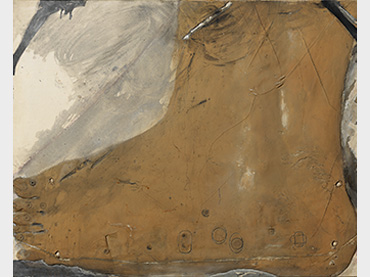
TicketsTo mark the centenary of the birth of Antoni Tàpies (1923–2012), the Museo Reina Sofía and Fundació Antoni Tàpies have organised one of the most complete exhibitions on the artist to date, spanning over 220 works from museums and private collections from around the world to shine a light on his career arc from 1943 to 2012. Through the selected works, some of which have not been shown together for many years, this exhibition foregrounds the prolific career of Tàpies, resituating his work and influences in recent art history.
-
Until 1 July 2024 Sabatini Building, Space 1
Olga de Soto
Reconstruction of a Danse Macabre
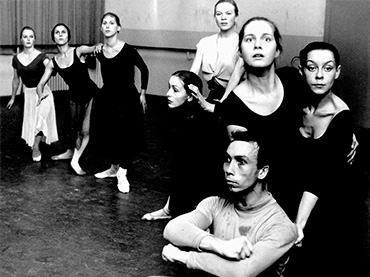
TicketsInside the framework of the Fissures programme, choreographer, dancer and dance researcher Olga de Soto (Valencia, 1972) revisits and expands upon a research project undertaken over more than a decade ago on Der grüne Tisch (The Green Table, 1932), an anti-war piece by German choreographer Kurt Jooss and one of the foundational works in the history of contemporary dance. With the project, De Soto endeavours to explore the lasting impact on audiences who have seen Der grüne Tisch and on the dancers who have performed it, with the aim of generating an archive of testimonies stretching across sixty-seven hours and comprising four languages, six countries and two continents. In conjunction with the opening, an encounter is scheduled for Tuesday, 27 February between the artist and the show’s curator, Lola Hinojosa, under the title Behind The Green Table of Kurt Jooss.
Radio RRS
-
Podcast
Alexandra T. Vázquez
Migration and Sound
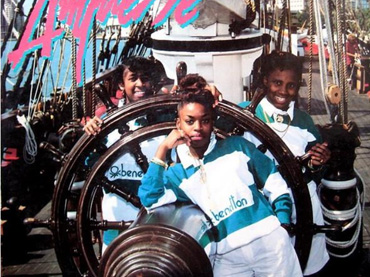
Listen to podcastAlexandra T. Vázquez (Miami, 1976) is a researcher, writer and associate professor at NYU’s Tisch School of the Arts. Her work, framed within so-called performance studies, is centred on music, Caribbean aesthetics and criticism, and Latin American and US Latina studies. This podcast contains her testimony following a conversation on her two books published to date: Listening in Detail: Performances of Cuban Music (Duke University Press, 2013) and The Florida Room (Duke University Press, 2022).
-
Podcast
‘92 Ends it All
Putting Out the Fuses
Listen to podcastComposed as a sound collage, this podcast, produced in 2022, includes a voice mixed with different songs and sound resources, resulting from a research project which began two years previously and echoes the events held in 1992 to mark the five hundredth anniversary of Spain’s colonial legacy. Therefore, this podcast is made in relation to the rooms of the Museo Reina Sofía Collection under the title Apparatus ‘92. Can History Be Rewound?

Más actividades
Rethinking Guernica
Monday and Sunday - Check times
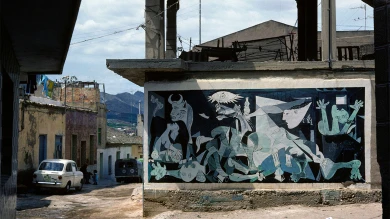
This guided tour activates the microsite Rethinking Guernica, a research project developed by the Museo Reina Sofía’s Collections Area, Conservation and Restoration Department and the Digital Projects Area of the Editorial Activities Department, assembling around 2,000 documents, interviews and counter-archives related to Pablo Picasso’s painting Guernica (1937).
The visit sets out an in-situ dialogue between the works hung around the painting and a selection of key documents, selected by the Museo’s Education Team and essential to gaining an idea of the picture’s historical background. Therefore, the tour looks to contribute to activating critical thought around this iconic and perpetually represented work and seeks to foster an approach which refreshes our gaze before the painting, thereby establishing a link with the present. Essentially revisiting to rethink Guernica.
Files of Tropical Revolutions
Sábado 20 y 27 de junio, 2026 - 19:00 H
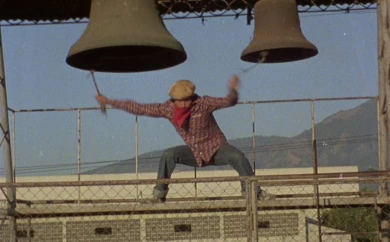
The Reframing Banana Imagery series concludes with two works that condense the height and twilight of this period in history, epic sagas that cross borders and registers to embody experiences of armed struggle in the region. Cameras mix with firearms, borders between nations blur and patience reaches breaking point. This is where the tipping point lies, where the bloodshed weighs heavy and the murmurings of regional brotherhood are buried in the ground again.
Pan y dignidad (Carta abierta de Nicaragua) [Bread and Dignity (An Open Letter to Nicaragua)] recounts the historical records and process of national reconstruction in Nicaragua via the Sandinista popular uprising. Historias prohibidas de Pulgarcito (Forbidden Tales of Tom Thumb) places the camera at the heart of the El Salvador revolutionary struggle, interspersing testimonies of daily violence with the verses of the poet Roque Dalton.
Both works understand the armed revolution as an open file under construction. The insurgent brotherhood, although dissolved, still resounds in regional history.
Circling Over Exploited Bodies
Friday, 19 and 26 June 2026 - 7pm
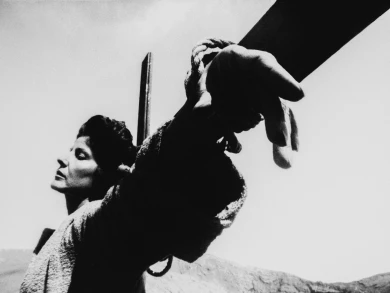
When forms of violence are inflicted on society, film responds from urgency. Images become abstract, sounds fade and the register of dissidence comes from the gut. La zona intertidal (The Intertidal Zone) is an essayistic and poetic approach to the repression of teachers in El Salvador in the 1970s — a teacher studies the biodiversity of the El Salvador coast as a boy finds a body on the same beach. A propósito de la mujer (About Women) interweaves testimonies of misery and rage towards patriarchal structures with fictional scenes of a symbolic procession through a harsh desert.
Both films understand the body as a target of violence and a territory of insurrection, a space where the blood shed by militancy and the patriarchal yoke turn pain into denouncement and existence outside the status quo into an act of political dissidence.
Central American Designation of Origin
Thursday, 18 and 25 June 2026 - 7pm
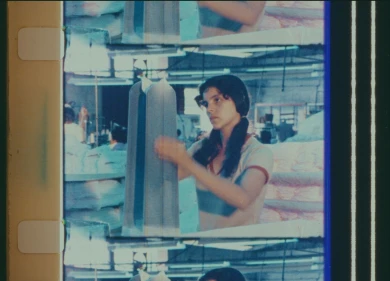
Fertile lands, farmers’ hands, rural faces. This first programme in the series Reframing Banana Imagery understands the foundations of the Central American experience from exploitation, extractivism and displacement, and from the organisation and resistance that emerged as a reaction. The four films within extend from a lyrical documentary on farmers’ solidarity to the playful subversion of the institutional format of the United Fruit Company.
Bananeras (Banana Growers) is a combative portrait of the inhumane conditions of the American banana plantations located in Nicaragua through much of the twentieth century. Costa Rica Banana Republic is a perspicacious satire via an institutional documentary of banana production, spotlighting the extractive nature of this agro-exporting model in the 1970s. Organización Campesina (Farmers’ Organisation) frames rural resistance in Honduras from a direct depiction and lyrical documentary, while Dos veces mujer (Two Times a Woman) dissects the invisibility of the double-shift working day Central American women farmers endure: working in the countryside and working in the home. As a whole, the works here present the earth at once as a wounded body and a space of dignity.
equipoMotor
Jueves alternos, 23 de octubre, 2025 - 11 de junio, 2026 - 17:30 h
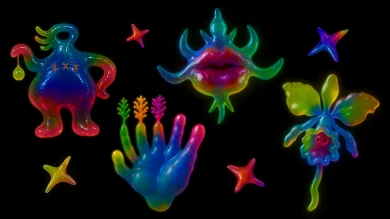
El programa equipoMotor regresa en su edición 25-26 con un aire espectral y mutante para lanzar la pregunta: ¿y si el Museo fuera «un poco más Frankenstein»? Inspirándose en dicho monstruo y en todas aquellas criaturas que desafían la norma desde los márgenes, el proyecto de mediación cultural Galaxxia diseña y acompaña una edición incisiva, intergeneracional y descentralizadora, donde saberes invisibilizados, cuerpos raros y deseos molestos se entrelazan para generar nuevas formas de imaginación crítica y radical. En los sótanos y corredores del Museo —un particular laboratorio— las dudas no se esconden: son materia prima.
Así, para este curso el equipoMotor convoca a personas de todas las edades que hayan participado en ediciones anteriores de los distintos equipos del Área de Educación a recorrer el Museo como quien manipula un cuerpo abierto: descoyuntando algunas de sus categorías teóricas y artísticas —la necropolítica, lo crip-cuir, la lucha de clases, las políticas del malestar, la decolonialidad, la temporalidad cuir, la descentralización institucional o el feísmo— para articular un relato díscolo, remendado y palpitante.
El programa se estructura en bloques temáticos sobre lo freak como metodología, el trabajo cultural, la intergeneracionalidad y la diversidad territorial. Cada bloque a su vez se despliega en sesiones que combinan disparadores teóricos y estéticos, visitas a exposiciones y espacios liminales del Museo, talleres artísticos con artistas, ejercicios de curaduría audiovisual colectiva y de relatoría radiofónica, así como instancias de activación pública, mediante proyecciones de cine experimental y coloquios compartidos con el público, en complicidad con el archivo Hamaca y el Área de Cine y Nuevos Medios del Museo.
De este modo, la presente edición incorpora una particularidad: el grupo de participantes irá transformándose en un «colectivo curatorial audiovisual temporalmente autónomo», con capacidad de incidir en la programación del Museo y de abrir la conversación de equipoMotor al público general, cuestionando y expandiendo así los límites entre las cabezas que deciden, las manos que producen y los cuerpos y presencias que habitan la institución. Las personas seleccionadas en la modalidad oyente serán invitadas a las proyecciones públicas, así como a otras activaciones y momentos de apertura del equipoMotor.
Frente al relato de un museo homogéneo, pulcro y lineal, apostamos por un Museo disidente, contradictorio y lleno de vida residual. Un Museo que no tema hacerse preguntas incómodas ni mostrar sus cicatrices. equipoMotor. Un poco más Frankenstein no busca repensar el cuerpo de la institución, sino habitarlo en sus desgarros, tal como es: híbrido, inacabado, infecto, fantasmagórico… y cargado de esporas y chispas por venir.