![Dorine van der Klei, Zyklus for Water-Pails [Zyklus para cubos de agua], performance de Tomas Schmit, Ámsterdam, 18 de diciembre, 1963. Cortesía de la artista](https://recursos.museoreinasofia.es/styles/small_landscape/public/Actividades/sep_encuentro.jpg.webp)
Held on 27 Sep 2023
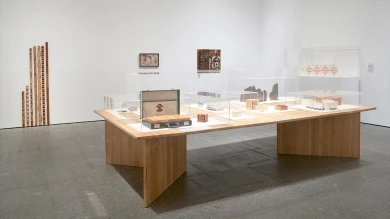
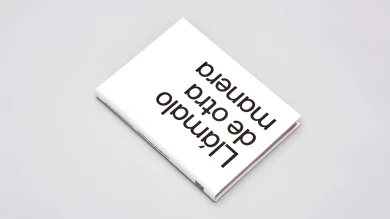
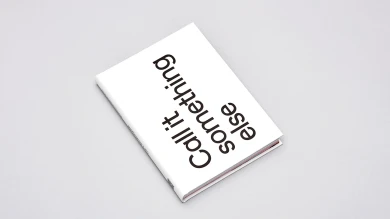
Alice Centamore and Christian Xatrec, the curators of the exhibition Call It Something Else. Something Else Press, Inc. (1963–1974), offer a tour of the show to delve into the artistic practices the Something Else Press publishing house helped to disseminate in the 1960s and 1970s: new forms of creation that were based on time, chance and public agency, for instance those of Fluxus and Conceptual Art.
The exhibition addresses the pivotal role Something Else Press, founded by the American artist, musician, poet and editor Dick Higgins, played in the origin of the concept of “intermedia”. Through conceiving and publishing books, disseminating new ideas through its Something Else Newsletter, printing and distributing pamphlets compiled in the Great Bear Pamphlets collection and the sporadic opening of the Something Else Gallery space, the publishing house organised a series of actions that made it one of the most active hubs of contemporary American art at the time. This work saw the project lauded by numerous artists, writers, architects, musicians and theorists, among them Gertrude Stein, Max Neuhaus, John Cage, Pauline Oliveros and Marshall McLuhan, whose works and ideas challenged long-established artistic categories.
Furthermore, this series of actions maintained a series of common traits: the dematerialisation of the art object, the strengthening of the public’s autonomy, the reading and interpretation of the artwork by way of sheet music or the inclusion of time, ephemeral and contingent, in the new consideration of the artwork post 1960. With these questions in mind, the tour also considers the activation, via artist and writer María Salgado and choreographer and dancer Tatiana Arias, of different exhibited works in order for the encounter to preserve the playful and performative nature of many of the art movements promoted by Something Else Press.
Participants
Tania Arias Winogradow is a choreographer and dancer. Trained in Dance and Theatre Studies in Madrid, New York (Columbia University and Movement Research) and Montpellier (National Choreographic Centre of France), she has presented pieces in Dixon Place (New York) and the Autumn Festival in Madrid, among others. She has also worked as an assistant director (40 espontáneos by La Ribot, 2004–2007), a dancer (with the El Bailadero company, 2002–2018) and has collaborated on different shows, among them +-1961: Founding the Expanded Arts (Museo Reina Sofia, 2013).
Alice Centamore is a researcher and art historian. Her research on the Something Else Press publications and activities for the present exhibition was awarded a grant by The Andy Warhol Foundation for the Visual Arts in 2019. Furthermore, she is the editor of A Something Else Reader (Primary Information, 2022), an anthology of facsimile editions published by Something Else Press.
María Salgado is an artist and poet whose work combines writing, performance and essay as parts of research into language and poetry. She is the author of the poetry collection Hacía un ruido (Contrabando, 2016), Salitre (La uÑa RoTa, 2019) and REKORD (Contrabando, 2023), and the essay El momento analírico. Una historia expandida de la poesía en España de 1964 a 1983 (Akal, 2023). She has carried out solo performances such as De lengua Trois (three) pieces (MAC Montreal, 2019) and stage pieces, for instance the trilogy Jinete Último Reino, conceived with composer Fran MM Cabeza de Vaca and premiered at the 39th Autumn Festival (Teatros del Canal, Madrid, 2021), with the first fragment performed in the Museo Reina Sofía. She is also part of Seminario Euraca (Madrid).
Christian Xatrec is an artist, curator and editor and, since 2004, director of The Emily Harvey Foundation in New York and Venice. He curated, with Julia Robinson, the exhibition +-1961: Founding the Expanded Arts (Museo Reina Sofia, 2013). He has also edited two books by philosopher and experimental composer Henry Flynt: Ruinous Spirituality (João Simões, 2021) and Three Essays on Spirituality and Art (João Simões Publisher, 2020).
Más actividades

Cinema, for the First Time
7 and 14 June 2026 – 12:00 pm
The final session in this Moon Projector season contemplates the feeling around the first experience of cinema — cinema as revelation, magic, fantasy and mystery from the first gaze, from the first contact with the medium, and imagery etched on the retina of childhood. The programme shows Émile Cohl’s landmark Fantasmagorie (1908), the first ever hand-drawn animation, and Ignacio Agüero’s Cien niños esperando un tren (One Hundred Children Waiting for a Train, 1988), a feature-length film on play and the origins of cinema.
Fantasmagorie (1908)by Émile Cohl (Paris, 1857– Villejuif, 1938) is the first expression in the history of animated drawing. Émile Cohl was an illustrator who belonged to the Parisian art group Arts incohérents (1882–1895), who was bestowed with an absurdist and pre-Surrealist talent. Whereas the Lumière brothers were able get audiences out of their seats as they witnessed a train moving towards them in 1895, Fantasmagorie is a supernatural experience, akin to an apparition yet also innocuous and entertaining — the inanimate comes to life out of nothing and figures seemingly move with little sense. From the outset, animation was related to caricature, fabulation and the comical, a sweet spot for the dreams of the youngest audience.
From the discovery of new imagery arising from the animated line to knowledge of the world through a screen, Cien niños esperando un tren (1988), by Chilean director Ignacio Agüero (Santiago, 1952), narrates a group of young people’s discovery of cinema in a workshop on the origins of the medium in a poverty-stricken town on the outskirts of Santiago de Chile. Play, fun and learning combine with a fascination with images, as viewing Émile Cohl’s Fantasmagorie (1908) in the workshop becomes an act of freedom.
Institutional Decentralisation
Thursday, 21 May 2026 – 5:30pm
This series is organised by equipoMotor, a group of teenagers, young people and older people who have participated in the Museo Reina Sofía’s previous community education projects, and is structured around four themed blocks that pivot on the monstrous.
This fourth and final session centres on films that take the museum away from its axis and make it gaze from the edges. Pieces that work with that which is normally left out: peripheral territories, unpolished aesthetics, clumsy gestures full of intent. Instead of possessing an institutional lustre, here they are rough, precarious and strange in appearance, legitimate forms of making and showing culture. The idea is to think about what happens when central authority is displaced, when the ugly and the uncomfortable are not hidden, when they are recognised as part of the commons. Film that does not seek to be to one’s liking, but to open space and allow other ways of seeing and inhabiting the museum to enter stage.
Ordinary, Common and Public. Common Fixes for Ordinary Communities
Tuesday, 26, and Wednesday, 27 May 2026 – Check programme
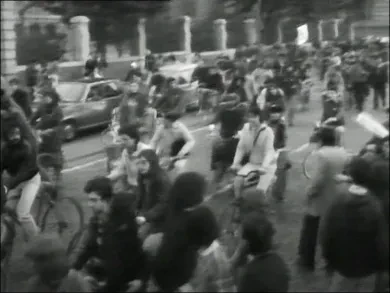
Ordinary, Common and Public. Common Fixes for Ordinary Communities is the title of the fourteenth encounter run by Sociología Ordinaria, a transdisciplinary research group that explores daily knowledge deemed ordinary, superficial or frivolous from a traditional academic and intellectual viewpoint.
This latest edition seeks to approach and map connections between concepts of the commons and the public realm — remembering that the ordinary is also the commons — and to ensure affects and moods of discontent are mobilised towards hope.
By way of its multiple declinations — community, community-based practices, the commons, the communal — the encounter seeks to reflect on different ways of creating, (re)configuring, maintaining, fixing, arranging, caring for and defending the public realm and the commons. Furthermore, it explores forms of invocation and experimentation as tools opposite the helplessness of an uncertain present, in addition to resistance against attempts of expropriation, distortion, privatisation and touristification.
International Museum Day 2026 with Radio 3
22 MAY 2026
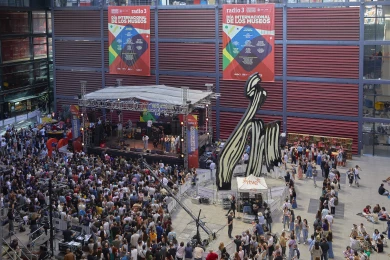
On Friday, 22 May 2026 the Museo Reina Sofía celebrates International Museum Day by way of a vibrant music programme conducted by Radio 3.
From 9am to 11pm, the Museo’s Nouvel Courtyard will host the live broadcast of Radio 3’s day-long programme —also available on a video streaming on the Radio3 website and app, on RTVEPlay and on the Museo’s social media accounts. The programme comprises more than twenty live acts, including artists such as Carlangas, Shego, Soleá Morente, Kokoshca, La Tania, La Pegatina, Pipiolas, Ángel Stanich, Triángulo de Amor Bizarro and Zahara, and many others.
With this programme the Museo Reina Sofía concludes its celebration of International Museum Day, which takes place on Monday, 18 May. Both on 18 May, from 10am to 9pm, and 22 May admission to the Museo will be free of charge.
Gerardo Mosquera: Island Thinker, Global Curator
19 MAY 2026
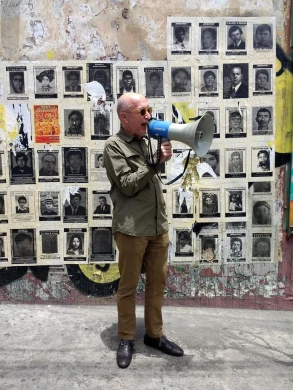
This encounter pays homage to Gerardo Mosquera (Havana, 1945), a pre-eminent curator, an essayist who has been part of key debates on decolonisation and the drifts of globalisation, a communicator and, primarily, an art critic who has managed to radically situate discourses and practices, while still taking on risks and perpetually upholding committed ethical positions.
Mosquera is one of the foremost curators internationally and was involved with the Havana Biennial from its foundation in 1984 to 1989, as well as curating pivotal shows in museums and art centres around the globe. Notable among his curatorial work is as adjunct curator at the New Museum in New York (1995–2009), the Liverpool Biennial (2006) and the exhibition It’s Not Just What You See. Perverting Minimalism (Museo Reina Sofía, 2000).
This round-table discussion, which features the participation of Gerardo Mosquerahimself and an ensemble of art critics, thinkers and artists, for instance Fernando Castro Flórez, Diana Cuéllar, Lillebit Fadraga and René Francisco Rodríguez, will approach the multifaceted and extremely fertile work of Mosquera as a renowned master curator.