-
Monday, 6 November
A masterclass with Adam Curtis
Nouvel Building, Auditorium 400
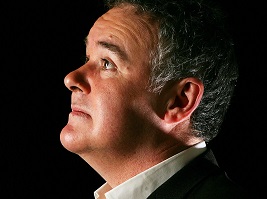
Adam Curtis often insists he is a journalist, not a film-maker or an artist, asserting that his work involves crafting a new analytical and critical model of information and reportage by searching through the discursive and visual montage of images to narrate ideas that emerge in such unhinged times.
-
Tuesday, 7 November
Session 1
Nouvel Building. Auditorium 400
Second screening: Saturday, 18 November – 5pm Sabatini Building. AuditoriumLiving in an Unreal World, 2016
UK, digital archive, colour, 5’
HyperNormalisation, 2016
UK, digital archive, colour, 166’The first session will be presented by Chema González, the Museo Reina Sofía’s Head of Cultural and Audiovisual Programmes at Museo Reina Sofía
![Adam Curtis. HyperNormalisation [Hipernormalización]. Película, 2016](https://recursos.museoreinasofia.es/legacy_programs/1_8.jpg "Adam Curtis. HyperNormalisation [Hipernormalización]. Película, 2016")
-
Wednesday, 8 November
Session 2
Edificio Sabatini. Auditorio
Second screening: Sunday, 19 November – 5pm Sabatini Building. AuditoriumBitter Lake , 2015
UK, digital archive, colour, 136’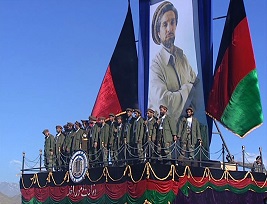
-
Saturday, 11 November
Session 3
Sabatini Building. Auditorium
Second screening: Sunday, 3 December – 5pm. Sabatini Building. AuditoriumEverything is Going According to a Plan, 2013
UK, digital archive, colour, 2’Dancing Remade, undated
UK, digital archive, colour, 10'It Felt Like a Kiss, 2009
UK, digital archive, colour, 54’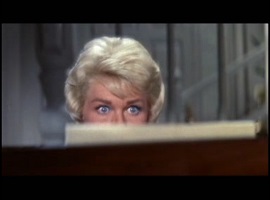
-
Monday, 13 November
Session 4
Sabatini Building. Auditorium
Second screening showing the entire series: Saturday, 25 November – 5pm
Sabatini Building. Auditorium
All Watched Over By Machines of Loving Grace. Episode 1: Love and Power, 2011
UK, digital archive, colour, 60’
Presented by César Rendueles, philosopher, professor at the Complutense University of Madrid and author of Sociofobia. El cambio político en la era de la utopía digital (Sociophobia. Political Change in the Digital Utopia, Capitán Swing, 2013).
![Adam Curtis. All Watched Over By Machines of Loving Grace. Episode 2: The Use and Abuse of Vegetational Concepts [Todos vigilados por máquinas de gracia y amor. Episodio 2: Uso y abuso de conceptos vegetativos]. Película, 2011](https://recursos.museoreinasofia.es/legacy_programs/4_4.jpg "Adam Curtis. All Watched Over By Machines of Loving Grace. Episode 2: The Use and Abuse of Vegetational Concepts [Todos vigilados por máquinas de gracia y amor. Episodio 2: Uso y abuso de conceptos vegetativos]. Película, 2011")
-
Tuesday, 14 November
Session 5
Sabatini Building. Auditorium
Second screening showing the entire series: Saturday, 25 November – 4pm
Sabatini Building. Auditorium
All Watched Over By Machines of Loving Grace. Episode 2: The Use and Abuse of Vegetational Concepts, 2011
UK, digital archive, colour, 60’![Adam Curtis. All Watched Over By Machines of Loving Grace. Episode 3: The Monkey in the Machine and The Machine in the Monkey [Todos vigilados por máquinas de gracia y amor. Episodio 3: El mono en la máquina y la máquina en el mono]. Película, 2011](https://recursos.museoreinasofia.es/legacy_programs/5_3.jpg "Adam Curtis. All Watched Over By Machines of Loving Grace. Episode 3: The Monkey in the Machine and The Machine in the Monkey [Todos vigilados por máquinas de gracia y amor. Episodio 3: El mono en la máquina y la máquina en el mono]. Película, 2011")
-
Wednesday, 15 November
Session 6
Sabatini Building. Auditorium
Second screening showing the entire series: Saturday, 25 November – 4pm
Sabatini Building. Auditorium
All Watched Over By Machines of Loving Grace. Episode 3: The Monkey in the Machine and the Machine in the Monkey, 2011
UK, digital archive, colour, 60’![Adam Curtis. All Watched Over By Machines of Loving Grace. Episode 3: The Monkey in the Machine and The Machine in the Monkey [Todos vigilados por máquinas de gracia y amor. Episodio 3: El mono en la máquina y la máquina en el mono]. Película, 2011](https://recursos.museoreinasofia.es/legacy_programs/6_5.jpg "Adam Curtis. All Watched Over By Machines of Loving Grace. Episode 3: The Monkey in the Machine and The Machine in the Monkey [Todos vigilados por máquinas de gracia y amor. Episodio 3: El mono en la máquina y la máquina en el mono]. Película, 2011")
-
Saturday, 18 November
Session 1, second screening
Sabatini Building. Auditorium
Living in an Unreal World, 2016
UK, digital archive, colour, 5’
HyperNormalisation, 2016
UK, digital archive, colour, 166’
-
Sunday, 19 November
Session 2, second screening
Sabatini Building. Auditorium
Bitter Lake, 2015
UK, digital archive, colour, 136’
-
Monday 20 November
Session 7
Sabatini Building. Auditorium
Second screening showing the entire series: Saturday, 2 December – 5pm
Sabatini Building. AuditoriumThe Trap: What Happened to Our Dream of Freedom. Episode 1: Fuck you, Buddy, 2007.
UK, digital archive, colour, 60’Presented by Marta Peirano, journalist, writer, and deputy director of eldiario.es. She is the author of El pequeño libro rojo del activista en la red (The Little Red Book of the Network Activist, Roca, 2015) and editor of El Rival de Prometeo. Vidas de Autómatas Ilustres (The Prometheus Opponent. Lives of Illustrious Automata, Impedimenta, 2009).
![Adam Curtis. The Trap: What Happened to Our Dream of Freedom. Episode 1: Fuck you, Buddy [La trampa: Qué pasó con nuestro sueño de libertad. Episodio 1: Que te den, colega]. Película, 2007](https://recursos.museoreinasofia.es/legacy_programs/7.png "Adam Curtis. The Trap: What Happened to Our Dream of Freedom. Episode 1: Fuck you, Buddy [La trampa: Qué pasó con nuestro sueño de libertad. Episodio 1: Que te den, colega]. Película, 2007")
-
Tuesday, 21 November
Session 8
Sabatini Building. Auditorium
Second screening showing the entire series: Saturday, 2 December – 5pm
Sabatini Building. Auditorium
The Trap: What Happened to Our Dream of Freedom. Episode 2: The Lonely Robot, 2007
UK, digital archive, colour, 60’![Adam Curtis. The Trap: What Happened to Our Dream of Freedom. Episode 2: The Lonely Robot [La trampa: Qué pasó con nuestro sueño de libertad. Episodio 2: El robot solitario]. Película, 2007](https://recursos.museoreinasofia.es/legacy_programs/8_2.jpg "Adam Curtis. The Trap: What Happened to Our Dream of Freedom. Episode 2: The Lonely Robot [La trampa: Qué pasó con nuestro sueño de libertad. Episodio 2: El robot solitario]. Película, 2007")
-
Wednesday, 22 November
Session 9
Sabatini Building. Auditorium
Second screening showing the entire series: Saturday, 2 December – 4pm. Sabatini Building. AuditoriumThe Trap: What Happened to Our Dream of Freedom. Episode 3: We Will Force You To Be Free, 2007
UK, digital archive, colour, 60’![Adam Curtis. The Trap: What Happened to Our Dream of Freedom. Episode 3: We Will Force You To Be Free [La trampa: Qué pasó con nuestro sueño de libertad. Episodio 3: Te obligaremos a ser libre]. Película, 2007](https://recursos.museoreinasofia.es/legacy_programs/9.png "Adam Curtis. The Trap: What Happened to Our Dream of Freedom. Episode 3: We Will Force You To Be Free [La trampa: Qué pasó con nuestro sueño de libertad. Episodio 3: Te obligaremos a ser libre]. Película, 2007")
-
Saturday, 25 November
Sessions 4, 5 and 6, second screening
Sabatini Building. Auditorium
All Watched Over By Machines of Loving Grace. Episode 1: Love and Power, 2011
UK, digital archive, colour, 60’All Watched Over By Machines of Loving Grace. Episode 2: The Use and Abuse of Vegetational Concepts, 2011
UK, digital archive, colour, 60’All Watched Over By Machines of Loving Grace. Episode 3: The Monkey in the Machine and The Machine in the Monkey, 2011
UK, digital archive, colour, 60’
-
Wednesday, 29 November
Session 10
Sabatini Building. Auditorium
Second screening showing the entire series: Saturday, 9 December – 5pm
Sabatini Building. Auditorium
The Power of Nightmares. Episode 1: Baby It’s Cold Outside, 2004
UK, digital archive, colour, 60’
Presented by Andrés Hispano, essayist, audiovisual producer and professor at Pompeu Fabra University, the Elisava School of Design and Engineering, and other university centres.![Adam Curtis. The Power of Nightmares. Episode 1: Baby It’s Cold Outside [El poder de las pesadillas. Episodio 1: Cariño, hace frío ahí fuera]. Película, 2004](https://recursos.museoreinasofia.es/legacy_programs/10.png "Adam Curtis. The Power of Nightmares. Episode 1: Baby It’s Cold Outside [El poder de las pesadillas. Episodio 1: Cariño, hace frío ahí fuera]. Película, 2004")
-
Thursday, 30 November
Session 11
Sabatini Building. Auditorium
Second screening showing the entire series: Saturday, 9 December – 4pm. Sabatini Building. AuditoriumThe Power of Nightmares. Episode 2: The Phantom Victory, 2004
UK, digital archive, colour, 60’![Adam Curtis. The Power of Nightmares. Episode 2: The Phantom Victory [El poder de las pesadillas. Episodio 2: La victoria fantasma]. Película, 2004](https://recursos.museoreinasofia.es/legacy_programs/11.png "Adam Curtis. The Power of Nightmares. Episode 2: The Phantom Victory [El poder de las pesadillas. Episodio 2: La victoria fantasma]. Película, 2004")
-
Friday, 1 December
Session 12
Sabatini Building. Auditorium
Second screening showing the entire series: Saturday, 9 December – 4pm. Sabatini Building. AuditoriumThe Power of Nightmares. Episode 3: The Shadows in the Cave, 2004
UK, digital archive, colour, 60’![Adam Curtis. The Power of Nightmares. Episode 3: The Shadows in the Cave [El poder de las pesadillas. Episodio 3: Las sombras en la caverna]. Película, 2004](https://recursos.museoreinasofia.es/legacy_programs/12_2.jpg "Adam Curtis. The Power of Nightmares. Episode 3: The Shadows in the Cave [El poder de las pesadillas. Episodio 3: Las sombras en la caverna]. Película, 2004")
-
Saturday, 2 December
Sessions 7, 8 and 9, second screening
Sabatini Building. Auditorium
The Trap: What Happened to Our Dream of Freedom. Episode 1: Fuck you, Buddy, 2007
UK, digital archive, colour, 60’The Trap: What Happened to Our Dream of Freedom. Episode 2: The Lonely Robot, 2007
UK, digital archive, colour, 60’The Trap: What Happened to Our Dream of Freedom. Episode 3: We Will Force You To Be Free, 2007
UK, digital archive, colour, 60’![The Trap: What Happened to Our Dream of Freedom. Episode 1: Fuck you, Buddy [La trampa: Qué pasó con nuestro sueño de libertad. Episodio 1: Que te jodan, colega], 2007](https://recursos.museoreinasofia.es/legacy_programs/7_0.png "The Trap: What Happened to Our Dream of Freedom. Episode 1: Fuck you, Buddy [La trampa: Qué pasó con nuestro sueño de libertad. Episodio 1: Que te jodan, colega], 2007")
-
Monday, 4 December
Session 13
Sabatini Building. Auditorium
Second screening showing the entire series: Sunday, 17 December – 12pm, episodes 1 and 2, and 5pm, episodes 3 and 4. Sabatini Building. AuditoriumThe Century of the Self. Episode 1: Happiness Machines, 2002
UK, digital archive, colour, 60’Presented by Luis Martínez, journalist and film critic for El Mundo.
![Adam Curtis. The Century of the Self. Episode 1: Happiness Machines [El siglo del Yo. Episodio 1: Máquinas de felicidad]. Película, 2002](https://recursos.museoreinasofia.es/legacy_programs/13.png "Adam Curtis. The Century of the Self. Episode 1: Happiness Machines [El siglo del Yo. Episodio 1: Máquinas de felicidad]. Película, 2002")
-
Tuesday, 5 December
Session 14
Sabatini Building. Auditorium
Second screening showing the entire series: Sunday, 17 December – 12pm, episodes 1 and 2, and 5pm, episodes 3 and 4. Sabatini Building. AuditoriumThe Century of the Self. Episode 2: The Engineering of Consent, 2002
UK, digital archive, colour, 60’![Adam Curtis. The Century of the Self. Episode 2: The Engineering of Consent [El siglo del Yo. Episodio 2: Ingeniería del consentimiento]. Película, 2002](https://recursos.museoreinasofia.es/legacy_programs/14.png "Adam Curtis. The Century of the Self. Episode 2: The Engineering of Consent [El siglo del Yo. Episodio 2: Ingeniería del consentimiento]. Película, 2002")
-
Wednesday, 6 December
Session 15
Sabatini Building. Auditorium
Second screening showing the entire series: Sunday, 17 December – 12pm, episodes 1 and 2, and 5pm, episodes 3 and 4. Sabatini Building. AuditoriumThe Century of the Self. Episode 3: There is a Policeman Inside All Our Heads, He Must Be Destroyed, 2002
UK, digital archive, colour, 60’![Adam Curtis. The Century of the Self. Episode 3: There is a Policeman Inside All Our Heads, He Must Be Destroyed [El siglo del Yo. Episodio 3: Hay un policía en nuestras cabezas que debe ser destruido]. Película, 2002](https://recursos.museoreinasofia.es/legacy_programs/15.png "Adam Curtis. The Century of the Self. Episode 3: There is a Policeman Inside All Our Heads, He Must Be Destroyed [El siglo del Yo. Episodio 3: Hay un policía en nuestras cabezas que debe ser destruido]. Película, 2002")
-
Thursday, 7 December
Session 16
Sabatini Building. Auditorium
Second screening showing the entire series: Sunday, 17 December – 12pm, episodes 1 and 2, and 5pm, episodes 3 and 4. Sabatini Building. AuditoriumThe Century of the Self. Episode 4: Eight People Sipping Wine in Kettering, 2002
UK, digital archive, colour, 60’![Adam Curtis. The Century of the Self. Episode 4: Eight People Sipping Wine in Kettering [El siglo del Yo. Episodio 4: Ocho personas bebiendo vino en Kettering]. Película, 2002](https://recursos.museoreinasofia.es/legacy_programs/16_0.jpg "Adam Curtis. The Century of the Self. Episode 4: Eight People Sipping Wine in Kettering [El siglo del Yo. Episodio 4: Ocho personas bebiendo vino en Kettering]. Película, 2002")
-
Saturday, 9 December
Sessions 10, 11 and 12, second screening
Sabatini Building. Auditorium
The Power of Nightmares. Episode 1: Baby It’s Cold Outside, 2004
UK, digital archive, colour, 60’The Power of Nightmares. Episode 2: The Phantom Victory, 2004
UK, digital archive, colour, 60’The Power of Nightmares. Episode 3: The Shadows in the Cave, 2004
UK, digital archive, colour, 60’
-
Monday, 11 December
Session 17
Sabatini Building. Auditorium
Second screening: Monday, 18 December – 7pm. Sabatini Building. AuditoriumEvery Day is Like Sunday, 2011
UK, digital archive, colour, 45’Oh dearism I, 2009
UK, digital archive, colour, 7’Oh dearism II, 2014
UK, digital archive, colour, 5’Murdoch’s revolution, 2010
UK, digital archive, colour, 5’Rise and Fall of TV journalism, 2007
UK, digital archive, colour, 4’Richard Nixon: Paranoia and Moral Panics, 2010
UK, digital archive, colour, 6’![Adam Curtis. Rise and Fall of TV journalism [Ascensión y caída de un periodista de televisión]. Película, 2007](https://recursos.museoreinasofia.es/legacy_programs/17_0.jpg "Adam Curtis. Rise and Fall of TV journalism [Ascensión y caída de un periodista de televisión]. Película, 2007")
-
Wednesday, 13 December
Session 18
Sabatini Building. Auditorium
Second screening: Tuesday, 19 December – 7pm. Sabatini Building. AuditoriumThe Way of All Flesh, 1997
UK, digital archive, colour, 52’![Adam Curtis. The Way of All Flesh [El camino de toda la carne]. Película, 1997](https://recursos.museoreinasofia.es/legacy_programs/18_0.jpg "Adam Curtis. The Way of All Flesh [El camino de toda la carne]. Película, 1997")
-
Sunday 17 December
Sessions 13, 14, 15 and 16, second screening
Sabatini Building. Auditorium
12pm, episodes 1 and 2, and 5pm, episodes 3 and 4The Century of the Self. Episode 1: Happiness Machines, 2002
UK, digital archive, colour, 60’The Century of the Self. Episode 2: The Engineering of Consent, 2002
UK, digital archive, colour, 60’The Century of the Self. Episode 3: There is a Policeman Inside All Our Heads, He Must Be Destroyed, 2002
UK, digital archive, colour, 60’The Century of the Self. Episode 4: Eight People Sipping Wine in Kettering, 2002
UK, digital archive, colour, 60’
-
Monday, 18 December
Session 17, second screening
Sabatini Building. Auditorium
Every Day is Like Sunday, 2011
UK, digital archive, colour, 45’Oh dearism I, 2009
UK, digital archive, colour, 7’Oh dearism II, 2014
UK, digital archive, colour, 5’Murdoch’s revolution, 2010
UK, digital archive, colour, 5’Rise and Fall of TV journalism, 2007
UK, digital archive, colour, 4’Richard Nixon: Paranoia and Moral Panics, 2010
UK, digital archive, colour, 6’
-
Tuesday, 19 December
Session 18, second screening
Sabatini Building. Auditorium
The Way of All Flesh, 1997
UK, digital archive, colour, 52’
-
Wednesday, 20 December
Session 19
Sabatini Building. Auditorium
Second screening showing the entire series: Saturday, 23 December – 12pm, episodes 1, 2 and 3, and 5pm, episodes 4, 5 and 6. Sabatini Building. Auditorium
Pandora ’s Box. Episode 1: The Engineers Plot, 1992
UK, digital archive, colour, 56’Pandora’s Box. Episode 2: To The Brink of Eternity, 1992
UK, digital archive, colour, 56’![Adam Curtis. Pandora ’s Box. Episode 1: The Engineers Plot [La caja de Pandora. Episodio 1: El complot de los ingenieros]. Película, 1992](https://recursos.museoreinasofia.es/legacy_programs/19_0.jpg "Adam Curtis. Pandora ’s Box. Episode 1: The Engineers Plot [La caja de Pandora. Episodio 1: El complot de los ingenieros]. Película, 1992")
-
Thursday, 21 December
Session 20
Sabatini Building. Auditorium
Second screening showing the entire series: Saturday, 23 December – 12pm, episodes 1, 2 and 3, and 5pm, episodes 4, 5 and 6. Sabatini Building. AuditoriumPandora ’s Box. Episode 3: The League of Gentlemen, 1992
UK, digital archive, colour, 60’Pandora’s Box. Episode 4: Goodbye Mrs Ant, 1992
UK, digital archive, colour, 57’![Adam Curtis. Pandora ’s Box. Episode 3: The League of Gentlemen [La caja de Pandora. Episodio 3: La liga de los caballeros]. Película, 1992](https://recursos.museoreinasofia.es/legacy_programs/20_0.jpg "Adam Curtis. Pandora ’s Box. Episode 3: The League of Gentlemen [La caja de Pandora. Episodio 3: La liga de los caballeros]. Película, 1992")
-
Friday, 22 December
Session 21
Sabatini Building. Auditorium
Second screening showing the entire series: Saturday, 23 December – 12pm, episodes 1, 2 and 3, and 5pm, episodes 4, 5 and 6. Sabatini Building. AuditoriumPandora ’s Box. Episode 5: Black Power, 1992
UK, digital archive, colour, 56’Pandora ’s Box. Episode 6: A is for Atom, 1992
UK, digital archive, colour, 56'![Adam Curtis. Pandora ’s Box. Episode 5: Black Power [La caja de Pandora. Episodio 5: Poder negro]. Película, 1992](https://recursos.museoreinasofia.es/legacy_programs/21_0.jpg "Adam Curtis. Pandora ’s Box. Episode 5: Black Power [La caja de Pandora. Episodio 5: Poder negro]. Película, 1992")
-
Saturday, 23 December
Sessions 19, 20 and 21, second screening
Sabatini Building. Auditorium
At 12:00 p.m.
Pandora ’s Box. Episode 1: The Engineers Plot, 1992
UK, digital archive, colour, 56’Pandora’s Box. Episode 2: To The Brink of Eternity, 1992
UK, digital archive, colour, 56’Pandora ’s Box. Episode 3: The League of Gentlemen, 1992
UK, digital archive, colour, 60’At 5:00 p.m.
Pandora’s Box. Episode 4: Goodbye Mrs Ant, 1992
UK, digital archive, colour, 57’Pandora ’s Box. Episode 5: Black Power, 1992
UK, digital archive, colour, 56’Pandora ’s Box. Episode 6: A is for Atom, 1992
UK, digital archive, colour, 56’
-
Wednesday, 27 December
Session 22
Sabatini Building. Auditorium
Blank Page I
At the express wish of the film-maker, the film will be announced just minutes before its screening.
-
Thursday, 28 December
Session 23
Sabatini Building. Auditorium
Blank Page II
At the express wish of the film-maker, the film will be announced just minutes before its screening.
![Adam Curtis. Collage a partir de fotogramas de HyperNormalisation [Hipernormalización], 2016](https://recursos.museoreinasofia.es/styles/small_landscape/public/Actividades/curtisprincipal_gn.jpg.webp)
Held on 06, 07, 08, 11, 13, 14, 15, 18, 19, 20, 21, 22, 25, 29, 30 Nov, 01, 02, 04, 05, 06, 07, 09, 11, 13, 17, 18, 19, 20, 21, 22, 23, 27, 28 Dec 2017
“We live in a strange time. Extraordinary events keep happening that undermine the stability of our world: suicide bombs, waves of refugees, Donald Trump, Vladimir Putin, even Brexit. Yet those in control seem unable to deal with them and no one has any vision of a different, or a better, kind of future. This film will tell the story of how we got to this strange place”. This is the opening of HyperNormalisation, one of the most influential films in recent memory. Since the 1990s, its director, Adam Curtis, has unrelentingly revealed the way power works, its meandering architecture, the ideas that configure it, the agents and institutions involved, the way it is etched into contemporary geopolitics, into us. Power reverberates through and constructs one of the most fervent, lucid and revealing bodies of work in recent times, a bona fide natural history of the present, of the times in which we live.
This series compiles, for the first time, a major part of Curtis’s work, spanning feature films, series and short clips reassembled from the vast BBC archive. The films, remastered in new versions made especially for this film season, are accompanied by a masterclass, two carte blanche (‘blank pages’) sessions orchestrated by the director and a series of presentations given by culture theorists. Adam Curtis often insists he is a journalist, not a film-maker or an artist, asserting that his work involves crafting a new analytical and critical model of information and reportage by searching through the discursive and visual montage of images to narrate ideas that emerge in such unhinged times. In excavating archives from the BBC, for whom he makes his films, Curtis deploys an endless stream of contemporary images, writing an account that maps out how certain notions, stories and connections, however unlikely, determine and govern us in the present day.
Adam Curtis is concerned with scrutinising a new narcissistic culture of the self, its relationship to 1960s counter-culture, the birth of the internet and technology networks, and, up against abstract, global financial power, political elites’ inability to lead the world since the Cold War. Underlying narratives include the crisis of representation, the use of the irrational desire of mass consumerism, new forms of social control, the architecture of a new world order, the effects of post-politics as government, and the consequences of so-called post-truth as a guideline for public communication. Drawing parallels with John Dos Passos’s books, Adam Curtis sets forth a multi-faceted body of work, peerless in the sheer density of its subjects, ideas and themes, to mark a transition from essay films to cinema as a novel of the present.
Moreover, Curtis’s films explore different spaces and audiences: produced on alternative devices, distributed on television in multi-episode series and premiered on streaming platforms and new screens. Therefore, in response to these new formats, the Museo will screen individual episodes and entire series in uninterrupted sessions.
All films are screened in their original version with Spanish subtitles.
Comisariado
Chema González
Itinerario
CGAI-Filmoteca de Galicia (22 marzo - 29 junio, 2018)
CCCB Centro de Cultura Contemporánea de Barcelona (22 noviembre - 14 diciembre, 2018)
Itinerancies
Museo Reina Sofía, Madrid
6 November, 2017 - 28 December, 2017
CGAI-Filmoteca de Galicia, A Coruña
22 March, 2018 - 29 June, 2018
CCCB Centro de Cultura Contemporánea de Barcelona
22 November, 2018 - 14 December, 2018
Más actividades
Central American Designation of Origin
Thursday, 18 and 25 June 2026 - 7pm
Fertile lands, farmers’ hands, rural faces. This first programme in the series Reframing Banana Imagery understands the foundations of the Central American experience from exploitation, extractivism and displacement, and from the organisation and resistance that emerged as a reaction. The four films within extend from a lyrical documentary on farmers’ solidarity to the playful subversion of the institutional format of the United Fruit Company.
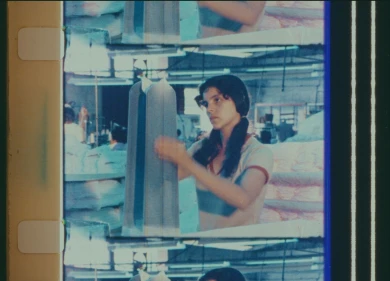
Bananeras (Banana Growers) is a combative portrait of the inhumane conditions of the American banana plantations located in Nicaragua through much of the twentieth century. Costa Rica Banana Republic is a perspicacious satire via an institutional documentary of banana production, spotlighting the extractive nature of this agro-exporting model in the 1970s. Organización Campesina (Farmers’ Organisation) frames rural resistance in Honduras from a direct depiction and lyrical documentary, while Dos veces mujer (Two Times a Woman) dissects the invisibility of the double-shift working day Central American women farmers endure: working in the countryside and working in the home. As a whole, the works here present the earth at once as a wounded body and a space of dignity.

Cinema, for the First Time
7 and 14 June 2026 – 12:00 pm
The final session in this Moon Projector season contemplates the feeling around the first experience of cinema — cinema as revelation, magic, fantasy and mystery from the first gaze, from the first contact with the medium, and imagery etched on the retina of childhood. The programme shows Émile Cohl’s landmark Fantasmagorie (1908), the first ever hand-drawn animation, and Ignacio Agüero’s Cien niños esperando un tren (One Hundred Children Waiting for a Train, 1988), a feature-length film on play and the origins of cinema.
Fantasmagorie (1908)by Émile Cohl (Paris, 1857– Villejuif, 1938) is the first expression in the history of animated drawing. Émile Cohl was an illustrator who belonged to the Parisian art group Arts incohérents (1882–1895), who was bestowed with an absurdist and pre-Surrealist talent. Whereas the Lumière brothers were able get audiences out of their seats as they witnessed a train moving towards them in 1895, Fantasmagorie is a supernatural experience, akin to an apparition yet also innocuous and entertaining — the inanimate comes to life out of nothing and figures seemingly move with little sense. From the outset, animation was related to caricature, fabulation and the comical, a sweet spot for the dreams of the youngest audience.
From the discovery of new imagery arising from the animated line to knowledge of the world through a screen, Cien niños esperando un tren (1988), by Chilean director Ignacio Agüero (Santiago, 1952), narrates a group of young people’s discovery of cinema in a workshop on the origins of the medium in a poverty-stricken town on the outskirts of Santiago de Chile. Play, fun and learning combine with a fascination with images, as viewing Émile Cohl’s Fantasmagorie (1908) in the workshop becomes an act of freedom.
Elisa González and Leah Pattem. Soy Tribulete 7
13 JUN 2026
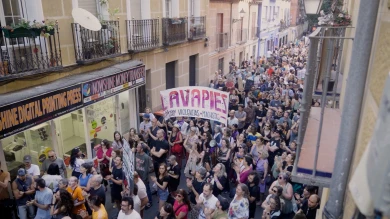
Framed inside this year’s Neighbourhood Picnic is the screening, in the Museo’s Cinema, of a film related to the life and protests of the Lavapiés neighbourhood, addressing issues of gentrification and the right to housing: Soy Tribulete 7 (I Am Tribulete 7, 2026), directed by Elisa González and Leah Pattem.
As the Spanish housing crisis takes hold in Lavapiés, this story begins in February 2024, when the residents of Calle Tribulete, 7, a block of apartments on a street in this Madrid barrio, receive a letter informing them that their building has been sold to a vulture fund. The news spreads quickly around the neighbourhood and, when it comes to the attention of González and Pattem, they grab their cameras and head straight for the building, where they encounter one hundred or so residents still in shock. The film Soy Tribulete 7 flows into the building and the daily lives of a community united, whose looming eviction occasions the fight of their lives. Ultimately, a path of resistance that will turn the community into a symbol of struggle for the right to housing.
Both film-makers worked closely with a group of tenants — Cris, Nani, Blanca, José, María Jesús and Antonia — to tell the story of how the building became the most creative stage of resistance ever witnessed in the area. The work presents the daily life of these residents in Madrid’s now-iconic “building fighting eviction”, depicting their collective struggle and the violent disruption to their lives. Through personal interviews, observational footage, archive material, music and a narration by eighty-year-old actress Ana Martín García, the film casts light on the human stories behind a community struggle.
The Neighbourhood Picnic is an annual gathering of festivities organised by Museo Situado, a network made up of associations, activists and residents from Lavapiés, a racially diverse, working-class neighbourhood where the Museo Reina Sofía is located.
Exile and Alienation
Saturday 30 May and 6 Jun, 2026 - 18:00 H
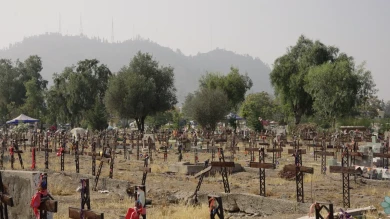
In the years of the Popular Unity Government in Chile, three young film-makers, Marilú Mallet, Valeria Sarmiento and Angelina Vázquez, went to the offices of Chile Films to present a film project. This session screens three films which convey the three directors’ experience of exile. In Dos años en Finlandia (Two Years in Finland), Angelina Vázquez depicts the social and working conditions of Chileans exiled in the Nordic country. The fictional work Lentement, directed by Marilú Mallet, follows a young Chilean exile around spaces of Montreal blighted by nostalgia and political rage. In Huellas (Fingerprints), Valeria Sarmiento returns to Chile to explore the memory of violence inflicted by Pinochet’s military dictatorship. The session culminates in a talk with the three directors, gathered here for the first time.
From North to South and South to North
Sunday 31 May and Friday 5 June, 2026
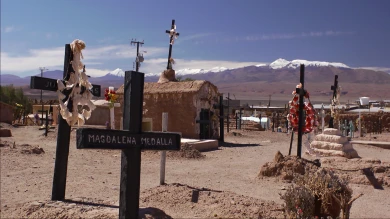
In a kind of road movie, Marilú Mallet travels across her native Chile after forty years of exile. The journey is an exploration of the dynamism of national identity, leading the film-maker to return to questions previously explored in her filmography and to search for new forms of filming the encounter between body and landscape.