TIZ 1. 8EMES
- Film and Video
- Encounter
- Research
- Workshop
- Guided Tour

View of Room 103.02. The Square. The Power of the Collective
Date and time
Held on 01 Feb 2022
View of Room 103.02. The Square. The Power of the Collective
March 8 has become a symbol of protest that flows beyond this date to solidify synergies and feminist, historical and present struggles. For over a century now, this day has condensed and amplified a first basic premise: rights for all women always, every single day. Over the past few decades, the feminist movement has made this demand ever more visible and global, and, from numerous corners, from the past and the present, we aspire to many more 8Ms — every single day.
The Museo’s public programmes are articulated and interwoven from a series of force lines — proposing a situated practice and a stance taken before issues that raise questions — made visible in the present year via so-called Temporary Intensity Zones (TIZs), a conceptual device which organises and concentrates a time frame of transversal connections in its activities. The 8EMES programme, distinctly feminist, denotes the first of these TIZs and gathers activities, propels cross-overs and articulates perspectives around these force lines from which the Museo works sustainedly. Feminisms permeate at once through the Museo’s programme and Collection — even more significantly after its recent rearrangement — extending the spirit of 8M beyond a stipulated date. Activated by this same idea and driven by an unceasing strength of collective protest, this programme sets forth a film series, encounters, lectures, workshops, exhibitions and gazes towards the Collection, setting out from a diverse and transversal approach.
-
From 16 to 20 February 2022 Nouvel Building, Protocol Room, Auditorium 200 and online platform
To Organise Is to Start to Prevail
Second Syndicalist Feminism Workshops
With the aim of reflecting on the notion of syndicalist feminism and thus vindicating the dynamism of new emerging struggles that pick up tools from the labour movement (strikes and strike funds), these workshops seek to weave alliances between collectives and feminist organisations, casting light not only on the difficulties faced and calling for change from institutions, but also backing rebellion and thinking jointly about strategies and forms of action which are up to the task of current challenges in a present laced with uncertainly, but also full of hope.
Organised by: Museo Reina Sofía and La Laboratoria. Espacios de Investigación Feminista
Collaboration: the Foundation for Arts Initiatives and Rosa Luxemburg Foundation -
From 11 March to 14 May 2022 Sabatini Building, Auditorium
Out of the Shadows
The Pioneering Films of Atteyat Al-Abnoudy, Selma Beccar, Assia Djebar, Jocelyne Saab and Heiny Srour
TicketsAn exploration of film-making from Mediterranean Arab countries, as rich as it is vast, offers a thought-provoking array of forms and manifestations. From the silent film era to the present today, film work from Magreb and the Mashriq has contributed a large number of standout productions to film history, yet a survey of canonical historiography casts, surprisingly, more darkness than light and is even more striking where films made by women are concerned. Despite a considerable rise in recent decades of women directors in Arab film, the work of many female pioneers regrettably tends to fall into obscurity.
Organised by: Museo Reina Sofía and the Courtisane Festival
With the support of: Arab Funds for Art and Culture (AFAC) -
Friday, 18 March 2022 Nouvel Building, Protocol Room and online platform
Situated Voices 21
Youth in Action: Responding to Racist Imaginaries. Movements and Strategies
TicketsThis encounter seeks to reflect, through young migrant and anti-racist activists, on modes to destabilise racism from an intersectional gaze. What role does racism play in the multiple forms of oppression that cross through certain bodies in relation to gender, race, class, administrative status, and so on? The aim is to collectively imagine multi-faceted, creative, political and disobedient processes which allow anti-racism to be incorporated into the heart of struggles and thereupon examine its relationship with other issues that include education, participation in politics, heteromormativity and climate justice.
Coordinated by: Red de Estrategias Antirrumores de la Región de Madrid (RAMA)
Organised by: Red de Estrategias Antirrumores de la Región de Madrid (RAMA), GRIGRI and Museo Situado
Collaboration: Madrid City Council -
Thursday, 31 March and 7 April 2022 Sabatini Building, Auditorium
Elena Asins. There Is Nothing to Understand Here
Screenings and Talk
TicketsThis Museo Reina Sofía-produced documentary approaches the unique work of Elena Asins (Madrid, 1940 — Azpirotz, Navarra, 2015), an artist who ardently explored abstract language in the field of logical thought and algebra applied to geometric abstraction. Her artistic practice — perpetually characterised by compositional rigour and formal refinement — stretches across a broad array of formats and mediums, from concrete poetry and drawing to video, via sculpture and installation. The film, resulting from research into the artist’s archive conducted over more than two years, is a multi-voiced account in which different figures seek to respond to the many questions that formulate a strict and demanding artistic practice, and which, as Javier Maderuelo highlights, is “pure mental process”. The documentary is followed by screenings of the unseen digital animation films by Elena Asins and a conversation with Javi Álvarez and Olga Sevillano, the documentary’s directors, in both sessions.
-
Saturday, 26 March 2022 Meeting Point: Sabatini Building, Floor 1, Room 103.02
The Feminisms Container
Docu-action on Feminisms and Syndicalism
RegistrationThe Contenedor de feminismos (Feminisms Container) is a sculpture and mobile archive devised and activated by artist Carme Nogueira and researchers Anxela Caramés and Uqui Permui and is part of Episode 8. Exodus and Communal Life, the final chapter in the new presentation of the Museo Reina Sofía Collection. Designed to be used in public space, the Container seeks to recover, document and make visible the history of women, feminisms and struggles in this sphere. Since 2009, different “docu-actions” — a term employed to designate an encounter or dialogue between women, on a specific theme, in public space — have been carried out in the Museo around feminism and associationist syndicalism. The materials produced from this docu-action are incorporated into the Container to become part of its archive.
-
Monday, 28 March 2022 Sabatini Building, Floor 1, Room 103.08
Luxurious Poverty
Andrea Büttner, in Conversation with Isabella Lenzi
RegistrationArtist Andrea Büttner engages in conversation with Isabella Lenzi, a curator and research fellow in the Museo’s Collections Department. Büttner’s work is part of Episode 8. Exodus and Communal Life, the final chapter in the new re-hang of the Collection. This event is organised inside the framework of a series of activations of the Collection throughout the month of March, underscoring feminist artistic practices and the work of women artists.
-
Wednesday, 30 March 2022 Sabatini Building, Floor 3
Belkis Ayón, Behind the Myth
RegistrationIn conjunction with the exhibition Belkis Ayón. Collographs, the Museo organises a tour through the show and a conversation with its curator Cristina Vives and Cuban artists Alexandre Arrechea and Luis Cabrera, both closely related to the figure of Ayón. The activity explores the artist’s short yet intensive career, shaped by plastic investigations around the Afro-Cuban secret society Abakuá, the practice of collography – an unusual printmaking technique developed by Ayón to create a unique artistic language — and the artistic and socio-cultural context of 1990s Cuba. The encounter is concluded with an activation on the process of conceiving and engraving the collograph and is conducted by Luis Cabrera.
-
From 10 February to 26 May 2022 Nouvel Building, Protocol Room
Conjugating Worlds: Multi-Species Corporealities
Across six sessions, this study group seeks to investigate alternative models in cultural and art theory, and in artistic practices, which radically challenge the relationship between animals and humans, with the notions of wild thought, human-animal coproduction and the between-zone as core topics. Conjugating Worlds: Multi-Species Corporealities is the continuation of the study group Body, Territory and Conflict, held from October 2020 to March 2021. Its thematic programme is linked to the research project The New Loss of Centre. Critical Practices in Live Arts and Architecture in the Anthropocene, funded by Spain’s Ministry of Science and Innovation.
Coordinated by: Fernando Quesada
-
Saturday, 26 March 2022 Sabatini Building, Workshops and Garden
Driving Evil Away
Closing Encounter
— Activity aimed at people participating in the study groups Driving Evil Away and Embracing Uncertainty. Driving Evil Away II
In the form of a conclusion, this activity puts forward an in-person re-encounter for people involved in the two past editions of the study group, held in 2020 and 2021. The first group, Driving Away Evil (in Spanish), addressed the pharmacologization of life and the contemporary malaise produced by neoliberal reality, and shared forms of collective and daily resistance. The second, Embracing Uncertainty. Driving Evil Away II, sought to jointly reflect on the ways in which we understand health, healing and care in the current context of the COVID-19 crisis, encouraging a pooling of experiences, emotions and knowledge. The health emergency conditioned the (re)consideration of the format and dynamics of both groups, turning virtuality into the only channel of encounter. This activity came into being with the will to “devirtualise” these groups with an in-person re-encounter as a coda.
Coordinated by: Equipo re - Anarchivo sida (Nancy Garín and Linda Valdés) and Josune Urrutia
-
Pink Triangle
LGTBQ+ Activisms in Schools
The Pink Triangle project looks to consolidate a space of convergence between different agents working in the sphere of affective-sexual diversity and gender in schools, with the aim of developing, in tune with the legislation in force, comprehensive programmes against LGTBI-phobia and discrimination based on sexual orientation and identity. Over the course of this year, and in collaboration with L’Internationale, a series of mediation materials are developed around dialogue recorded between Miguel Missé and Mercedes Sánchez Sáinz, with the aim of sharing strategies and activations in the sphere of sex-gender freedom of expression and educational work for and from difference.
-
Episode 1. Avant-garde Territories: City, Architecture, Magazines Sabatini Building, Floor 2
Women at the Forefront. Room 203.02
The modern city opened the way for the modern woman, who became a social phenomenon in the 1920s and 1930s. Yet in Spain there was no cultural framework in which to professionally contextualise women in art until well into the twentieth century, making their history tantamount to a list of exceptions with vital specific characteristics. This room contains works that represent the determinants women faced at the turn of the century, for instance La comulgante (Girl at Her First Communion, 1914), by María Blanchard, and pieces which render an account of the emancipatory spirit that had started to take shape in schools devoted to advancing women’s higher education, such as Ángeles Santos’s Tertulia (The Gathering, 1929). It also foregrounds the work of illustrators such as Pitti Bartolozzi, Rosario de Velasco and Delhy Tejero, who all employed materials widely considered second rate by historiography to build a feminist or subordinate art history.
-
Episode 4. Double Exhibition: Art and Cold War Sabatini Room, Floor 4
Body and Home. Room 419
This room presents works by two key artists related conceptually to Surrealism from Europe: Louise Bourgeois and Dorothea Tanning. Both would enter a liminal dimension, at once interior and exterior, of femininity, the body and the home, creating sharp contours to the violence of gender constructions and surveying their vicissitudes. To some degree, their treatment of the home is diametrically opposed to the American dream, where the suburban home, bright and always immaculate, is built upon an obliging and idyllic female figure taken for granted.
-
Episode 4. Double Exhibition: Art and Cold War Sabatini Room, Floor 4
Women Artists and Late Francoism. Room 427
Access to the projectDisplayed in this room are works by Mari Chordá, Ángela García Codoñer, Eulàlia Grau, Isabel Oliver and Ana Peters, artists whose careers began in the 1960s and 1970s but who, omitted from major narratives, have only started to be unearthed in recent investigations. During the last two decades of Franco’s dictatorship, women who were active in the Spanish art scene were seen as exceptions, their talent commonly belittled in critique and the media under the term “feminine”. Nevertheless, from the end of the 1960s this derogatory characterisation started to become part of the subject matter approached by many of these artists as a vindication of another kind of art-making and in resistance to Francoism.
-
Episode 8. Exodus and Communal Life Sabatini Building, Floor 1
Reasoning of the Commons. Room 103.08
New forms of governance emerge as a response from struggles against inequality, led by the search for alternative models, and perhaps pre-existing modes of exchange, with some based on the community logic that assumes the importance of existing in relation to others. This room displays works by artist Andrea Büttner which address moral or ethical issues linked to dispossession and vulnerability resulting from the structures of inequality and belief systems, such as religions, underpinning or confronting them. Her Beggars, portraits of beggars that make up one of her open strands of work, are woodcuts showing variations through the schematization of the beggar figure. The woodcut technique, unflashy and tied to folk art, establishes a parallel between artists and manual labourers: the artist as worker.
-
Episode 8. Exodus and Communal Life Sabatini Building, Floor 1
Room 103.16
This room displays Victoria Gil’s series Retratos saharauis (Sahrawi Portraits), conceived to illustrate a book of poems featuring the collaboration of different writers from Western Sahara and which sought to cast light upon the socio-political conflict. Although the series is broad and addresses issues such as the acts of resistance before eviction attempts in the camps or the use and spread of tear gas, the pieces selected in this room allow us to view the agency of communities of Sahrawi women, leading figures in the development of their society across more than four decades of exile. In her field journal, Victoria Gil depicts daily life in the camps and grants recognition to the participation of women not only in the anti-colonial struggle and the fight for the rights of the Sahrawi people until the present day, but also in leading community activities to improve co-existence and quality of life and creating education structures and promoting health in camps for displaced people.
-
Until 18 April 2022 Sabatini Building, Floor 3
Belkis Ayón
Collographs
Buy ticketsBelkis Ayón (Havana, 1967–1999), regarded as one of the foremost exponents of contemporary international printmaking in the 1990s, reached artistic maturity during the profound economic, social and ideological crisis in Cuba caused by the collapse of socialism in Europe. Ayón studied at Havana’s Instituto Superior de Arte de la Habana (ISA) from 1986 to 1991, excelling through the mastery of her large-scale collographs — via an assemblage of multiple printed sections — with their pronounced stage-like quality and great compositional complexity. Ayón used these works to build a universal discourse against marginalisation, frustration, fear, censorship, intolerance, violence, helplessness and limited freedom.
Curator: Cristina Vives
Organised by: Museo Reina Sofía, in collaboration with the Belkis Ayón Estate -
Until 2 May 2022 Retiro Park, Palacio de Velázquez
Vivian Suter
Argentinian-Swiss artist Vivian Suter (Buenos Aires, 1949) works in the middle of the Guatemalan rainforest, her practice, carried out from her studio in Panajachel, evolving towards an ever-closer exchange with nature. Wind, rain and mud act upon frameless colourist canvases in continuity with the surrounding tropical landscape. Her embrace of natural phenomena in her paintings not only erodes the notion of material hierarchy, but also shows an environmentally aware existence. Each canvas retains its own autonomy as an artwork while maintaining a close connection to the rest of the pieces, amounting to a kind of evocative ecosystem of climatic, sensorial and emotive experiences.
Curator: Manuel Borja-Villel
Organised by: Museo Reina Sofía
Collaboration: Comunidad de Madrid -
4 May - 5 September 2022 Sabatini Building, Floor 3, Vaults Room and Garden
< Jardín de las mixturas. Attempts to Make Place 1995 -…- >
Alejandra Riera
Buy ticketsJardín de las mixturas (The Garden of Mixtures) puts forward a presentation of the work of Alejandra Riera — “a series of attempts”, as she prefers to call it — across more than two decades. How can the poetic modes practiced in these attempts specifically unfold? How can they linger over long periods of time and address the density of their fabric? How can it be done by creating places that make room for the transit of anyone who approaches? The Jardín de las mixturas is not conceived as closed space and time (the exhibition room and its programmed temporality), but rather as an ensemble of unique places linked by an open narrative frame and a certain freedom of circulation.
Organised by: Museo Reina Sofía
-
From Monday to Sunday Meeting Point: Sabatini Building, Floor 1, Education Desk
Feminism. A Feminist Gaze on Avant-garde Movements
TicketsThis tour explores the spaces of the Collection devoted to historical avant-garde movements and questions women’s role and visibility in art history by means of an analysis of women as producers, recipients and subjects-objects of artistic production. It is part of a series of transversal tours that put forward new gazes of the Collection, questioning traditional interpretations and revealing the wealth of historical, social and political ramifications of artistic activity. It seeks to ignite a new gaze, to critically consider images of male domination and to prompt recognition of women’s work in overcoming roles and models.
-
From Monday to Sunday, starting on 30 March 2022 Meeting Point: Sabatini Building, Floor 1, Education desk
Making Space or Wandering from Disorientation
TicketsThe issue of space became visible on the artistic landscape after the Second World War with the rise of performance and its hybrids with dance, installation and reformulations around the support and materiality of artworks. This would affect not only art-making but also people situated inside the art system — Who occupies this space? — and those off-centre. In this meandering tour, taking in Episodes 2, 3 and 4 of the Collection, participation is encouraged in a relational practice with mediators and the rest of the group in an attempt to dismantle the idea of someone “who explains things” and form plural voices that will nurture word and listening from feminist perspectives.
-
Multimedia
Actions Speak Louder Than Words
Interview with Charlotte Johannesson
Watch videoArtist Charlotte Johannesson (Malmö, 1943) is a pioneer of digital graphic art and an early exponent of the conceptual synchrony between languages and the technique of IT programming and the loom. This interview, in conjunction with the monographic exhibition held in the Museo Reina Sofía in 2021, sees Johannesson weave together a tapestry of personal experience with her early approach to textiles, memories of political protest from the counterculture scene and her artistic practice at the inception of digital art.
-
Podcast
Belkis Ayón: Between Utopias
Interview with Cristina Vives
Listen to the podcastIn this sound podcast, researcher, editor and art critic Cristina Vives (Havana, 1955) presents the short yet prolific career of Belkis Ayón (Havana, 1967–1999). Vives, curator of the first retrospective of the printmaker in Europe, held in the Museo Reina Sofía, surveys the narrative of the artistic journey undertaken by her friend, exploring Ayón’s work with collographs as a unique language, her interest in the Afro-Cuban secret society Abakuá and her political commitment in the context of 1990s Cuba.
-
Podcast
Time has fallen asleep in the afternoon sunshine
Mette Edvardsen, Memory and Living Books
Listen to the podcastDystopian fiction, such as Ray Bradbury’s Fahrenheit 451, and real experiences, for instance Anna Ajmátova’s memorisation of her own poems in an attempt to avoid censorship, have inspired Time has fallen asleep in the afternoon sunshine, a proposal by performer and choreographer Mette Edvardsen. The project sees people from different countries memorise books with a view to creating a library of “living books” made available to the public in the form of common encounters in which they recite what they have learned. This double podcast offers an interview with Edvardsen as she recounts the beginnings of the project and its development over the years, and a conversation with Violeta Gil and Andrea Rodrigo, who narrate their experiences of these living books.
-
Podcast
Weaving a Blanket of Snow
Four “Tamo Evenings” with Eva Lootz
Listen to the podcastAcross four summer evenings, a group of participants learned to make string figures with their hands in a workshop conducted by artist Eva Lootz (Vienna, 1940). The string forms enable an exploration with knots and intertwining threads to relate body, memory and language; figures that can be undone and started again in another form. In this podcast, Lootz entwines a narration that begins from the outset of her artistic career and losing herself in a play with raw materials, memory, history and landscape.
Más actividades
![Isabel Coixet, 100 Years and You Everywhere [100 años y tú en todos los sitios], 2026, película](https://recursos.museoreinasofia.es/styles/small_landscape/public/Actividades/2.diseminar-mundo.jpg.webp)
John Berger and Isabel Coixet. Continued Ways of Seeing
Thursday, 17 September 2026 at 7pm
Ways of Seeing (1972) is one of the most revolutionary television series on art history, the museum and contemporary critical culture. Across four episodes, an articulate, enthusiastic John Berger unpacks the relationships between classical art through the gaze and new technology, the nude and feminism, the oil painting and commodity fetichism, advertising and consumerism. In essence, a level of critical commitment only comparable to its capacity for dissemination. Unsurprisingly, the series, and the book that would distil it, continues to forge vocations. This session sees art historians Alberto López Cuenca and Modesta Di Paola carry out an analysis of Berger’s audiovisual work, placing the stress on episodes one and four of the series. In the first episode, Berger reflects on the connection between the act of seeing, looking and being in light of new technology, such as the film camera. At the same time, it analyses how the culture of reproduction is turning paintings into messages or fragments of communication while stressing the importance of silence when observing historical paintings. In the fourth and final episode, he introduces advertising as a new iconic-verbal language that shares certain principles with the message of oil painting as a luxury item.
The session opens with the premiere of a filmic letter from Isabel Coixet, one of Spain’s most internationally acclaimed directors, to John Berger, with whom she maintained a long friendship and deep admiration. The short film is testament to the ubiquitous and long-lasting presence of the author of Ways of Seeing, even after his death in 2017.
![Chantal Akerman, Woman Sitting after Killing [Mujer sentada después de matar], 2001, instalación. Museo Reina Sofía](https://recursos.museoreinasofia.es/styles/small_landscape/public/Actividades/chantal-akerman-mujer-sentada-despues-matar.jpg.webp)
On Your Screen: Art History and the Museum Facing the Audiovisual Challenge
18, 19 SEP 2026
The conference On Your Screen: Art History and the Museum Facing the Audiovisual Challenge sparks debate around the transformations of art history and museum space upon embracing the audiovisual format. Its starting point is John Berger’s emblematic television series Ways of Seeing (1972), a landmark in the democratisation of art-historical discourse. In the series, Berger illustrated how the transfer of a work such as Goya’s Los fusilamientos del 3 de mayo (The Third of May 1808 or the Executions) from museum gallery to home TV screen completely changed the viewer’s experience, allowing the image to travel to straight to the viewer.
In the twenty-first century, this screen-based ecosystem has expanded exponentially, with museums not only physically integrating screenings and devices into their galleries— following in the wake of many exhibitions on the moving image — but also deploying complex virtual strategies. Equally, numerous en vez de a multitudeof historians, students and creators use digital platforms to circulate their ideas and projects. This audiovisual shift opens access to ignored materials and democratises knowledge, as well as challenging traditional hierarchies and the interpretive authority of institutions. The conference, promoted by the research project ATLAS AV: The Audiovisualisation of Art History and the Museum, seeks to analyse this vast audiovisual material, its archives, and its capacity to transform the memory of art.
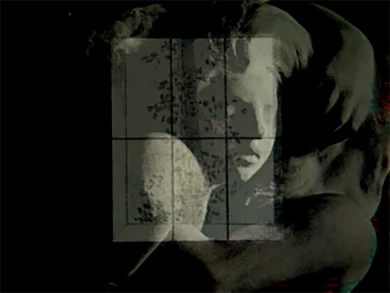
Godard and Miéville: Time and Ruin
Friday, 18 September 2026 - 7pm
Inside the framework of the conference On Your Screen: Art History and the Museum Facing the Audiovisual Challenge, this film series sets forth three critical visions of the museum via three sessions featuring the works of John Berger, Jean-Luc Godard and Anne-Marie Miéville, Ariella Azoulay, Alan Resnais and Chris Marker, Kwate Nee-Owoo, and the premiere of short films by Isabel Coixet and La Vulcanizadora (Maria Rojas Arias and Andrés Jurado). In classical theory, the museum gives the world meaning; it contains fragments of the past, granting them a history, a narrative that explains preterite time and the present. Today, there is an implicit assumption that this function hides and legitimises forms of power, yet what if the museum, instead of explaining the world, multiplied it through radical ideas, silenced periods and repressed subjects? Such is the approach of the film-makers and artists in this film season.
In 1972 the writer John Berger opened the landmark television series Ways of Seeing with an iconoclastic gesture: slicing Sandro Botticelli’s painting Venus and Mars (1485) in London’s National Gallery. A transgressive act that recalls contemporary attacks on the museum by dissident youth and with which Berger, after revealing it was a reproduction, sought to ignite debate around the idea of an original artwork and a copy. In this, the hundredth anniversary of his birth, the first session pays homage to one of the great art writers of the twentieth century. Starting with a review of Berger’s audiovisual work by art historians Alberto López Cuenca and Modesta Di Paola, the series begins with the premiere of 100 Years and You Everywhere (2026), an unreleased short film by Isabel Coixet composed as a beautifully crafted letter to Berger, and continues with an analysis of fragments of Ways of Seeing in relation to the museum and contemporary art.
The second session screens two medium-length films by Jean-Luc Godard and Anne-Marie Miéville on time, ruin and museum. In The Old Place. Small Notes Regarding the Arts at Fall of 20th Century (1999), both film-makers consider what remains of that “old place”, the museum, at the close of a century of wars and totalitarianism, and ask whether it should be more of a legend or desire than a place. This same driving principle leads Godard to build his own imaginary museum in Reportage amateur (maquette expo) (2006), a rickety toy museum which, paradoxically, contains the great film-maker’s full power of thought on history and images.
Finally, the third session explores one of the major challenges of recent years: the decolonisation of the museum, the recognition of its link to imperialist discourses of power and the need to situate a new silenced or repressed subject at the centre of the Western narration of history. Under the title Museums and Restitution, it includes the film Undocumented. Unlearning Imperial Plunder (2019), by theorist Ariella Azoulay, Statues Also Die, by Alan Resnais and Chris Marker (1953), Kwate Nee-Owoo’s You Hide Me (1970) and the first screening of the short film Quinto verso, parte de Tonada (Fifth Verse, Part of Tonada), by La Vulcanizadora (Maria Rojas Arias and Andrés Jurado), filmed at the Museo de América in Madrid.
![Ariella Azoulay, Un-documented. Unlearning Imperial Plunder [Indocumentados. Desaprendiendo el saqueo imperial], 2019, película](https://recursos.museoreinasofia.es/styles/small_landscape/public/Actividades/5.diseminar-mundo.jpg.webp)
Museums and Restitution
Saturday, 19 September 2026 - 7pm
Centuries of plundering, decades of amnesia, years of living with unmitigated extractivist power… Does a museum, as we know it, have a raison d'être in a postcolonial society?
This session expounds the operations of the museum as a colonial machine, while putting forward ideas, in narration, for a more just, equal and inclusive institution of the future via society’s marginalised and minority voices. The session begins with the international premiere of Quinto verso, parte de Tonada (Fifth Verse, Part of Tonada), which presents a vision of the Quimbaya Collection (fifth and sixth centuries CE) from the Museo de América in Madrid. It is constructed with the voices and chants of Wayúu mourners and guides, not only as a way of reinstating the role of these gold idols — anthropomorphic figures of men and women used as vessels in ritual practices — but also to imagine that what must be exhibited is not the gold itself. It is the ritual’s own chant. In the classic film You Hide Me (1970), Ghanaian film-maker Kwate Nee-Owoo accesses the British Museum’s collection of African art, located in the building’s basement, to question the meaning behind a museum plundering and nullifying. A fine exercise of first-person institutional critique screened for the first time in Spain. Almost seventy years since Resnais and Marker made Statues Also Die (1953), a reflection on the aura-bearing value of the museum opposite the identity-based and cultural belonging of African art, theorist Ariella Azoulay films the same statues again at the Musée du Trocadéro (today the Musée du Quai Branly), which survive and wait to be reunited with their people. Azoulay, whose wholly original undertaking is a lesson to the museum of the future, connects the forced migration of these sculptures with the mass transit of people crossing borders artificially imposed by the same system that has plundered their culture.
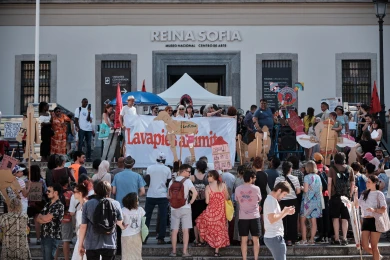
The School of Transformative Institutionalism and Local Organisation
From 21 to 24 September 2026
The School of Transformative Institutionalism and Local Organisation (S.T.I.L.O.) is a programme of joint learning and join strategy which sets in motion a process for the exchange of questions, methodologies and experiences between cultural organisations. The overall aim is to create, circulate and prototype tactics, tools and collective knowledge on institutional practices that open new channels for defending culture and advocating structural transformation in divergent geographical contexts.
The project is part of the Laboratorio de Institucionalidad Compartida (The Laboratory of Shared Institutionalism, LIC), a space for the Museo Reina Sofía’s research, work and advocacy centred on developing, experimenting with and systemising practices, protocols and tools which contribute to a fairer and more liveable cultural ecosystem.
For many years now, so-called infrastructural critique in museums questions material, legal and economic infrastructures, among others, as well as the forms of solidarity and practices required to sustain the cultural ecosystem. By approaching current debates, S.T.I.L.O. raises questions on the ways in which organisations define and interpret their practices, organise their relations and respond to the social contexts in which they operate.
The school gathers four cultural organisations that work via different institutional models – scale, contexts, conditions, different working models — with the goal of pooling common strategies and tools of organisation, advocacy and relationships with local communities.
The programme is conceived as a collaborative process with the participation of Arika, La Revuelta, BAK Basecamp and The Tentacular Museum (Museo Reina Sofía) and is structured around preparatory online sessions and an in-person seminar in Madrid.
S.T.I.L.O. is an activity framed inside the working strand of Situated Organisations from L'Internationale’s Museum of the Commons project, which reflects on the role of museums and art organisations as actors within complex social networks and ecosystems, with a view to exploring new ways to democratise institutions and make them more open, inclusive and useful.