![Basel Abbas y Ruanne Abou-Rahme, At Those Terrifying Frontiers Where the Existence and Disappearance of People Fade Into Each Other [En esas fronteras aterradoras donde la existencia y la desaparición de personas se disuelven entre sí], 2019. Museo Reina](https://recursos.museoreinasofia.es/styles/small_landscape/public/Actividades/palestina_1.jpg.webp)
Held on 05 Jun 2024
Palestine Is Everywhere is the international slogan of solidarity with the Palestinian people and also the title of a global debate that situates Palestine at the centre of our historical time, understanding the war in Gaza as the start of a new cycle shaped by colonial expansion. Under this title, the Museo organises an encounter that opens with a video recital by Palestinian poet Ibrahim Nasrallah, one of the best-known poetic voices in the Arab language. Following his intervention, artists and theorists Nitasha Dhillon and Amin Husain, part of the Decolonize This Place (DTP) movement, philosopher Marina Garcés and anthropologist Massimiliano (Mao) Mollona will exchange reflections, experiences and viewpoints on the Palestinian situation and cause in a round-table discussion. As a coda to the session, there will be a viewing of Those Terrifying Frontiers Where the Existence and Disappearance of People Fade Into Each Other (2019), a work by Palestinian artists Basel Abbas and Ruanne Abou-Rahme which has recently been incorporated into the Museo Reina Sofía Collection via a donation by Mercedes Vilardell in 2024. The eleven-minute video piece sets up a dialogue between the writings of Palestinian-American intellectual Edward Said (1935–2003) and AI-created images of protests at the wall that runs along the Gaza Strip.
With reverberations and protests around the world, Palestine has become a paradigm for a future to be recovered. Slogans such as Palestine Is Everywhere and Palestine Is All Around must be read in light of the rejection of the expansion of the colonial regime as they evoke the vindication and shared sense of inter-connected dissidences and movements for international freedom: from Palestine to the Brazilian rainforest, from Chiapas to Guinea-Bissau. With their resistance and demands, these territories are crying out for a new world-system that is more just, diverse and equal. What does it mean to be part of the planetary anti-colonial struggle? How to reorient ourselves towards fresh global movements that question the hegemony of the nation state? How to relate images of global freedom, those considered from desire, not pain, in this new temporal framework?
Organised by
Museo Reina Sofía and Cinema as Assembly
Inside the framework of

The Museum of the Commons project is organised by the L’Internationale museum confederation and co-funded by the EU’s Creative Europe programme. L’Internationale comprises fourteen major European art institutions: Museo Reina Sofía (Madrid, Spain), MACBA (Barcelona, Spain), M HKA (Antwerp, Belgium), MSN (Warsaw, Poland), SALT (Istanbul and Ankara, Turkey), Van Abbemuseum (Eindhoven, Netherlands), MSU (Zagreb, Croatia), HDK-Valand (Gothenburg, Sweden), NCAD (Dublin, Ireland), ZRC SAZU (Ljubljana, Slovenia), IRI (Italy), Tranzit.ro (Bucharest, Cluj and Iași, Romania) and VCRC (Kiev, Ukraine), as well as two associate organisations: IMMA (Dublin, Ireland) and WIELS (Brussels, Belgium).
Participants
Basel Abbas and Ruanne Abou-Rahme are Palestinian-born artists who live between Ramallah and New York. Through sound, image, text, installation and performance they examine themes such as the intersections between political imaginaries, the body and virtuality. They have shown their work at institutions that include the MIT List Visual Arts Center (Cambridge, Massachusetts, 2024), MoMA (New York, 2022), the Centraal Museum Utrecht (2021) and the Art Institute of Chicago (2021) and have participated in collective shows such as the Sharjah (2023) and Berlin (2022) biennales and at Appel Amsterdam (2018) and CCA Wattis in San Francisco (2018). Their work At Those Terrifying Frontiers Where the Existence and Disappearance of People Fade Into Each Other (2019) is now part of the Museo Reina Sofía Collection via a donation made by Mercedes Villaroel in 2024.
Nitasha Dhillon is an artist, teacher and researcher specialised in journalism. With Amin Husain, she is part of the MTL Collective, which joins research, artistic practice and activism. She also contributes to the magazines Occupy Theory and Occupy Strategy and is part of movements and initiatives such as the Direct Action Front for Palestine and, more recently, the Strike MoMA Working Group and Decolonize This Place, which explore aspects such as Indigenous struggles, action against the patriarchy and freedom for Palestine. She is also a member of the Cinema as Assembly group.
Marina Garcés is a philosopher, writer and teacher. She is an undergraduate and MA professor in Arts and Humanities Studies at the Universitat Oberta de Catalunya, and has aligned much of her career towards practical, critical and collective thought that she propels from Espai en Blanc. Her publications most notably include En las prisiones de lo posible (Bellaterra, 2002), Un mundo común (Bellaterra, 2013), Filosofía inacabada (Galaxia Gutenberg, 2015), Nova il·lustració radical (Anagrama, 2017), Ciutat Princesa (Galaxia Gutenberg, 2018) and Escola d’aprenents (Galaxia Gutenberg, 2020).
Amin Husain is an artist, teacher and researcher who specialises in philosophy and political science. Of Palestinian-US origin, he is part of the MTL Collective with Nitasha Dhillon, an initiative that joins research, artistic practice and activism. He also contributes to the magazines Occupy Theory and Occupy Strategy and is part of movements and initiatives such as the Direct Action Front for Palestine and, more recently, the Strike MoMA Working Group and Decolonize This Place, which explore aspects such as Indigenous struggles, action against the patriarchy and freedom for Palestine. He is also a member of the Cinema as Assembly group.
Massimiliano (Mao) Mollona is a theorist and anthropologist. With interdisciplinary training in economy and anthropology, his work is centred on the relationships between art and political economy. He has conducted far-reaching fieldwork in Italy, the UK, Norway and Brazil, primarily in economic institutions, analysing the relationships between economic development and political identity through participatory and experimental film projects. His practice is situated at the crossroads between pedagogy, art and activism, and he is a co-founder of the Institute of Radical Imagination (IRI) and a member of the Cinema as Assembly group.
Ibrahim Nasrallah is a poet, novelist, teacher and journalist. He was born in a Palestinian refugee camp in Jordan and was educated in one of the UN Agency’s schools for Palestinian Refugees in the Near East (UNRWA). Following a long career as a teacher and journalist in Saudi Arabia, he returned to Jordan in 1996 and since then has devoted his work to literature. His prolific output, spanning poetry, prose and essay, is shaped by exile and the Palestinian conflict. Some of his most recent works include Gaza Weddings (Hoopoe, 2017), Prairies of Fever (Interlink Books, 1998) and Time of White Horses (Hoopoe, 2016). He has been honoured with the Award for Best Poetry Collection Published in Jordan and the Arab Literary Award.
![Shuruq Harb. The Jump [El salto], Palestina, 2021. Cortesía de la artista](https://recursos.museoreinasofia.es/styles/small_landscape/public/Actividades/narrativas_desde_palestina._una_poetica_del_territorio_0.jpg.webp)
Más actividades
Dear Americas
Friday 29 May and 5 June, 2026
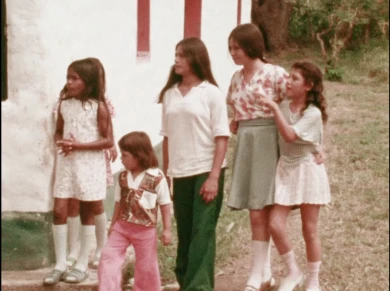
In these films, Marilú Mallet travels to Solentiname, in Nicaragua, and Andahuaylillas, in Peru, to paint a portrait of communities which resist the severity of forced industrialisation. In Solentiname, the focus is on the poet and priest Ernesto Cardenal’s founding of a Christian, poetic and revolutionary utopia, while in Andahuaylillas, a town close to Cuzco, Mallet explores the multiple layers of Andean culture.
A Poetics of the Subject
Thursday 28 May and 4 June, 2026
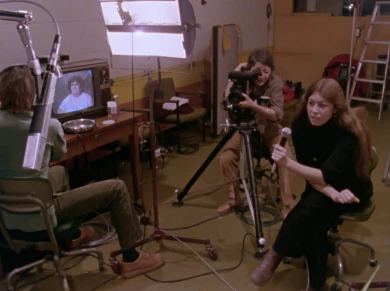
In the tension between documentary and fiction, between the rawness of a tragic political present and narrative escape, lies the truth of the exile’s condition. In Journal inachevé (Unfinished Diary, 1982) Marilú Mallet experiments with her own subjectivity, moving from affirmation to doubt. In Double Portrait (2000), María Luisa Señoret paints her daughter Marilú, who records the process. In this circular relationship, the film-maker constructs a poetics of the portrait as something perpetually unfinished, a process of exploration in which memory, identity and political history merge to become blurred.
Institutional Decentralisation
28 MAY 2026
This series is organised by equipoMotor, a group of teenagers, young people and older people who have participated in the Museo Reina Sofía’s previous community education projects, and is structured around four themed blocks that pivot on the monstrous.
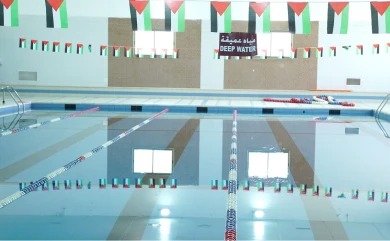
This fourth and final session centres on films that take the museum away from its axis and make it gaze from the edges. Pieces that work with that which is normally left out: peripheral territories, unpolished aesthetics, clumsy gestures full of intent. Instead of possessing an institutional lustre, here they are rough, precarious and strange in appearance, legitimate forms of making and showing culture. The idea is to think about what happens when central authority is displaced, when the ugly and the uncomfortable are not hidden, when they are recognised as part of the commons. Film that does not seek to be to one’s liking, but to open space and allow other ways of seeing and inhabiting the museum to enter stage.
Ordinary, Common and Public. Common Fixes for Ordinary Communities
Tuesday, 26, and Wednesday, 27 May 2026 – Check programme
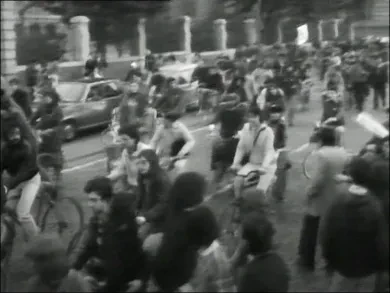
Ordinary, Common and Public. Common Fixes for Ordinary Communities is the title of the fourteenth encounter run by Sociología Ordinaria, a transdisciplinary research group that explores daily knowledge deemed ordinary, superficial or frivolous from a traditional academic and intellectual viewpoint.
This latest edition seeks to approach and map connections between concepts of the commons and the public realm — remembering that the ordinary is also the commons — and to ensure affects and moods of discontent are mobilised towards hope.
By way of its multiple declinations — community, community-based practices, the commons, the communal — the encounter seeks to reflect on different ways of creating, (re)configuring, maintaining, fixing, arranging, caring for and defending the public realm and the commons. Furthermore, it explores forms of invocation and experimentation as tools opposite the helplessness of an uncertain present, in addition to resistance against attempts of expropriation, distortion, privatisation and touristification.
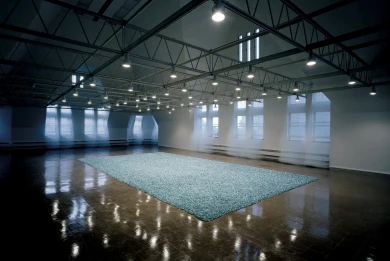
Felix Gonzalez-Torres. Sweet Revenge
26 MAY 2026
Nancy Spector and Alejandro Cesarco, curators of the exhibition Felix Gonzalez-Torres. Sweet Revenge, will speak with Manuel Segade, director of the Museo Reina Sofía, in a session dedicated to exploring the interpretive frameworks of this first large-scalepresentation in Madrid of the work of Felix Gonzalez-Torres (1957–1996), whose practice continues to resonate in the present.
The conversation begins with the exhibition’s title itself, Sweet Revenge, understood as a paradoxical notion that articulates much of the artist’s thinking. From there, the tensions running through his work are explored: the coexistence of opposing registers, ambiguity as a method, and the simultaneously affective and political charge of his works.
The dialogue also touches on some of the themes that run through his body of work, such as thenotions of identity, citizenship, and authority, alongside experiences linked to the AIDS crisis, and emotions such as love, loss, grief, and optimism. Special attention is given to the way in which Gonzalez-Torres shifts languages associated with Arte Povera, conceptualism, and minimalism towards open, participatory, and deeply personal structures.
The session also includes a reflection on the research process that shaped the exhibition, providing context for the curatorial decisions and criteria that structure it. In this context, Gonzalez-Torres’s work emerges as a device that actively engages those who activate orinterpret it, distributing responsibility for the production of meaning—a process that is alwaysunstable and constantly under negotiation.
These inaugural conversations, part of the main working strands of the Museo’s Public Programmes Area, aim to explore in greater depth the exhibition narratives of the shows organised by the Museo from the perspective of artists, curators and specialists.