-
April 8, 2015 Nouvel Building, Auditorium 200
The Artist and his Double. Mathias Goeritz: Personal Mythology, Strategies of Power and the Cold War
Francisco Reyes Palma
Presentation
Chus Tudelilla
Mathias Goeritz in Spain. A Simulator of Identities
Paula Barreiro
Goeritz in Transit: Transatlantic Circuits during the Cold WarJulián Díaz
The Poetics of Altamira and the Construction of Post-war Art CultureFinal round-table discussion and Q&A session
How do we approach the figure of Mathias Goeritz, an artist in constant motion, moving from Germany to North Africa, and then to Spain; or who, after choosing Mexico as his most stable base of operations, also spent time in the USA and Israel? These nomadic wanderings ran in parallel to reflect a figure in a permanent state of biographical reinvention. Goeritz’s time in Spain can be addressed as a counterpoint to his Mexican experience, and without refraining from inscribing him in the global issue of abstraction and the Cold War. Among the question marks over method and archive there is also the unravelling of his logbook of work, devised to confront the post-war period (the production of intimacy that conceives an artistic figure and transforms personal history), followed by the study of his vast international network of epistolary interconnections, akin to the Internet today but dispersed among scores of private archives from his correspondence.
-
April 9, 2015 Nouvel Building, Auditorium 200
The Centrality of the Margin. Emotional Architecture as a Decentred Creative Mechanism
Francisco Reyes Palma
PresentationDaniel Garza Usabiaga
Collaborations in Mathias Goeritz's “Emotional Architecture” Project
Felicity D. Scott
Other Modernisms: Mathias Goeritz and Bernard RudofkyFinal round-table discussion and Q&A sessionThis second session aims to delve deeper into the mechanism of emotional architecture and impress it upon the international architectural debate in the second half of the twentieth century. For Mathias Goeritz Mexico was a strategic place for doing the impossible; his plan to access the centre from the so-called edges proved to be a fruitful strategy. In this process he delineated his experiment on emotional architecture, stretching it over a number of decades and, on more than one occasion spreading it over local borders in the media. Emotional architecture introduced the idea of design as a primordial component, effectively transforming modes of artistic production and certain principles of repetition and saturation inspired by the media and which had an affect on its influence. Yet it was his stockpile of multidisciplinary and undisciplined visions would materialise to form a critique of spatiality within the modern canon and would be one of Goeritz’s main contributions.
-
March 12, 2015 Instituto de México en España. Carrera de San Jerónimo, 46
Related activity
Las torres de Ciudad Satélite (Towers of Satellite City). Presentation of the book by Fernando González Gortázar
Participants: With participation from João Fernandes and Fernando Huici, alongside the author.
The Torres de Ciudad Satélite (Towers of Satellite City) form a sculptural ensemble of five triangular prisms of different colours and sizes, displayed on an esplanade in the north of Mexico City. This ensemble is one of the most distinguished works by artist Mathias Goeritz and architect Luis Barragán – awarded the Pritzker Prize in 1980 – in collaboration with painter Jesús Reyes Ferreira. In this volume, Fernando González compiles vast graphic material expounding the social and cultural value in a work that would become an artistic epicentre in the 1960s, adding accounts and personal documentary to the history of its construction.
Organised by: The Mexican Embassy, The Mexican Institute in Spain, and the Mexican Study Centre UNAM-Spain, in collaboration with Museo Reina Sofía, within the framework of the seminar Mathias Goeritz. Activating Space. An Art of Commotion.
Admission: Free, until full capacity is reached.
Mathias Goeritz. Activating Space. An Art of Commotion

Held on 08 Apr 2015
This seminar is the culmination of the exhibition The Return of the Snake. Mathias Goeritz and the Invention of Emotional Architecture and looks to generate a debate centred on the artist Mathias Goertiz as a unique case study with which to understand the phenomena of the translation, reinterpretation and survival of modernity in a new time in history, straight after the war. In a similar vein, together with the seminar Radiations. The Idea of European Art in the Cold War (Museo Reina Sofía, 29 and 30 April), it will introduce the line of research based on the ideas, subjects and life experiences from this time period, which would end in the definition of a new multifocal geopolitical board that is interconnected and far more complex than previously thought by the traditional bipolar history of two antagonistic blocks confronting one another.
The seminar pivots around the concept of “emotional architecture”, put into circulation for the first time in 1953 when the artist opened his Museo experimental El Eco in the Mexican capital. Above and beyond the idea of construction present in a building’s structure, Goeritz’s concept of emotional architecture lead to spaces of recontextualisation in art disciplines, establishing a dialogue between mural painting and sculpture in an anti-functionalist architectural environment. Furthermore, Mathias Goeritz advocated a renewed blueprint of work that traversed the idea of traditional collaboration, favouring instead mechanisms of friendship, exchange and creative loans (the best example being the triad formed by Goeritz, the engineer and architect Luis Barragán and the collector, antiquarian and painter Jesús Reyes Ferreira), in addition to the expanded notion of patronage, which allowed the exponential joining of sensibilities and resources, materialising in works that, while fuelled by historical avant-garde tradition, lead to productions that stood on their own and stood outside the canons of the traditional history of art in central metropolises.
In collaboration with
Instituto de México en España and Centro de Estudios Mexicanos UNAM-España
Organised by
Museo Reina Sofía
Participants
Paula Barreiro. Professor in the Department of Art History at the University of Barcelona. In 2013 she co-directed the international conference Transatlantic Encounters: Avant-garde Discourses in Spain and Latin America in the Museo Reina Sofía. Her publications include, among others, Globalization and Art in the Twentieth Century (Third Text, 2013) and Crítica(s) de arte: discrepancias e hibridaciones de la Guerra Fría a la globalización (Critique(s) of Art: Discrepancies and Hybridisations from the Cold War to Globalisation) (Cendeac, 2014), recently co-edited with Julián Díaz Sánchez.
Julián Díaz Sánchez. Professor of Art History at the University of Castilla La Mancha. He is the author of titles such as La oficialización de la vanguardia artística en la postguerra española [el informalismo en la crítica de arte y los grandes relatos](The Formalisation of the Artistic Avant-garde in Post-war Spain [Informalism in Art Critique and Grand Narratives) (UCLM, 1999), Políticas, poéticas y prácticas artísticas. Apuntes para una historia del arte (Politics, Poetics and Artistic Practices. Notes for a History of Art) (Catarata, 2009) and La idea de arte abstracto en la España de Franco (The Idea of Abstract Art in Franco’s Spain) (Cátedra, 2013).
Daniel Garza Usabiaga. Art historian and author of the recent monograph Mathias Goeritz y la arquitectura emocional. Una revisión crítica [1952-1968] (Mathias Goeritz and Emotional Architecture. A Critical Review [1952-1968]) (Vanilla Planifolia, 2012). He has worked as a curator at Museo de Arte Moderno (MAM), Mexico City, and is currently curator of visual arts at the Museo Universitario del Chopo, also in Mexico City.
Francisco Reyes Palma. Art historian, critic and researcher at the National Centre for Research, Documentation and Information on Plastic Arts at the National Institute of Fine Arts, Mexico. A founding member and president of CURARE. Critical Space for the Arts. He is also the author of Mathias Goeritz (La Caja Negra Ediciones, 2011), and numerous other works, and curator of the exhibition The Return of the Snake. Mathias Goeritz and the Invention of Emotional Architecture (Museo Reina Sofía, 2015). Chair person and moderator.
Felicity Scott. Associate professor of architecture and director of the programme in Critical, Curatorial and Conceptual Practices in Architecture at the Graduate School of Architecture, Planning and Preservation from the University of Columbia. She is also a founding co-editor of the journal Grey Room and author of Architecture or Techno-Utopia: Politics After Modernism (MIT Press, 2007), as well as multiple articles in exhibition catalogues and magazines such as Artforum and Texte zur Kunst.
Chus Tudelilla. Art historian, independent curator and art critic. Her noteworthy publications include Mathias Goeritz. Recuerdos de España [1940-1953] (Mathias Goeritz. Memories of Spain [1940-1953] (Prensas Universitarias de Zaragoza, 2014). She has also regularly collaborated with the magazines Arte y Parte and MAKMA.
Más actividades

Files of Tropical Revolutions
Sábado 20 y 27 de junio, 2026 - 19:00 H
The Reframing Banana Imagery series concludes with two works that condense the height and twilight of this period in history, epic sagas that cross borders and registers to embody experiences of armed struggle in the region. Cameras mix with firearms, borders between nations blur and patience reaches breaking point. This is where the tipping point lies, where the bloodshed weighs heavy and the murmurings of regional brotherhood are buried in the ground again.
Pan y dignidad (Carta abierta de Nicaragua) [Bread and Dignity (An Open Letter to Nicaragua)] recounts the historical records and process of national reconstruction in Nicaragua via the Sandinista popular uprising. Historias prohibidas de Pulgarcito (Forbidden Tales of Tom Thumb) places the camera at the heart of the El Salvador revolutionary struggle, interspersing testimonies of daily violence with the verses of the poet Roque Dalton.
Both works understand the armed revolution as an open file under construction. The insurgent brotherhood, although dissolved, still resounds in regional history.
Circling Over Exploited Bodies
Friday, 19 and 26 June 2026 - 7pm
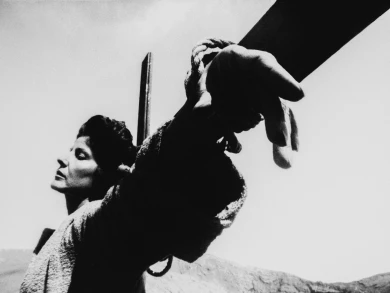
When forms of violence are inflicted on society, film responds from urgency. Images become abstract, sounds fade and the register of dissidence comes from the gut. La zona intertidal (The Intertidal Zone) is an essayistic and poetic approach to the repression of teachers in El Salvador in the 1970s — a teacher studies the biodiversity of the El Salvador coast as a boy finds a body on the same beach. A propósito de la mujer (About Women) interweaves testimonies of misery and rage towards patriarchal structures with fictional scenes of a symbolic procession through a harsh desert.
Both films understand the body as a target of violence and a territory of insurrection, a space where the blood shed by militancy and the patriarchal yoke turn pain into denouncement and existence outside the status quo into an act of political dissidence.
Central American Designation of Origin
Thursday, 18 and 25 June 2026 - 7pm
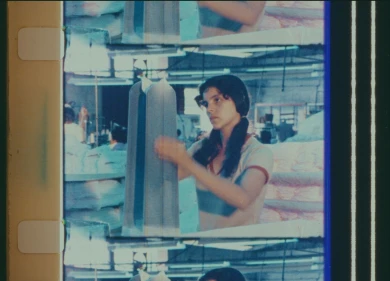
Fertile lands, farmers’ hands, rural faces. This first programme in the series Reframing Banana Imagery understands the foundations of the Central American experience from exploitation, extractivism and displacement, and from the organisation and resistance that emerged as a reaction. The four films within extend from a lyrical documentary on farmers’ solidarity to the playful subversion of the institutional format of the United Fruit Company.
Bananeras (Banana Growers) is a combative portrait of the inhumane conditions of the American banana plantations located in Nicaragua through much of the twentieth century. Costa Rica Banana Republic is a perspicacious satire via an institutional documentary of banana production, spotlighting the extractive nature of this agro-exporting model in the 1970s. Organización Campesina (Farmers’ Organisation) frames rural resistance in Honduras from a direct depiction and lyrical documentary, while Dos veces mujer (Two Times a Woman) dissects the invisibility of the double-shift working day Central American women farmers endure: working in the countryside and working in the home. As a whole, the works here present the earth at once as a wounded body and a space of dignity.

Aesthetics of Peace and Desertion Tactics
8 October 2025 – 24 June 2026
The study group Aesthetics of Peace and Tactics of Desertion: Prefiguring New Pacifisms and Forms of Transitional Justice proposes a rethinking—through both a theoretical-critical and historical-artistic lens—of the intricate network of concepts and practices operating under the notion of pacifism. A term not without contestation and critical tension, pacifism gathers under its name a multiplicity of practices—from anti-militarism and anti-war movements to non-violence activism—while simultaneously opening urgent debates around violence, justice, reparation, and desertion. Here, pacifism is not conceived as a moral doctrine, but as an active form of ethical and political resistance capable of generating aesthetic languages and new positions of social imagination.
Through collective study, the group seeks to update critical debates surrounding the use of violence and non-violence, as well as to explore the conflict of their representation at the core of visual cultures. In a present marked by rearmament, war, genocide, and the collapse of the social contract, this group aims to equip itself with tools to, on one hand, map genealogies and aesthetics of peace—within and beyond the Spanish context—and, on the other, analyze strategies of pacification that have served to neutralize the critical power of peace struggles. Transitional and anti-punitive justice proposals will also be addressed, alongside their intersections with artistic, visual, and cinematic practices. This includes examining historical examples of tribunals and paralegal activisms initiated by artists, and projects where gestures, imaginaries, and vocabularies tied to justice, reparation, memory, and mourning are developed.
It is also crucial to note that the study programme is grounded in ongoing reflection around tactics and concepts drawn, among others, from contemporary and radical Black thought—such as flight, exodus, abolitionism, desertion, and refusal. In other words, strategies and ideas that articulate ways of withdrawing from the mandates of institutions or violent paradigms that must be abandoned or dismantled. From feminist, internationalist, and decolonial perspectives, these concepts have nourished cultural coalitions and positions whose recovery today is urgent in order to prefigure a new pacifism: generative, transformative, and radical.
Aesthetics of Peace and Tactics of Desertion, developed and led by the Museo Reina Sofía’s Studies Management, unfolds through biweekly sessions from October to June. These sessions alternate between theoretical discussions, screenings, work with artworks and archival materials from the Museo’s Collection, reading workshops, and public sessions. The group is structured around sustained methodologies of study, close reading, and collective discussion of thinkers such as Judith Butler, Elsa Dorlin, Juan Albarrán, Rita Segato, Sven Lütticken, Ruth Wilson Gilmore, and Franco “Bifo” Berardi; historical episodes such as the anti-nuclear and anti-arms race movement in Spain; and the work of artists and activists including Rojava Film Commune, Manuel Correa and the Oficina de Investigación Documental (Office for Documentary Investigation), and Jonas Staal, among other initial cases that will expand as the group progresses.

equipoMotor
Jueves alternos, 23 de octubre, 2025 - 11 de junio, 2026 - 17:30 h
El programa equipoMotor regresa en su edición 25-26 con un aire espectral y mutante para lanzar la pregunta: ¿y si el Museo fuera «un poco más Frankenstein»? Inspirándose en dicho monstruo y en todas aquellas criaturas que desafían la norma desde los márgenes, el proyecto de mediación cultural Galaxxia diseña y acompaña una edición incisiva, intergeneracional y descentralizadora, donde saberes invisibilizados, cuerpos raros y deseos molestos se entrelazan para generar nuevas formas de imaginación crítica y radical. En los sótanos y corredores del Museo —un particular laboratorio— las dudas no se esconden: son materia prima.
Así, para este curso el equipoMotor convoca a personas de todas las edades que hayan participado en ediciones anteriores de los distintos equipos del Área de Educación a recorrer el Museo como quien manipula un cuerpo abierto: descoyuntando algunas de sus categorías teóricas y artísticas —la necropolítica, lo crip-cuir, la lucha de clases, las políticas del malestar, la decolonialidad, la temporalidad cuir, la descentralización institucional o el feísmo— para articular un relato díscolo, remendado y palpitante.
El programa se estructura en bloques temáticos sobre lo freak como metodología, el trabajo cultural, la intergeneracionalidad y la diversidad territorial. Cada bloque a su vez se despliega en sesiones que combinan disparadores teóricos y estéticos, visitas a exposiciones y espacios liminales del Museo, talleres artísticos con artistas, ejercicios de curaduría audiovisual colectiva y de relatoría radiofónica, así como instancias de activación pública, mediante proyecciones de cine experimental y coloquios compartidos con el público, en complicidad con el archivo Hamaca y el Área de Cine y Nuevos Medios del Museo.
De este modo, la presente edición incorpora una particularidad: el grupo de participantes irá transformándose en un «colectivo curatorial audiovisual temporalmente autónomo», con capacidad de incidir en la programación del Museo y de abrir la conversación de equipoMotor al público general, cuestionando y expandiendo así los límites entre las cabezas que deciden, las manos que producen y los cuerpos y presencias que habitan la institución. Las personas seleccionadas en la modalidad oyente serán invitadas a las proyecciones públicas, así como a otras activaciones y momentos de apertura del equipoMotor.
Frente al relato de un museo homogéneo, pulcro y lineal, apostamos por un Museo disidente, contradictorio y lleno de vida residual. Un Museo que no tema hacerse preguntas incómodas ni mostrar sus cicatrices. equipoMotor. Un poco más Frankenstein no busca repensar el cuerpo de la institución, sino habitarlo en sus desgarros, tal como es: híbrido, inacabado, infecto, fantasmagórico… y cargado de esporas y chispas por venir.