Critical Thinking Gatherings
International Solidarity with Palestine
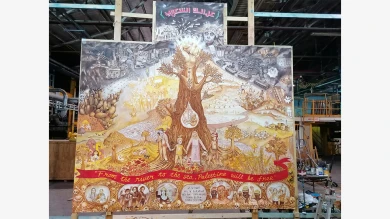
The collectives The Kitchen, Globe Aroma, Learning Palestine, Subversive Film and The Question of Funding, عدالة الشعوب Adalet El Sho’ob / People’s Justice, work in progress, Java, Indonesia, May 2024. Photograph: Taring Padi
Date and time
Held on 8 May - 30 September 2024 - Check programme
The emergency situation afflicting Gaza since October 2023 has induced the Museo Reina Sofía, in collaboration with TEJA. The Network of Cultural Spaces in Support of Emergency Situations, to organise a special programme in solidarity with Palestine and as a call for the end of the war and genocide in the Mashriq region.
Through art, this programme looks to create collective spaces of critical thought on today’s complex geopolitical stage, in addition to supporting Palestinian artists and curators with a view to connecting their struggles and experiences with networks of international solidarity.
The programme assembles a variety of formats and initiatives which offer different perspectives and are developed at different points through lectures, conversations, encounters with Palestinian artists, podcasts, a publication by the museum confederation L’Internationale, and the sixth edition of the Neighbourhood Picnic, all of which unites to demand the end of the war in Gaza, and all wars that threaten lives. Furthermore, the programme resonates in two works which have recently been incorporated into the Museo Reina Sofía Collection and which explore the past and present of the war in Palestine: Amos Gitai’s Chronique d’un assasinat (artist donation, 2022) and At Those Terrifying Frontiers Where the Existence and Disappearance of People Fade Into Each Other, by Basel Abbas and Ruanne Abou-Rahme (donation by Mercedes Vilardell, 2024).
Activities
-
Wednesday, 8 May 2024 Nouvel Building, Auditorium 200, and online platform
Palestine Is the Measure of Our Capacity to Change the World
Lecture by Françoise Vergès
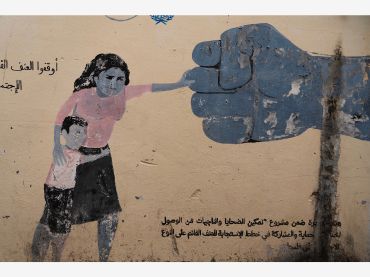
Online platformFeminist and anti-racist political scientist Françoise Vergès gives a lecture on the relationship between the massacre of the Palestinian people and the history of Western democracies built on colonialism, and thus on the genocide of indigenous peoples, extraction, exploitation and destruction of the environment. Vergès analyses how, along with other peoples from the Congo, Sudan, Kashmir and those territories struggling for freedom and decolonialisation, Palestine represents an example of resistance to the global reactionism shaped by the extreme militarisation, dehumanisation and absolutist and authoritarian thinking that perpetuates colonial domination.
-
Thursday, 16 May 2024 Nouvel Building, Auditorium 200, and online platform
Situated Voices 31
Voices for Palestine against the World’s Militarisation
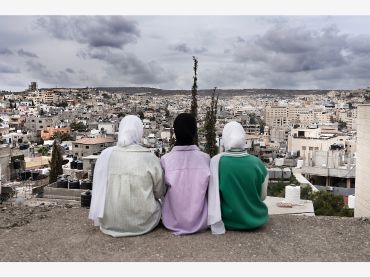
Online platformThe assembly of Museo Situado, made up of social collectives from the Lavapiés neighbourhood in Madrid, in which the Museo Reina Sofía also participates, devotes this thirty-first edition of Situated Voices to thinking collectively, from this context, about the forms of opposition to the war in Gaza — and all wars — as well as strategies of support and solidarity with the Palestinian people. The current context of militarisation and global fear, intensified in recent years by the Russian invasion of Ukraine, raises the question of how we can organise against world destruction. In this session, Museo Situado assembles different voices to hear their analyses and political practices and thereby contribute to collectively building a future of justice, reparation and peace in Palestine and around the world.
-
Wednesday, 5 June 2024 Nouvel Building, Auditorium 200, online platform and Sabatini Building, Protocol Room
Palestine Is Everywhere
Encounter and Screening
Tickets— Conducted by Amin Husain, Nitasha Dhillon (Decolonize This Place), Marina Garcés and Massimiliano Mollona (Institute of Radical Imagination)
This session features the presentation of the global project Palestine is Everywhere, centred on the actions of activists who, from different places in the world, aim to spotlight the oppression of the Palestinian people and their struggle for freedom. The presentation, conducted by Amin Husain and Nitasha Dhillon from the Decolonize This Place (DTP) movement, philosopher Marina Garcés, and Massimiliano Mollona, from the Institute of Radical Imagination (IRI), is made up of a round-table discussion and the screening of different video extracts with interventions from renowned theorists and artists, before closing with a streamed poetic reading by Palestinian writer and lecturer Ibrahim Nasrallah.

-
Saturday, 8 June 2024 Sabatini Building, Garden
Neighbourhood Picnic
Now in its sixth edition, the Neighbourhood Picnic returns to turn the Museo Reina Sofía Garden into a space of encounter, enjoyment and resistance by and for all residents from Madrid’s Lavapiés neighbourhood. This year, given the emergency situation in Palestine, the Museo Situado assembly sets forth a performance action that condemns the war in Gaza and a discussion with feminist philosopher Silvia Federici.
-
Monday, 24 June 2024 Nouvel Building, Auditorium 200, and online platform
Narratives from Palestine
Screening and Discussion with the Artists Shuruq Harb and Lara Salous
Online platformThis encounter welcomes screenings of films by Shuruq Harb (Ramallah, 1980), Shereen Abdel-Karim Hassanein (Gaza City, 1996) and Lara Salous (Ramallah, 1988), three Palestinian multidisciplinary artists that are part of the Tadafuq project, which provides artistic training and mentoring online for Palestinian creatives from the Gaza Strip, the West Bank and Jerusalem. The initiative has been developed by artist and curator Nicolás Combarro since 2020.
Alongside the film screenings is a conversation between Harb and Salous, accompanied by Sara Buraya Boned (Museo Reina Sofía), as they reflect on their experience as Palestinian women artists from a feminist perspective, exploring the possibilities of disseminating the Palestinian cause through their art-making, work which is punctuated by their ideas, desires and personal hopes.

Collection
-
Until 30 Septembre, 2024 Sabatini Building, Floor 0, Protocol Room
At Those Terrifying Frontiers Where the Existence and Disappearance of People Fade Into Each Other
Basel Abbas and Ruanne Abou-Rahme
The audiovisual piece by Basel Abbas and Ruanne Abou-Rahme, entitled At Those Terrifying Frontiers Where the Existence and Disappearance of People Fade Into Each Other, spotlights the violence implicit in the construction of images and the position facing people considered illegal, disposable and invisible, not only in Palestine but also in broader political and social contexts, at those terrifying frontiers where the existence and disappearance of people fade into each other. The work, eleven minutes in length, combines three visual elements which overlap to form layers of information: night-time images of the wall that runs along the Gaza Strip, digital images of avatars and a reflective text by the artists. The work was donated to the Museo Reina Sofía Collection by Mercedes Vilardell in 2024.
-
Until 1 July, 2024
Chroniques d’un assasinat
Amos Gitai
The installation Chroniques d’un assasinat (Chronicles of an Assassination, 2021), donated to the Museo in 2022 by its creator, the artist Amos Gitai, focuses on the assassination of Israel’s Prime Minister Yitzhak Rabin in 1995, which shocked the world and brought the peace plans to end the Israeli-Palestinian conflict to a standstill. This major event also impacted the artist, who turned it into one of the main threads in his work. Chroniques d’un assasinat sets forth a spatial journey around pertinent scenes from Rabin, the Last Day (2015) by way of fourteen panels and seven sound documents. Using collage, akin to a film montage, Gitai combines archive documents, press images and stills which intervene to dissect the context of a tragic moment that changed the history of the Middle East.
Publications
-
Online publication
Towards Collective Study in Times of Emergency
L’Internationale Online Editorial Board
Since the start of the war in Gaza in October 2023, the museum confederation L’Internationale, of which the Museo Reina Sofía is part, has supported and organised a series of actions that include residencies for Palestinian artists and specific, conflict-related programmes. Among these initiatives is the digital publication Towards Collective Study in Times of Emergency, published by the L’Internationale Online Editorial Board, which contains interventions by Learning Palestine Group, Radio Alhara, Lara Khaldi and Yazan Khalili, Rana Issa, Françoise Vergès, Bojana Piškur, Mick Wilson, Ovidiu Tichindeleanu, The Free Palestine Iniciative Croatia and Baqiya and Yu’ad. The publication is part of the Critical Media Alliances activity within the Museum of the Commons programme.
Radio RRS
-
Podcast
Meira Asher
TANSIK تنسيق
Listen to podcastTansik (تنسيق) means “coordination” in Arabic. Picking olives in zones of the West Bank under Israeli military control requires “coordination” with the Israeli army, yet the real purpose of such “coordination” is to make harvesting problematic and cause damage. During October and November in 2019, Meira Asher, a composer, performer and human rights activist, joined her friends Kalef and Walid to harvest olives in the town of Kufr Qaddum. This podcast, commissioned by the Museo Reina Sofía, witnesses Asher document the situation via interviews and her own experience.
-
Podcast
Heba Y. Amin
The General's Stork
Listen to podcastIn 2013, the Egyptian authorities withheld a stork migrating from Hungary to Israel due to an electronic device that was attached to its back. The suspicion was espionage. The podcast The General’s Stork (2018), by Egyptian artist and lecturer Heba Y. Amin, explores the historical accounts of biblical prophecies, colonial narrations, and the politics of war technology from a bird’s-eye view. When the war started to be dictated by technological needs, conquering the sky turned Western armed conflicts into a high-tech armed spectacle. Since then, technological aesthetics have been intrinsically linked to the image of the Middle East, and the language of occupation and colonisation translated into the vision of the landscape at war as a topographic study, a kind of aerial cartography of bombing and drones.
Museo Tentacular Networks
-
Network
TEJA. The Network of Cultural Spaces in Support of Emergency Situations
Made up of seventeen culture organisations from Spain, among them the Museo Reina Sofía, TEJA came into being after the Russian invasion of Ukraine and going forward it offers artist residencies, accommodation, support and legal counsel to artists and culture professionals affected by armed conflicts, political repression and other emergency situations. Today, the Museo supports Palestinian artists Motasem Siam, Lara Salous and Shuruq Harb by way of public presentations and activations, advocating their contact with artistic communities and networks from the institution and the city of Madrid.
![Shuruq Harb. The Jump [El salto], Palestina, 2021. Cortesía de la artista](https://recursos.museoreinasofia.es/styles/small_landscape/public/Actividades/narrativas_desde_palestina._una_poetica_del_territorio_0.jpg.webp)
Más actividades
Files of Tropical Revolutions
Sábado 20 y 27 de junio, 2026 - 19:00 H
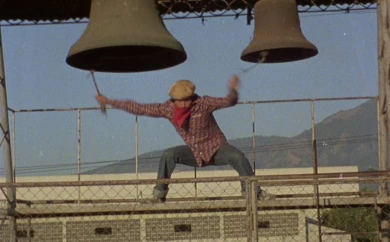
The Reframing Banana Imagery series concludes with two works that condense the height and twilight of this period in history, epic sagas that cross borders and registers to embody experiences of armed struggle in the region. Cameras mix with firearms, borders between nations blur and patience reaches breaking point. This is where the tipping point lies, where the bloodshed weighs heavy and the murmurings of regional brotherhood are buried in the ground again.
Pan y dignidad (Carta abierta de Nicaragua) [Bread and Dignity (An Open Letter to Nicaragua)] recounts the historical records and process of national reconstruction in Nicaragua via the Sandinista popular uprising. Historias prohibidas de Pulgarcito (Forbidden Tales of Tom Thumb) places the camera at the heart of the El Salvador revolutionary struggle, interspersing testimonies of daily violence with the verses of the poet Roque Dalton.
Both works understand the armed revolution as an open file under construction. The insurgent brotherhood, although dissolved, still resounds in regional history.
Circling Over Exploited Bodies
Friday, 19 and 26 June 2026 - 7pm
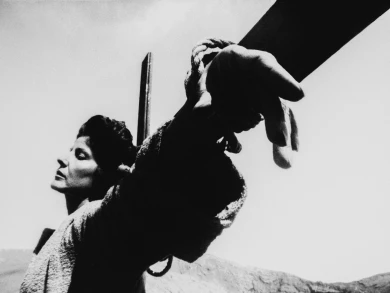
When forms of violence are inflicted on society, film responds from urgency. Images become abstract, sounds fade and the register of dissidence comes from the gut. La zona intertidal (The Intertidal Zone) is an essayistic and poetic approach to the repression of teachers in El Salvador in the 1970s — a teacher studies the biodiversity of the El Salvador coast as a boy finds a body on the same beach. A propósito de la mujer (About Women) interweaves testimonies of misery and rage towards patriarchal structures with fictional scenes of a symbolic procession through a harsh desert.
Both films understand the body as a target of violence and a territory of insurrection, a space where the blood shed by militancy and the patriarchal yoke turn pain into denouncement and existence outside the status quo into an act of political dissidence.
Central American Designation of Origin
Thursday, 18 and 25 June 2026 - 7pm
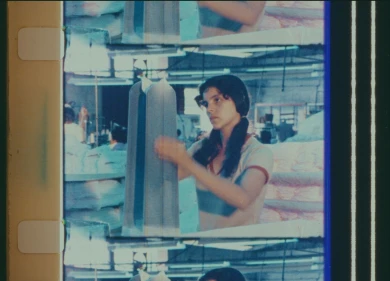
Fertile lands, farmers’ hands, rural faces. This first programme in the series Reframing Banana Imagery understands the foundations of the Central American experience from exploitation, extractivism and displacement, and from the organisation and resistance that emerged as a reaction. The four films within extend from a lyrical documentary on farmers’ solidarity to the playful subversion of the institutional format of the United Fruit Company.
Bananeras (Banana Growers) is a combative portrait of the inhumane conditions of the American banana plantations located in Nicaragua through much of the twentieth century. Costa Rica Banana Republic is a perspicacious satire via an institutional documentary of banana production, spotlighting the extractive nature of this agro-exporting model in the 1970s. Organización Campesina (Farmers’ Organisation) frames rural resistance in Honduras from a direct depiction and lyrical documentary, while Dos veces mujer (Two Times a Woman) dissects the invisibility of the double-shift working day Central American women farmers endure: working in the countryside and working in the home. As a whole, the works here present the earth at once as a wounded body and a space of dignity.

Aesthetics of Peace and Desertion Tactics
8 October 2025 – 24 June 2026
The study group Aesthetics of Peace and Tactics of Desertion: Prefiguring New Pacifisms and Forms of Transitional Justice proposes a rethinking—through both a theoretical-critical and historical-artistic lens—of the intricate network of concepts and practices operating under the notion of pacifism. A term not without contestation and critical tension, pacifism gathers under its name a multiplicity of practices—from anti-militarism and anti-war movements to non-violence activism—while simultaneously opening urgent debates around violence, justice, reparation, and desertion. Here, pacifism is not conceived as a moral doctrine, but as an active form of ethical and political resistance capable of generating aesthetic languages and new positions of social imagination.
Through collective study, the group seeks to update critical debates surrounding the use of violence and non-violence, as well as to explore the conflict of their representation at the core of visual cultures. In a present marked by rearmament, war, genocide, and the collapse of the social contract, this group aims to equip itself with tools to, on one hand, map genealogies and aesthetics of peace—within and beyond the Spanish context—and, on the other, analyze strategies of pacification that have served to neutralize the critical power of peace struggles. Transitional and anti-punitive justice proposals will also be addressed, alongside their intersections with artistic, visual, and cinematic practices. This includes examining historical examples of tribunals and paralegal activisms initiated by artists, and projects where gestures, imaginaries, and vocabularies tied to justice, reparation, memory, and mourning are developed.
It is also crucial to note that the study programme is grounded in ongoing reflection around tactics and concepts drawn, among others, from contemporary and radical Black thought—such as flight, exodus, abolitionism, desertion, and refusal. In other words, strategies and ideas that articulate ways of withdrawing from the mandates of institutions or violent paradigms that must be abandoned or dismantled. From feminist, internationalist, and decolonial perspectives, these concepts have nourished cultural coalitions and positions whose recovery today is urgent in order to prefigure a new pacifism: generative, transformative, and radical.
Aesthetics of Peace and Tactics of Desertion, developed and led by the Museo Reina Sofía’s Studies Management, unfolds through biweekly sessions from October to June. These sessions alternate between theoretical discussions, screenings, work with artworks and archival materials from the Museo’s Collection, reading workshops, and public sessions. The group is structured around sustained methodologies of study, close reading, and collective discussion of thinkers such as Judith Butler, Elsa Dorlin, Juan Albarrán, Rita Segato, Sven Lütticken, Ruth Wilson Gilmore, and Franco “Bifo” Berardi; historical episodes such as the anti-nuclear and anti-arms race movement in Spain; and the work of artists and activists including Rojava Film Commune, Manuel Correa and the Oficina de Investigación Documental (Office for Documentary Investigation), and Jonas Staal, among other initial cases that will expand as the group progresses.
equipoMotor
Jueves alternos, 23 de octubre, 2025 - 11 de junio, 2026 - 17:30 h
El programa equipoMotor regresa en su edición 25-26 con un aire espectral y mutante para lanzar la pregunta: ¿y si el Museo fuera «un poco más Frankenstein»? Inspirándose en dicho monstruo y en todas aquellas criaturas que desafían la norma desde los márgenes, el proyecto de mediación cultural Galaxxia diseña y acompaña una edición incisiva, intergeneracional y descentralizadora, donde saberes invisibilizados, cuerpos raros y deseos molestos se entrelazan para generar nuevas formas de imaginación crítica y radical. En los sótanos y corredores del Museo —un particular laboratorio— las dudas no se esconden: son materia prima.
Así, para este curso el equipoMotor convoca a personas de todas las edades que hayan participado en ediciones anteriores de los distintos equipos del Área de Educación a recorrer el Museo como quien manipula un cuerpo abierto: descoyuntando algunas de sus categorías teóricas y artísticas —la necropolítica, lo crip-cuir, la lucha de clases, las políticas del malestar, la decolonialidad, la temporalidad cuir, la descentralización institucional o el feísmo— para articular un relato díscolo, remendado y palpitante.
El programa se estructura en bloques temáticos sobre lo freak como metodología, el trabajo cultural, la intergeneracionalidad y la diversidad territorial. Cada bloque a su vez se despliega en sesiones que combinan disparadores teóricos y estéticos, visitas a exposiciones y espacios liminales del Museo, talleres artísticos con artistas, ejercicios de curaduría audiovisual colectiva y de relatoría radiofónica, así como instancias de activación pública, mediante proyecciones de cine experimental y coloquios compartidos con el público, en complicidad con el archivo Hamaca y el Área de Cine y Nuevos Medios del Museo.
De este modo, la presente edición incorpora una particularidad: el grupo de participantes irá transformándose en un «colectivo curatorial audiovisual temporalmente autónomo», con capacidad de incidir en la programación del Museo y de abrir la conversación de equipoMotor al público general, cuestionando y expandiendo así los límites entre las cabezas que deciden, las manos que producen y los cuerpos y presencias que habitan la institución. Las personas seleccionadas en la modalidad oyente serán invitadas a las proyecciones públicas, así como a otras activaciones y momentos de apertura del equipoMotor.
Frente al relato de un museo homogéneo, pulcro y lineal, apostamos por un Museo disidente, contradictorio y lleno de vida residual. Un Museo que no tema hacerse preguntas incómodas ni mostrar sus cicatrices. equipoMotor. Un poco más Frankenstein no busca repensar el cuerpo de la institución, sino habitarlo en sus desgarros, tal como es: híbrido, inacabado, infecto, fantasmagórico… y cargado de esporas y chispas por venir.