-
December 11, 2015 Nouvel Building, Protocol Room
Presentation of the archive participants
Moderator: Marisa Pérez Colina (Fundación de los Comunes)
Those interested in attending must register beforehand at: centrodeestudios@museoreinasofia.es
-
December 11, 2015 Nouvel Building, Auditorium 200
Conferences
Nancy Kranich. Reclaiming the Commons: Countering Enclosure of our Archival Heritage [30 min]
Digital technologies offer unprecedented possibilities for human creativity, global communication, innovation, and access to information and knowledge. Yet these same technologies also provide new opportunities to control—or enclose— intellectual products, threatening to erode political discourse, scientific inquiry, free speech, and the creativity needed for healthy democratic discourse. To counter such enclosure, scholars, technologists, and research institutions are working together to develop information commons that promise new models for stimulating innovation, fostering creativity, and building a movement that embodies knowledge as a shared resource.
Librarians and archivists have spearheaded this movement to counter enclosure of information commons by not only opposing access controls but also developing and adopting new, exciting approaches to sharing information and advancing knowledge. They are developing new structures that promote more open access to information resources across collections, platforms and repositories. Through these efforts, they are harnessing the power and potential of technology to democratize access, thereby realizing both the metaphor and reality of information commons. To move forward, a multidisciplinary collaborative effort is needed to advance information commons that adopt open standards and collaborative governance structures in order to enable sustainable global resource sharing in the 21st century.
Ariella Azoulay. Procedurally Speaking: No Archives of the Common Without Trans-Border Restitution [30 min]
With the creation of state archives, we have been made foreign, often untrusted guests to the archives. Performing our right to these archives is one way to demonstrate that archives are not about the past but about the common. Under five centuries old imperial condition, this right can practically be performed mainly by citizens or residents of sovereign states. It can hardly be practiced by people living in formerly colonized countries in which, during centuries of imperial rule, cultural treasures were looted and expropriated, and much of this plunder was transferred and continued to be stored and displayed in archives and museums of the former imperial powers. Under the imperial condition, the dispossession of those people from their art objects and cultural infrastructures and from archival documents they have right to use, has been followed by system of borders and fences that deprive former colonized subjects from access to the sites where these treasures are stored. Under this condition, a claim to have archives of the commons, should be inseparable from the claim to restitute portions of these archives to the countries where the looting, plunder, and expropriation took place.
Break
Jorge Reina Schement. Meeting the Challenge of Meaningful Access: Connectivity, Capability, Content, and Context [30 min]
Digital technologies offer unprecedented opportunities to share information in new and expanded ways. But making information available in any given format will not, by itself, guarantee meaningful access, especially for those groups lacking or not familiar with the technologies of access necessary to retrieve the information. A community must marshal resources to make the most of the potential offered by access. For communities to exploit the benefits of access, they must mobilize connectivity, capability, content, and context—the 4C's of access.
By conceptualizing the Internet as a pluralistic domain that includes the broader context in which technical components are embedded, we explicitly connect social with technical to conceptualize the Internet as an interdependent, socio-technical network. In so doing, we emphasize the importance of context in determining community-level interventions, as well as recognize the inherent difficulty in developing “best practices” that can be applied validly across diverse settings. Thus, the goal of connectivity, which is at the heart of most policies aimed at increasing access and, represents but a small first step toward functional access and empowerment. Capability, content, and context must be woven into any strategy seeking to achieve a better informational future for all.
William Gambetta. Archives of movement: between cultural reflection and social unrest [30 min]
If memory is a way of building social domination in the field of the imaginary and the symbolic, then the archive of movements, which has played a vital role in history but has also been defeated as a political actor capable of organising the prevalent institutionalism in production and its conservation, must operate with diverse constructed logics. These are defined and implemented in the specific conditions in which this dispute is disentangled by a sense of past and present. In these times of marked social unrest, of vast technological innovations and intense mutations in social actors’ political subjectivity, the archive of movements becomes a greater problem in inventing the future in terms of collective action and the activation of social energy. Therefore, this memory of movements is paramount to debating the possible lines of action aimed at inventing other forms of institutional, social and political organisation and other models of co-existence and human relationality.
The task of archives of movements is to keep spaces for reflection and social constitution open - these have been historically opened in order to use the repository of experience in the debate on the possible directions of social transformation in the present. The activation of these repositories of experience has ties to cartography, commitment and the accessibility of the materials, narratives and micro-histories belonging to those involved in their existence. The fragmentary nature and dispersion of movements have not historically implied either a lack of coherence or intelligibility in contributions to social transformation; thus the archive of movements represents a basic mechanism of social constitution today.
Question and answer session
-
December 12, 2015 Nouvel Building, Protocol Room
Workshop Sessions
Archive policies and forms of institution
10:00 - 12:00 a.m.
Moderator: Mela Dávila (Museo Reina Sofía)
The archives of the commons must be imagined beyond the principles of exclusive and identity heritage, simultaneously combining the reality of being founded in local and politically positioned experience and the chance to be appropriated, activated and distributed in different modes, without its value being spuriously perverted. Accordingly, it must redefine its institutional structure and conceptual architecture, adapting to this collective, conceivable, open and variable nature.
Archive economies
12:30 - 2:30 p.m.
Moderator: Mabel Tapia (Red Conceptualismos del Sur)
The State has traditionally been the guarantor of material continuity and the archive economy, with this presence one of its defining characteristics. The archives of the commons is based on the withdrawal of this guarantee, yet it also has to search for logics of continuity and dissemination in a context of institutional instability, economic insecurity and the discontinuity of the specific agents it is founded upon.
Techno-political mechanisms of the common archive
4:30 - 6:30 p.m.
Moderator: Roxu Álvarez (Fundación de los Comunes)
Technological forms of archive cannot be separated from their political dimension; the Internet has become an archive in one of the central battlefields in contemporary societies. The generation of technological devices enabling exposure, hybrid and changeable taxonomies, and their collective production, as well as universal access, is a condition of possibility for the archives of the commons.
-
December 12, 2015 Nouvel Building, Auditorium 200
Round-table Discussion. The future of memory and the expropriation of the political sense of the present
Participants: Nancy Kranich, Ariella Azoulay, Jorge Reina Schement, William Gambetta and representants of the archives participants
Moderator: Carlos Prieto del Campo (Museo Reina Sofía)
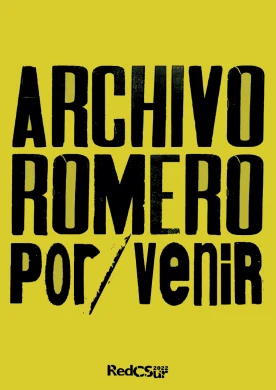
Archives of the commons
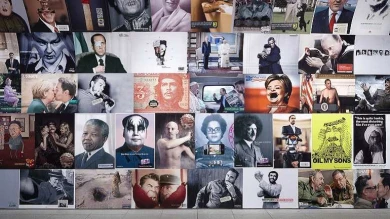
Held on 11, 12 Dec 2015
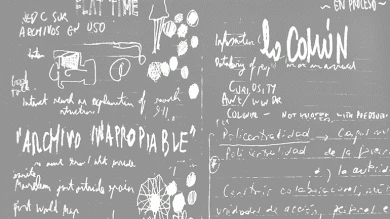
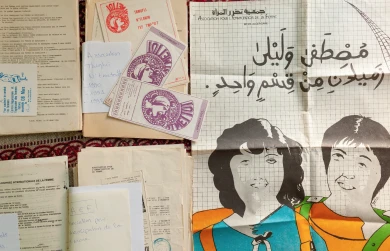
In this seminar, Fundación de los Comunes, Red de Conceptualismos del Sur and Museo Reina Sofía put forward a reflection on issues of social, cultural and political memory through the work of archives that guard, transmit and produce public memory generated by the current forms of social action conservation, which also shuts out major parts of collective experience from dominant discourse. This line of research into the archive and memory of subordinate and dominant groups sets forth a powerful line of reflection on new political rights and the new characteristics of a genuinely democratic sphere that is currently traversed by a multifactorial sense of crisis with far-reaching effects on the types of collective behaviour in our societies.
Archives of the commons shines a spotlight on these debates and lines of work in an international seminar organised into tables for discussion and public presentations. It is structured around three core principles of reflection: the archive models and institutional forms that make it possible, laying out a broad cartography of repository initiatives created between the 1970s and the present day; the economies of archive and the methods and protocols that ensure its dissemination and sustainability; the possible techno-political tools for undertaking its organisation, conceived as instruments that guarantee exposure, dynamic taxonomies and universal access, an indispensable condition of common archives. Therefore, the seminar will address institutional, technological and economic models that promote the different archives brought together, transversally debating these divergent records of experience and thought via the synthesis of the local and international, the individual and the collective.
With support from the Foundation for Arts Initiatives (FfAI)
Organised by
Museo Reina Sofía, Fundación de los Comunes and Red Conceptualismos del Sur
With the support of

Más actividades
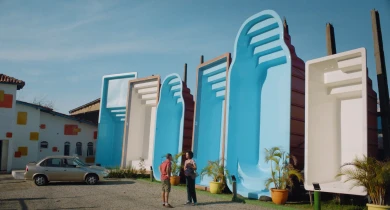
Dominga Sotomayor. Debajo and Thais Fujinaga. A Felicidade das Coisas
Friday 14 August 2026
Two gems, from two new voices in Latin American cinema, which swing between families, swimming pools, reencounters and status. In Debajo, a short film on youth by Chilean director Dominga Sotomayor, an abstract yet powerful bird’s-eye view of a swimming pool co-exists with the relationships of a crisis-stricken family, gathered to see an eclipse. Sotomayor’s distinctive film-making of care and affects shares a similar space to the daily naturalism of Thais Fujinaga’s A Felicidade das Coisas. In the director’s first feature film, the swimming pool is not a horizontal basin for swimmers’ immersion; rather it is a huge vertical monolith, a kind of an anti-monument, anchored in the garden of a middle-class family. The film conveys the efforts and challenges of a mother of two children to build a swimming pool in their modest summer house, a mother who, alone, comes up against a hypermasculine world. Equally, the film speaks of family love, and the search for status, with the swimming pool a languishing totem of the Brazilian middle class during the years of Bolsonarism.
![Blake Edwards, The Party [El guateque], 1968, película](https://recursos.museoreinasofia.es/styles/small_landscape/public/Actividades/ciclocine-piscinas-14.jpg.webp)
Blake Edwards. The Party
Saturday, 15 August 2026
In The Party, actor Hrundi V. Bakshi (Peter Sellers) is mistakenly invited to a glamorous dinner party in Hollywood. His curiosity and two left feet lead to one funny mishap after the other. During the soiree he consoles Michèle, a young actress who has been fired by her producer, and the chaos gathers momentum when Bakshi accidentally opens a retractable floor, making the guests fall into a swimming pool. A small hippie-style elephant gatecrashes the party, brought by a group of young people, and Bakshi asks the guests to wash the elephant as it is a sacred animal in his country. The house fills with soap suds, culminating in a wackily chaotic party.
When Stanley Kubrick was once asked who Peter Sellers was, he replied: “There is no such person as Peter Sellers”. The Party is one of the most widely recognised comedies in the history of film, its director Blake Edwards and the English actor making an entertaining critique of a fading conservative society. The cultural revolutions of the 1960s fit into the container of a choppy swimming pool: people from high society, an elephant, a Russian ballet, waiters, beatnik youth… similar to Sellers’s own identity: an empty vessel that can be refilled. In the film, Edwards tapped into the ingenious actor’s innate improvisation and the swimming pool as a container for revolutionary intent.
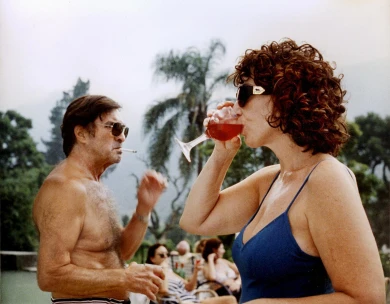
Lucrecia Martel. La ciénaga (The Swamp)
Viernes 21 de agosto, 2026
A couple of families spend the summer in a country cottage. The relationship between them exposes a crisis. The alcoholism of Mecha (Graciela Borges) and Gregorio (Martín Adjemián) becomes clear, leading to a drift in the education of their children and impacting relationships of respect and affect. Weariness expresses the lackadaisical environment.
In La ciénaga Lucrecia Martel approaches the decadence of a middle-class Argentinian family. The pool of dirty, stagnant water reflects the economic and social collapse of a whole country, yet reflects more than economic crisis as it becomes a murky well feeding off the pain of those living in the house. An erstwhile space of joy, the swimming pool becomes a reflection of adult depression, resulting in apathy. And the children, especially the girls, seem to be the only people awake in this drift. Barring a flicker of unawareness, the young people immerse themselves in rainwater or the water from the river, in water that flows, but are cautious of getting too close to the swimming pool.
![Yorgos Lanthimos, Kynodontas [Canino], 2009, película](https://recursos.museoreinasofia.es/styles/small_landscape/public/Actividades/ciclocine-piscinas-16_00.jpg.webp)
Yorgos Lanthimos. Dogtooth
Saturday, 22 August 2026
A couple with three adult children live in a modern country cottage. A large swimming pool takes centre stage in a sizeable garden. The property is skirted by a large fence that blocks a view of the outside. Here, the father has educated his children without outside contact, maintaining their belief in a false world: aeroplanes fall in the garden like toys and they must act like dogs to defend themselves from the ferocious cats that surround the house. The promise of going out into the world when they lose their dogtooth is proof of their maturity.
Lanthimos builds a world that is surreal, comical and terrible. The swimming pool is the house’s central element, a limited, controlled space assimilated like the sea, yet under the father’s supervision. A space of imagination, but with sinister intentions: the children are indoctrinated under the water as they believe in a better world. Far from reality. The swimming pool’s limits are the limits of their freedom, a false state of well-being expressed in the weightless bodies in the water. The liquid element is an analgesic magma with the power to educate offspring under the latent fear of a shark bite.
![Binka Zhelyazkova, Baseynat [La piscina], 1977, película](https://recursos.museoreinasofia.es/styles/small_landscape/public/Actividades/ciclocine-piscinas-17_00.png.webp)
Binka Zhelyazkova. The Swimming Pool
Viernes 28 de agosto, 2026
The young, bright Bella (Yanina Kasheva), after unforeseen heartbreak at her graduation party, meets Apostol (Kosta Tsonev), a reserved architect, and Boyan (Kliment Denchev), a comedy actor who is cynical about his country. The three characters climb up to a diving board in a municipal swimming pool, where they begin a strange relationship of friendship, love and despair which reflects a generational clash.
Binka Zhelyazkova, the great enfant terrible of Eastern European cinema, critic of the communist system and widely acclaimed film-maker beyond Bulgarian borders, made in The Swimming Pool a masterly metaphor for a country in decline. The public pool symbolises a closed, immovable enclosure where society is festering. From the height of a diving board she sees, in a panoptic view, the different generations living underneath a limited space. On one side, older people attempt to preserve the old revolutionary spirit with constant collective swimming exercises while, on the other, young people don’t hide the desire for freedom that remains unrealised. The result is an ideological clash in how to act and move in the enclosure, unearthing vast hypocrisy in the lost ideals of socialism, reflected in the total apathy of youth. The Swimming Pool for Zhelyazkova is a reflection of the disillusionment and existential void of a whole country and system.