-
9 junio, 2017
Concierto Mini 1
Sven Helbig, director/compositor
Jordi Navarro Martín / directorSven Helbig
Rise, A Tear y EisenhüttenstadtNino Rota
Concerto for strings (Preludio, Scherzo, Aria, Finale)Sven Helbig
Bell Sound Falling Like Snow and Schlaflied -
9 junio, 2017
Concierto Mini 2
Sven Helbig, director/compositor
Jordi Navarro Martín / directorSven Helbig
Am Abend, Gone, Autumn Song
Sing For The Moment, Frost
Zorn and Urban PerfumeSamuel Barber
Adagio for strings -
10 junio, 2017
Concierto Mini 3
Sven Helbig, director/compositor
Miguel Ángel García Cañamero, director CNEJohn Taverner
Funeral IkosKnut Nystedet
LaudateJan Sandström
SanctusSven Helbig
AbenglUhen
L'Infinito
Agnus Dei
Kyrie -
10 junio, 2017
Concierto Mini 4
Sven Helbig, director/compositor
Miguel Ángel García Cañamero, director CNEFrederick Delius
On Craig DduZoltán Kodály
Esti DalEdward Elgar
The Shower, opus 71, núm. 1Sven Helbig
Meernach
Maibaum
Como el Sol

Held on 09, 10 Jun 2017
La Orquesta y Coro Nacionales de España (OCNE) en su objetivo de atraer a nuevos públicos a la música clásica y contemporánea programa los Conciertos Mini en colaboración con el Museo Reina Sofía, que se enmarcan dentro de los eventos especiales de la temporada 2016/2017 de la OCNE.
Cada día se ofrecen dos conciertos, para los que se necesitan entradas independientes. Todas las entradas incluyen, al finalizar, una consumición en el vestíbulo del Auditorio 400 y la asistencia al set de música electrónica.
Organised by
Orquesta y Coro Nacionales de España con la colaboración del Museo Reina Sofía
Más actividades
Dear Felix:
Saturdays at 6pm
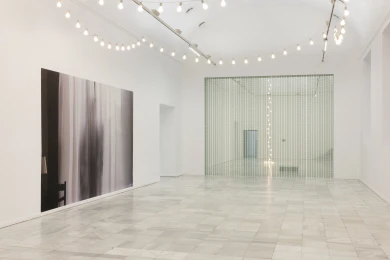
The immediately recognisable art of Felix Gonzalez-Torres, which is on display, from May to October 2026, in the show Sweet Revenge, moves beyond the transmission of messages laden with poetic evocation, vital or biographical reflection, or even a clear political or ethical positioning. Rather, it seeks an active response by visitors to the exhibition. His work invites engagement with these messages so that, whether delighting, moving or challenging, it still prompts viewers to participate in the dialogue and complete the artistic undertaking with their own actions.
Thus, the guided tour Dear Felix: offers a shared, dialogue-inflected tour through the show, with the aim of collectively thinking and feeling the gestures the artist’s work puts forward. Ostensibly simple actions such as crossing through a beaded curtain to take a sweet and eat it, taking a poster from a stack of paper or simply observing a billboard closely, all contain ways of understanding life, loss, love, injustice or the passing — never linear — of time. The tour’s ultimate aim is not to set meanings or create an overload of interpretations of the work, nor does it seek to crystallise an image of the artist and his life in a response to questions which are not there. It looks instead to provide a space to open shared meaning in these apparently simple objects and to attempt a possible correspondence of return from the here and now. A lumbering attempt at responding which starts with a simple Dear Felix:
Files of Tropical Revolutions
Sábado 20 y 27 de junio, 2026 - 19:00 H
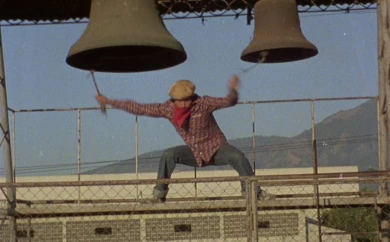
The Reframing Banana Imagery series concludes with two works that condense the height and twilight of this period in history, epic sagas that cross borders and registers to embody experiences of armed struggle in the region. Cameras mix with firearms, borders between nations blur and patience reaches breaking point. This is where the tipping point lies, where the bloodshed weighs heavy and the murmurings of regional brotherhood are buried in the ground again.
Pan y dignidad (Carta abierta de Nicaragua) [Bread and Dignity (An Open Letter to Nicaragua)] recounts the historical records and process of national reconstruction in Nicaragua via the Sandinista popular uprising. Historias prohibidas de Pulgarcito (Forbidden Tales of Tom Thumb) places the camera at the heart of the El Salvador revolutionary struggle, interspersing testimonies of daily violence with the verses of the poet Roque Dalton.
Both works understand the armed revolution as an open file under construction. The insurgent brotherhood, although dissolved, still resounds in regional history.
Circling Over Exploited Bodies
Friday, 19 and 26 June 2026 - 7pm
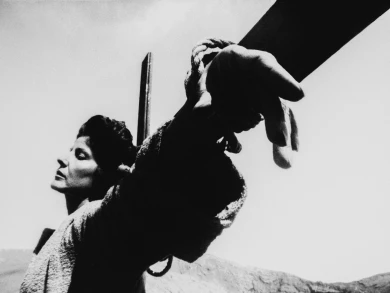
When forms of violence are inflicted on society, film responds from urgency. Images become abstract, sounds fade and the register of dissidence comes from the gut. La zona intertidal (The Intertidal Zone) is an essayistic and poetic approach to the repression of teachers in El Salvador in the 1970s — a teacher studies the biodiversity of the El Salvador coast as a boy finds a body on the same beach. A propósito de la mujer (About Women) interweaves testimonies of misery and rage towards patriarchal structures with fictional scenes of a symbolic procession through a harsh desert.
Both films understand the body as a target of violence and a territory of insurrection, a space where the blood shed by militancy and the patriarchal yoke turn pain into denouncement and existence outside the status quo into an act of political dissidence.
Robert Capa
Friday, 26 June 2026 – 6pm
This international encounter centred on the figure of Robert Capa (Budapest, 1913 — Thai Binh, Vietnam, 1954), one of photojournalism’s pre-eminent figures, is held within the framework of the government initiative Spain and Freedom. Fifty Years and in conjunction with a cluster of three locations — the building on number 10 Calle Peironcely, the Plaza del Fotógrafo Robert Capa and the San Carlos Borromeo Parish in Vallecas — declared as a Place of Democratic Memory.
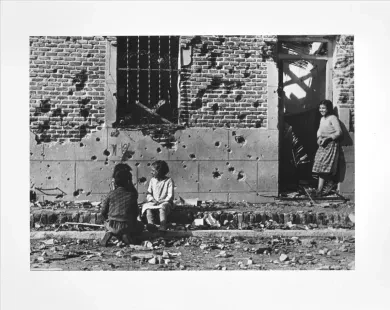
The emblematic photo Robert Capa took in 1936 of this area of Republican Madrid, featuring anonymous children talking in front of a bullet-riddled building attacked by Nazi-fascist air forces, has, in recent years, become a catalyst for impassioned collective action vindicating memory and denouncing the horrors and brutality of wars, past and present.
Within this context, representatives from cultural and academic spheres and civil society organisations from Germany, the USA and Spain discuss the legacy of Capa and photojournalism in European democratic memory, exploring in greater depth two citizen initiatives constructed by Europe from its shared memory: #SalvaPeironcely10 (#SavePeironcely10), in Entrevías (Puente de Vallecas), and the Capa Haus Initiative in the Lindenau neighbourhood of Leipzig, both united by the protection and conservation of historical heritage and by the defence of peace.
The round-table discussion features the participation of Cynthia Young, Juan Miguel Sánchez Vigil, Ulf-Dietrich Brumann and José María Uría Fernández and is moderated by Myriam Soto Lucas. Carmina Gustrán Loscos, the commissioner of Spain and Freedom. Fifty Years, will also join the discussion.
Inclusive Policies and Practices
19, 20 JUN 2026
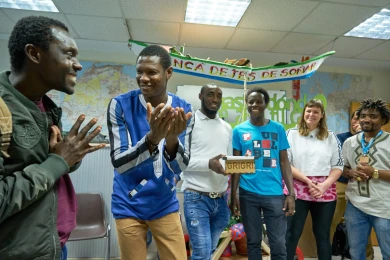
In conjunction with World Refugee Day, which takes place on 20 June 2026, Museo Situado and GRIGRI jointly organise this international encounter to foster the discussions, debates and exchange of practices which uphold solidarity with migrant people in European Union countries.
The programme, conceived as a space of exchange and the collective construction of knowledge, comprises a workshop of collaborative creation, discussions, a community meal and a film forum — activities designed by a local committee made up of young people under the age of thirty from different territories in Europe. The policy recommendations on welcoming people with migrant backgrounds and hospitality in urban contexts that arise from this encounter will be presented in Brussels at the end of 2026.
These sessions are developed within the context of the European cooperation project Bridging Borders and are framed inside the tenth anniversary of the GRIGRI Pixel project.