Lenguaje y escena del arte en Guatemala
Maya Juracán. Inventarnos el camino, hacer la revolución
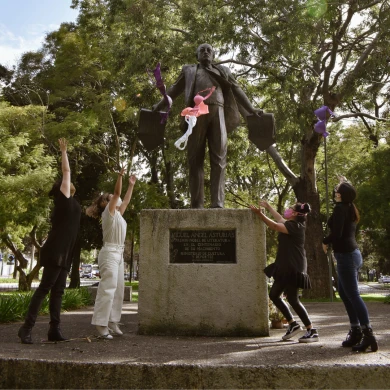
Inventarnos el camino, hacer la revolución es toda una declaración de intenciones de Maya Juracán, la protagonista de esta cápsula perteneciente a la serie Lenguaje y escena del arte en Guatemala. Esta serie, a su vez, forma parte de una tentativa historia oral de las prácticas artísticas centroamericanas que, desde el Instituto Cáder de Arte Centroamericano, estamos intentando trazar. Esta entrevista busca recorrer la trayectoria de Maya en una profesión a la que llegó casi por casualidad: la curaduría.
En un contexto como el guatemalteco, donde hasta hace poco formar parte del mundo del arte podía significar exponerse o ponerse en riesgo, artistas como Regina José Galindo o Aníbal López demostraron que la producción artística puede ser herramienta de resistencia y lucha social. Es entonces cuando, a través de iniciativas como Proyecto 44, Maya Juracán comenzó su trabajo como curadora, en un ejercicio que desbordaría los límites de la propia palabra.
Maya Juracán habla de conceptos como «curaduría en resistencia» y «curaduría comunitaria» que, desde una perspectiva situada, incorporan principios como la noción del poder como herramienta colectiva, propuesta por Hannah Arendt. Maya pretende crear espacios en los que se rompan las estructuras establecidas para imaginar otras nuevas que acojan e integren realidades como las de los pueblos originarios y que partan de la recuperación de la memoria como un ejercicio de justicia. Una tarea especialmente urgente en el caso de Guatemala, cuya historia está profundamente marcada por la guerra y el genocidio. Así, Maya cree en los museos como lugares con capacidad para ensanchar el camino de la lucha social, como espacios de sanación colectiva y de amplificación de voces silenciadas. Desde esta base, también conversamos sobre la escena artística actual de Guatemala, la educación en artes o sobre iniciativas como la Bienal Paiz, donde el arte centroamericano cobra protagonismo.
El arte como herramienta
Creo que llegar a la curaduría o el comisariado no fue un anhelo. O sea, nunca había visto esa carrera en una universidad. No existe en Guatemala y creo que en Centroamérica no existe. Luego Costa Rica tiene algunas visiones, pero la escuela de Guatemala ha estado muy fragmentada, como que tenemos que entender que venimos de un país de genocidio donde los artistas, una generación antes que nosotros, los artistas fueron asesinados, violentados y desaparecidos.
Entonces, nuestra generación de artistas estaba como condicionada específicamente como a nada más la visión estética de los procesos, pero las rabias a veces no se aguantan y el miedo no puede con tanto. Entonces, creo que ahí es donde el arte fue una herramienta cuando se firma la paz, el arte fue una herramienta que los artistas de posguerra empezaron a usar.
Si bien yo no tenía contexto que era de curaduría, sabía muy bien quién era Regina José Galindo, pero en ese tiempo no pensaba que era un artista, pensaba que era una señora que se colgó de un edificio en Guatemala y dijo poesías. Y después conocí a Aníbal López, que decía una frase que creo que cambió mi vida: «Dicen que después de la firma de la paz podemos hacer lo que queramos en el espacio público, sin que nos quiebren el culo. Probemos».
Entonces, creo que esas fueron como mis primeras instancias con la curaduría, pero yo soy profesora, pedagoga de historia y ciencias sociales. Después como que ya me especialicé en historia, pero cuando llego a dar clases al diversificado me doy cuenta de que los libros de historia no tienen la historia del genocidio en Guatemala o no se nombraba como genocidio, se nombraba como el conflicto social, el conflicto político o la guerra civil. Y después tampoco tenía la historia de la Revolución del 44 —que ahí es donde logramos muchas garantías sociales, como el Instituto Guatemalteco de Seguridad Social—, donde la primera vez elige a un presidente con el 85% de votos, que fue Juan José Arévalo. Y, como apasionada de la historia, era muy importante para mí contarles esta historia a mis estudiantes y empecé con la Gloriosa Victoria de Diego Rivera.
Esa pieza tiene a una artista guatemalteca que es Rina Lazo. Ella le cuenta toda la historia a Diego Rivera, Rina Lazo, lo que está pasando en la contrarrevolución: que Estados Unidos inventa —Estados Unidos siempre inventa— una historia de que somos comunistas y que le estamos quitando garantías a la población, estos gobiernos revolucionarios, y se inicia una guerra. Y sacan a los presidentes revolucionarios en sí mismo.
Pero esa pieza, es una pintura, tiene de un lado a los hermanos Dulles (que son John Foster y Allen Dulles), que son los dueños de la bananera en Guatemala; además, uno de ellos trabaja en la CIA. Y está el presidente de turno de Guatemala. Y además cuenta, como en este realismo social, toda la historia de la revolución y la contrarrevolución en Guatemala.
Entonces, yo llevaba esa obra impresa en grande al salón de clases y les contaba a mis alumnos toda esa historia. Después entendí con esa pieza que el arte tenía la capacidad de relatar narrativas e historias y, entonces, le empiezo a pedir a mis compañeros artistas que si pudieran pintar una historia del genocidio en Guatemala o contar una historia de la United Fruit Company en Guatemala. Así, me lleno de un montón de obras al final del semestre, al final del año, muchas obras con la historia de Guatemala; y esa fue mi primera curaduría.
Después, decidimos como hacer una exposición de arte, un grupo de historiadores docentes que se llamaba Proyecto 44. La revolución fue en 1944; entonces, el proyecto era 44, como devolver la memoria. Hicimos dos exposiciones de esas y nos dimos cuenta de que le estábamos predicando a la gente ya convertida. O sea, siempre llegaban aficionados de la revolución, y llegaban y dijimos: «Bueno, hay algo malo aquí, porque estamos hablando con la misma gente a la que ya les interesa», y decidimos: «Y, ¿qué tal si Proyecto 44 es una acción colectiva en las calles de Guatemala?».
Entonces, Allan Raimundo fue un artista que nos acompañó en este momento y decidimos, para el 20 de octubre, que es el día de la Revolución, colocar trescientos bananos enfrente de la iglesia católica de Guatemala, y cada banano tenía una letra; y él le tituló a esa pieza Scrabble de la Revolución [Scrabble 44]. Entonces, con los bananos podrías escribir qué sabías de la Revolución. Fue una pieza muy impresionante. Además, en ese mismo día hubo una procesión católica del ejército. Entonces, fue también como plantearnos la realidad de que estábamos haciendo activismo público en un lugar que todavía no había sanado heridas. Y creo que Proyecto 44 fue un proyecto curatorial en sí mismo, donde entendí esta herramienta en el espacio público.
Hicimos muchas cosas. Casi no hablo de esto porque en Guatemala teníamos como… —habíamos leído a Roland Barthes, y era La muerte del autor—, todo lo que hacíamos con el Proyecto 44… Nos inventábamos nombres como de Friends: yo era Phoebe Buffay y mi amigo era Ross Geller; solo que los trasladábamos a versión Latinoamérica, y esas eran las entrevistas que dábamos en prensa. Entonces, hay muy poco registro, pero fue muy interesante. Como colocar el Día Mundial de Desapariciones Forzadas…, escribir la palabra «culpable» afuera del Palacio Nacional con 3000 soldaditos de plástico.
Lo que entendimos muy jóvenes fue el marketing de guerrillas: cómo podíamos robarnos la narrativa y hacer que todos los periódicos hablaran de nosotros o del tema que queríamos posicionar con arte. Y creo que ahí fue donde entendí el arte y cómo lo de curadora me servía a veces, y a veces no.
Entonces, como dije, pero tiene que haber una curadora, tiene que haber un espacio, o tiene que haber una palabra, o tengo que tener la capacidad o tenemos que tener la capacidad de reescribir las visiones occidentales de la curaduría; porque, en esta, también cabemos nosotros con nuestras formas, con nuestro modo, con nuestros procesos. Y creo que ahí es donde nace la palabra «curaduría en resistencia» y «curaduría comunitaria».
La enseñanza de artes en Centroamérica. Escapando a lo meramente estético
Creo que el arte en Centroamérica políticamente ha estado muy dañado por los gobiernos militares, los gobiernos villanos del sistema; y creo que eso lo podemos notar. Por ejemplo, grandes poetas, grandes artistas fueron asesinados: Roque Dalton, Luis de Lión… Y creo que eso ha marcado también un parteaguas de tener miedo de hablar, de tener miedo de decir, de cuidarnos mucho de lo que vamos a decir, y eso se ha transferido a las escuelas de arte.
Y las escuelas de arte son estos espacios donde no hay un lugar para la duda, para el cuestionamiento, para lo político. Hay espacios para la materia específica, ¿verdad?, para lo estético. Entonces, no hay una filosofía del arte como tal, en una escuela. Lo que sí hay es pequeñas carreras, como diplomados, en universidades privadas que son un poco caras. Recuerdo también un espacio donde Patricio Majano, que es un curador salvadoreño… Yo llegué a El Salvador a hacer una exposición con el CCE [Centro Cultural de España] de El Salvador y Patricio me dice: «Mira, es muy importante que conozcas a mis alumnos. Quiero que vayas a la universidad». Y ahí me doy cuenta de que la Universidad del Salvador, que era la universidad pública, estaba bajo las mismas condiciones que la Universidad de Guatemala. Entonces, en la Universidad de Guatemala, yo daba clases en diseño y arquitectura, porque ahí era donde salían los artistas en la Universidad de San Carlos. Y en El Salvador, Patricio estaba haciendo un gran esfuerzo para que un curador como él estuviera enseñando visiones contemporáneas del arte.
Si bien el Estado ha hecho poco o nada por los artistas que ahora son reconocidos internacionalmente, también hay que darle un peso muy importante a todos aquellos individuos que han apoyado estructuralmente el crecimiento pedagógico en Guatemala. Un ejemplo de eso podría ser la familia Boror Bor, la familia de Marilyn Boror que tienen escuelas de arte en su comunidad. Y, por ejemplo, escuelas independientes, procesos pedagógicos como Esperanza de León con el CAP [Creatorio Artístico Pedagógico], que explora procesos pedagógicos específicos en arte, que ahí han salido otro montón de artistas. Entonces, creo que son los espacios independientes los que se han encargado de nutrir a las nuevas generaciones en procesos artísticos pedagógicos. Yo doy clases en la Universidad Francisco Marroquín, he tenido la libertad de tener libertad de cátedra, entonces yo entiendo perfectamente que mi comprensión de la historia del arte no es la comprensión unitaria, unilateral, de un solo lado del pensamiento, que son historias de arte las que yo cuento y que eso puede ser un poquito retador para centros e instituciones. Pero como que Josué Alvarado, el productor de la Bienal en Resistencia, decía algo muy importante que me quedó muy claro, decía: «Es que yo con ustedes… Ustedes no están enseñando, pero yo estoy aprendiendo». Y era como sin ponerte en la posición de un maestro o de una cátedra, había enseñanzas colectivas y aprendizajes colectivos. Entonces, creo que Centroamérica puede ser un ejemplo de esos aprendizajes colectivos que no necesariamente se hacen en aulas, sino que se hacen en la vida.
Y me gusta pensar en eso, que lo que yo hago ya es un lugar de aprendizaje, y que lo que hacemos en otros lugares de resistencia ya las personas pueden sentirse animadas; que tal vez no tenés que estudiar estrictamente curaduría para ser curador, que en nuestras condiciones competir con un curador internacional es una audacia y que aun así lo hemos hecho.
Articular con palabras. Principios, preocupaciones y preguntas que guían la práctica de Maya Juracán
Creo que el lenguaje ha funcionado mucho para crear nuestra práctica y creo que entender principalmente, o sea, inventarme palabras como un juego para entender los procesos que estaba viviendo. Al principio decía: «No, es que es un curador “burbujocentrista”», y todos: «¿Qué significa eso?», y yo: «Es que vive una burbuja, que es centralista y que solo piensa dentro de él». Y entonces: «Ah, bueno, ya entendemos». Entonces, esta palabra de «burbujocentrista» me ha ido acompañando para nombrar ciertas prácticas que tal vez no me interesaban.
Y, después, la «curaduría comunitaria», como ir escribiendo, y jugando con ese concepto, la «curaduría en resistencia»; que no son conceptos, creo yo, locos; es la idea radical que debe existir dignidad en los espacios de arte y que el poder no debe ser controlado por una sola persona.
No sé por qué le parece tan radical al mundo del arte eso. Creo que es dignidad. Pero creo que al ir explorando estas palabras —de Lorena Cabnal, pensadores mayas…—; y es como muchas veces citamos palabras que no son de nosotros o estábamos acostumbrados a escuchar la historia acerca de nuestras vidas, nuestra esencia, en otras personas. Y al tener la conciencia crítica de: «Quiero escribir esta historia con mis condiciones, bajo mis parámetros, bajo las estructuras colectivas que nos acompañan, no dándome —el pensamiento— a las personas occidentales o no regalando mi pensamiento a los museos y estas estructuras», tuvimos la habilidad de construir narrativas que estuvieran a la altura de nuestras necesidades y construir narrativas que estuvieran ante las condiciones de nuestras opresiones.
Entonces, creo que también la esencia nunca fue ser para el otro. Muy Chomsky ahí, pero nunca fue una necesidad de ser para el otro. Siempre fue una necesidad de ser para nosotros, sea cual sea el resultado. La expectativa era ninguna, mas que ser nosotros mismos. Y eso nos abrió las herramientas a la palabra, al describir, al contar, al decir, por ejemplo, ¿qué es la dignidad humana en un contexto centroamericano? Deconstruir palabras… Como todos decían: «Bueno, es que el nivel, o sea, la estructura centroamericana es muy precaria». Y nosotros entender: «Pues no, son realidades distintas».
Los museos son muy precarios, sí, pero los museos son una idea occidental que está funcionando en un territorio centroamericano. Aquí los museos deberían ser diferentes, ¿verdad? Ese «deberían», «podrían», nos llevó a indagar en palabras, en sueños, y creo que sobre todo es la convicción de soñar en un lugar distinto.
Cuando yo entré al mundo del arte, recuerdo que eran los mismos artistas que se nombraban siempre en territorios y llegaba a ser un poco aburrido, digamos, como escucharlo siempre y la audacia de algunas personas de subirse a un escenario sin decir nada, pero ser este mito del artista. Me parecía muy deplorable y recuerdo que cuando era un poquito más joven utilizaba mi rabia y en conversatorios levantaba la mano: «Sí, pero eso no está bien, habemos un mundo entero». Pero ahora hemos llegado a la conclusión de que nuestra rabia colectiva se ha convertido en procesos, tanto de sanación como de procesos colectivos de enunciación, y de narrativas; y entonces, cuando pasa algo en un conversatorio, ya todos levantan la mano.
Y entonces es una manera de navegar el conflicto sana, es una manera de reconocernos: «Habemos otros, habemos un montón, pero no ya no son solo unos». Entonces a eso nos llevó el uso de la palabra: «No es solo uno. No somos tokens, ¿verdad? Somos muchísimos artistas curadores que están llenando esta escena y es una escena diversa».
Creo que ahí es donde ha sido primordial no solo la palabra, sino la energía, sino entender que el arte para nosotros no es un objeto, sino es una materia viva, es un pensamiento en movimiento que articula desde museos, calles, estructuras…, todo.
[Cortinilla musical]
Una de las preguntas es cómo manejás una Bienal en Resistencia o cómo manejás un proyecto feminista o cómo manejás los proyectos que hacés y aun, digamos, ser coherente con los procesos. Yo creo que esa coherencia viene todo el tiempo de saber que yo también estoy aprendiendo. Que tengo la habilidad de equivocarme y que no quiero ser caudillo de nadie y no quiero ser un ejemplo de nadie. Creo que mi mayor obligación en esta vida —con toda honestidad y certeza lo puedo decir— es no tener ningún puesto importante en ningún museo. Creo que la condición que yo tengo de vida es ser feliz. Y esa felicidad lleva a muchas muchas cosas.
Esa felicidad lleva a la conciencia de que estoy haciendo un bien y que el futuro ya dirá si hice bien o mal, pero que la intención es tratar de hacer el bien y que no podría vivir si no lo hago, digamos. Creo que eso es principal y buscar ese gozo colectivo que podemos tener. Si fue difícil para mí, no tiene que ser así para las demás generaciones. O sea, abrir camino. Si yo estoy aquí ahorita, agradezco y honro mi camino, pero también entender que este camino no va a estar para siempre para mí, que va a haber otras personas que lo pueden llenar y que parte de ese camino es también yo convertirme en compost de apoyar a las demás generaciones a crecer.
Entonces, la coherencia no viene necesariamente de que yo todo el tiempo estoy pensando: «Tengo que ser coherente, tengo que ser coherente», porque ya me hubiera equivocado. «Estos son mis principios y no los puedo abandonar». La coherencia viene de la radical idea de que soy capaz de equivocarme y que puedo entender cuándo parar.
Entonces, los principios en sí mismos, ser feliz, y una vez me lo preguntaron en un museo en México: «¿Cuál sería el consejo que le podés dar a los artistas en su carrera?». Sean felices. Hay miles de artistas que están haciendo obras maravillosas que no pueden contemplar el gozo, la felicidad, ¿verdad? Entonces, creo que la búsqueda honesta del gozo en lo que hacemos es lo que nos trae la coherencia también.
Desconfigurar la palabra «curaduría»: curaduría comunitaria y curaduría en resistencia
Yo creo que, al final, la «curaduría en resistencia» no es que yo me la haya inventado, ya existía. Yo solo di un contenedor, por ejemplo, o como colectivo solo dimos un contenedor para que esto pudiera ser llenado de información y al principio lo llamamos «curaduría comunitaria».
En la comunidad vos entendés que sos parte de algo más grande que vos y cada acto que vos hagas, individual y colectivo, va a ser parte de la comunidad, pero es muy diferente lo comunitario de lo colectivo. Lo colectivo en sí mismo puede llegarse a leer, más en campos occidentales y capitalistas, como: «Tenemos que lograr esta meta y todos vamos a luchar para esta meta». No sé, un jefe puede llegarte a decir eso y lo puedes entender como un trabajo colectivo. Pero el trabajo comunitario en sí mismo tiene la conciencia de que tu responsabilidad es con la comunidad y la comunidad tiene una responsabilidad contigo. Y eso no solo va a las personas, sino a lo humano y no humano. Tú en una comunidad lees el río como un vecino. Si pones una presa, estás atrapando al vecino. Si lo estás ensuciando, estás ensuciando la casa del vecino. Entonces, creo que la curaduría comunitaria venía a hacer eso: las corresponsabilidades del artista con el curador, del curador con el artista, del productor con el curador, del curador con el productor, con los directores… Entonces, sigue habiendo como las mismas estructuras —podría decirse—. Me gustaría pensar que sin poder, pero es un poder colectivo. Ya decía Hannah Arendt que «el poder no viene en una persona ni es algo que puedes encapsular», es una conciencia colectiva y —dónde— se sitúa también ahí.
Entonces, la curaduría comunitaria planteaba eso, las corresponsabilidades. Y entender también que hacer una bienal era una corresponsabilidad conjunta, que si te habías apuntado a la Bienal en Resistencia era porque había algo más grande que vos que te había puesto ahí. Y jugando, al principio, pusimos: «Si quieres que te miren en el mundo del arte, si quieres exponer en muchos lugares, si quieres ganar mucho dinero, esta bienal no es para ti». Y ese era el espacio de la convocatoria y jugamos con eso al principio, que ya marcaba las bases de lo que se quería convertir la Bienal en Resistencia y lo que quería hacer con toda honestidad y descaro, siento yo, porque quién se iba a atrever a tanto, ¿verdad? Y eso venía a marcar como ciertos parámetros colectivos.
Y, después, la curaduría en resistencia creo que fue un concepto que me dio Gerardo Mosquera, cuando trabajamos juntos en la Bienal de Arte Paiz, y él decía: «Bueno, pero es que entonces tú eres una curadora en resistencia». Porque yo todo el tiempo le estaba diciendo: «Mirá, Gerardo, creo que es muy importante que una sede la tengamos en la Universidad de San Carlos, que es la universidad local, y reconocer que de ahí salen los artistas no habiendo una carrera de arte formal, creo que sería muy importante». Y entonces como haciendo esa presión del contexto que yo conocía y reconocía y creo que en un momento dice: «Ah, pero eres una curadora en resistencia». Creo que se estaba refiriendo a que me resistía a todo, pero fue un término que me gustó para no encapsular, para dar esta plataforma a todas aquellas artes que estuvieran en resistencia del sistema.
Entonces, ahí fui encontrando como muchas más palabras, después pensé en «curaduría de la tierra», que es otra que estamos explorando, pero son como esta manera de desconfigurar la palabra curaduría, donde no creo que quepa, y jugarla y volverla y de repente no es curaduría, solo es difusión de dignidad humana. De repente no es curaduría, sino darle vueltas al mundo del arte, y de repente no es curaduría, sino ser feliz con tu colectiva.
Entonces, creo que estas formas de nombrar otra vez han sido una forma de reconocer la otredad, que habemos otros; que tal vez no nos interesan los espacios más institucionales, pero que también los vamos a tomar porque sabemos que nuestra voz es importante.
Caminar al revés para recordar. La memoria y la curaduría en Guatemala
Creo que al principio cuando entendíamos lo que era curaduría comunitaria, tomamos el feminismo comunitario como un aprendizaje para entenderlo y decíamos: «Bueno, entonces, sí es parte del buen vivir, es parte de buscar una vida buena, digna, para todos». Y después como que fuimos entendiendo un poco más, por ejemplo, cómo podría haber una vida digna si el mundo del arte no me trata como un creador, sino como un productor todo el tiempo.
Cumplir los tiempos del arte eran muy difíciles para nosotros y teníamos que estar aquí y hacer esto y producir y producir, producir. ¿Y dónde dejaba la etapa más humana de la creación, del pensamiento? Entonces, tenían que ser maravillosas obras de arte, pero no había tiempo para la investigación, pero no había presupuesto para invitar a la comunidad, pero no había espacio para el conflicto. Entonces, este capitalismo que obviamente nos estaba atravesando, nos dio un lugar para decir —o sea, no, el capitalismo no nos dio un lugar—, pero a nosotros nos dio un lugar para romper, tratar de romper las estructuras y entender que: «No. Va a ser a mis tiempos, va a ser a nuestras condiciones y vamos a dejar de ver el objeto como una herramienta. Perdón, vamos a dejar de ver el objeto como todo lo que produce el arte. Vamos a ver a las personas que están acompañando el proceso, ¿verdad?». Porque si al final… —Y este es un poema de Roque Dalton que decía que «al final nuestro punto de encuentro iba a ser devolvernos mejores al mundo»—. Y ahí también estaba el buen vivir, ¿verdad? Y ahí también estaba el ejercicio comunitario y ahí también estaba romper las estructuras patriarcales.
Siempre decimos que descolonizar la mirada era otro ejercicio que teníamos. ¿Cómo íbamos a aprender el arte si el arte que nos habían enseñado toda la vida siempre había estado en libros que no habían sido escrito por nosotros? Entonces teníamos que alejarnos de esta visión y entrar a dinámicas colectivas. Creo que ahí… Diego Ventura Puac Coyoy es un curador, artista, coleccionista ajq’ij maya, que es un contador del tiempo k'iche'. Y su figura es tan relevante en el mundo en el que yo existo porque es un coleccionista k'iche' —en sus palabras, un indio que colecciona—. Y eso venía a nutrir todo tipo…, y a contradecir todo tipo de visión de colección de arte. Y era más una colección de memoria. Y creo que, como aquí, que es un contador de tiempo, él comentaba que la palabra «arte» en k'iche' no existe, que existía la palabra ajq'ij, que es como el vocablo de «el que hace». Y que muchos de los artistas de pueblos originarios pintaban, pero también cosechaban. Y se pintaban a ellos mismos pintando y se pintaban a ellos mismos cosechando, que era una narrativa de la comunidad y que la responsabilidad era contar la historia de la comunidad y que era un ejercicio heredado. Entonces, por ejemplo, si era el abuelo el que pintaba, el hijo pintaba, la nieta pintaba y así se iban en generaciones.
Y eso también nos ayudó a entender que los caminos que estaban escritos del mundo del arte no eran los mismos que nosotros íbamos a escribir y que no nos teníamos que suscribir únicamente a un proceso y creo que personas como Diego, como Marilyn, que son artistas, pero también curan, ¿verdad?, nos pueden dar estos ejercicios comunitarios colectivos.
Muchas veces creo que los curadores hacen de su personalidad la curaduría. Yo no soy una curadora; yo soy Maya Juracán, que hago la curaduría. Entonces, creo que ahí era descapitalizar o desestructurar las herramientas tradicionales del arte, donde te quieren poner como un centro, y entonces ya le quitabas el poder. Le quitabas y le ibas quitando el poder y la estructura. Y creo que lo más importante, algo que ha estado presente en todo mi trabajo, es la memoria. Humberto Ak’abal lo decía, que había que caminar al revés para recordar, para pensar en eso, y creo que en un país con genocidio donde tus padres se acostumbraron tanto… Y yo quiero decirlo con honestidad: mis papás no acumularon un capital cultural. Cuando yo crecí, donde yo crecí, en mi casa no había libros. Mis papás no son graduados de la universidad, y que yo leyera un libro era un acontecimiento. Y creo que eso fue por mucho miedo, mucho miedo después de transcurrir un genocidio, después de ver todo lo que sucedía. No meterse en política era la regla en mi casa.
Mi papá hizo todo lo posible para que yo no estudiara en una universidad pública porque él había visto los horrores que pasaron ahí. Entonces, estudié en una universidad privada. No sé si le salí mejor o peor, si hubiera sido al revés, pero yo nunca tuve ese capital cultural y, entonces, fue rascar con garras —esas visiones —.
Y cuando yo empiezo a entender que mi familia fue despojada de su territorio dentro de un genocidio, que no solo es mi historia, sino es la historia de muchas comunidades y muchos territorios, en mi práctica se impregnó la memoria.
Una de mis primeras exposiciones fue una invitación de Anabella Acevedo y Rosina Cazali, donde me invitaron a ser asistente curatorial —yo no sabía que era eso, lo aprendí en el proceso— de una exposición de fotografía de la Casa de la Memoria. Las fotografías eran de un fotógrafo llamado Ulf Aneer. Fueron fotografías que se utilizaron para el juicio por genocidio en Guatemala. El fotógrafo había donado las fotografías y la Casa de la Memoria nos pedía que hiciéramos una exposición de arte, y era como superdifícil, eran fotografías fuertes. Y cuando hablamos con la comunidad ixil, acerca de por qué querían esta exposición de arte, nos dijeron: «Para que no vuelva a pasar».
Y esa fue una herramienta que llevo impregnada en mi práctica y en mi corazón, de cómo utilizar el arte para la memoria; y que eso es algo… No es mío, mis abuelos pusieron esa semilla en mí y ahí va creciendo, y yo espero ponerla en muchas personas. Nombrar un genocidio en Guatemala muchas veces no va a ser fácil, pero lo difícil es, al conocer la historia, no hacerlo.
Yo me recuerdo que en esa exposición, cuando la inauguramos, se puso un gran presupuesto para que la comunidad ixil viniera. Estábamos arriba, en el segundo nivel, y abajo se podía ver como toda la gente que había llegado y todos tenían sus trajes originarios, su indumentaria maya, rojo; y yo vi esa exposición de arte, como nunca había visto otra exposición de arte. Siempre había personas no indígenas en las exposiciones de arte y en esa exposición de arte todos eran de la comunidad ixil. Y eso me dio un espíritu de decir: «Guau, así debería de ser el mundo del arte». Entonces, la memoria no es algo que yo hago: «Bueno, vamos a hablar de memoria». No, la memoria está en mí; cuando yo hablo, hablo de memoria, porque yo no estuviera aquí si no existieran ancestras que me acompañaran.
Museos: lugares de sanación colectiva, lugares para ensanchar el camino en la lucha social
La lucha social va a seguir existiendo sin los museos. Lo que pasa es que los museos, a veces, dan un espacio seguro para que lo podamos enunciar. Y tal vez con una experiencia que podría ser muy muy importante o dos experiencias...
Una experiencia que tuve muy importante fue con Agencia Ocote, que fue un centro de investigación periodística, que hace una investigación en Guatemala acerca de las niñas del Hogar Seguro. El Hogar Seguro en Guatemala fue un hogar que era de la Presidencia, digamos, o estaba resguardado por el Gobierno, donde unas niñas ponen una denuncia de que estaban siendo maltratadas, las encierran en el lugar y el Gobierno da las órdenes de que no las dejen salir. Ellas, en su desesperación, encienden un colchón porque ya llevaban muchas horas encerradas. Le prenden fuego a un colchón y la regla fue no dejarlas salir cuando todo se estaba incendiando. Cincuenta y seis niñas fueron asesinadas y quemadas y la culpa fue del Estado. Hasta hace algunos meses no habían señalado a ningún culpable y eso es por el «Pacto de Corruptos» que existe.
La Agencia Ocote hace esta investigación que después sirve herramientas para el juicio —y que, por cierto, se acaban de ganar el premio Gabo, que es un premio de periodismo muy importante—. Pero me dicen a mí: «Maya, tenemos esta investigación y queremos contar la historia, pero no contarla tradicionalmente. Queremos hacer pódcast, queremos hacer esto, una página web; o sea, ayúdanos porque necesitamos esto».
Al principio fue difícil para mí, porque ¿por qué quería hacer una exposición de eso? «¿Por qué quiero contar esa historia?». Y fue hasta hablar con las familias de las niñas, que les pregunté: «¿Por qué creen que es importante una exposición de arte?». Y ellas me dijeron: «Hay que contarlo una y otra vez hasta que se haga justicia de las maneras que sean necesarias». Así, emprendimos una exposición colectiva donde se hicieron convocatorias, donde agarramos el archivo y lo trasladamos a un lenguaje visual que pudiera ser transitado, donde el texto curatorial tuvo —no sé si [fue] el lugar, o es mi forma de hacer las cosas— una denuncia política: fue aceptado en muchos espacios, pero lo quitaron en muchos otros porque tenía el nombre del presidente de turno, que era Jimmy Morales, para su denuncia.
Entonces, creo que esa experiencia me hizo entender que en el museo podía nacer un espacio para conversar, para platicar, para hablar… Pero, no, tampoco lo quiero confundir porque, cuando personas como nosotros entramos al museo, se nos aplaude y, sí, pero cuando personas como nosotros salimos del museo, las opresiones siguen ahí. Claro, no nos van a tratar igual. Si una persona de pueblos originarios entra al museo, es el artista. Pero si una persona sale a la calle a tomar el bus, va a sufrir las mismas violencias que hacia una persona de pueblos originarios. Entonces, tampoco lo quiero confundir. Lo que sí pienso yo es que el museo, cuando nos deja entrar a alguno de nosotros, tiene que tener la capacidad de ensanchar el camino, porque entonces a veces la puerta es muy pequeña y yo no quepo con todas mis luchas, mis resistencias; y tener mi cuerpo, también significa tener mis políticas, acompañar mis procesos, mis resistencias...
De nada me sirve que me citen en mil textos de ensayos doctorales cuando la lucha por la justicia la sigo haciendo yo sola. Entonces, creo que ensanchar ese camino ha sido uno de los ejercicios muy importantes del museo. Bueno, hoy yo estoy aquí, pero mañana van a ser veinte como yo. Y tampoco me vendo simulacros. Yo entiendo que las estructuras de un museo [no] van a cambiar hasta que uno de nosotros esté en un puesto con poder estructural. Porque entonces no hay que arreglar la alfombra donde yo camino, hay que arreglar todo el piso que está abajo, que hace que en algún momento nos sintamos intimidados. Y cuando doy clases dicen: «No, es que sentimos que el mundo del arte no es para nosotros». No están sintiendo eso. «Es que el mundo del arte no está diseñado para personas como nosotros. Hay que abrirnos camino, ¿verdad? Pero ya vieron muchos otros que abrieron camino por nosotros». Entonces, con el tiempo —espero yo— tal vez sea más sencillo o tal vez podamos tener la capacidad de crear otras herramientas que nos puedan acompañar.
«Tan importante es crear espacios nuevos como tomar los que ya existen». Eso fue una enseñanza de una compañera revoltosa llamada Fernanda Alvarado que nos dio la fuerza para decir: «Okay, si estamos en esto lo creamos nosotros solitos, pero también me sumo a los otros porque siempre debí estar ahí».
La recuperación de la memoria de Guatemala a través de las instituciones culturales
Eso fue muy muy interesante. Yo ya había colaborado con la Casa de la Memoria en esta exposición de fotografía que les digo, y cuando me toca curar la Bienal de Arte Paiz, pues le hablo a la Casa de la Memoria: «Yo quiero que ustedes sean parte». Y tenemos que entender un proceso: como que la Bienal de Arte Paiz siempre había representado la hegemonía y la Casa de la Memoria es CALDH [Centro para la Acción Legal en Derechos Humanos], es centro de comisión por los derechos humanos, los que llevaron el juicio por genocidio en Guatemala. Y no había diálogo alguno, ni siquiera con hijos, que también los queríamos incluir, que ese crédito también es de Gerardo Mosquera: «El hijo, tenemos que invitar a hijos», porque lo veía por todas las calles de Guatemala.
Entonces, Itziar Sagone, que era la directora de Fundación Paiz en ese tiempo, tiene que empezar un proceso de diálogo con estas comunidades. Entonces, se sentó y muy efusivamente me dijo: «¿Tú querés esa Casa de la Memoria en la Bienal?». Yo le dije: «Sí, va a ser difícil, pero lo podemos intentar». Y creo que fue la capacidad de diálogo que tuvimos todos al sentarnos y platicar: «Bueno, ¿y qué vamos a hacer?», e hijos e hijas llegan y dicen: «Bueno, pero todos vamos a ir con nuestra playera de “Sí hubo genocidio”». Y yo, pues: «Magnífico, ahí me pasan una, lo podemos hacer», y Casa de la Memoria dijo: «Bueno, sí, nosotros podemos hacer que esto pase, pero queremos tener la conciencia de saber qué está aquí, qué artistas están aquí y si están acompañándonos de las narrativas que nosotros acompañamos. Y queremos tener un plan pedagógico que sea de la Casa de la Memoria, no queremos solo existir por…, no queremos que nos usen, queremos entrar en diálogo». Y creo que todos fuimos muy capaces de sentarnos a dialogar y creo que hubo una persona clave ahí que fue Esperanza de León, que es una curadora pedagógica que hacía muchas preguntas. De repente, como: «¿Qué? ¿Van a hablar de genocidio? ¿Y van a hablar que hubo genocidio?». Porque anteriormente se había dado, pero con artistas que hablaban de genocidio, pero no con comunidades que habían resistido y pasado el genocidio, con comunidades de desaparecidos. Entonces, eso era como… Ya ves, a veces, cómo el mundo del arte usa el tema; usa las personas, pero por el tema. Pero esta vez eran las mismas personas hablando de sus propias temáticas. Entonces, creo que fue algo bastante interesante situar a la Casa de la Memoria como un espacio expositivo, por lo menos eso era lo que yo creía, ellos ya tienen una exposición de memoria ahí.
Me hace mucha gracia porque cuando llevaba a artistas al lugar decían: «Ay, pero a esta Casa de la Memoria le hace falta un curador». Y yo decía: «No le hace falta nada, su objetivo es la memoria, su objetivo es contar la historia de Guatemala». Entonces, eso es lo que están haciendo porque llevan a muchos estudiantes y reciben a muchas personas.
Creo que ese fue un reto bastante grande que nos pusimos en esa bienal, 21 Bienal de Arte Paiz, y que fue un reto que estoy muy orgullosa de haber compartido con mi amigo Gerardo Mosquera. Yo tenía veintisiete años cuando curé esa bienal, o sea, tenía una audacia gigantesca y un descaro, y creo que tal vez no hubiera hecho las mismas cosas ahorita que ya estoy más grande, pero Gerardo me enseñó con ternura y gozo cómo hacer demandas. Y eso se lo agradezco mucho y sé que no solo ha abierto caminos para mí, sino para muchas personas.
Gerardo me sigue recomendando para procesos. Actualmente estoy curando la primera sala permanente en mi país —eso es muy difícil—, y es la Sala de la Criminalización en la Casa de la Memoria. Entonces, eso es algo también que… Mi trabajo con CALDH, con la Casa de la Memoria, ha sido constante. No precisamente porque haya un contrato, o procesos así, sino que comunitariamente sabemos cómo ambos podemos contribuir a contar estas narrativas sociales. Creo que desde ese momento en que decidimos posicionar la memoria, es un espacio de narrativas visuales artísticas. Se convirtió en un centro para muchos de nosotros. Y fueron, digamos, muchos de los guías que estuvieron en esa sede. Y a veces me topo a guías que eran estudiantes en aquel momento. Y dicen: «Yo te conocí cuando nos llevaste a la Casa de la Memoria». Y muchos de ellos ahora están apoyando en hacer la Sala de la Criminalización, y la Resistencia. Lo cambiamos, ya no queremos que sea solo la Criminalización, es la Sala de la Criminalización y la Resistencia en Casa de la Memoria, Ciudad de Guatemala.
[Cortinilla musical]
Yo siento que a veces cómo una tiene la noción de qué quiere hacer, digamos, y a veces se va resolviendo en el camino. O sea, nosotros sabíamos qué es lo que teníamos que hacer, qué es lo que queríamos hacer, pero no sabíamos realmente cómo: «¿Cómo vamos a ahondar la memoria con dignidad?». Creo que nada más era la conciencia de lo que teníamos que hacer. Y creo que hay memorias, por ejemplo; y esas memorias tienen que ser abordadas desde el espacio y pueden ser como introducidas en espacios, en diálogos.
Creo que Juan José Guillén es un artista que tiene una sensibilidad increíble. Esa sensibilidad le hace tener sus mundos, y esos mundos… Recuerdo muy bien el momento en que leímos el texto que él envió para la Bienal en Resistencia. Era un párrafo en una historia a Word. Lo estábamos leyendo, una de nosotras lo leía en voz alta, y todos los demás escuchábamos. Lo leyó y fue un momento impresionante. Todos nos llenamos los ojos de lágrimas y era solo el texto. ¡Era solo el texto! No había hecho la obra. Y fue como: «Guau». Recuerdo que Gustavo García, mi compañero de la Bienal en Resistencia, me dijo: «Uf, esa obra está impresionante, hay que hacerla, hay que hacerla». Y creo que sabíamos a lo que íbamos, pero no nos imaginábamos la magnitud. Y eso es lo más importante, que la memoria no es un concepto que nosotros creamos como curadores, ni es algo que yo quise traducir a un espacio artístico curatorial, la memoria es algo que ya existía y nosotros solo pusimos la visión en eso.
Entonces, la pieza de Julia [performance Señorita Memoria Trans] creo que es un gran ejemplo de cómo un artista con dignidad, sensibilidad y ternura está abordando un tema sumamente importante para su comunidad dentro de su comunidad. Y ahí está la diferencia de la Bienal en Resistencia, o sea, creo que ahí es donde se une todo. Porque no le estábamos hablando a otro, no le estábamos hablando al mundo del arte, no estábamos hablando de él; le estábamos hablando a la comunidad de Juanjo, el artista estaba hablando con su comunidad y nosotros solo fuimos parte de eso.
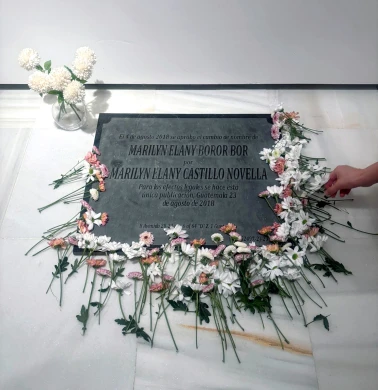
Y entonces las memorias colectivas se iban sumando a las luchas sociales, se iban sumando a la Bienal en Resistencia de una manera impresionante y creo que ahí fue cómo la memoria de Julia... O sea, a mí me gusta pensar que ahora Julia tiene una placa en su tumba que dice su nombre, y que no estaba con el nombre que le dieron, que era su nombre de hombre; sino ahora tiene su nombre elegido, su nombre de mujer trans, que es la Julia.
Y, entonces, creo que la Julia nos puede enseñar este proceso. Una frase que decía Juanjo en el performer era: «Julia, tu memoria existe en nosotros». Y eso creo que se puede trasladar, que hablar de memoria es reconocer a las personas que tienen historia. O sea, hablamos de grandes museos y piezas gigantescas que están en los museos y personas que están en los museos, pero las historias de las personas que no están en los museos son tan importantes como las que sí están. Y la Bienal en Resistencia está contando esas historias, pero no somos los únicos. Muchos artistas lo están haciendo, y no somos los únicos. Muchos espacios de resistencia lo están haciendo y muchos nietos lo están haciendo con sus abuelos. Entonces, creo que esa búsqueda de memoria no viene desde el espacio del arte, solo es la plataforma en la que se está elaborando.
Alejandra Garavito tiene una pieza [Llegar a casa / cuerpo, casa, territorio] también muy importante de memoria dentro de la Bienal en Resistencia. Y, además, como lo que más me admiro es la sencillez de las piezas. Como no es una gran estructura de producción, sino utilizando el cuerpo como una herramienta, donde Alejandra decide caminar un tramo aproximadamente de cuatro horas, de la ciudad de Guatemala hasta un espacio en Escuintla, que fue el espacio y el tiempo preciso en que su abuela desapareció en época de guerra. Imagínate ese espacio y cómo iba Alejandra caminando, pensando en su memoria, habitando todo el tiempo el espacio que su abuela había habitado pensando en su abuela. Eso no le devolvió, o sea… Yo lo que estaba pensando dentro de eso: «Bueno, eso puede ser una gran pieza de arte para nosotros». Pero la esencia que le devolvió eso a ella, habitar la memoria con su cuerpo; y lo que nos daba a nosotros, estábamos conmovidos totalmente ante su acto: valiente, de fuerza, de caminar, habitar un espacio.
Y creo que esos dos performers —que ha habido muchos—, pero esos dos performers de la Bienal en Resistencia nos han acercado a los procesos de sanación colectiva que estamos buscando. Tal vez no sucedieron en el museo, pero sí habla de eso el museo. Entonces, creo que son actos importantes, de solidaridad con la memoria de otros, que estamos habitando.
La escena en Guatemala. Espacios e iniciativas que la componen
Esa es una pregunta que me emociona mucho porque estoy emocionadísima por lo que está pasando. Una, es que están pasando muchas cosas, y [otra] que ya perdí esa maternidad que a muchas de las mujeres en el arte nos acompaña en el proceso: «No, yo estoy acompañando a la nueva generación. Yo estoy aquí, yo estoy resolviendo». Yo ahorita siento que no necesito estar resolviendo nada en Guatemala; que los colectivos autogestionables, que las comunidades diversas de artistas y curadores ya la tienen clara —y eso me emociona mucho— con una audacia que ya me superaron en mucho. Entonces, eso me tiene emocionada.
De los espacios autogestionables, digamos que todavía he estado involucrada en La Revuelta. Una organización, una colectiva de mujeres curadoras feministas diversas que lo que busca es posicionar a la mujer, las veces que sea necesario, desde los momentos que sean necesarios, en el arte, la cultura y el activismo. Tan importante para nosotros es que una mujer exponga, tan importante es para nosotros que esa mujer tenga los derechos laborales y reproductivos necesarios; van de la mano, no se desligan.
Hay otro espacio que me emociona mucho que es Perjura Proyecto, que es un espacio [gestionado] por una abuela, una mamá y una hija. La hija es una adolescente que guía todo el programa pedagógico para niños, la mamá hace todos los proyectos de grabado y la abuela gestiona todo el espacio. Es un proyecto maravilloso, que me emociona, que es un proyecto feminista, que nace también de una iniciativa familiar, de una familia de artistas.
Hay curadores como muy importantes, bastante jóvenes. Uno de esos es Alejandro Ortiz, que es un joven que fue periodista, que trabajó muchísimo tiempo en el periódico de Guatemala haciendo notas de prensa, y así es como te vas convirtiendo en curador en Guatemala. La otra es Saqb’ech Pérez, una mujer maya que es bastante joven, además punk —que tiene ahí su banda de punk—, que está haciendo que las cosas pasen; y ellos dos tienen un proyecto que se llama Casa Inhabitada, que es un proyecto fabuloso donde toman estas casas deshabitadas y las convierten en proyectos artísticos, espacios activos de narrativas. Entonces, creo que tienen un subplan pedagógico, tienen un club de anarquismo en Casa Capicúa, también entonces es un proyecto muy muy lindo que está haciendo que las cosas se muevan.
Hay dos proyectos más de los que me gustaría hablar, uno es Proyecto Parutz´, que es de Edizon Cúmes, que es un proyecto de alimentación política. Utiliza los alimentos como una herramienta disidente: de hablar de procesos artísticos, de hablar de narrativas sociales, políticas; por ejemplo, el tamal, por qué está hecho de eso, por qué comemos tamal. Es increíble su proceso. Y creo que otro es el proyecto [Espacio/C] de Diego Ventura y Anny Puac en Chichicastenango, que es un proyecto de una familia maya k'iche' en el que tienen colección, exposiciones de arte y el espacio… Tienen un café que está ubicado en el mercado y, en ese mercado, hacen las exposiciones y conversatorios de arte. ¿Tú te imaginás un mercado latinoamericano donde tenga un centro? Y a veces como él dice: «Sí, pero el mercado está muy plagado». «Está como muy lleno», nos contaba Diego que le decían. «Sí, de conocimiento», les decía Diego, «porque entonces el queso está envuelto en hojas de milpa, que es la mazorca, porque ahí ya cuenta una historia; y tan importante es esto, como el artista que yo tengo dentro del café». Entonces, creo que eso es muy muy importante dentro de eso.
Y hay un proyecto que me emociona mucho que queda en Quetzaltenango (Guatemala), que es el Parque Intercultural. El Parque Intercultural era una antigua base militar —literal, estaba plagado de soldados; todavía hay algunos— y fueron lugares donde se hicieron desapariciones, masacres y secuestros en época de guerra.
Entonces, un grupo de artistas lo toma, Valeria Leiva, Bryan Castro, entre otros muchos maravillosos artistas, lo toman y lo convierten en un espacio cultural. Esa fue la sede de la III Bienal en Resistencia, 3.3. Bienal en Resistencia, y fue muy divertido porque, entonces, nos ofrecen un lugar donde dormir mientras se estaba pasando toda la Bienal en Resistencia y nos quedamos en las cabañas de los soldados, en estas literas de doble. No fue tan divertido, pero fue interesante asumir ese espacio, llenarlo de información, llenarlo de estas resistencias y resignificar la memoria. Y creo que lo más importante que tiene este espacio es que ahora se está convirtiendo en un museo de la memoria; no negando todo lo que pasó en el espacio, sino trayendo a colación en qué está pasando en el futuro.
Entonces, creo que son espacios que tienen una dinámica, una fuerza gigantesca que me emociona mucho; y también me da la certeza, digamos, de que si yo me voy del mundo del arte no pasa nada. La resistencia va a seguir empujándose y van a pasar cosas muy emocionantes y pues creo que eso es lo que lo que me motiva del espacio como político estructural en Guatemala. Seguro habrá muchos espacios más que tal vez no conozco, es ahí hasta donde puedo pensar ahora. Tal vez algunos no me gustarán mucho, pero creo que mi visión curatorial está bien asignada donde mi energía me llama y ya lo demás lo podrán hablar otros curadores.
[Cortinilla musical]
La Revuelta surgió como una suerte de encuentro en el espacio de Mujeres Muy Indignadas. Yo estaba trabajando en una institución de arte y vienen dos chicas muy brillantes y me dicen: «Maya, ¿podemos apoyarte?». En Guatemala no hay muchos lugares de trabajar en un espacio de arte. Yo les dije: «Sí». Y después, como que tuve la reflexión de decir: «Si las traigo a este espacio no lo van a pasar tan bien, porque, honestamente, yo no lo estoy pasando bien». Entonces, llegamos a una conclusión; yo renuncio a todo y digo: «Nos inventamos un nuevo espacio», y ahí se fueron sumando más chicas y más chicas.
Actualmente, es Jimena Galán, una investigadora brillante, comunicadora; Vekis Morales, que es nuestra diseñadora, comunicadora y además es artista. También está Susana Alvarado, que es una trabajadora social que está haciendo actualmente su EPS [Ejercicio Profesional Supervisado] en el Lago, una mujer de pueblos originarios que tienen a una voz muy muy firme y que nos dice a veces regaños importantes que estamos muy felices de poder escuchar. Están Elizabeth y Lorraine, que son nuestras voluntarias ahorita, voluntarias pagadas, que son muy importantes, y que manejan la Casa Revoltosa.
Siempre fuimos un hogar, ahora tenemos una casa, la Casa Revoltosa. Es un espacio en Guatemala que tiene su galería, sus oficinas, la primera biblioteca feminista y de arte de toda Centroamérica — y eso nos emociona mucho, que hemos tenido la capacidad, con donaciones, de tener esos libros—... Tenemos tres residencias al año para artistas centroamericanas. También tenemos exposiciones que nosotras no curamos, solo apoyamos y brindamos el espacio. Recientemente, tuvimos la exposición de la Comuna Bisexual, que estuvo muy divertida.
Y tenemos también algo que es muy muy importante, que siento que ha llegado a dinamizar los espacios, que es la Escuela de Artivismo Feminista. Vamos por la segunda, actualmente queremos hacer otra el próximo año. Y la Escuela de Artivismo Feminista es un espacio donde Marilyn Boror también ha sido profesora; Gabriela Novoa, del Salvador, la hemos traído para ser profesora; Emilia Yang, de Nicaragua, la hemos traído para ser profesora; Andy, de Nicaragua, también ha estado de profesora; Risseth Yangüez, de Panamá, ha estado de profesora; y Ana Lagunas, de Panamá, también ha sido profesora. Entonces, ha sido como un movimiento ahí centroamericano donde nos hemos acompañado de artistas y curadoras centroamericanas para dar esas clases. En la Escuela de Artivismo Feminista tú aplicás y no pedimos un portafolio ni un proceso artístico. Antes, solo que quieras presentar un proyecto. Ya con el proyecto tú eres parte. Entonces, tenemos psicólogas, biólogas, antropólogas…, tuvimos una doctora una vez, de cine también ha habido algunas personas; y ha sido una dinámica superimportante acerca de esto. Y les damos un presupuesto para que hagan su proyecto. Además, les damos un presupuesto de viaje para que ellas puedan viajar todo el día y cubrimos sus alimentaciones.
Entonces, que [haya] un espacio del arte autogestionable, independiente, y que, además, seis mujeres curadoras y artistas tengan la capacidad de suplir las necesidades de las artistas y pagarles económicamente —nada lo hacemos de gratis, nunca pedimos nada gratis—, tiende a ser un ejemplo para que organizaciones más grandes tengan que pagarles a sus artistas. Eso es con La Revuelta en Guatemala, que es muy lindo que puedan llegar y, además, que cada una tiene su propia práctica: tan importante es lo individual; porque a veces nos quedamos en lo colectivo, así como: «Sí, no, es colectivo, es colectivo». No, tan importante es lo individual como lo colectivo; y entendemos que todas nos tenemos que ir algún tiempo y ese espacio va a seguir existiendo porque está creado para mujeres.
Y después, el proyecto [Espacio] MUY está en un territorio totalmente diferente. Es en Chiapas, en San Cristóbal de las Casas. Es una pequeña comunidad que nació de la intención de John Burstein. John fue un antropólogo en los años setenta, aprende tsotsil en la comunidad, crea un montón de organizaciones de resistencia… Gracias a sus luchas y a la comunidad, muchos de los artistas tsotsiles se pueden quedar en Chiapas enseñando —porque hacen un proyecto de ley—, y cuando John le pregunta a la comunidad: «Bueno, ustedes, ¿qué más hacemos? Ya creamos esta organización de sociedad civil, ya creamos esta organización de migración… Ahora, ¿qué más hacemos?». Y los artistas le dicen eso. Bueno, el pueblo, porque no eran reconocidos como artistas, dice: «Queremos un lugar donde crear. Queremos un lugar donde hacer arte»; y entonces se crea el proyecto MUY, que es un proyecto coordinado por artistas tsotsiles, mayas, zoques…, que ofrece residencias y espacios para artistas de pueblos originarios en todo el mundo. Entonces, nos han visitado bastantes personas —que nos emocionó mucho—. Y también la narrativa es, creo, muy similar a los proyectos culturales. No nos vamos a hacer al mundo del arte, sino que el mundo del arte conozca nuestras propias prácticas culturales, sociales, comunitarias…, y cada artista está muy empeñado en generar proyectos que honren a su comunidad.
Hay muchos procesos que pasan: por ejemplo, pedir permiso a tu comunidad para ir a una feria, pedir permiso a tu comunidad para presentar un proyecto, pedir permiso a tu comunidad para pintar algo… Hay muchos proyectos que, tal vez, bajo la lógica occidental de arte se ve un poquito extraño, pero son las capacidades que tenemos como un proyecto comunitario situado. No tenemos intereses de movernos.
Este es un proyecto situado. Actualmente Martha Alejandro y yo somos las directoras. John Burstein —le agradecimos y honramos todo su trabajo— ha decidido pasar para, dice él, ser feliz en otros proyectos. Igual lo queremos mucho. Y tiene una colección y un archivo —alrededor de 300 obras, que van desde hace diez años— de las comunidades Chamula, Chilón, la Selva Lacandona, de todo el territorio de Chiapas, todo el territorio cercano a la galería. Las comunidades lo llenan de energía, de armonía y es muy interesante, porque, por ejemplo, cuando alguien quiere conocer el espacio, nosotros nos abrimos a ese espacio. Mientras la persona trabaje con respeto a nuestras creencias y nuestros cuidados, nosotros somos compartidos en el conocimiento.
Pero también siempre nos preguntan: «Miren, ¿y nos pueden unir con las personas zapatistas?». Y hemos venido entendiendo que poco a poco las comunidades zapatistas se han cerrado ante estas visiones porque dicen: «Bueno, solo…». Y muchas veces la comunidad, igual nosotros en la MUY nos hemos cerrado, porque habíamos visto un ejercicio de extractivismo epistémico de parte de muchos curadores y muchos teóricos.
Entonces, hemos aprendido a desarrollar herramientas estructurales que nos acuerpan nuestros pensamientos; y que nos acompañen. Este no es un lugar de extraer, esto es un lugar de compartir, y así hemos creado este espacio con mucha dignidad, pero es un proceso de mucha creación, de mucha capacidad, de mucha memoria, otra vez situado en este territorio para ellos, por ellos; y creo que eso es lo más importante.
La Bienal en Resistencia. Un pensamiento situado centroamericano
Pues yo creo que Centroamérica, no sé cómo ponerlo, que en el sentido de nunca nos ubicamos de: «Tenemos que trabajar con Centroamérica». Sabíamos que esa era nuestra escena y sabíamos que ahí íbamos a aplicar.
Uno de los primeros encuentros conscientes con Centroamérica —y lo he traído mucho acá a esta conversación porque creo que ha sido muy importante— fue un encuentro centroamericano de curadores en Costa Rica. Nos invitaron a muchos curadores, —estaba Nicaragua, El Salvador, Honduras, Panamá, Costa Rica…— y ahí nos sentamos como por una semana a aprender, enseñar y todo, y ahí nos conocimos a todos. Me recuerdo que estaba muy joven, a veces me arrepiento de esas rabias incontrolables que me agarraban en mi juventud. Después digo: «No, estuvo bien. Era lo que sentía en el momento». Creo que fueron muy importantes porque aprendimos. Nicaragua estaba pasando por un momento bien difícil en ese momento, y estábamos ahí tratando de apoyarlos.
Y recuerdo que Gladioska, que fue una curadora que fue con Moisés, otro curador —ahorita me voy a recordar los apellidos—, llegan a Nicaragua. Ven a Emilia Yang y lesdice: «Cómo les fue en este taller?». Y ellos le cuentan: «Tenés que conocer a una curadora que te va a encantar. Es igual que vos, se llama Maya Juracán y tiene un fuego…». Y entonces ahí Emilia se entera de mi existencia y me escribe. Bueno, pero eso fue después, voy a regresar un poquito.
Y entonces Moisés Barrios y Gladioska me dice: «Mira, Maya, queremos hacer… Ya vimos que tenés abierta la convocatoria de la Bienal en Resistencia». Pero imagínate, esa, qué locura. Yo en ese encuentro hablaba de que quería hacer una Bienal en Resistencia, no se había concretado nada, solo decía: «Ah, miren, íbamos a tener una Bienal en Resistencia». Sí, o sea, como que enseñándoles… Y ellos me escriben y me dicen: «Mira, queremos participar un grupo de Nicaragua en la Bienal en Resistencia». Yo les dije: «Va, el pabellón nicaragüense en Guatemala. Les vamos a dar como un salón» —ahí todavía teníamos como una pequeña sede— «y ustedes exponen todo lo que quieran». Y entonces Emilia manda obra, Moisés manda obra, Alejandro de la Guerra manda obra, entonces todos mandan obra y lo exponemos allí: era el pabellón Nicaragua. Bueno, me acuerdo de que hasta una bandera pusimos así. Y ese fue como iniciar las primeras conversaciones con la banda nicaragüense y, después, Emilia me contacta, me dice: «Maya, hagamos algo. Tengo este grant que me dieron y quiero hacer una exposición, pero no sé». Yo le digo: «Emilia, yo ya estoy cansada de exposiciones». Y me dice: «A mí también. Ya no aguanto, ya no quiero hacer una más. [Ya verás ] tú cómo se acaban y ya no pasa nada. ¿Qué hacemos ahora?» Y entonces yo le dije: «Creemos una unión». Y [ella]: «Sí, eso está buenísimo». [Y yo]: «Una unión de feministas en contra del sistema». Sería UNFES. Y [ella]: «¿A quién invitamos?». Y entonces empezamos a pensar a quién invitábamos.
Y pues decidimos: «Bueno, Marilyn es amiga de las dos, es guatemalteca». «Sí, pero abramos una convocatoria porque no podemos solo invitar a personas que nos caen bien, sino [que] tenemos que abrir una convocatoria». Bueno: «Y creo que Ana Laguna podría ser buena, es una curadora joven, afro, que fue la primera curadora afro en el Museo de Panamá y está trayendo todas estas dinámicas. Risseth Yangüez tiene una posición fortísima; Andy, es otra nicaragüense…». Y entonces empezamos a ver… Hasta había una artista que era rapera. Me encantó. Tenemos un documental y todo. Y la pusimos como parte del documental. Y, entonces, dijimos: «Bueno, entonces no van a ser…».
Emilia es una artista que está exiliada viviendo en Michigan. Y ella decía: «Como que necesito un espacio para crear con gente que me acompañe», y: «¿Qué tal si vamos todas a Michigan y hacemos un primer encuentro?». «Sí, la universidad lo puede pagar». Y nos juntamos todas en Michigan y empezamos a hacer reuniones cerradas y después una presentación pública; y fue maravilloso. El segundo encuentro fue en Guatemala en la Casa Revoltosa y entonces me decían: «Bueno, en Michigan esto era lo que queríamos hacer. ¿Qué quieres que hagamos en La Revuelta?». Yo: «En la Revuelta es muy importante la educación. Necesitamos que vengan y nos enseñen todo lo que ustedes ya saben para las chicas de Guatemala».
Y entonces hicimos una apertura de portafolios y Emilia, yo, y Ana Laguna nos sentamos a ver portafolios de cada una de las mujeres que había participado en la convocatoria. Después hicimos un taller de fanzine, después un conversatorio e hicimos un performance por las niñas del Hogar Seguro. Entonces fue una locura. Y después dijimos como que: «Bueno, ¿y ahora qué vamos a hacer?». «En Costa Rica». Bueno, le toca a Mariela Richmond, que también es parte de la colectiva. «Bueno, ¿y qué? ¿Una exposición?». Bueno, aplicamos a una convocatoria y nos dijeron que no, y después nos dijeron: «Miren, sí las queremos». «Bueno, pero esta vez queremos todo el Museo». Y nos dieron todo el museo de Costa Rica para exponer todas las obras de las artistas.
Y entonces, bueno, después ya no fue UNFES, Unión de Feministas en Contra del Sistema, porque muchas de las artistas decían: «No, yo no quiero estar en contra de nada, es cansado». A mí me encanta estar en contra de todo, pero no sé si todas tenían esa energía. Entonces, después se convirtió en Unión de Feministas Engendrando Nuevos Sistemas, que estuve ahí, como lidiando con eso, bien. Y, pues, la exposición Somos mares, ríos, agua… [Somos mares, ríos, flores, minerales, volcanes, montañas, y compost]… Como que entender también que nos quieren poner en este trópico. Hubo un curador que dijo una vez que Centroamérica era el trópico y habló de eso; y después ya todas tenemos que ser trópicos. Y no, ¿verdad? O sea, como que queríamos poner esta energía vital en las montañas. Y somos montañas, a veces no nos movemos, y a veces somos volcanes y explotamos, y a veces somos ríos y tenemos paz, y a veces somos corrientes grandes. Y a veces somos una flor. Entonces, creo que desde ahí venía la energía; que, si no estoy mal, fue un texto de Mariela Richmond que nos acompañó en ese título. Entonces, fueron muchísimas obras de arte.
La exposición va a cerrar ya este próximo mes, pero fue una exposición muy muy interesante y ahí va… Como desde la Bienal en Resistencia…: Mariela Richmond fue la productora de la Bienal en Resistencia 1, eso es muy interesante; Marilyn Boror participó con Monumento Vivo en la Bienal en Resistencia 2... Y entonces, ahí es como nos vamos juntando y alborotando todas para ir creando estos diferentes proyectos.
Una necesidad imperiosa: el sindicato de artista
El sindicato fue una necesidad obligatoria. Creo que en Guatemala muchas de las cosas que estaban pasando… Isabel Ruiz, que es una gran artista, murió solicitando dinero para pagar la cuenta del hospital. Después, Julio Serrano, que es un poeta guatemalteco, tuvo un accidente y solicitó dinero para pagar su cuenta. Y esa es la realidad de todos, no era difícil entenderme en un espejo y que tal vez para la población mis logros en mi campo de trabajo eran importantes, pero mi realidad económica no era igual. Trabajar en la autogestión te lleva un poco a eso.
Entonces, crear este sindicato fue una unión entre André de Paz y SEDE/CULT, que es un espacio para derechos culturales. Y nos convoca a La Revuelta; nos convoca a AGACINE, que es como la comitiva de cine; a Red Viva Primavera, que es una red de música; y al Centro Cultural de España, que nos da toda la plataforma. Y ahí fue muy importante empezar a platicar. Como primer recurso, dijimos: «Bueno, ¿cuáles son los artistas que tienen problemas contables? Muchísimos. Entonces, vamos a poner a cuatro contadoras en un espacio y que se sienten a llamar a los artistas que llegaron a la convocatoria, a solucionar sus problemas contables». Ese fue nuestro primer llamado. Después, dar un taller de bases culturales, porque entonces teníamos que entender las necesidades económicas de los artistas para que ellos tuvieran la capacidad de acercarse a un sindicato o vieran la necesidad de un sindicato. Después de eso, que fue un encuentro muy interesante, hicimos una encuesta.
La encuesta reveló que menos del 2 % de la población en Guatemala tiene el derecho a seguridad social —de artistas—, que la mayoría de personas trabajadoras culturales solo un 1 % tenía un contrato formal, y que el 0 % tenía seguro de salud, y que el 100 % se había endeudado por una enfermedad o por una situación médica —se había endeudado, había adquirido una deuda bastante grande que todavía no había logrado pagar—. Eso nos dio la solución de que no estábamos solos, pero si entiendes el contexto de Guatemala, eso no era una prioridad porque en Guatemala esa es la realidad de la mayoría de población, seas trabajador cultural o no, por la economía informal.
Entonces, ahorita ya están las funciones del sindicato. Pero ahorita al entrar ya nos reunimos con políticos, con diputados, ya hablamos y entendimos como muy certeramente; y creo que esa es mi parte del sindicato. Como mi lado es: «Ya todos saben, tienen conocimiento y ya, cuando no se puede hacer nada, ahí entro yo»; y es como que: «Okay, entonces tenemos que inventarnos el camino, hacer la revolución». Y ahorita estamos con el proceso de llamar la atención haciendo manifestaciones públicas, denunciando públicamente lo que está pasando, contando historias… Tenemos un fanzine, vamos a hacer un próximo encuentro, vamos a hacer activaciones públicas en el espacio público, vamos a invitar a diputados y a gente para no posicionar este sindicato, porque creo que eso ya está, lo que vamos a hacer es posicionar los derechos culturales y el seguro social para los artistas después de diez años de trabajo.
Y eso significa crear herramientas que no existen, porque significa hacer un protocolo de trabajo artístico cultural, que lo reconozca el sistema, que lo pague el Gobierno, y creo que el acompañamiento seguro que hemos tenido son el sindicato de trabajadoras del hogar y el sindicato de payasos, que nos han dado las herramientas para poder hacer este sindicato de artista.
Recientemente, se iba a cerrar una escuela de arte en Guatemala, que era la escuela municipal de arte. No se iba a cerrar, les iban a quitar el edificio. Se hizo como un comunicado y todo, y para mí fue muy importante decir: «Sí, está bien que luchemos por el espacio. Solo quiero nombrar que el 100 % de artistas que trabajan en el espacio como docentes no tienen un seguro laboral ni un contrato digno». Y eso vino a encender: «No, que estamos luchando por un...». «No, va de la mano. La educación libre para todos va de la mano y la dignidad para nosotros, porque yo no estoy dispuesta a hacer una carrera de arte para no vivir con dignidad».
Y entonces creo que eso marcó un camino para la búsqueda de la dignidad. Incluso curadoras como Rosina Cazali y Regina José Galindo, que son todos estos top artistas, vienen y dicen: «Sí, tienes razón, sigamos con esto». Entonces, ya tenemos como ahí… Regina José Galindo va a estar invitada a las charlas del sindicato. Entonces, como hay que armar un relajo, decimos en Guatemala, hay que armar esta revolución para que nos escuchen. El camino no existe, nos lo estamos inventando. Vamos a ver hasta dónde llegamos con eso.
Futuros deseables para el ecosistema cultural en Centroamérica
Yo creo que muchas veces siento que a veces me canso de vivir en el futuro como todo el tiempo: «Quiero esto en el futuro»… Ahorita veo el presente, por ejemplo, y el presente es un grupo de chicas superaguerridas, que es la palabra que me encanta, que están dispuestas a luchar con dignidad, a acompañar a las mujeres artistas.
Veo a grupos de pueblos originarios exigiendo la dignidad por donde quiera que pasen, siendo no el tema, sino siendo la coyuntura, creo que eso es muy muy importante. Y veo a muchos jóvenes como con un descaro impresionante de querer hacer las cosas sin situarse en un sistema. Pero lo que me gustaría para mí, se lo he dicho a Emilia Yang en algún tiempo, le digo: «Un día, tú y yo vamos a hacer un simposio de arte y activismo de mujeres en Nicaragua». Y me dice: «¿Qué? ¿Cómo va a pasar eso? No va a pasar, ¿en dónde querés que sea?». Y le pregunté: «¿En dónde querés que sea?». «Eso tiene que ser en el centro», y ya empezó a decirme lugares donde podrían ser. Bueno, lo vamos a hacer. Como que si yo me atreviera a soñar y me atrevo a soñar, eso es lo que yo quisiera en un futuro, que pudiéramos regresar todas a Nicaragua y hacer un simposio de arte y feminismo en el lugar.
Me gustaría que, ligada a las visiones artísticas curatoriales, podamos desarrollar un proyecto de ley para las mujeres y sus derechos sexuales y reproductivos en Guatemala. Eso también, vamos caminando ahí. Ya está una ley de la juventud que la estamos apoyando muchísimo. Eso me gustaría.
Pero lo que lo que me gustaría como ideal en Centroamérica, digamos, es que todas mis amigas pudieran ser felices en libertad, haciendo arte y todo. Después, pregunto, bueno, pero que hubiera mejores historias, mejores espacios de arte para todos. Creo que sin estos espacios ya lo estamos logrando. Imagínate si pudiéramos arreglar esta estructura, creo que sería maravilloso.
Pero, en general, tal vez un lugar muy utópico es como que me gustaría que seamos felices como en este proceso de crear arte y que algún día de viejitas podamos decir: «¿Te acordás cuando hacíamos arte qué alegres en estos procesos?». Y creo, por ejemplo, con alguien que crecí y que mi vida siempre ha estado y va a estar ligada a ella, es Marilyn Boror. Y cuando la miro plena y feliz, es lo que me hace feliz. Entonces, eso es lo que me gusta.
Ahora, individualmente, me gustaría decirte que me gustaría envejecer en paz, y eso tal vez significa no estar ya en el mundo del arte, saber que cumplí con lo que tenía que hacer: tal vez hice menos, tal vez hice más, pero irme con la satisfacción de que no me quedé sin hacer nada y que siempre me va a gustar ir a exposiciones de arte, claro que sí, pero creo que, desde el principio, el arte no era mi prioridad. Y siempre iba a hacer acompañarme de seres humanos que busquen la dignidad. Y creo que esa dignidad también me conviene a mí: estar tranquila en un espacio seguro y, no sé, trabajando en el jardín.