-
Thursday, 4 October, 7pm
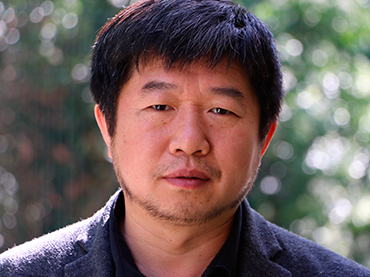
Wang Bing. Masterclass
Museo Reina Sofía. Nouvel Building, Auditorium 400
The film-maker will give a masterclass to set in motion this series, putting forward the idea of film as a mediator between extreme living conditions and the viewer. Wang Bing’s approach to film-making is grounded in living with subjects portrayed over long periods of time, to the point where the director is no longer directing or arranging shots, or any other aspect of sound and image, with the camera subordinate to the lives being filmed and their daily affirmation of clinging to existence.
-
Friday, 5 October, 5:30pm
Session 1. Beauty Lives in Freedom, Gao Ertai
International premiere
China, France, 2018, DCP, colour, original version with Spanish subtitles, 300’
Filmoteca Española, Cine Doré. Sala 1
Presented by Wang BingSecond session: Sunday, 7 October, 5pm. Museo Reina Sofía, Sabatini Building, Auditorium
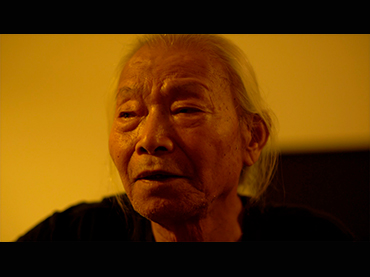
With a presentation by Lihong Kong, the producer of many of Wang Bing’s films.Wang Bing’s corpus of film work can be pared down to two major themes. The first, people discarded by globalisation and their living conditions in contemporary China. The second, the memory of Chinese political dissidents’ repression during Maoism; namely, the conscience of a country subjected to the double amnesia of censorship and hyper-capitalism. This film, an international premiere, falls under this second theme. Gao Ertai (1931) is an artist, teacher, philosopher who, in the 1950s, was imprisoned in the Jianbiangou Labour Camp. The film works as a diptych with Fengming, the confessional story of another victim of reprisals, and closes a vast film series on those who disappeared.
-
Saturday, 6 October, 7:30pm
Session 2. Mrs Fang
First version. Cinema edit
China, France and Germany 2017, DCP, colour, original version with Spanish subtitles, 86’
Filmoteca Española, Cine Doré. Sala 1
With a presentation by Wang Bing.Wednesday, 17 October, 7pm
Session 2. Mrs Fang. Second version. Museum edit
China, France and Germany 2016-2018, digital archive, colour, original version with Spanish subtitles, 102’
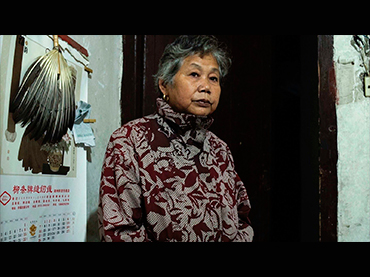
Museo Reina Sofía, Sabatini Building, AuditoriumMrs Fang chronicles the transition to death of Fang Xiu Ying, a sixty-year-old woman with Alzheimer’s who spends her agonising final days surrounded by her family in the bucolic landscape of southern China. The long public and collective grieving evokes archaic forms of contemplating loss and, as in the entirety of Wang Bing’s filmography, pivots around the length of the final breath, the resistance to accepting defeat. As with Fengming, this film is screened for the first time in two versions, two edits of different lengths made by the film-maker, one for cinema and the other for museum screenings.
-
Tuesday, 9 October, 10pm
Session 3. The Ditch
China, France, 2010, DCP, colour, original version with Spanish subtitles, 113’
Filmoteca Española, Cine Doré. Sala 1The only fictional feature in Wang Bing’s filmography. Still banned in China, the film is a brutal endeavour to consider history against the grain. The Ditch is part of a broad film series on the history of repression meted out in the early years of Maoist China. Jiabangou is a labour camp to which a large number of dissidents were sent in the 1950s, including intellectuals and artists who, paradoxically, bought into the promises of Maoism. Most died of cold and starvation. Based on rigorous interviews with survivors, like Fengming, this film is one of the most extreme depictions of the crimes of totalitarianism.
-
Thursday, 11 October, 6pm
Session 4. Ta´ang
China, France, 2016, DCP, colour, original version with Spanish subtitles, 148’
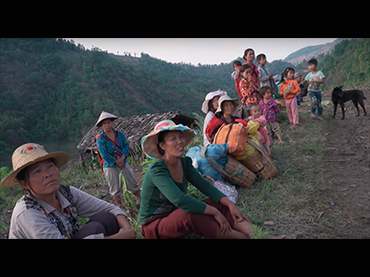
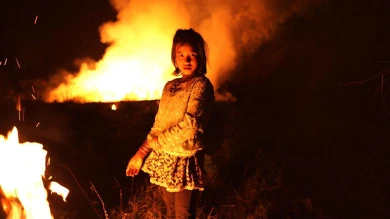
Filmoteca Española, Cine Doré. Sala 1The Ta’ang are an ethnic minority from Burma, forced into exile to China after a decades-long civil war. “My aim”, writes the film-maker, “was not to make a film about a grand narrative, armed conflict and its political causes, but to tell stories of displaced mothers and children wandering aimlessly, lost”. Ta’ang, a film among mass displacement and transient architecture, alludes to the efforts to maintain unity and the links to absolute dispossession.
-
Saturday, 13 October, 12 noon
Session 5. Dead Souls
National premiere
China, France, 2018, digital archive, colour, original version with Spanish subtitles, 480’
Museo Reina Sofía, Sabatini Building, Auditorium
12 noon to 2:30pm (30’ intermission), 3pm to 6pm (15’ intermission), 6:15pm to 8:45pmSecond session: Sunday, 14 October, 12 noon. Museo Reina Sofía, Sabatini Building, Auditorium
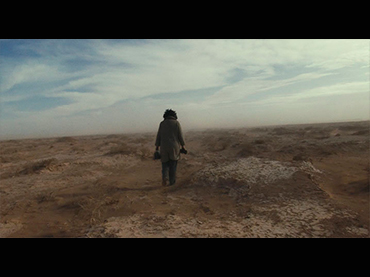
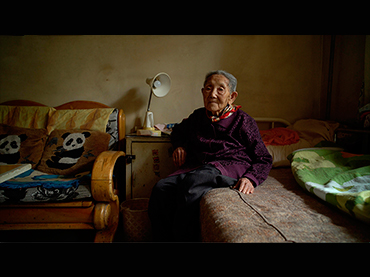
The third film, after Fengming and The Ditch, on the mass killing of citizens who criticised Maoism in its first decade. In the province of Gansu, north-east China, lie the remains of thousands of prisoners left to rot in the Gobi desert sixty years previously. Dubbed ‘rightists’ in the Communist Party campaign of 1957, these people died of starvation in the Jiabiangou and Mingshui ‘re-education’ camps. The film looks to reconstruct the oral memory of trauma from survivors and the place’s landscape of tragedy. Often compared with Claude Lanzmann’s Shoa and Aleksandr Solzhenitsyn’s Gulag Archipelago, the film shows evil not as the exception but the norm.
-
Monday, 15 October, 7pm
Session 6. Traces, Venice 70: Future Reloaded and Father & Sons
National premiere
Traces
China, France, 2014, digital archive, sound, b/w, 29’Venice 70: Future Reloaded
China, Italy, 2013, digital archive, original version with Spanish subtitles, 2'Father & Sons
China, France, 2014, digital archive, colour, original version with Spanish subtitles, 87’
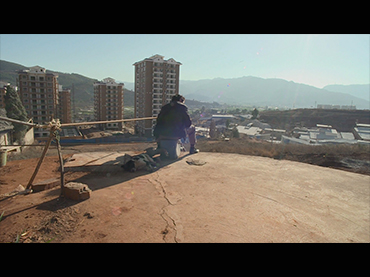
Museo Reina Sofía, Sabatini Building, AuditoriumThis session features three works considered by Wang Bing to be video art, thus differing from the language of cinema. Venice 70 is a short film made for the 70th edition of the Venice International Film Festival and shows an anonymous, solitary man in his routine of survival. Traces, meanwhile, is a survey of mass graves in the Gobi Desert, but through a profoundly material and stark gaze. This is the only work by the director filmed for cinema and later digitalised, giving it the quality of poetry that is at once elegiac and stark. Finally, the film Father & Sons records the bare room that houses a worker and his two sons — engrossed in their mobile phones among extreme poverty — and has been interpreted as the expansion of consumerism among Chinese teenagers, regardless of their social background.
-
Thursday, 18 October, 7:30pm
Session 7. Alone (Gudu)
China, France, 2012, DCP, colour, original version with Spanish subtitles, 89’
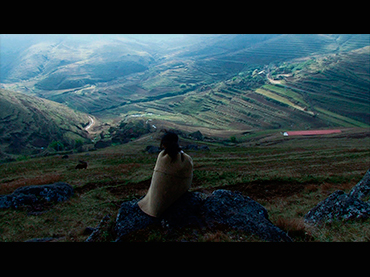
Filmoteca Española, Cine Doré. Sala 1A shorter version of the film Three Sisters. Three sisters, Yinx (ten), Zhen (six) and Fen (four) live alone in the mountains, at an altitude of 3,200 metres, in a small family house in the Yunnan region. Their mother is absent and their father works in the local village. Bing returns to a familiar theme here: the strength of kinship in extreme isolation.
-
Saturday, 20 October, 9am
Session 8. 15 hours
National premiere
China, France, 2017, digital archive, colour, original version with Spanish subtitles, 900’
Screening without intermission
Museo Reina Sofía, Sabatini Building, AuditoriumSecond session: Sunday, 21 October, 9am. Museo Reina Sofía, Sabatini Building, Auditorium
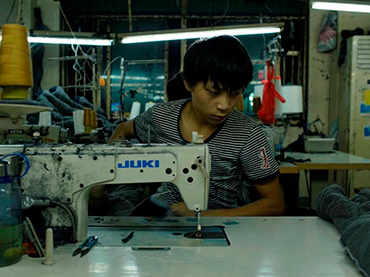
One of the most defiant works in recent years, this single-shot film shows a day’s work in a clothing factory in the Zheijang province, challenging the limits of structure, conception and duration in the history of cinema as it seeks to reproduce the draining and monotonous passing of time in the slave-like garment factories in China. As with the origins of cinema, Wang Bing sees this medium as the direct consequence of the great industrial machine and the proletariat. In this screening, the cinema will be set up as an installation where the audience can move around freely.
-
Monday, 22 October, 7pm
Session 9. Man with No Name
China, France, 2009, digital archive, sound, colour, no dialogue, 97’
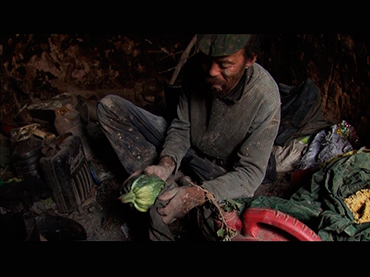
Museo Reina Sofía, Sabatini Building, AuditoriumAn anonymous man leaves his cave among snow-covered ruins. Wang Bing focuses on the meticulous tasks of daily survival – the man collects firewood, cooks, eats, tidies, and transports his rags. A minute, silent life of someone without history, property or identity. Are we seeing a contemporary subject close to the absurd subject of Samuel Beckett? No. This is an obstinate and radical affirmation of the right to existence.
-
Thursday, 25 October, 7:30pm
Session 10. Happy Valley and Brutality Factory
Happy Valley
China, Spain, 2009-2011, DCP, colour, original version with Spanish subtitles, 49’Brutality Factory
China, Portugal, 2007, DCP, colour, original version with Spanish subtitles, 17’
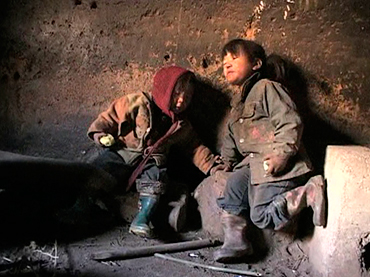
Filmoteca Española, Cine Doré. Sala 1Two short films, each made for collective projects. In Happy Valley Wang Bing participates with Spaniard Jaime Rosales in Cinematic Correspondences from one director to another. The two directors, long-standing friends, renounce the format of an audiovisual letter to set forth a story of two geographically and culturally distant worlds. Brutality Factory, produced for the collective work The State of the World, with the participation of Pedro Costa, Chantal Akerman and Apichatpong Weerasethakul, is a fictional film of torture in Maoist China, drawn from the life of Fengming.
-
Friday, 26 October, 9:30pm
Session 11. Three sisters
China, France, 2012, DCP, colour, original version with Spanish subtitles, 153’
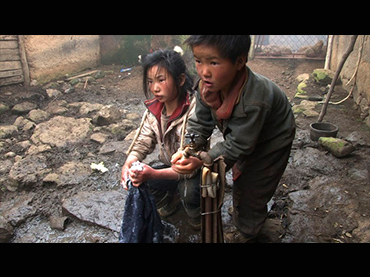
Filmoteca Española, Cine Doré. Sala 1Three sisters, Yinx (ten), Zhen (six) and Fen (four) live alone in the mountains, at an altitude of 3,200 metres, in a small family house in the Yunnan region. Their mother is absent and their father works in the local village. Bing returns to a familiar theme here: the strength of kinship in extreme isolation.
-
Saturday, 27 October, 5pm
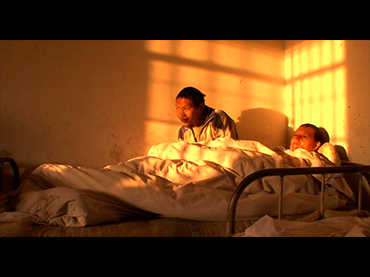
Session 12. Til Madness Do Us Part
China, France, 2013, digital archive, colour, original version with Spanish subtitles, 228’
Museo Reina Sofía. Sabatini Building, AuditoriumSecond session: Sunday, 28 October, 5pm. Museo Reina Sofía, Sabatini Building, Auditorium
-
Tuesday, 30 October, 7:30pm
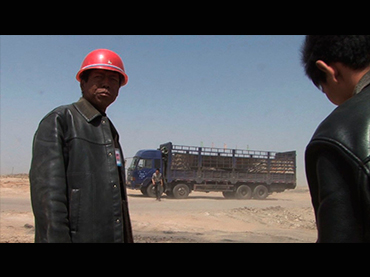
Session 13. Coal Money
China, France, 2009, DCP, colour, original version with Spanish subtitles, 53’
Filmoteca Española, Cine Doré. Sala 1This film explores the heavy exploitation of the landscape, according to the logic of an insatiable market in which coal is extracted and sold on to the highest bidder for electrical production. The cruel and beautiful drilled landscapes alternate with the fruitless journey in search of a buyer. Coal Money is a drama about rampant greed that transforms the face of the earth and the solidarity between workers, who trick and exploit each other. The film ends with a shot which, after a long journey, shows us the mine once again, describing a never-ending cycle.
-
Tuesday, 30 October, 9pm
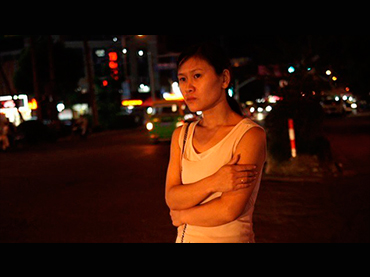
Session 14. Bitter Money
China, France, 2016, DCP, colour, original version with Spanish subtitles 145’
Filmoteca Española, Cine Doré. Sala 1The city of Huzhou is home to 18,000 clothing factories and more than 300,000 workers, mostly migrants from rural areas in the surrounding provinces. Wang Bing follows a group of these young workers in their 13-hour workdays and during their limited free-time, in which they wander around shabby rooms drinking, waste time with their mobile phones, or worry about not getting ripped off. The factory is not an assembly line; it is a place of condemnation that lacks ethics. A prize-winner of cinematography at the Venice Film Festival, the film’s camera is practically anonymous, creating through conversations and situations. Thus Wang Bing manages to render one of the most truthful and demoralising portrayals of an oppressive system.
-
Wednesday, 31 October, 5:30pm
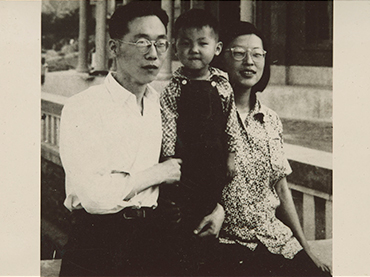
Session 15. Fengming. A Chinese Memoir
First version. Cinema edit
China, France, 2007, DCP,colour, original version with Spanish subtitles, 186’
Filmoteca Española, Cine Doré. Sala 1Wednesday, 7 November, 7pm
Session 15. Fengming. A Chinese Memoir. Second version. Museum edit
China, France, 2007, digital archive, colour, original version with Spanish subtitles, 227’
Museo Reina Sofía. Sabatini Building, AuditoriumIn what way can narration and oral memory transmit and exorcise trauma? This film personally chronicles the life of Fengming, an old woman persecuted in the early years of the Communist Regime and taken to the Jianbiangou Labour Camp. It is also the search for a visual form of testimony. The cinematic apparatus becomes invisible for three hours, placing the voice at the centre and establishing a personal connection between Fengming and the viewer. Screened for the first time in two versions, the film leads on to The Ditch, Traces and Brutality Factory. Equally, this diptych will be joined by the international premiere of Beauty Lives in Freedom, Gao Ertai.
-
Saturday, 3 November, 9am
Session 16. Crude Oil
China, France, 2008, digital archive, colour, original version with Spanish subtitles, 840’
Screening without intermission, Museo Reina Sofía. Sabatini Building, Auditorium
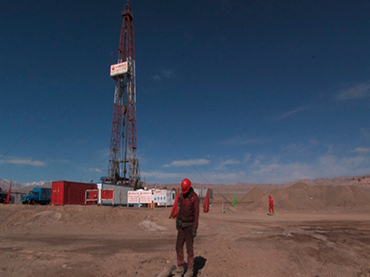
Second session: Sunday, 4 November, 9am. Museo Reina Sofía, Sabatini Building, AuditoriumThis film installation shows the daily routines of workers on an oil rig in the district of Huatugo. Wang Bing presses ahead with the idea of connecting capital with the exploitation of the land and ecological catastrophe, and in inhumane working conditions. Tedium and lack of sleep, brought on by brief shifts, mix with kitsch pop played on the radio and the sublime landscapes of the plains to create a state of permanent hallucination, frozen between insomnia and sleep, trapping workers and viewers alike.
-
Sunday, 11 November, 11am
Session 17. West of the Tracks
China, 2003, digital archive, colour, original version with Spanish subtitles, 551’
Museo Reina Sofía. Sabatini Building, Auditorium
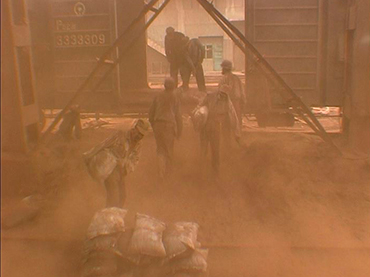
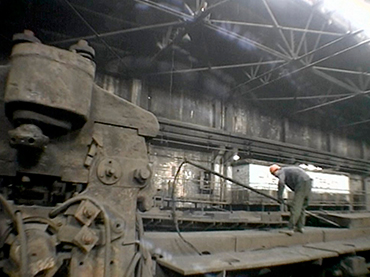
11am to 3pm (15’ intermission), 3:15pm to 6:15pm (15’ intermission), 6:30pm to 8:45pmThe coda to the series is Wang Bing’s first work, a three-part documentary which puts forward the signature themes of the film-maker, his method of filming and, at the same time, establishes what the epic and monumentality mean in contemporary cinema, seen as a dialectic manifestation of the present. West of the Tracks explores the ruin of Tie Xi, the industrial area of north-east China and erstwhile heart of the state’s heavy industry. Tie Xi is now a scene of degeneration, where economic reforms, bankruptcy, displacement and demolition have emptied factories, leaving entire communities without work. In essence, the film signals the end of a regime and the start of a new phase in China’s history.
-
Thursday, 15 November, 7pm
Session 18. West of the Tracks. Part I: Rust
China, 2003, digital archive, colour, original version with Spanish subtitles, 244’
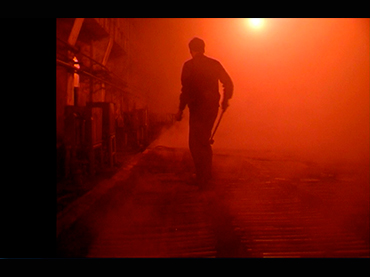
Museo Reina Sofía. Sabatini Building, AuditoriumIn this first part, Wang Bing follows workers in the Tie Xi metalworks and their daily routines, breaks and free-time, capturing every moment, from the mundane to the industrious. The workers laugh, argue, bitterly complain about their future prospects, pass the time drinking, or simply digress.
-
Friday, 16 November, 7pm
Session 19. West of the Tracks. Part II: Remnants
China, 2003, digital archive, colour, original version with Spanish subtitles, 178’
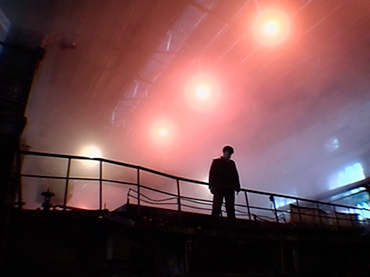
Museo Reina Sofía. Sabatini Building, AuditoriumThis second instalment sees Wang Bing follow the inhabitants of the town of Rainbow Road, one of the many Tie Xi urban developments. The workers’ children are aware of what the future holds: Wang follows groups of young people while their parents return home without work and begin to receive news of evictions.
-
Saturday, 17 November, 7pm
Session 20. West of the Tracks. Part III: Rails
China, 2003, digital archive, colour, original version with Spanish subtitles, 132’
Museo Reina Sofía. Sabatini Building, AuditoriumThis part tells the story of the freight trains that connected the factories in the district of Tie Xi, and the stories of two men: Du Xiyun and his son, both unemployed and on the margins of society, living off the railroad. While Du Xiyun and his son fight to deal with the changes taking place in the world that surrounds them and keep come control over their own destinies, their friends, state railroad workers, still repeat the movements of their now-non-existent jobs as they are locked to a bygone time.
Held on 04, 05, 06, 07, 08, 09, 10, 11, 12, 13, 14, 15, 16, 17, 18, 19, 20, 21, 22, 23, 24, 25, 26, 27, 28, 29, 30, 31 Oct, 01, 02, 03, 04, 05, 06, 07, 08, 09, 10, 11, 12, 13, 14, 15, 16, 17 Nov 2018
Film-maker Wang Bing portrays people who have been excluded in China’s recent economic transformation with rare beauty and uncompromising severity, focusing on those who have been disowned by the system and experience untold cruelty on a daily basis, people who cling to life as an extreme act of resistance and dignity. In the first comprehensive retrospective on one of today’s pivotal directors, the Museo Reina Sofía and Filmoteca Española will screen the entirety of Wang Bing’s films and film installations, scarcely exhibited or shown due to their extreme running times. Moreover, the series features the film-maker’s first lecture in Spain, along with two premieres on Spanish soil and another international premiere.
Wang Bing puts forward a profound consideration of history, the paradoxes of industrial ruin and the suffering caused by the inexorable ‘progress’ in modern China in his work, taking the cinema verité ideal of observing reality to the extreme to reach a new and profound radicalism. By and large, his films, shot covertly with digital film equipment, possess a cinematic intensity that is at once beautiful and tragic with respect to the power of a world dominated by a decaying industrial infrastructure and landscapes ruined by exploitation. For months on end, he cuts himself off, living with the people he is filming as he searches for a way to transform the material conditions and temporality of their lives into allegories of a present shaped by accumulation and systemic dispossession. Frenzied construction, land transformed for energy production, the ambition and greed of the repressed, memory in a time of developmentalist amnesia and survival in the harshest conditions, these are all themes from an anonymous and contemporary history that Wang Bing masterfully captures.
Curatorship
Chema González, Museo Reina Sofía, and Carlos Reviriego, Filmoteca Española
Organised by
Museo Reina Sofía and Filmoteca Española
Más actividades
![Isabel Coixet, 100 Years and You Everywhere [100 años y tú en todos los sitios], 2026, película](https://recursos.museoreinasofia.es/styles/small_landscape/public/Actividades/2.diseminar-mundo.jpg.webp)
John Berger and Isabel Coixet. Continued Ways of Seeing
Thursday, 17 September 2026 at 7pm
Ways of Seeing (1972) is one of the most revolutionary television series on art history, the museum and contemporary critical culture. Across four episodes, an articulate, enthusiastic John Berger unpacks the relationships between classical art through the gaze and new technology, the nude and feminism, the oil painting and commodity fetichism, advertising and consumerism. In essence, a level of critical commitment only comparable to its capacity for dissemination. Unsurprisingly, the series, and the book that would distil it, continues to forge vocations. This session sees art historians Alberto López Cuenca and Modesta Di Paola carry out an analysis of Berger’s audiovisual work, placing the stress on episodes one and four of the series. In the first episode, Berger reflects on the connection between the act of seeing, looking and being in light of new technology, such as the film camera. At the same time, it analyses how the culture of reproduction is turning paintings into messages or fragments of communication while stressing the importance of silence when observing historical paintings. In the fourth and final episode, he introduces advertising as a new iconic-verbal language that shares certain principles with the message of oil painting as a luxury item.
The session opens with the premiere of a filmic letter from Isabel Coixet, one of Spain’s most internationally acclaimed directors, to John Berger, with whom she maintained a long friendship and deep admiration. The short film is testament to the ubiquitous and long-lasting presence of the author of Ways of Seeing, even after his death in 2017.
![Chantal Akerman, Woman Sitting after Killing [Mujer sentada después de matar], 2001, instalación. Museo Reina Sofía](https://recursos.museoreinasofia.es/styles/small_landscape/public/Actividades/chantal-akerman-mujer-sentada-despues-matar.jpg.webp)
On Your Screen: Art History and the Museum Facing the Audiovisual Challenge
18, 19 SEP 2026
The conference On Your Screen: Art History and the Museum Facing the Audiovisual Challenge sparks debate around the transformations of art history and museum space upon embracing the audiovisual format. Its starting point is John Berger’s emblematic television series Ways of Seeing (1972), a landmark in the democratisation of art-historical discourse. In the series, Berger illustrated how the transfer of a work such as Goya’s Los fusilamientos del 3 de mayo (The Third of May 1808 or the Executions) from museum gallery to home TV screen completely changed the viewer’s experience, allowing the image to travel to straight to the viewer.
In the twenty-first century, this screen-based ecosystem has expanded exponentially, with museums not only physically integrating screenings and devices into their galleries— following in the wake of many exhibitions on the moving image — but also deploying complex virtual strategies. Equally, numerous en vez de a multitudeof historians, students and creators use digital platforms to circulate their ideas and projects. This audiovisual shift opens access to ignored materials and democratises knowledge, as well as challenging traditional hierarchies and the interpretive authority of institutions. The conference, promoted by the research project ATLAS AV: The Audiovisualisation of Art History and the Museum, seeks to analyse this vast audiovisual material, its archives, and its capacity to transform the memory of art.
Godard and Miéville: Time and Ruin
Friday, 18 September 2026 - 7pm
Inside the framework of the conference On Your Screen: Art History and the Museum Facing the Audiovisual Challenge, this film series sets forth three critical visions of the museum via three sessions featuring the works of John Berger, Jean-Luc Godard and Anne-Marie Miéville, Ariella Azoulay, Alan Resnais and Chris Marker, Kwate Nee-Owoo, and the premiere of short films by Isabel Coixet and La Vulcanizadora (Maria Rojas Arias and Andrés Jurado). In classical theory, the museum gives the world meaning; it contains fragments of the past, granting them a history, a narrative that explains preterite time and the present. Today, there is an implicit assumption that this function hides and legitimises forms of power, yet what if the museum, instead of explaining the world, multiplied it through radical ideas, silenced periods and repressed subjects? Such is the approach of the film-makers and artists in this film season.
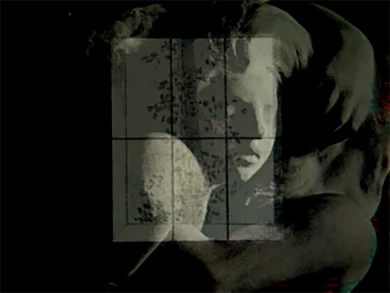
In 1972 the writer John Berger opened the landmark television series Ways of Seeing with an iconoclastic gesture: slicing Sandro Botticelli’s painting Venus and Mars (1485) in London’s National Gallery. A transgressive act that recalls contemporary attacks on the museum by dissident youth and with which Berger, after revealing it was a reproduction, sought to ignite debate around the idea of an original artwork and a copy. In this, the hundredth anniversary of his birth, the first session pays homage to one of the great art writers of the twentieth century. Starting with a review of Berger’s audiovisual work by art historians Alberto López Cuenca and Modesta Di Paola, the series begins with the premiere of 100 Years and You Everywhere (2026), an unreleased short film by Isabel Coixet composed as a beautifully crafted letter to Berger, and continues with an analysis of fragments of Ways of Seeing in relation to the museum and contemporary art.
The second session screens two medium-length films by Jean-Luc Godard and Anne-Marie Miéville on time, ruin and museum. In The Old Place. Small Notes Regarding the Arts at Fall of 20th Century (1999), both film-makers consider what remains of that “old place”, the museum, at the close of a century of wars and totalitarianism, and ask whether it should be more of a legend or desire than a place. This same driving principle leads Godard to build his own imaginary museum in Reportage amateur (maquette expo) (2006), a rickety toy museum which, paradoxically, contains the great film-maker’s full power of thought on history and images.
Finally, the third session explores one of the major challenges of recent years: the decolonisation of the museum, the recognition of its link to imperialist discourses of power and the need to situate a new silenced or repressed subject at the centre of the Western narration of history. Under the title Museums and Restitution, it includes the film Undocumented. Unlearning Imperial Plunder (2019), by theorist Ariella Azoulay, Statues Also Die, by Alan Resnais and Chris Marker (1953), Kwate Nee-Owoo’s You Hide Me (1970) and the first screening of the short film Quinto verso, parte de Tonada (Fifth Verse, Part of Tonada), by La Vulcanizadora (Maria Rojas Arias and Andrés Jurado), filmed at the Museo de América in Madrid.
![Ariella Azoulay, Un-documented. Unlearning Imperial Plunder [Indocumentados. Desaprendiendo el saqueo imperial], 2019, película](https://recursos.museoreinasofia.es/styles/small_landscape/public/Actividades/5.diseminar-mundo.jpg.webp)
Museums and Restitution
Saturday, 19 September 2026 - 7pm
Centuries of plundering, decades of amnesia, years of living with unmitigated extractivist power… Does a museum, as we know it, have a raison d'être in a postcolonial society?
This session expounds the operations of the museum as a colonial machine, while putting forward ideas, in narration, for a more just, equal and inclusive institution of the future via society’s marginalised and minority voices. The session begins with the international premiere of Quinto verso, parte de Tonada (Fifth Verse, Part of Tonada), which presents a vision of the Quimbaya Collection (fifth and sixth centuries CE) from the Museo de América in Madrid. It is constructed with the voices and chants of Wayúu mourners and guides, not only as a way of reinstating the role of these gold idols — anthropomorphic figures of men and women used as vessels in ritual practices — but also to imagine that what must be exhibited is not the gold itself. It is the ritual’s own chant. In the classic film You Hide Me (1970), Ghanaian film-maker Kwate Nee-Owoo accesses the British Museum’s collection of African art, located in the building’s basement, to question the meaning behind a museum plundering and nullifying. A fine exercise of first-person institutional critique screened for the first time in Spain. Almost seventy years since Resnais and Marker made Statues Also Die (1953), a reflection on the aura-bearing value of the museum opposite the identity-based and cultural belonging of African art, theorist Ariella Azoulay films the same statues again at the Musée du Trocadéro (today the Musée du Quai Branly), which survive and wait to be reunited with their people. Azoulay, whose wholly original undertaking is a lesson to the museum of the future, connects the forced migration of these sculptures with the mass transit of people crossing borders artificially imposed by the same system that has plundered their culture.
The School of Transformative Institutionalism and Local Organisation
From 21 to 24 September 2026
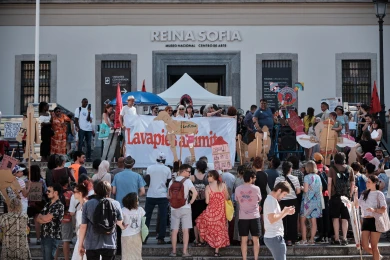
The School of Transformative Institutionalism and Local Organisation (S.T.I.L.O.) is a programme of joint learning and join strategy which sets in motion a process for the exchange of questions, methodologies and experiences between cultural organisations. The overall aim is to create, circulate and prototype tactics, tools and collective knowledge on institutional practices that open new channels for defending culture and advocating structural transformation in divergent geographical contexts.
The project is part of the Laboratorio de Institucionalidad Compartida (The Laboratory of Shared Institutionalism, LIC), a space for the Museo Reina Sofía’s research, work and advocacy centred on developing, experimenting with and systemising practices, protocols and tools which contribute to a fairer and more liveable cultural ecosystem.
For many years now, so-called infrastructural critique in museums questions material, legal and economic infrastructures, among others, as well as the forms of solidarity and practices required to sustain the cultural ecosystem. By approaching current debates, S.T.I.L.O. raises questions on the ways in which organisations define and interpret their practices, organise their relations and respond to the social contexts in which they operate.
The school gathers four cultural organisations that work via different institutional models – scale, contexts, conditions, different working models — with the goal of pooling common strategies and tools of organisation, advocacy and relationships with local communities.
The programme is conceived as a collaborative process with the participation of Arika, La Revuelta, BAK Basecamp and The Tentacular Museum (Museo Reina Sofía) and is structured around preparatory online sessions and an in-person seminar in Madrid.
S.T.I.L.O. is an activity framed inside the working strand of Situated Organisations from L'Internationale’s Museum of the Commons project, which reflects on the role of museums and art organisations as actors within complex social networks and ecosystems, with a view to exploring new ways to democratise institutions and make them more open, inclusive and useful.