-
Thursday, 13 April 2023 Nouvel Building, Protocol Room and online platform
Session 1. Non-White Feminisms
Tickets— Encounter with Paloma Chen, Esther Mayoko Ortega and Trifonia Melibea Obono, accompanied by Tatiana Romero Reina
This first encounter starts from anti-racist, transversal and intersectional (trans)feminisms to approach issues that think from the eradication of racism in our practices and feminist theories, jointly building feminisms which are unencumbered by colonialist and supremacist attitudes.
-
Thursday, 13 April 2023 Nouvel Building, Protocol Room and online platform
Session 2. Queer Identities
Tickets—Encounter with Ángelo Néstore, Fefa Vila Nuñez and Gad Yola, accompanied by Víctor Mora
For Víctor Mora, queerness is “the disoriented temptation to read ourselves, ultimately, as living bodies”. This table aims to build a reflection around queerness from different experiences and places, understanding it as an open concept built to the rhythm of the people inhabiting it.
-
Friday, 14 April 2023 Nouvel Building, Protocol Room and online platform
Session 3. For a Transfeminist Politics of Care
Tickets—Encounter with Silvia Agüero Fernández, June Fernández, Silvia Nanclares, accompanied by Carmen Romero Bachiller
Care is, as Amaia Pérez Orozco puts it, “a radical change of gaze. [...] A need for everyone”. Around this third table guests address the need to politically demand essential jobs that uphold invisible and feminised ways of life.
-
Friday, 14 April 2023 Nouvel Building, Protocol Room and online platform
Session 4. (H)Amor and Sexualities
Tickets—Encounter with Christo Casas, Roma de las Heras Gómez and Irantzu Varela Urrestizala, accompanied by Nuria Cano
The possibility of subverting technologies of power used to market bodies and desires, the place of asexuality in our non-romantic imaginaries and the practice of relational anarchy are some of the lines of thought the guests in this encounter explore from journalism, prose, research and education.
-
Saturday, 15 April 2023 Nouvel Building, Auditorium 400
Session 5. Pandemics and Queer Bodies
Tickets—Encounter with Violeta Assiego, Andrea Galaxina, Rodrigo García Marina and Roberta Marrero, accompanied by Inés Plasencia Camps
New trans, feminist and anti-racist struggles are epistemic battles, efforts to alter the historical relationships between bodies, knowledge and power. From such an articulation, this table seeks to reflect on the paradigm changes produced from specific moments of social inflection.
-
Saturday, 15 April 2023 Nouvel Building, Auditorium 400 and online platform
Session 6. Bi-dyke Desires and Imaginaries
Tickets— Encounter with Carla Berrocal, Laura Casielles, Alana Portero and Gabriela Wiener, accompanied by Nerea Pérez de las Heras
For us to imagine, representations are paramount, those representations which have been so lacking in bi-dyke ways of relating. Guests around this concluding table will discuss the irremediable mediation with respect to that which we desire from what we know-read-live and, above all, are able to imagine.
-
Saturday, 15 April 2023 Nouvel Building, Auditorium 400 and online platform
Session 7. The Hills Are Ours
Tickets—Literary performance by Alberto Cortés, Claudia Faci and Alejandro Simón Partal
During an evening-night of imagined campfires, where the idea of the narrated story returns to its original covenant, the artists put forward a gathering around light to hear us, barely without seeing. Imagining together a night-time forest which is a room, a lobby, a corridor, where there is no front because there must be an inwards.
This encounter-performance appears to be a reading but essentially it looks to end the idea of the dramatized reading, for there is “no reading or dramatizing here”.
What there is, however, is a space from which to listen to and inhabit the imagined. What is required is a group of people who wish to go deep into the night, who bring their blankets, mats, sleeping bags, water bottles and mountain gear. We need a fire in the middle, a computer, a sound system, a microphone, and books that are half-read, read, and with notes and sections underlined. We need physical contact for the cold, because although we are sheltered we are actually under the open sky. Always.

Held on 13 Apr 2023
Queer L.E. The First Queer Literature Encounter is a transversal programme which addresses issues that cross and shake transfeminisms and queer lives, advocating the sharing of a space and time of common reading, thinking and debate.
The sessions are articulated from different places such as prose, research and critical thinking, a juncture for words to transcend books and reach bodies around a community of readers, activists, writers and LGTBIAQ+ people who, with increasing frequency, exist in bibliographies and, above all else, resist in struggles.
This encounter is held in collaboration with Librería Mary Read, a bookshop and cultural space of critical thought which specialises in feminisms and LGTBIAQ+ communities.
[dropdown]
Silvia Agüero Fernández defines herself as a mother, lactactivist, feminist, communicator, actress, essayist and playwright who is self-taught in all her practices. Her most recent publications include Mi feminismo es gitano (Píkara, 2022) and Resistencias gitanas (Libros.com, 2020), co-written with Nicolás Jiménez. She is also the author of the play No soy tu gitana (2023) and chairwoman of the Pretendemos Gitanizar el Mundo (We Seek to Gypsyfy the World) association, with a mission to create a counter-narrative which provides an alternative to the anti-gypsy social imaginary.
Violeta Assiego is a lawyer, animal-rights activist and a specialist in Human Rights on gender, childhood and inequality. She is a regular contributor to eldiario.es and Pikara Magazine, and has also worked as general manager of children’s and teenagers’ rights in the current term of office in Spain. She has contributed to the books Derribar los Muros. Desde el Muro de Berlín demolido, contra los nuevos muros levantados (Roca, 2019) and Alianzas Rebeldes. Un feminismo más allá de la identidad (Bellaterra, 2021), among other publications.
Carla Berrocal is an illustration and graphic design student in Madrid. Since 2017, she has contributed to Madrid City Council’s M21 Magazine, and in 2019 she was awarded a grant from Spain’s Royal Academy in Rome to work on a comic book project drawing from the life of Concha Piquer, published by Reservoir Books in 2021. As an activist, she has chaired the Association of Madrid Illustrators (2016–2021) and promoted the Collective of Comic Book Artists.
Nuria Cano is a sexologist on the platform lasexologia.com and an adjunct professor on the official MA in Sexology at the IUNIVES University Institute of Sexology and Camilo José Cela University. She specialises in supporting people with functional diversity, as well as working with the Sexuality and Disability Association and offering training to teachers, professionals and families. She is also co-director of the Coñumor Festival and founder of the company Menudas Pájaras.
Christo Casas defines himself as “the son of Zarpas and the Foreigner, the grandson of Pelines. You know, the one they call fag”. He is a journalist, anthropologist and entity in different digital formats such as the podcast, the story and, above all, the tweet. He is the author of El Power Ranger rosa (Niños gratis, 2020).
Laura Casielles is a poet and journalist who holds a degree in Journalism and Philosophy and a PhD in Contemporary Arabic and Islamic Studies. Her recent publications include Las señales que hacemos en los mapas (Libros de la Herida, 2014) and Breve historia de algunas cosas (Ediciones del 4 de agosto, 2017).
Paloma Chen is a writer, researcher and cultural manager. She has co-managed the platform Tusanaje, which works to disseminate cultural manifestations of Chinese diaspora in Spanish-speaking countries, co-organising, in 2022, cultural days and events such as 我们我们. The First Encounter of Chinese Diaspora Creators in Spain at Matadero Madrid. She won the National Poetry Award Viva L de Lírica in 2020 and is the author of the poetry collection Invocación a las mayorías silenciosas (Letraversal, 2022). She is also a regular contributor to publications such as La Marea, El Salto, El País and À Punt.
Alberto Cortés is a stage director, playwright and performer. In 2009, he began his stage career from an “illegitimate and peripheral dramaturgy which has been growing wilder with the passing of time”. He is the author of Los montes son tuyos (Continta Me Tienes, 2022).
Claudia Faci is a dancer, choreographer, stage director, actress, teacher and independent author. After training as an actress at the J. C. Corazza International Performance Studio, she has worked as a performer in an array of dance, theatre, film and television productions. She has also taught at the María de Ávila Studio and run courses at the Association of Dance Professionals in Madrid, the Dance School at the University of Alcalá de Henares, the Galician Choreographic Centre and the Madrid Advanced Dance Conservatoire.
June Fernández is an LGTBI feminist journalist. Founder of the feminist publication Pikara Magazine, she is a regular contributor to ARGIA, El Salto, eldiario.es, Ctxt, Revista 5W, AltaÏr Magazine, Salvaje and Revista Soberanía Alimentaria. Her most recent publication is La tribu de las amatxus bollo (Histeria Kolektiboa, 2022). Currently, she works with the Association of Gypsy Women from the Basque Country (AMUGE).
Andrea Galaxina is an art historian, the curator of the Picnic Sessions at CA2M in 2019 and creator of the micro-publishing fanzine Bombas para Desayunar. In 2020, she created the contemporary art publisher El primer grito, publishing the essay Nadie miraba hacia aquí (Nobody Looked Over Here, El primer grito, 2022) on the impact of HIV/AIDS on art.
Rodrigo García Marina is a poet. He studied viola at the Advanced Music Conservatoire of the Canary Islands and holds a degree in Medicine from the University of Las Palmas de Gran Canaria (ULPGC) and an MA in Cultural Theory and Critique. His most recent publications include El libro de los arquitectos (UNED, II Premio de Poesía de la Facultad de Filología, 2021), Desear la casa (Editorial Cántico, 2021) and Los prodigiosos gatos monteses (Letraversal, 2023).
Roma de las Heras Gómez is a feminist activist and a “bi-dyke” and sexologist specialised in sexual diversity and gender. She works so that sex education, from a perspective of diversity and a rights approach, reaches everyone. Her research revolves around relational anarchy, and she is the co-author of Anarquía Relacional. Una novela gráfica (Continta Me Tienes, 2023).
Roberta Marrero is a poet, writer, lecturer and visual artist. The different angles of her practice as a creator range from the autobiographical to revising images of power, identity and desire. She is the author of Dictadores (Hidroavión, 2015), El bebé verde (Lunwerg, 2016), We can be heroes (Lunwerg, 2018) and Todo era por ser fuego (Continta Me Tienes, 2022).
Víctor Mora is a writer with a PhD in Cultural Studies. His books most notably include Al margen de la naturaleza. La persecución de la homosexualidad durante el franquismo (Debate, 2016), which was awarded the Sagasta National Essay Prize, and ¿Quién teme a lo queer? (Continta Me Tienes, 2021). He is the coordinator of the blog LGTBI+ 1 de cada 10 in the newspaper 20 Minutos and is director of the training and research area of the 26 de diciembre Foundation, an organisation which works with and for older LGTBIQ+ people.
Silvia Nanclares is a writer and cultural manager. She is the co-director, with Silvia Herreros, of the literary podcast #EnTuFeriaMeCole (Goethe-Institut) and works with different media and programmes such as Carne Cruda in eldiario.es, with her specialist gaze centred on feminisms, parenting, families and diversity. She has also published Quién quiere ser madre (Alfaguara, 2017) and participated in the collective volume entitled Tranquilas (Lumen, 2019).
Ángelo Néstore is an artist whose first collective poetic-audiovisual experiment is the poetry-based Poeta Cíborg Pecador, followed by Incognito. Néstore has published the poetry books Deseo de ser árbol (Espasa, 2022), Hágase mi voluntad (Pre-Textos, 2020), Actos impuros (Hiperión, 2017) and Adán o nada (Bandaàparte Editores, 2017), and currently co-directs the Irreconciliables International Poetry Festival of Málaga and is director of the poetry publisher Letraversal.
Trifonia Melibea Obono is a writer, journalist, political scientist, teacher and researcher who explores issues around women and gender in Africa. She has lectured in the Faculty of Literature and Social Sciences at the National University of Ecuatorial Guinea (UNGE), in Malabo, since 2013 and is part of the team of the Centre for Afro-Hispanic Studies (CEAH) at Spain’s National University of Distance Education (UNED). She has published the books Yo no quería ser madre (Egales, 2019) and Allí debajo de las mujeres (Ediciones Wanafrica, 2019).
Esther Mayoko Ortega is an afro-feminist, anti-racist and sexual dissidence activist. She is part of the Conciencia Afro collective and co-leads the research collective In the Wake: Laboratorio Experimental de Pensamiento Negro. She also co-edited the publication Barbarismos queer y otras esdrújulas (Bellaterra, 2017) and wrote the prologue to Contra el feminismo blanco (Continta Me Tienes, 2022).
Alejandro Simón Partal is a writer, poet and university lecturer with a PhD in Hispanic Studies. With Una buena hora (Visor, 2019), his fifth book of poems, he won the Hermanos Argensola International Poetry Award. His latest theatre piece Resistencia y Sumisión (2019) was selected by Factoría Echegaray. In 2022, he published his first novel La parcela (Caballo de Troya, 2021), leading to the Otra mirada (Another Gaze) Cálamo Prize.
Nerea Pérez de las Heras is a journalist, feminist and humorist. She has worked as a contributor with El País, Vogue, Esquire, Marie Claire and Glamour, and her monologue Feminismo para torpes (Feminism for the Clumsy, 2019) was met with widespread acclaim and also lends its title to a series of videos for the newspaper El País, which, through humour, criticises sexist roles and behaviours in our society. She currently makes the podcasts Saldremos mejores and Lo normal.
Inés Plasencia Camps is a curator, researcher and cultural manager. She is currently an associate professor at the Autonomous University of Madrid (UAM) and at Duke University in Madrid. She is a regular contributor with Tabakalera (San Sebastián), the Instituto Valenciano de Arte Moderno and Museo Reina Sofía, and with the latter is part of the team that conceptualised the microsite Rethinking Guernica and curated the photographic show With Three Wounds, I (2020). She recently curated the programmes Los nombres del miedo (2021) and Miedo, amor y revolución (2022), with Víctor Mora and Magui, respectively, at Matadero Madrid.
Alana Portero is an art historian specialised in the Middle Ages, a writer, playwright, stage director, and co-founder of the theatre company Striga. She writes about culture, feminism and LGTBQIA+ activism, with a specific approach to the reality of trans women, for a number of publications, including Agente Provocador, eldiario.es, El Salto Diario, S Moda and Vogue. In May 2023 she published her first novel, La mala costumbre (Seix Barral).
Carmen Romero Bachiller describes herself as an “intersectional queer feminist, femme and mother”. She is part of Punto Violeta Somosaguas and the Familias Heterodisidentes collective, and is a professor of Sociology at the Complutense University of Madrid (UCM). Her published work includes “Maternidades y crianzas heterodisidentes: resistencias y respuestas a las violencias de lo normativo”, in Cuando el estado es violento. Narrativas de violencia contra las mujeres y las disidencias sexuales (Bellaterra, 2022), and “¿Quién teme al transfeminismo?”, in Transfeminismo o barbarie (Kaótica libros, 2020).
Tatiana Romero Reina holds a degree in History from the Universidad Nacional Autónoma de México and specialises in the social history of women, gender relations and sex-generic dissidences from an intersectional perspective. She is co-founder of the Grupo Kollontai and contributes to publications such as Píkara Magazine, El Salto and Feminopraxis. She recently coordinated the collaborative volume (h)amor 8 gordo (Continta Me Tienes, 2023).
Irantzu Varela Urrestizala describes herself as a “feminist journalist, dyke, fat and Basque”. She holds a degree in journalism from the University of the Basque Country (UPV-EHU), an MA in Globalisation, Development and International Cooperation from the same university, and a post-graduate degree in Gender and Communication from the University of Havana. She is the creator of El Tornillo on Público TV and is a contributor with Pikara Magazine, among other publications. She is director of the documentary Él Nunca Me Pegó (2016) and her latest writings are part of the publications (h)amor 5 húmedo (Continta Me Tienes, 2021) and (h)amor 8 gordo (Continta Me Tienes, 2023).
Fefa Vila Nuñez is a feminist queer activist, writer and professor of Sociology at the Complutense University of Madrid (UCM). She was a promoter of and artivist with grupo LSD (1993–1998), a touchstone of queer politics and public artistic-cultural interventions in Spain. For over three decades, she has combined her teaching and research work in different institutions with cultural research, writing, artistic creation, curating and cuirfeminista (queer-feminist) independent cultural production.
Gabriela Wiener is a Peruvian writer and journalist who lives in Madrid. She has published the books Sexografías (Melusina, 2008), Nueve Lunas (Literaturas Random House, 2009), the book of poems Ejercicios para el endurecimiento del espíritu (La Bella Varsovia, 2014), Llamada perdida (Malpaso Ediciones, 2015) and Dicen de mí (Estruendomudo, 2017), and has created numerous performances she has staged with her family. She wrote and starred in the theatre piece Qué locura enamorarme yo de ti (2020), directed by Mariana de Althaus, and her most recent book is the novel Huaco Retrato (Literatura Random House, 2021).
Gad Yola is a drag artist who works between musical and audiovisual creation, contemporary art, anti-racist activism and LGBT leisure, and who holds a degree in Audiovisual Communication from Carlos III University in Madrid (UC3M). As a performer, she has worked with Colectivo Ayllú at the Don’t Hit a la Negra parties. She is part of the Casa Drag Latina collective, a speaker and an instructor at workshops on drag make-up and history at Matadero, the TresPeces Cultural Association in Lavapiés and Librería Mary Read, and an online speaker on Usergender, project Galaxxia. Most notable among her works are the performance El drag es marrón: Fantasías familiares (2021), the exhibition Hipernariz (2021) and the song and music video No Exotice (2022).
[/dropdown]
Organizan
Museo Reina Sofía y Librería Mary Read
En el marco de
Participants

Más actividades
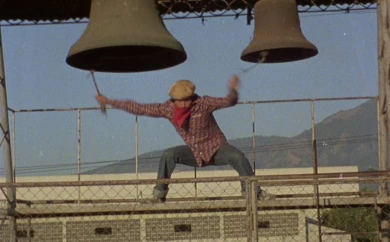
Files of Tropical Revolutions
Sábado 20 y 27 de junio, 2026 - 19:00 H
The Reframing Banana Imagery series concludes with two works that condense the height and twilight of this period in history, epic sagas that cross borders and registers to embody experiences of armed struggle in the region. Cameras mix with firearms, borders between nations blur and patience reaches breaking point. This is where the tipping point lies, where the bloodshed weighs heavy and the murmurings of regional brotherhood are buried in the ground again.
Pan y dignidad (Carta abierta de Nicaragua) [Bread and Dignity (An Open Letter to Nicaragua)] recounts the historical records and process of national reconstruction in Nicaragua via the Sandinista popular uprising. Historias prohibidas de Pulgarcito (Forbidden Tales of Tom Thumb) places the camera at the heart of the El Salvador revolutionary struggle, interspersing testimonies of daily violence with the verses of the poet Roque Dalton.
Both works understand the armed revolution as an open file under construction. The insurgent brotherhood, although dissolved, still resounds in regional history.
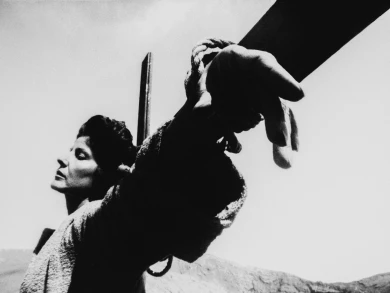
Circling Over Exploited Bodies
Friday, 19 and 26 June 2026 - 7pm
When forms of violence are inflicted on society, film responds from urgency. Images become abstract, sounds fade and the register of dissidence comes from the gut. La zona intertidal (The Intertidal Zone) is an essayistic and poetic approach to the repression of teachers in El Salvador in the 1970s — a teacher studies the biodiversity of the El Salvador coast as a boy finds a body on the same beach. A propósito de la mujer (About Women) interweaves testimonies of misery and rage towards patriarchal structures with fictional scenes of a symbolic procession through a harsh desert.
Both films understand the body as a target of violence and a territory of insurrection, a space where the blood shed by militancy and the patriarchal yoke turn pain into denouncement and existence outside the status quo into an act of political dissidence.
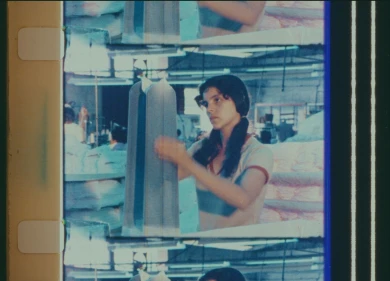
Central American Designation of Origin
Thursday, 18 and 25 June 2026 - 7pm
Fertile lands, farmers’ hands, rural faces. This first programme in the series Reframing Banana Imagery understands the foundations of the Central American experience from exploitation, extractivism and displacement, and from the organisation and resistance that emerged as a reaction. The four films within extend from a lyrical documentary on farmers’ solidarity to the playful subversion of the institutional format of the United Fruit Company.
Bananeras (Banana Growers) is a combative portrait of the inhumane conditions of the American banana plantations located in Nicaragua through much of the twentieth century. Costa Rica Banana Republic is a perspicacious satire via an institutional documentary of banana production, spotlighting the extractive nature of this agro-exporting model in the 1970s. Organización Campesina (Farmers’ Organisation) frames rural resistance in Honduras from a direct depiction and lyrical documentary, while Dos veces mujer (Two Times a Woman) dissects the invisibility of the double-shift working day Central American women farmers endure: working in the countryside and working in the home. As a whole, the works here present the earth at once as a wounded body and a space of dignity.

Cinema, for the First Time
7 and 14 June 2026 – 12:00 pm
The final session in this Moon Projector season contemplates the feeling around the first experience of cinema — cinema as revelation, magic, fantasy and mystery from the first gaze, from the first contact with the medium, and imagery etched on the retina of childhood. The programme shows Émile Cohl’s landmark Fantasmagorie (1908), the first ever hand-drawn animation, and Ignacio Agüero’s Cien niños esperando un tren (One Hundred Children Waiting for a Train, 1988), a feature-length film on play and the origins of cinema.
Fantasmagorie (1908)by Émile Cohl (Paris, 1857– Villejuif, 1938) is the first expression in the history of animated drawing. Émile Cohl was an illustrator who belonged to the Parisian art group Arts incohérents (1882–1895), who was bestowed with an absurdist and pre-Surrealist talent. Whereas the Lumière brothers were able get audiences out of their seats as they witnessed a train moving towards them in 1895, Fantasmagorie is a supernatural experience, akin to an apparition yet also innocuous and entertaining — the inanimate comes to life out of nothing and figures seemingly move with little sense. From the outset, animation was related to caricature, fabulation and the comical, a sweet spot for the dreams of the youngest audience.
From the discovery of new imagery arising from the animated line to knowledge of the world through a screen, Cien niños esperando un tren (1988), by Chilean director Ignacio Agüero (Santiago, 1952), narrates a group of young people’s discovery of cinema in a workshop on the origins of the medium in a poverty-stricken town on the outskirts of Santiago de Chile. Play, fun and learning combine with a fascination with images, as viewing Émile Cohl’s Fantasmagorie (1908) in the workshop becomes an act of freedom.
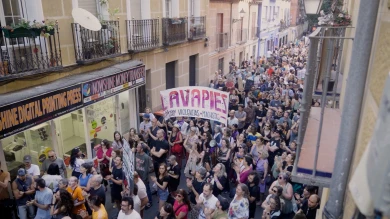
Elisa González and Leah Pattem. Soy Tribulete 7
13 JUN 2026
Framed inside this year’s Neighbourhood Picnic is the screening, in the Museo’s Cinema, of a film related to the life and protests of the Lavapiés neighbourhood, addressing issues of gentrification and the right to housing: Soy Tribulete 7 (I Am Tribulete 7, 2026), directed by Elisa González and Leah Pattem.
As the Spanish housing crisis takes hold in Lavapiés, this story begins in February 2024, when the residents of Calle Tribulete, 7, a block of apartments on a street in this Madrid barrio, receive a letter informing them that their building has been sold to a vulture fund. The news spreads quickly around the neighbourhood and, when it comes to the attention of González and Pattem, they grab their cameras and head straight for the building, where they encounter one hundred or so residents still in shock. The film Soy Tribulete 7 flows into the building and the daily lives of a community united, whose looming eviction occasions the fight of their lives. Ultimately, a path of resistance that will turn the community into a symbol of struggle for the right to housing.
Both film-makers worked closely with a group of tenants — Cris, Nani, Blanca, José, María Jesús and Antonia — to tell the story of how the building became the most creative stage of resistance ever witnessed in the area. The work presents the daily life of these residents in Madrid’s now-iconic “building fighting eviction”, depicting their collective struggle and the violent disruption to their lives. Through personal interviews, observational footage, archive material, music and a narration by eighty-year-old actress Ana Martín García, the film casts light on the human stories behind a community struggle.
The Neighbourhood Picnic is an annual gathering of festivities organised by Museo Situado, a network made up of associations, activists and residents from Lavapiés, a racially diverse, working-class neighbourhood where the Museo Reina Sofía is located.