-
Friday 11 May, 2018
Mini Concert 1
J.S. Bach: Piano concerto in A major BWV 1055
Arash Safaian from “ÜBERBACH”1. Looping Bach
2. Folia (after BWV 21/847/245)
3. Sinfonia (after BWV 21)
4. Prelude c minor (after BWV 847) -
Friday 11 May, 2018
Mini Concert 2
J.S. Bach: Piano Concert in D minor BWV 1052
Arash Safaian from “ÜBERBACH”1. Canon in G (after BWV 1078)
2. Little G (after BWV 578) -
Saturday 12 May, 2018
Mini Concert 3
J.S. Bach: Piano concerto in E major BWV 1053
Arash Safaian from “ÜBERBACH”1. Aria (after BWV 170)
2. Fuga XX (after BWV 889)
3. Choral Prelude (after BWV 617) -
Saturday 12 May, 2018
Mini Concert 4
J.S. Bach: Piano concerto in F minor BWV 1056
Arash Safaian from "ÜBERBACH"1. Canon in C (after BWV 1072)
2. Empty Set (after BWV 54)
3. Prelude in C (after BWV 924)
4. In Midair (after BWV 245)
5. Halleluja (after BWV 142) -
Friday 1 June, 2018
Mini Concert 5
Philip Glass: Echorus
Arvo Pä: Darf ich
Bach: Concert for 2 violines in D minor BWV 1043 -
Friday 1 June, 2018
Mini Concert 6
Händel: Concerto grosso for two violins and cello, op 6, num. 10
Vivaldi: L´estro armonico núm. 11, Concert for two violins and cello, in d minor, RV 565 -
Saturday 2 June, 2018
Mini Concert 7
Bechara El-Khoury: Unfinished Journey, in memoriam Yehudi Menuhin
Händel: Concerto for violin in B flat major "Sonata á 5" HWV288
Vivaldi: L´estro armonico núm. 8, Concert for two violins, in A minor, RV 522 -
Saturday 2 June, 2018
Mini Concert 8
Béla Bartók: Rumanian Folk Dances
Felix Mendelssohn-Bartholdy: Concert for violin and string orquestra in D minor

Held on 01 Jun 2018
In its aim to attract new audiences to classical and contemporary music, Spain's National Orchestra and Choir (OCNE) arranges this programme of Mini Concerts, in collaboration with the Museo Reina Sofía and framed within OCNE’s special events scheduled for 2018.
Each date will feature two concerts, requiring two separate tickets, with all valid tickets including a drink in the lobby to Auditorium 400 and an electronic music set.
Organised by
Museo Reina Sofía and Spain's National Orchestra and Choir
Más actividades
Institutional Decentralisation
Thursday, 21 May 2026 – 5:30pm
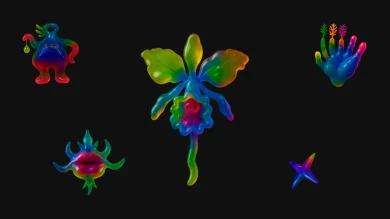
This series is organised by equipoMotor, a group of teenagers, young people and older people who have participated in the Museo Reina Sofía’s previous community education projects, and is structured around four themed blocks that pivot on the monstrous.
This fourth and final session centres on films that take the museum away from its axis and make it gaze from the edges. Pieces that work with that which is normally left out: peripheral territories, unpolished aesthetics, clumsy gestures full of intent. Instead of possessing an institutional lustre, here they are rough, precarious and strange in appearance, legitimate forms of making and showing culture. The idea is to think about what happens when central authority is displaced, when the ugly and the uncomfortable are not hidden, when they are recognised as part of the commons. Film that does not seek to be to one’s liking, but to open space and allow other ways of seeing and inhabiting the museum to enter stage.
Ordinary, Common and Public. Common Fixes for Ordinary Communities
Tuesday, 26, and Wednesday, 27 May 2026 – Check programme
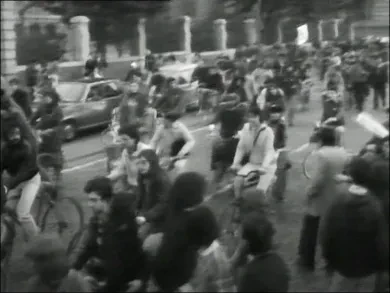
Ordinary, Common and Public. Common Fixes for Ordinary Communities is the title of the fourteenth encounter run by Sociología Ordinaria, a transdisciplinary research group that explores daily knowledge deemed ordinary, superficial or frivolous from a traditional academic and intellectual viewpoint.
This latest edition seeks to approach and map connections between concepts of the commons and the public realm — remembering that the ordinary is also the commons — and to ensure affects and moods of discontent are mobilised towards hope.
By way of its multiple declinations — community, community-based practices, the commons, the communal — the encounter seeks to reflect on different ways of creating, (re)configuring, maintaining, fixing, arranging, caring for and defending the public realm and the commons. Furthermore, it explores forms of invocation and experimentation as tools opposite the helplessness of an uncertain present, in addition to resistance against attempts of expropriation, distortion, privatisation and touristification.
International Museum Day 2026 with Radio 3
22 MAY 2026
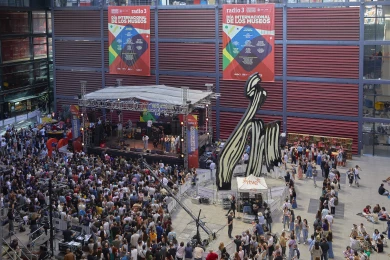
On Friday, 22 May 2026 the Museo Reina Sofía celebrates International Museum Day by way of a vibrant music programme conducted by Radio 3.
From 9am to 11pm, the Museo’s Nouvel Courtyard will host the live broadcast of Radio 3’s day-long programme —also available on a video streaming on the Radio3 website and app, on RTVEPlay and on the Museo’s social media accounts. The programme comprises more than twenty live acts, including artists such as Carlangas, Shego, Soleá Morente, Kokoshca, La Tania, La Pegatina, Pipiolas, Ángel Stanich, Triángulo de Amor Bizarro and Zahara, and many others.
With this programme the Museo Reina Sofía concludes its celebration of International Museum Day, which takes place on Monday, 18 May. Both on 18 May, from 10am to 9pm, and 22 May admission to the Museo will be free of charge.
Gerardo Mosquera: Island Thinker, Global Curator
19 MAY 2026
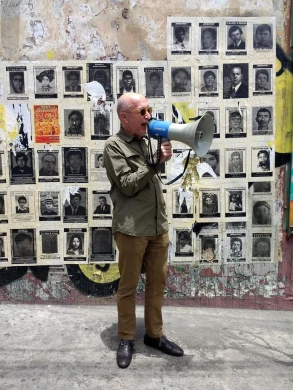
This encounter pays homage to Gerardo Mosquera (Havana, 1945), a pre-eminent curator, an essayist who has been part of key debates on decolonisation and the drifts of globalisation, a communicator and, primarily, an art critic who has managed to radically situate discourses and practices, while still taking on risks and perpetually upholding committed ethical positions.
Mosquera is one of the foremost curators internationally and was involved with the Havana Biennial from its foundation in 1984 to 1989, as well as curating pivotal shows in museums and art centres around the globe. Notable among his curatorial work is as adjunct curator at the New Museum in New York (1995–2009), the Liverpool Biennial (2006) and the exhibition It’s Not Just What You See. Perverting Minimalism (Museo Reina Sofía, 2000).
This round-table discussion, which features the participation of Gerardo Mosquerahimself and an ensemble of art critics, thinkers and artists, for instance Fernando Castro Flórez, Diana Cuéllar, Lillebit Fadraga and René Francisco Rodríguez, will approach the multifaceted and extremely fertile work of Mosquera as a renowned master curator.
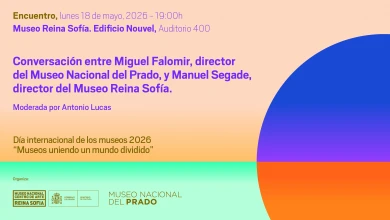
Miguel Falomir, Director of the Museo Nacional del Prado, in Conversation with Museo Reina Sofía Director Manuel Segade
18 MAY 2026
Museo del Prado and Museo Reina Sofía directors, Miguel Falomir and Manuel Segade, respectively,engage in conversation on Monday, 18 May in the Museo Reina Sofía’s Auditorium 400, in conjunction with International Museum Day 2026, the theme of which is “Museums Uniting a Dividing World”. The discussion, moderated by journalist and poet Antonio Lucas, will see the two heads of these major cultural institutions share their reflections on the role they play in today’s society.
In addition to addressing the management of art, the conversation seeks to explore in greater depth museums’ potential as meeting points to face today’s social tensions, thereby fulfilling the international mandate of this year’s edition.
The activity will be live-streamed and is available at this link.