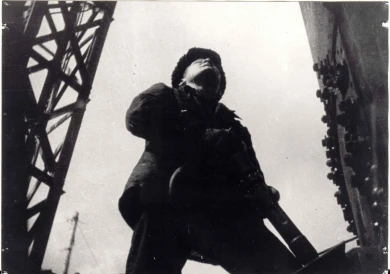
Jorge Ribalta. A look at Harsh light, without compassion. The Worker-Photography Movement, 1926-1939

Held on 06 Apr 2011
Place and registration: Please check programasculturales3@museoreinasofia.es

Más actividades
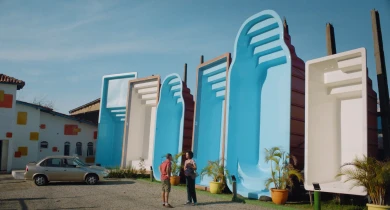
Dominga Sotomayor. Debajo and Thais Fujinaga. A Felicidade das Coisas
Friday 14 August 2026
Two gems, from two new voices in Latin American cinema, which swing between families, swimming pools, reencounters and status. In Debajo, a short film on youth by Chilean director Dominga Sotomayor, an abstract yet powerful bird’s-eye view of a swimming pool co-exists with the relationships of a crisis-stricken family, gathered to see an eclipse. Sotomayor’s distinctive film-making of care and affects shares a similar space to the daily naturalism of Thais Fujinaga’s A Felicidade das Coisas. In the director’s first feature film, the swimming pool is not a horizontal basin for swimmers’ immersion; rather it is a huge vertical monolith, a kind of an anti-monument, anchored in the garden of a middle-class family. The film conveys the efforts and challenges of a mother of two children to build a swimming pool in their modest summer house, a mother who, alone, comes up against a hypermasculine world. Equally, the film speaks of family love, and the search for status, with the swimming pool a languishing totem of the Brazilian middle class during the years of Bolsonarism.
![Blake Edwards, The Party [El guateque], 1968, película](https://recursos.museoreinasofia.es/styles/small_landscape/public/Actividades/ciclocine-piscinas-14.jpg.webp)
Blake Edwards. The Party
Saturday, 15 August 2026
In The Party, actor Hrundi V. Bakshi (Peter Sellers) is mistakenly invited to a glamorous dinner party in Hollywood. His curiosity and two left feet lead to one funny mishap after the other. During the soiree he consoles Michèle, a young actress who has been fired by her producer, and the chaos gathers momentum when Bakshi accidentally opens a retractable floor, making the guests fall into a swimming pool. A small hippie-style elephant gatecrashes the party, brought by a group of young people, and Bakshi asks the guests to wash the elephant as it is a sacred animal in his country. The house fills with soap suds, culminating in a wackily chaotic party.
When Stanley Kubrick was once asked who Peter Sellers was, he replied: “There is no such person as Peter Sellers”. The Party is one of the most widely recognised comedies in the history of film, its director Blake Edwards and the English actor making an entertaining critique of a fading conservative society. The cultural revolutions of the 1960s fit into the container of a choppy swimming pool: people from high society, an elephant, a Russian ballet, waiters, beatnik youth… similar to Sellers’s own identity: an empty vessel that can be refilled. In the film, Edwards tapped into the ingenious actor’s innate improvisation and the swimming pool as a container for revolutionary intent.
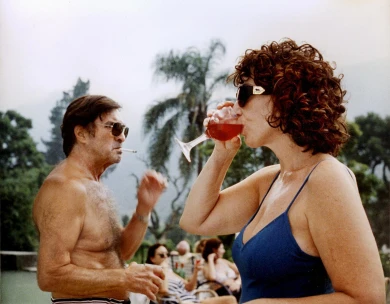
Lucrecia Martel. La ciénaga (The Swamp)
Viernes 21 de agosto, 2026
A couple of families spend the summer in a country cottage. The relationship between them exposes a crisis. The alcoholism of Mecha (Graciela Borges) and Gregorio (Martín Adjemián) becomes clear, leading to a drift in the education of their children and impacting relationships of respect and affect. Weariness expresses the lackadaisical environment.
In La ciénaga Lucrecia Martel approaches the decadence of a middle-class Argentinian family. The pool of dirty, stagnant water reflects the economic and social collapse of a whole country, yet reflects more than economic crisis as it becomes a murky well feeding off the pain of those living in the house. An erstwhile space of joy, the swimming pool becomes a reflection of adult depression, resulting in apathy. And the children, especially the girls, seem to be the only people awake in this drift. Barring a flicker of unawareness, the young people immerse themselves in rainwater or the water from the river, in water that flows, but are cautious of getting too close to the swimming pool.
![Yorgos Lanthimos, Kynodontas [Canino], 2009, película](https://recursos.museoreinasofia.es/styles/small_landscape/public/Actividades/ciclocine-piscinas-16_00.jpg.webp)
Yorgos Lanthimos. Dogtooth
Saturday, 22 August 2026
A couple with three adult children live in a modern country cottage. A large swimming pool takes centre stage in a sizeable garden. The property is skirted by a large fence that blocks a view of the outside. Here, the father has educated his children without outside contact, maintaining their belief in a false world: aeroplanes fall in the garden like toys and they must act like dogs to defend themselves from the ferocious cats that surround the house. The promise of going out into the world when they lose their dogtooth is proof of their maturity.
Lanthimos builds a world that is surreal, comical and terrible. The swimming pool is the house’s central element, a limited, controlled space assimilated like the sea, yet under the father’s supervision. A space of imagination, but with sinister intentions: the children are indoctrinated under the water as they believe in a better world. Far from reality. The swimming pool’s limits are the limits of their freedom, a false state of well-being expressed in the weightless bodies in the water. The liquid element is an analgesic magma with the power to educate offspring under the latent fear of a shark bite.
![Binka Zhelyazkova, Baseynat [La piscina], 1977, película](https://recursos.museoreinasofia.es/styles/small_landscape/public/Actividades/ciclocine-piscinas-17_00.png.webp)
Binka Zhelyazkova. The Swimming Pool
Viernes 28 de agosto, 2026
The young, bright Bella (Yanina Kasheva), after unforeseen heartbreak at her graduation party, meets Apostol (Kosta Tsonev), a reserved architect, and Boyan (Kliment Denchev), a comedy actor who is cynical about his country. The three characters climb up to a diving board in a municipal swimming pool, where they begin a strange relationship of friendship, love and despair which reflects a generational clash.
Binka Zhelyazkova, the great enfant terrible of Eastern European cinema, critic of the communist system and widely acclaimed film-maker beyond Bulgarian borders, made in The Swimming Pool a masterly metaphor for a country in decline. The public pool symbolises a closed, immovable enclosure where society is festering. From the height of a diving board she sees, in a panoptic view, the different generations living underneath a limited space. On one side, older people attempt to preserve the old revolutionary spirit with constant collective swimming exercises while, on the other, young people don’t hide the desire for freedom that remains unrealised. The result is an ideological clash in how to act and move in the enclosure, unearthing vast hypocrisy in the lost ideals of socialism, reflected in the total apathy of youth. The Swimming Pool for Zhelyazkova is a reflection of the disillusionment and existential void of a whole country and system.