Held on 24, 26 Nov 2022
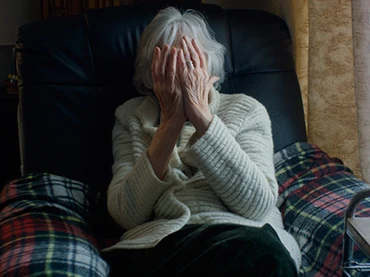
This fresh edition welcomes film-maker Irene M. Borrego’s film La Visita y Un Jardín secreto (The Visit and a Secret Garden), the winner of awards at the Málaga Film Festival, Documenta Madrid and Doclisboa in 2022. The film centres on Isabel Santaló, a Spanish painter whose career remains shrouded in obscurity. The screening is accompanied by a talk with the director and a special guest in each session: Lola Hinojosa and Antonio López, respectively.
Very little is known about the mysterious figure of Isabel Santaló (born Isabel Martínez Ruiz, Córdoba, 1923–2017), an artist erased from Spanish art history, despite being part of numerous collective exhibitions in Galería Biosca (1962), an abstract art gallery that ran in the 1950s and 1960s, and the subject of glowing essays by distinguished critics such as Vicente Aguilera Cerni and renowned writers like José Manuel Caballero Bonald. The film shows Isabel Santaló as an elderly woman clinging to life in a modest apartment on the outskirts of Madrid, where she receives the occasional visit. Through these visits, and the voice of Antonio López — the only painter of his generation to remember her with astonishing clarity — a multi-faced picture is formed. A unique gaze at an old woman in the humblest moment of her life which, as the film elapses, reveals powerful and lucid visions of art. In short, a film about memory and forgetting, about the creative process and what it means to be a woman and an artist.
Irene M. Borrego (1979) is a film-maker. She studied Film Directing at the Escuela Internacional de Cine y TV (EICTV) in Cuba, before broadening her studies further at The London Film School. She was later a pupil of film-maker Abbas Kiarostami. As a producer, she has made nine short films to date, with La Visita y Un Jardín secreto her first feature-length film as a director.
Lola Hinojosa (1979) oversees the Museo Reina Sofía’s Performing Arts and Intermedia Collection.
Antonio López (1936) is an artist. His work is part of the Museo Reina Sofía, Museo Nacional Thyssen-Bornemisza, Museo de Bellas Artes de Bilbao and Museum of Fine Arts, Boston, collections, among others. He is also at the centre of the film El sol del membrillo (1992) by film-maker Víctor Erice.
Thursday, 24 November - 7pm
Irene M. Borrego. La Visita y Un Jardín secreto
—Presentation and talk with Irene M. Borrego and Lola Hinojosa
Saturday, 26 November - 7pm
Irene M. Borrego. La Visita y Un Jardín secreto
—Presentation and talk with Irene M. Borrego and Lola Hinojosa
Credits
La Visita y Un Jardín secreto
Spain and Portugal, 2022, colour, original version in Spanish, DA, 65'
Director:Irene M. BorregoProduction:Mariangela Mondolo-Burghard and Renata SanchoScript:Irene M. Borrego and Manuel Muñoz RivasCinematography:Rita Noriega and Javier CalvoSound:Nicolas Tsabertidis and Hugo LeitãoEditing:Manuel Muñoz Rivas and Irene M. BorregoAudio post-production:Hugo LeitãoMusic:Frederic Mompou, performed by Alexis Delgado BúrdaloAssistant director:Adriana F. CastellanosAwards:
25th Málaga Film Festival, 2022. Biznaga de Plata Award for Best Director and the Biznaga de Plata Audience Award
Documenta Madrid, 2022. 19th International Film Festival. Audience Award
Cineteca Madrid, Best National Film
IBAFF International Film Festival of Murcia, 2022. 12th edition. Best Feature Film Award
20th Doclisboa, 2022. HBO Award for Portuguese Competition Best Film, and the ETIC Award for Best Portuguese Competition Film – Escolas Award
Organised by
Museo Reina Sofía
Collaboration
illycaffè
Inside the framework of
Programme
Participants
Participants
Más actividades
Files of Tropical Revolutions
Sábado 20 y 27 de junio, 2026 - 19:00 H
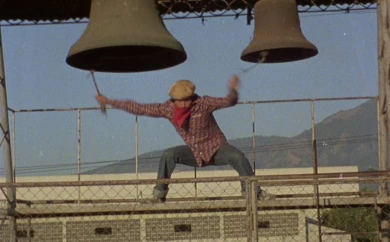
The Reframing Banana Imagery series concludes with two works that condense the height and twilight of this period in history, epic sagas that cross borders and registers to embody experiences of armed struggle in the region. Cameras mix with firearms, borders between nations blur and patience reaches breaking point. This is where the tipping point lies, where the bloodshed weighs heavy and the murmurings of regional brotherhood are buried in the ground again.
Pan y dignidad (Carta abierta de Nicaragua) [Bread and Dignity (An Open Letter to Nicaragua)] recounts the historical records and process of national reconstruction in Nicaragua via the Sandinista popular uprising. Historias prohibidas de Pulgarcito (Forbidden Tales of Tom Thumb) places the camera at the heart of the El Salvador revolutionary struggle, interspersing testimonies of daily violence with the verses of the poet Roque Dalton.
Both works understand the armed revolution as an open file under construction. The insurgent brotherhood, although dissolved, still resounds in regional history.
Circling Over Exploited Bodies
Friday, 19 and 26 June 2026 - 7pm
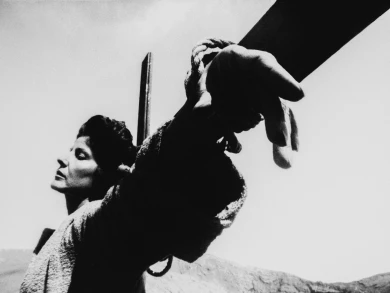
When forms of violence are inflicted on society, film responds from urgency. Images become abstract, sounds fade and the register of dissidence comes from the gut. La zona intertidal (The Intertidal Zone) is an essayistic and poetic approach to the repression of teachers in El Salvador in the 1970s — a teacher studies the biodiversity of the El Salvador coast as a boy finds a body on the same beach. A propósito de la mujer (About Women) interweaves testimonies of misery and rage towards patriarchal structures with fictional scenes of a symbolic procession through a harsh desert.
Both films understand the body as a target of violence and a territory of insurrection, a space where the blood shed by militancy and the patriarchal yoke turn pain into denouncement and existence outside the status quo into an act of political dissidence.
Central American Designation of Origin
Thursday, 18 and 25 June 2026 - 7pm
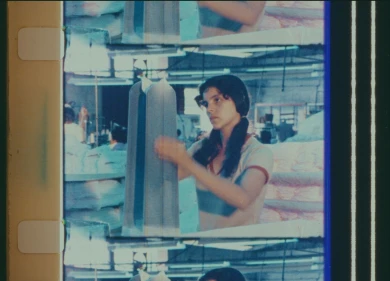
Fertile lands, farmers’ hands, rural faces. This first programme in the series Reframing Banana Imagery understands the foundations of the Central American experience from exploitation, extractivism and displacement, and from the organisation and resistance that emerged as a reaction. The four films within extend from a lyrical documentary on farmers’ solidarity to the playful subversion of the institutional format of the United Fruit Company.
Bananeras (Banana Growers) is a combative portrait of the inhumane conditions of the American banana plantations located in Nicaragua through much of the twentieth century. Costa Rica Banana Republic is a perspicacious satire via an institutional documentary of banana production, spotlighting the extractive nature of this agro-exporting model in the 1970s. Organización Campesina (Farmers’ Organisation) frames rural resistance in Honduras from a direct depiction and lyrical documentary, while Dos veces mujer (Two Times a Woman) dissects the invisibility of the double-shift working day Central American women farmers endure: working in the countryside and working in the home. As a whole, the works here present the earth at once as a wounded body and a space of dignity.

Aesthetics of Peace and Desertion Tactics
8 October 2025 – 24 June 2026
The study group Aesthetics of Peace and Tactics of Desertion: Prefiguring New Pacifisms and Forms of Transitional Justice proposes a rethinking—through both a theoretical-critical and historical-artistic lens—of the intricate network of concepts and practices operating under the notion of pacifism. A term not without contestation and critical tension, pacifism gathers under its name a multiplicity of practices—from anti-militarism and anti-war movements to non-violence activism—while simultaneously opening urgent debates around violence, justice, reparation, and desertion. Here, pacifism is not conceived as a moral doctrine, but as an active form of ethical and political resistance capable of generating aesthetic languages and new positions of social imagination.
Through collective study, the group seeks to update critical debates surrounding the use of violence and non-violence, as well as to explore the conflict of their representation at the core of visual cultures. In a present marked by rearmament, war, genocide, and the collapse of the social contract, this group aims to equip itself with tools to, on one hand, map genealogies and aesthetics of peace—within and beyond the Spanish context—and, on the other, analyze strategies of pacification that have served to neutralize the critical power of peace struggles. Transitional and anti-punitive justice proposals will also be addressed, alongside their intersections with artistic, visual, and cinematic practices. This includes examining historical examples of tribunals and paralegal activisms initiated by artists, and projects where gestures, imaginaries, and vocabularies tied to justice, reparation, memory, and mourning are developed.
It is also crucial to note that the study programme is grounded in ongoing reflection around tactics and concepts drawn, among others, from contemporary and radical Black thought—such as flight, exodus, abolitionism, desertion, and refusal. In other words, strategies and ideas that articulate ways of withdrawing from the mandates of institutions or violent paradigms that must be abandoned or dismantled. From feminist, internationalist, and decolonial perspectives, these concepts have nourished cultural coalitions and positions whose recovery today is urgent in order to prefigure a new pacifism: generative, transformative, and radical.
Aesthetics of Peace and Tactics of Desertion, developed and led by the Museo Reina Sofía’s Studies Management, unfolds through biweekly sessions from October to June. These sessions alternate between theoretical discussions, screenings, work with artworks and archival materials from the Museo’s Collection, reading workshops, and public sessions. The group is structured around sustained methodologies of study, close reading, and collective discussion of thinkers such as Judith Butler, Elsa Dorlin, Juan Albarrán, Rita Segato, Sven Lütticken, Ruth Wilson Gilmore, and Franco “Bifo” Berardi; historical episodes such as the anti-nuclear and anti-arms race movement in Spain; and the work of artists and activists including Rojava Film Commune, Manuel Correa and the Oficina de Investigación Documental (Office for Documentary Investigation), and Jonas Staal, among other initial cases that will expand as the group progresses.

equipoMotor
Jueves alternos, 23 de octubre, 2025 - 11 de junio, 2026 - 17:30 h
El programa equipoMotor regresa en su edición 25-26 con un aire espectral y mutante para lanzar la pregunta: ¿y si el Museo fuera «un poco más Frankenstein»? Inspirándose en dicho monstruo y en todas aquellas criaturas que desafían la norma desde los márgenes, el proyecto de mediación cultural Galaxxia diseña y acompaña una edición incisiva, intergeneracional y descentralizadora, donde saberes invisibilizados, cuerpos raros y deseos molestos se entrelazan para generar nuevas formas de imaginación crítica y radical. En los sótanos y corredores del Museo —un particular laboratorio— las dudas no se esconden: son materia prima.
Así, para este curso el equipoMotor convoca a personas de todas las edades que hayan participado en ediciones anteriores de los distintos equipos del Área de Educación a recorrer el Museo como quien manipula un cuerpo abierto: descoyuntando algunas de sus categorías teóricas y artísticas —la necropolítica, lo crip-cuir, la lucha de clases, las políticas del malestar, la decolonialidad, la temporalidad cuir, la descentralización institucional o el feísmo— para articular un relato díscolo, remendado y palpitante.
El programa se estructura en bloques temáticos sobre lo freak como metodología, el trabajo cultural, la intergeneracionalidad y la diversidad territorial. Cada bloque a su vez se despliega en sesiones que combinan disparadores teóricos y estéticos, visitas a exposiciones y espacios liminales del Museo, talleres artísticos con artistas, ejercicios de curaduría audiovisual colectiva y de relatoría radiofónica, así como instancias de activación pública, mediante proyecciones de cine experimental y coloquios compartidos con el público, en complicidad con el archivo Hamaca y el Área de Cine y Nuevos Medios del Museo.
De este modo, la presente edición incorpora una particularidad: el grupo de participantes irá transformándose en un «colectivo curatorial audiovisual temporalmente autónomo», con capacidad de incidir en la programación del Museo y de abrir la conversación de equipoMotor al público general, cuestionando y expandiendo así los límites entre las cabezas que deciden, las manos que producen y los cuerpos y presencias que habitan la institución. Las personas seleccionadas en la modalidad oyente serán invitadas a las proyecciones públicas, así como a otras activaciones y momentos de apertura del equipoMotor.
Frente al relato de un museo homogéneo, pulcro y lineal, apostamos por un Museo disidente, contradictorio y lleno de vida residual. Un Museo que no tema hacerse preguntas incómodas ni mostrar sus cicatrices. equipoMotor. Un poco más Frankenstein no busca repensar el cuerpo de la institución, sino habitarlo en sus desgarros, tal como es: híbrido, inacabado, infecto, fantasmagórico… y cargado de esporas y chispas por venir.