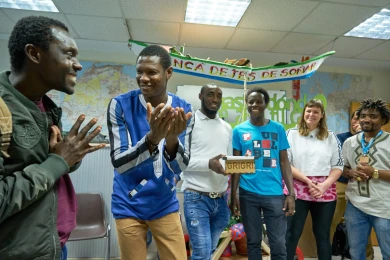
Workshop during the fourth edition of Grigri Pixel, held in SERCADE on 24 October 2019
Photograph: Óscar Parasiego
In conjunction with World Refugee Day, which takes place on 20 June 2026, Museo Situado and GRIGRI jointly organise this international encounter to foster the discussions, debates and exchange of practices which uphold solidarity with migrant people in European Union countries.
The programme, conceived as a space of exchange and the collective construction of knowledge, comprises a workshop of collaborative creation, discussions, a community meal and a film forum — activities designed by a local committee made up of young people under the age of thirty from different territories in Europe. The policy recommendations on welcoming people with migrant backgrounds and hospitality in urban contexts that arise from this encounter will be presented in Brussels at the end of 2026.
These sessions are developed within the context of the European cooperation project Bridging Borders and are framed inside the tenth anniversary of the GRIGRI Pixel project.
Collaboration
The Spanish Agency for International Development Cooperation (AECID) and the European Union’s Bridging Borders project
With the support of
Organised by
GRIGRI and Museo Situado
Agenda
viernes 19 jun 2026 a las 16:00
Welcome
— Presentation by Susana Moliner from GRIGRI, Giulia Baruzzo from Per Esempio and the local committee of the Bridging Borders programme
viernes 19 jun 2026 a las 16:45
Open Dialogue on Disinformation, Migration and Journalism
This participatory talk analyses how disinformation around migrant people feeds into hate narratives and speech and offers practical solutions such as identifying predominant narratives of disinformation, strategies used to disseminate them and dealing with content of disinformation.
— By the editorial project Maldita.es
Location: Nouvel Building, Protocol Room
Capacity: 150 people
Language: Spanish, with interpreting into English and French
Admission: Free, until full capacity is reached
viernes 19 jun 2026 a las 18:00
Collective Creation Workshop. A welcoming textile banner (Part 1)
This workshop is set up to create a portable and inhabitable large-scale map that can be used as a tool for imagining the construction of a city which is able to turn fear into possibility and the logic of protection into a practice of hospitality. It is organised across the two days of the programme and culminates in a playful intervention in public space.
From previously collected words, images, symbols and stories on inclusion and hospitality, participants and the city’s residents will collectively create a large textile banner in the form of a flag and affective cartography bearing slogans, drawings and signs that represent the feeling of being welcomed in a city.
The resulting work is activated through a collective action in urban space to become a device for imagining, seeing and vindicating forms of co-existence based on hospitality, mutual care and the right to the city.
— With David Pérez from GRIGRI and the La Tortuga Centre of Cultural Creation and Research. In collaboration with Alcalá Acoge and Parroquia San Carlos Borromeo.
Location: Sabatini Building, Workshops
Capacity: 30 people
Admission: Free, until full capacity is reached. With prior registration by filling out this form from Grigri
sábado 20 jun 2026 a las 10:00
Collective Creation Workshop. A welcoming textile banner (Part 2)
Location: Sabatini Building, Workshop
Capacity: 30 people
Admission: Free, until full capacity is reached. With prior registration by filling out this form from Grigri
sábado 20 jun 2026 a las 12:30
The Passion of Strangers: Which Policies and Practices Can Turn Fear into Possibility? And Defence into Hospitality?
This discussion sets out to explore the need for and power in building new forms of relating to otherness, inhabiting and moving beyond the very concept of hospitality. From a critical reflection on contemporary migration, the conversation spotlights narratives capable of centring the debate on racial justice and questioning borders as devices which engender exclusion and otherness.
Opposite hate speech and secularisation, the encounter prompts thinking around inclusion not only as an ethical practice, but also as a political tool for imagining more just forms of co-existence and belonging.
— With Marina Garcés, Sarah Babiker and Sani Ladan. Accompanied by Susana Moliner from GRIGRI
Location: Nouvel Building, Protocol Room and online
Capacity: 150 people
Language: Spanish, with interpreting into English and French
Admission: Free, until full capacity is reached
sábado 20 jun 2026 a las 17:00
Film Forum. Les Voyageurs (The Travellers) by David Bingong
Spain and Cameroon, 2025, colour, sound, original version in French with Spanish subtitles, 60’
On the border between Morocco and Spain, a group of travellers anxiously wait to cross into Europe. They survive one failed attempt after the other while the director attempts to keep the whole group’s hopes alive.
— Screening and talk with director David Bingong
Location: Nouvel Building, Auditorium 200
Capacity: 200 people
Admission: Free, until full capacity is reached
sábado 20 jun 2026 a las 20:00
Presentation of the welcoming textile banner
As a playful urban intervention, the final outcome of the creative collective workshop Welcoming Textile Banner will be shared with people gathered in support of refugees and migrant people for World Refugee Day.
Location: Plaza de Lavapiés
Participants
Sarah Babiker
is a journalist and anthropologist who has worked in collaboration with different media, including El Salto Diario in recent years. As a communicator, her concerns focus on inequality from an intersectional perspective. In 2024 she published the essay La nada fértil. Edades de la ciudad precaria (Continta me tienes, 2024) and the novel Café Abismo (La Oveja Roja, 2024).
Giulia Baruzzo
is a senior project manager and coordinator of the Per Esempio Onlus International Department with over fifteen years’ experience in designing, managing and monitoring EU-funded and international projects. She currently coordinates the European project Bridging Borders (CERV-2023-CITIZENS-CIV-101147847), which works with programmes such as Erasmus+, AMIF, CERV and CREA. She also lectures in European Project Management at the University of Palermo and is co-founder of the Bella Ciao Project Factory.
David Bingong
is a film-maker and playwright from Cameroon. After arriving in Spain in 2025, he founded the music group Los Griots de África and collaborated as an actor with the Teatro Sin Papeles theatre company. His first film Les Voyageurs (2025), shot between 2013 and 2015 as he travelled through Africa en route to Europe, won the Special Jury Award at the Visions du Réel film festival.
Marina Garcés
is a philosopher and writer who lectures on degree and MA courses in the Arts and Humanities at the Universitat Oberta de Catalunya. She has aligned her trajectory towards practical, critical and collective thought, and is the author of En las prisiones de lo posible (Bellaterra, 2002), Un mundo común (Bellaterra, 2013), Filosofía inacabada (Galaxia Gutenberg, 2015), Nova il·lustració radical (Anagrama, 2017), Ciutat Princesa (Galaxia Gutenberg, 2018), Escola d'aprenents (Galaxia Gutenberg, 2020) and La pasión de los extraños. Una filosofía de la amistad (Galaxia Gutenberg, 2025).
Sani Ladan
holds a degree in International Relations and is a social educator, intercultural trainer and a specialist in foreign policy, security and international migration. He works as an international analyst and as a researcher he specialises in subjects related to the Middle East and Central and West Africa. He is, moreover, a Pan-Africanist, anti-racist and an activist to protect human rights, as well as a member of Asociación Elín (Ceuta) and creator of the podcast África en 1 click. He is the author of La luna está en Duala (Plaza&Janés, 2023) and El latir de un continente (Plaza&Janés, 2026).
Centro de Creación e Investigación La Tortuga
is a space of encounter, learning and transformation through art and critical thought. A cultural centre of creativity and research which develops self-managed projects and fosters community participation.
Maldita.es
is a project by the publisher of Fundación Maldita.es, a non-profit organisation with offices in Spain which protects the integrity of information and promotes building citizen trust via journalism, education, technology, research and advocacy in public policies. Its mission is to provide evidence- and data-based tools, skills and content to make informed decisions and nurture an ecosystem of information and media that is more resilient, accessible and trustworthy.
GRIGRI
is an association devoted to cultural and social intervention from a community and transdisciplinary approach. Since 2016 it has created and implemented projects such as Un Botiquín para mi Ciudad, Grigri Pixel, Cocinar Madrid, Haciendo Plaza, Pincha tu Deuda and Templete Fantástico, coordinated and co-designed spaces of reflection and debate such as Situated Voices and supported citizen laboratories like Mulleres de Castelo, placing the stress on the process and how these initiatives have the capacity to create community.
Más actividades
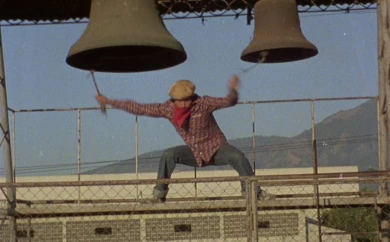
Files of Tropical Revolutions
Sábado 20 y 27 de junio, 2026 - 19:00 H
The Reframing Banana Imagery series concludes with two works that condense the height and twilight of this period in history, epic sagas that cross borders and registers to embody experiences of armed struggle in the region. Cameras mix with firearms, borders between nations blur and patience reaches breaking point. This is where the tipping point lies, where the bloodshed weighs heavy and the murmurings of regional brotherhood are buried in the ground again.
Pan y dignidad (Carta abierta de Nicaragua) [Bread and Dignity (An Open Letter to Nicaragua)] recounts the historical records and process of national reconstruction in Nicaragua via the Sandinista popular uprising. Historias prohibidas de Pulgarcito (Forbidden Tales of Tom Thumb) places the camera at the heart of the El Salvador revolutionary struggle, interspersing testimonies of daily violence with the verses of the poet Roque Dalton.
Both works understand the armed revolution as an open file under construction. The insurgent brotherhood, although dissolved, still resounds in regional history.
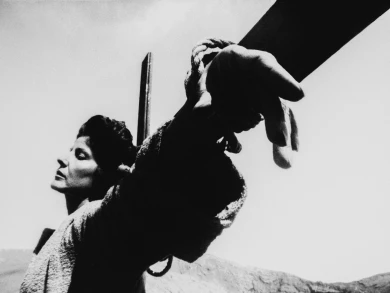
Circling Over Exploited Bodies
Friday, 19 and 26 June 2026 - 7pm
When forms of violence are inflicted on society, film responds from urgency. Images become abstract, sounds fade and the register of dissidence comes from the gut. La zona intertidal (The Intertidal Zone) is an essayistic and poetic approach to the repression of teachers in El Salvador in the 1970s — a teacher studies the biodiversity of the El Salvador coast as a boy finds a body on the same beach. A propósito de la mujer (About Women) interweaves testimonies of misery and rage towards patriarchal structures with fictional scenes of a symbolic procession through a harsh desert.
Both films understand the body as a target of violence and a territory of insurrection, a space where the blood shed by militancy and the patriarchal yoke turn pain into denouncement and existence outside the status quo into an act of political dissidence.
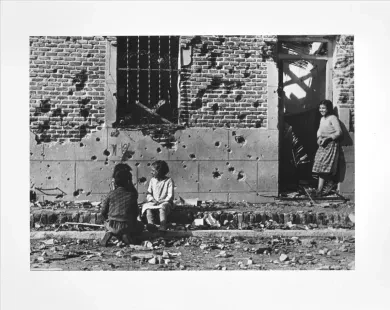
Robert Capa
Friday, 26 June 2026 – 6pm
This international encounter centred on the figure of Robert Capa (Budapest, 1913 — Thai Binh, Vietnam, 1954), one of photojournalism’s pre-eminent figures, is held within the framework of the government initiative Spain and Freedom. Fifty Years and in conjunction with a cluster of three locations — the building on number 10 Calle Peironcely, the Plaza del Fotógrafo Robert Capa and the San Carlos Borromeo Parish in Vallecas — declared as a Place of Democratic Memory.
The emblematic photo Robert Capa took in 1936 of this area of Republican Madrid, featuring anonymous children talking in front of a bullet-riddled building attacked by Nazi-fascist air forces, has, in recent years, become a catalyst for impassioned collective action vindicating memory and denouncing the horrors and brutality of wars, past and present.
Within this context, representatives from cultural and academic spheres and civil society organisations from Germany, the USA and Spain discuss the legacy of Capa and photojournalism in European democratic memory, exploring in greater depth two citizen initiatives constructed by Europe from its shared memory: #SalvaPeironcely10 (#SavePeironcely10), in Entrevías (Puente de Vallecas), and the Capa Haus Initiative in the Lindenau neighbourhood of Leipzig, both united by the protection and conservation of historical heritage and by the defence of peace.
The round-table discussion features the participation of Cynthia Young, Juan Miguel Sánchez Vigil, Ulf-Dietrich Brumann and José María Uría Fernández and is moderated by Myriam Soto Lucas. Carmina Gustrán Loscos, the commissioner of Spain and Freedom. Fifty Years, will also join the discussion.
Central American Designation of Origin
Thursday, 18 and 25 June 2026 - 7pm
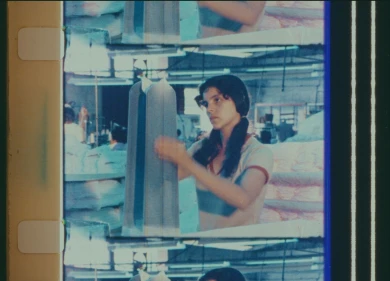
Fertile lands, farmers’ hands, rural faces. This first programme in the series Reframing Banana Imagery understands the foundations of the Central American experience from exploitation, extractivism and displacement, and from the organisation and resistance that emerged as a reaction. The four films within extend from a lyrical documentary on farmers’ solidarity to the playful subversion of the institutional format of the United Fruit Company.
Bananeras (Banana Growers) is a combative portrait of the inhumane conditions of the American banana plantations located in Nicaragua through much of the twentieth century. Costa Rica Banana Republic is a perspicacious satire via an institutional documentary of banana production, spotlighting the extractive nature of this agro-exporting model in the 1970s. Organización Campesina (Farmers’ Organisation) frames rural resistance in Honduras from a direct depiction and lyrical documentary, while Dos veces mujer (Two Times a Woman) dissects the invisibility of the double-shift working day Central American women farmers endure: working in the countryside and working in the home. As a whole, the works here present the earth at once as a wounded body and a space of dignity.
Inclusive Policies and Practices
19, 20 JUN 2026
In conjunction with World Refugee Day, which takes place on 20 June 2026, Museo Situado and GRIGRI jointly organise this international encounter to foster the discussions, debates and exchange of practices which uphold solidarity with migrant people in European Union countries.
The programme, conceived as a space of exchange and the collective construction of knowledge, comprises a workshop of collaborative creation, discussions, a community meal and a film forum — activities designed by a local committee made up of young people under the age of thirty from different territories in Europe. The policy recommendations on welcoming people with migrant backgrounds and hospitality in urban contexts that arise from this encounter will be presented in Brussels at the end of 2026.
These sessions are developed within the context of the European cooperation project Bridging Borders and are framed inside the tenth anniversary of the GRIGRI Pixel project.