-
Thursday, 3 May – 7pm
Session 1
Second session: Friday, 18 May – 7pm
First session presented by David Cortés Santamarta, curator
Second session presented by Gérard FromangerGérard Fromanger and Jean-Luc Godard
Film-tract nº 1968 (1968)
France, DA, colour, silent, 3’Anonymous
Cinétracts (Film-Tracts), 1968
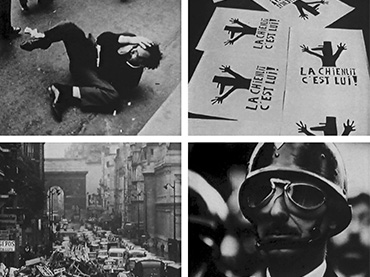
France, DA, b/w, original version with Spanish subtitles, 76’The political pamphlet Cinétractez, handed out in May 1968, describes the cinétract in the following terms: “What is a cinétract?: 2’44” (that is, a 30-metre-long reel of 16mm film at 24 frames per second) of silent film on a political and social theme, or any other, aimed to trigger discussion and action. Through these cinétracts we attempt to explain our thoughts and reactions. Why? To: Oppose-Propose-Surprise-Inform-Question-Affirm-Convince-Shout-Laugh-Denounce-Teach. But with what? A wall, a camera, lamplight on a wall. Documents, photographs, newspapers, drawings, posters, books, etc. A marker pen, tape, glue, a tape measure, a timer”. This new format places the stress on both the will for political intervention, driven by the urgency of revolution, and an invitation, in the wordplay in the title, in a creative appropriation of this approach to film.
-
Friday, 4 May – 7pm
Session 2
Second session: Monday, 21 May – 7pm
Chris Marker and Mario Marret
À bientôt, j'espère (Be Seing You), 1967
France, DA, b/w, original version with Spanish subtitles, 43’The Besançon Medvedkin Group
La Charnière (The Hinge), 1968
France, DA, b/w, original version with Spanish subtitles, 12’
Classe de lutte (The Class of Struggle), 1968
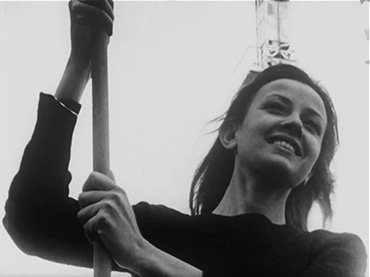
France, DA, b/w, original version with Spanish subtitles, 40’“Comrades, silence is your worst enemy!” was how film-maker Mario Marret addressed workers on the day he arrived at the Rhodiaceta textile factory in Besançon, the location of a strike that would act as a forerunner to those which came shortly afterwards, in May ’68. The documentary by Marker and Marret portrays the workers’ reflections on their work and day-to-day existence. Without images, La Charnière is an unalloyed soundtrack recording the discussion between the film-makers and workers after the premiere of À bientôt, j’espère, a debate which would give rise to the collective experience of the Medvedkin Groups, who took their name as an homage to Soviet film-maker Aleksandr Medvedkin. Classe de lutte is the first film by the said groups and symbolises a definitive step from a “militant film about workers’ conditions to a militant workers’ film” (Benoliel).
-
Monday, 7 May – 7pm
Session 3
Second session: Thursday, 17 May – 7pm
The Besançon Medvedkin Group
Serie Nouvelle société No. 5 - 7 (New Society Series No. 5–7), 1969–1970
France, DA, b/w, original version with Spanish subtitles, 30’
Rhodia 4 x 8, 1969
France, DA, b/w, original version with Spanish subtitles, 4’The Sochaux Medvedkin Group
Sochaux, 11 juin 68 (Sochaux, 11 June ’68), 1970
France, DA, b/w, original version with Spanish subtitles, 19’Jean-Pierre Thiébaud / The Besançon Medvedkin Group
Le Traîneau-échelle (The Sled-Ladder), 1971
France, DA, colour, original version with Spanish subtitles, 8’Michel Desrois / The Besançon Medvedkin Group
Lettre à mon ami Pol Cèbe (A Letter to My Friend Pol Cèbe), 1970
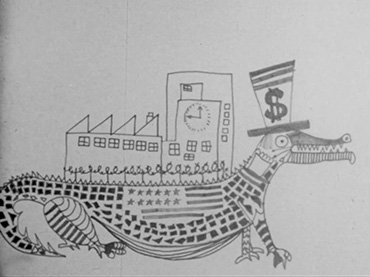
France, DA, colour, original version with Spanish subtitles, 17’The alliance between workers and film-makers that cemented in the Medvedkin Groups resulted in an ensemble of films which broke out beyond the conventional parameters of the concept of militant cinema. In generically and ironically alluding to the “new society”, promised at the time by the French Prime Minister, the series Nouvelle Société comprises different conflicts in French factories. In Rhodia 4 x 8, a song by the French militant singer-songwriter Colette Magny accompanies sequences showing the repetitive and gruelling shifts worked on the assembly line. Sochaux, 11 juin 68, meanwhile, recalls one of the most brutal episodes of government repression from May ’68, whereas Le Traîneau-échelle composes a unique visual poem, juxtaposing images of hope with others documenting the horrors of history. One continuous shot-sequence, filmed from the inside of a car, structures Lettre à mon ami Pol Cèbe, whereby the fixed view of the road runs in parallel with the dialogue of three passengers, members of the Medvedkin Groups, who reflect on the potential of militant cinema.
-
Thursday, 10 May – 7pm
Session 4
Second session: Friday, 25 May – 7pm
The Sochaux Medvedkin Group
Les trois-quarts de la vie (Three-Quarters of a Lifetime), 1971
France, DA, b/w, original version with Spanish subtitles, 18’The Sochaux Medvedkin Group
Week-end à Sochaux (Weekend in Shochaux), 1971
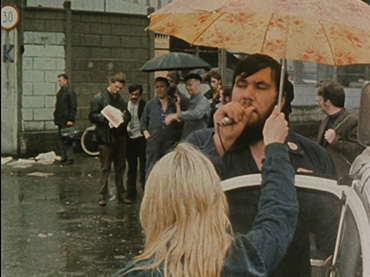
France, DA, colour, original version with Spanish subtitles, 53’After 1969, the Sochaux Medvedkin Group would continue with the militant workers’ film project that had germinated in Besançon. In the words of Bruno Muel, the collective worked to “show the cultural prohibitions that must be defeated, that which we could call the usurpation of knowledge, to obtain the means to fight equally against those who think everyone should remain in their place”. Workers from the Peugeot factory in Sochaux, along with advocates of the previous group like Pol Cèbe and Muel, made the films Les trois-quarts de la vie and Week-end à Sochaux to expose the assembly-line working conditions and the engulfing existence of daily work. They refer to “three-quarters of a lifetime”, the title of the first medium-length film, with registers and resources that include an unprecedented, irreverent and satirical theatrical take as close to the popular commedia dell´arte as performance, and explored in greater depth in Week-end à Sochaux.
-
Friday, 11 May – 7pm
Session 5
Second session: Monday, 28 May – 7pm
Bruno Muel / Grupo Medvedkin de Sochaux
Avec le sang des autres (With the Blood of Others), 1974
France, DA, colour, original version with Spanish subtitles, 52’Avec le sang des autres corroborates the break-up of the Medvedkin Groups’ collective experience. Conceived as a common initiative, it was ultimately Bruno Muel who filmed this damning documentary about workplace exploitation at the Peugeot factory in Sochaux, the largest factory in France. The humour and provocative side of the Medvedkin Group’s preceding work is notably lacking here; the assembly line and life’s reduction to a workforce, admin time and time-clock dehumanisation are recorded in an insufferable whole: “In the filming, the workers insisted on both the correct length of the shots — enough to see the progress of the assembly line and to get a feel for the unrelenting noise — and on the importance of filming the workers’ hands,” writes Muel.
-
Monday, 14 May – 7pm
Session 6
Second session: Thursday, 24 May – 7pm
Second session presented by Sylvain George
Jean-Marie Straub
Europa 2005 / 27 octobre (cinétract) (Europe 2005/27 October [Film Tract]), 2006
France, DA, colour, original version with Spanish subtitles, 11’
Joachim Gatti, 2009
France, DA, colour, original version with Spanish subtitles, 1’30’’Sylvain George
N'entre pas sans violence dans la nuit (Do Not Go Gentle in the Night), 2005
France, DA, b/w, original version with Spanish subtitles, 20’.
Ils nous tueront tous (They Will Kill Us All), 2009
France, DA, b/w, original version with Spanish subtitles, 10’.
Les Nuées (My Black Mama's Face), 2012
France, DA, b/w, original version with Spanish subtitles, 8’.
Joli mai (celui qui a tué moins de cent fois, qu'il me jette la première pierre) (Beautiful May [let he who has killed fewer than a hundred times cast the first stone]), 2017
France, DA, b/w, original version with Spanish subtitles, 10’.
Un peu de feu que vole (sa geste en mille éclats) (A Little Fire that Flies [A Gesture in a Thousand Pieces]), 2017
France, DA, b/w, original version with Spanish subtitles, 11 min.The short films by Jean-Marie Straub and Sylvain George demonstrate the continuities and ruptures between the May ’68 cinétracts and the present. The Film-makers’ blatant use of the term is not only a way to designate a set format; it also denotes the affirmation of the historical and political links established with that legacy. Their counter-informative approach stems from the cinétracts made in 1968, in regard to their immediate adherence to contemporary events — the banlieues riots in Paris, political repression, the sans-papiers’ fight for their rights, the refugee camp in Calais and the Nuit debout movement — and their opposition to the dominant language in the media.
![Sylvain George. Un peu de feu que vole (sa geste en mille éclats) (A Little Fire that Flies [A Gesture in a Thousand Pieces]), Film, 2017](https://recursos.museoreinasofia.es/legacy_programs/06_sgeorge-peq.jpg "Sylvain George. Un peu de feu que vole (sa geste en mille éclats) (A Little Fire that Flies [A Gesture in a Thousand Pieces]), Film, 2017")

Held on 03, 04, 07, 10, 11, 14, 17, 18, 21, 24, 25, 28 May 2018
In May 1968, the defiance of power, mobilised through demonstrations, by reclaiming the streets, new forms of DIY organisation, the occupation of factories and universities and a prolonged general strike was driven primarily by the subversive power from the horizontal gathering of identities and spheres kept apart by society; from collectively speaking out and questioning any form of representation, whether it be political, cultural, or through the media or trade unions.
This collective and anonymous dimension, a pivotal part of the events that transpired, was reflected in cinétracts, cinema “tracts”, or film pamphlets, and the films of the Medvedkin Groups, made by workers and film-makers (producers and technicians) alike. These practices, the fulcrum of this series, built the sturdiest expressions of film-making which contested at once the traditional notion of authorship and the standard devices of film production. These practices appear to reveal that which the philosopher Jacques Rancière has articulated on the very principle of radical democracy and politics: “The recognition of anybody’s power”.
The aforementioned cinétracts are short films with a running time of between two to five minutes, filmed under a policy of anonymity by a number of professional directors, among them Jean-Luc Godard, Alain Resnais and Chris Marker – responsible for the initiative — and amateur film-makers. Moreover, these works can be seen as the film equivalent to the illustrious May ‘68 posters and graffiti: simple resources and craftsmanship with a fitting visual impact for the purposes of counter-information.
The collective experience of the Medvedkin Groups — named in homage to Soviet film-maker Aleksandr Medvedkin (1900—1989), the creator of the “film-train” in the 1930s — prompted the workers to make militant films. Certain professionals, including Chris Marker, Mario Marret and Bruno Muel, organised workshops in Besançon and Sochaux, and loaned cameras and film-making materials out with the intention of sharing their specialist technical knowledge with the workers, who in turn appropriated the image to create their own representation of the living and working conditions they experienced. This alliance thus gave rise, between 1967 and 1974, to a string of films which exceeded, in content and formal invention, the conventional parameters defining cinéma militant.
In addition to putting forward an approach to the anonymous and collective practices which surfaced around May ‘68, the series sets out to constitute a way of examining the event on the eve of its 50th anniversary. Consequently, along with the cinétracts of ’68, more recent tracts by Straub and Sylvain George will be screened, thus reflecting the ruptures and continuities between that legacy and the present in an insurgent audiovisual genre.
In collaboration with
Curatorship
David Cortés Santamarta
Organised by
Museo Reina Sofía
Más actividades
Files of Tropical Revolutions
Sábado 20 y 27 de junio, 2026 - 19:00 H
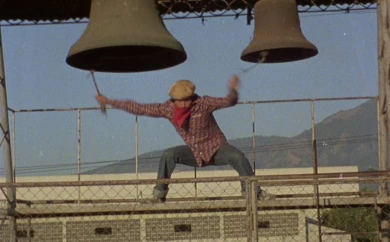
The Reframing Banana Imagery series concludes with two works that condense the height and twilight of this period in history, epic sagas that cross borders and registers to embody experiences of armed struggle in the region. Cameras mix with firearms, borders between nations blur and patience reaches breaking point. This is where the tipping point lies, where the bloodshed weighs heavy and the murmurings of regional brotherhood are buried in the ground again.
Pan y dignidad (Carta abierta de Nicaragua) [Bread and Dignity (An Open Letter to Nicaragua)] recounts the historical records and process of national reconstruction in Nicaragua via the Sandinista popular uprising. Historias prohibidas de Pulgarcito (Forbidden Tales of Tom Thumb) places the camera at the heart of the El Salvador revolutionary struggle, interspersing testimonies of daily violence with the verses of the poet Roque Dalton.
Both works understand the armed revolution as an open file under construction. The insurgent brotherhood, although dissolved, still resounds in regional history.
Circling Over Exploited Bodies
Friday, 19 and 26 June 2026 - 7pm
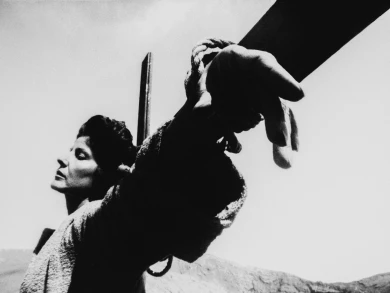
When forms of violence are inflicted on society, film responds from urgency. Images become abstract, sounds fade and the register of dissidence comes from the gut. La zona intertidal (The Intertidal Zone) is an essayistic and poetic approach to the repression of teachers in El Salvador in the 1970s — a teacher studies the biodiversity of the El Salvador coast as a boy finds a body on the same beach. A propósito de la mujer (About Women) interweaves testimonies of misery and rage towards patriarchal structures with fictional scenes of a symbolic procession through a harsh desert.
Both films understand the body as a target of violence and a territory of insurrection, a space where the blood shed by militancy and the patriarchal yoke turn pain into denouncement and existence outside the status quo into an act of political dissidence.
Central American Designation of Origin
Thursday, 18 and 25 June 2026 - 7pm
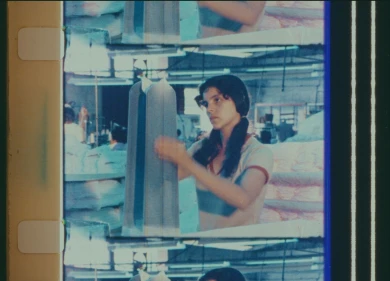
Fertile lands, farmers’ hands, rural faces. This first programme in the series Reframing Banana Imagery understands the foundations of the Central American experience from exploitation, extractivism and displacement, and from the organisation and resistance that emerged as a reaction. The four films within extend from a lyrical documentary on farmers’ solidarity to the playful subversion of the institutional format of the United Fruit Company.
Bananeras (Banana Growers) is a combative portrait of the inhumane conditions of the American banana plantations located in Nicaragua through much of the twentieth century. Costa Rica Banana Republic is a perspicacious satire via an institutional documentary of banana production, spotlighting the extractive nature of this agro-exporting model in the 1970s. Organización Campesina (Farmers’ Organisation) frames rural resistance in Honduras from a direct depiction and lyrical documentary, while Dos veces mujer (Two Times a Woman) dissects the invisibility of the double-shift working day Central American women farmers endure: working in the countryside and working in the home. As a whole, the works here present the earth at once as a wounded body and a space of dignity.

Aesthetics of Peace and Desertion Tactics
8 October 2025 – 24 June 2026
The study group Aesthetics of Peace and Tactics of Desertion: Prefiguring New Pacifisms and Forms of Transitional Justice proposes a rethinking—through both a theoretical-critical and historical-artistic lens—of the intricate network of concepts and practices operating under the notion of pacifism. A term not without contestation and critical tension, pacifism gathers under its name a multiplicity of practices—from anti-militarism and anti-war movements to non-violence activism—while simultaneously opening urgent debates around violence, justice, reparation, and desertion. Here, pacifism is not conceived as a moral doctrine, but as an active form of ethical and political resistance capable of generating aesthetic languages and new positions of social imagination.
Through collective study, the group seeks to update critical debates surrounding the use of violence and non-violence, as well as to explore the conflict of their representation at the core of visual cultures. In a present marked by rearmament, war, genocide, and the collapse of the social contract, this group aims to equip itself with tools to, on one hand, map genealogies and aesthetics of peace—within and beyond the Spanish context—and, on the other, analyze strategies of pacification that have served to neutralize the critical power of peace struggles. Transitional and anti-punitive justice proposals will also be addressed, alongside their intersections with artistic, visual, and cinematic practices. This includes examining historical examples of tribunals and paralegal activisms initiated by artists, and projects where gestures, imaginaries, and vocabularies tied to justice, reparation, memory, and mourning are developed.
It is also crucial to note that the study programme is grounded in ongoing reflection around tactics and concepts drawn, among others, from contemporary and radical Black thought—such as flight, exodus, abolitionism, desertion, and refusal. In other words, strategies and ideas that articulate ways of withdrawing from the mandates of institutions or violent paradigms that must be abandoned or dismantled. From feminist, internationalist, and decolonial perspectives, these concepts have nourished cultural coalitions and positions whose recovery today is urgent in order to prefigure a new pacifism: generative, transformative, and radical.
Aesthetics of Peace and Tactics of Desertion, developed and led by the Museo Reina Sofía’s Studies Management, unfolds through biweekly sessions from October to June. These sessions alternate between theoretical discussions, screenings, work with artworks and archival materials from the Museo’s Collection, reading workshops, and public sessions. The group is structured around sustained methodologies of study, close reading, and collective discussion of thinkers such as Judith Butler, Elsa Dorlin, Juan Albarrán, Rita Segato, Sven Lütticken, Ruth Wilson Gilmore, and Franco “Bifo” Berardi; historical episodes such as the anti-nuclear and anti-arms race movement in Spain; and the work of artists and activists including Rojava Film Commune, Manuel Correa and the Oficina de Investigación Documental (Office for Documentary Investigation), and Jonas Staal, among other initial cases that will expand as the group progresses.

equipoMotor
Jueves alternos, 23 de octubre, 2025 - 11 de junio, 2026 - 17:30 h
El programa equipoMotor regresa en su edición 25-26 con un aire espectral y mutante para lanzar la pregunta: ¿y si el Museo fuera «un poco más Frankenstein»? Inspirándose en dicho monstruo y en todas aquellas criaturas que desafían la norma desde los márgenes, el proyecto de mediación cultural Galaxxia diseña y acompaña una edición incisiva, intergeneracional y descentralizadora, donde saberes invisibilizados, cuerpos raros y deseos molestos se entrelazan para generar nuevas formas de imaginación crítica y radical. En los sótanos y corredores del Museo —un particular laboratorio— las dudas no se esconden: son materia prima.
Así, para este curso el equipoMotor convoca a personas de todas las edades que hayan participado en ediciones anteriores de los distintos equipos del Área de Educación a recorrer el Museo como quien manipula un cuerpo abierto: descoyuntando algunas de sus categorías teóricas y artísticas —la necropolítica, lo crip-cuir, la lucha de clases, las políticas del malestar, la decolonialidad, la temporalidad cuir, la descentralización institucional o el feísmo— para articular un relato díscolo, remendado y palpitante.
El programa se estructura en bloques temáticos sobre lo freak como metodología, el trabajo cultural, la intergeneracionalidad y la diversidad territorial. Cada bloque a su vez se despliega en sesiones que combinan disparadores teóricos y estéticos, visitas a exposiciones y espacios liminales del Museo, talleres artísticos con artistas, ejercicios de curaduría audiovisual colectiva y de relatoría radiofónica, así como instancias de activación pública, mediante proyecciones de cine experimental y coloquios compartidos con el público, en complicidad con el archivo Hamaca y el Área de Cine y Nuevos Medios del Museo.
De este modo, la presente edición incorpora una particularidad: el grupo de participantes irá transformándose en un «colectivo curatorial audiovisual temporalmente autónomo», con capacidad de incidir en la programación del Museo y de abrir la conversación de equipoMotor al público general, cuestionando y expandiendo así los límites entre las cabezas que deciden, las manos que producen y los cuerpos y presencias que habitan la institución. Las personas seleccionadas en la modalidad oyente serán invitadas a las proyecciones públicas, así como a otras activaciones y momentos de apertura del equipoMotor.
Frente al relato de un museo homogéneo, pulcro y lineal, apostamos por un Museo disidente, contradictorio y lleno de vida residual. Un Museo que no tema hacerse preguntas incómodas ni mostrar sus cicatrices. equipoMotor. Un poco más Frankenstein no busca repensar el cuerpo de la institución, sino habitarlo en sus desgarros, tal como es: híbrido, inacabado, infecto, fantasmagórico… y cargado de esporas y chispas por venir.