-
30-31 August
Session 1. Film
Luis Buñuel. Un Chien Andalou ( An Andalusian Dog ) 1929. B/W, in French, with Spanish subtitles.
Courtesy of Filmoteca Española, Madrid.Luis Buñuel. L’Âge d'Or ( The Golden Age) 1930. B/W, in French, with Spanish subtitles.
Courtesy of Centre Pompidou, Musée National d’Art Moderne, Paris . Donation made in 1989. Original negative restored in 1993 by the Centre Pompidou, Musée National d’Art Moderne, with help from the GAN Foundation for Cinema. 35 mm film courtesy of Filmoteca Española , Madrid . Screenings in 35 mm on Friday at 4:30 p.m. and Saturday at 12 noon.Salvador Dalí with Walt Disney. Destino, 1946-2003. Colour, sound, no dialogue, 6’31’’.
Courtesy of Walt Disney Animation Studios. Film screened only on Friday at 4:30 p.m. and Saturday at 12 noon.Alfred Hitchcock. Spellbound , 1945. B/W, in English, with Spanish subtitles, 2’45’’. Fragment with sets designed by Dalí.
Courtesy of Walt Disney / ABC Domestic Television.Duration of the session: 1h 37 min
* Image rights of Salvador Dalí reserved. Fundació Gala-Salvador Dalí, Figueres, 2013
-
30-31 August
Session 2. Television. Advertisements. Happenings
A fondo . Joaquín Soler Serrano interviews Salvador Dalí, 1977. B/N, 46’
In collaboration with RTVE.*Advertisement for Chocolat Lanvin, 1969. Colour, in French, with Spanish subtitles. 25’’
Courtesy of La Maison de la Publicité *Salvador Dalí working on the two pieces Pastor de Ampurdán and La sirena alada de la Costa Brava to decorate Iberia airlines DC-10 aircraft, 1972. Colour, 1’ 21’’
Courtesy of the Iberia Documentation Centre. *Advertisement for Alka-Seltzer, 1974. Colour, in English, with Spanish subtitles. 44’’ Archives of the Bayer Corporation.
Courtesy of Bayer HealthCare LLC. *Happenings and actions Salvador Dalí happening in Park Güell. Tribute to Gaudí, 1956. B/W NO-DO Archives. Courtesy of Filmoteca Española. *
Dalinian Variations , Dalí on the beach and at his Port Lligat house presenting an invention that enables a sea urchin to paint a picture, 1957. B/W NO-DO Archives. Courtesy of Filmoteca Española. *
Salvador Dalí happening held in Park Güell for Harkness Ballet , 1966. B/W NO-DO Archives. Courtesy of Filmoteca Española. *
Fragment of the Salvador Dalí happening in Granollers. Dalí and his new invention. Rain Painting , 1974. B/W NO-DO Archives. Courtesy of Filmoteca Española. *
Salvador Dalí the baker, 1958. B/W, in French, with Spanish subtitles.
Courtesy of Institut National de l’Audiovisuel (INA), France . *
Ovociped , 1959. B/W, in French, with Spanish subtitles.
Courtesy of Institut National de l’Audiovisuel (INA), France . *Lecture by Dalí at the École Polytechnique, Paris , 1961. B/W, in French, with Spanish subtitles.
Courtesy of Institut National de l’Audiovisuel (INA), France . *Salvador Dalí, Journal de Paris. Dalí presents his collection of swimsuits. Dalí-kinis , 1964. B/W, in French, with Spanish subtitles.
Courtesy of Institut National de l’Audiovisuel (INA), France . *Salvador Dalí. Lorca, poetry phenomenon . Fragment in which Paco Ibáñez sings to Lorca and Dalí talks about him, 1965. B/W, in French, with Spanish subtitles.
Courtesy of Institut National de l’Audiovisuel (INA), France . *Salvador Dalí with Philippe Halsman, Chaos and Creation , 1960. B/W, in English, with Spanish subtitles, 18’26’’.
Courtesy of Philippe Halsman Archive , New York .Dizzy Dali Dinner , 1941. B/W, no sound, 52’’
Courtesy of Grinberg Asset Holdings.*Le Veston aphrodisiaque ( The Aphrodisiac Jacket ), 1964. B/W, in French, with Spanish subtitles, 45’’ Courtesy of Institut National de l’Audiovisuel (INA), France . *
Duration of the session: 1 h 34 min
* Image rights of Salvador Dalí reserved. Fundació Gala-Salvador Dalí, Figueres, 2013
-
30-31 agosto
Session 3. Documentary film
Jean-Christophe Averty.Soft Self-Portrait of Salvador Dalí (Autoportrait mou de Salvador Dalí), 1966. Colour, in French with Spanish subtitles, 70’
Courtesy of Jean-Christophe Averty and Institut National de l’Audiovisuel, INA, France *Duration of the session: 1 h 10 min
* Image rights of Salvador Dalí reserved. Fundació Gala-Salvador Dalí, Figueres, 2013
-
30-31 August
Schedule
Friday, August 30th
11:00 a.m. Session 1. Cinema
1:00 p.m Session 2. Advertisements. Television. Happenings.
3:00 p.m. Session 3. Documentary film
4:30 p.m. Session 1. Cinema
** Screening of L' Âge d'Or and Destino in 35 mm
Saturday, August 31st
11:00 a.m. Session 2. Advertisements. Television. Happenings.
1:00 p.m Session 1. Cinema
** Screening of L' Âge d'Or and Destino in 35 mm
3:00 p.m. Session 3. Documentary film.
4:30 p.m. Session 2. Advertisements. Television. Happenings.
6:30 p.m. Session 3. Documentary film.
8:00 p.m. Session 1. Cinema
10:00 p.m. Session 2. Advertisements. Television. Happenings.

Held on 30, 31 Aug 2013
This audiovisual series looks at Salvador Dalí's film, video and television production, as a culmination of the exhibition Dalí. All of the poetic suggestions and all of the plastic possibilities. Almost five hours in length, this collection of works, with repeat screenings over two days, argues that the relationship between Dalí and mass culture is key to understanding the artist's work, but also to developing a different idea of modernity, one that conveys the spectacular and tumultuous nature of 1930s modernity.
The connection between mass media and modern art was understood, during most of that decade, through a complex body of theories. These modes of thinking, which ranged from formalist critique to the most orthodox surrealism, reveal the presence of an inevitable dialectical tension. So, it is no surprise that Clement Greenberg would situate the survival of the avant-garde in its direct confrontation with the kitsch of film and illustration. Similarly, André Breton would conceive of the manifestations of popular culture in surrealism as a simple means by which to transcend everyday life and once again enchant the world with the marvellous. The definitions proposed by the theorists of the time, such as Siegfried Kracauer, present cinema as an entertainment factory, in which the seriality and division of labour, typical of the industrial assembly line, are put to the service of merchandise transformed into spectacle.
Unlike theses such as these, which in one way or another protagonized the decade, Dalí's achievement was to formulate his own conception of the mass media, and his ideas took concrete form in the series of audiovisual productions presented in this series. In contrast with the mechanical and standardised work described by Kracauer, Dalí conceived of the film industry as a machine for the collective production of desire, in which the spectacle is the sequenced version of the paranoiac-critical method and its delirious associations. The public and the masses urgently demand the illogical and tumultuous images of their own desires and their own dreams (…), in Hollywood I hear the word Surrealism from every mouth, he wrote in 1937. Therefore it is not strange at all that Dalí would comment to Buñuel that, after all, L'Age d'Or is nothing but another American movie.
After two collaborations with his friend at the Residencia de Estudiantes in Madrid (Un Chien Andalou and L'Àge d'Or), Dalí's attraction to the subversive potential of Hollywood and mass culture, so liberating and spontaneous, prompted him to take part in film projects with Walt Disney (a genuine surrealist, along with Harpo Marx and Cecil B. DeMille, Dalí said of Disney) and Alfred Hitchcock. Dalí's originality lies in the fact that, unlike André Breton, he does not idealize or transcend this subculture, but rather promotes, somewhat like the surrealist dissident Georges Bataille, its low and degrading, anti-artistic nature. The artist conceived of himself as a Gargantua that executes and celebrates this collective manifestation of delirium.
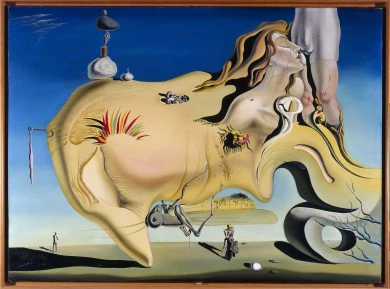
So, although this new relationship between artist and spectacle led Breton to expel Dalí from the Surrealist movement - and rename him Avida Dollars - , the creator of The Great Masturbator did become the protagonist of numerous advertisements, documentaries, happenings and various actions undertaken by a generation of younger artists. In doing so, he not only revealed his ability to put forward a specific role of the artist within the mediatic world of post-war art, he also offered a solution, questionable or not, to another endless enigma, that of the relationship between modernity and the mass media.
Más actividades
Files of Tropical Revolutions
Sábado 20 y 27 de junio, 2026 - 19:00 H
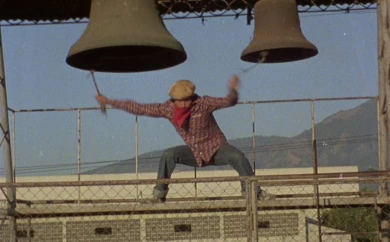
The Reframing Banana Imagery series concludes with two works that condense the height and twilight of this period in history, epic sagas that cross borders and registers to embody experiences of armed struggle in the region. Cameras mix with firearms, borders between nations blur and patience reaches breaking point. This is where the tipping point lies, where the bloodshed weighs heavy and the murmurings of regional brotherhood are buried in the ground again.
Pan y dignidad (Carta abierta de Nicaragua) [Bread and Dignity (An Open Letter to Nicaragua)] recounts the historical records and process of national reconstruction in Nicaragua via the Sandinista popular uprising. Historias prohibidas de Pulgarcito (Forbidden Tales of Tom Thumb) places the camera at the heart of the El Salvador revolutionary struggle, interspersing testimonies of daily violence with the verses of the poet Roque Dalton.
Both works understand the armed revolution as an open file under construction. The insurgent brotherhood, although dissolved, still resounds in regional history.
Circling Over Exploited Bodies
Friday, 19 and 26 June 2026 - 7pm
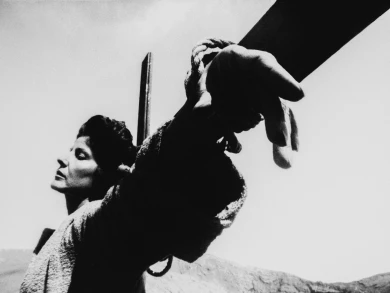
When forms of violence are inflicted on society, film responds from urgency. Images become abstract, sounds fade and the register of dissidence comes from the gut. La zona intertidal (The Intertidal Zone) is an essayistic and poetic approach to the repression of teachers in El Salvador in the 1970s — a teacher studies the biodiversity of the El Salvador coast as a boy finds a body on the same beach. A propósito de la mujer (About Women) interweaves testimonies of misery and rage towards patriarchal structures with fictional scenes of a symbolic procession through a harsh desert.
Both films understand the body as a target of violence and a territory of insurrection, a space where the blood shed by militancy and the patriarchal yoke turn pain into denouncement and existence outside the status quo into an act of political dissidence.
Central American Designation of Origin
Thursday, 18 and 25 June 2026 - 7pm
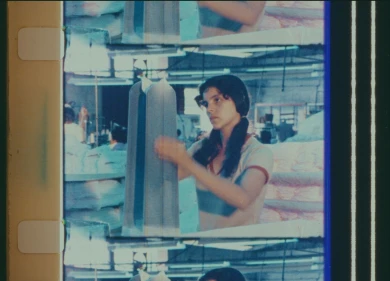
Fertile lands, farmers’ hands, rural faces. This first programme in the series Reframing Banana Imagery understands the foundations of the Central American experience from exploitation, extractivism and displacement, and from the organisation and resistance that emerged as a reaction. The four films within extend from a lyrical documentary on farmers’ solidarity to the playful subversion of the institutional format of the United Fruit Company.
Bananeras (Banana Growers) is a combative portrait of the inhumane conditions of the American banana plantations located in Nicaragua through much of the twentieth century. Costa Rica Banana Republic is a perspicacious satire via an institutional documentary of banana production, spotlighting the extractive nature of this agro-exporting model in the 1970s. Organización Campesina (Farmers’ Organisation) frames rural resistance in Honduras from a direct depiction and lyrical documentary, while Dos veces mujer (Two Times a Woman) dissects the invisibility of the double-shift working day Central American women farmers endure: working in the countryside and working in the home. As a whole, the works here present the earth at once as a wounded body and a space of dignity.

Cinema, for the First Time
7 and 14 June 2026 – 12:00 pm
The final session in this Moon Projector season contemplates the feeling around the first experience of cinema — cinema as revelation, magic, fantasy and mystery from the first gaze, from the first contact with the medium, and imagery etched on the retina of childhood. The programme shows Émile Cohl’s landmark Fantasmagorie (1908), the first ever hand-drawn animation, and Ignacio Agüero’s Cien niños esperando un tren (One Hundred Children Waiting for a Train, 1988), a feature-length film on play and the origins of cinema.
Fantasmagorie (1908)by Émile Cohl (Paris, 1857– Villejuif, 1938) is the first expression in the history of animated drawing. Émile Cohl was an illustrator who belonged to the Parisian art group Arts incohérents (1882–1895), who was bestowed with an absurdist and pre-Surrealist talent. Whereas the Lumière brothers were able get audiences out of their seats as they witnessed a train moving towards them in 1895, Fantasmagorie is a supernatural experience, akin to an apparition yet also innocuous and entertaining — the inanimate comes to life out of nothing and figures seemingly move with little sense. From the outset, animation was related to caricature, fabulation and the comical, a sweet spot for the dreams of the youngest audience.
From the discovery of new imagery arising from the animated line to knowledge of the world through a screen, Cien niños esperando un tren (1988), by Chilean director Ignacio Agüero (Santiago, 1952), narrates a group of young people’s discovery of cinema in a workshop on the origins of the medium in a poverty-stricken town on the outskirts of Santiago de Chile. Play, fun and learning combine with a fascination with images, as viewing Émile Cohl’s Fantasmagorie (1908) in the workshop becomes an act of freedom.
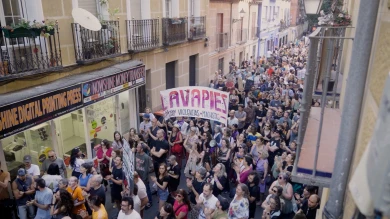
Elisa González and Leah Pattem. Soy Tribulete 7
13 JUN 2026
Framed inside this year’s Neighbourhood Picnic is the screening, in the Museo’s Cinema, of a film related to the life and protests of the Lavapiés neighbourhood, addressing issues of gentrification and the right to housing: Soy Tribulete 7 (I Am Tribulete 7, 2026), directed by Elisa González and Leah Pattem.
As the Spanish housing crisis takes hold in Lavapiés, this story begins in February 2024, when the residents of Calle Tribulete, 7, a block of apartments on a street in this Madrid barrio, receive a letter informing them that their building has been sold to a vulture fund. The news spreads quickly around the neighbourhood and, when it comes to the attention of González and Pattem, they grab their cameras and head straight for the building, where they encounter one hundred or so residents still in shock. The film Soy Tribulete 7 flows into the building and the daily lives of a community united, whose looming eviction occasions the fight of their lives. Ultimately, a path of resistance that will turn the community into a symbol of struggle for the right to housing.
Both film-makers worked closely with a group of tenants — Cris, Nani, Blanca, José, María Jesús and Antonia — to tell the story of how the building became the most creative stage of resistance ever witnessed in the area. The work presents the daily life of these residents in Madrid’s now-iconic “building fighting eviction”, depicting their collective struggle and the violent disruption to their lives. Through personal interviews, observational footage, archive material, music and a narration by eighty-year-old actress Ana Martín García, the film casts light on the human stories behind a community struggle.
The Neighbourhood Picnic is an annual gathering of festivities organised by Museo Situado, a network made up of associations, activists and residents from Lavapiés, a racially diverse, working-class neighbourhood where the Museo Reina Sofía is located.