Esperpento. Popular Art and Aesthetic Revolution
Encounters Around the Exhibition

Lagartijas tiradas al sol, No tengo por qué seguir soñando con los cadáveres que he visto, 2024
Held on 09, 16, 17 Oct 2024
This encounter series, which revolves around the exhibition Esperpento. Popular Art and Aesthetic Revolution, comprises presentations of the show by its curatorial team and two theatre pieces which reflect on the notion of “esperpento” and are performed by the companies Lagartijas tiradas al sol and ButacaZero.
The exhibition is devoted to the artistic fortune of this variety of social critique, which is founded in the grotesque, parody and deformation, approaching the concept of esperpento as a fulcrum of aesthetic thought that puts forward a new way of looking at reality. Formulated by writer Ramón María del Valle-Inclán (1866–1936) in reaction to the backwardness and moral despair that blighted Spain in the first third of the twentieth century, esperpento confronted the country’s social, political and cultural constraints, focusing attention on a distancing of the gaze and a set of aesthetic strategies whose prime effectiveness lay in deformation. Eight broad sections build the framework of the exhibition — the theatre companies’ interventions here focus on the rooms of the third section (Marionette Stage), in which esperpento is explored in relation to popular theatre, encompassing elements such as puppets and marionettes, carnival and romances de ciego (blind-man ballads).
The Lagartijas tiradas al sol theatre company will present a contemporary revision of the novel Tirano Banderas (Tyrant Banderas, Valle-Inclán, 1926), setting out from the version in bululú — a genre of theatre whereby a lone comedic actor portrays the entire work — devised by stage director Cipriano Rivas Cherif. ButacaZero, for its part, will premiere Melón pelado (Peeled Melon), a non-infantile farce for a box of dolls based on the “shaved heads of Francoism”, in reference to the women who were harassed at the end of the Civil War and paraded in public processions with their heads shaved after being forced to ingest castor oil, a powerful laxative.
Programme
Encounters
Organised by
Museo Reina Sofía
Agenda
miércoles 09 oct 2024 a las 18:00
Session 1. No tengo por qué seguir soñando con los cadáveres que he visto
6pm Presentation of the exhibition Esperpento. Popular Art and Aesthetic Revolution by its curatorial team
6:30pm Stage performance of No tengo por qué seguir soñando con los cadáveres que he visto (I Don’t Have to Keep On Dreaming about the Corpses I’ve Seen) by Lagartijas tiradas al sol. Produced by the Museo Reina Sofía, 2024.
Lagartijas tiradas al sol brings back to Spain the bululú that stage director and stage designer Cipriano Rivas Cherif took to Mexico in exile, setting out from a revision of Valle-Inclán’s Tirano Banderas (Tyrant Banderas). With No tengo por qué seguir soñando con los cadáveres que he visto, the collective leaves the space of representation to rebel and fighting women who are absent from the writer’s narrative but are victims all the same of the tyranny and violence the novel describes. Therefore, women weavers, poets, painters, peasants, community leaders, sociologists, anthropologists, teachers, doctors and seed guardians are invited to write a letter to the tyrant.
During the exhibition period, this stage installation is activated on the following days:
Thursday, 10, Friday, 11, and Saturday, 12 October - 6:45pm and 7:45pm
Sunday, 13 October – 12pm and 1pm
Performed by Luisa Pardo
Monday, Wednesday and Friday, from 14 October 2024 to 10 March 2025 - 6:45pm and 7:45pm (except on Wednesday 16)
Performed by Delia Pacas and Laura Pacas
miércoles 16 oct 2024 a las 18:00
Session 2. Melón pelado
6pm Presentation of the exhibition Esperpento. Popular Art and Aesthetic Revolution by its curatorial team
6:45pm Stage performance of Melón pelado by ButacaZero. Produced by the Museo Reina Sofía, 2024.
Two puppeteers open a box of dolls which, in reality, is a chest of memories. Here the story begins. Spain, in the nineteen thirties. The Village Music Band (from any village) gets people going. Between the churros stand and anis booth, the procession, the parade, the troupe appears. Yet this is a Dantesque parade of shaven-headed dolls — without doubt, the work resembles an esperpento, but Valle-Inclán’s it is not. Melón pelado sets forth a journey of initiation towards places in a history that is not written or told, and much less photographed, to reflect on the very fact of the memory of the found.
Credits
Cast: Nuria Gullón and Cris Collazo
Text: Esther F. Carrodeguas
Director: Xavier Castiñeira
Design and stage construction: Luchi Iglesias
Sonoplastia consultancy: Juanma LoDo
Production: ButacaZero
jueves 17 oct 2024 a las 18:00
Session 3. Melón pelado
6pm Presentation of the exhibition Esperpento. Popular Art and Aesthetic Revolution by its curatorial team
6:45pm Stage performance of Melón pelado by ButacaZero. Produced by the Museo Reina Sofía, 2024.
Two puppeteers open a box of dolls which, in reality, is a chest of memories. Here the story begins. Spain, in the nineteen thirties. The Village Music Band (from any village) gets people going. Between the churros stand and anis booth, the procession, the parade, the troupe appears. Yet this is a Dantesque parade of shaven-headed dolls — without doubt, the work resembles an esperpento, but Valle-Inclán’s it is not. Melón pelado sets forth a journey of initiation towards places in a history that is not written or told, and much less photographed, to reflect on the very fact of the memory of the found.
Credits
Cast: Nuria Gullón and Cris Collazo
Text: Esther F. Carrodeguas
Director: Xavier Castiñeira
Design and stage construction: Luchi Iglesias
Sonoplastia consultancy: Juanma LoDo
Production: ButacaZero
Participants
Lagartijas tiradas al sol is an artists’ community from Mexico City, founded by Luisa Pardo and Lázaro Gabino Rodríguez, who describe their stage projects as seeking to create narratives on events from reality. They have participated at Spanish and international theatre festivals and encounters, such as the Festival d’automne and Festival Impatience in Paris, Kunstenfestivaldesarts in Brussels, Theater Spektakel in Zurich, Festival TransAmériques in Montreal, the Foro de escena contemporánea Re/posiciones in Mexico City, the XII Festival Internacional de Teatro de Grupo in Lima and the Festival Internacional de Teatro de Manizales.
ButacaZero is the theatre company of writer, actress and director Esther F. Carrodeguas and stage director Xavier Castiñeira, who put forward theatre which engages in dialogue with the present day from a critical and ironic gaze. They have participated at festivals and in theatres in Galicia, for instance the Mostra Internacional de Teatro de Ribadavia and Mostra Internacional de Teatro cómico e festivo de Cangas, as well as the Teatro del Barrio in Madrid. Moreover, they have been nominated for the Teatro María Casares Awards and the Max Awards for Performing Arts and have co-produced Iribarne (2023), with the Centro Dramático Nacional de España.
The curatorial team of Esperpento. Popular Art and Aesthetic Revolution, made up of Pablo Allepuz, Rafael García, Germán Labrador, Beatriz Martínez, José A. Sánchez and Teresa Velázquez.

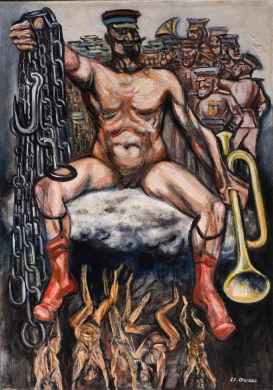
Más actividades

Cinema, for the First Time
7 and 14 June 2026 – 12:00 pm
The final session in this Moon Projector season contemplates the feeling around the first experience of cinema — cinema as revelation, magic, fantasy and mystery from the first gaze, from the first contact with the medium, and imagery etched on the retina of childhood. The programme shows Émile Cohl’s landmark Fantasmagorie (1908), the first ever hand-drawn animation, and Ignacio Agüero’s Cien niños esperando un tren (One Hundred Children Waiting for a Train, 1988), a feature-length film on play and the origins of cinema.
Fantasmagorie (1908)by Émile Cohl (Paris, 1857– Villejuif, 1938) is the first expression in the history of animated drawing. Émile Cohl was an illustrator who belonged to the Parisian art group Arts incohérents (1882–1895), who was bestowed with an absurdist and pre-Surrealist talent. Whereas the Lumière brothers were able get audiences out of their seats as they witnessed a train moving towards them in 1895, Fantasmagorie is a supernatural experience, akin to an apparition yet also innocuous and entertaining — the inanimate comes to life out of nothing and figures seemingly move with little sense. From the outset, animation was related to caricature, fabulation and the comical, a sweet spot for the dreams of the youngest audience.
From the discovery of new imagery arising from the animated line to knowledge of the world through a screen, Cien niños esperando un tren (1988), by Chilean director Ignacio Agüero (Santiago, 1952), narrates a group of young people’s discovery of cinema in a workshop on the origins of the medium in a poverty-stricken town on the outskirts of Santiago de Chile. Play, fun and learning combine with a fascination with images, as viewing Émile Cohl’s Fantasmagorie (1908) in the workshop becomes an act of freedom.
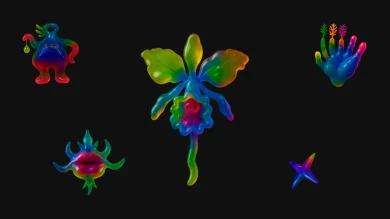
Institutional Decentralisation
Thursday, 21 May 2026 – 5:30pm
This series is organised by equipoMotor, a group of teenagers, young people and older people who have participated in the Museo Reina Sofía’s previous community education projects, and is structured around four themed blocks that pivot on the monstrous.
This fourth and final session centres on films that take the museum away from its axis and make it gaze from the edges. Pieces that work with that which is normally left out: peripheral territories, unpolished aesthetics, clumsy gestures full of intent. Instead of possessing an institutional lustre, here they are rough, precarious and strange in appearance, legitimate forms of making and showing culture. The idea is to think about what happens when central authority is displaced, when the ugly and the uncomfortable are not hidden, when they are recognised as part of the commons. Film that does not seek to be to one’s liking, but to open space and allow other ways of seeing and inhabiting the museum to enter stage.
![Joseph Kosuth. One and Three Chairs [Una y tres sillas]](https://recursos.museoreinasofia.es/styles/small_landscape/public/Actividades/joseph_kosuth.jpg.webp)
The (legal) person and the legal form. Chapter III
Monday 11, Wednesday 13 and Thursday 14 May 2026 - Registration deadline extended
As part of the Studies Constellation, the Study Directoship’s annual fellowship, art historian and theorist Sven Lütticken leads the seminar The (Legal) Person and the Legal Form: Theoretical, Artistic, and Activist Commitments to foster dialogue and deepen the hypotheses and questions driving his research project.
The seminar consists of eight sessions, divided into three chapters throughout the academic year. While conceived as non-public spaces for discussion and collective work, these sessions complement, nourish, and amplify the public program of the Studies Constellation.
First session of the third chapter focuses on the transformation of the artwork in the context and wake of Conceptual art. The very notion of the artwork, together with its ownership and authenticity, is reconsidered from a broad perspective open to new and alternative models of management, which could ultimately transform the relationship between artist, artwork and owner. Can some of the practices in question serve as critical models? To what extent is it possible to think and act with them, and extrapolate from them, beyond a beautiful niche?
The second session turns to the question of representation. While many (but not all) human natural persons can, in principle, represent themselves in legal matters, other needs representatives. This goes for minors as well for adults who have been placed under legal guardianship; it applies to fictitious persons such as corporations and states, who need human representatives to sign contracts or defend them in court. We will look into the question of legal representation in conjunction with other forms of representation, in the cultural as well as political register—taking cues from Spivak’s distinction between portrait (Darstellung) and proxy (Vertretung), which is an unstable and historically mutable one.
The seminar concludes with a closing session dedicated to collectively revisiting and reflecting on the themes and discussions that have emerged throughout the first Studies Constellation Residency Program.
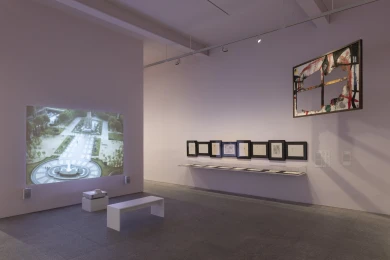
Collection. Contemporary Art: 1975–Present
Miércoles 13 de mayo, 2026 - 19:00 h
In this lecture, Museo Reina Sofía director Manuel Segade outlines the key readings of the new presentation of the Collection on Floor 4 of the Sabatini Building. This new arrangement is framed inside an ambitious rehang that harnesses the uses of the Museo’s architecture, in a plan that will continue in 2027 with the opening of Floor 3 in the same building, culminating with Floor 2 in 2028.
The new rehang of the Collections, unveiled on 16 February 2026, sets forth a journey through contemporary art history over the past fifty years in Spain. Rather than an unambiguous narrative, the floor recounts the same period — from the Transition to democracy in Spain to the present — in three different ways, starting back at the 1970s time and again.
The exhibition route gets under way with a prologue that travels through the affections, material culture and institutionalism of the Spanish Transition, serving as a starting point for the three routes that follow. The first, A History of Affect in Contemporary Art, advances from affective systems in artmaking linked to the second wave of feminism, arriving at grief as a tool to interpret new realities. The second route, The Powers of Fiction: Sculpture, New Materialisms, and Relational Aesthetics, is conceived as a sculpture gallery in which the artworks engage with the public, focusing on the performance side of the discipline. This route shows, among other aspects, how Spanish sculpture has gained significant international visibility since the 1980s, with women artists playing a key role in this display. The third route, A New Framework. The Institution, the Market, and the Art that Transcends Both, zooms in on the origins of the Museo and its role in the process of art’s institutionalisation in Spain. In May 1986 the Centro de Arte Reina Sofía opened, occupying the first and second floors of the former hospital: the forty years that have elapsed since then enable a re-evaluation of the effects of the Museo on Spanish art and art on the institution.
This talk strengthens the goal of socially integrating the narratives produced by the Museo at a time when the Collections are under permanent review.
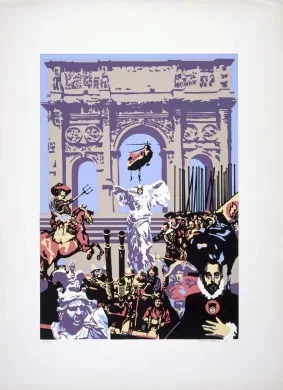
Patricia Falguières
Tuesday May 12th 2026 – 19:00 h
Art historian Patricia Falguières inaugurates the María Luisa Caturla Chairwith the lecture Art History in Dark Times. This Chair, dedicated to the reflection on art in times «sick with uncertainty», is aimed at dismounting, digressing and imagining multiple temporalities and materialities in art history and cultural studies from an eccentric gaze, in the sense of being displaced, off-centre or with a centre that is different.
The lecture’s title references Hannah Arendt’s collection of essays Men in Dark Times, which in turn paraphrases a Bertol Brecht poem. In it, Arendt asserts «dark times are not only not new, they are no rarity in history».
Patricia Falguières also claims history knows many periods when the public realm has been obscured, when the world becomes so uncertain that people cease to ask anything of politics except to relieve them of the burden of their vital interests and their private freedom. The art historian —whose expertise is in the field of Renaissance art and philosophy but paying close attention to contemporaneity— invites us to a «chaotic and adventurous journey», from the Italian Renaissance to Fukushima, through which to delve into the questions: What can the practice of art history mean today, in a world ablaze with ominous glimmers and even more ominous threats, if not as mere entertainment or social ornament? Of what vital interests, of what freedom can it bear witness and serve as an instrument?