-
Friday, 11 December 2020 – 7pm/ Sabatini Building, Auditorium
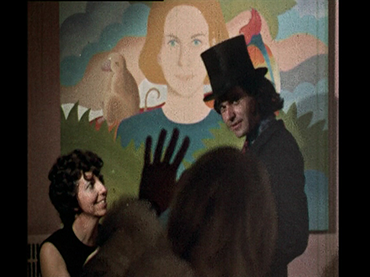
Session 1. First session. Filming Performance
Narcisa Hirsch
Marabunta (Swarm)
Filming and editing by Raymundo Gleyzer. Lead roles: Narcisa Hirsch, Marie Louise Alemann and Walther Mejía
Argentina, 1967, b/w, sound, 16 mm transferred to digital, 7’55’’Muñecos (Dolls)/Have a Baby
Argentina, USA and UK, 1972, colour, silent, Super-8 transferred to digital, 15’31’’Manzanas (Apples)
Argentina, 1973, colour, original version in Spanish, 16 mm transferred to digital, 4’La noche bengalí (The Bengali Night), co-directed with Werner Nekes
Argentina, 1980, colour, silent, 16 mm transferred to digital, 6’30’’Testamento y vida interior (Testament and Inner Life)
Argentina, 1976, colour, sound, video transferred to digital, 10’38’’Retrato de una artista como ser humano (Portrait of a Woman Artist as a Human Being)
Argentina, 1973, colour, sound, video transferred to digital, 15’51’’Narcisa Hirsch’s first incursions into film were to record her performances and happenings in public spaces. Collective actions, first shot in Super-8 and 16 mm, and later in video, in which Hirsch and the group of artists she worked with sought a different, more direct relationship with a spectator found randomly. These early works also reveal themes the artist would develop across her film work: the mystery of birth and death and our relationship to nature.
-
Saturday, 12 December 2020 – 5pm / Sabatini Building, Auditorium
Session 2. Landscape and Experience
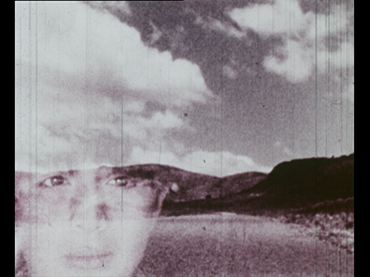
Narcisa Hirsch
Rumi
Argentina, 1995–1999, colour, sound, 16 mm transferred to digital, 27’A-Dios
Argentina, 1989, colour, sound, Super-8 transferred to digital, 22’Patagonia 2
Argentina, 1976, colour, sound, Super-8 transferred to digital, 9’56’’Patagonia takes centre stage and is at the heart of Narcisa Hirsch’s film work as a space of natural encounter, of union between body and the eternal, of dialogue between elements that are at once intimate and immense. This second session in the series includes some of the films in which the film-maker explores Patagonian landscapes and develops her relationship with them.
-
Sunday, 13 December 2020 – 12:30pm / Sabatini Building, Auditorium
Session 3. Experiments with Experimentation
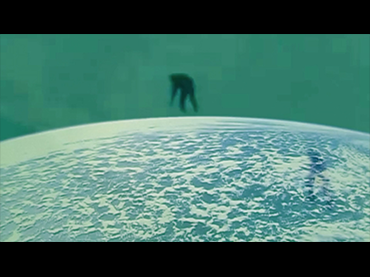
Narcisa Hirsch
Taller (Workshop)
Argentina, 1971, colour, original version in Spanish, 16 mm transferred to digital, 10’Come out
Argentina, 1971, colour, sound, 16 mm transferred to digital, 11’Ama-zona
Argentina, 1983, colour, sound, Super-8 transferred to digital, 10’38’’Canciones napolitanas (Neapolitan Songs)
Argentina, 1971, colour, sound, 16 mm transferred to digital, 10’Aleph
Argentina, 2005, colour, original version in Spanish, Betacam SP transferred to digital, 1’Myst
Argentina, 2019, colour, original version in Spanish and English, video transferred to digital, 15’This third session more clearly expounds the relation Narcisa Hirsch’s work bears to many of the ideas and currents in experimental film: from structural cinema to more sensorial and poetic film-making via abstraction. In these works, we witness Hirsch explore different paths in the experimental genre, making them hers and bringing them closer to her idiosyncratic themes: the feminine body, Argentinian tradition, landscape and nature.

Held on 11 Dec 2020
Narcisa Hirsch is one of the foremost figures in the history of Latin American and international experimental film. Born in Germany in 1928, and living in Argentina since her childhood, her name has lurked in the shadows unduly, owing to a twofold “eccentricity”: being a woman and making films that lie outside central spaces constructing the history of this filmic modality: the United States and Europe.
Yet this binary, off-centre state has not stopped her from being mindful of world movements in experimental film and video art. Her own work, at once domestic and mystical, is related to canonical films and figures from video and experimental art as it constantly shuns imitation and vindicates film as a space of freedom. In Hirsch’s own words: “The freedom of working to a really tight budget is the freedom of not having to sell; the freedom of working in a way that is DIY and artisan, without big teams or stages. I don’t rush either. One frame per day, or one per year. Everyone chooses their time and space, and it’s because of that and everything else that experimental film is a subversive art, more than documentary or political film. More subversive than intellectual or conceptual film. That’s why few go and fewer still remain”.
Hirsch’s first foray into art was as a painter and draughtswoman in the 1960s, before suddenly leaping into public space, staging happenings in the search for a new kind of spectator. Understanding film and creation as a collective process of work and thought, she has built, since the start of her career, a sturdy community around her filmic and artistic practice, a wide-ranging network of experimental artists and film-makers who came together through the Union of Small-Gauge Film-makers (UNCIPAR), around the Goethe Institute and Di Tella Institute, originally comprising figures such as Marie Louise Alemann, Claudio Caldini, Jorge Honik, Juan José Mugni, Horacio Vallereggio and Juan Villola, who are all, ultimately, key to the formation of Argentina’s independent and experimental scene. A network and solid conception of collectiveness that remains today, and, even at the age of ninety-two, Hirsch holds weekly encounters (in-person before the pandemic, now online) with an extensive network of young film-makers and aficionados of experimental cinema that embrace her work.
This retrospective is made up of three sessions reflecting some of the must-see pictures in her film oeuvre, made from the 1960s onwards. These works, chosen to engage in dialogue with the film-maker, illuminate spiritual and existential themes: love, birth, death, eroticism and feminine power, orbiting around the materiality of the body. In Narcisa Hirsch’s work domestic scenes and landscapes of inner-city and outlying areas of Buenos Aires and Patagonia function as an amplification of an exploration that is both formal and personal: the body, the eternal, the inside, the outside, movement, that which remains, intimacy and collectivity.
This programme is framed inside a joint project between Museo Reina Sofía and Documenta Madrid, an international film festival promoted by Madrid’s City Council and returning this year, in 2020, in a hybrid format combining in-person and online formats.
Curators
Cecilia Barrionuevo, in collaboration with Narcisa Hirsch
Acknowledgements
Daniela Muttis and Tomás Rautenstrauch (the Narcisa Hirsch Cinematheque)
Organised by
Museo Reina Sofía and Documenta Madrid (17th International Film Festival)


Admission: Free, until full capacity is reached, with prior ticket collection on the Museo Reina Sofía website from 10am on the last working day before the activity. A maximum of 1 per person. Doors open 30 minutes before screenings
Más actividades
Rethinking Guernica
Monday and Sunday - Check times
This guided tour activates the microsite Rethinking Guernica, a research project developed by the Museo Reina Sofía’s Collections Area, Conservation and Restoration Department and the Digital Projects Area of the Editorial Activities Department, assembling around 2,000 documents, interviews and counter-archives related to Pablo Picasso’s painting Guernica (1937).
The visit sets out an in-situ dialogue between the works hung around the painting and a selection of key documents, selected by the Museo’s Education Team and essential to gaining an idea of the picture’s historical background. Therefore, the tour looks to contribute to activating critical thought around this iconic and perpetually represented work and seeks to foster an approach which refreshes our gaze before the painting, thereby establishing a link with the present. Essentially revisiting to rethink Guernica.
Files of Tropical Revolutions
Sábado 20 y 27 de junio, 2026 - 19:00 H
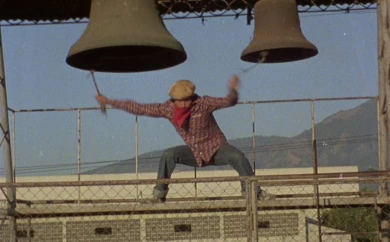
The Reframing Banana Imagery series concludes with two works that condense the height and twilight of this period in history, epic sagas that cross borders and registers to embody experiences of armed struggle in the region. Cameras mix with firearms, borders between nations blur and patience reaches breaking point. This is where the tipping point lies, where the bloodshed weighs heavy and the murmurings of regional brotherhood are buried in the ground again.
Pan y dignidad (Carta abierta de Nicaragua) [Bread and Dignity (An Open Letter to Nicaragua)] recounts the historical records and process of national reconstruction in Nicaragua via the Sandinista popular uprising. Historias prohibidas de Pulgarcito (Forbidden Tales of Tom Thumb) places the camera at the heart of the El Salvador revolutionary struggle, interspersing testimonies of daily violence with the verses of the poet Roque Dalton.
Both works understand the armed revolution as an open file under construction. The insurgent brotherhood, although dissolved, still resounds in regional history.
Circling Over Exploited Bodies
Friday, 19 and 26 June 2026 - 7pm
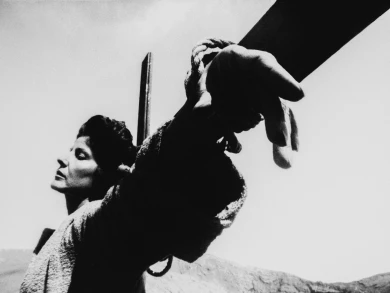
When forms of violence are inflicted on society, film responds from urgency. Images become abstract, sounds fade and the register of dissidence comes from the gut. La zona intertidal (The Intertidal Zone) is an essayistic and poetic approach to the repression of teachers in El Salvador in the 1970s — a teacher studies the biodiversity of the El Salvador coast as a boy finds a body on the same beach. A propósito de la mujer (About Women) interweaves testimonies of misery and rage towards patriarchal structures with fictional scenes of a symbolic procession through a harsh desert.
Both films understand the body as a target of violence and a territory of insurrection, a space where the blood shed by militancy and the patriarchal yoke turn pain into denouncement and existence outside the status quo into an act of political dissidence.
Central American Designation of Origin
Thursday, 18 and 25 June 2026 - 7pm
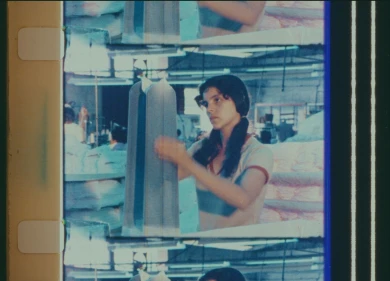
Fertile lands, farmers’ hands, rural faces. This first programme in the series Reframing Banana Imagery understands the foundations of the Central American experience from exploitation, extractivism and displacement, and from the organisation and resistance that emerged as a reaction. The four films within extend from a lyrical documentary on farmers’ solidarity to the playful subversion of the institutional format of the United Fruit Company.
Bananeras (Banana Growers) is a combative portrait of the inhumane conditions of the American banana plantations located in Nicaragua through much of the twentieth century. Costa Rica Banana Republic is a perspicacious satire via an institutional documentary of banana production, spotlighting the extractive nature of this agro-exporting model in the 1970s. Organización Campesina (Farmers’ Organisation) frames rural resistance in Honduras from a direct depiction and lyrical documentary, while Dos veces mujer (Two Times a Woman) dissects the invisibility of the double-shift working day Central American women farmers endure: working in the countryside and working in the home. As a whole, the works here present the earth at once as a wounded body and a space of dignity.
equipoMotor
Jueves alternos, 23 de octubre, 2025 - 11 de junio, 2026 - 17:30 h
El programa equipoMotor regresa en su edición 25-26 con un aire espectral y mutante para lanzar la pregunta: ¿y si el Museo fuera «un poco más Frankenstein»? Inspirándose en dicho monstruo y en todas aquellas criaturas que desafían la norma desde los márgenes, el proyecto de mediación cultural Galaxxia diseña y acompaña una edición incisiva, intergeneracional y descentralizadora, donde saberes invisibilizados, cuerpos raros y deseos molestos se entrelazan para generar nuevas formas de imaginación crítica y radical. En los sótanos y corredores del Museo —un particular laboratorio— las dudas no se esconden: son materia prima.
Así, para este curso el equipoMotor convoca a personas de todas las edades que hayan participado en ediciones anteriores de los distintos equipos del Área de Educación a recorrer el Museo como quien manipula un cuerpo abierto: descoyuntando algunas de sus categorías teóricas y artísticas —la necropolítica, lo crip-cuir, la lucha de clases, las políticas del malestar, la decolonialidad, la temporalidad cuir, la descentralización institucional o el feísmo— para articular un relato díscolo, remendado y palpitante.
El programa se estructura en bloques temáticos sobre lo freak como metodología, el trabajo cultural, la intergeneracionalidad y la diversidad territorial. Cada bloque a su vez se despliega en sesiones que combinan disparadores teóricos y estéticos, visitas a exposiciones y espacios liminales del Museo, talleres artísticos con artistas, ejercicios de curaduría audiovisual colectiva y de relatoría radiofónica, así como instancias de activación pública, mediante proyecciones de cine experimental y coloquios compartidos con el público, en complicidad con el archivo Hamaca y el Área de Cine y Nuevos Medios del Museo.
De este modo, la presente edición incorpora una particularidad: el grupo de participantes irá transformándose en un «colectivo curatorial audiovisual temporalmente autónomo», con capacidad de incidir en la programación del Museo y de abrir la conversación de equipoMotor al público general, cuestionando y expandiendo así los límites entre las cabezas que deciden, las manos que producen y los cuerpos y presencias que habitan la institución. Las personas seleccionadas en la modalidad oyente serán invitadas a las proyecciones públicas, así como a otras activaciones y momentos de apertura del equipoMotor.
Frente al relato de un museo homogéneo, pulcro y lineal, apostamos por un Museo disidente, contradictorio y lleno de vida residual. Un Museo que no tema hacerse preguntas incómodas ni mostrar sus cicatrices. equipoMotor. Un poco más Frankenstein no busca repensar el cuerpo de la institución, sino habitarlo en sus desgarros, tal como es: híbrido, inacabado, infecto, fantasmagórico… y cargado de esporas y chispas por venir.