-
Monday, 6 November
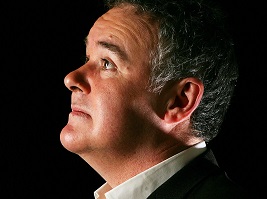
A masterclass with Adam Curtis
Nouvel Building, Auditorium 400
Adam Curtis often insists he is a journalist, not a film-maker or an artist, asserting that his work involves crafting a new analytical and critical model of information and reportage by searching through the discursive and visual montage of images to narrate ideas that emerge in such unhinged times.
-
Tuesday, 7 November
Session 1
Nouvel Building. Auditorium 400
Second screening: Saturday, 18 November – 5pm Sabatini Building. AuditoriumLiving in an Unreal World, 2016
UK, digital archive, colour, 5’
HyperNormalisation, 2016
UK, digital archive, colour, 166’The first session will be presented by Chema González, the Museo Reina Sofía’s Head of Cultural and Audiovisual Programmes at Museo Reina Sofía
![Adam Curtis. HyperNormalisation [Hipernormalización]. Película, 2016](https://recursos.museoreinasofia.es/legacy_programs/1_8.jpg "Adam Curtis. HyperNormalisation [Hipernormalización]. Película, 2016")
-
Wednesday, 8 November
Session 2
Edificio Sabatini. Auditorio
Second screening: Sunday, 19 November – 5pm Sabatini Building. AuditoriumBitter Lake , 2015
UK, digital archive, colour, 136’
-
Saturday, 11 November
Session 3
Sabatini Building. Auditorium
Second screening: Sunday, 3 December – 5pm. Sabatini Building. AuditoriumEverything is Going According to a Plan, 2013
UK, digital archive, colour, 2’Dancing Remade, undated
UK, digital archive, colour, 10'It Felt Like a Kiss, 2009
UK, digital archive, colour, 54’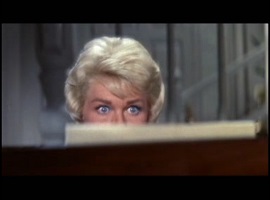
-
Monday, 13 November
Session 4
Sabatini Building. Auditorium
Second screening showing the entire series: Saturday, 25 November – 5pm
Sabatini Building. Auditorium
All Watched Over By Machines of Loving Grace. Episode 1: Love and Power, 2011
UK, digital archive, colour, 60’
Presented by César Rendueles, philosopher, professor at the Complutense University of Madrid and author of Sociofobia. El cambio político en la era de la utopía digital (Sociophobia. Political Change in the Digital Utopia, Capitán Swing, 2013).
![Adam Curtis. All Watched Over By Machines of Loving Grace. Episode 2: The Use and Abuse of Vegetational Concepts [Todos vigilados por máquinas de gracia y amor. Episodio 2: Uso y abuso de conceptos vegetativos]. Película, 2011](https://recursos.museoreinasofia.es/legacy_programs/4_4.jpg "Adam Curtis. All Watched Over By Machines of Loving Grace. Episode 2: The Use and Abuse of Vegetational Concepts [Todos vigilados por máquinas de gracia y amor. Episodio 2: Uso y abuso de conceptos vegetativos]. Película, 2011")
-
Tuesday, 14 November
Session 5
Sabatini Building. Auditorium
Second screening showing the entire series: Saturday, 25 November – 4pm
Sabatini Building. Auditorium
All Watched Over By Machines of Loving Grace. Episode 2: The Use and Abuse of Vegetational Concepts, 2011
UK, digital archive, colour, 60’![Adam Curtis. All Watched Over By Machines of Loving Grace. Episode 3: The Monkey in the Machine and The Machine in the Monkey [Todos vigilados por máquinas de gracia y amor. Episodio 3: El mono en la máquina y la máquina en el mono]. Película, 2011](https://recursos.museoreinasofia.es/legacy_programs/5_3.jpg "Adam Curtis. All Watched Over By Machines of Loving Grace. Episode 3: The Monkey in the Machine and The Machine in the Monkey [Todos vigilados por máquinas de gracia y amor. Episodio 3: El mono en la máquina y la máquina en el mono]. Película, 2011")
-
Wednesday, 15 November
Session 6
Sabatini Building. Auditorium
Second screening showing the entire series: Saturday, 25 November – 4pm
Sabatini Building. Auditorium
All Watched Over By Machines of Loving Grace. Episode 3: The Monkey in the Machine and the Machine in the Monkey, 2011
UK, digital archive, colour, 60’![Adam Curtis. All Watched Over By Machines of Loving Grace. Episode 3: The Monkey in the Machine and The Machine in the Monkey [Todos vigilados por máquinas de gracia y amor. Episodio 3: El mono en la máquina y la máquina en el mono]. Película, 2011](https://recursos.museoreinasofia.es/legacy_programs/6_5.jpg "Adam Curtis. All Watched Over By Machines of Loving Grace. Episode 3: The Monkey in the Machine and The Machine in the Monkey [Todos vigilados por máquinas de gracia y amor. Episodio 3: El mono en la máquina y la máquina en el mono]. Película, 2011")
-
Saturday, 18 November
Session 1, second screening
Sabatini Building. Auditorium
Living in an Unreal World, 2016
UK, digital archive, colour, 5’
HyperNormalisation, 2016
UK, digital archive, colour, 166’
-
Sunday, 19 November
Session 2, second screening
Sabatini Building. Auditorium
Bitter Lake, 2015
UK, digital archive, colour, 136’
-
Monday 20 November
Session 7
Sabatini Building. Auditorium
Second screening showing the entire series: Saturday, 2 December – 5pm
Sabatini Building. AuditoriumThe Trap: What Happened to Our Dream of Freedom. Episode 1: Fuck you, Buddy, 2007.
UK, digital archive, colour, 60’Presented by Marta Peirano, journalist, writer, and deputy director of eldiario.es. She is the author of El pequeño libro rojo del activista en la red (The Little Red Book of the Network Activist, Roca, 2015) and editor of El Rival de Prometeo. Vidas de Autómatas Ilustres (The Prometheus Opponent. Lives of Illustrious Automata, Impedimenta, 2009).
![Adam Curtis. The Trap: What Happened to Our Dream of Freedom. Episode 1: Fuck you, Buddy [La trampa: Qué pasó con nuestro sueño de libertad. Episodio 1: Que te den, colega]. Película, 2007](https://recursos.museoreinasofia.es/legacy_programs/7.png "Adam Curtis. The Trap: What Happened to Our Dream of Freedom. Episode 1: Fuck you, Buddy [La trampa: Qué pasó con nuestro sueño de libertad. Episodio 1: Que te den, colega]. Película, 2007")
-
Tuesday, 21 November
Session 8
Sabatini Building. Auditorium
Second screening showing the entire series: Saturday, 2 December – 5pm
Sabatini Building. Auditorium
The Trap: What Happened to Our Dream of Freedom. Episode 2: The Lonely Robot, 2007
UK, digital archive, colour, 60’![Adam Curtis. The Trap: What Happened to Our Dream of Freedom. Episode 2: The Lonely Robot [La trampa: Qué pasó con nuestro sueño de libertad. Episodio 2: El robot solitario]. Película, 2007](https://recursos.museoreinasofia.es/legacy_programs/8_2.jpg "Adam Curtis. The Trap: What Happened to Our Dream of Freedom. Episode 2: The Lonely Robot [La trampa: Qué pasó con nuestro sueño de libertad. Episodio 2: El robot solitario]. Película, 2007")
-
Wednesday, 22 November
Session 9
Sabatini Building. Auditorium
Second screening showing the entire series: Saturday, 2 December – 4pm. Sabatini Building. AuditoriumThe Trap: What Happened to Our Dream of Freedom. Episode 3: We Will Force You To Be Free, 2007
UK, digital archive, colour, 60’![Adam Curtis. The Trap: What Happened to Our Dream of Freedom. Episode 3: We Will Force You To Be Free [La trampa: Qué pasó con nuestro sueño de libertad. Episodio 3: Te obligaremos a ser libre]. Película, 2007](https://recursos.museoreinasofia.es/legacy_programs/9.png "Adam Curtis. The Trap: What Happened to Our Dream of Freedom. Episode 3: We Will Force You To Be Free [La trampa: Qué pasó con nuestro sueño de libertad. Episodio 3: Te obligaremos a ser libre]. Película, 2007")
-
Saturday, 25 November
Sessions 4, 5 and 6, second screening
Sabatini Building. Auditorium
All Watched Over By Machines of Loving Grace. Episode 1: Love and Power, 2011
UK, digital archive, colour, 60’All Watched Over By Machines of Loving Grace. Episode 2: The Use and Abuse of Vegetational Concepts, 2011
UK, digital archive, colour, 60’All Watched Over By Machines of Loving Grace. Episode 3: The Monkey in the Machine and The Machine in the Monkey, 2011
UK, digital archive, colour, 60’
-
Wednesday, 29 November
Session 10
Sabatini Building. Auditorium
Second screening showing the entire series: Saturday, 9 December – 5pm
Sabatini Building. Auditorium
The Power of Nightmares. Episode 1: Baby It’s Cold Outside, 2004
UK, digital archive, colour, 60’
Presented by Andrés Hispano, essayist, audiovisual producer and professor at Pompeu Fabra University, the Elisava School of Design and Engineering, and other university centres.![Adam Curtis. The Power of Nightmares. Episode 1: Baby It’s Cold Outside [El poder de las pesadillas. Episodio 1: Cariño, hace frío ahí fuera]. Película, 2004](https://recursos.museoreinasofia.es/legacy_programs/10.png "Adam Curtis. The Power of Nightmares. Episode 1: Baby It’s Cold Outside [El poder de las pesadillas. Episodio 1: Cariño, hace frío ahí fuera]. Película, 2004")
-
Thursday, 30 November
Session 11
Sabatini Building. Auditorium
Second screening showing the entire series: Saturday, 9 December – 4pm. Sabatini Building. AuditoriumThe Power of Nightmares. Episode 2: The Phantom Victory, 2004
UK, digital archive, colour, 60’![Adam Curtis. The Power of Nightmares. Episode 2: The Phantom Victory [El poder de las pesadillas. Episodio 2: La victoria fantasma]. Película, 2004](https://recursos.museoreinasofia.es/legacy_programs/11.png "Adam Curtis. The Power of Nightmares. Episode 2: The Phantom Victory [El poder de las pesadillas. Episodio 2: La victoria fantasma]. Película, 2004")
-
Friday, 1 December
Session 12
Sabatini Building. Auditorium
Second screening showing the entire series: Saturday, 9 December – 4pm. Sabatini Building. AuditoriumThe Power of Nightmares. Episode 3: The Shadows in the Cave, 2004
UK, digital archive, colour, 60’![Adam Curtis. The Power of Nightmares. Episode 3: The Shadows in the Cave [El poder de las pesadillas. Episodio 3: Las sombras en la caverna]. Película, 2004](https://recursos.museoreinasofia.es/legacy_programs/12_2.jpg "Adam Curtis. The Power of Nightmares. Episode 3: The Shadows in the Cave [El poder de las pesadillas. Episodio 3: Las sombras en la caverna]. Película, 2004")
-
Saturday, 2 December
Sessions 7, 8 and 9, second screening
Sabatini Building. Auditorium
The Trap: What Happened to Our Dream of Freedom. Episode 1: Fuck you, Buddy, 2007
UK, digital archive, colour, 60’The Trap: What Happened to Our Dream of Freedom. Episode 2: The Lonely Robot, 2007
UK, digital archive, colour, 60’The Trap: What Happened to Our Dream of Freedom. Episode 3: We Will Force You To Be Free, 2007
UK, digital archive, colour, 60’![The Trap: What Happened to Our Dream of Freedom. Episode 1: Fuck you, Buddy [La trampa: Qué pasó con nuestro sueño de libertad. Episodio 1: Que te jodan, colega], 2007](https://recursos.museoreinasofia.es/legacy_programs/7_0.png "The Trap: What Happened to Our Dream of Freedom. Episode 1: Fuck you, Buddy [La trampa: Qué pasó con nuestro sueño de libertad. Episodio 1: Que te jodan, colega], 2007")
-
Monday, 4 December
Session 13
Sabatini Building. Auditorium
Second screening showing the entire series: Sunday, 17 December – 12pm, episodes 1 and 2, and 5pm, episodes 3 and 4. Sabatini Building. AuditoriumThe Century of the Self. Episode 1: Happiness Machines, 2002
UK, digital archive, colour, 60’Presented by Luis Martínez, journalist and film critic for El Mundo.
![Adam Curtis. The Century of the Self. Episode 1: Happiness Machines [El siglo del Yo. Episodio 1: Máquinas de felicidad]. Película, 2002](https://recursos.museoreinasofia.es/legacy_programs/13.png "Adam Curtis. The Century of the Self. Episode 1: Happiness Machines [El siglo del Yo. Episodio 1: Máquinas de felicidad]. Película, 2002")
-
Tuesday, 5 December
Session 14
Sabatini Building. Auditorium
Second screening showing the entire series: Sunday, 17 December – 12pm, episodes 1 and 2, and 5pm, episodes 3 and 4. Sabatini Building. AuditoriumThe Century of the Self. Episode 2: The Engineering of Consent, 2002
UK, digital archive, colour, 60’![Adam Curtis. The Century of the Self. Episode 2: The Engineering of Consent [El siglo del Yo. Episodio 2: Ingeniería del consentimiento]. Película, 2002](https://recursos.museoreinasofia.es/legacy_programs/14.png "Adam Curtis. The Century of the Self. Episode 2: The Engineering of Consent [El siglo del Yo. Episodio 2: Ingeniería del consentimiento]. Película, 2002")
-
Wednesday, 6 December
Session 15
Sabatini Building. Auditorium
Second screening showing the entire series: Sunday, 17 December – 12pm, episodes 1 and 2, and 5pm, episodes 3 and 4. Sabatini Building. AuditoriumThe Century of the Self. Episode 3: There is a Policeman Inside All Our Heads, He Must Be Destroyed, 2002
UK, digital archive, colour, 60’![Adam Curtis. The Century of the Self. Episode 3: There is a Policeman Inside All Our Heads, He Must Be Destroyed [El siglo del Yo. Episodio 3: Hay un policía en nuestras cabezas que debe ser destruido]. Película, 2002](https://recursos.museoreinasofia.es/legacy_programs/15.png "Adam Curtis. The Century of the Self. Episode 3: There is a Policeman Inside All Our Heads, He Must Be Destroyed [El siglo del Yo. Episodio 3: Hay un policía en nuestras cabezas que debe ser destruido]. Película, 2002")
-
Thursday, 7 December
Session 16
Sabatini Building. Auditorium
Second screening showing the entire series: Sunday, 17 December – 12pm, episodes 1 and 2, and 5pm, episodes 3 and 4. Sabatini Building. AuditoriumThe Century of the Self. Episode 4: Eight People Sipping Wine in Kettering, 2002
UK, digital archive, colour, 60’![Adam Curtis. The Century of the Self. Episode 4: Eight People Sipping Wine in Kettering [El siglo del Yo. Episodio 4: Ocho personas bebiendo vino en Kettering]. Película, 2002](https://recursos.museoreinasofia.es/legacy_programs/16_0.jpg "Adam Curtis. The Century of the Self. Episode 4: Eight People Sipping Wine in Kettering [El siglo del Yo. Episodio 4: Ocho personas bebiendo vino en Kettering]. Película, 2002")
-
Saturday, 9 December
Sessions 10, 11 and 12, second screening
Sabatini Building. Auditorium
The Power of Nightmares. Episode 1: Baby It’s Cold Outside, 2004
UK, digital archive, colour, 60’The Power of Nightmares. Episode 2: The Phantom Victory, 2004
UK, digital archive, colour, 60’The Power of Nightmares. Episode 3: The Shadows in the Cave, 2004
UK, digital archive, colour, 60’
-
Monday, 11 December
Session 17
Sabatini Building. Auditorium
Second screening: Monday, 18 December – 7pm. Sabatini Building. AuditoriumEvery Day is Like Sunday, 2011
UK, digital archive, colour, 45’Oh dearism I, 2009
UK, digital archive, colour, 7’Oh dearism II, 2014
UK, digital archive, colour, 5’Murdoch’s revolution, 2010
UK, digital archive, colour, 5’Rise and Fall of TV journalism, 2007
UK, digital archive, colour, 4’Richard Nixon: Paranoia and Moral Panics, 2010
UK, digital archive, colour, 6’![Adam Curtis. Rise and Fall of TV journalism [Ascensión y caída de un periodista de televisión]. Película, 2007](https://recursos.museoreinasofia.es/legacy_programs/17_0.jpg "Adam Curtis. Rise and Fall of TV journalism [Ascensión y caída de un periodista de televisión]. Película, 2007")
-
Wednesday, 13 December
Session 18
Sabatini Building. Auditorium
Second screening: Tuesday, 19 December – 7pm. Sabatini Building. AuditoriumThe Way of All Flesh, 1997
UK, digital archive, colour, 52’![Adam Curtis. The Way of All Flesh [El camino de toda la carne]. Película, 1997](https://recursos.museoreinasofia.es/legacy_programs/18_0.jpg "Adam Curtis. The Way of All Flesh [El camino de toda la carne]. Película, 1997")
-
Sunday 17 December
Sessions 13, 14, 15 and 16, second screening
Sabatini Building. Auditorium
12pm, episodes 1 and 2, and 5pm, episodes 3 and 4The Century of the Self. Episode 1: Happiness Machines, 2002
UK, digital archive, colour, 60’The Century of the Self. Episode 2: The Engineering of Consent, 2002
UK, digital archive, colour, 60’The Century of the Self. Episode 3: There is a Policeman Inside All Our Heads, He Must Be Destroyed, 2002
UK, digital archive, colour, 60’The Century of the Self. Episode 4: Eight People Sipping Wine in Kettering, 2002
UK, digital archive, colour, 60’
-
Monday, 18 December
Session 17, second screening
Sabatini Building. Auditorium
Every Day is Like Sunday, 2011
UK, digital archive, colour, 45’Oh dearism I, 2009
UK, digital archive, colour, 7’Oh dearism II, 2014
UK, digital archive, colour, 5’Murdoch’s revolution, 2010
UK, digital archive, colour, 5’Rise and Fall of TV journalism, 2007
UK, digital archive, colour, 4’Richard Nixon: Paranoia and Moral Panics, 2010
UK, digital archive, colour, 6’
-
Tuesday, 19 December
Session 18, second screening
Sabatini Building. Auditorium
The Way of All Flesh, 1997
UK, digital archive, colour, 52’
-
Wednesday, 20 December
Session 19
Sabatini Building. Auditorium
Second screening showing the entire series: Saturday, 23 December – 12pm, episodes 1, 2 and 3, and 5pm, episodes 4, 5 and 6. Sabatini Building. Auditorium
Pandora ’s Box. Episode 1: The Engineers Plot, 1992
UK, digital archive, colour, 56’Pandora’s Box. Episode 2: To The Brink of Eternity, 1992
UK, digital archive, colour, 56’![Adam Curtis. Pandora ’s Box. Episode 1: The Engineers Plot [La caja de Pandora. Episodio 1: El complot de los ingenieros]. Película, 1992](https://recursos.museoreinasofia.es/legacy_programs/19_0.jpg "Adam Curtis. Pandora ’s Box. Episode 1: The Engineers Plot [La caja de Pandora. Episodio 1: El complot de los ingenieros]. Película, 1992")
-
Thursday, 21 December
Session 20
Sabatini Building. Auditorium
Second screening showing the entire series: Saturday, 23 December – 12pm, episodes 1, 2 and 3, and 5pm, episodes 4, 5 and 6. Sabatini Building. AuditoriumPandora ’s Box. Episode 3: The League of Gentlemen, 1992
UK, digital archive, colour, 60’Pandora’s Box. Episode 4: Goodbye Mrs Ant, 1992
UK, digital archive, colour, 57’![Adam Curtis. Pandora ’s Box. Episode 3: The League of Gentlemen [La caja de Pandora. Episodio 3: La liga de los caballeros]. Película, 1992](https://recursos.museoreinasofia.es/legacy_programs/20_0.jpg "Adam Curtis. Pandora ’s Box. Episode 3: The League of Gentlemen [La caja de Pandora. Episodio 3: La liga de los caballeros]. Película, 1992")
-
Friday, 22 December
Session 21
Sabatini Building. Auditorium
Second screening showing the entire series: Saturday, 23 December – 12pm, episodes 1, 2 and 3, and 5pm, episodes 4, 5 and 6. Sabatini Building. AuditoriumPandora ’s Box. Episode 5: Black Power, 1992
UK, digital archive, colour, 56’Pandora ’s Box. Episode 6: A is for Atom, 1992
UK, digital archive, colour, 56'![Adam Curtis. Pandora ’s Box. Episode 5: Black Power [La caja de Pandora. Episodio 5: Poder negro]. Película, 1992](https://recursos.museoreinasofia.es/legacy_programs/21_0.jpg "Adam Curtis. Pandora ’s Box. Episode 5: Black Power [La caja de Pandora. Episodio 5: Poder negro]. Película, 1992")
-
Saturday, 23 December
Sessions 19, 20 and 21, second screening
Sabatini Building. Auditorium
At 12:00 p.m.
Pandora ’s Box. Episode 1: The Engineers Plot, 1992
UK, digital archive, colour, 56’Pandora’s Box. Episode 2: To The Brink of Eternity, 1992
UK, digital archive, colour, 56’Pandora ’s Box. Episode 3: The League of Gentlemen, 1992
UK, digital archive, colour, 60’At 5:00 p.m.
Pandora’s Box. Episode 4: Goodbye Mrs Ant, 1992
UK, digital archive, colour, 57’Pandora ’s Box. Episode 5: Black Power, 1992
UK, digital archive, colour, 56’Pandora ’s Box. Episode 6: A is for Atom, 1992
UK, digital archive, colour, 56’
-
Wednesday, 27 December
Session 22
Sabatini Building. Auditorium
Blank Page I
At the express wish of the film-maker, the film will be announced just minutes before its screening.
-
Thursday, 28 December
Session 23
Sabatini Building. Auditorium
Blank Page II
At the express wish of the film-maker, the film will be announced just minutes before its screening.
![Adam Curtis. Collage a partir de fotogramas de HyperNormalisation [Hipernormalización], 2016](https://recursos.museoreinasofia.es/styles/small_landscape/public/Actividades/curtisprincipal_gn.jpg.webp)
Held on 06, 07, 08, 11, 13, 14, 15, 18, 19, 20, 21, 22, 25, 29, 30 Nov, 01, 02, 04, 05, 06, 07, 09, 11, 13, 17, 18, 19, 20, 21, 22, 23, 27, 28 Dec 2017
“We live in a strange time. Extraordinary events keep happening that undermine the stability of our world: suicide bombs, waves of refugees, Donald Trump, Vladimir Putin, even Brexit. Yet those in control seem unable to deal with them and no one has any vision of a different, or a better, kind of future. This film will tell the story of how we got to this strange place”. This is the opening of HyperNormalisation, one of the most influential films in recent memory. Since the 1990s, its director, Adam Curtis, has unrelentingly revealed the way power works, its meandering architecture, the ideas that configure it, the agents and institutions involved, the way it is etched into contemporary geopolitics, into us. Power reverberates through and constructs one of the most fervent, lucid and revealing bodies of work in recent times, a bona fide natural history of the present, of the times in which we live.
This series compiles, for the first time, a major part of Curtis’s work, spanning feature films, series and short clips reassembled from the vast BBC archive. The films, remastered in new versions made especially for this film season, are accompanied by a masterclass, two carte blanche (‘blank pages’) sessions orchestrated by the director and a series of presentations given by culture theorists. Adam Curtis often insists he is a journalist, not a film-maker or an artist, asserting that his work involves crafting a new analytical and critical model of information and reportage by searching through the discursive and visual montage of images to narrate ideas that emerge in such unhinged times. In excavating archives from the BBC, for whom he makes his films, Curtis deploys an endless stream of contemporary images, writing an account that maps out how certain notions, stories and connections, however unlikely, determine and govern us in the present day.
Adam Curtis is concerned with scrutinising a new narcissistic culture of the self, its relationship to 1960s counter-culture, the birth of the internet and technology networks, and, up against abstract, global financial power, political elites’ inability to lead the world since the Cold War. Underlying narratives include the crisis of representation, the use of the irrational desire of mass consumerism, new forms of social control, the architecture of a new world order, the effects of post-politics as government, and the consequences of so-called post-truth as a guideline for public communication. Drawing parallels with John Dos Passos’s books, Adam Curtis sets forth a multi-faceted body of work, peerless in the sheer density of its subjects, ideas and themes, to mark a transition from essay films to cinema as a novel of the present.
Moreover, Curtis’s films explore different spaces and audiences: produced on alternative devices, distributed on television in multi-episode series and premiered on streaming platforms and new screens. Therefore, in response to these new formats, the Museo will screen individual episodes and entire series in uninterrupted sessions.
All films are screened in their original version with Spanish subtitles.
Comisariado
Chema González
Itinerario
CGAI-Filmoteca de Galicia (22 marzo - 29 junio, 2018)
CCCB Centro de Cultura Contemporánea de Barcelona (22 noviembre - 14 diciembre, 2018)
Itinerancies
Museo Reina Sofía, Madrid
6 November, 2017 - 28 December, 2017
CGAI-Filmoteca de Galicia, A Coruña
22 March, 2018 - 29 June, 2018
CCCB Centro de Cultura Contemporánea de Barcelona
22 November, 2018 - 14 December, 2018
Más actividades
Dominga Sotomayor. Debajo and Thais Fujinaga. A Felicidade das Coisas
Friday 14 August 2026
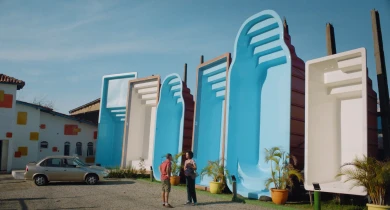
Two gems, from two new voices in Latin American cinema, which swing between families, swimming pools, reencounters and status. In Debajo, a short film on youth by Chilean director Dominga Sotomayor, an abstract yet powerful bird’s-eye view of a swimming pool co-exists with the relationships of a crisis-stricken family, gathered to see an eclipse. Sotomayor’s distinctive film-making of care and affects shares a similar space to the daily naturalism of Thais Fujinaga’s A Felicidade das Coisas. In the director’s first feature film, the swimming pool is not a horizontal basin for swimmers’ immersion; rather it is a huge vertical monolith, a kind of an anti-monument, anchored in the garden of a middle-class family. The film conveys the efforts and challenges of a mother of two children to build a swimming pool in their modest summer house, a mother who, alone, comes up against a hypermasculine world. Equally, the film speaks of family love, and the search for status, with the swimming pool a languishing totem of the Brazilian middle class during the years of Bolsonarism.
![Blake Edwards, The Party [El guateque], 1968, película](https://recursos.museoreinasofia.es/styles/small_landscape/public/Actividades/ciclocine-piscinas-14.jpg.webp)
Blake Edwards. The Party
Saturday, 15 August 2026
In The Party, actor Hrundi V. Bakshi (Peter Sellers) is mistakenly invited to a glamorous dinner party in Hollywood. His curiosity and two left feet lead to one funny mishap after the other. During the soiree he consoles Michèle, a young actress who has been fired by her producer, and the chaos gathers momentum when Bakshi accidentally opens a retractable floor, making the guests fall into a swimming pool. A small hippie-style elephant gatecrashes the party, brought by a group of young people, and Bakshi asks the guests to wash the elephant as it is a sacred animal in his country. The house fills with soap suds, culminating in a wackily chaotic party.
When Stanley Kubrick was once asked who Peter Sellers was, he replied: “There is no such person as Peter Sellers”. The Party is one of the most widely recognised comedies in the history of film, its director Blake Edwards and the English actor making an entertaining critique of a fading conservative society. The cultural revolutions of the 1960s fit into the container of a choppy swimming pool: people from high society, an elephant, a Russian ballet, waiters, beatnik youth… similar to Sellers’s own identity: an empty vessel that can be refilled. In the film, Edwards tapped into the ingenious actor’s innate improvisation and the swimming pool as a container for revolutionary intent.
Lucrecia Martel. La ciénaga (The Swamp)
Viernes 21 de agosto, 2026
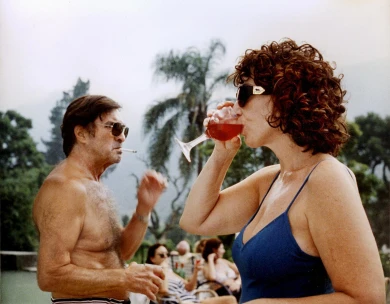
A couple of families spend the summer in a country cottage. The relationship between them exposes a crisis. The alcoholism of Mecha (Graciela Borges) and Gregorio (Martín Adjemián) becomes clear, leading to a drift in the education of their children and impacting relationships of respect and affect. Weariness expresses the lackadaisical environment.
In La ciénaga Lucrecia Martel approaches the decadence of a middle-class Argentinian family. The pool of dirty, stagnant water reflects the economic and social collapse of a whole country, yet reflects more than economic crisis as it becomes a murky well feeding off the pain of those living in the house. An erstwhile space of joy, the swimming pool becomes a reflection of adult depression, resulting in apathy. And the children, especially the girls, seem to be the only people awake in this drift. Barring a flicker of unawareness, the young people immerse themselves in rainwater or the water from the river, in water that flows, but are cautious of getting too close to the swimming pool.
![Yorgos Lanthimos, Kynodontas [Canino], 2009, película](https://recursos.museoreinasofia.es/styles/small_landscape/public/Actividades/ciclocine-piscinas-16_00.jpg.webp)
Yorgos Lanthimos. Dogtooth
Saturday, 22 August 2026
A couple with three adult children live in a modern country cottage. A large swimming pool takes centre stage in a sizeable garden. The property is skirted by a large fence that blocks a view of the outside. Here, the father has educated his children without outside contact, maintaining their belief in a false world: aeroplanes fall in the garden like toys and they must act like dogs to defend themselves from the ferocious cats that surround the house. The promise of going out into the world when they lose their dogtooth is proof of their maturity.
Lanthimos builds a world that is surreal, comical and terrible. The swimming pool is the house’s central element, a limited, controlled space assimilated like the sea, yet under the father’s supervision. A space of imagination, but with sinister intentions: the children are indoctrinated under the water as they believe in a better world. Far from reality. The swimming pool’s limits are the limits of their freedom, a false state of well-being expressed in the weightless bodies in the water. The liquid element is an analgesic magma with the power to educate offspring under the latent fear of a shark bite.
![Binka Zhelyazkova, Baseynat [La piscina], 1977, película](https://recursos.museoreinasofia.es/styles/small_landscape/public/Actividades/ciclocine-piscinas-17_00.png.webp)
Binka Zhelyazkova. The Swimming Pool
Viernes 28 de agosto, 2026
The young, bright Bella (Yanina Kasheva), after unforeseen heartbreak at her graduation party, meets Apostol (Kosta Tsonev), a reserved architect, and Boyan (Kliment Denchev), a comedy actor who is cynical about his country. The three characters climb up to a diving board in a municipal swimming pool, where they begin a strange relationship of friendship, love and despair which reflects a generational clash.
Binka Zhelyazkova, the great enfant terrible of Eastern European cinema, critic of the communist system and widely acclaimed film-maker beyond Bulgarian borders, made in The Swimming Pool a masterly metaphor for a country in decline. The public pool symbolises a closed, immovable enclosure where society is festering. From the height of a diving board she sees, in a panoptic view, the different generations living underneath a limited space. On one side, older people attempt to preserve the old revolutionary spirit with constant collective swimming exercises while, on the other, young people don’t hide the desire for freedom that remains unrealised. The result is an ideological clash in how to act and move in the enclosure, unearthing vast hypocrisy in the lost ideals of socialism, reflected in the total apathy of youth. The Swimming Pool for Zhelyazkova is a reflection of the disillusionment and existential void of a whole country and system.