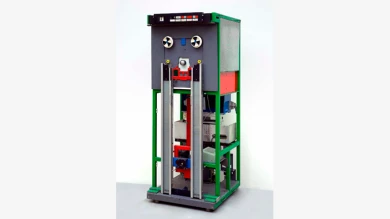
Held on 24 Feb 2022
The 23rd Contemporary Art Conservation Conference, organised by the Museo Reina Sofía’s Department of Conservation and Restoration and supported by MAPFRE Foundation, will be held on 24 and 25 February 2022. As an international encounter it sets out to share and debate experiences and research, open new channels of study and reflect upon the institutional management of conservation and the professional practice of restorers.
This edition is held in a virtual format via 20-minute contributions from speakers, followed by a five-minute Q&A session live with the audience. It features participation from universities, museums, art centres, and restorers’ associations, among others.
People who sign up will receive an email with instructions and a link to the online platform enabling them to follow and participate in the event.
- All talks with be streamed bilingually in Spanish and English.
- Questions will be taken at the end of each presentation via the chat.
- For any technical issues during the streaming, please contact: jornada.conservacion@museoreinasofia.es
- Times will be synchronised with CET (Central European Time).
- An attendance certificate will be issued to people registered previously. This certificate must be requested via email by writing to jornada.conservacion@museoreinasofia.es from 26 February to 4 March.
Programme
Thursday, 24 February 2022
3:45pm Opening
4pm Presentation and welcome
Jorge García Gómez-Tejedor (head of the Museo Reina Sofía’s Department of Conservation and Restoration), Leyre Bozal (collections conservator in Fundación MAPFRE’s Culture Area) and Mayte Ortega Gallego (coordinator of the 23rd Contemporary Art Conservation Conference)
4:15pm Reflecting Upon the (In)Visibility of the Conservator’s Creative Agency (in English)
Andreia Nogueira (Centro de Tecnologia, Restauro e Valorização das Artes - Techn&Art, from the Polytechnic Institut of Tomar - IPT, Portugal)
4:45pm Discovering a Mexican Suitcase: Characterising a Collection of Work by Pictorialist Photographer Hugo Brehme
Alejandra Nieto Villena (Autonomous University of San Luis Potosí, Mexico). Co-authors: José Refugio Martínez Mendoza and Álvaro Solbes García (Autonomous University of San Luis Potosí, Mexico), and Juan Cayetano Valcárcel Andrés (Polytechnic University of Valencia)
5:15pm Eugenio Granell’s Films Newly Preserved
Carolina Cappa (Elías Querejeta Zine Eskola, San Sebastián)
Co-authors: Pablo Adiego, Amaia Badiola, Julia Cortegana de la Fuente and Borja Rodríguez Gimeno (Elías Querejeta Zine Eskola, San Sebastián).
5:45pm Traditional Pigments in Contemporary Art: Enamel Blue
Patricia de los Reyes Félix (independent restorer)
Co-authors: Beatriz de los Reyes Félix and Marta Plaza Beltrán (Complutense University of Madrid)
6:15pm Presentation of the Work Group Contemporary Art and New Media. Monograph and New Projects from GE-IIC
Rita Amor García (The Spanish Conservation Group GE-IIC)
6:30pm Round-table Discussion. The Evolution of Creation and Documentation Processes in Complex Artworks. The Experience of Kinetic Artist Elías Crespín
Elías Crespín (artist), Jorge García, Carmen Muro, Mayte Ortega and Regina Rivas (Museo Reina Sofía)
—Moderated by: Arianne Vanrell (Museo Reina Sofía)
7:15pm Conclusions
Friday, 25 February 2022
3:45pm Opening
4pm A Paradigmatic Agreement to Conserve Art Stations in Naples. Case Study: Restoring Enzo Cucchi’s Work Untitled in the Salvator Rosa Underground Station
Giovanna Cassese (Accademia di Belle Arti, Naples)
Co-authors: Maria Corbi (Ufficio Patrimonio Artístico, Azienda Napoletana Mobilità - ANM, Naples) and Manlio Titomanlio (Accademia di Belle Art, Naples) and Alfreda Capone (student)
4:30pm Deploying Metal Soaps in Oil Painting. Experimental Methodology to Determine the Influence of Variable Relative Humidity
Marta Pérez Estébanez (Complutense University of Madrid)
Co-authors: Susanna Marras, Ruth Chércoles and Margarita San Andrés (Complutense University of Madrid) and María Antonia García (Cultural Heritage Institute of Spain)
5pm Study Methodology to Determine the Behaviour of Pen Inks Exposed to Radiation
Luis Erick Miraval Gómez (Complutense University of Madrid)
Co-authors: Ruth Chércoles Asensio, Marta Pérez Estébanez and Carmen Pérez González (Complutense University of Madrid), and Ramón J. Freire Santa Cruz (University of Castilla-La Mancha)
5:30pm The Textile Creations of Mariano Fortuny y Madrazo and Henriette Negrin. Their Conservation and Restoration
Silvia Montero (Museo Reina Sofía)
6pm Farewell and conclusion
Submission of Lectures (closed)
[dropdown]
The deadline for submitting lecture proposals ends on 21 November 2021. Those interested must send an email to jornada.conservacion@museoreinasofia.es attaching the following documents:
- An unpublished proposal related to contemporary art conservation and restoration.
- A 1,700-word summary, written in Word, on the addressed subject matter, which should be stated at the start of the document using a keyword.
- CV and contact details.
The proposals can be presented in Spanish and English and will be evaluated by a scientific committee, which will select the lectures to be presented during the conferences and will determine their possible inclusion in a subsequent publication, which in turn will undergo a second, and definitive, evaluation by the editorial committee.
For online presentations, participants must send their recording in accordance with the technical requirements they will receive upon notification of participation.
[/dropdown]
Collaboration
illycaffèSponsor
The Mapfre Foundation
Más actividades
![Isabel Coixet, 100 Years and You Everywhere [100 años y tú en todos los sitios], 2026, película](https://recursos.museoreinasofia.es/styles/small_landscape/public/Actividades/2.diseminar-mundo.jpg.webp)
John Berger and Isabel Coixet. Continued Ways of Seeing
Thursday, 17 September 2026 at 7pm
Ways of Seeing (1972) is one of the most revolutionary television series on art history, the museum and contemporary critical culture. Across four episodes, an articulate, enthusiastic John Berger unpacks the relationships between classical art through the gaze and new technology, the nude and feminism, the oil painting and commodity fetichism, advertising and consumerism. In essence, a level of critical commitment only comparable to its capacity for dissemination. Unsurprisingly, the series, and the book that would distil it, continues to forge vocations. This session sees art historians Alberto López Cuenca and Modesta Di Paola carry out an analysis of Berger’s audiovisual work, placing the stress on episodes one and four of the series. In the first episode, Berger reflects on the connection between the act of seeing, looking and being in light of new technology, such as the film camera. At the same time, it analyses how the culture of reproduction is turning paintings into messages or fragments of communication while stressing the importance of silence when observing historical paintings. In the fourth and final episode, he introduces advertising as a new iconic-verbal language that shares certain principles with the message of oil painting as a luxury item.
The session opens with the premiere of a filmic letter from Isabel Coixet, one of Spain’s most internationally acclaimed directors, to John Berger, with whom she maintained a long friendship and deep admiration. The short film is testament to the ubiquitous and long-lasting presence of the author of Ways of Seeing, even after his death in 2017.
![Chantal Akerman, Woman Sitting after Killing [Mujer sentada después de matar], 2001, instalación. Museo Reina Sofía](https://recursos.museoreinasofia.es/styles/small_landscape/public/Actividades/chantal-akerman-mujer-sentada-despues-matar.jpg.webp)
On Your Screen: Art History and the Museum Facing the Audiovisual Challenge
18, 19 SEP 2026
The conference On Your Screen: Art History and the Museum Facing the Audiovisual Challenge sparks debate around the transformations of art history and museum space upon embracing the audiovisual format. Its starting point is John Berger’s emblematic television series Ways of Seeing (1972), a landmark in the democratisation of art-historical discourse. In the series, Berger illustrated how the transfer of a work such as Goya’s Los fusilamientos del 3 de mayo (The Third of May 1808 or the Executions) from museum gallery to home TV screen completely changed the viewer’s experience, allowing the image to travel to straight to the viewer.
In the twenty-first century, this screen-based ecosystem has expanded exponentially, with museums not only physically integrating screenings and devices into their galleries— following in the wake of many exhibitions on the moving image — but also deploying complex virtual strategies. Equally, numerous en vez de a multitudeof historians, students and creators use digital platforms to circulate their ideas and projects. This audiovisual shift opens access to ignored materials and democratises knowledge, as well as challenging traditional hierarchies and the interpretive authority of institutions. The conference, promoted by the research project ATLAS AV: The Audiovisualisation of Art History and the Museum, seeks to analyse this vast audiovisual material, its archives, and its capacity to transform the memory of art.
Godard and Miéville: Time and Ruin
Friday, 18 September 2026 - 7pm
Inside the framework of the conference On Your Screen: Art History and the Museum Facing the Audiovisual Challenge, this film series sets forth three critical visions of the museum via three sessions featuring the works of John Berger, Jean-Luc Godard and Anne-Marie Miéville, Ariella Azoulay, Alan Resnais and Chris Marker, Kwate Nee-Owoo, and the premiere of short films by Isabel Coixet and La Vulcanizadora (Maria Rojas Arias and Andrés Jurado). In classical theory, the museum gives the world meaning; it contains fragments of the past, granting them a history, a narrative that explains preterite time and the present. Today, there is an implicit assumption that this function hides and legitimises forms of power, yet what if the museum, instead of explaining the world, multiplied it through radical ideas, silenced periods and repressed subjects? Such is the approach of the film-makers and artists in this film season.
In 1972 the writer John Berger opened the landmark television series Ways of Seeing with an iconoclastic gesture: slicing Sandro Botticelli’s painting Venus and Mars (1485) in London’s National Gallery. A transgressive act that recalls contemporary attacks on the museum by dissident youth and with which Berger, after revealing it was a reproduction, sought to ignite debate around the idea of an original artwork and a copy. In this, the hundredth anniversary of his birth, the first session pays homage to one of the great art writers of the twentieth century. Starting with a review of Berger’s audiovisual work by art historians Alberto López Cuenca and Modesta Di Paola, the series begins with the premiere of 100 Years and You Everywhere (2026), an unreleased short film by Isabel Coixet composed as a beautifully crafted letter to Berger, and continues with an analysis of fragments of Ways of Seeing in relation to the museum and contemporary art.
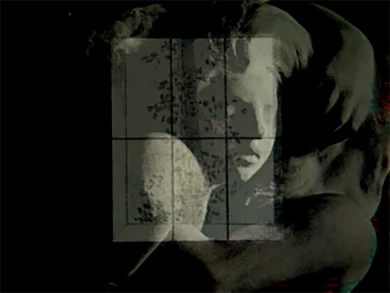
The second session screens two medium-length films by Jean-Luc Godard and Anne-Marie Miéville on time, ruin and museum. In The Old Place. Small Notes Regarding the Arts at Fall of 20th Century (1999), both film-makers consider what remains of that “old place”, the museum, at the close of a century of wars and totalitarianism, and ask whether it should be more of a legend or desire than a place. This same driving principle leads Godard to build his own imaginary museum in Reportage amateur (maquette expo) (2006), a rickety toy museum which, paradoxically, contains the great film-maker’s full power of thought on history and images.
Finally, the third session explores one of the major challenges of recent years: the decolonisation of the museum, the recognition of its link to imperialist discourses of power and the need to situate a new silenced or repressed subject at the centre of the Western narration of history. Under the title Museums and Restitution, it includes the film Undocumented. Unlearning Imperial Plunder (2019), by theorist Ariella Azoulay, Statues Also Die, by Alan Resnais and Chris Marker (1953), Kwate Nee-Owoo’s You Hide Me (1970) and the first screening of the short film Quinto verso, parte de Tonada (Fifth Verse, Part of Tonada), by La Vulcanizadora (Maria Rojas Arias and Andrés Jurado), filmed at the Museo de América in Madrid.
![Ariella Azoulay, Un-documented. Unlearning Imperial Plunder [Indocumentados. Desaprendiendo el saqueo imperial], 2019, película](https://recursos.museoreinasofia.es/styles/small_landscape/public/Actividades/5.diseminar-mundo.jpg.webp)
Museums and Restitution
Saturday, 19 September 2026 - 7pm
Centuries of plundering, decades of amnesia, years of living with unmitigated extractivist power… Does a museum, as we know it, have a raison d'être in a postcolonial society?
This session expounds the operations of the museum as a colonial machine, while putting forward ideas, in narration, for a more just, equal and inclusive institution of the future via society’s marginalised and minority voices. The session begins with the international premiere of Quinto verso, parte de Tonada (Fifth Verse, Part of Tonada), which presents a vision of the Quimbaya Collection (fifth and sixth centuries CE) from the Museo de América in Madrid. It is constructed with the voices and chants of Wayúu mourners and guides, not only as a way of reinstating the role of these gold idols — anthropomorphic figures of men and women used as vessels in ritual practices — but also to imagine that what must be exhibited is not the gold itself. It is the ritual’s own chant. In the classic film You Hide Me (1970), Ghanaian film-maker Kwate Nee-Owoo accesses the British Museum’s collection of African art, located in the building’s basement, to question the meaning behind a museum plundering and nullifying. A fine exercise of first-person institutional critique screened for the first time in Spain. Almost seventy years since Resnais and Marker made Statues Also Die (1953), a reflection on the aura-bearing value of the museum opposite the identity-based and cultural belonging of African art, theorist Ariella Azoulay films the same statues again at the Musée du Trocadéro (today the Musée du Quai Branly), which survive and wait to be reunited with their people. Azoulay, whose wholly original undertaking is a lesson to the museum of the future, connects the forced migration of these sculptures with the mass transit of people crossing borders artificially imposed by the same system that has plundered their culture.
The School of Transformative Institutionalism and Local Organisation
From 21 to 24 September 2026
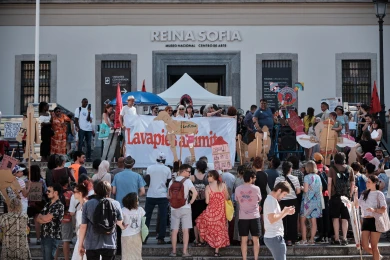
The School of Transformative Institutionalism and Local Organisation (S.T.I.L.O.) is a programme of joint learning and join strategy which sets in motion a process for the exchange of questions, methodologies and experiences between cultural organisations. The overall aim is to create, circulate and prototype tactics, tools and collective knowledge on institutional practices that open new channels for defending culture and advocating structural transformation in divergent geographical contexts.
The project is part of the Laboratorio de Institucionalidad Compartida (The Laboratory of Shared Institutionalism, LIC), a space for the Museo Reina Sofía’s research, work and advocacy centred on developing, experimenting with and systemising practices, protocols and tools which contribute to a fairer and more liveable cultural ecosystem.
For many years now, so-called infrastructural critique in museums questions material, legal and economic infrastructures, among others, as well as the forms of solidarity and practices required to sustain the cultural ecosystem. By approaching current debates, S.T.I.L.O. raises questions on the ways in which organisations define and interpret their practices, organise their relations and respond to the social contexts in which they operate.
The school gathers four cultural organisations that work via different institutional models – scale, contexts, conditions, different working models — with the goal of pooling common strategies and tools of organisation, advocacy and relationships with local communities.
The programme is conceived as a collaborative process with the participation of Arika, La Revuelta, BAK Basecamp and The Tentacular Museum (Museo Reina Sofía) and is structured around preparatory online sessions and an in-person seminar in Madrid.
S.T.I.L.O. is an activity framed inside the working strand of Situated Organisations from L'Internationale’s Museum of the Commons project, which reflects on the role of museums and art organisations as actors within complex social networks and ecosystems, with a view to exploring new ways to democratise institutions and make them more open, inclusive and useful.