Without Your Body the World Stops
Dance Workshops Between the Museum and the Neighbourhood

Held on 01 Nov 2020
Museo Reina Sofía and the cooperative Mbolo Moy Dole organise two weekly dance and theatre workshops conducted by teacher Deisy Mesías García, whereby female domestic workers approach movement in a way that expands beyond its functional value and work.
It aims to move and decontract the body, working with it as a plastic, expressive and communicative element, producing a reencounter with creativity and with the pleasure and enjoyment of dance. The disciplines employed — contemporary and Afro-contemporary dance, Latin rhythms and theatre — grant the necessary tools to make struggles and denouncements materialise via a coordinated shaking of bodies, connecting the women involved not just with themselves but also with other participants as they support one another in the collective empowerment of their lives. In parallel, the musical rhythms selected connect these women to their places of origin, to family, to their backgrounds, helping them to share experiences and biographical trajectories.
The workshop is coordinated by Territorio Doméstico, a collective that forms a space of encounter, care and the struggles of predominantly migrant women’s struggles, seeking recognition for their diminished rights as domestic workers and searching for the visibility of care work. The collective’s slogan “Without Women the World Stops” bears a direct relation to the title of the activity, in this instance granting a central position to the body and the experiences and marks recognised within it. The workshop’s teacher Deisy Mesías García has spent the past three years working with the collective, using disciplines from her training: corporality, movement and creativity.
Coordinated by
Territorio Doméstico
Force line
Action and Radical Imagination
Organised by
Registration method:
Deadline ended
Aimed at:
Migrant women, feminists and domestic workers
Times:
Museo Reina Sofía: Saturdays, from 5pm to 7pm
Mbolo Moy Dole: Sundays, from 11am to 1pm
Participants
Deisy Mesías García is a professor of Performing Arts specialised in contemporary dance in the ASAB Arts Department at the Francisco José de Caldas District University in Bogotá. She has lived in Madrid since 2011, studying an MA and carrying out PhD studies in Performing Arts at Rey Juan Carlos University. Furthermore, she works as a choreographer and dancer with different theatre and dance companies in Madrid and Bogotá, complementing her work with research and teaching and running classes at different universities and schools. She also focuses her activities on carrying out social projects with vulnerable people, developing a methodology of corporeal reconciliation.
Más actividades
Economy of Hate
18 ABR, 9 MAY 2026
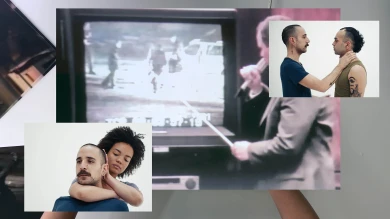
Economy of Hate features one sole work, Oído Odio (2021) by artist Diego del Pozo Barriuso. The piece combines television and media archive materials, recordings with performers with explicitly queer corporalities and 3D animations, combining in a strikingly fluid dialogue. The title alludes to a notion developed by the artist concerning the materiality with which hate circulates and the way it escalates. Setting out from the idea that hate is an affect which gains more value the more it circulates, the video shows the evolution from television to mobiles, expounding how the change of technological paradigm has made viral the fact of being in contact more than ever with explicitly violent images.
Inside the framework of The Collection Screened, a programme rooted in the institution’s film, video and moving image holdings, the Museo invites Laura Baigorri, one of the leading specialists in video art, to approach specific aspects related to identity, self-representation and the body within the Museo’s audiovisual collection since the 1990s.
![Dias & Riedweg, Casulo [Crisálida], 2019, película](https://recursos.museoreinasofia.es/styles/small_landscape/public/Actividades/desafios-cine-2.png.webp)
Other Voices in Us All
17 ABR, 8 MAY 2026
A session which starts from a subtle corporeal challenge that prompts a confrontation with reason from sensibility and emotion, both of which are linked to a difference in mental health or spiritualism. It opens with a beautiful and strange short film entitled A família do Capitao Gervásio (2013), by Tamar Guimarães and Kasper Akhøj, set in a small town in inland Brazil, where around half the inhabitants are psychic mediums whose work centres on community healing. The second piece, Dias & Riedweg’s Casulo, is the outcome of a participatory project with a group of patients from the Institute of Psychiatry at the Universidad Federal de Río de Janeiro. The video bears witness to the development of their routines after hospitalisation and captures their ideas and impressions about different aspects of life, revealing the division between territories of reason and madness in their daily existence.
Inside the framework of The Collection Screened, a programme rooted in the institution’s film, video and moving image holdings, the Museo invites Laura Baigorri, one of the leading specialists in video art, to approach specific aspects related to identity, self-representation and the body within the Museo’s audiovisual collection since the 1990s.
We Go On from Here… And Will Not Move
Thursday, 16 April and Thursday, 7 May 2026 — 19:00
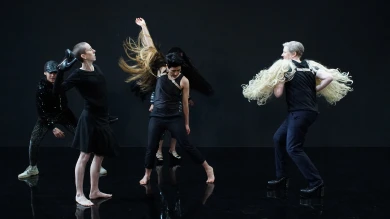
This session advances a programme focused on the most elemental side of performance: a simple, direct act that starts from the self-exhibition of the body. At certain points, from the calculated serenity of Miguel Benlloch’s Tengo tiempo (I Have Time, 1994); at other times, from the challenging and visceral impulse of Bollos (Buns, 1996), by Cabello y Carceller, or the rage of Habla (Talk, 2008), by Cristina Lucas; and, finally, from video-graphic experimentation, disconcerting and sustained in the dance culture of Moving Backwards (2019), by Pauline Boudry and Renate Lorenz, whose mise en scène reminds us that it is not actually déjà vu but the present, unfortunately, that moves through a reactionary period.
Inside the framework of The Collection Screened, a programme rooted in the institution’s film, video and moving image holdings, the Museo invites Laura Baigorri, one of the leading specialists in video art, to approach specific aspects related to identity, self-representation and the body within the Museo’s audiovisual collection since the 1990s. The session recovers paradigmatic performances, from three successive decades, crossed by the indisputable expression of gender; that is, mediated by the confronted acts of feminisms and the queer paradigms of culture.
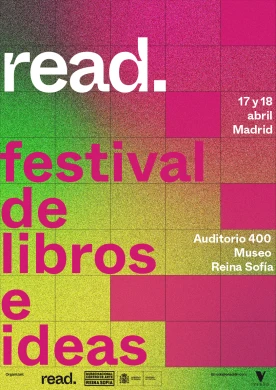
READ Madrid. Festival of Books and Ideas
Friday 17 and Saturday 18 April, 2026 – Check Programme
READ Madrid. Festival of Books and Ideas emerges as a meeting space for critical and experimental voices in the fields of literature, theory, and publishing. With particular attention to artistic production practices and independent publishing, and seeking to build a transatlantic cultural bridge with Latin America, the program aims to decenter hegemonic frameworks of knowledge production and open up new communities of interpretation and horizons for political imagination. To this end, it takes writing and reading—understood in broad and plural ways across their modes, forms, and registers—as constitutive of a public laboratory of what we call study: a space for thinking collectively, debating and coining ideas, making and unmaking arguments, as well as articulating new imaginaries and forms of enunciation.
In a context of ecological, political, and epistemological crisis, the festival proposes modes of gathering that make it possible to sustain shared time and space for collective reflection, thereby contributing to the reconfiguration of the terms of cultural debate. In this sense, the program is conceived as an intervention into the contemporary conditions of circulation and legitimation of thought and creation, expanding the traditional boundaries of the book and connecting literature, visual arts, performance, and critical thought. These formats are organized around three thematic axes led by key voices in contemporary writing, artistic practice, and critical thinking.
The thematic axes of READ Madrid. Festival of Books and Ideas are: a popular minoritarian, or how to activate an emancipatory practice of the popular; raging peace, or how to sustain justice, mourning, and repair without resorting to pacifying imaginaries devoid of conflict; and fiction against oblivion, which explores the role of science fiction, horror, and speculative narratives as forms of resistance against the liberalism of forgetting. Ultimately, the aim is to interrogate our present through the potential that ideas and books can mobilize within a shared space of study, debate, and enjoyment.
Juan Uslé and the New York Experience
15 ABR 2026
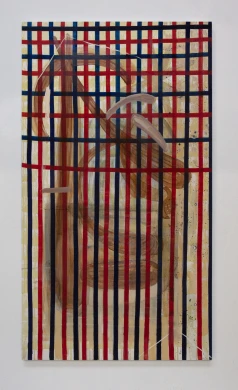
Framed inside the exhibition Juan Uslé. That Ship on the Mountain, this round-table discussion puts forward a journey towards a decisive time and place: New York in the 1980s and 1990s, the setting for an artistic vibrancy whose influence would run deep among an entire generation of artists from Spain who in the US city encountered fertile, chaotic anddemanding ground full of possibility. Such was the case with Juan Uslé, who in January 1987 crossed the Atlantic in the opposite direction to the Elorrio Ship — the sinking of which in 1960 off the coast of Langre (Cantabria) remained etched in the artist’s mind — to take up residence in New York.
The conversation, moderated by the show’s curator, Ángel Calvo Ulloa, brings together Juan Uslé, Vicky Civera, Txomin Badiola and Octavio Zaya, four voices who experienced this time from different yet complementary perspectives. Their dialogue reconstructs the experience of arriving in an alien context and explores the ways in which these artistic figures created ties and communities in an environment crossed by creative intensity and tensions of cultural change.
Furthermore, it approaches the relationship with the Museo Reina Sofía, which in those years was beginning to redefine its role within the international artistic ecosystem. The round-table prompts reflection on how the Spanish scene and Spain’s museum institutions were perceived from the distance of New York, recovering, through orality, a key episode in the history of Spanish art.