Lenguaje y escena del arte en Guatemala
Marilyn Boror. Mi corazón es de flores, no de cemento
San Juan Sacatepéquez, más conocido como Tierra de las flores, es un municipio de Guatemala en el que nació Marilyn Boror Bor, protagonista de esta cápsula. En los últimos años, San Juan Sacatepéquez ha visto amenazada la calidad de su agua y su principal actividad, el cultivo y la cosecha, por la llegada de una cementera regentada por una de las familias más influyentes de la región. Una familia con un apellido intocable, que es desafiada por Marilyn Boror, artista maya-kaqchikel, cuya obra está alineada y conectada con la lucha por la justicia y la recuperación de la memoria de los pueblos originarios.
En sus creaciones, plasma los modos de entender el mundo y construir el conocimiento de estos pueblos, y reivindica sus manifestaciones culturales, como la lengua, las artes y el textil; modos de hacer que en su mayoría han sido vehiculados históricamente por mujeres.
En esta entrevista, Marilyn nos habla de sus herramientas, saberes y estrategias para «curarse el susto» que supone la pervivencia de las violencias sobre estos saberes, haceres y cuerpos. Unas heridas abiertas que hunden sus raíces en los conflictos armados y masacres de los pueblos originarios acontecidos en Guatemala y en toda Centroamérica. Además, presta especial atención al lenguaje y a la palabra escrita, como reflejo de los modos de entender y hacer, que construyen las constelaciones culturales que conviven en la región centroamericana. Del mismo modo, Marilyn reflexiona sobre la escena artística y cultural de Guatemala y Centroamérica, y las personas e instituciones que la conforman.
Sirviéndonos de la cita de Marilyn «mi corazón es de flores, no de cemento», proponemos indagar en su práctica y contexto. Una práctica rica y variada que recorre múltiples medios como son la fotografía, la instalación, la pintura, el grabado y la performance. A través de ellos, Marilyn explora los desafíos del mestizaje y de la cultura maya actual y pasada.
Marilyn Boror. Su origen y el punto de partida de su práctica artística
Hola. Mi nombre es Marilyn Boror Bor, soy artista y comisaria, originaria de San Juan Sacatepéquez, Guatemala, en Centroamérica; y mis papás, pues mi papá es profesor de una escuelita de arte, de música y de pintura, mi hermana tiene un conservatorio de música en el pueblo. Mi mamá es tejedora, mis tías son tejedoras. Y creo que mucho de lo que hago viene de ahí. Un poco cuesta reconocer el trabajo que se hace dentro de la familia, porque uno siempre busca ir hacia afuera, y la academia y la escuela, etc. De ahí nace mi deseo de pensarme como artista.
Bueno, quizá hablando un poco en contexto centroamericano, que seguramente poco se ha escuchado sobre Centroamérica desde España, mencionar que, en Guatemala, por ejemplo, tenemos solamente una universidad pública y la carrera de Arte pues es bastante limitada, diría yo. Yo estudié la licenciatura en Arte, pero creo que muchas de las cosas que aprendí las aprendí fuera de la universidad. Y muchas cosas, pues, ya las sabía. Yo vengo de una escuela que se llama EspIRA / La ESPORA, que es una escuela que tiene Patricia Belli, una de las primeras escuelas de arte que tiene en Nicaragua. Patricia es una artista que formó a muchos de los artistas que ahora están en un gran auge. Y nada, ella, como mujer creadora, pero también educadora, crea esta escuela para formarnos a varios de nosotros. Y yo vengo directamente, siento como de casa, a la escuela de Patricia Belli. Hago tres residencias con ella en Nicaragua y es así como surge mi necesidad de no solo formarme como artista, pero también formarme como educadora.
En toda Centroamérica la educación artística es bastante, diría yo, teórica, viene mucho también de la academia y lo formal, y esta parte de pensamiento crítico, de pensamiento creativo, etc. es una cosa que siento que, desde la educación en general en Centroamérica, pues está bastante colonizada, como que venimos con patrones muy occidentales, y creo que es importante reconocerlo para darse cuenta de que necesitamos pensamiento crítico, pensamiento creativo, para ser artistas, para formar, para decir, para decidir.
Arte, naoj y otros términos para nombrar el hacer arte más allá de la epistemología occidental
Una de las cosas tal vez importantes de mencionar desde Centroamérica y países del sur global, diría, es que, desde pueblos originarios, nos hemos dado cuenta de que no existe la traducción de la palabra arte y, como muchas cosas, la palabra arte es una palabra occidental impuesta a los países del sur global, sobre todo en los pueblos originarios. En el caso de Guatemala, yo trabajo con muchos colectivos de mujeres indígenas, colectivos también indígenas de Latinoamérica, de lo que nombramos Abya Yala, que es como se nombraba antes el territorio, que era un territorio bastante indígena, como nosotros nombramos arte, y bueno, ha habido muchas formas de discusión sobre esto que nos desligan de la palabra arte, es decir, no sé, desde el pensamiento indígena pensamos el arte como la comadrona, que es, como dar a luz, como parir, como algo que nace, algo nuevo. O también lo pensamos como el ajb’, que significa hacedor, alguien que hace.
También lo pensamos desde el naoj, que significa pensamiento, también política, inteligencia, como que tiene muchos significados que van más allá de solo… no sé, para mí arte es muy pequeño y muy limitante, muy elitista también, y desde los pueblos nosotros pensamos el arte en otro plano.
Esto porque desde el pensamiento indígena es muy ritual. El idioma es poesía. Si alguna vez tienen la oportunidad de revisar un diccionario de algún idioma originario de Guatemala, revísenlo. Es poesía pura, no es literal, es poético y hay una forma de pensar desde el idioma que es muy rica. Y otra cosa es que nuestra relación con los objetos y el entorno es distinta, diría yo.
Nosotros creemos mucho en el kush, que es el alma y el espíritu de los objetos, es decir, tenemos una relación con los objetos de sujeto a sujeto y no de sujeto a objeto. Para nosotros todos los seres son sagrados y se merecen un espacio y un respeto. Y creo que darme cuenta de esto, de que lo había practicado siempre, fue importante para mi práctica, porque tenía un respeto hacia los objetos, que, como artista, no sé, todo el mundo trabaja con objetos, poner los bodegones, qué sé yo, cualquier cosa. Nuestro trato era distinto, el idioma era distinto, la forma de pensar era distinta y es así como yo... Mi hipótesis es que, a partir del momento conceptual contemporáneo, los artistas indígenas tienen un gran auge en el arte porque son poéticos y porque hay mucha metáfora en las formas y el lenguaje que venimos conservando desde ser pueblos originarios. Y entonces, es así como muchos artistas indígenas entran al mercado del arte y a estar en museos, en exposiciones, etcétera. De hecho, varios son parte de la Colección [Cáder, en el Museo Reina Sofía] y que sé que son estos artistas indígenas que trabajan con este pensamiento.
Para mí, en mis procesos de investigación artística y de creación equilibro mucho, o me interesa equilibrar la práctica con la teoría, es decir, la práctica y la vivencia y las cosas que te atraviesan, pues van a ser mucho más fuertes no solo si las investigas, sino si te atraviesan el cuerpo. La importancia que le vas a dar va a ser otra. Intento vivirlo desde ahí, prácticas que atraviesen mi cuerpo, que atraviesen mi comunidad y claro, por supuesto, reforzarlo con teoría. Pero no sé cómo, no sé si contesté.
La memoria indígena borrada de Guatemala y su recuperación a través del arte
Bueno, hay un escritor en Guatemala que se llama Humberto Ak’abal, que dice: «De vez en cuando camino al revés, es la forma de recordar el futuro o lo que viene». Entonces, como que es importante reconocer tu historia para saber el futuro, y creo que eso es una parte muy importante del pensamiento indígena. Contando un poco el contexto de forma rápida, Guatemala es un país que ha sido golpeado por más de treinta y cinco años de guerra y básicamente esta guerra fue dirigida hacia los pueblos originarios, era básicamente un genocidio. Y era desaparecer lo indígena, porque Miguel Ángel Asturias, que es nuestro premio nobel de literatura, escribió su tesis que se llamaba El problema social del indio. Esto significa que nuestro propio nobel de literatura habla sobre un problema, y ese problema pues somos nosotros, los indígenas ¿no? Entonces nombra todas las problemáticas, etc. Y el Estado, pues, básicamente lo que quería hacer era pues eliminar al indígena, porque era pues inculto, de modales rústicos, es como se nombraba, ¿no? Básicamente, no reconocido como un ser humano, sino como un animal. No podían votar, etcétera; no podíamos votar. Entonces, basados un poco en esta historia, ¿cómo recuperar toda esta ancestralidad?
Es importante para artistas como yo, que somos indígenas, que venimos de una cosmovisión y un pensamiento distinto, recuperar el idioma, recuperar la indumentaria, recuperar todo lo que un sistema, a través de una guerra, pues nos sometió ¿no? Como el empobrecimiento del indígena, etc. Recapitulando sobre esto, yo, desde mi práctica artística, pues vuelvo a recuperar el idioma, intento recuperar las indumentarias, como darle el valor que… Efectivamente, sobre la población guatemalteca, pues existe un gran racismo, que el racismo ya no se piensa, sino está ahí, en tu piel, viviendo, ya no lo cuestionas. Entonces, yo intento, desde mi práctica artística, nombrar todas estas problemáticas que nos siguen atravesando y que son como estos problemas que deberíamos ir al psicólogo para hablar, pero que no lo hacemos, entonces se convierte como en un dolorcito que está ahí, que es una heridita que no se cura, que no se sana y que creo que yo, yo desde el arte, creo que muchas cosas sí se pueden sanar desde el arte.
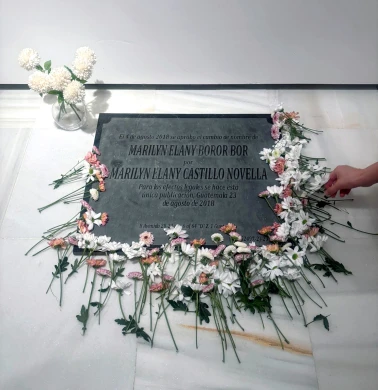
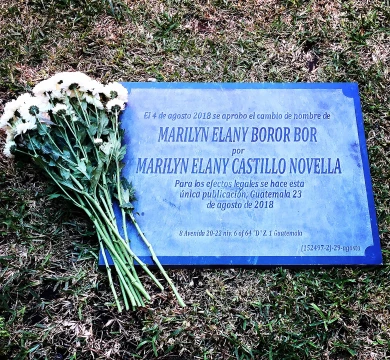
Quizás hablando desde mi práctica artística, una obra que a mí me cambió la vida y creo que está todavía en mesa de discusión, pues es la pieza que está aquí en el [Museo] Reina Sofía, que es el Edicto Cambio de Nombre, porque no solo es una pieza de arte, sino es un tema de discusión en el ministerio público, en las escuelas, en las universidades…
Yo nazco en el 84 y estamos en generación posguerra, es decir, la guerra estaba ahí, pero estaba terminando. ¿Qué sucede? Si eras indígena, te podían matar, básicamente.
Entonces muchas de las soluciones de las generaciones anteriores, como mis padres, pues fue quitarnos el idioma y quitarnos la ropa. Esto lo que hacía dentro de una sociedad era que te mimetizaba con el resto. Nadie se enteraba que eras indígena. Obvio, los rasgos no te los puedes quitar. La piel, el color de piel no te lo puedes quitar, pero quitarte la indumentaria maya y quitarte los apellidos, quitarte el idioma hacía que te reconocieran como mestizo, como ya no indígena.
Y desde Edicto Cambio de Nombre una cosa que yo nombro importante es que en Guatemala hay tres formas de eliminarte y de matarte. Y como mencionaba antes, una es la indumentaria maya, cuando te quitan la ropa. La segunda, es cuando te quitan el idioma. Cuando te quitan el idioma, no solo te están quitando un idioma, sino te están quitando una forma de conocimiento. Y tres, cuando te quitan los apellidos. Si te quitan esas tres cosas, te están matando. Y nada, para mí es como un cuerpo vacío caminando por el mundo porque no tiene la memoria y la ancestralidad.
Fue algo de lo que no se hablaba en un país como Guatemala. Nada, básicamente me di cuenta. Reconociendo los archivos del país, me di cuenta de que muchas personas indígenas cambiaban los apellidos indígenas por cualquier otro que no fuera indígena para pertenecer a una sociedad racista, es decir, para no sentirte discriminado, pues te quitas los apellidos y es una forma de tener acceso a trabajo, acceso a universidad, etc.
Y es una problemática que no parecía importante y que nadie se daba cuenta. Pero si lo analizamos como a grandes rasgos, si tú cambias tus apellidos, estás borrando tu ancestralidad, estás borrando la lucha de tus abuelas, de tus abuelos, de tu familia, etc. Y eso lo que hace es borrar del mapa a una sociedad que ha sido discriminada históricamente y tú estás aportando a que esa comunidad desaparezca y, por lo tanto, estás borrando las estadísticas de la población indígena de un país. Eso significa que estás matándote a ti mismo. ¿Qué va a pasar dentro de veinte años cuando el porcentaje de indígenas que hay en Guatemala se hayan cambiado los apellidos? Y es algo de lo que no se habla.
Una cosa importante que sucedió en mi proceso fue cuando conocí a Patricia Belli y me dijo no solo es dibujar y pintar, es hacer otras cosas, es investigar, es revisar archivos y revisar dentro de tu misma historia, que se repite seguramente en muchas personas de tu país o del territorio. Cuando yo hago esta revisión de mi historia personal, reconozco que —mi abuela, que solo hablaba kaqchikel, que no hablaba español— muchos de los rituales que uso ahora para mi trabajo de arte los aprendí de mi abuela materna porque no hablaba español y nuestra comunicación fue más performática, más visual, más ritual. Y me pareció importante decir como: «Mi abuela nunca va a aparecer en los libros de historia del arte. ¿Cómo la traigo yo y todas sus memorias y sus rituales a esto que hago que se llama arte?». Y es así como también decido hablar sobre toda esta trama enorme de problemáticas.
Curarnos el susto. Una práctica comunitaria
Yo creo que desde mi proceso de creación llegan también los límites y como confrontarte a ti mismo y abrir caminos hacia otras personas y a otros artistas jóvenes. Yo estaba trabajando en una investigación en Uruguay sobre la salud mental, pero también como todas las enfermedades y todas las formas de curarnos que no eran reconocidas por el Estado, digamos el mal de ojo, el susto —no sé si esto suena en España, pero estoy segura de que sí—, que si vas al doctor y decís: «Tengo el susto», se van a reír y te van a mandar a un psicólogo, como que estás loco. Pero en Guatemala hay muchas enfermedades de este tipo, enfermedades que las guías espirituales dicen que tienen que ver con historia, con dolores, con pobreza, con desnutrición, etc. Pero no son físicos. No precisamente son físicos, son sintomáticos y etcétera, pero que tú los puedes heredar de generación en generación, es decir, como cualquier enfermedad ¿no?
Entonces, pensando un poco en esto, busqué cerca de mí personas que… No sé, como que en Guatemala hay mucho dolor, pero también hay mucha alegría, desde los pueblos hay mucha felicidad, o sea, si ustedes van, van a los pueblos y la gente está celebrando la feria patronal, un rezo, no sé qué, siempre hay como fiestas, siempre está la gente como muy en un estado muy… muy auténticos, y pensaba, bueno, ¿cómo nos hemos curado de este dolor de 500 años? Sobre todo que el año pasado se cumplieron, no, este año, este año se cumplieron 500 años de invasión a nuestro territorio y en muchos lados se estaba celebrando; desde La Nueva Fábrica, con la curadora Ilaria Conti pues platicamos sobre esto. Y lo ideal no era llamar a alguien que trabajara sanación ya desde su práctica artística, sino llamar a colectivos de comunidades que estuvieran trabajando la sanación desde su comunidad, desde ellos mismos. Y encontramos colectivos que trabajan desde la cocina, que trabajan desde el teatro, que trabajan desde el agua, desde el textil, etcétera, que se han unido en resistencia, en lucha, pero también en felicidad, a curarse solos. Un proceso más independiente del Estado. Y nada, también como esta queja de «siempre estamos mal», sino como pensar también qué hemos hecho nosotros mismos para curarnos a nosotros mismos. Y encontramos pues eso, muchos proyectos que ya lo estaban haciendo, que no necesitamos de un Estado para curarnos y sanarnos, que tenemos que volver como a nuestros saberes ancestrales, a las plantas, a la cocina, al fuego, a la tierra…, y que eso es lo más sanador que puedes tener.
El reconocimiento del arte de los pueblos originarios. El caso de Elena Curruchich
Centroamérica pues carece de mucha educación, carece de educación artística. Creo que ahora hay un poco más de oportunidades, pero básicamente yo les diría que de los artistas que tenemos en sala, básicamente van a encontrar a muy pocos con una licenciatura, es decir, porque venimos formándonos desde otros espacios, que también es interesante. Y desde Guatemala, yo, como artista indígena, podría hablar de cómo se reconoció el arte en Guatemala. Y pues la historia que he analizado yo, desde mi práctica, es que…, o sea, cuando yo empecé a hacer arte, mucho del arte que se reconocía desde ser indígena, es decir, yo, cuando veía los libros de historia, era como arte popular o arte povera, y veía a los artistas de San Juan Comalapa, artistas todos indígenas, por supuesto. Y eso era como lo que me enseñaban en la escuela, que era arte popular y arte povera y todo lo demás era arte, y esto era arte popular. Y estaba muy incluido dentro de la artesanía también, es decir, no se reconocía el arte de los pueblos originarios como arte, como el término arte occidental.
Entonces, basados un poco en esto, en cómo se ha formado, cómo se ha estructurado la educación artística y el pensamiento, también basado en una educación occidental, pues yo me di cuenta de que muchos artistas no estaban en la época moderna de Guatemala. Muchos artistas, pues diría una mujer, dos mujeres, el resto hombres y todos mestizos, que habían tenido la oportunidad de estudiar, de hecho, en Europa. Muchos vinieron a Francia a estudiar con Picasso, etcétera, o qué sé yo, que también era otro tipo de economía, que lograron venir, estudiar y volver. Pues ellos son los que forman la historia moderna de Guatemala. Pensando en eso, dije: «Bueno, ¿y qué pasó? ¿No había arte en los pueblos indígenas? ¿No había arte en los pueblos originarios?». Efectivamente había arte, solo que no era reconocido ni nombrado.
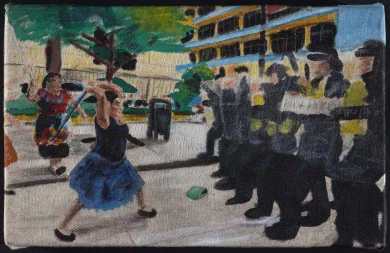
De hecho, una mujer que a mí me encanta mencionar es Rosa Elena Curruchich, que estuvo en la Bienal de Venecia el año pasado, una mujer indígena. La historia es muy interesante, sobre todo su lucha, porque, primero, porque era mujer; segunda, porque retrataba su comunidad. Efectivamente, no tenía la técnica, la perspectiva, el manejo del hiperrealismo o el cubismo, o las expresiones que se formaron en Europa. Tenía su propia forma muy particular de pintar. De hecho, pintaba en miniaturas y las piezas, de hecho, son como de no sé, diez centímetros por doce, como tamaños que ella pudiera meterse entre la ropa y podía comercializar en otros mercados. Como no la dejaban vender en su propio pueblo, entonces tenía que esconderlas e irse a otro pueblo y venderlas. Y es así como hoy…, creo que pronto tendrá una gran exposición en México, y está como en uno de los puestos más importantes. Pero en ese tiempo yo decía: «No hay artistas indígenas en los que yo me sienta representada, porque todos son artesanos, digamos». Y de mi generación —creo que un poco antes— empezamos varios artistas indígenas a darnos cuenta también de la importancia de nuestro conocimiento ancestral.
Una red para tejer la escena centroamericana
Sí, yo diría que en Guatemala no tenemos institución, y eso es bueno, pero también es malo. La parte buena es que no tenemos que responder a nadie ni a nada. La parte mala es que sigue siendo comunitario y que quizás no sale tanto del país, etc. Pero creo que también eso es bueno.
Bueno, hablando sobre los espacios y las instituciones, como les decía, en Guatemala no hay muchas y sé que en Centroamérica tampoco hay tantas, son muy pocas las instituciones, también con la responsabilidad. Por ejemplo, desde mi práctica artística tiende a ser muy política y esto hace que no responda a intereses de una parte de la oligarquía del país. Y esto hace que muchos espacios que están siendo alimentados con economía de familias de poder del país, pues que cierren las puertas a artistas que están hablando de cosas que en las agendas públicas no conviene. Entonces, creo que es importante mencionarlo, porque muchas instituciones responden a agendas alejadas de las realidades del país. Sí, yo, por ejemplo, no puedo exponer, o sea, hay espacios en Guatemala donde definitivamente yo no puedo volver a exponer porque quienes dan los fondos son las familias del poder a las que yo les estoy haciendo, desde el arte, la resistencia.
Realmente somos bastante pequeños. Guatemala, diría yo, con una población muy enriquecida con lo indígena. El Salvador con una tasa de criminalidad muy grande. También tenemos compañeras salvadoreñas con trabajo muy fuerte, político, etcétera.
Bueno, yo debo decir que me siento muy acompañada sobre todo por mujeres artistas centroamericanas, que es una forma distinta de pensar el mundo, que siento que entre mujeres trabajamos más desde la comunidad y también tenemos más contacto, no sé, con la tierra, con rituales, etcétera, que los hombres. Y yo sí lo veo en Centroamérica como que hay una cuestión de género masculino que es más individualista, que se piensa menos en comunidad o en colectivo, mientras que mujeres… Yo de hecho trabajo con varias mujeres en Centroamérica, haciéndonos una red centroamericana solo de mujeres y diversidades, para crecer, porque también, sí, aceptemos que el mundo del arte es un mundo de hombres.
Bueno ya hace un tiempo, estoy trabajando con UNFES (Unión de Feministas Engendrando Nuevos Sistemas), que es una unión feminista de mujeres centroamericanas, engendrando nuevos sistemas, y somos varias mujeres y diversidades de Centroamérica, algunas de hecho exiliadas en otros países por las problemáticas de Centroamérica.
Centroamérica tiene muchas problemáticas: Honduras está en una crisis muy fuerte, El Salvador también, Nicaragua, pues, ya saben, muchas personas están exiliadas, nicaragüenses, presos políticos, fuera… Y nada, una forma de entender Centroamérica, pues para nosotras ha sido encontrar esta red, unirnos y hablar sobre las problemáticas, porque desde las noticias nos enteramos de cosas, pero no de las realidades. Entonces, nuestra práctica tiene que ver con esto, con abrazar también el trabajo de las otras y abrir camino para otras mujeres que vienen después, o sea, nos interesan mucho las mujeres.
Uy, Centroamérica también es bien racista. Centroamérica ha negado históricamente la parte indígena y la parte negra. En Panamá, pues mucha negación de la parte negra. Y hay muchas artistas panameñas hablando…, reivindicando la lucha de los pueblos negros. Y el resto de Centroamérica borró mucho la huella indígena. Creo que eso es importante en el contexto.
«Mi corazón es de flores, no de cemento». El arte como respuesta al extractivismo
Bueno, por hablar sobre el proceso de la pieza que está en el [Museo] Reina Sofía, Edicto Cambio de Nombre. Viene de una investigación que yo realizo en Guatemala. En Guatemala tú te puedes cambiar los apellidos por cualquier nombre, el que tú quieras, cualquier apellido, el que tú quieras de la A a la Z, y solo se tiene que llamar a un abogado legal y decidir los apellidos que quieras. Esto tiene que publicarse en un diario de mayor circulación tres veces y luego otras tres veces en un diario nacional. Si no hay objeción por parte de nadie, se publica por si hay objeción. Si hay objeción, pues se va a corte, etcétera. Pero ese es el proceso legal y, si no hay objeción, ya se hace un acta final y ya con eso, pues oficialmente te puedes cambiar los apellidos y los registras en el Registro Nacional de las Personas. Y ya, es así de sencillo. Por 400 dólares, tú te puedes cambiar los apellidos. Revisando pues todo esto, me di cuenta de que más de 400 personas se cambiaron los apellidos indígenas por cualquier otro y, no solo eso, muchos mestizos también, pues blanqueaban mucho más los apellidos con apellidos europeos o apellidos norteamericanos. Y bueno, esto fue muy duro para mí. Dije: «No puedo utilizar la historia de alguien más, tengo que hacerlo yo». Y decido buscar los mejores apellidos.
Un poco cuestionando la oligarquía del país y cómo muchas familias se han hecho del poder en base al trabajo de los pueblos originarios, yo decido utilizar dos apellidos que confrontan, sobre todo confrontarlos, porque yo soy de San Juan Sacatepéquez, que es un pueblo que se dedica, históricamente, se ha dedicado a cosechar y cultivar flores. El trabajo es la siembra y cosecha de flores y exportarlas a todo el mundo. Y San Juan Sacatepéquez se denomina San Juan Sacatepéquez, la Tierra de las Flores. Entonces, si van, es muy lindo y todo está lleno de flores, los mercados siempre llenos de flores. Y hace unos años, ingresó una cementera al territorio y esto pues ha cambiado muchísimo la historia de nuestra ciudad. Quizás los cambios no se ven tan pronto, pero sí que hay problemas de agua.
Hemos tenido muchos problemas de consulta popular hacia los pueblos, es decir, no se consultó. Se ha hecho todo desde una forma no correcta hacia los pueblos originarios, que históricamente han sido los pueblos quienes han defendido y cuidado la tierra. La mayoría de estos territorios han sido conservados por los pueblos originarios: los ríos, los lagos, las montañas, porque tenemos este concepto de cuidar de todo lo que está a nuestro alrededor y que todos son seres vivos. Entonces, abrazas la montaña, abrazas el río, etc. Entonces, a partir de que esta cementera entra al territorio, pues hay muchos conflictos en el territorio, muchas personas mueren por defender su territorio, muchas personas son encarceladas; y con esta problemática, pensé cómo confrontar y cómo afrontar esto desde el arte. Y dije: «Bueno, si se metieron a mi territorio, pues yo me meto a su territorio desde la práctica artística».
Entonces, bueno, en Guatemala no te puedes poner estos apellidos, no porque no puedas y porque la ley sí te lo permite, pero porque son apellidos que no se tocan. Es decir, estas familias conservan muchos de sus apellidos para no mezclarse con cualquier otro apellido, entonces es muy difícil decir soy de estos apellidos si la familia no te conoce. Entonces, yo decido ponerme Castillo Novella. Los Castillo son los dueños de la cerveza, de toda la cerveza en el país, en el país no hay otra. Y los Novella son los dueños de la cementera, que pronto va a ser una de las cementeras más grandes de Centroamérica y, básicamente, el país, Guatemala, está construido con este cemento, carreteras, país completo.
Pero sobre todo esto que ingresaron a mi territorio, que hubo conflictos, que se cambia la tierra y las flores por cemento, y una de las frases que los pueblos utilizamos en el territorio es «mi corazón es de flores, no de cemento». Y desde el pensamiento también se dice que los pueblos… Un colectivo que se llama los Médicos Descalzos menciona que, si todos construyéramos con lo que tenemos bajo nuestros pies, pues todos tendríamos casa. Y es una forma distinta de pensar el mundo. Y no es que estemos en contra de la idea de progreso —de hecho, la marca del cemento es Progreso—, es que, básicamente, nosotros lo vemos como un retroceso. El problema es que no se consulta y que también todos estos fondos pues no van al país, no van a las comunidades.
Hay comunidades que tienen hidroeléctricas, mineras, etcétera, a cielo abierto y en Guatemala queda el 1% y todo se va al extranjero, es decir, nos quedamos luego sin nada. Y pensando desde ahí, el extractivismo ha sido histórico en nuestros territorios, no solo de territorio, sino de conocimiento, y creo que hacer esta pieza de arte reivindica la lucha y la resistencia, pero también nombrar que seguimos aquí, 500 años después, peleando.
Edicto Cambio de Nombre en el Museo Reina Sofía. La historia que regresa, y cómo conservarla. Futuros deseables para la escena en Centroamérica
Es complejo, pero siendo un país colonizado, del sur global, etcétera, creo que es importante que la historia también se cuente desde este lado. De hecho, Edicto Cambio de Nombre, la pieza habla sobre cómo, en un año, más de 400 personas cambian sus apellidos indígenas por cualquier otro. Esta es una problemática que viene arrastrando al país de racismo, pero un racismo estructural histórico, desde la colonización, diría yo, desde la invasión. Es decir, la idea del blanqueamiento de raza, la idea de superioridad, etcétera, sigue infundada en nuestros pensamientos. Y esto hace que, instintivamente, yo quiera ser cada vez más blanco, a costa de lo que sea. Hacer esta investigación no solo visibiliza un borramiento de identidades, sino el borramiento de un país, el borramiento de una historia. Y creo que para mí es importante que esté acá, porque es importante que la historia regrese. Estas son las consecuencias de una invasión y una colonización. Seguimos viviendo la invasión y la colonia en nuestras espaldas y la seguimos sintiendo. Y está aquí la evidencia de que así sigue siendo. Aquí hay documentos, hay archivos y así esto es lo que está pasando. Y por eso me parece que es importante tenerla, discutirla y que abra otras discusiones acá a partir de eso. Sí, porque siempre es como: «Les salvamos», no sé… como, «¿qué estarían haciendo si no hubiera sido por nosotros?», etcétera. De hecho, ese discurso también se recita en Guatemala, o sea desde una clase económica blanca. Se recita como: «Ay, sí, nos vinieron a salvar», ¿no? Entonces un poco discutir y cuestionar estas prácticas y cómo las vivimos todavía en Guatemala.
Creo que más es lo simbólico, como lo que está en la sala es un listado de muertos, y yo pedí que pusieran flores siempre, porque para mí es importante tener la vida ahí cerca. Como pensaba, antes nos mataban, como les contaba sobre el genocidio, etc. Antes nos mataban con armas, ahora nos matan de una forma intelectual. Entonces borrar tu archivo es una forma de matarte. Yo creo que, en cuestión ritual, es lo más importante, como siempre nosotros, siempre que hacemos una ceremonia, es si vas a pedir algo, tienes que dar algo. Entonces, si vas a estar enfrente y estás enfrente de tantos muertos, saber a lo que te estás enfrentando. Eso, pero en general, me parece que es importante que esté y que se vea y que se lea y que se entienda y que se discuta.
Sí, yo siento que no soy como la artista de: «Ay, no me la toque, no me la cuide», y como… No es el objeto, sino lo que significa… Que no me gusta, como si esto del arte que es tal y que no se toca. Es algo que a mí no... Esta lápida… como esta, no hay otra, pero tengo una parecida en alemán en Berlín y está en un cementerio. Y la utiliza un colectivo de artistas que se llama Voces de Guatemala en Berlín y cada vez que hay manifestaciones, marchas, etc., hacen la fiesta alrededor de la tumba, de la lápida, y reivindican. Porque también en otros países las personas se cambian los apellidos para pertenecer, o sea, esto no solo pasa en Guatemala, pasa de hecho en muchos países donde, si vas a pedir la residencia alemana, por ejemplo, no te dicen que lo hagas, pero te ofrecen un listado de nombres, tipo para pertenecer y que no suene tan tu nombre. Aquí hay un listado para que sea más fácil, y yo creo que eso pasa en todos lados. Entonces esto es una historia que no solo sucede en Guatemala.
Creo que es importante tener esta colección, la Colección Cáder, en el Museo Reina Sofía, porque es una representación del territorio. Yo confío en que sean consecuentes con la historia del territorio y que las colecciones respondan a las necesidades y problemáticas del mismo.
Pues bueno, desde el Movimiento Nacional de Tejedoras, ellas dicen que una de las cosas más importantes no es ser millonario ni rico ni reconocido, sino vivir con dignidad. Y creo que es a lo que todo artista debería aspirar, como hacer lo que te gusta, ser consecuente con tu trabajo, cuestionar y vivir con dignidad, o sea, creo que eso es lo más importante.