Spain: Art and Society in the 1950s and 1960s
Senior Citizens
- Guided Tour
- Duration
- 90 mins
Spain: Art and Society in the 1959s and 1960s sets out an analysis of the Spanish artistic landscape following the Civil War and World War II. It focuses on the uniqueness of the time as a turning point in the return to experimentation after the trauma created by the conflicts. To illustrate the discourse, the visit takes us through works by artists including Eugene Smith, Antoni Tapiès and Equipo 57.
The guided visit takes place in the rooms of the Collection 2, the starting point of which is the 1940s. It is an addition to the group of visits mainly revolving around the Collection 1, broadening the spectrum of subjects dealt with by the cultural volunteers. Dialogue and thought will be the interactive mainstays to encourage the Senior Citizen groups to connect with the discourses of contemporary culture.
Intended Public: Senior Citizens
Language: Spanish
Date: October 14, 2013 – June 13, 2014
Further Information: Tel. 91 774 10 00, Ext. 2098 / e-mail: visitasescolares@museoreinasofia.es
Más actividades
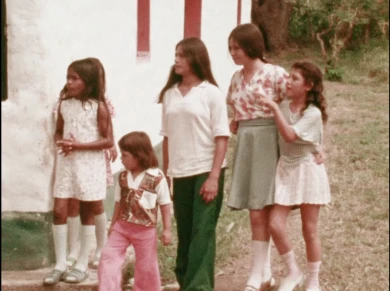
Dear Americas
Friday 29 May and 5 June, 2026
In these films, Marilú Mallet travels to Solentiname, in Nicaragua, and Andahuaylillas, in Peru, to paint a portrait of communities which resist the severity of forced industrialisation. In Solentiname, the focus is on the poet and priest Ernesto Cardenal’s founding of a Christian, poetic and revolutionary utopia, while in Andahuaylillas, a town close to Cuzco, Mallet explores the multiple layers of Andean culture.
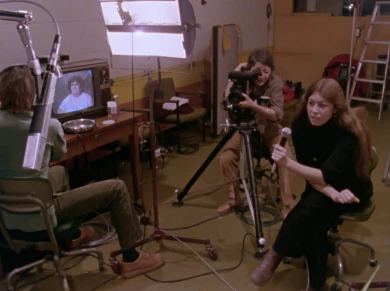
A Poetics of the Subject
Thursday 28 May and 4 June, 2026
In the tension between documentary and fiction, between the rawness of a tragic political present and narrative escape, lies the truth of the exile’s condition. In Journal inachevé (Unfinished Diary, 1982) Marilú Mallet experiments with her own subjectivity, moving from affirmation to doubt. In Double Portrait (2000), María Luisa Señoret paints her daughter Marilú, who records the process. In this circular relationship, the film-maker constructs a poetics of the portrait as something perpetually unfinished, a process of exploration in which memory, identity and political history merge to become blurred.
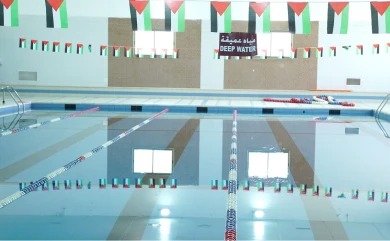
Institutional Decentralisation
28 MAY 2026
This series is organised by equipoMotor, a group of teenagers, young people and older people who have participated in the Museo Reina Sofía’s previous community education projects, and is structured around four themed blocks that pivot on the monstrous.
This fourth and final session centres on films that take the museum away from its axis and make it gaze from the edges. Pieces that work with that which is normally left out: peripheral territories, unpolished aesthetics, clumsy gestures full of intent. Instead of possessing an institutional lustre, here they are rough, precarious and strange in appearance, legitimate forms of making and showing culture. The idea is to think about what happens when central authority is displaced, when the ugly and the uncomfortable are not hidden, when they are recognised as part of the commons. Film that does not seek to be to one’s liking, but to open space and allow other ways of seeing and inhabiting the museum to enter stage.
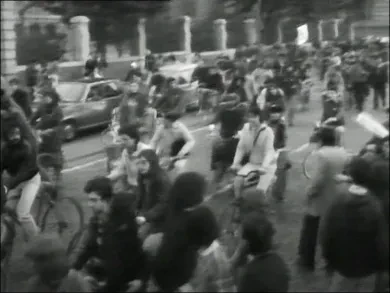
Ordinary, Common and Public. Common Fixes for Ordinary Communities
Tuesday, 26, and Wednesday, 27 May 2026 – Check programme
Ordinary, Common and Public. Common Fixes for Ordinary Communities is the title of the fourteenth encounter run by Sociología Ordinaria, a transdisciplinary research group that explores daily knowledge deemed ordinary, superficial or frivolous from a traditional academic and intellectual viewpoint.
This latest edition seeks to approach and map connections between concepts of the commons and the public realm — remembering that the ordinary is also the commons — and to ensure affects and moods of discontent are mobilised towards hope.
By way of its multiple declinations — community, community-based practices, the commons, the communal — the encounter seeks to reflect on different ways of creating, (re)configuring, maintaining, fixing, arranging, caring for and defending the public realm and the commons. Furthermore, it explores forms of invocation and experimentation as tools opposite the helplessness of an uncertain present, in addition to resistance against attempts of expropriation, distortion, privatisation and touristification.
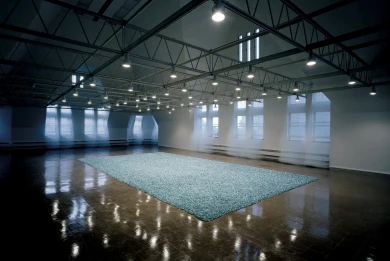
Felix Gonzalez-Torres. Sweet Revenge
26 MAY 2026
Nancy Spector and Alejandro Cesarco, curators of the exhibition Felix Gonzalez-Torres. Sweet Revenge, will speak with Manuel Segade, director of the Museo Reina Sofía, in a session dedicated to exploring the interpretive frameworks of this first large-scalepresentation in Madrid of the work of Felix Gonzalez-Torres (1957–1996), whose practice continues to resonate in the present.
The conversation begins with the exhibition’s title itself, Sweet Revenge, understood as a paradoxical notion that articulates much of the artist’s thinking. From there, the tensions running through his work are explored: the coexistence of opposing registers, ambiguity as a method, and the simultaneously affective and political charge of his works.
The dialogue also touches on some of the themes that run through his body of work, such as thenotions of identity, citizenship, and authority, alongside experiences linked to the AIDS crisis, and emotions such as love, loss, grief, and optimism. Special attention is given to the way in which Gonzalez-Torres shifts languages associated with Arte Povera, conceptualism, and minimalism towards open, participatory, and deeply personal structures.
The session also includes a reflection on the research process that shaped the exhibition, providing context for the curatorial decisions and criteria that structure it. In this context, Gonzalez-Torres’s work emerges as a device that actively engages those who activate orinterpret it, distributing responsibility for the production of meaning—a process that is alwaysunstable and constantly under negotiation.
These inaugural conversations, part of the main working strands of the Museo’s Public Programmes Area, aim to explore in greater depth the exhibition narratives of the shows organised by the Museo from the perspective of artists, curators and specialists.