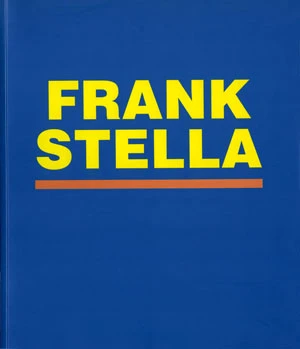
Frank Stella

The distribution of his work in series brings clarity to the understanding of a work which, without abandoning the role of colour as a starting point in research on the forms and structures and because of its decorative value, gradually incorporates new elements, materials and techniques (wood, metal, printmaking, collage). Stella wants to place himself in an unrealistic intermediate space between the flat surface and the three-dimensional body. In this way, from the Seventies onwards, his paintings - both reliefs and assemblages of spatial growth - cause mixed feelings of space which break the uniformity of the pictorial surface, as shown by the series Brazlian, Exotic Bird or Indian Bird. The artist himself, as recalled by the art historian Hubertus Gaßner, "explicitly calls attention to the aspect and the process of the DIY part of his projects," to the point of qualifying some of the elements that make it up are waste materials.
The supports, from the series Aluminium Paintings, Notched V Paintings and especially Protractor, are subject to a formal investigation that questions the artistic ability of the continuous perimeter of the square canvas. Here Stella introduces, along the straight angle and on the diagonal, circular arcs and segments of circles. Going one step further, the Polish Village series illustrates how colour contrasts assume a dual role: uniting and separating the reliefs at the same time. The development and use of this pictorial grammar highlights his commitment to strip the painting of its symbolic value (which also affects the spectator’s role as interpreter of its content) so as to reach the principles of the painting as an object, while revitalising the flat abstraction seen in Cubism which he considers worn out.
Haus der Kunst, Munich (February 10 - April 21, 1996)
Organised by
Museo Nacional Centro de Arte Reina Sofía and Haus der Kunst, Munich
Image gallery
Itinerary
Haus der Kunst, Munich
10 February, 1996 - 21 April, 1996
Museo Nacional Centro de Arte Reina Sofía, Madrid
26 September, 1995 - 9 January, 1996