-
Internacional Conference . Day 1
Thursday, 29 November
MORNING
9:30am – 10:00am
Welcome10:00am – 11:00am
Keynote: Juan Martín Prada, Art and Spectators in the Social Media Age.
This lecture looks at the transformations that new connectivity technologies — particularly social media – have engendered in the relationships between artistic practices and their audiences over the last decade.11:00am – 11:30am
Coffee Break11:30am – 1:30pm
Reception, Participation and Appropriation, moderated by Laura Caballero. Lectures by:- Ivana Hanacek. Strategies for the Democratization of Culture in Socialist Yugoslavia: Artistic Work in the National Front
- Catalina Imizcoz. ramona: Looping the Mechanisms of Production and Reception
- André Rui Graça. Audiences and Film-going in Portugal (1960-2010): Evolution of Policies, Reception Contexts and Visual Culture
- Alia Soliman. On the Popularisation of the Doppelgänger Figure in Contemporary Visual Culture
1:30pm – 5:00pm
BreakAFTERNOON
5:00pm - 6:30pm
Art (and) Mediation, moderated by Javier Fernández Vázquez. Lectures by:- Ariadna Lorenzo. The Illustrated Lecture at MoMA’s Auditorium: Developing a Space for a New Audience
- Elizabeth Stainforth y Ana Baeza Ruiz. Technologies of Public Culture: Exploring the Role of Visual Communication Technologies in Cultural Heritage Institutions
- Sonia Jiménez Hortelano y Clara Solbes Borja. Programas públicos para públicos plurales. Las estrategias de mediación en Bombas Gens Centre d’Art [Public Programmes for Diverse Audiences. Mediation Strategies in Bombas Gens Centre d’Art]
- Emily Watlington. Pretty Gross: Aestheticized Abjection in Feminist Video Art, 1996-2009
6:30pm – 7:00pm
Break7:00pm – 8:00pm
Towards a Constituent Museum. Politics and Practices of Mediation in “Our Many Europes”
Round-table discussion, with the participation of Pablo Martínez, Fran MM Cabeza de Vaca, Onur Yıldız and Adela ŽeleznikCultural institutions in general, and museums in particular, face the challenge of responding to a population that can no longer be recognised under the unified epithet ‘public’. This has occurred as much through the demographic, technological and economic transformations that have had a radical effect on the ‘Libidinal Economy’ in society as the crisis in the illustrated notion of culture as the chief articulator of the common good, in which subjects are no longer considered citizens. Rather, they are treated as consumers in the industries of leisure and the spectacle.
In this round-table discussion, spokespeople from the mediation teams of L’Internationale’s member museums will discuss the practices and relationship modes which, in their different contexts, seek to recognise subjects as constituent elements in the critical notion of the institution.
-
Internacional Conference. Day 2
Friday, 30 November
MORNING
10:00am – 11:00am
Biennials and Contemporary Publics, moderated by Desirée Vidal. Lectures by:- Eva March. Barcelona 1955: la apropiación social de la III Bienal Hispanoamericana de arte. [Barcelona 1955: The Social Appropriation of the 3rd Hispano-American Biennial of Art]
- María Dolores Barrena Delgado. Fotografía, 1968, 1969 y un grupo de amigos: el aquí y ahora del aquí y ahora [Photography, 1968, 1969 and a Group of Friends: The Here and Now from the Here and Now]
11:00am – 11:30am
Coffee Break11:30am – 1:00pm
Broadening Audiences, Expanding Channels, moderated by Alberto López Cuenca. Lectures by:- Briley Rasmussen. Broadcasting Modernity: The Museum of Modern Art’s Experiments in Television Programming
- Daniel Verdú. In Search of Wider Audiences. Strategies of Spanish Art Criticism between 1975 and 1992
- Laura Gómez Vaquero. Modos de narrar el arte contemporáneo español en el documental reciente [Modes of Narrating Spanish Contemporary Art in Recent Documentaries]
1:00pm – 4:30pm
BreakAFTERNOON
4:30pm - 5:30pm
Keynote: Lynn Spigel, Talking Heads and Video Countercultures.
This lecture explores how, since the 1960s, certain American artists have used talk shows as a space to develop artistic and political practices of counterculture.5:30pm – 6:00pm
Break6:00pm – 7:30pm
Artists and/or Wide Audiences, moderated by Laura Ramírez. Lectures by:- Katharine J. Wright. The Medium is the Media: Protest Art and the Infiltration of Postwar American Periodicals
- Andrew Cappetta. The Birth of Underground Music and the British Art School, 1960-1980
- Patrick Van Rossem. The Artist and the Worry Behind the Work. Just a Voice Amongst Many?
7:30pm – 8:00pm
Closing remarks
Wide Audiences and the Visual Arts from 1950 to the Present: Agencies, Politics and Discourses
International conference

Held on 29 Nov 2018
This international conference examines the media, narratives and practices which have sought to make contemporary visual arts accessible to wide audiences from 1950 to the present.
The development of the media (press, cinema, television, the internet), the proliferation of illustrated publications and the exponential increase in the number of exhibitions and new museums around the world has given rise to a vast array of mediums that have played a key role in configuring and disseminating narratives of contemporary art among a wide, diverse and unspecialised audience. The expansion of education and leisure- and consumerism-related activities has also led to a significant rise in the mainstream’s interest in the visual arts. Both the aims and effects of the initiatives steered towards the “popularisation” of the arts are diverse and often incompatible, ranging from the commercialisation of culture to the empowering of individuals and collectives. Consequently, the ways of approaching communication and dissemination vary according to the receivers, who are equally diverse: from political and cultural agents to consumers from the society of the spectacle and digital users.
Furthermore, it must be noted that although these receivers sometimes follow norms established by senders, they also frequently modify, misinterpret, deny or subvert them. Thus contemporary art is re-appropriated in unpredictable and unexpected ways, and counter-publics emerge. The demands on the worlds of culture and the humanities require them to have a social impact and to construct “from below”, contributing to empowerment, using new technologies wisely, and promoting freedom, democracy, equality and respect, as well as the integration of diversity. Yet there is also the need to combine critical analyses and productive reflections to elucidate the method of obtaining results.
The conference is structured around two sessions, including the presentation of communications selected via an international open call for papers, a round-table discussion and two lectures, combining to create a framework to debate and think about the problems, limitations and opportunities arising in the crossroads between the arts and wide audiences.
In collaboration with
The School of Philosophy and Letters at the Autonomous University of Madrid (UAM).
The Office of Cultural Activities of the Vice-Chancellor of Institutional Relations, Social Responsibility and Culture at the Autonomous University of Madrid (UAM).
Creative Europe Culture Programme Centro Cultural La Corrala Museo de Artes y Tradiciones Populares
Inside the framework of
The research project: “Long Exposure: the Narratives of Spanish Contemporary Art for ‘Wide Audiences’" (HAR2015-67059-P MINECO, FEDER).
The Doctoral Programme for Studies in Art, Literature and Culture at the Autonomous University of Madrid (UAM). The ACCAMC Research Group of Art, Film and Audiovisual Cultures in the Contemporary World.
The Project: “Our Many Europes. Europe’s Critical ‘90s and the Constituent Museum”, by L’Internationale, the European Confederation of Museums. L’Internationale
Convenors
Valeria Camporesi (UAM), Olga Fernández López (UAM) and Noemi de Haro García (UAM)
Scientific committee
Valeria Camporesi, Jesús Carrillo, Olga Fernández López, Noemi de Haro García (UAM) and Ana Longoni (Museo Reina Sofía)
Organised by
The Autonomous University of Madrid (UAM) and Museo Reina Sofía
Participants
Lectures:
Juan Martín Prada. A professor at the University of Cádiz, where he is in charge of the research group Contemporary Aesthetic Theories. He is also the author of the books El ver y las imágenes en el tiempo de Internet (2018) and Prácticas artísticas e Internet en la época de las redes sociales (2012), among others.
Lynn Spigel. A professor of Digital Media Culture at Northwestern University, she writes and lectures about the cultural history of film, television and digital media, with a focus on gender, technology and the relationship the media bears to daily life. She is the author of Feminist TV Criticism (2007) and Welcome to the Dreamhouse: Popular Media and Postwar Suburbs (2001), among others.
Round table:
Pablo Martínez. An educator and researcher, and currently head of Public Programmes at the Museo de Arte Contemporáneo de Barcelona (MACBA). He has worked in the sphere of education and public policy activities in the Centro de Arte Dos de Mayo and Museo Nacional Centro de Arte Reina Sofía, among others.
Fran MM Cabeza de Vaca. A member of the Museo Reina Sofía’s Education team. As an artist and teacher, he has participated in different initiatives that sit at the crossroads between education and art practices, for instance with the collective ZEMOS98 and the project Expanded Education (2012).
Onur Yıldız. With a PhD in Political Theory from the University of Essex, his lines of research take in radical theory, democratic politics, populisms and the political uses of art. He is currently head of Pubic Programmes at SALT (Istanbul).
Adela Železnik. She holds a PhD in Art History and has curated exhibitions and participated in projects related to pedagogies in contemporary art, for instance the Radical Education Collective and L’Internationale’s mediation work group. Since 1993, she has worked as head of education and public programmes at Moderna galerija, Ljubljana.
Talks:
Ana Baeza Ruiz. An associate professor at University College London and research fellow at the Victoria and Albert Museum. Her research explores the history of UK museums in the middle of the 20th century, specifically the structuring of collections and curatorial techniques in public art museums.
María Dolores Barrena Delgado. She holds a PhD in Art History and works as an exhibition curator, forming part of the Curatorial Platform of the International Photography Biennial Fotonoviembre. Since 2013 she has worked on Solar. Acción cultural Sociedad – Lugar – Arte, a cultural association which considers everyday space to be a place of research and artistic creation.
Andrew Cappetta. A doctoral candidate in Art History and assistant curator in the academic programmes at the University of Rochester’s Memorial Art Gallery. He has worked in various art institutions, such as the Museum of Modern Art and the Albright-Knox Art Gallery, and has written a number of texts on art, music and education for journals such as The Brooklyn Rail, Art & Education and Sound Effects, among others.
Laura Gómez Vaquero. A professor of Film and Art in different centres belonging to the University Camilo José Cela and the University Rey Juan Carlos. She has also been a member of the programme committee for Madrid’s International Documentary Festival, DocumentaMadrid, and is the author of a number of publications, including Las voces del cambio. La palabra en el documental durante la transición en España (2012).
Ivana Hanaček. An art historian and curator whose research centres around the conditions of socialist realism in Yugoslavian art. With an interest in the intersection between art, public space and education, she has been part of different collectives and programmes such as BLOK and the Political School for Artists.
Catalina Imizcoz. An editor, producer and researcher of contemporary art who is also an associate professor at University College London and the University of Arts London. Her research focuses on publications which have shaped exhibition studies, for instance the magazine ramona, from Argentina.
Sonia Jiménez Hortelano. With a PhD in Art History, she is currently undertaking a training and research fellowship at the Museo Nacional del Prado. She has worked as a mediator at Bombas Gens Centre d’Art, in Valencia, and has carried out internships in the museum sphere, working in centres such as the Institut Valencià d’Art Modern (IVAM) and La Nau from the University of Valencia.
Ariadna Lorenzo Sunyer. A doctoral candidate at the University of Lausanne and the University of Gerona. Her research analyses the role of artists’ conferences in the development of school art and museum programmes for art education and communication. Moreover, she has curated a wide range of exhibitions and is part of different research groups.
Eva March. With a PhD in Art History and an associate professor at Pompeu Fabra Univeristy, she has focused her research on the study of museums and collecting in Catalonia during the first 30 years of the 20th century. She is the author of Los museos de arte y arqueología de Barcelona durante la Dictadura de Primo de Rivera (2011).
Briley Rasmussen. An assistant professor and director of Museum Studies at the University of Florida. Her field of research focuses on the history of education practices in museums, and she has worked in this sphere in institutions such as the Museum of Contemporary Art, Los Angeles, and the J. Paul Getty Museum.
André Rui Graça. With a PhD in film studies from University College London and an independent advisor, he is currently a researcher in the Centre for 20th Century Interdisciplinary Studies at the University of Coimbra. His research focuses on the film market in general and the dissemination and consumption of Portuguese cinema and art in particular.
Clara Solbes Borja. An art historian with broad experience in the museum sphere, she has worked as a mediator at Bombas Gens Centre d’Art and an exhibition assistant at IVAM. She has also been part of different teams which aim to establish a gender perspective in museums, for instance “Re-readings. Museum Itineraries in Terms of Gender”.
Alia Soliman. A doctoral candidate at University College London and a cultural advisor. She has published work on female sexuality, ageing and the image of the body, in addition to the dissemination of the image in contemporary culture.
Elizabeth Stainforth. A professor at the University of Leeds whose research explores digital heritage and memory cultures. She has also worked as an associate editor for the parallax journal and has published different articles in journals such as Museum and Society.
Patrick Van Rossem. A curator, critic and researcher with a PhD in Art History and an associate professor at Utrecht University. His interests lie in the performative turn in visual arts and the relationships between artists and audiences from 1960 onwards. He is the co-author of The audience as an authorial presence in the creative act. Considering authorship and the performative turn in the 1960s and 1970s (2012).
Daniel A. Verdú Schumann. Currently a researcher at Paderborn University and associate professor at University Carlos III, Madrid. He has conducted research into Spanish art and the art world between 1960 and 1990, and is the author of diverse publications such as Crítica y pintura en los años ochenta (2007) and Alberto Solsona (2013)
Emily Watlington. As a contemporary art critic and curator, her work is centred around the study of video through affect theory, feminist theory and disability studies. She has worked in institutions such as the MIT List Visual Arts Center and has written for different magazines, including Frieze and Art Papers.
Katharine J. Wright. As an independent curator and researcher, she has worked in different art institutions such as the Metropolitan Museum of Art, the Whitney Museum of American Art and the Museum of Modern Art, New York. Specialised in post-war American art, she has a keen academic interest in alternative media, public art, photography and graphic design.
Más actividades
![Isabel Coixet, 100 Years and You Everywhere [100 años y tú en todos los sitios], 2026, película](https://recursos.museoreinasofia.es/styles/small_landscape/public/Actividades/2.diseminar-mundo.jpg.webp)
John Berger and Isabel Coixet. Continued Ways of Seeing
Thursday, 17 September 2026 at 7pm
Ways of Seeing (1972) is one of the most revolutionary television series on art history, the museum and contemporary critical culture. Across four episodes, an articulate, enthusiastic John Berger unpacks the relationships between classical art through the gaze and new technology, the nude and feminism, the oil painting and commodity fetichism, advertising and consumerism. In essence, a level of critical commitment only comparable to its capacity for dissemination. Unsurprisingly, the series, and the book that would distil it, continues to forge vocations. This session sees art historians Alberto López Cuenca and Modesta Di Paola carry out an analysis of Berger’s audiovisual work, placing the stress on episodes one and four of the series. In the first episode, Berger reflects on the connection between the act of seeing, looking and being in light of new technology, such as the film camera. At the same time, it analyses how the culture of reproduction is turning paintings into messages or fragments of communication while stressing the importance of silence when observing historical paintings. In the fourth and final episode, he introduces advertising as a new iconic-verbal language that shares certain principles with the message of oil painting as a luxury item.
The session opens with the premiere of a filmic letter from Isabel Coixet, one of Spain’s most internationally acclaimed directors, to John Berger, with whom she maintained a long friendship and deep admiration. The short film is testament to the ubiquitous and long-lasting presence of the author of Ways of Seeing, even after his death in 2017.
![Chantal Akerman, Woman Sitting after Killing [Mujer sentada después de matar], 2001, instalación. Museo Reina Sofía](https://recursos.museoreinasofia.es/styles/small_landscape/public/Actividades/chantal-akerman-mujer-sentada-despues-matar.jpg.webp)
On Your Screen: Art History and the Museum Facing the Audiovisual Challenge
18, 19 SEP 2026
The conference On Your Screen: Art History and the Museum Facing the Audiovisual Challenge sparks debate around the transformations of art history and museum space upon embracing the audiovisual format. Its starting point is John Berger’s emblematic television series Ways of Seeing (1972), a landmark in the democratisation of art-historical discourse. In the series, Berger illustrated how the transfer of a work such as Goya’s Los fusilamientos del 3 de mayo (The Third of May 1808 or the Executions) from museum gallery to home TV screen completely changed the viewer’s experience, allowing the image to travel to straight to the viewer.
In the twenty-first century, this screen-based ecosystem has expanded exponentially, with museums not only physically integrating screenings and devices into their galleries— following in the wake of many exhibitions on the moving image — but also deploying complex virtual strategies. Equally, numerous en vez de a multitudeof historians, students and creators use digital platforms to circulate their ideas and projects. This audiovisual shift opens access to ignored materials and democratises knowledge, as well as challenging traditional hierarchies and the interpretive authority of institutions. The conference, promoted by the research project ATLAS AV: The Audiovisualisation of Art History and the Museum, seeks to analyse this vast audiovisual material, its archives, and its capacity to transform the memory of art.
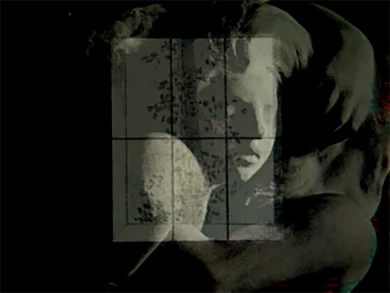
Godard and Miéville: Time and Ruin
Friday, 18 September 2026 - 7pm
Inside the framework of the conference On Your Screen: Art History and the Museum Facing the Audiovisual Challenge, this film series sets forth three critical visions of the museum via three sessions featuring the works of John Berger, Jean-Luc Godard and Anne-Marie Miéville, Ariella Azoulay, Alan Resnais and Chris Marker, Kwate Nee-Owoo, and the premiere of short films by Isabel Coixet and La Vulcanizadora (Maria Rojas Arias and Andrés Jurado). In classical theory, the museum gives the world meaning; it contains fragments of the past, granting them a history, a narrative that explains preterite time and the present. Today, there is an implicit assumption that this function hides and legitimises forms of power, yet what if the museum, instead of explaining the world, multiplied it through radical ideas, silenced periods and repressed subjects? Such is the approach of the film-makers and artists in this film season.
In 1972 the writer John Berger opened the landmark television series Ways of Seeing with an iconoclastic gesture: slicing Sandro Botticelli’s painting Venus and Mars (1485) in London’s National Gallery. A transgressive act that recalls contemporary attacks on the museum by dissident youth and with which Berger, after revealing it was a reproduction, sought to ignite debate around the idea of an original artwork and a copy. In this, the hundredth anniversary of his birth, the first session pays homage to one of the great art writers of the twentieth century. Starting with a review of Berger’s audiovisual work by art historians Alberto López Cuenca and Modesta Di Paola, the series begins with the premiere of 100 Years and You Everywhere (2026), an unreleased short film by Isabel Coixet composed as a beautifully crafted letter to Berger, and continues with an analysis of fragments of Ways of Seeing in relation to the museum and contemporary art.
The second session screens two medium-length films by Jean-Luc Godard and Anne-Marie Miéville on time, ruin and museum. In The Old Place. Small Notes Regarding the Arts at Fall of 20th Century (1999), both film-makers consider what remains of that “old place”, the museum, at the close of a century of wars and totalitarianism, and ask whether it should be more of a legend or desire than a place. This same driving principle leads Godard to build his own imaginary museum in Reportage amateur (maquette expo) (2006), a rickety toy museum which, paradoxically, contains the great film-maker’s full power of thought on history and images.
Finally, the third session explores one of the major challenges of recent years: the decolonisation of the museum, the recognition of its link to imperialist discourses of power and the need to situate a new silenced or repressed subject at the centre of the Western narration of history. Under the title Museums and Restitution, it includes the film Undocumented. Unlearning Imperial Plunder (2019), by theorist Ariella Azoulay, Statues Also Die, by Alan Resnais and Chris Marker (1953), Kwate Nee-Owoo’s You Hide Me (1970) and the first screening of the short film Quinto verso, parte de Tonada (Fifth Verse, Part of Tonada), by La Vulcanizadora (Maria Rojas Arias and Andrés Jurado), filmed at the Museo de América in Madrid.
![Ariella Azoulay, Un-documented. Unlearning Imperial Plunder [Indocumentados. Desaprendiendo el saqueo imperial], 2019, película](https://recursos.museoreinasofia.es/styles/small_landscape/public/Actividades/5.diseminar-mundo.jpg.webp)
Museums and Restitution
Saturday, 19 September 2026 - 7pm
Centuries of plundering, decades of amnesia, years of living with unmitigated extractivist power… Does a museum, as we know it, have a raison d'être in a postcolonial society?
This session expounds the operations of the museum as a colonial machine, while putting forward ideas, in narration, for a more just, equal and inclusive institution of the future via society’s marginalised and minority voices. The session begins with the international premiere of Quinto verso, parte de Tonada (Fifth Verse, Part of Tonada), which presents a vision of the Quimbaya Collection (fifth and sixth centuries CE) from the Museo de América in Madrid. It is constructed with the voices and chants of Wayúu mourners and guides, not only as a way of reinstating the role of these gold idols — anthropomorphic figures of men and women used as vessels in ritual practices — but also to imagine that what must be exhibited is not the gold itself. It is the ritual’s own chant. In the classic film You Hide Me (1970), Ghanaian film-maker Kwate Nee-Owoo accesses the British Museum’s collection of African art, located in the building’s basement, to question the meaning behind a museum plundering and nullifying. A fine exercise of first-person institutional critique screened for the first time in Spain. Almost seventy years since Resnais and Marker made Statues Also Die (1953), a reflection on the aura-bearing value of the museum opposite the identity-based and cultural belonging of African art, theorist Ariella Azoulay films the same statues again at the Musée du Trocadéro (today the Musée du Quai Branly), which survive and wait to be reunited with their people. Azoulay, whose wholly original undertaking is a lesson to the museum of the future, connects the forced migration of these sculptures with the mass transit of people crossing borders artificially imposed by the same system that has plundered their culture.
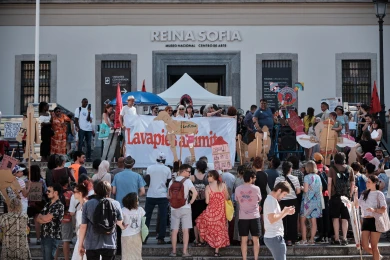
The School of Transformative Institutionalism and Local Organisation
From 21 to 24 September 2026
The School of Transformative Institutionalism and Local Organisation (S.T.I.L.O.) is a programme of joint learning and join strategy which sets in motion a process for the exchange of questions, methodologies and experiences between cultural organisations. The overall aim is to create, circulate and prototype tactics, tools and collective knowledge on institutional practices that open new channels for defending culture and advocating structural transformation in divergent geographical contexts.
The project is part of the Laboratorio de Institucionalidad Compartida (The Laboratory of Shared Institutionalism, LIC), a space for the Museo Reina Sofía’s research, work and advocacy centred on developing, experimenting with and systemising practices, protocols and tools which contribute to a fairer and more liveable cultural ecosystem.
For many years now, so-called infrastructural critique in museums questions material, legal and economic infrastructures, among others, as well as the forms of solidarity and practices required to sustain the cultural ecosystem. By approaching current debates, S.T.I.L.O. raises questions on the ways in which organisations define and interpret their practices, organise their relations and respond to the social contexts in which they operate.
The school gathers four cultural organisations that work via different institutional models – scale, contexts, conditions, different working models — with the goal of pooling common strategies and tools of organisation, advocacy and relationships with local communities.
The programme is conceived as a collaborative process with the participation of Arika, La Revuelta, BAK Basecamp and The Tentacular Museum (Museo Reina Sofía) and is structured around preparatory online sessions and an in-person seminar in Madrid.
S.T.I.L.O. is an activity framed inside the working strand of Situated Organisations from L'Internationale’s Museum of the Commons project, which reflects on the role of museums and art organisations as actors within complex social networks and ecosystems, with a view to exploring new ways to democratise institutions and make them more open, inclusive and useful.