-
Amandi
Directors: Francesc Sitges-Sardà and Elisabet Prandi. Choreography and performers: Ferran Carvajal and Marta Filella. Cinematography: Elisabet Prandi. Music: Passacaglia Händel/Halvorsen. Montage: Francesc Sitges-Sardà. Spain, 2012, 6'.
Amandi is a melting pot made from nature, forests and strange landscapes. Amandi are two characters that move around this particular space, taking us along different paths and leading us to delve deeper into a world undergoing a constant transformation.
-
One Man Walking
Director: Margaret Williams. Choreography and performers: Kenrick ‘H2O’ Sandy. Script: Jonzi D. Cinematography: George Richmond. Music: Michael ‘Mikey J’ Asante. Editor: Rachel Tunnard. Production: Anne Beresford. United Kingdom, 2011, 17'.
One Man Walking explores the intensity and challenges of life in the metropolis, combining krump – a highly expressive and energetic dance movement – with the uplifting excitement and liveliness of free-running.
-
Coup de Grâce
Director: Clara van Gool. Production: Hanneke Niens, Hans de Wolf, Raül Perales. Script: Jordi Cortés Molina, Damián Muñoz, Clara van Gool. Cinematography: Nils Post. Editor: Stefan Kamp, John Hipkiss. Performers: Jordi Cortés Molina, Damián Muñoz. Holland/Spain, 2011, 26'.
Coup de Grâce is a film about the collapse of a friendship, about what is broken and what cannot break. After a long separation, two men meet again in an enormous building at a remote location. Over the course of an evening, and during an icy night, they fight a weaponless, exhausting duel.
-
Motion Sickness
Director: John Mcllduff. Choreography: Jessica Kennedy. Performers: Eddie Hay, Jessica Kennedy, Liv O'Donoghue. Production: Zlata Filipovic. Ireland. 2012, 10'.
A teenage band rehearses on a rooftop car park on a Saturday. A flock of crows lie dead in the wind. Three people sit in the back of a car waiting to move. Motion Sickness is a dance film that explores the concepts of need, rejection and escape.
-
Communication Breakdown
Director: Beatriz Palenzuela. Performers: Rafael de la Lastra and Beatriz Palenzuela. Music: Chema Palenzuela. Production: Ícaro Maiterena, Rafael de la Lastra and Beatriz Palenzuela. Spain, 2012, 6'.
It reaches the point where communication breaks down, and no matter how hard we try to climb this barrier we are unable to. Time heals but the dust spreads. The meaning of these suggestions is left open to the viewer.

Held on 19 Sep 2014
Short Dance Films is a touring programme that includes a selection of forty-five short dance films produced in Europe in recent years. It is curated by Núria Font/NU2’s, commissioned by the European Dancehouse Network, a network with the participation of 20 dance houses from 16 countries.
The programme, within the framework of the cooperation project Modul-dance, has been screened in over twenty European cities, illustrating the diverse ways of building a dialogue between dance and the moving image. For the screening in the Museo Reina Sofía, five works have been selected to give a prime example of the expressive, narrative and aesthetic possibilities of the stories told through the body and movement.
Short Dance Films will feature participation from Núria Font, the programme’s curator.
Curatorship
Núria Font / NU2's
Related links
A production by

Participants
Núria Font is a video producer and curator specialised in new media. She has directed the Espai Video at the Centre d'Art Santa Mònica, over an eight-year period, the biennials of Video and Electronic Arts (1998, 2000 and 2002), Mostra de Videodansa (1984-2003) and VAD, the Video and Digital Arts festival in Girona (2003-2012). She is currently in charge of the activities project of NU2’s, Associació per a la creació, and teaches courses on applied technology in performing arts at the Conservatorio Superior de Danza María de Ávila, in Madrid, and the Institut del Teatre, in Barcelona. She was awarded the National Dance Award by the Regional Government of Catalonia in 2009.
Más actividades
Files of Tropical Revolutions
Sábado 20 y 27 de junio, 2026 - 19:00 H
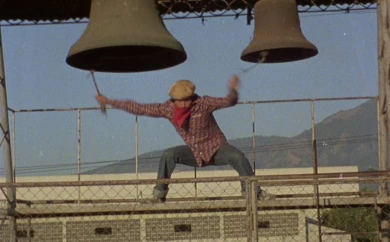
The Reframing Banana Imagery series concludes with two works that condense the height and twilight of this period in history, epic sagas that cross borders and registers to embody experiences of armed struggle in the region. Cameras mix with firearms, borders between nations blur and patience reaches breaking point. This is where the tipping point lies, where the bloodshed weighs heavy and the murmurings of regional brotherhood are buried in the ground again.
Pan y dignidad (Carta abierta de Nicaragua) [Bread and Dignity (An Open Letter to Nicaragua)] recounts the historical records and process of national reconstruction in Nicaragua via the Sandinista popular uprising. Historias prohibidas de Pulgarcito (Forbidden Tales of Tom Thumb) places the camera at the heart of the El Salvador revolutionary struggle, interspersing testimonies of daily violence with the verses of the poet Roque Dalton.
Both works understand the armed revolution as an open file under construction. The insurgent brotherhood, although dissolved, still resounds in regional history.
Circling Over Exploited Bodies
Friday, 19 and 26 June 2026 - 7pm
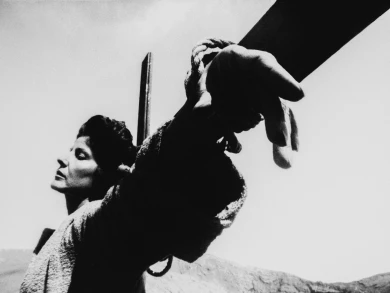
When forms of violence are inflicted on society, film responds from urgency. Images become abstract, sounds fade and the register of dissidence comes from the gut. La zona intertidal (The Intertidal Zone) is an essayistic and poetic approach to the repression of teachers in El Salvador in the 1970s — a teacher studies the biodiversity of the El Salvador coast as a boy finds a body on the same beach. A propósito de la mujer (About Women) interweaves testimonies of misery and rage towards patriarchal structures with fictional scenes of a symbolic procession through a harsh desert.
Both films understand the body as a target of violence and a territory of insurrection, a space where the blood shed by militancy and the patriarchal yoke turn pain into denouncement and existence outside the status quo into an act of political dissidence.
Central American Designation of Origin
Thursday, 18 and 25 June 2026 - 7pm
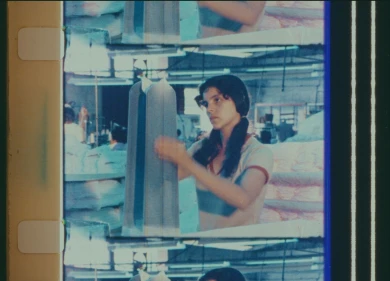
Fertile lands, farmers’ hands, rural faces. This first programme in the series Reframing Banana Imagery understands the foundations of the Central American experience from exploitation, extractivism and displacement, and from the organisation and resistance that emerged as a reaction. The four films within extend from a lyrical documentary on farmers’ solidarity to the playful subversion of the institutional format of the United Fruit Company.
Bananeras (Banana Growers) is a combative portrait of the inhumane conditions of the American banana plantations located in Nicaragua through much of the twentieth century. Costa Rica Banana Republic is a perspicacious satire via an institutional documentary of banana production, spotlighting the extractive nature of this agro-exporting model in the 1970s. Organización Campesina (Farmers’ Organisation) frames rural resistance in Honduras from a direct depiction and lyrical documentary, while Dos veces mujer (Two Times a Woman) dissects the invisibility of the double-shift working day Central American women farmers endure: working in the countryside and working in the home. As a whole, the works here present the earth at once as a wounded body and a space of dignity.

Aesthetics of Peace and Desertion Tactics
8 October 2025 – 24 June 2026
The study group Aesthetics of Peace and Tactics of Desertion: Prefiguring New Pacifisms and Forms of Transitional Justice proposes a rethinking—through both a theoretical-critical and historical-artistic lens—of the intricate network of concepts and practices operating under the notion of pacifism. A term not without contestation and critical tension, pacifism gathers under its name a multiplicity of practices—from anti-militarism and anti-war movements to non-violence activism—while simultaneously opening urgent debates around violence, justice, reparation, and desertion. Here, pacifism is not conceived as a moral doctrine, but as an active form of ethical and political resistance capable of generating aesthetic languages and new positions of social imagination.
Through collective study, the group seeks to update critical debates surrounding the use of violence and non-violence, as well as to explore the conflict of their representation at the core of visual cultures. In a present marked by rearmament, war, genocide, and the collapse of the social contract, this group aims to equip itself with tools to, on one hand, map genealogies and aesthetics of peace—within and beyond the Spanish context—and, on the other, analyze strategies of pacification that have served to neutralize the critical power of peace struggles. Transitional and anti-punitive justice proposals will also be addressed, alongside their intersections with artistic, visual, and cinematic practices. This includes examining historical examples of tribunals and paralegal activisms initiated by artists, and projects where gestures, imaginaries, and vocabularies tied to justice, reparation, memory, and mourning are developed.
It is also crucial to note that the study programme is grounded in ongoing reflection around tactics and concepts drawn, among others, from contemporary and radical Black thought—such as flight, exodus, abolitionism, desertion, and refusal. In other words, strategies and ideas that articulate ways of withdrawing from the mandates of institutions or violent paradigms that must be abandoned or dismantled. From feminist, internationalist, and decolonial perspectives, these concepts have nourished cultural coalitions and positions whose recovery today is urgent in order to prefigure a new pacifism: generative, transformative, and radical.
Aesthetics of Peace and Tactics of Desertion, developed and led by the Museo Reina Sofía’s Studies Management, unfolds through biweekly sessions from October to June. These sessions alternate between theoretical discussions, screenings, work with artworks and archival materials from the Museo’s Collection, reading workshops, and public sessions. The group is structured around sustained methodologies of study, close reading, and collective discussion of thinkers such as Judith Butler, Elsa Dorlin, Juan Albarrán, Rita Segato, Sven Lütticken, Ruth Wilson Gilmore, and Franco “Bifo” Berardi; historical episodes such as the anti-nuclear and anti-arms race movement in Spain; and the work of artists and activists including Rojava Film Commune, Manuel Correa and the Oficina de Investigación Documental (Office for Documentary Investigation), and Jonas Staal, among other initial cases that will expand as the group progresses.
Elisa González and Leah Pattem. Soy Tribulete 7
13 JUN 2026
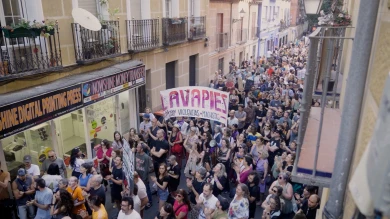
Framed inside this year’s Neighbourhood Picnic is the screening, in the Museo’s Cinema, of a film related to the life and protests of the Lavapiés neighbourhood, addressing issues of gentrification and the right to housing: Soy Tribulete 7 (I Am Tribulete 7, 2026), directed by Elisa González and Leah Pattem.
As the Spanish housing crisis takes hold in Lavapiés, this story begins in February 2024, when the residents of Calle Tribulete, 7, a block of apartments on a street in this Madrid barrio, receive a letter informing them that their building has been sold to a vulture fund. The news spreads quickly around the neighbourhood and, when it comes to the attention of González and Pattem, they grab their cameras and head straight for the building, where they encounter one hundred or so residents still in shock. The film Soy Tribulete 7 flows into the building and the daily lives of a community united, whose looming eviction occasions the fight of their lives. Ultimately, a path of resistance that will turn the community into a symbol of struggle for the right to housing.
Both film-makers worked closely with a group of tenants — Cris, Nani, Blanca, José, María Jesús and Antonia — to tell the story of how the building became the most creative stage of resistance ever witnessed in the area. The work presents the daily life of these residents in Madrid’s now-iconic “building fighting eviction”, depicting their collective struggle and the violent disruption to their lives. Through personal interviews, observational footage, archive material, music and a narration by eighty-year-old actress Ana Martín García, the film casts light on the human stories behind a community struggle.
The Neighbourhood Picnic is an annual gathering of festivities organised by Museo Situado, a network made up of associations, activists and residents from Lavapiés, a racially diverse, working-class neighbourhood where the Museo Reina Sofía is located.