
Held on 27 Sep 2024
The Museo Reina Sofía organises an encounter in memory of cultural manager Berta Sureda (Barcelona, 1959 – Palma de Mallorca, 2024), whose work was pivotal in opening new horizons in cultural institutions, placing creators front and centre and driving forward citizen participation. The activity here comprises a series of interventions by different cultural agents and fellow professionals and is conducted, in parallel, in the Museo Reina Sofía and the Centre de Cultura Contemporània de Barcelona (CCCB), with a live streaming between both spaces. The interventions will be followed by a dance piece by the company Mal Pelo, performed by María Muñoz.
After studying Art History at the University of Barcelona, Sureda’s career began to take shape around cultural management as she held positions in institutions such as CCCB, the Generalitat de Catalunya, the Institut de cultura de Barcelona, la Fabra i Coats and Es Baluard Museu d’Art Contemporani de Palma. In 2008, she joined the Museo Reina Sofía, becoming part of Manuel Borja-Villel’s team and managing the recently created Department of Public Activities, where she introduced live arts to the Museo and established many new links to the cultural ecosystem. In 2015, she carried her experience over to regional politics after being appointed the new commissioner of Culture for Barcelona City Council. Across all of these stages, she was committed to testing out new modes of relations between institutions and civil society, and perpetually with a core mission of fostering an associative and independent cultural fabric.
Sensibility, listening and boundless creativity in Berta Sureda’s management have left their mark on an entire generation of culture workers, and thus this encounter wishes to acknowledge a life devoted to propelling culture by those who shared work and learning with her in the different phases of her professional life.
Acknowledgements
Natalia Álvarez Simó, Manuel Borja-Villel, Jesús Carrillo, Blanca García Fusté, Mònica Lòpez Dalmau, Montse Martínez-Izquierdo, María Muñoz
Organised by
Museo Reina Sofía
Agenda
viernes 27 sep 2024 a las 12:00
Welcome and presentation
viernes 27 sep 2024 a las 12:15
Dear Berta, the reading of a collective letter
viernes 27 sep 2024 a las 12:30
Remembering Berta Sureda, video
viernes 27 sep 2024 a las 12:45
Maria Muñoz, Bach, fragments
viernes 27 sep 2024 a las 13:00
Connection to the Centre de Cultura Contemporània de Barcelona (CCCB)
sábado 27 sep 2025 a las 13:10
Intervention by Manuel Borja-Villel
Participants
Manuel Borja-Villel es historiador del arte y comisario. Ha sido director del Museo Reina Sofía (2008-2023), el MACBA (1998-2007) y la Fundació Antoni Tàpies (1989-1998). Su última publicación es el libro Campos magnéticos. Escritos sobre arte y política (Arcadia, 2020) y ha sido uno de los comisarios de la 35ª Bienal de São Paulo. Actualmente es director del Programa “Museu Habitat” en el Departament de Cultura de la Generalitat de Catalunya
María Muñoz es coreógrafa, bailarina y codirectora del centro de creación L’animal a l’esquena en Celrà, Girona. Junto con Pep Ramis, dirige el grupo de creación escénica Mal Pelo que, desde 1989, ha desarrollado su propio lenguaje artístico a través del movimiento y la creación de dramaturgias.


Más actividades
Rethinking Guernica
Monday and Sunday - Check times
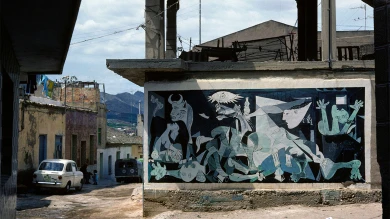
This guided tour activates the microsite Rethinking Guernica, a research project developed by the Museo Reina Sofía’s Collections Area, Conservation and Restoration Department and the Digital Projects Area of the Editorial Activities Department, assembling around 2,000 documents, interviews and counter-archives related to Pablo Picasso’s painting Guernica (1937).
The visit sets out an in-situ dialogue between the works hung around the painting and a selection of key documents, selected by the Museo’s Education Team and essential to gaining an idea of the picture’s historical background. Therefore, the tour looks to contribute to activating critical thought around this iconic and perpetually represented work and seeks to foster an approach which refreshes our gaze before the painting, thereby establishing a link with the present. Essentially revisiting to rethink Guernica.
Files of Tropical Revolutions
Sábado 20 y 27 de junio, 2026 - 19:00 H
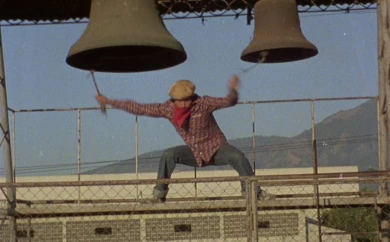
The Reframing Banana Imagery series concludes with two works that condense the height and twilight of this period in history, epic sagas that cross borders and registers to embody experiences of armed struggle in the region. Cameras mix with firearms, borders between nations blur and patience reaches breaking point. This is where the tipping point lies, where the bloodshed weighs heavy and the murmurings of regional brotherhood are buried in the ground again.
Pan y dignidad (Carta abierta de Nicaragua) [Bread and Dignity (An Open Letter to Nicaragua)] recounts the historical records and process of national reconstruction in Nicaragua via the Sandinista popular uprising. Historias prohibidas de Pulgarcito (Forbidden Tales of Tom Thumb) places the camera at the heart of the El Salvador revolutionary struggle, interspersing testimonies of daily violence with the verses of the poet Roque Dalton.
Both works understand the armed revolution as an open file under construction. The insurgent brotherhood, although dissolved, still resounds in regional history.
Circling Over Exploited Bodies
Friday, 19 and 26 June 2026 - 7pm
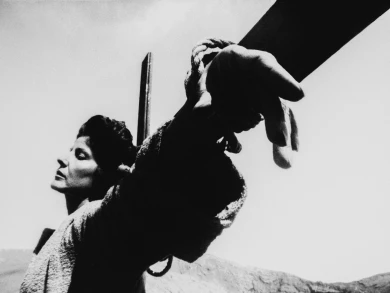
When forms of violence are inflicted on society, film responds from urgency. Images become abstract, sounds fade and the register of dissidence comes from the gut. La zona intertidal (The Intertidal Zone) is an essayistic and poetic approach to the repression of teachers in El Salvador in the 1970s — a teacher studies the biodiversity of the El Salvador coast as a boy finds a body on the same beach. A propósito de la mujer (About Women) interweaves testimonies of misery and rage towards patriarchal structures with fictional scenes of a symbolic procession through a harsh desert.
Both films understand the body as a target of violence and a territory of insurrection, a space where the blood shed by militancy and the patriarchal yoke turn pain into denouncement and existence outside the status quo into an act of political dissidence.
Central American Designation of Origin
Thursday, 18 and 25 June 2026 - 7pm
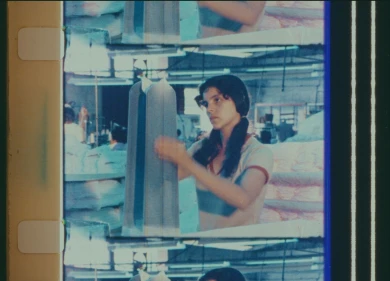
Fertile lands, farmers’ hands, rural faces. This first programme in the series Reframing Banana Imagery understands the foundations of the Central American experience from exploitation, extractivism and displacement, and from the organisation and resistance that emerged as a reaction. The four films within extend from a lyrical documentary on farmers’ solidarity to the playful subversion of the institutional format of the United Fruit Company.
Bananeras (Banana Growers) is a combative portrait of the inhumane conditions of the American banana plantations located in Nicaragua through much of the twentieth century. Costa Rica Banana Republic is a perspicacious satire via an institutional documentary of banana production, spotlighting the extractive nature of this agro-exporting model in the 1970s. Organización Campesina (Farmers’ Organisation) frames rural resistance in Honduras from a direct depiction and lyrical documentary, while Dos veces mujer (Two Times a Woman) dissects the invisibility of the double-shift working day Central American women farmers endure: working in the countryside and working in the home. As a whole, the works here present the earth at once as a wounded body and a space of dignity.
equipoMotor
Jueves alternos, 23 de octubre, 2025 - 11 de junio, 2026 - 17:30 h
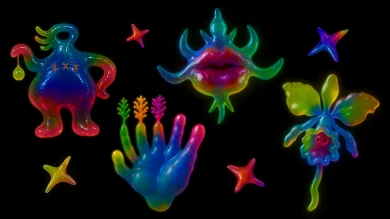
El programa equipoMotor regresa en su edición 25-26 con un aire espectral y mutante para lanzar la pregunta: ¿y si el Museo fuera «un poco más Frankenstein»? Inspirándose en dicho monstruo y en todas aquellas criaturas que desafían la norma desde los márgenes, el proyecto de mediación cultural Galaxxia diseña y acompaña una edición incisiva, intergeneracional y descentralizadora, donde saberes invisibilizados, cuerpos raros y deseos molestos se entrelazan para generar nuevas formas de imaginación crítica y radical. En los sótanos y corredores del Museo —un particular laboratorio— las dudas no se esconden: son materia prima.
Así, para este curso el equipoMotor convoca a personas de todas las edades que hayan participado en ediciones anteriores de los distintos equipos del Área de Educación a recorrer el Museo como quien manipula un cuerpo abierto: descoyuntando algunas de sus categorías teóricas y artísticas —la necropolítica, lo crip-cuir, la lucha de clases, las políticas del malestar, la decolonialidad, la temporalidad cuir, la descentralización institucional o el feísmo— para articular un relato díscolo, remendado y palpitante.
El programa se estructura en bloques temáticos sobre lo freak como metodología, el trabajo cultural, la intergeneracionalidad y la diversidad territorial. Cada bloque a su vez se despliega en sesiones que combinan disparadores teóricos y estéticos, visitas a exposiciones y espacios liminales del Museo, talleres artísticos con artistas, ejercicios de curaduría audiovisual colectiva y de relatoría radiofónica, así como instancias de activación pública, mediante proyecciones de cine experimental y coloquios compartidos con el público, en complicidad con el archivo Hamaca y el Área de Cine y Nuevos Medios del Museo.
De este modo, la presente edición incorpora una particularidad: el grupo de participantes irá transformándose en un «colectivo curatorial audiovisual temporalmente autónomo», con capacidad de incidir en la programación del Museo y de abrir la conversación de equipoMotor al público general, cuestionando y expandiendo así los límites entre las cabezas que deciden, las manos que producen y los cuerpos y presencias que habitan la institución. Las personas seleccionadas en la modalidad oyente serán invitadas a las proyecciones públicas, así como a otras activaciones y momentos de apertura del equipoMotor.
Frente al relato de un museo homogéneo, pulcro y lineal, apostamos por un Museo disidente, contradictorio y lleno de vida residual. Un Museo que no tema hacerse preguntas incómodas ni mostrar sus cicatrices. equipoMotor. Un poco más Frankenstein no busca repensar el cuerpo de la institución, sino habitarlo en sus desgarros, tal como es: híbrido, inacabado, infecto, fantasmagórico… y cargado de esporas y chispas por venir.