Held on 22 Jun 2020
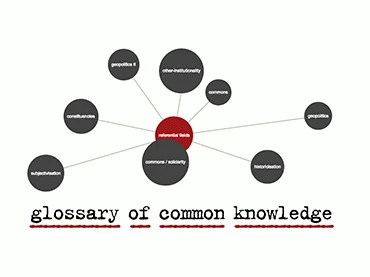
The Glossary of Common Knowledge is a project of the European confederation of museums L’Internationale started in 2014 and organized cross-sectionally from working seminars and public conferences. The goal of the project is twofold: to compile a glossary of art terminology that differs substantially from what is found in the existing literature on art, and to do so in collaboration with institutions and individuals from Europe and other parts of the world who will propose terms relating to their own practices and contexts, to share them and put them into collective discussion.
Each edition begins with a public conference, followed by several working days, in which a group of invited participants who act as "narrators" proposing new terms around a given "referential field”. On this occasion the conference will be given by the anthropologist, social educator and ecofeminist activist Yayo Herrero, and the seminar intends to deepen the field dedicated to the commons, focusing this time on the notion of “solidarity” as a practice but also as a political position to be problematized.
In times of war, economic collapse, natural disasters or pandemics like the current one, calls are made for solidarity, which, however, should help us respond to the current state of emergency through the creation of alliances to face the times to come. People unite through solidarity in repressive or violent political contexts, economic conditions of exploitation, or to overcome grief after natural disasters. But calls for solidarity do not only appear as a reaction in times of exceptional difficulties. Solidarity is at the heart of our project as a society, as the labor movement, feminisms and decolonization processes have shown throughout the world.
The current Covid19 situation invokes the need for concrete solutions (basic income, universal healthcare, regularization of migrants and refugees, right to housing, redistribution of reproductive and care work, etc.) that oppose the reduction of aid to individual acts of charity that have no systemic consequences. Individual acts can mitigate part of the problem while perpetuating the cause of social upheaval — global inequality in late capitalism.
Program
Monday June 22 - 6:00 pm / Zoom platform
Opening conference by Yayo Herrero
Antigones against the monsters of heartbreak. Imagine everyday utopias in times of pandemics.
COVID-19 arrives riding on a crisis of multiple interconnected dimensions that place humanity in a civilizing emergency. At the heart of the problem is a way of conceiving the economy, politics and culture at war with life. The magnitude of the problem is such that we are at a crossroads where the options that are taken determine the decent survival of most human beings and many other living beings. Imagining horizons of desire that may be compatible with the material conditions that make them possible is an urgent task. Ecofeminisms, decoloniality and the gaze of those that have historically been subjugated can make this imagination possible.
Tuesday 23 and Wednesday 24 / The sessions’ records will be available on the project website
Internal seminar
Participants
Zdenka Badovinac is the Director of Moderna galerija / the Museum of Modern Art (MG+MSUM), Ljubljana (Slovenia), since 1993. She has curated numerous exhibitions presenting both Slovenian and international artists. She initiated the first collection of Eastern European art, Moderna galerija’s Arteast 2000+ collection. Badovinac was the President of CIMAM – International Committee for Museums and Collections of Modern Art (2010–2013). She is also co-curator of the Glossary of Common Knowledge.
Miha Blažič (N'toko) is a Slovenian rapper and political activist. He is well known for his socially critical lyrics and as one of the initiators of social centre Rog (Ljubljana, Slovenia) a safe-space for marginalised groups, like migrants and other socially excluded people whose civil rights are being violated. He is best known by his stage name N’toko, and a lead singer of the Moveknowledgement. During the period of mass popular protests in 2012-2014, he also found his journalistic voice and began to use it relentlessly, first on his blog and later also as a columnist for the Mladina Slovenian weekly. In 2016 he published his first book Samoumevni svet.
Jesús Carrillo is a professor of Contemporary Art History at the Universidad Autónoma de Madrid (Spain), and has been Head of the Cultural Activities in Museo Reina Sofía from 2008 to 2014. He combines the analysis of contemporary culture and cultural institutions with a critical reading of historical narratives of art. He has published: Tecnología e Imperio (Nivola, 2003), Arte en la Red (Cátedra, 2004), Naturaleza e Imperio (Doce Calles, 2004) and Space invaders. Intervenciones artístico-políticas en un territorio en disputa: Lavapiés (1997-2004) (Brumaria, 2018). And he is editor of the collective works Modos de hacer: arte crítico, esfera pública y acción directa (Ediciones de la Universidad de Salamanca, 2001), Tendencias del arte, arte de tendencias a principios del siglo XXI (Cátedra, 2003) and Desacuerdos: sobre arte, políticas y esfera pública en el Estado español (v. 1–4) (Macba, 2004-2007). He also edited the books Posiciones críticas: ensayos sobre las políticas de arte y la identidad, by Douglas Crimp (Akal, 2005) and Imágenes públicas. La función política de la imagen, by Martha Rosler (Gustavo Gili, 2008). He was a member of the Editorial Board of L’Internationale online from 2013 to 2015, and he is co-curator of the Glossary of Commons Knowledge.
Kike España is a urban researcher, part of Sub-urbia, based in Málaga (Spain). Participates in La Invisible, a self-managed cultural and social center also in Málaga, and Fundación de los Comunes (network of cooperatives and autonomous social centers). Translates in the multilingual publishing platform transversal texts. Architect, currently PhD candidate in Urban Theory at University of Seville (Spain) with a critical research on the right to the city. Member of the research group OUT_arquías [HUM853]. Investigación para los límites en arquitectura at University of Seville and member of INURA (International Network for Urban Research and Action). Participates in different anti-gentrification and right to the city movements in Málaga.
Maddalena Fragnito is a cultural activist exploring the intersections between art, transfeminisms, critical theory and technologies – focusing on practices of commoning social reproduction and reappropriation of time, pleasure, economies and spaces. At the moment she is a Doctoral Student at Coventry University’s Centre for Postdigital Cultures (United Kingdom).
Yayo Herrero is an anthropologist, social educator and agricultural technical engineer. Herrero is a leading researcher in the eco-feminist and eco-socialist field at a European level and has participated in numerous social initiatives on the promotion of human rights and social ecology, a field in which she has published more than twenty books and numerous articles. She is partner and worker of Garúa S. Coop. Mad, professor-collaborator on the Unesco Cathedra of Environmental Education and Sustainable Development (UNED), president of Foro de Transiciones and member of the editorial board of Hegoa. She was coordinator of the Complutense University Centre for Environmental Studies and Information (CCEIM) in Madrid (Spain) between 2009 and 2012, and confederal coordinator of Ecologistas en Acción between 2005–2014.
Ida Hiršenfelder works at the Museum of Contemporary Art Metelkova (Museum of Modern Art in Ljubljana, Slovenia) on projects related to digital archives. She is coordinator and editor of Network Museum, a repository for contemporary audio-visual art. She is also the museum’s online editor. From 2007 to 2013 she was a digital archivist at Center for Contemporary Arts SCCA (Ljubljana, Slovenia) where she was co-developing DIVA Station, Digital Video Archive. Media archeology, archives and their disappearance – the digital life and the digital afterlife – are one of her key interests. She is also an advocate and user of free and open source software, and creator of experimental sound-art under an alias beepblip. From 2010 to 2014 she was a curator and advisor at Ljudmila, Ljubljana Art and Science Laboratory. Together with media artist Saša Spačal, she is a co-founders of ČIPke, Initiative for Women with a Sense for Technology, Science and Art at RAMPA Lab – Kersnikova Institute. Prior, she was a journalist at Dnevnik Daily and Radio Student.
Jennifer Hayashida is a poet, translator, and visual artist. She is currently a PhD candidate in Artistic Research at HDK-Valand – Academy of Art and Design at the University of Gothenburg (Sweden). Her research focuses on translation, dislocation, race, and affect. From 2010–2017, she served as director of the Asian American Studies Program at Hunter College, The City University of New York (United States).
Gal Kirn holds a PhD since 2012 in political philosophy from the University of Nova Gorica (Slovenia). He was a researcher at the Jan van Eyck Academie in Maastricht (The Netherlands, 2008–2010), and a research fellow at ICI Berlin Institute for Cultural Inquiry (Germany, 2010–2012). He received a fellowship at the Akademie Schloss Solitude in Stuttgart (Germany, 2015), and was a postdoctoral fellow of the Alexander von Humboldt Foundation (Germany, 2013–2016). He has been teaching courses in film, philosophy, and contemporary political theory at the Freie Universität Berlin and at Justus-Liebig-Universität Gießen. Kirn published Partizanski prelomi in protislovja trznega socializma vJugoslaviji edited by the Slovenian Sophia (2014).
Javiera Manzi is a sociologist and archivist at the University of Chile (Santiago, Chile). Independent researcher, curator, teacher and feminist activist. She is a member of the 8M Feminist Coordinator since 2018 where she participates in the Laura Rodig Brigade and the Internationalist Committee. In 2020 she was one of the spokespersons for the General Feminist Strike on March 8 and 9. During the October revolt, she participated in the formation of the self-convened Assembly of the Yungay Neighborhood and other instances of popular, feminist and plurinational articulation that proliferated after the outbreak in Chile. She has written articles and book chapters on feminist politics, including: Para una historia común del presente y del futuro: hacia un feminismo antifascista (El Desconcierto, 2020), Lucha feminista en tiempos de pandemia (Lobo Suelto, 2020), La Internacional Feminista. Luchas en los territorios y contra el neoliberalismo (Tinta Limón, 2020) and Por una Constitución Feminista (Libros del Pez Espiral 2020). It is also part of the collective of the social center Proyecto Librería, an autonomous social center with libertarian roots where hundreds of social organizations circulate and which this year celebrates 10 years since its foundation. She has been a member of RedCSur since 2014 and since 2019 one of its coordinators. As a researcher and curator, she works with archives on the intersections between art, politics and visual culture of social movements in Latin America and international solidarity networks during the 1970s. She is currently investigating the muralist brigades in exile and preparing a book on the networks of cultural resistance in Chile during the dictatorship. She has written books, articles and chapters about these crossings, among them she is co-author of the book Resistencia gráfica a la dictadura en Chile APJ - Tallersol (LOM, 2016) and the chapter “Open Slogan, the current uses of No +” in the book CADA Archive (Eight Books, 2019).
Pablo Martínez is the Head of programming at the Museu d'Art Contemporani de Barcelona (MACBA) in Barcelona (Spain) since 2016 and Co-director of its Independent Studies Program (PEI) since 2017. He has been in charge of Education and Public Activities at the Centro de Arte Dos de Mayo (CA2M), in Móstoles (Madrid, Spain) from 2009 to 2016, and associate lecturer in the History of Contemporary Art at the Fine Arts faculty of the Universidad Complutense de Madrid (2011–2015). He edits the et al. series of essays (MACBA-Arcàdia). He’s part of the editorial board of L’Internationale online. He is the editorial secretary of the academic research journal Re-visiones and a member of the research and action group on education, art and cultural practices Las Lindes. He has edited published publications including Arte actual. Lecturas para un espectador inquieto (CA2M, 2011) and No sabíamos lo que hacíamos. Lecturas para una educación situada (CA2M, 2016); he has curated exhibitions by Werker (2014) and Adelita Husni-Bey (2016), and has collaborated in numerous collective publications including Pensar la Imagen / Pensar con las imágenes (Delirio, 2014), Patricia Esquivias: a veces decorado (CA2M, 2016), Index / Willem de Rooij (Koenig Books, 2016), and Visualidades críticas y ecologías culturales (Brumaria, 2018).
Bojana Piškur is a writer and curator and works in the Museum of Contemporary Art Metelkova (Museum of Modern Art in Ljubljana, Slovenia). Her main research topics deal with experimental art forms, concepts and context in relation to wider socio-political environments. Related exhibitions and projects include Museum in the Street with Zdenka Badovinac (Moderna galerija, Ljubljana, 2008); This Is All Film! Experimental Film in Yugoslavia 1951–1991 with Ana Janevski, Jurij Meden and Stevan Vuković (Moderna galerija, 2010); Museum of Affects with Bartomeu Mari, Bart de Baere, Teresa Grandas and Leen de Backer (Moderna galerija; Museu d'Art Contemporani de Barcelona (MACBA), Barcelona, Spain; Van Abbemuseum, Eindhoven, The Netherlands; and Museum van Hedendaagse Kunst (M HKA), Antwerpen, Belgium; 2010). In 2006 she initiated Radical Education, a project whose aim was “to translate” radical pedagogy into the sphere of artistic production, with education being conceived not merely as a model but also as a field of political participation. She is also co-curator of the Glossary of Common Knowledge.
Theo Prodromidis is a visual artist and director based in Athens (Greece). He studied Contemporary Media Practice at the University of Westminster (London, United Kingdom) and was awarded an MFA in Fine Art by Goldsmiths, University of London in 2007. His work has been exhibited and screened in galleries, museums and festivals such as the Furtherfield (London), the Galerija Nova (Zagreb, Croatia), the State of Concept (Athens), the 1st and 5th Thessaloniki Biennale, the 4th Athens Biennale, both events in Greece. Since 2017, he has contributed to the exhibition The School of Redistribution by the platform Future Climates and the mentioned State of Concept; to Project PRE.SS (Provision of Refugee Education and Support Scheme) by Hellenic Open University and part of WHW Akademija's (Zagreb) program To care for another, radical politics of care. Ηe is a member of the Institute of Radical Imagination (IRI), a volunteer at the Open School for Immigrants of Piraeus (Greece) and a member of the Solidarity Schools Network. For 2020-2021, he is the co-leader of An album from our square at Victoria Square Project in Athens, supported by the Stavros Niarchos Foundation Public Humanities Initiative (SNFPHI) at Columbia University (New York, United States).
Natalia Sielewicz is an art historian and curator at the Museum of Modern Art in Warsaw (Poland). Curator of exhibitions: Paint, also known as Blood. Women, Affect, and Desire in Contemporary Painting (2019), Hoolifemmes (2017), Ministry Internal Affairs. Intimacy as Text (2017). She was also a curator of Private Settings. Art After Internet (2014), one of the first institutional exhibitions to look at the impact of new technologies on the human condition in the late capitalism, and Bread and Roses. Artists and the Class Divide (2015), together with Łukasz Ronduda, about the way artists define their status and position in the realm of the current ever-widening economic gap. She has curated and produced numerous performances, including Haroon Mirza and Richards Sides (2012), Ramona Nagabczynska (The Way Things Dinge, 2014), Grace Ndiritu (Spring Rites: Birthing of a New Museum, 2014), C. Spencer Yeh (2014), Korakrit Arunanondchai (2014), Jesse Darling (Habeas Corpus ad Subjiciendum, 2014), DIS (#Thinkspiration, 2014), Adam Linder (Some Proximity, 2015), Manuel Pelmus and Alexandra Pirici (Public Collection, 2015), and Jeremiah Day (2016). Most recently, together with theatre director Bartosz Frąckowiak she co-authored Modern Slavery, forensic investigation and experimental theatre play discussing the forced unpaid labour in today’s Poland. During the pandemic lockdown she ran MSN Home Office blog, the Museum’s online platform for communication during the COVID-19 crisis.
Rasha Salti is a film programmer, curator and writer, who lives in Beirut (Lebanon). She writes about art and film in the Arab world. She has edited Insights into Syrian Cinema: Essays and Conversations with Contemporary Filmmakers (Rattapallax Press, 2006); co-edited with Issam Nassar I Would Have Smiled. Photographing the Palestinian Refugee Experience. A Tribute to Myrtle Winter - Chaumeny (Institute for Palestine Studies, 2009; co-edited with Layla al-Zubaidi, Samar Kanafani and Munira Khayyat, Anywhere but Now: Landscapes of Belonging in the Eastern Mediterranean (Heinrich Boell Foundation, 2012).
Onur Yıldız has obtained a PhD degree in Political Theory from University of Essex (United Kingdom). His He is currently the Senior Public Programmer of SALT (Istanbul).
Joanna Zielińska is an art historian, writer, exhibition maker and performance curator based in Warsaw (Poland). She is interested in transdisciplinary art practice on the crossover between visual arts, theatre and literature. In her practice she explores different mediums and formats in visual arts like: staged exhibitions, artist's novels or publications. Currently, she works as a Senior curator at Museum of Contemporary Art in Antwerp M HKA (Antwerp, Belgium). She was the Chief of Performance Department at the Ujazdowski Castle Centre for Contemporary Art (Warsaw, Poland). From 2011 - 2015 she was a chief curator at the Centre for the Documentation of the Art of Tadeusz Kantor – Cricoteka in Kraków (Poland), where curated Radical Languages (2012) and Nothing Twice (2014). She also curated Can objects Perform? during Performa 13 (New York, United States). She was the former Chief Curator at the Znaki Czasu Centre of Contemporary Art (CoCA, Toruń, Poland), from 2008 to 2010. She has collaborated with art magazines and catalogues, and published over 100 articles. From 2003 to 2007, she worked with the curatorial collective Exgirls. In 2010 and 2011 she was in residence at International Studio and Curatorial Program (ISCP) in New York. Currently, she is working on a long-term project on artist novels (2011-), The Book Lovers, in collaboration with David Maroto, that was presented in different installments at: the Museum van Hedendaagse Kunst (M HKA), Antwerpen, Belgium, the De Appel (Amsterdam, The Netherlands), the Raven Row and the Whitechapel (London, United Kingdom), and the EFA Project Space in New York among others.
Yolande Zola Zoli van der Heide is exhibitions curator at Van Abbemuseum. Her interests lie in diverse intersecting perspectives – institutional, trans-local, feminist, queer, intersectional, and modes that decentre the oppressor in practices of freedom and liberation – to influence art institutional practices. Previously she was deputy director at Casco Art Institute: Working for the Commons (Utrecht, the Netherlands), where she began as an intern in 2008, and worked as producer on several project exhibitions including the Grand Domestic Revolution (2009—2012). More recently she was co-curator of exhibitions, assemblies and events at Casco including: Het is of de Stenen Spreken [Silence is a commons] with artists Ama Josephine Budge, Ansuya Blom, Babi Badilov, and Mire Lee (2019); Curating Strategies of Productive Refusal with Gabi Ngcobo; co-organiser to the second assembly for commoning art institutions and on art organisations as sites for unlearning, 2019. Yolande is co-editor to several books published with Casco including Unlearning Exercises: Art Organisations as Sites for Unlearning (Casco and Valiz, 2018). She is faculty member at the Dutch Art Institute, Roaming Academy ( Arnhem, the Nederlands). Currently on her nightstand: The Stars and the Blackness Between Them by Junauda Petrus, The Black Unicorn by Audre Lorde, Between the World and Me by Ta-Nehisi Coates. Currently listening to: Love and Death, Ebo Taylor & Uhuru Yenzu
The project Our Many Europes, organised by the L’internationale museum confederation and co-funded by the European Union’s Creative Europe programme. L'Internationale comprises seven major European art institutions: Moderna galerija (MG+MSUM, Ljubljana, Slovenia); Museo Reina Sofía (Madrid, Spain); MACBA, Museu d'Art Contemporani de Barcelona (Spain); Museum van Hedendaagse Kunst Antwerpen (M HKA, Antwerp, Belgium); Muzeum Sztuki Nowoczesnej w Warszawie (Warsaw, Poland), SALT (Istanbul and Ankara, Turkey) and Van Abbemuseum (VAM, Eindhoven, Netherlands), and collaborates in the project with the HDK-Valand Academy (Gothenburg, Sweden) and the National College of Art and Design (NCAD, Dublin, Ireland). Together, these institutions will present a programme with over 40 public activities (lectures, exhibitions, workshops) until May 2022.
Línea-fuerza
Comunes
En el marco de
Our Many Europes
Equipo curatorial del Glossary of Common Knowledge
Zdenka Badovinac, Jesús Carrillo, Ida Hiršenfelder y Bojana Piškur
Organised by
Museo Reina Sofía, Moderna galerija and L’Internationale

Más actividades
![Isabel Coixet, 100 Years and You Everywhere [100 años y tú en todos los sitios], 2026, película](https://recursos.museoreinasofia.es/styles/small_landscape/public/Actividades/2.diseminar-mundo.jpg.webp)
John Berger and Isabel Coixet. Continued Ways of Seeing
Thursday, 17 September 2026 at 7pm
Ways of Seeing (1972) is one of the most revolutionary television series on art history, the museum and contemporary critical culture. Across four episodes, an articulate, enthusiastic John Berger unpacks the relationships between classical art through the gaze and new technology, the nude and feminism, the oil painting and commodity fetichism, advertising and consumerism. In essence, a level of critical commitment only comparable to its capacity for dissemination. Unsurprisingly, the series, and the book that would distil it, continues to forge vocations. This session sees art historians Alberto López Cuenca and Modesta Di Paola carry out an analysis of Berger’s audiovisual work, placing the stress on episodes one and four of the series. In the first episode, Berger reflects on the connection between the act of seeing, looking and being in light of new technology, such as the film camera. At the same time, it analyses how the culture of reproduction is turning paintings into messages or fragments of communication while stressing the importance of silence when observing historical paintings. In the fourth and final episode, he introduces advertising as a new iconic-verbal language that shares certain principles with the message of oil painting as a luxury item.
The session opens with the premiere of a filmic letter from Isabel Coixet, one of Spain’s most internationally acclaimed directors, to John Berger, with whom she maintained a long friendship and deep admiration. The short film is testament to the ubiquitous and long-lasting presence of the author of Ways of Seeing, even after his death in 2017.
![Chantal Akerman, Woman Sitting after Killing [Mujer sentada después de matar], 2001, instalación. Museo Reina Sofía](https://recursos.museoreinasofia.es/styles/small_landscape/public/Actividades/chantal-akerman-mujer-sentada-despues-matar.jpg.webp)
On Your Screen: Art History and the Museum Facing the Audiovisual Challenge
18, 19 SEP 2026
The conference On Your Screen: Art History and the Museum Facing the Audiovisual Challenge sparks debate around the transformations of art history and museum space upon embracing the audiovisual format. Its starting point is John Berger’s emblematic television series Ways of Seeing (1972), a landmark in the democratisation of art-historical discourse. In the series, Berger illustrated how the transfer of a work such as Goya’s Los fusilamientos del 3 de mayo (The Third of May 1808 or the Executions) from museum gallery to home TV screen completely changed the viewer’s experience, allowing the image to travel to straight to the viewer.
In the twenty-first century, this screen-based ecosystem has expanded exponentially, with museums not only physically integrating screenings and devices into their galleries— following in the wake of many exhibitions on the moving image — but also deploying complex virtual strategies. Equally, numerous en vez de a multitudeof historians, students and creators use digital platforms to circulate their ideas and projects. This audiovisual shift opens access to ignored materials and democratises knowledge, as well as challenging traditional hierarchies and the interpretive authority of institutions. The conference, promoted by the research project ATLAS AV: The Audiovisualisation of Art History and the Museum, seeks to analyse this vast audiovisual material, its archives, and its capacity to transform the memory of art.
Godard and Miéville: Time and Ruin
Friday, 18 September 2026 - 7pm
Inside the framework of the conference On Your Screen: Art History and the Museum Facing the Audiovisual Challenge, this film series sets forth three critical visions of the museum via three sessions featuring the works of John Berger, Jean-Luc Godard and Anne-Marie Miéville, Ariella Azoulay, Alan Resnais and Chris Marker, Kwate Nee-Owoo, and the premiere of short films by Isabel Coixet and La Vulcanizadora (Maria Rojas Arias and Andrés Jurado). In classical theory, the museum gives the world meaning; it contains fragments of the past, granting them a history, a narrative that explains preterite time and the present. Today, there is an implicit assumption that this function hides and legitimises forms of power, yet what if the museum, instead of explaining the world, multiplied it through radical ideas, silenced periods and repressed subjects? Such is the approach of the film-makers and artists in this film season.
In 1972 the writer John Berger opened the landmark television series Ways of Seeing with an iconoclastic gesture: slicing Sandro Botticelli’s painting Venus and Mars (1485) in London’s National Gallery. A transgressive act that recalls contemporary attacks on the museum by dissident youth and with which Berger, after revealing it was a reproduction, sought to ignite debate around the idea of an original artwork and a copy. In this, the hundredth anniversary of his birth, the first session pays homage to one of the great art writers of the twentieth century. Starting with a review of Berger’s audiovisual work by art historians Alberto López Cuenca and Modesta Di Paola, the series begins with the premiere of 100 Years and You Everywhere (2026), an unreleased short film by Isabel Coixet composed as a beautifully crafted letter to Berger, and continues with an analysis of fragments of Ways of Seeing in relation to the museum and contemporary art.
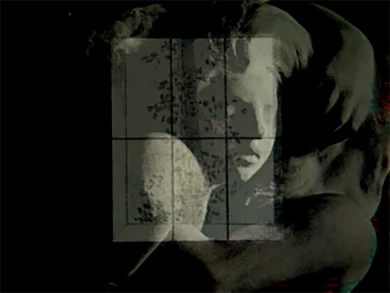
The second session screens two medium-length films by Jean-Luc Godard and Anne-Marie Miéville on time, ruin and museum. In The Old Place. Small Notes Regarding the Arts at Fall of 20th Century (1999), both film-makers consider what remains of that “old place”, the museum, at the close of a century of wars and totalitarianism, and ask whether it should be more of a legend or desire than a place. This same driving principle leads Godard to build his own imaginary museum in Reportage amateur (maquette expo) (2006), a rickety toy museum which, paradoxically, contains the great film-maker’s full power of thought on history and images.
Finally, the third session explores one of the major challenges of recent years: the decolonisation of the museum, the recognition of its link to imperialist discourses of power and the need to situate a new silenced or repressed subject at the centre of the Western narration of history. Under the title Museums and Restitution, it includes the film Undocumented. Unlearning Imperial Plunder (2019), by theorist Ariella Azoulay, Statues Also Die, by Alan Resnais and Chris Marker (1953), Kwate Nee-Owoo’s You Hide Me (1970) and the first screening of the short film Quinto verso, parte de Tonada (Fifth Verse, Part of Tonada), by La Vulcanizadora (Maria Rojas Arias and Andrés Jurado), filmed at the Museo de América in Madrid.
![Ariella Azoulay, Un-documented. Unlearning Imperial Plunder [Indocumentados. Desaprendiendo el saqueo imperial], 2019, película](https://recursos.museoreinasofia.es/styles/small_landscape/public/Actividades/5.diseminar-mundo.jpg.webp)
Museums and Restitution
Saturday, 19 September 2026 - 7pm
Centuries of plundering, decades of amnesia, years of living with unmitigated extractivist power… Does a museum, as we know it, have a raison d'être in a postcolonial society?
This session expounds the operations of the museum as a colonial machine, while putting forward ideas, in narration, for a more just, equal and inclusive institution of the future via society’s marginalised and minority voices. The session begins with the international premiere of Quinto verso, parte de Tonada (Fifth Verse, Part of Tonada), which presents a vision of the Quimbaya Collection (fifth and sixth centuries CE) from the Museo de América in Madrid. It is constructed with the voices and chants of Wayúu mourners and guides, not only as a way of reinstating the role of these gold idols — anthropomorphic figures of men and women used as vessels in ritual practices — but also to imagine that what must be exhibited is not the gold itself. It is the ritual’s own chant. In the classic film You Hide Me (1970), Ghanaian film-maker Kwate Nee-Owoo accesses the British Museum’s collection of African art, located in the building’s basement, to question the meaning behind a museum plundering and nullifying. A fine exercise of first-person institutional critique screened for the first time in Spain. Almost seventy years since Resnais and Marker made Statues Also Die (1953), a reflection on the aura-bearing value of the museum opposite the identity-based and cultural belonging of African art, theorist Ariella Azoulay films the same statues again at the Musée du Trocadéro (today the Musée du Quai Branly), which survive and wait to be reunited with their people. Azoulay, whose wholly original undertaking is a lesson to the museum of the future, connects the forced migration of these sculptures with the mass transit of people crossing borders artificially imposed by the same system that has plundered their culture.
The School of Transformative Institutionalism and Local Organisation
From 21 to 24 September 2026
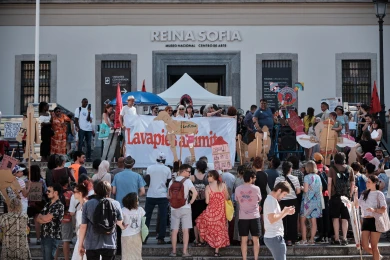
The School of Transformative Institutionalism and Local Organisation (S.T.I.L.O.) is a programme of joint learning and join strategy which sets in motion a process for the exchange of questions, methodologies and experiences between cultural organisations. The overall aim is to create, circulate and prototype tactics, tools and collective knowledge on institutional practices that open new channels for defending culture and advocating structural transformation in divergent geographical contexts.
The project is part of the Laboratorio de Institucionalidad Compartida (The Laboratory of Shared Institutionalism, LIC), a space for the Museo Reina Sofía’s research, work and advocacy centred on developing, experimenting with and systemising practices, protocols and tools which contribute to a fairer and more liveable cultural ecosystem.
For many years now, so-called infrastructural critique in museums questions material, legal and economic infrastructures, among others, as well as the forms of solidarity and practices required to sustain the cultural ecosystem. By approaching current debates, S.T.I.L.O. raises questions on the ways in which organisations define and interpret their practices, organise their relations and respond to the social contexts in which they operate.
The school gathers four cultural organisations that work via different institutional models – scale, contexts, conditions, different working models — with the goal of pooling common strategies and tools of organisation, advocacy and relationships with local communities.
The programme is conceived as a collaborative process with the participation of Arika, La Revuelta, BAK Basecamp and The Tentacular Museum (Museo Reina Sofía) and is structured around preparatory online sessions and an in-person seminar in Madrid.
S.T.I.L.O. is an activity framed inside the working strand of Situated Organisations from L'Internationale’s Museum of the Commons project, which reflects on the role of museums and art organisations as actors within complex social networks and ecosystems, with a view to exploring new ways to democratise institutions and make them more open, inclusive and useful.