
Held on 06 Oct 2022
This year, the Museo Reina Sofía participates for the first time in Spanish Film Day, an initiative, established in 2021, of Spain’s Ministry of Culture and Sport which brings together screens and programmes from different institutions. In this edition, the Museo retrieves a historical and pioneering work in international experimental film: ...ere erera baleibu izik subua aruaren...(1968–1970), made by artist José Antonio Sistiaga (San Sebastián, 1932). The film screening will be accompanied by live music from ambient group Menhir (Coco Moya and Iván Cebrián).
Painted by hand, frame by frame, onto 35mm celluloid, ...ere erera baleibu izik subua aruaren... is a work framed within so-called “camera-less film”. The work encompasses a synaesthesia between painting and film — that is, it can be understood at once as a painting animated in time and enlarged on-screen and as abstract cinema that is part of the aesthetic qualities of non-representation. Across 70-plus minutes, geometric and lyrical forms materialise, referring to an origin of life — a type of Big Bang — or to microscopic visions of nature, thereby producing a preternatural state of trance in contemplation. The title …ere erera baleibu izik subua aruaren… has no meaning as such, but evokes the phonetics of the Basque language. The film is also one of the first in “expanded cinema”, a term coined by experimental film-maker Stan Vanderbeek in 1966 and used by critic Gene Youngblood in his 1970 book under the same title, in which he highlights how film, expanding its temporal and spatial limits, must trigger an experience in the spectator.
The screening of this work during Spanish Film Day sees the Museo Reina Sofía spotlight its collection of experimental film and invite the audience, to use Sistiaga’s words, on a journey with no set destination.
José Antonio Sistiaga …ere erera baleibu izik subua aruaren…
Spain, 1968–1970, colour, silent, 35mm, hand-painted and transferred to DA, 75'
—With a live musical accompaniment by the group Menhir
Organised by
Museo Reina Sofía
Más actividades
Exile and Alienation
Saturday 30 May and 6 Jun, 2026 - 18:00 H
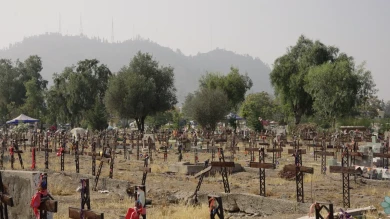
In the years of the Popular Unity Government in Chile, three young film-makers, Marilú Mallet, Valeria Sarmiento and Angelina Vázquez, went to the offices of Chile Films to present a film project. This session screens three films which convey the three directors’ experience of exile. In Dos años en Finlandia (Two Years in Finland), Angelina Vázquez depicts the social and working conditions of Chileans exiled in the Nordic country. The fictional work Lentement, directed by Marilú Mallet, follows a young Chilean exile around spaces of Montreal blighted by nostalgia and political rage. In Huellas (Fingerprints), Valeria Sarmiento returns to Chile to explore the memory of violence inflicted by Pinochet’s military dictatorship. The session culminates in a talk with the three directors, gathered here for the first time.
Dear Americas
Friday 29 May and 5 June, 2026
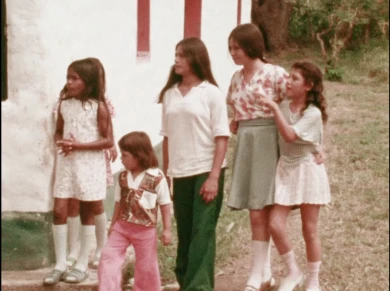
In these films, Marilú Mallet travels to Solentiname, in Nicaragua, and Andahuaylillas, in Peru, to paint a portrait of communities which resist the severity of forced industrialisation. In Solentiname, the focus is on the poet and priest Ernesto Cardenal’s founding of a Christian, poetic and revolutionary utopia, while in Andahuaylillas, a town close to Cuzco, Mallet explores the multiple layers of Andean culture.
A Poetics of the Subject
Thursday 28 May and 4 June, 2026
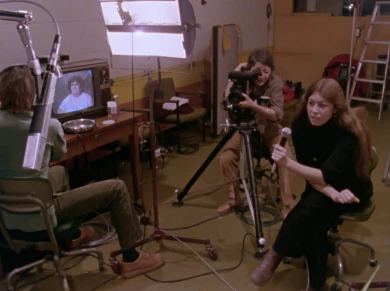
In the tension between documentary and fiction, between the rawness of a tragic political present and narrative escape, lies the truth of the exile’s condition. In Journal inachevé (Unfinished Diary, 1982) Marilú Mallet experiments with her own subjectivity, moving from affirmation to doubt. In Double Portrait (2000), María Luisa Señoret paints her daughter Marilú, who records the process. In this circular relationship, the film-maker constructs a poetics of the portrait as something perpetually unfinished, a process of exploration in which memory, identity and political history merge to become blurred.
Institutional Decentralisation
28 MAY 2026
This series is organised by equipoMotor, a group of teenagers, young people and older people who have participated in the Museo Reina Sofía’s previous community education projects, and is structured around four themed blocks that pivot on the monstrous.
This fourth and final session centres on films that take the museum away from its axis and make it gaze from the edges. Pieces that work with that which is normally left out: peripheral territories, unpolished aesthetics, clumsy gestures full of intent. Instead of possessing an institutional lustre, here they are rough, precarious and strange in appearance, legitimate forms of making and showing culture. The idea is to think about what happens when central authority is displaced, when the ugly and the uncomfortable are not hidden, when they are recognised as part of the commons. Film that does not seek to be to one’s liking, but to open space and allow other ways of seeing and inhabiting the museum to enter stage.
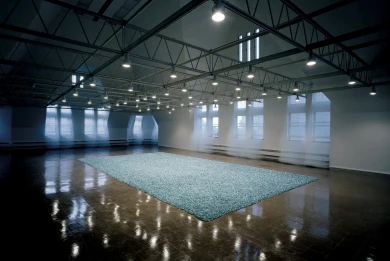
Felix Gonzalez-Torres. Sweet Revenge
26 MAY 2026
Nancy Spector and Alejandro Cesarco, curators of the exhibition Felix Gonzalez-Torres. Sweet Revenge, will speak with Manuel Segade, director of the Museo Reina Sofía, in a session dedicated to exploring the interpretive frameworks of this first large-scalepresentation in Madrid of the work of Felix Gonzalez-Torres (1957–1996), whose practice continues to resonate in the present.
The conversation begins with the exhibition’s title itself, Sweet Revenge, understood as a paradoxical notion that articulates much of the artist’s thinking. From there, the tensions running through his work are explored: the coexistence of opposing registers, ambiguity as a method, and the simultaneously affective and political charge of his works.
The dialogue also touches on some of the themes that run through his body of work, such as thenotions of identity, citizenship, and authority, alongside experiences linked to the AIDS crisis, and emotions such as love, loss, grief, and optimism. Special attention is given to the way in which Gonzalez-Torres shifts languages associated with Arte Povera, conceptualism, and minimalism towards open, participatory, and deeply personal structures.
The session also includes a reflection on the research process that shaped the exhibition, providing context for the curatorial decisions and criteria that structure it. In this context, Gonzalez-Torres’s work emerges as a device that actively engages those who activate orinterpret it, distributing responsibility for the production of meaning—a process that is alwaysunstable and constantly under negotiation.
These inaugural conversations, part of the main working strands of the Museo’s Public Programmes Area, aim to explore in greater depth the exhibition narratives of the shows organised by the Museo from the perspective of artists, curators and specialists.