
Held on 15, 16, 17, 18, 19 Nov 2022
The Documents programme explores the relationships between art and publishing, exploring themes that include the effects of archive on narratives of art history, the artist’s book and publishing as an artistic practice. This new edition holds a workshop conducted by David Maroto, whose work investigates the artist’s novel as a new medium.
Participants will work together to create and produce a novel written collectively — customarily an individual endeavour — addressing not only the writing process but also other tasks such as editing, correcting and disseminating a text. The aim is to experiment with tools and notions which, despite being traditionally attributed to literature, can also be used to underpin an autonomous artistic project. By the same token, and in the form of a coda, the workshop will explore the performative nature of the collective novel with a public presentation in different spaces inside the Museo.
Visual artists such as Bernadette Corporation, Keren Cytter and Yayoi Kusama are increasingly writing novels as part of a broader artistic project. The use of novelistic resources facilitates an exploration of artistic questions and, therefore, allows us to speak of the artist’s novel as another medium in the visuals arts, like video or performance. As David Maroto’s investigations verify, the process of creating such a novel does not differ from any other work — the writing process and artistic creation both converge inside the same project. In an artist’s novel, the reading of the final result is important, yet crucially the artistic experience lies behind the scenes. This workshop digs deeper into the latter: into the act of creating.
David Maroto is a visual artist, writer, curator and researcher who lives in the Netherlands. He has developed a far-reaching international artistic practice, exhibiting in spaces such as Kanal Centre Pompidou (Brussels, 2021), A Tale of a Tub (Rotterdam, 2020) and EFA Project Space (New York, 2013), among others. Since 2011, he has collaborated with the curator Joanna Zielińska on the project The Book Lovers, which focuses on research into the different ways the artist’s novel is employed as a medium in the visual arts, organising exhibitions, public programmes, commissioned projects and publications. He is also the author of The Artist’s Novel: The Novel as a Medium in the Visual Arts (Mousse Publishing, 2019).
Tuesday, 15 November 2022 – 9:30am – 1:30pm / Nouvel Building, Study Centre
Session 1
Introduction to the content of the workshop: the artist’s novel; collaborative writing strategies; a quick exercise in individual writing; reading and collective feedback.
Wednesday, 16 November 2022 – 9:30am – 1:30pm / Nouvel Building, Study Centre
Sessiom 2
A collective selection which includes work on the core narrative elements, the creative strategy of collaborative organisation and formal decisions. In this session the collective writing process gets under way.
Thursday, 17 November 2022 – 9:30am – 1:30pm / Nouvel Building, Study Centre
Session 3
Continuation of the collective writing process.
Friday, 18 November 2022 – 9:30am – 1:30pm / Nouvel Building, Study Centre
Session 4
Collective editing of the draft and preliminary preparations for the performance presentation.
Saturday, 19 November 2022 – 10am – 2pm / Sabatini Building, Garden
Sesión 5
Performance presentation of the collective novel inside the Museo’s public spaces. Workshop evaluation.


Más actividades
Dear Felix:
Saturdays at 6pm
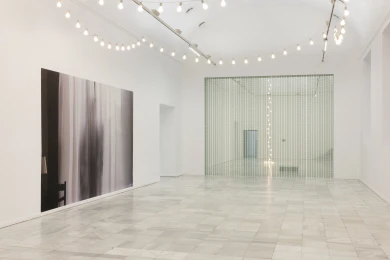
The immediately recognisable art of Felix Gonzalez-Torres, which is on display, from May to October 2026, in the show Sweet Revenge, moves beyond the transmission of messages laden with poetic evocation, vital or biographical reflection, or even a clear political or ethical positioning. Rather, it seeks an active response by visitors to the exhibition. His work invites engagement with these messages so that, whether delighting, moving or challenging, it still prompts viewers to participate in the dialogue and complete the artistic undertaking with their own actions.
Thus, the guided tour Dear Felix: offers a shared, dialogue-inflected tour through the show, with the aim of collectively thinking and feeling the gestures the artist’s work puts forward. Ostensibly simple actions such as crossing through a beaded curtain to take a sweet and eat it, taking a poster from a stack of paper or simply observing a billboard closely, all contain ways of understanding life, loss, love, injustice or the passing — never linear — of time. The tour’s ultimate aim is not to set meanings or create an overload of interpretations of the work, nor does it seek to crystallise an image of the artist and his life in a response to questions which are not there. It looks instead to provide a space to open shared meaning in these apparently simple objects and to attempt a possible correspondence of return from the here and now. A lumbering attempt at responding which starts with a simple Dear Felix:
Files of Tropical Revolutions
Sábado 20 y 27 de junio, 2026 - 19:00 H
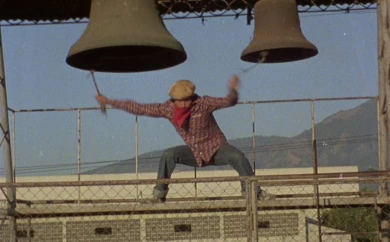
The Reframing Banana Imagery series concludes with two works that condense the height and twilight of this period in history, epic sagas that cross borders and registers to embody experiences of armed struggle in the region. Cameras mix with firearms, borders between nations blur and patience reaches breaking point. This is where the tipping point lies, where the bloodshed weighs heavy and the murmurings of regional brotherhood are buried in the ground again.
Pan y dignidad (Carta abierta de Nicaragua) [Bread and Dignity (An Open Letter to Nicaragua)] recounts the historical records and process of national reconstruction in Nicaragua via the Sandinista popular uprising. Historias prohibidas de Pulgarcito (Forbidden Tales of Tom Thumb) places the camera at the heart of the El Salvador revolutionary struggle, interspersing testimonies of daily violence with the verses of the poet Roque Dalton.
Both works understand the armed revolution as an open file under construction. The insurgent brotherhood, although dissolved, still resounds in regional history.
Circling Over Exploited Bodies
Friday, 19 and 26 June 2026 - 7pm
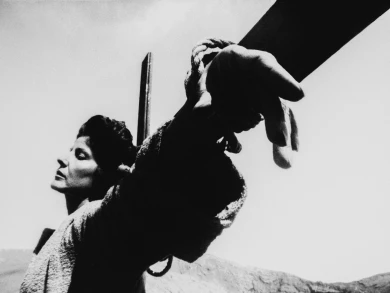
When forms of violence are inflicted on society, film responds from urgency. Images become abstract, sounds fade and the register of dissidence comes from the gut. La zona intertidal (The Intertidal Zone) is an essayistic and poetic approach to the repression of teachers in El Salvador in the 1970s — a teacher studies the biodiversity of the El Salvador coast as a boy finds a body on the same beach. A propósito de la mujer (About Women) interweaves testimonies of misery and rage towards patriarchal structures with fictional scenes of a symbolic procession through a harsh desert.
Both films understand the body as a target of violence and a territory of insurrection, a space where the blood shed by militancy and the patriarchal yoke turn pain into denouncement and existence outside the status quo into an act of political dissidence.
Robert Capa
Friday, 26 June 2026 – 6pm
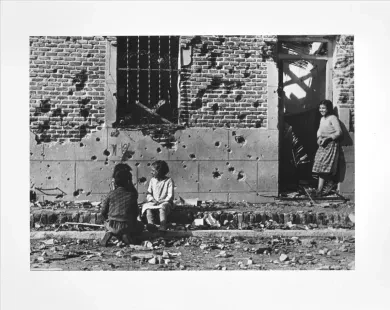
This international encounter centred on the figure of Robert Capa (Budapest, 1913 — Thai Binh, Vietnam, 1954), one of photojournalism’s pre-eminent figures, is held within the framework of the government initiative Spain and Freedom. Fifty Years and in conjunction with a cluster of three locations — the building on number 10 Calle Peironcely, the Plaza del Fotógrafo Robert Capa and the San Carlos Borromeo Parish in Vallecas — declared as a Place of Democratic Memory.
The emblematic photo Robert Capa took in 1936 of this area of Republican Madrid, featuring anonymous children talking in front of a bullet-riddled building attacked by Nazi-fascist air forces, has, in recent years, become a catalyst for impassioned collective action vindicating memory and denouncing the horrors and brutality of wars, past and present.
Within this context, representatives from cultural and academic spheres and civil society organisations from Germany, the USA and Spain discuss the legacy of Capa and photojournalism in European democratic memory, exploring in greater depth two citizen initiatives constructed by Europe from its shared memory: #SalvaPeironcely10 (#SavePeironcely10), in Entrevías (Puente de Vallecas), and the Capa Haus Initiative in the Lindenau neighbourhood of Leipzig, both united by the protection and conservation of historical heritage and by the defence of peace.
The round-table discussion features the participation of Cynthia Young, Juan Miguel Sánchez Vigil, Ulf-Dietrich Brumann and José María Uría Fernández and is moderated by Myriam Soto Lucas. Carmina Gustrán Loscos, the commissioner of Spain and Freedom. Fifty Years, will also join the discussion.
equipoMotor
Jueves alternos, 23 de octubre, 2025 - 11 de junio, 2026 - 17:30 h
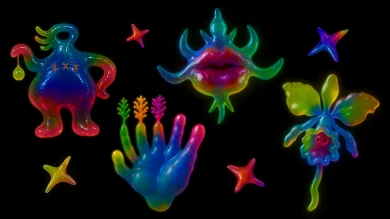
El programa equipoMotor regresa en su edición 25-26 con un aire espectral y mutante para lanzar la pregunta: ¿y si el Museo fuera «un poco más Frankenstein»? Inspirándose en dicho monstruo y en todas aquellas criaturas que desafían la norma desde los márgenes, el proyecto de mediación cultural Galaxxia diseña y acompaña una edición incisiva, intergeneracional y descentralizadora, donde saberes invisibilizados, cuerpos raros y deseos molestos se entrelazan para generar nuevas formas de imaginación crítica y radical. En los sótanos y corredores del Museo —un particular laboratorio— las dudas no se esconden: son materia prima.
Así, para este curso el equipoMotor convoca a personas de todas las edades que hayan participado en ediciones anteriores de los distintos equipos del Área de Educación a recorrer el Museo como quien manipula un cuerpo abierto: descoyuntando algunas de sus categorías teóricas y artísticas —la necropolítica, lo crip-cuir, la lucha de clases, las políticas del malestar, la decolonialidad, la temporalidad cuir, la descentralización institucional o el feísmo— para articular un relato díscolo, remendado y palpitante.
El programa se estructura en bloques temáticos sobre lo freak como metodología, el trabajo cultural, la intergeneracionalidad y la diversidad territorial. Cada bloque a su vez se despliega en sesiones que combinan disparadores teóricos y estéticos, visitas a exposiciones y espacios liminales del Museo, talleres artísticos con artistas, ejercicios de curaduría audiovisual colectiva y de relatoría radiofónica, así como instancias de activación pública, mediante proyecciones de cine experimental y coloquios compartidos con el público, en complicidad con el archivo Hamaca y el Área de Cine y Nuevos Medios del Museo.
De este modo, la presente edición incorpora una particularidad: el grupo de participantes irá transformándose en un «colectivo curatorial audiovisual temporalmente autónomo», con capacidad de incidir en la programación del Museo y de abrir la conversación de equipoMotor al público general, cuestionando y expandiendo así los límites entre las cabezas que deciden, las manos que producen y los cuerpos y presencias que habitan la institución. Las personas seleccionadas en la modalidad oyente serán invitadas a las proyecciones públicas, así como a otras activaciones y momentos de apertura del equipoMotor.
Frente al relato de un museo homogéneo, pulcro y lineal, apostamos por un Museo disidente, contradictorio y lleno de vida residual. Un Museo que no tema hacerse preguntas incómodas ni mostrar sus cicatrices. equipoMotor. Un poco más Frankenstein no busca repensar el cuerpo de la institución, sino habitarlo en sus desgarros, tal como es: híbrido, inacabado, infecto, fantasmagórico… y cargado de esporas y chispas por venir.