Antonio Bonet Correa and the Beginnings of Contemporary Art in Spain

Antonio Bonet Correa. Photograph: Tofiño
Held on 08 Sep 2020
The Museo Reina Sofía organises this colloquium in memory of Antonio Bonet Correa (La Coruña, 1925 – Madrid, 2020), who passed away in May this year, exploring the relationships this distinguished art historian cemented with contemporary art theory and critique in Spain and the art movements of his time.
Antonio Bonet Correa’s interests were inexhaustible (the Spanish and Hispanic American baroque, urbanism and architecture, historical avant-garde movements…), and he personified the aperturismo, or openness, of the Late Francoism period through his publishing work and university lecturing. The first of these activities accounts for the publication of countless indispensable essays on the historiographical beginnings of modern and contemporary art in Spain and the instruction of a generation of art historians, among them Juan Antonio Ramírez, Ángel González, Francisco Calvo Serraller and Estrella de Diego, thereby opening the way for contemporary visual culture, feminism, art theory, sociology and historical avant-garde art in Spanish academia, and establishing the start of theoretical discourse on contemporary art in Spain. This role earned him the name “master of masters”. Bonet Correa was also one of the founders of the ARCO art fair, created as an instrument to internationalise Spanish art, and was director of summer courses at Menéndez Pelayo International University (UIMP) that defined and debated key movements in the new artistic landscape of the first democracy, for instance New Figuration in Madrid. Further, he was director of Seville’s Fine Arts Museum, the San Fernando Royal Academy of Fine Arts and chairman of the Board to Rank, Evaluate and Export Assets of Spanish Art’s Historical Heritage. His contribution to art history was awarded Spain’s Gold Medal of Merit in the Fine Arts (2012) and the Honorary Presidency of CEHA (the Spanish Committee of Art History, an organisation he helped to found).
The colloquium also features the participation of art historians Estrella de Diego and María Dolores Jiménez-Blanco, artists Guillermo Pérez Villalta and José Manuel Ballester, and gallerist Juana de Aizpuru. It will be moderated by Juan Manuel Bonet, former director of Museo Reina Sofía, from 2000 to 2004, and one of Antonio Bonet Correa’s sons. The act will conclude with a musical performance by another of Antonio Bonet Correa’s sons, Pedro Bonet, director of the baroque music group La Folía and a recorder professor.
Programme
7pm
Presentation. Manuel Borja-Villel, director of the Museo Reina Sofía, and Ángeles González-Sinde, president of the Museo Reina Sofía Board of Trustees
7:15pm
Colloquium. With the participation of Juana de Aizpuru, José Manuel Ballester, Estrella de Diego, María Dolores Jiménez-Blanco, Guillermo Pérez Villalta. Moderated by: Juan Manuel Bonet.
8:30pm
Concert. Pedro Bonet, recorder.
Performing Amarilli mia bella. Hommage a Van Eyck (1971), by Hans-Martin Linde.
Organised by
Museo Reina Sofía
Doors open at 6:30pm
Requirements:
Ensure safe distancing at the entrance and exit
Use the stairs and give the elderly and people with disabilities or special needs priority use of the lift
Comply with unavailable seating
Arrive with enough time to guarantee an orderly movement of people
Participants
Juana de Aizpuru is a gallerist and pioneer of contemporary art in Spain. She founded the ARCO art fair in 1982, which she directed from its inception to 1986. She is also the founder and director of the gallery that bears her name, the Juana de Aizpuru Gallery, chaired the Spanish Association of Contemporary Art Galleries, and is a member on the Board of Directors of the Spanish Federation of Art Galleries. Furthermore, she has participated in prestigious national and international art fairs such as Frieze Art Fair, Art Basel, Paris Photo, Art Lima, Estampa and Art Genève. In 1997, she was awarded the Gold Medal for Merit in the Fine Arts.
José Manuel Ballester is a painter and photographer, and winner of Spain’s National Etching Award in 1999 and National Photography Award in 2010. His numerous exhibitions most notably include Habitación 523 (Museo Reina Sofía, 2005), Fervor de Metrópolis (Pinacoteca del Estado de São Paulo, 2010), La Abstracción en la Realidad (Sala Alcalá 31, 2011) and Bosques de luz (Tabacalera, 2013). Moreover, his works are part of an array of museums and institutions such as Museo Reina Sofía, IVAM in Valencia, the Telefónica Foundation, Museo Guggenheim in Bilbao, the Iberdrola Collection and the Cristina Masaveu Peterson Collection.
Juan Manuel Bonet is a writer and art and literary critic who was director of Instituto Cervantes in Paris from 2012 to 2017 and, subsequently, Instituto Cervantes until 2018. He was also director of IVAM and the Museo Reina Sofía, and is chairman of the Rafael Cansinos Assens Foundation-Archive and the International Committee of the Vicente Huidobro Foundation. Furthermore, he has curated around thirty exhibitions, with a strong emphasis on the recovery of historical avant-garde movements in Spain, Spanish painting during the 1980s, and international Painterly Abstraction after the Second World War. He is author of the benchmark monograph Diccionario de las vanguardias en España (1907-1936) (Alianza, 1995) and curator and author, respectively, of the show and book Impresos de vanguardia en España (1912-1936) (Centro Andaluz de Arte Contemporáneo, 2011). His poetry work can be found in full in Via Labirinto (Poesía 1978-2015) (La Veleta, 2018) and the diary La ronda de los días (1984-1990) (Guillermo Canals, 1990). He has also overseen critical editions of Rafael Alberti, Max Aub, Salvador Dalí, José María Eguren and Rafael Lasso de la Vega, among others.
Pedro Bonet is a recorder professor at the Madrid Royal Music Conservatory. As a concert musician, he has performed as a soloist with orchestras (Camerata de Madrid, Camerata del Prado, Orquesta Sinfónica de Madrid, etc.), played solo flute and performed in different chamber formations with the group La Folía, which he founded in 1977 and with whom he has performed in over forty countries in Europe, America, Asia and Africa, and recorded albums such as Música instrumental del tiempo de Velázquez, La imitación de la naturaleza, Los viajes de Gulliver y otras visiones… and La Nao de China. Moreover, he has curated numerous works in a contemporary language for baroque ensembles, with La Folía premiering them in festivals in Granada, Alicante, Roma, Istanbul and Caracas.
Estrella de Diego is an essayist, lecturer at Madrid’s Complutense University and a full member of the San Fernando Academy of Fine Arts. She has held the King Juan Carlos I of Spain Chair (New York University) and was honoured with the Ida Cordelia Beam Distinguished Professorship 2017–2018. She is author of numerous books, including No soy yo: autobiografía, performance y los nuevos espectadores (Siruela, 2011) and Rincones de postales: turismo y hospitalidad (Cátedra, 2014), and has curated exhibitions such as Berenice Abbott. Portraits of Modernity (Fundación Mapfre, 2019) and Liliana Porter. Dialogues and Disobediences (Artium, 2017). She is also on the Board of Trustees of the Spanish Academy in Rome, Instituto Cervantes, and is a board member of the Norman Foster Foundation and the Real Colegio Complutense at Harvard.
María Dolores Jiménez-Blanco Carrillo de Albornoz is an art historian and director of the Department of Art History at Madrid’s Complutense University. A chairperson of the Royal Board of Trustees of the Museo Nacional del Prado since 2013, she has curated exhibitions such as Campo Cerrado. Spanish Art, 1939–1953 (Museo Reina Sofía, 2016) and The Unseen. From Informalist Painting to the Photobook (1945–1965) (Fundación Juan March, 2016). Moreover, she is a specialist in the relationships between art and politics in the twentieth century, Juan Gris and Cubism, and the ties between the history of collecting and museums, publishing a broad number of essays and monographs in this area, most notably Antes, desde y después del cubismo: Picasso, Gris, Blanchard, Gargallo y González, y vuelta a Picasso (Antonio Machado, 2017) and Una historia del museo en nueve conceptos (Cátedra, 2014).
Guillermo Pérez Villalta is an artist, and winner of Spain’s National Award for Plastic Arts in 1985. His work is part of a number of collections, including the Museo Reina Sofía, the Solomon R. Guggenheim Museum, the Centro Andaluz de Arte Contemporáneo (CAAC) and Fundación Juan March collections. His most recent exhibitions include Pinturas 2008-2010 (Galería Soledad Lorenzo, Madrid, 2010) and Viajes de Gulliver (Museo de Bellas Artes de Jaén, 2012), and the collective shows The Schizos of Madrid. Madrid’s Figurative Movement in the 1970s (Museo Reina Sofía, Fundación Josep Suñol, Barcelona, and the Centro Andaluz de Arte Contemporáneo CAAC, Seville, 2009–2010) and Soledad Lorenzo Collection (Museo Reina Sofía, 2017–2018).


Más actividades
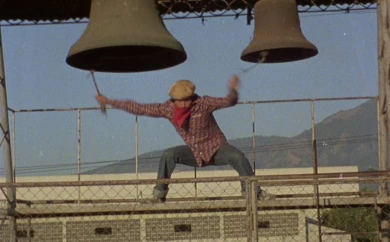
Files of Tropical Revolutions
Sábado 20 y 27 de junio, 2026 - 19:00 H
The Reframing Banana Imagery series concludes with two works that condense the height and twilight of this period in history, epic sagas that cross borders and registers to embody experiences of armed struggle in the region. Cameras mix with firearms, borders between nations blur and patience reaches breaking point. This is where the tipping point lies, where the bloodshed weighs heavy and the murmurings of regional brotherhood are buried in the ground again.
Pan y dignidad (Carta abierta de Nicaragua) [Bread and Dignity (An Open Letter to Nicaragua)] recounts the historical records and process of national reconstruction in Nicaragua via the Sandinista popular uprising. Historias prohibidas de Pulgarcito (Forbidden Tales of Tom Thumb) places the camera at the heart of the El Salvador revolutionary struggle, interspersing testimonies of daily violence with the verses of the poet Roque Dalton.
Both works understand the armed revolution as an open file under construction. The insurgent brotherhood, although dissolved, still resounds in regional history.
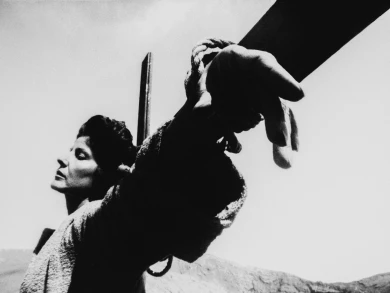
Circling Over Exploited Bodies
Friday, 19 and 26 June 2026 - 7pm
When forms of violence are inflicted on society, film responds from urgency. Images become abstract, sounds fade and the register of dissidence comes from the gut. La zona intertidal (The Intertidal Zone) is an essayistic and poetic approach to the repression of teachers in El Salvador in the 1970s — a teacher studies the biodiversity of the El Salvador coast as a boy finds a body on the same beach. A propósito de la mujer (About Women) interweaves testimonies of misery and rage towards patriarchal structures with fictional scenes of a symbolic procession through a harsh desert.
Both films understand the body as a target of violence and a territory of insurrection, a space where the blood shed by militancy and the patriarchal yoke turn pain into denouncement and existence outside the status quo into an act of political dissidence.
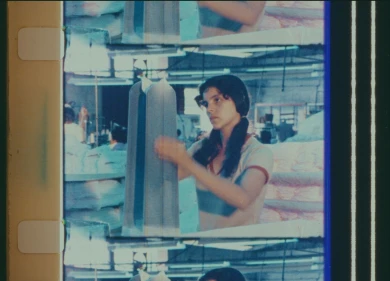
Central American Designation of Origin
Thursday, 18 and 25 June 2026 - 7pm
Fertile lands, farmers’ hands, rural faces. This first programme in the series Reframing Banana Imagery understands the foundations of the Central American experience from exploitation, extractivism and displacement, and from the organisation and resistance that emerged as a reaction. The four films within extend from a lyrical documentary on farmers’ solidarity to the playful subversion of the institutional format of the United Fruit Company.
Bananeras (Banana Growers) is a combative portrait of the inhumane conditions of the American banana plantations located in Nicaragua through much of the twentieth century. Costa Rica Banana Republic is a perspicacious satire via an institutional documentary of banana production, spotlighting the extractive nature of this agro-exporting model in the 1970s. Organización Campesina (Farmers’ Organisation) frames rural resistance in Honduras from a direct depiction and lyrical documentary, while Dos veces mujer (Two Times a Woman) dissects the invisibility of the double-shift working day Central American women farmers endure: working in the countryside and working in the home. As a whole, the works here present the earth at once as a wounded body and a space of dignity.

Aesthetics of Peace and Desertion Tactics
8 October 2025 – 24 June 2026
The study group Aesthetics of Peace and Tactics of Desertion: Prefiguring New Pacifisms and Forms of Transitional Justice proposes a rethinking—through both a theoretical-critical and historical-artistic lens—of the intricate network of concepts and practices operating under the notion of pacifism. A term not without contestation and critical tension, pacifism gathers under its name a multiplicity of practices—from anti-militarism and anti-war movements to non-violence activism—while simultaneously opening urgent debates around violence, justice, reparation, and desertion. Here, pacifism is not conceived as a moral doctrine, but as an active form of ethical and political resistance capable of generating aesthetic languages and new positions of social imagination.
Through collective study, the group seeks to update critical debates surrounding the use of violence and non-violence, as well as to explore the conflict of their representation at the core of visual cultures. In a present marked by rearmament, war, genocide, and the collapse of the social contract, this group aims to equip itself with tools to, on one hand, map genealogies and aesthetics of peace—within and beyond the Spanish context—and, on the other, analyze strategies of pacification that have served to neutralize the critical power of peace struggles. Transitional and anti-punitive justice proposals will also be addressed, alongside their intersections with artistic, visual, and cinematic practices. This includes examining historical examples of tribunals and paralegal activisms initiated by artists, and projects where gestures, imaginaries, and vocabularies tied to justice, reparation, memory, and mourning are developed.
It is also crucial to note that the study programme is grounded in ongoing reflection around tactics and concepts drawn, among others, from contemporary and radical Black thought—such as flight, exodus, abolitionism, desertion, and refusal. In other words, strategies and ideas that articulate ways of withdrawing from the mandates of institutions or violent paradigms that must be abandoned or dismantled. From feminist, internationalist, and decolonial perspectives, these concepts have nourished cultural coalitions and positions whose recovery today is urgent in order to prefigure a new pacifism: generative, transformative, and radical.
Aesthetics of Peace and Tactics of Desertion, developed and led by the Museo Reina Sofía’s Studies Management, unfolds through biweekly sessions from October to June. These sessions alternate between theoretical discussions, screenings, work with artworks and archival materials from the Museo’s Collection, reading workshops, and public sessions. The group is structured around sustained methodologies of study, close reading, and collective discussion of thinkers such as Judith Butler, Elsa Dorlin, Juan Albarrán, Rita Segato, Sven Lütticken, Ruth Wilson Gilmore, and Franco “Bifo” Berardi; historical episodes such as the anti-nuclear and anti-arms race movement in Spain; and the work of artists and activists including Rojava Film Commune, Manuel Correa and the Oficina de Investigación Documental (Office for Documentary Investigation), and Jonas Staal, among other initial cases that will expand as the group progresses.
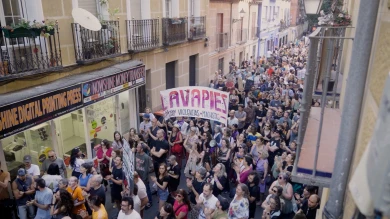
Elisa González and Leah Pattem. Soy Tribulete 7
13 JUN 2026
Framed inside this year’s Neighbourhood Picnic is the screening, in the Museo’s Cinema, of a film related to the life and protests of the Lavapiés neighbourhood, addressing issues of gentrification and the right to housing: Soy Tribulete 7 (I Am Tribulete 7, 2026), directed by Elisa González and Leah Pattem.
As the Spanish housing crisis takes hold in Lavapiés, this story begins in February 2024, when the residents of Calle Tribulete, 7, a block of apartments on a street in this Madrid barrio, receive a letter informing them that their building has been sold to a vulture fund. The news spreads quickly around the neighbourhood and, when it comes to the attention of González and Pattem, they grab their cameras and head straight for the building, where they encounter one hundred or so residents still in shock. The film Soy Tribulete 7 flows into the building and the daily lives of a community united, whose looming eviction occasions the fight of their lives. Ultimately, a path of resistance that will turn the community into a symbol of struggle for the right to housing.
Both film-makers worked closely with a group of tenants — Cris, Nani, Blanca, José, María Jesús and Antonia — to tell the story of how the building became the most creative stage of resistance ever witnessed in the area. The work presents the daily life of these residents in Madrid’s now-iconic “building fighting eviction”, depicting their collective struggle and the violent disruption to their lives. Through personal interviews, observational footage, archive material, music and a narration by eighty-year-old actress Ana Martín García, the film casts light on the human stories behind a community struggle.
The Neighbourhood Picnic is an annual gathering of festivities organised by Museo Situado, a network made up of associations, activists and residents from Lavapiés, a racially diverse, working-class neighbourhood where the Museo Reina Sofía is located.